×
Uzbekistan 🇺🇿

backpacking Asia Uzbekistan 🇺🇿Walk tiled Silk Road cities and eat plov before noon.

Explore UAEExplore Vietnam

Backpacking Uzbekistan in 2027

A complete guide including when and where to go, costs, transport, itineraries, and practical travel advice.
A first look at the country

Backpacking Uzbekistan
By Johan Kruseman 🇳🇱 | Updated October 25, 2026

Plov is a morning dish here, and that small fact rearranges your days. In Tashkent the big plov centers fire their cauldrons before dawn, serve from late morning, and are often scraping the bottoms by early afternoon. Show up at 3 pm hungry and you’ll be eating samsa instead.
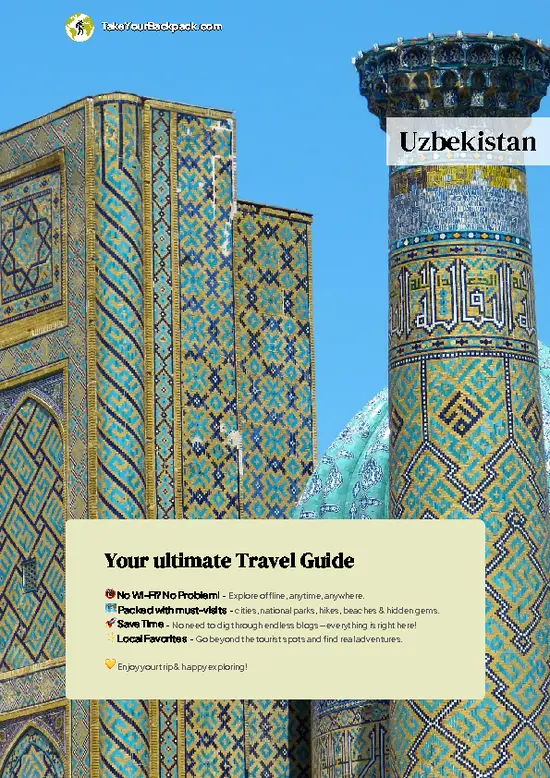
The reason to come is architecture at a scale you rarely get to walk through freely: the Registan in Samarkand, Bukhara’s Po-i-Kalyan complex, the walled lanes of Khiva’s Itchan Kala. Add bread stamped with patterns, bazaars where vendors press dried apricots into your hand, and tea drunk from small bowls. The hard parts are plain. Summer in the desert cities regularly passes 40°C, distances between the western sites are long, and hotels must register foreign guests, so you keep those slips.
Kyrgyzstan wins on mountains and yurts, and Tajikistan has the Pamirs. Uzbekistan is the cities and the food. It suits history lovers and slow eaters; serious trekkers and nightlife hunters will want to move on quickly.

👉 Get the 📖 Travel Guide of Uzbekistan

Tashkent (Tashkent, Chorsu Bazaar, Chimgan)

Most trips through Uzbekistan start in Tashkent, a Soviet-planned capital of wide avenues, Russian-speaking cafés and a metro with chandeliers and ceramic panels in its stations. Go to Chorsu Bazaar before 9 a.m., when bread sellers stack fresh non and the dome is still cool. Chimgan and Charvak Reservoir sit 1.5 to 2 hours east by shared taxi, where city families escape on weekends. It suits travelers who like urban grit with easy logistics.

Samarkand (Samarkand, Shahrisabz, Registan)

The Afrosiyob high-speed train reaches Samarkand from Tashkent in about 2 hours 10 minutes. Tour groups flood the Registan from late morning, so arrive at opening or come back for the evening lights. The tiled mausoleums of Shah-i-Zinda glow best mid-afternoon. Shahrisabz, Timur’s hometown, lies 1.5 to 2 hours south over the Takhtakaracha Pass by shared taxi. Touts work the big sights, but residential lanes a block behind are quiet. Ideal for first-timers.

Bukhara (Bukhara, Lyabi-Hauz, Gijduvan)

Bukhara has the most walkable old town in the country: the Kalyan Minaret, the trading domes and Lyabi-Hauz pond sit within a 15-minute stroll. The Afrosiyob from Tashkent takes 3.5 to 4 hours. After sunset, locals gather around Lyabi-Hauz for tea under the mulberry trees, which is your cue to slow down. Gijduvan, about 45 minutes away, has the Narzullaev family ceramics workshop. Best for slow travelers and anyone tired of taxis.

Khorezm and Karakalpakstan (Khiva, Nukus, Moynaq)

Khiva’s walled Itchan Kala feels like an open-air museum at noon and a village at dawn, when kids kick footballs under the minarets. Fly Tashkent to Urgench in about 1.5 hours, then 30 to 40 minutes by taxi, or ride 6 to 7 hours by train from Bukhara across the Kyzylkum. Nukus holds the Savitsky Museum of banned Soviet avant-garde art; Moynaq has rusting ships on the dry Aral seabed. Remote and hot, for the curious.

Fergana Valley (Kokand, Margilan, Rishtan)

The Fergana Valley is the most densely populated and conservative corner, and the most hospitable: strangers really do invite you home for tea. Trains cross the Kamchik Pass from Tashkent to Kokand or Margilan in 4.5 to 5.5 hours. Watch silk being woven at Margilan’s Yodgorlik factory, hit Kumtepa Bazaar on Thursday or Sunday, and buy blue-glazed pottery in Rishtan. Few tourists, little English, so bring Russian or Uzbek phrases.
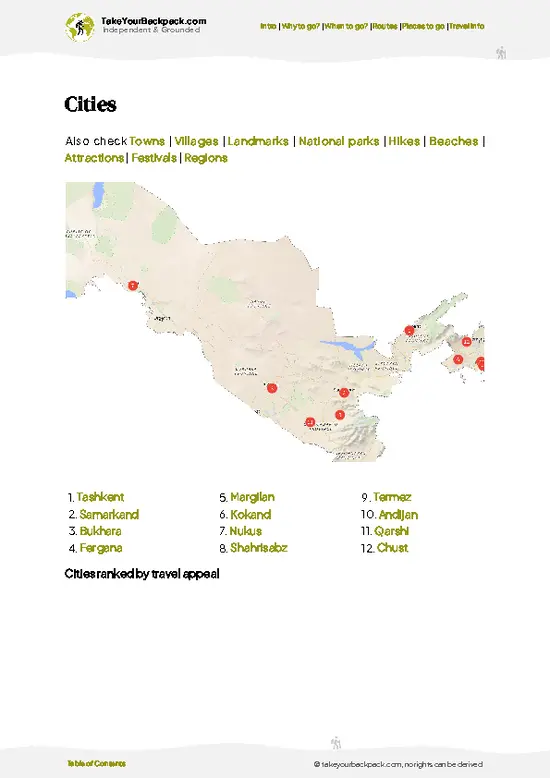
Geography and where places are located
Loading the map 🌍
CLICK TO FILTER
cities
towns
villages
landmarks
national parks
hikes
beaches
attractions
festivals
regions
SHOW COUNTRY’S BESTSHOW ALL

Why go?What makes this country worth the trip

Architecture

Few countries let you walk this freely among buildings this old and this ornate. In Samarkand, Bukhara and Khiva, tiled domes, minarets and madrasa courtyards … read more 👉
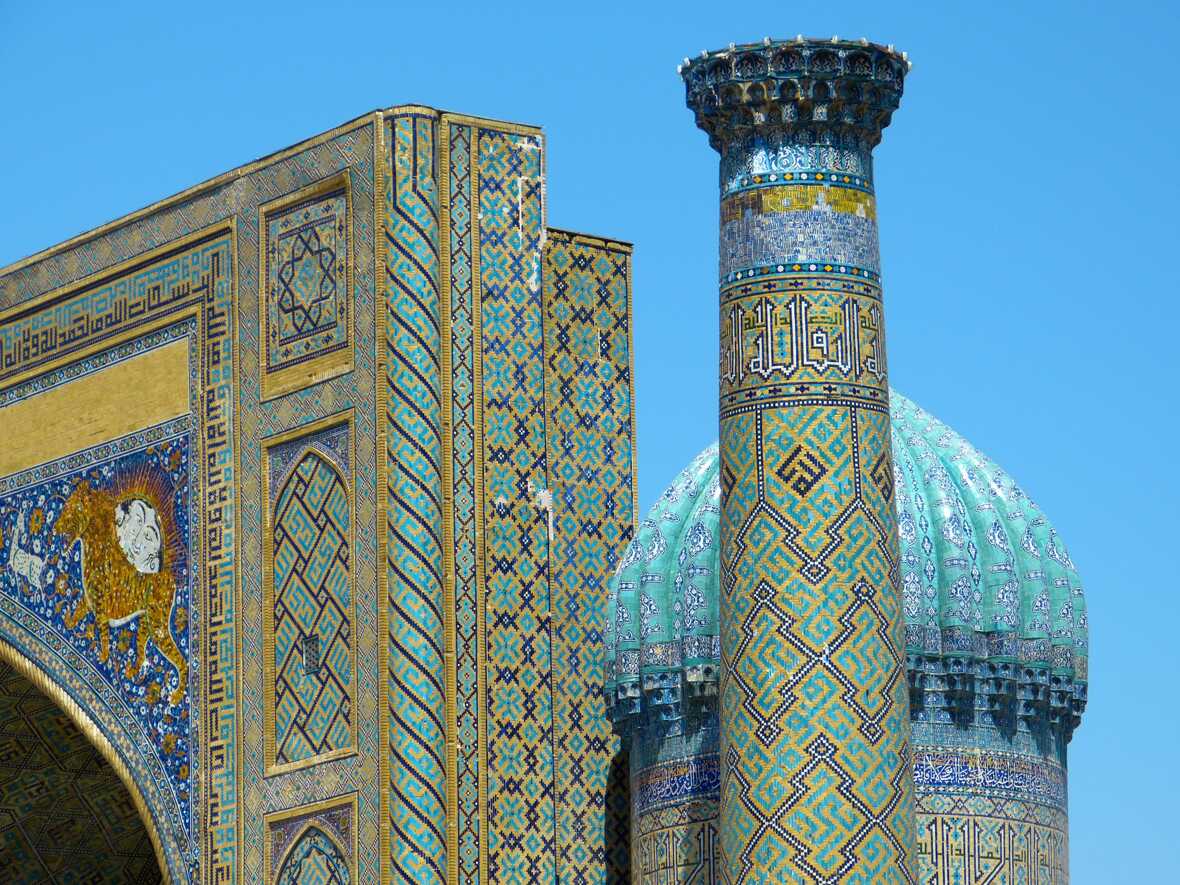
Few countries let you walk this freely among buildings this old and this ornate. In Samarkand, Bukhara and Khiva, tiled domes, minarets and madrasa courtyards sit in living neighborhoods, with kids playing football against walls that are six centuries old. The tilework alone keeps you staring: geometric patterns, calligraphy, and blues that change with every hour of light. Be at the Registan just after sunrise, before the tour groups arrive, and in Khiva climb the Islam Khoja minaret late in the afternoon for the view of the walled town turning gold.

Low cost

Most backpackers get by on roughly US$25 to 40 a day in Uzbekistan with a dorm bed, and a private room in a family guesthouse adds only a little. Guesthouses … read more 👉
Most backpackers get by on roughly US$25 to 40 a day in Uzbekistan with a dorm bed, and a private room in a family guesthouse adds only a little. Guesthouses usually serve a big breakfast of eggs, bread, jam and fruit, which carries you well into the day. Eat your main meal at lunch in a local chaikhana or plov house, where a full plate with bread, salad and a pot of tea costs far less than tourist cafes facing the monuments. Pay in som, keep small notes, and buy snacks like dried fruit and nuts at the bazaar.

Food

Uzbek cooking runs on cast-iron cauldrons and clay ovens, and once you learn its clock, you eat like a local. Plov is a midday dish. At Tashkent’s Besh … read more 👉
Uzbek cooking runs on cast-iron cauldrons and clay ovens, and once you learn its clock, you eat like a local. Plov is a midday dish. At Tashkent’s Besh Qozon the giant kazans start serving late morning, and by early afternoon the best bits (crispy rice from the bottom, quail eggs, slices of kazy horse sausage) are gone. Mornings belong to tandoor samsa, flaky and dripping with mutton fat, grabbed hot at Chorsu Bazaar. Tear your non bread by hand and never set it face down. People notice, and they’ll love you for getting it right.

⭐ HighlightsUnmissable destinations

  • Registan, Samarkand: Three madrasas face each other across a sunken square, their tiled facades shifting from turquoise to deep blue as the light drops. Come in the evening when the sandstone paving still radiates the day’s heat through your sandals and local families arrive to take photos in their best clothes.
  • Shah-i-Zinda, Samarkand: A narrow lane of mausoleums climbing a hillside, so tightly packed that the glazed tilework seems to close over your head. Pilgrims murmur prayers at the doorways, and you’ll hear the soft slap of slippers on stone more than any voice.
  • Itchan Kala, Khiva: The whole walled inner town is the attraction. Mud-brick walls the color of dry clay, a stubby unfinished minaret wrapped in green tiles, and wooden columns carved so finely they look combed. At dawn the only sound is someone sweeping the dust from a courtyard.
  • Po-i-Kalyan, Bukhara: The Kalyan Minaret has stood since the 12th century, and Genghis Khan reportedly spared it. Standing in the plaza between the
… read more 👉
  • Registan, Samarkand: Three madrasas face each other across a sunken square, their tiled facades shifting from turquoise to deep blue as the light drops. Come in the evening when the sandstone paving still radiates the day’s heat through your sandals and local families arrive to take photos in their best clothes.
  • Shah-i-Zinda, Samarkand: A narrow lane of mausoleums climbing a hillside, so tightly packed that the glazed tilework seems to close over your head. Pilgrims murmur prayers at the doorways, and you’ll hear the soft slap of slippers on stone more than any voice.
  • Itchan Kala, Khiva: The whole walled inner town is the attraction. Mud-brick walls the color of dry clay, a stubby unfinished minaret wrapped in green tiles, and wooden columns carved so finely they look combed. At dawn the only sound is someone sweeping the dust from a courtyard.
  • Po-i-Kalyan, Bukhara: The Kalyan Minaret has stood since the 12th century, and Genghis Khan reportedly spared it. Standing in the plaza between the mosque and the Mir-i-Arab madrasa, you catch the smell of bread from nearby tandoor ovens and the clatter of tea bowls from the cafes.
  • Chorsu Bazaar, Tashkent: Under a huge green dome, women sell kurt (hard balls of salted dried yogurt) that taste sharper than you’re ready for, butchers stack horse meat sausages, and bread sellers wheel out carts of round non still warm enough to fog a plastic bag.
Off the map, look for the homestays of Sentyab village in the Nuratau mountains, the desert fortress of Ayaz Kala, and the potters’ workshops of Rishtan.
Spotted a mistake or missing a highlight? Contact us.

But Uzbekistan offers more...

Discover and compare all of its highlights per category

🧭 RoutesHow travelers typically move through the country

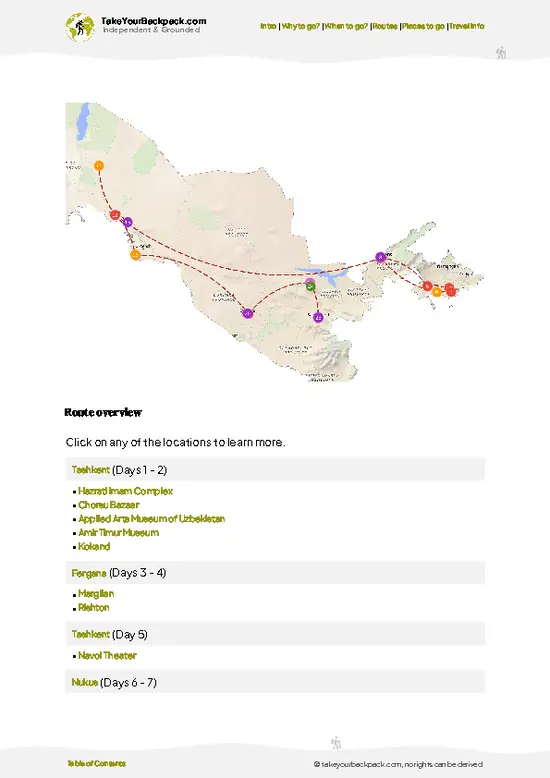
The 5-Day Samarkand Route

One base, no packing and unpacking, and plenty of time to see Timur’s capital at different hours of the day. Expect turquoise domes, a mountain-pass day trip and long tea breaks in shady courtyards.
  • The Registan Ensemble lit up after dark
  • Dawn at the Shah-i-Zinda Necropolis
  • Timur’s birthplace over the Takhtakaracha Pass

👉 explore this 5-day route

The 10-Day Silk Road Classic

A west-to-east sweep through the four cities that shaped Central Asian trade, from mud-walled desert towns to tiled imperial squares. It mixes one desert crossing with fast trains and craft workshops along the way.
  • Sunset from the walls of Khiva’s Itchan Kala
  • Evenings by the Lyabi-Hauz pool in Bukhara
  • A pottery workshop day in Gijduvan
  • Samarkand before the crowds arrive

👉 explore this 10-day route

The 15-Day Valley-to-Desert Route

Two weeks that pair the famous monuments with the country most visitors never see: silk workshops, a drained sea and a mountain homestay. Rail, a domestic flight and hired … read more 👉

The 5-Day Samarkand Route

One base, no packing and unpacking, and plenty of time to see Timur’s capital at different hours of the day. Expect turquoise domes, a mountain-pass day trip and long tea breaks in shady courtyards.
  • The Registan Ensemble lit up after dark
  • Dawn at the Shah-i-Zinda Necropolis
  • Timur’s birthplace over the Takhtakaracha Pass

👉 explore this 5-day route

The 10-Day Silk Road Classic

A west-to-east sweep through the four cities that shaped Central Asian trade, from mud-walled desert towns to tiled imperial squares. It mixes one desert crossing with fast trains and craft workshops along the way.
  • Sunset from the walls of Khiva’s Itchan Kala
  • Evenings by the Lyabi-Hauz pool in Bukhara
  • A pottery workshop day in Gijduvan
  • Samarkand before the crowds arrive

👉 explore this 10-day route

The 15-Day Valley-to-Desert Route

Two weeks that pair the famous monuments with the country most visitors never see: silk workshops, a drained sea and a mountain homestay. Rail, a domestic flight and hired drivers link fertile valleys, empty desert and village life.
  • Hand-woven ikat silk in the Fergana Valley
  • The ship graveyard of Moynaq
  • Banned Soviet avant-garde art in Nukus
  • A homestay night in Sentyab Village

👉 explore this 15-day route

🌤️ When to go?Choosing the right months to travel

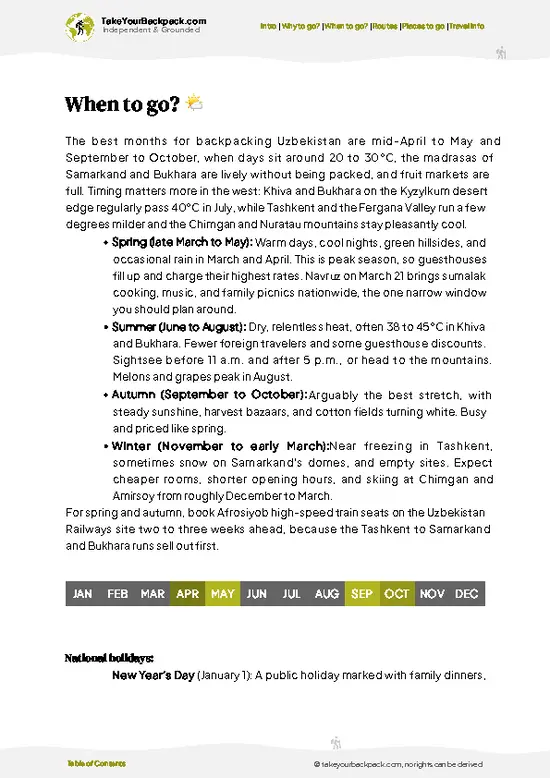
The best months for backpacking Uzbekistan are mid-April to May and September to October, when days sit around 20 to 30°C, the madrasas of Samarkand and Bukhara are lively without being packed, and fruit markets are full. Timing matters more in the west: Khiva and Bukhara on the Kyzylkum desert edge regularly pass 40°C in July, while Tashkent and the Fergana Valley run a few degrees milder and the Chimgan and Nuratau mountains stay pleasantly cool.
  • Spring (late March to May): Warm days, cool nights, green hillsides, and occasional rain in March and April. This is peak season, so guesthouses fill up and charge their highest rates. Navruz on March 21 brings sumalak cooking, music, and family picnics nationwide, the one narrow window you should plan around.
  • Summer (June to August): Dry, relentless heat, often 38 to 45°C in Khiva and Bukhara. Fewer foreign travelers and some guesthouse discounts. Sightsee before 11 a.m. and after 5 p.m., or head to the mountains. Melons and grapes peak in August.
  • Autumn (September to October): Arguably the best stretch, with steady sunshine, harvest bazaars, and cotton fields turning white. Busy and priced like spring.
  • Winter (November to early March): Near freezing in Tashkent, sometimes snow on Samarkand’s domes, and empty sites. Expect cheaper rooms, shorter opening hours, and skiing at Chimgan and Amirsoy from roughly December to March.
For spring and autumn, book Afrosiyob high-speed train seats on the Uzbekistan Railways site two to three weeks ahead, because the Tashkent to Samarkand and Bukhara runs sell out first.

source: climatestotravel.comJANJanuary: below average for travelingFEBFebruary: below average for travelingMARMarch: fair for travelingAPRApril: good for travelingMAYMay: excellent for travelingJUNJune: fair for travelingJULJuly: fair for travelingAUGAugust: fair for travelingSEPSeptember: excellent for travelingOCTOctober: highly recommended for travelingNOVNovember: fair for travelingDECDecember: below average for traveling
uzbekistan - pixabay - samarkand-196924

💰 Costs (as of 2026)Travel costs in Uzbekistan

Plan on US$25 to 35 a day for backpacking Uzbekistan if you stay in dorms, eat in local canteens and take shared transport between the Silk Road cities.
That makes Uzbekistan a little more expensive than Kyrgyzstan and Tajikistan, and noticeably cheaper than Kazakhstan, where an Almaty dorm bed can cost what a private double does in Bukhara. Prices here have risen fast since the country opened up to visa-free tourism, so plan for small increases every season. You pay in som. Cash still matters outside Tashkent, though Visa cards work more and more in hotels and supermarkets.
CategoryBudget RangeLocal Reality
Dorm accommodationUS$7 to 14 per nightA dorm bed in Tashkent costs about US$9 to 14. In Samarkand and Bukhara it runs about US$7 to 11, and family-run guesthouses there often include a big breakfast of bread, eggs, fruit and tea, so you can skip buying one meal. In Khiva, rooms just outside the Ichan Kala walls cost less than those inside. Off-season (November to February) rates drop by 20 to 30 percent.
MealsUS$6 to 12 per dayA plate of plov at a choyxona costs US$2.50 to 4. A samsa from a street tandoor costs US$0.40 to 0.80, a round of non bread US$0.25 to 0.50, and lagman about
… read more 👉
Plan on US$25 to 35 a day for backpacking Uzbekistan if you stay in dorms, eat in local canteens and take shared transport between the Silk Road cities.
That makes Uzbekistan a little more expensive than Kyrgyzstan and Tajikistan, and noticeably cheaper than Kazakhstan, where an Almaty dorm bed can cost what a private double does in Bukhara. Prices here have risen fast since the country opened up to visa-free tourism, so plan for small increases every season. You pay in som. Cash still matters outside Tashkent, though Visa cards work more and more in hotels and supermarkets.
CategoryBudget RangeLocal Reality
Dorm accommodationUS$7 to 14 per nightA dorm bed in Tashkent costs about US$9 to 14. In Samarkand and Bukhara it runs about US$7 to 11, and family-run guesthouses there often include a big breakfast of bread, eggs, fruit and tea, so you can skip buying one meal. In Khiva, rooms just outside the Ichan Kala walls cost less than those inside. Off-season (November to February) rates drop by 20 to 30 percent.
MealsUS$6 to 12 per dayA plate of plov at a choyxona costs US$2.50 to 4. A samsa from a street tandoor costs US$0.40 to 0.80, a round of non bread US$0.25 to 0.50, and lagman about US$2 to 3.50. Self-catering at Korzinka or Makro supermarkets (bread, cheese, fruit, yogurt) costs US$3 to 5 a day. That beats Kazakhstan, but it saves little compared with eating at bazaar canteens.
Local transportUS$2 to 8 per day (averaged)A Tashkent metro ride costs about US$0.15, and Yandex Go rides across the city run US$1.50 to 3. The cheapest way between cities is the regular Sharq train: Tashkent to Samarkand costs roughly US$10 to 15, against US$20 to 25 for the Afrosiyob. A shared taxi from Samarkand to Bukhara costs about US$8 to 12 per seat.
ActivitiesUS$3 to 15 per dayMonument fees add up quickly. Registan entry costs about US$5 to 8, the Ark in Bukhara roughly US$4, and the Ichan Kala combined ticket in Khiva about US$15. Guided day trips, such as a desert yurt camp near Nurata, can cost US$40 to 70, and they are what blows a budget.
MiscellaneousUS$1 to 4 per dayA tourist SIM with 20 to 30 GB of data costs about US$5 to 10. A 1.5-liter bottle of water costs US$0.25 to 0.40, and a local beer US$1.50 to 2.50. Camera fees at some sites run US$1 to 3, and public toilets charge small amounts.
Total Daily BudgetUS$25 to 35Dorm, two canteen meals and a metro ride in Tashkent come to about US$25. A day in Samarkand with the Registan ticket and a train fare comes to about US$35. Kyrgyzstan runs about US$20 to 30, and Kazakhstan US$35 to 45.
I would spend most of the money on monument tickets and the train, and eat plov at lunch. Lunch is when Uzbek cooks serve it fresh, and it fills you up until evening.
⚠️ Prices can change and everyone travels differently, so take this as a rough guide. Hope it helps you plan your adventure!

✈️ The backpacker research shortcutUzbekistan Travel Guide

An offline-friendly backpacking guide with optimized travel routes, ranked highlights, transport advice, and the best areas to stay.
example page 0 from our offline Travel Guide for Uzbekistan
example page 1 from our offline Travel Guide for Uzbekistan
example page 2 from our offline Travel Guide for Uzbekistan
example page 3 from our offline Travel Guide for Uzbekistan
example page 4 from our offline Travel Guide for Uzbekistan
example page 5 from our offline Travel Guide for Uzbekistan
example page 6 from our offline Travel Guide for Uzbekistan
example page 7 from our offline Travel Guide for Uzbekistan
The digital guide (246 pages) contains:
✅ 74 highlights, ranked by travel appeal
✅ Optimized 5, 10 & 15-day travel routes
✅ Cities, national parks, landmarks, beaches
✅ How to get around
✅ Offline-friendly for travel without Wi-Fi
👉 Click to see all 30+ guide features

📅 Plan smarter in minutes, not weeks
✅ Month by month travel advice
✅ Festivals & national holidays
✅ Budget expectations

🗺️ Go to the right places, skip the overrated ones
✅ Honest pros & cons of destinations
✅ Top hikes, parks & viewpoints
✅ Lesser-known places most travelers miss
✅ Clear “worth it vs skip it” guidance

🛏️ Travel smoothly without rookie mistakes
✅ Best areas to stay
✅ Transport systems explained simply
✅ Common scams & safety advice
✅ SIM cards, money & practical tips

🌍 Understand the country, not just visit it
✅ Culture & traditions
✅ 52 Essential phrases & customs
✅ Festivals worth planning around
✅ Traveler-friendly historical context
✅ Insights that make places more meaningful

📱 Built for real travel conditions
✅ Fully downloadable PDF
✅ Works completely offline
✅ Optimized for phone use
✅ Useful in remote areas & buses
✅ Everything in one place
Stop searching, start planning
Get instant access to your full guide. 30‑day money-back guarantee.
+ Add another guide for just

By proceeding you agree to our terms.
Sent to your inbox immediately after payment • 100% Secure Checkout
Best Backpacking Travel Advisor 2025 tourism awardBest Backpacking
Travel Advisor
2025
What others say about Take Your Backpack Guides:
⭐⭐⭐⭐⭐
Fantastic, amazing amount of information!
⭐⭐⭐⭐⭐
My goodness this is amazing, it's what I've been looking for hats off too you!
⭐⭐⭐⭐⭐
I think this is absolutely BRILLIANT
⭐⭐⭐⭐
Very complete and informative. It's still missing places, but I gotta to commend you
⭐⭐⭐⭐⭐
This is truly amazing, thank you, can't wait to explore it with my kids!
⭐⭐⭐⭐⭐
Awesome resource, thank you!
⭐⭐⭐⭐⭐
This is amazing! Can't wait to explore the ones I haven't seen
⭐⭐⭐⭐
I love this! Well done, great idea.
⭐⭐⭐⭐⭐
Thanks for taking the time to make this gem!
⭐⭐⭐⭐⭐
This might be the best website I've ever seen.
⭐⭐⭐⭐⭐
Congratulations, and thank you so much for your work; it's incredibly valuable.
⭐⭐⭐⭐
In all seriousness I think you did a great job pointing out the important spots
⭐⭐⭐⭐⭐
10/10 very good
⭐⭐⭐⭐⭐
As someone who's only just starting to visit regularly this is awesome, thank you.
⭐⭐⭐⭐
Thank you very much! I'm going to visit my dad, it's going to be very useful!
⭐⭐⭐⭐⭐
This is really cool! We'll be travelling for the first time and this definitely come in handy.
⭐⭐⭐⭐⭐
You are now our minister of culture, congratulations 👨‍💼
⭐⭐⭐⭐⭐
Just wanted to tell you that this is a pearl! Going to follow your recommendations.
⭐⭐⭐⭐⭐
This is so cool. I'll definitely be using the resource for my travels soon.
⭐⭐⭐⭐⭐
This is very impressive! Good work.
⭐⭐⭐⭐⭐
This is an amazing and informative site. Very well done!

🛏️ Where to stay?Choosing the right base for your trip

Uzbekistan has a growing hostel scene, with dorm beds typically running 100,000 to 190,000 so’m (US$8 to 15) and family-run guesthouses with breakfast offering private rooms from about US$20 to 35. In Tashkent, Mirabad and the streets around Amir Timur Square put you near metro lines, cafés and the city’s modest bar scene, while the Chorsu area in the old town is cheaper and closer to the bazaar but quieter after dark. In Samarkand, beds clustered between the Registan and Gur-e-Amir keep the big monuments walkable. Staying inside Bukhara’s old town around Lyabi-Hauz or within Khiva’s walled Itchan … read more 👉
Uzbekistan has a growing hostel scene, with dorm beds typically running 100,000 to 190,000 so’m (US$8 to 15) and family-run guesthouses with breakfast offering private rooms from about US$20 to 35. In Tashkent, Mirabad and the streets around Amir Timur Square put you near metro lines, cafés and the city’s modest bar scene, while the Chorsu area in the old town is cheaper and closer to the bazaar but quieter after dark. In Samarkand, beds clustered between the Registan and Gur-e-Amir keep the big monuments walkable. Staying inside Bukhara’s old town around Lyabi-Hauz or within Khiva’s walled Itchan Kala gives you the most atmosphere and very safe, sleepy nights, though nightlife is close to nonexistent.

If you enjoy meeting fellow travelers, consider choosing hostels with high ratings for atmosphere. On the other hand, if you prefer having your own space, a hotel might be a better option.

🚌 Getting aroundGetting around Uzbekistan

Book your trains in the official Uzbekistan Railways app or on the railway’s ticket website the moment your dates are fixed. From April to October, Afrosiyob seats on the Tashkent-Samarkand-Bukhara line can sell out several days ahead, and station ticket queues crawl. Where the rails don’t reach, a shared taxi seat or a Yandex Go ride costs a fraction of what a hotel-arranged driver quotes.
  • Afrosiyob high-speed train: Tashkent to Samarkand takes about 2 hours 10 minutes, and Samarkand to Bukhara
… read more 👉
Book your trains in the official Uzbekistan Railways app or on the railway’s ticket website the moment your dates are fixed. From April to October, Afrosiyob seats on the Tashkent-Samarkand-Bukhara line can sell out several days ahead, and station ticket queues crawl. Where the rails don’t reach, a shared taxi seat or a Yandex Go ride costs a fraction of what a hotel-arranged driver quotes.
  • Afrosiyob high-speed train: Tashkent to Samarkand takes about 2 hours 10 minutes, and Samarkand to Bukhara about 1 hour 40 minutes. Economy runs roughly 200,000 to 300,000 som (US$16 to 24), and business class costs more. Expect airline-style seats, air-conditioning and a snack trolley. Carry your passport, because names are checked at the station entrance and again on board.
  • Sharq and regular trains: These are slower (Tashkent to Bukhara takes around 6 to 7 hours) and 30 to 50 percent cheaper. Overnight sleepers run to Urgench, Khiva, Nukus and Termez, so a berth covers both your bed and your transport. Grab a lower bunk if you want the table.
  • Shared taxis: These are the workhorse for the Fergana Valley, Shahrisabz and the desert roads. Drivers wait at stands near bazaars and bus stations and leave when all four seats fill, usually within 30 to 60 minutes in the morning. Tashkent to Fergana takes 4 to 5 hours over the Kamchik Pass for about 150,000 to 250,000 som a seat. Agree the per-seat price before your bag goes in the trunk. Buying the empty front seat as well gets you legroom.
  • Yandex Go: The ride-hailing app works in every major city, and cross-town rides in Tashkent or Samarkand cost 15,000 to 40,000 som. The fixed price ends any haggling, and you can pay the driver in cash.
  • Domestic flights: Tashkent to Urgench (for Khiva) or Nukus takes 1.5 to 2 hours, typically 600,000 to 1,200,000 som one-way if booked early. One flight turns a full day on the rails into a morning.
Plan the west as a one-way trip. Fly from Tashkent to Urgench or Nukus, then work east overland through Khiva, Bukhara and Samarkand, so you cross the Kyzylkum only once and never backtrack.
Islam Karimov Tashkent International Airport (TAS) sits about 7 km (4.5 miles) south of central Tashkent, Uzbekistan’s capital, and the cheapest reliable way in is city bus 67, while a ride-hailing car costs only a few dollars more.
  • City bus 67 (30 to 45 minutes, about 2,000 to 3,000 so’m, under US$0.25): catch it at the stop outside the terminal, pay by tapping a contactless bank card or a Tashkent transport card on the validator, and expect service to wind down around 10 to 11 p.m.
  • Yandex Go ride-hailing (15 to 25 minutes, about 30,000 to 60,000 so’m, US$2.50 to 5): order through the app once you have data or airport Wi-Fi, meet the driver in the pickup area outside arrivals, and pay cash or by linked card at a fixed upfront price.
  • Airport taxi (15 to 25 minutes, typically 100,000 to 200,000 so’m, US$8 to 16 after haggling): drivers wait right outside the arrivals exit at all hours, so agree on the fare in so’m before you load your bag, since opening offers are often several times the app price.
If you land late at night, buy a local SIM at the operator kiosks in the arrivals hall, then walk past the taxi touts and book a Yandex Go car so you pay the app fare instead of a midnight markup.
⚠️ Prices and routes can change, so take this as a rough guide and ask for local advice when you arrive.
🚀 Don’t waste time on the road.
We’ll generate a route that minimizes unnecessary travel and fits your available days.

Generate my itinerary

🔒 Safety (risk Level: low)Common concerns and things to watch out for

Safety for solo travelers, including women and LGBTQ+ individuals
Uzbekistan is one of the safer countries in Central Asia for solo travelers, with low violent crime, a visible police presence and a culture of hospitality toward guests. The main issues are petty scams, such as taxi overcharging and inflated bazaar prices, so use ride-hailing apps and agree prices upfront. Women traveling alone may get stares and occasional unwanted attention, especially in rural areas and the Fergana Valley, and modest dress plus firmness usually solves it. LGBTQ+ travelers should be aware that same-sex relations between men are criminalized and social attitudes are conservative, so discretion in public is strongly advised.


Full official government travel advisory (live updates)
View details 👉

✈️ VisaUnderstanding entry rules

Citizens of more than 90 countries, including the EU member states, the UK, Canada, Australia, New Zealand and Japan, can visit Uzbekistan visa-free for 30 days, while many other nationalities can apply for a single-entry e-visa online through the official government portal, typically processed within about 3 working days. Check your nationality’s current status before booking, as the visa-free list has expanded several times in recent years. Hotels, hostels and guesthouses register foreign guests with the authorities automatically, which is a legal requirement for your stay.
⚠️ Visa requirements can change over time, so always check the latest visa requirements with the official embassy or government website before you travel.

🎒 What to pack?What to pack for Uzbekistan

Uzbekistan swings between extremes, with summer days in Bukhara and Khiva regularly above 40°C (104°F) and winter nights well below freezing, so pack for the season and bring layers in spring and autumn, when desert mornings start cold. Breathable, loose clothing that covers shoulders and knees works best, because it keeps the sun off and is expected at mosques, shrines and in conservative Fergana Valley towns. Slip-on shoes save time at the many monuments and homes where you take them off, and sturdy footwear helps on uneven cobbles and mountain trails. Desert dust gets everywhere, so a scarf or buff, sunglasses and good sun protection earn their place. Carry enough cash in som for rural areas, where card payments are less common.

Apart from this country specific advice, I have also crafted a general packing list that should help on any trip. authorOver the years, I've learned the importance of packing minimally. It's so much easier to jump on the back of a truck or squeeze yourself into the last spot of a minibus without that supersized backpack. If you're headed to a warm destination, leave your winter jacket at home; for colder regions, opt for thin thermal underlayers. Instead of packing your entire wardrobe, bring just three sets of clothes, as laundry facilities are available everywhere.

View the full list 👉

🙋 FAQCommon questions before visiting

Trip Planning

Planning a backpacking route through Uzbekistan can be tricky — you need to balance must-see places, travel times, budget, and how long to stay in each destination. Our free personalized Uzbekistan itinerary planner creates a route based on your travel style, trip duration, and interests, so you can spend less time researching and more time exploring.


Personal tip: I normally search on good rating for atmosphere (for meeting people) and location (for easy exploring). Cleanliness as a bonus.


Travel Essentials

No vaccinations are required to enter Uzbekistan unless you arrive from a country with yellow fever risk. Make sure routine vaccines (measles-mumps-rubella, tetanus-diphtheria, polio) are up to date, and hepatitis A and typhoid are recommended for most travelers, since food and water hygiene varies outside major hotels. Consider hepatitis B for longer stays and rabies if you plan to hike or spend time in rural villages where stray dogs are common. See a travel clinic 4 to 8 weeks before departure for personal advice.


vaccination requirements
When I first started traveling, I often spent part of my first day in a new country hunting for a local SIM card. While this can still be slightly cheaper, it also takes time and planning.

These days, it's much simpler to install an eSIM before leaving home. Once you arrive in Uzbekistan, you can activate it immediately and have mobile data from the moment you land — which is especially useful for ordering transport or navigating away from busy airports.

There are many providers nowadays, and price differences are usually small. I personally go with Holafly, as it offers excellent network coverage throughout the country and strong global coverage, so you can manage multiple countries from a single app.


HolaFly eSim

Culture & Customs

Uzbek culture is built on hospitality and respect for elders, and a few customs go a long way. Do take your shoes off when entering homes and mosques, and do accept tea when offered, since refusing outright can seem cold. Treat bread with respect: never place non upside down, throw it away or put it on the ground. Use your right hand for passing food and money, and let older people be served first. Dress modestly, with shoulders and knees covered, especially at religious sites, where women should carry a headscarf. Don’t photograph people, particularly women, without asking, and avoid public displays of affection. Same-sex couples should be especially discreet, as homosexuality between men is illegal. During Ramadan, avoid eating or drinking in public in conservative areas during daylight.
Trying traditional food is always a great way to experience the culture. Here are some must-try dishes for Uzbekistan.
  1. Plov (osh): Rice slow-cooked in a huge kazan with lamb, yellow carrots, onions, cumin and sometimes chickpeas or raisins. It is the centerpiece of weddings and Thursday family lunches, and its culture is on UNESCO’s intangible heritage list. Eat it at lunchtime, because plov centers often sell out by early afternoon.
  2. Samsa: Flaky pastry stuffed with lamb, onion and fat, slapped onto the wall of a clay tandoor until blistered and golden. It is the country’s favorite street snack, sold hot from roadside ovens.
  3. Lagman: Hand-pulled noodles in a rich broth or stir-fried with beef, peppers and garlic. The dish reflects the Uyghur influence in Central Asian cooking and is a filling, cheap lunch anywhere.
  4. Shashlik: Skewers of lamb, beef, liver or minced meat grilled over charcoal and served with raw onion and vinegar. The smoke from shashlik grills marks every bazaar and roadside teahouse.
  5. Manti: Large steamed dumplings filled with lamb and onion, sometimes pumpkin, topped with sour cream or yogurt. They are a home-cooking staple and often made for guests.
  6. Non: Round tandoor bread stamped with patterns in the center. Each city bakes its own style, and Samarkand’s dense, glossy loaves are famous enough that travelers carry them home.
  7. Shurpa: A clear soup of lamb, chunky potatoes, carrots and herbs, simmered for hours. It is the classic cold-weather dish and a gentle option for travel-weary stomachs.
Tap water in Uzbekistan is not considered safe for travelers to drink. Many locals boil it first or drink it mainly as tea, and visitors are advised to stick to bottled water, which is cheap and sold everywhere, or to use a filter bottle. Bottled water is also the safer choice for brushing your teeth if you have a sensitive stomach.
The main language in Uzbekistan is Uzbek. Backpacking is way more rewarding if you know a bit of the local language, so I'd suggest brushing up on the basics just in case your Uzbek skills have become a bit rusty.

Want to understand locals better?
The complete Travel Guide for Uzbekistan includes 52 essential words and phrases — greetings, thank-yous, ordering food, transport, numbers, and common local expressions you'll actually hear.

Get your local basic phrases 👉

Get the Travel Guide -


English is limited in Uzbekistan. You’ll find it at hotel and hostel desks, in tourist-facing cafés and among younger people in Tashkent, Samarkand and Bukhara, many of whom are keen to practice. In Fergana Valley towns, bazaars and rural villages, expect very little. Russian is the most useful second language everywhere, Uzbek dominates in the countryside, and Tajik is widely spoken in Samarkand and Bukhara. Download Russian for offline use in Google Translate or Yandex Translate, and learn “rahmat” (thank you) plus Russian numbers for bargaining at the bazaar.

Money & Payments

The local currency of Uzbekistan is UZS (сум).
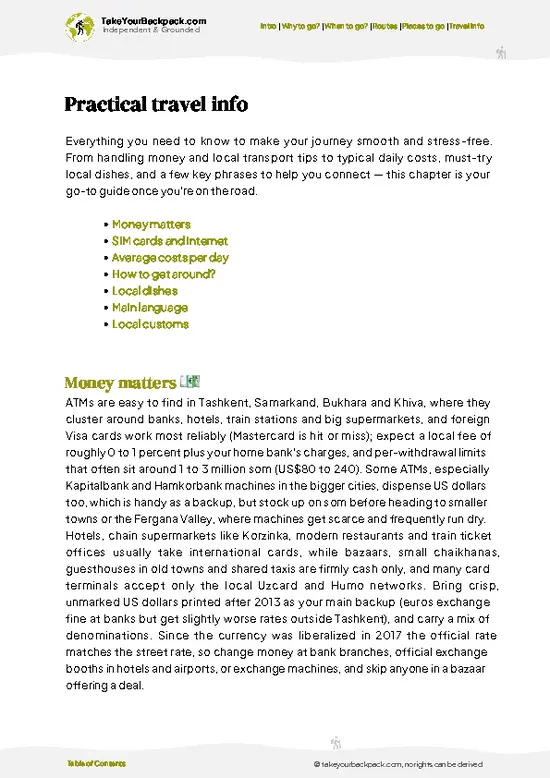
ATMs are easy to find in Tashkent, Samarkand, Bukhara and Khiva, where they cluster around banks, hotels, train stations and big supermarkets, and foreign Visa cards work most reliably (Mastercard is hit or miss); expect a local fee of roughly 0 to 1 percent plus your home bank’s charges, and per-withdrawal limits that often sit around 1 to 3 million som (US$80 to 240). Some ATMs, especially Kapitalbank and Hamkorbank machines in the bigger cities, dispense US dollars too, which is handy as a backup, but stock up on som before heading to smaller towns or the Fergana Valley, where machines get scarce and frequently run dry. Hotels, chain supermarkets like Korzinka, modern restaurants and train ticket offices usually take international cards, while bazaars, small chaikhanas, guesthouses in old towns and shared taxis are firmly cash only, and many card terminals accept only the local Uzcard and Humo networks. Bring crisp, unmarked US dollars printed after 2013 as your main backup (euros exchange fine at banks but get slightly worse rates outside Tashkent), and carry a mix of denominations. Since the currency was liberalized in 2017 the official rate matches the street rate, so change money at bank branches, official exchange booths in hotels and airports, or exchange machines, and skip anyone in a bazaar offering a deal.
Tipping in Uzbekistan is appreciated but not expected. Many restaurants in cities add a 10 to 15 percent service charge to the bill, in which case nothing extra is needed, and where no charge is added, rounding up or leaving 5 to 10 percent is a kind gesture. Guides and drivers on day tours typically receive around 50,000 to 100,000 som (US$4 to 8) per day, while taxi drivers and small cafés don’t expect tips.

🧩 Nearby countriesNearby backpacking alternatives

We 💚 feedbackFinal notes for travelers

Come for the cities. Walking into the Registan at dusk or getting lost inside Khiva’s walls is about as close as you can get to the Silk Road you imagined as a kid. The realistic drawback is heat and distance: from June to August the western desert is punishing, so spring and autumn make far more sense. Looking ahead, the country keeps opening, with easier entry, more cards accepted and new guesthouses each season, so the quieter years are passing quickly.

✍️ Help improve this page!
The information on this page is based on in-depth research, insights shared by experienced travelers, and feedback from the local travel community in Uzbekistan. While every effort is made to keep the information accurate and current, conditions can change — so if you spot anything incorrect or outdated, please get in touch.


🙋‍♂️ Give feedback

👋 Meet the founderWho’s Behind Take Your Backpack?

Johan, backpacker and founder of TakeYourBackpackHi, I’m Johan (Netherlands 🇳🇱), the creator of TakeYourBackpack. Over the past 3 decades, I’ve backpacked through 90+ countries across six continents, gaining extensive experience with independent travel, long-term trips, and overland routes.

This site is built on a combination of firsthand travel experience and carefully curated insights from other backpackers. Many guides are based on places I’ve personally visited, while others bring together tips, observations, and practical advice shared by trusted travelers I’ve met along the way.

The goal is to provide realistic, experience-driven guidance — not generic itineraries — so you can explore destinations with better context, clearer expectations, and more confidence.