×
Timor-Leste 🇹🇱

backpacking Oceania Timor-Leste 🇹🇱
Travel rugged roads revealing unpolished natural beauty.

Explore Solomon IslandsExplore Tonga

Backpacking Timor-Leste in 2026

A complete guide including when and where to go, costs, transport, itineraries, and practical travel advice.
What a trip here is really like

Backpacking Timor-Leste
By Johan Kruseman 🇳🇱 | Updated May 16, 2026

You wedge into a blue microlet, pack on your lap, rattling toward a $15 room with a bucket shower. That’s Timor-Leste (East Timor): simple, a little bruising, and honest. Lean comfort, warm welcome, big payoffs just beyond the bend.

On Atauro the reef starts in thigh-deep water and drops like a curtain; in October blue whales ghost along the coast. Dawn on Mount Ramelau puts you over a sea of cloud, incense curling from hilltop crosses. Baucau’s colonnades peel in the heat, uma lulik stand in the hills, and grilled fish with ai‑manas burns your fingers by Dili’s shore. Roads crumble, transport waits to fill, the sun bites—but patience becomes an icy beer under a tin roof while the mountains go purple.

Compared with Bali’s polish or Flores’ growing circuit, this is slower, prouder, more conversational—a Portuguese cadence on island time. Go if you dive for living reefs, hike for quiet horizons, or value hospitality over slickness; skip it if you need clockwork.

👉 Get the 📖 Travel Guide of Timor-Leste

Dili & Atauro Island

Heat sticks early: diesel on the sea breeze, church bells, plastic stools and strong, sweet coffee. Dili is your hub—microlets, embassy SUVs, grilled fish on the waterfront. The fast boat to Atauro is simple when seas behave; swells can cancel. On Atauro the reef drops like a cliff a few fin-kicks off Beloi. Snorkel until your fingers prune, then a warm bucket shower and a cold beer. Cash rules; power blinks. Easy access, big ocean payoff.

Maubisse & Mount Ramelau (Hato Builico)

Southbound, the asphalt frays into patched concrete and switchbacks. Homestays smell of wood smoke and boiled cassava. The Ramelau ascent starts in the dark—dogs bark, eucalyptus oil in the air, breath steaming. The summit cross cuts a clean line against first light over folded ridges. It is cold—real layers cold. For hikers who like their views earned and their legs humming.

Baucau & Venilale

The north coast road rides cliffs and truck exhaust to East Timor’s old second city. Baucau’s faded mercado and blue-tiled pool feel lived-in, not curated. Shared taxis grind uphill to Venilale’s karst, WWII caves, and quiet evenings of cricket chirps and generator hum. Good for slow travelers who like towns with edges and a workable bus spine under them.

Lospalos, Tutuala & Jaco Island

It is a long haul east: bright sea, broken tarmac, goats. From Tutuala the last track to Valu Beach is rutted; 4WD or hoof it. Fishermen run you across to Jaco—no overnights, no nonsense. Sand squeaks, water clears your head, sun bites hard. Bring water, repellent, and patience. For committed beach-and-reef people who accept logistics as the ticket price.

Oecusse Enclave

A frontier mood. You reach it by ferry when it runs, or a small plane when it does; overland means flirting with Indonesian borders and paperwork. Inside: empty new roads, black-sand stretches, river valleys where kids shout “malae” and race you uphill. ATMs can sulk. Build buffer days. It rewards the traveler who likes wide horizons and the feeling of being far from the main thread.
Map of Timor-Leste
Loading the map 🌍
CLICK TO FILTER
city
town
village
unique site
national park
hike
beach
attraction
festival
region
SHOW COUNTRY‘S BESTSHOW ALL
film
0
0
0a
Cristo Rei of Dili Statue Complex
film
1
1
1a
Santa Cruz Cemetery
film
2
2
2a
Resistance Museum and Archive
film
3
3
3a
Chega! Exhibition
film
4
4
4a
Immaculate Conception Cathedral
film
5
5
5a
Motael Church
film
6
6
6a
Arte Moris Free Art School & Gallery
film
7
7
7a
Praia de Cristo Rei
Faisal
film
8
8
8a
Hera
film
9
9
9a
Praia dos Coqueiros
Juliana Ribon
film
10
10
10a
Dili
Mama Africa
film
11
11
11a
Matebian
Pb Channel
film
12
12
12a
Loi Hunu
film
13
13
13a
Nino Konis Santana
Colin Trainor
film
14
14
14a
Mount Ramelau
film
15
15
15a
Bucoli Cave
Tiago Larsen
film
16
16
16a
Maubisse
film
17
17
17a
Oecusse
Paulo Sergio Amaral
film
18
18
18a
Maubisse
Pasrah Mendo
film
19
19
19a
Ainaro
film
20
20
20a
Cristo Rei
Around The World

Why go?What draws travelers here

Uniqueness

Timor-Leste feels earned. You bounce for hours on busted mountain roads past goats and coffee trees, … read more 👉
Timor-Leste feels earned. You bounce for hours on busted mountain roads past goats and coffee trees, the air switching from diesel and clove smoke to wet-forest cold. Mikrolets rattle through Dili, reggae distorting, markets spit betel-red smiles. Then it delivers: Ramelau at sunrise, clouds at your feet; Atauro’s reefs like stained glass; a beach shack grilling fish and that first cold beer sweating hard.

Low cost

Timor-Leste is kind to a backpacker’s wallet: microlets rattle across Dili for pocket change, long-haul … read more 👉
Timor-Leste is kind to a backpacker’s wallet: microlets rattle across Dili for pocket change, long-haul minibuses grind into the hills, and family hospedarias hand you a mosquito net and a smile. Eat grilled fish and rice at roadside stalls, sip strong local coffee, and end with a cold beer at sunset—living roughly $30–40 a day without trying.

Scenery

Timor-Leste makes you earn the views. Dusty roads, sun like a hammer, the smell of eucalyptus and woodsmoke … read more 👉
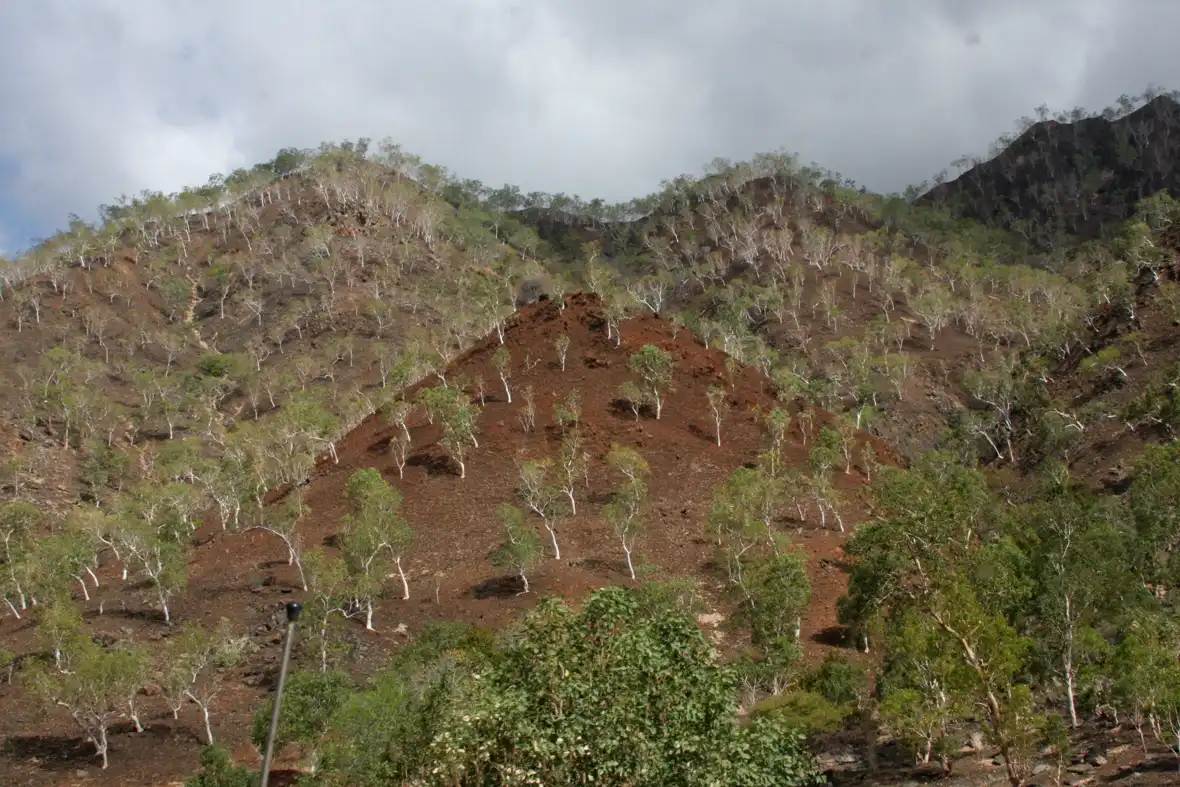
Timor-Leste makes you earn the views. Dusty roads, sun like a hammer, the smell of eucalyptus and woodsmoke in the hills. Then the payoffs: Ramelau’s cloud forest giving way to dawn light, Atauro’s volcanic ridgelines falling into neon reefs, the wide savannah around Lautem and Ira Lalaro’s mirror. You hike, sweat, and drink that first cold beer with salt still on your skin.

Mountains

Timor-Leste rewards hikers who like their summits earned. Trails leave from coffee villages—Maubisse, … read more 👉
Timor-Leste rewards hikers who like their summits earned. Trails leave from coffee villages—Maubisse, Hato Builico—straight into steep ridges that smell of eucalyptus and wood smoke. Ramelau’s pre-dawn climb bites in the calves, Matebian’s limestone cuts the wind, and then the payoff: cloud seas, church bells drifting up from valleys, coral coastlines far below. Back in Dili, the first cold beer tastes earned.

Beach life

Timor-Leste makes you work for it—heat that bites, roads that rattle your teeth, salt drying to a crust … read more 👉
Timor-Leste makes you work for it—heat that bites, roads that rattle your teeth, salt drying to a crust on your arms. Then you kick out from shore at Atauro and the reef just falls away: turtles, soft corals, no crowds. Jaco’s sugar-white arc for naps. Dili’s Areia Branca for sunset beers, plastic chairs, low music, warm night air.
Want the complete picture of Timor-Leste?
The offline Travel Guide brings everything together — routes, highlights & planning.

See what's included in the guide 👉

Get the Travel Guide -

⭐ HighlightsHighlights of Timor-Leste

  • Atauro Island Reefs: Dawn ferry, diesel in the nose, blue water hard as glass. You roll over the side and the world turns into a vertical city of coral, anthias flickering like confetti in slow motion. Proof you were there: lips salted raw, prune-fingered and grinning on a creaking outrigger.
  • Mount Ramelau (Tatamailau) Sunrise: You leave Hatobuilico in the dark, breath fogging, eucalyptus and damp earth underfoot. The ridge opens to a small summit chapel and a horizon that lights up like coals. Proof you were there: numb knuckles around a thermos of sweet coffee as roosters start far below.
  • Jaco Island: The last kilometers to Tutuala rattle every bolt, then a canoe skims you over water so clear it looks fake. Sacred, empty, and bright; sand squeaks under your heels, hermit crabs patrol the tideline. Proof you were there: salt drying white on your skin, no cellphone bars, no noise.
  • Cristo Rei and Areia Branca, Dili: Stone steps, sun on your neck, stations of the cross tiled and fading; wind
read more 👉
  • Atauro Island Reefs: Dawn ferry, diesel in the nose, blue water hard as glass. You roll over the side and the world turns into a vertical city of coral, anthias flickering like confetti in slow motion. Proof you were there: lips salted raw, prune-fingered and grinning on a creaking outrigger.
  • Mount Ramelau (Tatamailau) Sunrise: You leave Hatobuilico in the dark, breath fogging, eucalyptus and damp earth underfoot. The ridge opens to a small summit chapel and a horizon that lights up like coals. Proof you were there: numb knuckles around a thermos of sweet coffee as roosters start far below.
  • Jaco Island: The last kilometers to Tutuala rattle every bolt, then a canoe skims you over water so clear it looks fake. Sacred, empty, and bright; sand squeaks under your heels, hermit crabs patrol the tideline. Proof you were there: salt drying white on your skin, no cellphone bars, no noise.
  • Cristo Rei and Areia Branca, Dili: Stone steps, sun on your neck, stations of the cross tiled and fading; wind slaps the cape. You drop to the cove for grilled fish and a cold beer from a squeaky cooler. Proof you were there: palms gritty from the rail, calves striped with salt.
  • Baucau Old Town and Spring Pool: Faded colonnades, peeling blues and yellows, oranges stacked high at the market. The public spring pool bites like melted ice; rough stone nudges your soles awake. Proof you were there: a shiver that lingers, and bread warm from a roadside oven; off the map: Lene Hara cave near Tutuala, the coffee ridges around Letefoho at dawn, and the quiet Maubara fort with its salt pans.
Spotted a mistake or missing a highlight? Contact us.

But Timor-Leste offers more...

Discover and compare all of its highlights per category

🧭 RouteHow to structure a trip

The 2-Day Dili Deep-Dive

The Vibe: A compact, low-stress city break that trades long drives for powerful history, coastal walks, and easy cultural encounters, all while sleeping in Dili. Ideal if you want to understand Timor-Leste’s story in a weekend without burning out.
The Highlights:
  • Time in Dili’s core sites, including the Chega! Exhibition and Resistance Museum and Archive.
  • Sunrise or sunset views from the Cristo Rei of Dili Statue Complex and nearby beaches.
  • Hands-on encounters with tais textiles at Tais Market and the Alola Foundation & Tais Weaving Center.
  • A taste of the capital’s emerging art scene at Arte Moris Free Art School & Gallery.

The 3-Day Coast & Highlands Taster

The Vibe: A road-trip-style sampler that starts with Dili’s history, then follows the coastal road east to Manatuto and Baucau for a first look at life beyond the capital. Perfect if you want a mix of story, scenery, and small-town atmosphere without racing across the whole country.
The Highlights:
  • Dili’s key historical
read more 👉

The 2-Day Dili Deep-Dive

The Vibe: A compact, low-stress city break that trades long drives for powerful history, coastal walks, and easy cultural encounters, all while sleeping in Dili. Ideal if you want to understand Timor-Leste’s story in a weekend without burning out.
The Highlights:
  • Time in Dili’s core sites, including the Chega! Exhibition and Resistance Museum and Archive.
  • Sunrise or sunset views from the Cristo Rei of Dili Statue Complex and nearby beaches.
  • Hands-on encounters with tais textiles at Tais Market and the Alola Foundation & Tais Weaving Center.
  • A taste of the capital’s emerging art scene at Arte Moris Free Art School & Gallery.

The 3-Day Coast & Highlands Taster

The Vibe: A road-trip-style sampler that starts with Dili’s history, then follows the coastal road east to Manatuto and Baucau for a first look at life beyond the capital. Perfect if you want a mix of story, scenery, and small-town atmosphere without racing across the whole country.
The Highlights:
  • Dili’s key historical and spiritual sites, from Chega! to Motael Church.
  • Coastal stops at One Dollar Beach and Metiaut Beach for swims and grilled fish.
  • An overnight in Baucau, exploring its hilltop old town and markets.
  • A gentle introduction to Timor-Leste’s road-trip rhythm along the north coast.

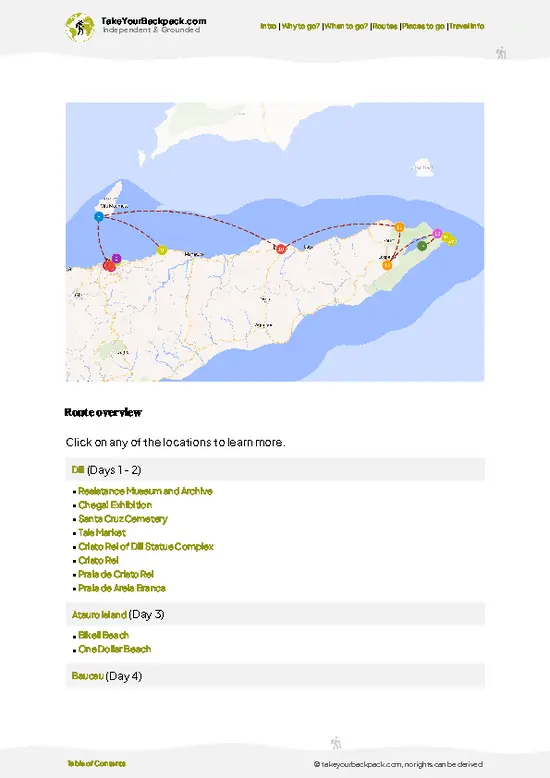
The 5-Day East & Island Explorer

The Vibe: A fuller journey that links Dili’s history and art with island time on Atauro and the wild eastern corridor around Baucau, Lautem, and Tutuala. Designed for travelers who want a real sense of the country’s variety—city, island, coast, and national park—without turning the trip into a marathon.
The Highlights:
  • Two days in Dili for museums, churches, markets, and the Cristo Rei of Dili Statue Complex.
  • A boat trip to Atauro Island with time to relax and swim off quiet beaches like Bikeli Beach.
  • A coastal drive east with stops at One Dollar Beach, Manatuto, and an overnight in Baucau.
  • A foray into Lautem and Tutuala on the edge of Nino Konis Santana National Park, reaching Timor-Leste’s remote eastern tip.
🌍 Want a ready-to-use travel plan for Timor-Leste?
The overview above gives a quick comparison of route options based on your travel time and style. The full Travel Guide shows each route in detail, with maps, stops, highlights, and transport types.

Explore all route details 👉

Get the Travel Guide -

🌤️ When to go?Weather, seasons, and timing

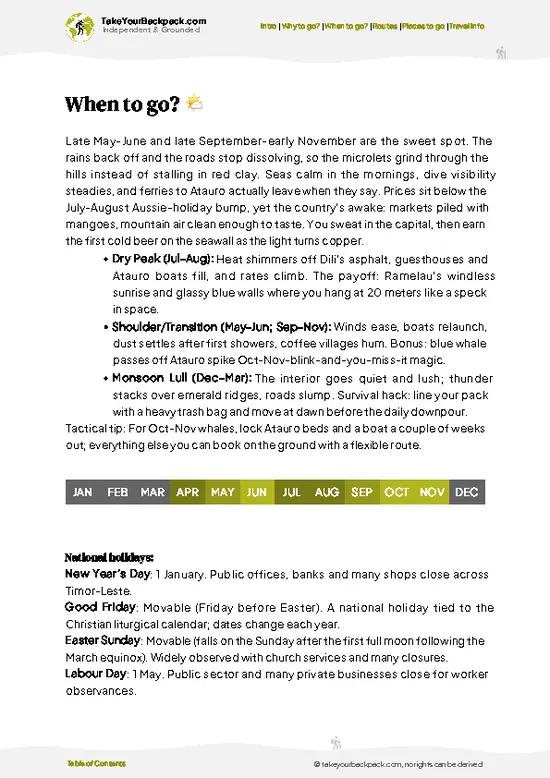
Late May-June and late September-early November are the sweet spot. The rains back off and the roads stop dissolving, so the microlets grind through the hills instead of stalling in red clay. Seas calm in the mornings, dive visibility steadies, and ferries to Atauro actually leave when they say. Prices sit below the July-August Aussie-holiday bump, yet the country’s awake: markets piled with mangoes, mountain air clean enough to taste. You sweat in the capital, then earn the first cold beer on the seawall as the light turns copper.
  • Dry Peak (Jul-Aug): Heat shimmers off Dili’s asphalt, guesthouses and Atauro boats fill, and rates climb. The payoff: Ramelau’s windless sunrise and glassy blue walls where you hang at 20 meters like a speck in space.
  • Shoulder/Transition (May-Jun; Sep-Nov): Winds ease, boats relaunch, dust settles after first showers, coffee villages hum. Bonus: blue whale passes off Atauro spike Oct-Nov—blink-and-you-miss-it magic.
  • Monsoon Lull (Dec-Mar): The interior goes quiet and lush; thunder stacks over emerald ridges, roads slump. Survival hack: line your pack with a heavy trash bag and move at dawn before the daily downpour.

Tactical tip: For Oct-Nov whales, lock Atauro beds and a boat a couple of weeks out; everything else you can book on the ground with a flexible route.

source: climatestotravel.comJANJanuary: fair for travelingFEBFebruary: fair for travelingMARMarch: fair for travelingAPRApril: good for travelingMAYMay: highly recommended for travelingJUNJune: excellent for travelingJULJuly: good for travelingAUGAugust: good for travelingSEPSeptember: highly recommended for travelingOCTOctober: excellent for travelingNOVNovember: excellent for travelingDECDecember: fair for traveling
Traveling in a specific month?
This page covers the best seasons to visit. For a complete month-by-month breakdown — including weather, crowds, costs, national holidays, and festivals — download the full Travel Guide.

Get the Travel Guide -
timor-leste-pixabay-228286

💰 Costs (as of 2026)Prices, expenses, and money tips

Expect $40-55 USD per day if you sleep in dorms, eat local, and ride mikrolets; dive days or remote detours can push you to $70-90.
  • dorm accommodation: $10-18 in Dili, $8-12 in secondary towns; where no dorms exist, the cheapest guesthouses run $15-25 for a fan room. Beds are basic, fans hum through power cuts, and mosquitos test your patience. System tip: walk in before noon, pay cash, and ask for a “multiple-night” discount; pick places on a mikrolet route to avoid taxi bleed.
  • meals: Supermarket Survival: bread, eggs, tuna, instant noodles, bananas—$6-10/day, but kitchens are rare so expect cold meals. Street food reality: warungs and market stalls serve rice, grilled fish, stews—$2-4 per plate in towns, $3-6 on Atauro; Western plates jump to $8-15. Compared with Indonesia, everyday food runs 30-60% higher with less variety.
  • local transport: Dili mikrolets cost $0.25-0.50 a ride; intercity minibuses/HiAces run $3-10 depending on distance; sit with the sacks and diesel fumes and you’ll see the country. Government ferry to Atauro is the bargain move ($4-6); fast boats are $10-45. Motorbike rental $15-20/day (+$1-1.50/L fuel). Charters and 4x4s are ruinous. Cheapest way to unlock Timor-Leste:
read more 👉
Expect $40-55 USD per day if you sleep in dorms, eat local, and ride mikrolets; dive days or remote detours can push you to $70-90.
  • dorm accommodation: $10-18 in Dili, $8-12 in secondary towns; where no dorms exist, the cheapest guesthouses run $15-25 for a fan room. Beds are basic, fans hum through power cuts, and mosquitos test your patience. System tip: walk in before noon, pay cash, and ask for a “multiple-night” discount; pick places on a mikrolet route to avoid taxi bleed.
  • meals: Supermarket Survival: bread, eggs, tuna, instant noodles, bananas—$6-10/day, but kitchens are rare so expect cold meals. Street food reality: warungs and market stalls serve rice, grilled fish, stews—$2-4 per plate in towns, $3-6 on Atauro; Western plates jump to $8-15. Compared with Indonesia, everyday food runs 30-60% higher with less variety.
  • local transport: Dili mikrolets cost $0.25-0.50 a ride; intercity minibuses/HiAces run $3-10 depending on distance; sit with the sacks and diesel fumes and you’ll see the country. Government ferry to Atauro is the bargain move ($4-6); fast boats are $10-45. Motorbike rental $15-20/day (+$1-1.50/L fuel). Charters and 4x4s are ruinous. Cheapest way to unlock Timor-Leste: microlets + buses + the slow ferry + early starts.
  • activities: Major cost drivers are water-based: diving around Atauro ($60-90 per dive, or $120-160 day trips with gear/boat) and seasonal whale trips ($40-100). Inland, Mt. Ramelau guide/homestay $25-40 total; village contributions $2-5. Pricier than Indonesia, far cheaper than Australia.
  • miscellaneous: Budget leaks: ATM fees ($3-6), bottled water ($1 unless you refill), beer ($2 shop/$3-4 bar), sunscreen and imported snacks (often double Indonesia), laundry ($3-5/kg), occasional taxi hops in Dili ($2-5). Cash rules; carry small bills. One-time visa fee stings more than in Indonesia.
⚠️ Prices can change and everyone travels differently, so take this as a rough guide. Hope it helps you plan your adventure!

✈️ The backpacker research shortcutTimor-Leste Travel Guide

An offline-friendly backpacking guide with optimized travel routes, ranked highlights, transport advice, and the best areas to stay.
example page 0 from our offline Travel Guide for Timor-Lesteexample page 1 from our offline Travel Guide for Timor-Lesteexample page 2 from our offline Travel Guide for Timor-Lesteexample page 3 from our offline Travel Guide for Timor-Lesteexample page 4 from our offline Travel Guide for Timor-Leste
The digital guide (174 pages) contains:
51 highlights, ranked by travel appeal
Optimized 2, 3 & 5-day travel routes
Best neighborhoods to stay
How to get around
Offline-friendly for travel without Wi-Fi
👉 See all 30+ guide features

📅 Plan smarter in minutes, not weeks
Month by month travel advice
Festivals & national holidays
Budget expectations

🗺️ Go to the right places, skip the overrated ones
Honest pros & cons of destinations
Top hikes, parks & viewpoints
Lesser-known places most travelers miss
Clear “worth it vs skip it” guidance

🛏️ Travel smoothly without rookie mistakes
Best areas to stay
Transport systems explained simply
Common scams & safety advice
SIM cards, money & practical tips

🌍 Understand the country, not just visit it
Culture & traditions
52 Essential phrases & customs
Festivals worth planning around
Traveler-friendly historical context
Insights that make places more meaningful

📱 Built for real travel conditions
Fully downloadable PDF
Works completely offline
Optimized for phone use
Useful in remote areas & buses
Everything in one place
Save weeks of stressful planning
Get instant access to the full guide directly. 30-day money-back guarantee.


Sent to your inbox immediately after payment • 100% Secure Checkout
Best Backpacking Travel Advisor 2025 tourism awardBest Backpacking
Travel Advisor
2025
What others say about Take Your Backpack Guides:
⭐⭐⭐⭐⭐
Fantastic, amazing amount of information!
⭐⭐⭐⭐⭐
My goodness this is amazing, it's what I've been looking for hats off too you!
⭐⭐⭐⭐⭐
I think this is absolutely BRILLIANT
⭐⭐⭐⭐
Very complete and informative. It's still missing places, but I gotta to commend you
⭐⭐⭐⭐⭐
This is truly amazing, thank you, can't wait to explore it with my kids!
⭐⭐⭐⭐⭐
Awesome resource, thank you!
⭐⭐⭐⭐⭐
This is amazing! Can't wait to explore the ones I haven't seen
⭐⭐⭐⭐
I love this! Well done, great idea.
⭐⭐⭐⭐⭐
Thanks for taking the time to make this gem!
⭐⭐⭐⭐⭐
This might be the best website I've ever seen.
⭐⭐⭐⭐⭐
Congratulations, and thank you so much for your work; it's incredibly valuable.
⭐⭐⭐⭐
In all seriousness I think you did a great job pointing out the important spots
⭐⭐⭐⭐⭐
10/10 very good
⭐⭐⭐⭐⭐
As someone who's only just starting to visit regularly this is awesome, thank you.
⭐⭐⭐⭐
Thank you very much! I'm going to visit my dad, it's going to be very useful!
⭐⭐⭐⭐⭐
This is really cool! We'll be travelling for the first time and this definitely come in handy.
⭐⭐⭐⭐⭐
You are now our minister of culture, congratulations 👨‍💼
⭐⭐⭐⭐⭐
Just wanted to tell you that this is a pearl! Going to follow your recommendations.
⭐⭐⭐⭐⭐
This is so cool. I'll definitely be using the resource for my travels soon.
⭐⭐⭐⭐⭐
This is very impressive! Good work.
⭐⭐⭐⭐⭐
This is an amazing and informative site. Very well done!

🛏️ Where to stay?Accommodation types and options

Yes — there are hostels and budget guesthouses in Timor-Leste, but options are limited and mostly small family-run places rather than a large backpacker hostel network.
Most choices cluster in Dili (central waterfront/CBD) with the widest selection, then Atauro Island (main village near the ferry) for dive‑and‑beach guesthouses, and Baucau town for basic provincial stays.
Dili gives the best transport links, markets and the most nightlife but can be noisy, basic and requires vigilance for petty crime at night; Atauro is quiet, superb for diving and beaches but has irregular ferries and very … read more 👉
Yes — there are hostels and budget guesthouses in Timor-Leste, but options are limited and mostly small family-run places rather than a large backpacker hostel network.
Most choices cluster in Dili (central waterfront/CBD) with the widest selection, then Atauro Island (main village near the ferry) for dive‑and‑beach guesthouses, and Baucau town for basic provincial stays.
Dili gives the best transport links, markets and the most nightlife but can be noisy, basic and requires vigilance for petty crime at night; Atauro is quiet, superb for diving and beaches but has irregular ferries and very limited services; Baucau is calmer and cheaper with good access to east‑coast highlights but offers few amenities, little nightlife and sparse public transport.

If you enjoy meeting fellow travelers, consider choosing hostels with high ratings for atmosphere. On the other hand, if you prefer having your own space, a hotel might be a better option.

🚌 Getting aroundHow to travel within the country

Timor-Leste moves by sunlight and hunch. Engines cough awake before dawn, drivers sniff the sky, and departures happen when seats and sacks run out. The roads climb, crumble, and blindside you with potholes and goat logic. Then a ridge breaks, a bay burns blue, and the wind dries the sweat; the first cold beer tastes earned, not bought.
  • Intercity buses (coasters) The speed you save in money, you lose in hours. Dili-Baucau runs about $4-6 and 4-6 hours with market stops, tire checks, and roadside
read more 👉
Timor-Leste moves by sunlight and hunch. Engines cough awake before dawn, drivers sniff the sky, and departures happen when seats and sacks run out. The roads climb, crumble, and blindside you with potholes and goat logic. Then a ridge breaks, a bay burns blue, and the wind dries the sweat; the first cold beer tastes earned, not bought.
  • Intercity buses (coasters) The speed you save in money, you lose in hours. Dili-Baucau runs about $4-6 and 4-6 hours with market stops, tire checks, and roadside papaya. A private 4WD halves the time but nukes your budget. Sit front-left to dodge diesel cough and watch the driver read the road.
  • Microlets (Dili minibuses) This is the city’s pulse. Flag with a low hand, squeeze in, pass your coin forward, pay on exit. Keep quarters; no one breaks tens. Music thumps, groceries ride on laps, and you slide for elders or mums with kids. Tap the rail to stop; hop fast, doors don’t linger.
  • Ferries and local boats Water beats mountains. The Dili-Atauro run turns a winding all-day ordeal into a morning glide. Tickets go early; seas stiffen after noon. You board with motorbikes and onions, sit upwind, and bag your pack. Sailings cancel when the wind says so—plan a spare day, not a tight connection.
  • Angguna/pickup trucks The cheap hack into highlands. Climb the tailgate at dawn, plant on rice sacks, pay a few dollars cash, and accept detours for pigs, cousins, and fuel. It’s rough, wet in rain, glorious at sunset, and costs a tenth of hiring a 4WD.

Master tip: Move at first light with small bills, chain short hops through known hubs (Becora east, Tasi Tolu west), and always choose the first ride leaving over the perfect route on paper.
Dili’s Presidente Nicolau Lobato International Airport (DIL) sits about 6 km (3.7 miles) west of the city center around Colmera/Lecidere.

Main ways to get into town:
  • Microlet (minibus) - The cheapest public transport. Walk 2-3 minutes out to the main coastal road in front of the airport and flag an eastbound microlet heading toward Colmera/Lecidere. Pay the conductor when you get off.

    Time: 20-35 minutes, plus a few minutes’ waiting.

    Cost: US$0.25-$0.50 per ride.

    Notes: Very frequent in daylight hours (roughly early morning to early evening); service is limited or stops after dark. Have small change.
  • Hotel transfer / private car - Many hotels and guesthouses offer pre-booked pickups.

    Time: 15-25 minutes.

    Cost: Typically US$10-$15 per car.
  • On foot - It’s walkable if you’re determined.

    Time: 60-90 minutes.

    Cost: Free.

    Notes: Sidewalks are patchy and the heat/humidity can be rough; not great with luggage or after dark.

Taxis:
There’s a taxi rank outside arrivals. Most taxis in Dili are unmetered—agree the fare before you get in. Expect US$5-$10 to central Dili in daytime; US$10-$15 late at night or if traffic is heavy. The ride takes about 10-20 minutes depending on congestion. Keep small bills and confirm your destination (e.g., “Colmera” or “Lecidere”) clearly.

Small print:
Traffic can bunch up around rush hours (roughly 08:00-09:30 and 16:30-18:30). Prices above are in US dollars—the currency used in Timor-Leste—and are typical as of 2025.
⚠️ Prices and routes can change, so take this as a rough guide and ask for local advice when you arrive.

🔒 Safety (risk Level: medium)Is Timor-Leste safe to visit?

Safety for solo travelers, including women and LGBTQ+ individuals
Timor-Leste is generally safe for solo travelers, including women and LGBTQ+ individuals, but caution is advised. While violent crime is rare, petty theft, especially in Dili, can be an issue, so keep your belongings secure. Cultural sensitivity is important; dress modestly and be discreet with public displays of affection, especially outside urban areas. LGBTQ+ travelers should be aware that attitudes can be conservative, so exercising discretion is wise.


Full official government travel advisory (live updates)
View details 👉

✈️ VisaUnderstanding entry rules

Most nationalities can get a visa on arrival for Timor-Leste, valid for 30 days. Make sure your passport is valid for at least six months and bring $30 USD cash for the visa fee. Always check the latest entry requirements before you travel, as visa policies can change.
⚠️ Visa requirements can change over time, so always check the latest visa requirements with the official embassy or government website before you travel.

🎒 What to pack?Packing essentials for the trip

Timor-Leste is a wild mix of mountains, jungles, and stunning beaches, so pack for variety. The climate is generally hot and humid, with a rainy season from December to April, so think lightweight and breathable. **Modesty is key** in this Catholic-majority country, especially in rural areas, so keep shorts and tank tops for the beaches and stick to longer sleeves and pants elsewhere. If you’re planning on hiking the epic Mount Ramelau, bring layers as it gets chilly at the top. Be ready for some rough terrain, so sturdy footwear is a must.

Apart from this country specific advice, I have also crafted a general packing list that should help on any trip. authorOver the years, I've learned the importance of packing minimally. It's so much easier to jump on the back of a truck or squeeze yourself into the last spot of a minibus without that supersized backpack. If you're headed to a warm destination, leave your winter jacket at home; for colder regions, opt for thin thermal underlayers. Instead of packing your entire wardrobe, bring just three sets of clothes, as laundry facilities are available everywhere.

View the full list 👉

✈️ FAQFrequently asked questions

Trip Planning


Personal tip: I normally search on good rating for atmosphere (for meeting people) and location (for easy exploring). Cleanliness as a bonus.


Travel Essentials

Hepatitis A and B, Typhoid, and Tetanus are generally recommended for Timor-Leste. Consider a Yellow Fever vaccine if coming from a risk zone. Malaria prophylaxis is advised. Check CDC or WHO for updates.


vaccination requirements
When I first started traveling, I often spent part of my first day in a new country hunting for a local SIM card. While this can still be slightly cheaper, it also takes time and planning.

These days, it's much simpler to install an eSIM before leaving home. Once you arrive in Timor-Leste, you can activate it immediately and have mobile data from the moment you land — which is especially useful for ordering transport or navigating away from busy airports.

There are many providers nowadays, and price differences are usually small. I personally go with Airalo, as it offers excellent network coverage throughout the country and strong global coverage, so you can manage multiple countries from a single app.


Get your e-sim for Timor-Leste

Culture & Customs

Do dress modestly, especially in rural areas; shoulders and knees should be covered to show respect. Remove shoes before entering someone’s home. Handshakes are common, but use your right hand as the left is considered unclean.

Don’t touch someone’s head (including children) as it’s seen as disrespectful. Avoid discussing political issues, especially topics related to Indonesia and independence. For LGBTQ+ travelers, discretion is advised since attitudes can be conservative.

Women travelers should be mindful of local dress codes and may get extra attention but usually more out of curiosity than anything else. Always remain polite and assertive if needed.
Trying traditional food is always a great way to experience the culture. Here are some must-try dishes for Timor-Leste.
  • Ikan Pepes: This dish consists of fish marinated in a blend of spices, wrapped in banana leaves, and then grilled or steamed. It’s popular because it highlights the island’s fresh seafood and the use of fragrant local spices.
  • Batar Da’an: A hearty corn, mung bean, and pumpkin stew. It’s a staple in East Timor, showcasing the country’s agrarian roots and the importance of these crops in daily diets.
  • Feijoada: A legacy of Portuguese influence, this dish is a rich stew of beans with beef or pork. It’s a communal dish, often enjoyed during gatherings and special occasions.
  • Katupa: Compressed rice cakes cooked in woven coconut leaves. These are often served with meat or fish dishes and symbolize the blend of indigenous and Portuguese culinary traditions.
  • Tukir: A spicy, coconut-based stew often made with buffalo or goat. This dish is culturally significant, frequently prepared during traditional ceremonies and celebrations.
Tap water in Timor-Leste isn’t typically safe for tourists to drink, as locals often boil or filter it before use. It’s recommended that travelers stick to bottled or filtered water to avoid any stomach issues. Always check the seal on bottled water to ensure it’s intact.
The main language in Timor-Leste is Tetum. Backpacking is way more rewarding if you know a bit of the local language, so I'd suggest brushing up on the basics just in case your Tetum skills have become a bit rusty.

Want to understand locals better?
The complete Travel Guide for Timor-Leste includes 52 essential words and phrases — greetings, thank-yous, ordering food, transport, numbers, and common local expressions you'll actually hear.

Get your local basic phrases 👉

Get the Travel Guide -


In Timor-Leste (Timor-Leste), English is not the primary language, but it is increasingly spoken, especially in urban areas and among the younger population. The official languages are Tetum and Portuguese, with Tetum being the most widely used in daily communication. English is taught in schools and is often used in government and business contexts, particularly in tourism.

In major cities like Dili, you will find many people who can communicate in English, especially in hotels, restaurants, and tourist attractions. However, proficiency can vary significantly, and outside urban centers, English speakers may be less common. Travelers might encounter challenges in more remote areas where Tetum and Portuguese dominate.

For a smoother experience, learning a few basic phrases in Tetum can be helpful and appreciated by locals. Overall, while English is not universally spoken, it is present enough in key areas to facilitate travel and communication for visitors.

Money & Payments

The local currency of Timor-Leste is EUR (€).

Cash is king in East Timor, so plan to carry enough USD in small denominations. The local currency is the US dollar, and ATMs are primarily found in Dili. Outside the capital, ATM access is pretty rare. Even in Dili, ATMs can be temperamental, so it’s good to have backup cash.

Credit and debit cards aren’t widely accepted, especially in smaller towns and local businesses. Stick to cash for most transactions. Euros and other foreign currencies are usually not accepted, so exchange them for USD before you go.

For currency exchange, check out major banks in Dili, or the airport for convenience, but don’t expect great rates. Always check your bills for any damage, as torn or worn notes might not be accepted. Keep it simple: bring USD, carry cash, and be ready for an adventure.

Tipping in Timor-Leste isn’t customary, but small tips are appreciated, especially in touristy areas. At restaurants, rounding up the bill or leaving a couple of dollars is a nice gesture. For guides or drivers, a tip of $5-10 is considered generous.

🧩 Nearby countriesSimilar backpacking destinations

We 💚 feedbackFinal notes for travelers

Timor-Leste hums like a generator at dusk: diesel on the breeze, geckos on the walls, kids waving from dusty mikrolets. It’s work—slow roads, cash-only towns, and rain that turns clay to soap—but the payoff is clean and immediate. Dawn coffee in the cool highlands. Reef walls off Atauro dropping into cobalt, with nobody else around. Best surprise: grilled fish and a cold Super Bock on Dili’s seafront as Cristo Rei goes purple. Trajectory’s good—ferries more reliable, coastal roads getting sealed, local marine protections tightening.

✍️ Help improve this page!
The information on this page is based on in-depth research, insights shared by experienced travelers, and feedback from the local travel community in Timor-Leste. While every effort is made to keep the information accurate and current, conditions can change — so if you spot anything incorrect or outdated, please get in touch.


🙋‍♂️ Give feedback

👋 Meet the founderWho’s Behind Take Your Backpack?

Johan, backpacker and founder of TakeYourBackpackHi, I’m Johan (Netherlands 🇳🇱), the creator of TakeYourBackpack. Over the past decade, I’ve backpacked through 80+ countries across six continents, gaining extensive experience with independent travel, long-term trips, and overland routes.

This site is built on a combination of firsthand travel experience and carefully curated insights from other backpackers. Many guides are based on places I’ve personally visited, while others bring together tips, observations, and practical advice shared by trusted travelers I’ve met along the way.

The goal is to provide realistic, experience-driven guidance — not generic itineraries — so you can explore destinations with better context, clearer expectations, and more confidence.

Get Full Country Guide |
Instant download • 51 highlights • Full Offline guide