×

Madagascar🇲🇬 | villagesNosy Sakatia
coral reefs, sea turtle habitat, small lodges | things to do and best time to go

Explore Nosy MitsioExplore Tsingy de Bemaraha Stone Forest Viewpoints and Suspension Bridge

Backpacking in Nosy Sakatia
👍 Recommendedvillage ranked #12
By Johan Kruseman 🇳🇱 | last update: 18 April, 2026

Everyone comes to Nosy Sakatia for the sea turtles—those slow-motion grazers in the eelgrass—but the real reason to linger is the island’s rhythm: salt on your skin, the scent of woodsmoke, and the hush that falls after sunset. Just off Nosy Be’s west coast in northern Madagascar, Sakatia is less a town than a sprawl of sandy paths and thatched bungalows, where the loudest thing at night is the tide. It’s not a hub—no markets, no nightlife, just a handful of beach bars and a couple of lodges where backpackers swap stories over cheap rum. You come here to reset, not to party. Getting here means a short boat hop from Nosy Be, and once you arrive, you’ll walk everywhere—no taxis, no traffic, just sand between your toes. It’s cheaper and quieter than Nosy Be, but you trade convenience for calm. If you want crowds or a scene, stay on the big island; if you want to wake up to birds and the smell of the sea, Sakatia is the move.

Discover everything you want to know in the 📖 Madagascar Travel Guide.
Loading the map 🌍
CLICK TO FILTER
city
town
village
unique site
national park
hike
beach
attraction
festival
region
SHOW COUNTRY‘S BESTSHOW ALL

✨ Why go?
Ranked #12 village in Madagascar
What makes this village worth visiting

Nosy Sakatia is a backpacker’s hub that serves as a launchpad for exploring Madagascar’s natural wonders. Its walkable streets make it easy to navigate, with small-scale hostels and guesthouses that foster a friendly, communal vibe. You’ll find yourself sharing stories over a plate of local seafood, the salty air mingling with the scent of grilled fish.

The town’s proximity to hiking trails and pristine beaches means you can dive into adventure by day and unwind with fellow travelers by night. Most visitors linger a few days, soaking in the laid-back atmosphere, while solo travelers and small groups feel right at home.

It’s not a party town, but the social scene is warm and inviting, perfect for those who appreciate authentic connections over nightlife. If you’re a slow traveler or a hiker, … read more 👉
Nosy Sakatia is a backpacker’s hub that serves as a launchpad for exploring Madagascar’s natural wonders. Its walkable streets make it easy to navigate, with small-scale hostels and guesthouses that foster a friendly, communal vibe. You’ll find yourself sharing stories over a plate of local seafood, the salty air mingling with the scent of grilled fish.

The town’s proximity to hiking trails and pristine beaches means you can dive into adventure by day and unwind with fellow travelers by night. Most visitors linger a few days, soaking in the laid-back atmosphere, while solo travelers and small groups feel right at home.

It’s not a party town, but the social scene is warm and inviting, perfect for those who appreciate authentic connections over nightlife. If you’re a slow traveler or a hiker, Nosy Sakatia offers a meaningful pause in your journey, making it a worthwhile stop rather than just a fleeting visit.
Get the complete Travel Guide for Madagascar
Everything organized for offline planning — routes, highlights, costs & tips

See what’s inside 👉

Get the Travel Guide -
  • Village harbor / pirogue landing — The real heartbeat of Sakatia: where fishermen land the day’s catch, pirogues are beached, and local skippers arrange trips. Great for watching daily rhythms and catching a cheap boat ride.
  • Central village market — A tiny, lively cluster of stalls with fresh fish, vanilla/seasonal spices, and household goods. Perfect for practicing a few Malagasy phrases and tasting straight-off-the-boat seafood.
  • Turtle Bay (shore snorkeling with turtles) — Clear, shallow water right off the village beach where green turtles are regularly seen feeding. You can snorkel from shore; it’s low-effort but hugely rewarding.
  • Mangrove channel & kayak route — A short paddle into protected mangroves beside the village: birds, small crabs, and calm water. Locals run inexpensive
  • read more 👉
  • Village harbor / pirogue landing — The real heartbeat of Sakatia: where fishermen land the day’s catch, pirogues are beached, and local skippers arrange trips. Great for watching daily rhythms and catching a cheap boat ride.
  • Central village market — A tiny, lively cluster of stalls with fresh fish, vanilla/seasonal spices, and household goods. Perfect for practicing a few Malagasy phrases and tasting straight-off-the-boat seafood.
  • Turtle Bay (shore snorkeling with turtles) — Clear, shallow water right off the village beach where green turtles are regularly seen feeding. You can snorkel from shore; it’s low-effort but hugely rewarding.
  • Mangrove channel & kayak route — A short paddle into protected mangroves beside the village: birds, small crabs, and calm water. Locals run inexpensive kayak or pirogue tours that explain fishing and mangrove ecology.
  • Spice and ylang-ylang plots — Small family plots tucked near the village where you can see vanilla, ylang-ylang, and other island plants being grown and processed. Honest, hands-on taste-and-smell lessons from growers.
  • Pirogue boatyard and fishermen’s workshops — Where traditional wooden boats are carved, repaired and rigged. Watching craftsmen and fishermen mend nets is a genuine look into coastal Malagasy life.
  • Shoreline coral gardens (village snorkel entries) — Several easy, walk-in snorkel spots in front of the village with healthy coral patches and reef fish—ideal if you don’t want a full dive trip but still want good underwater time.
  • Community school and village project visits — Small, visitable community projects and the school often welcome respectful, pre-arranged visits. These give context on island life, education, and local initiatives (ask locally for permission first).
  • Village headland viewpoint — A short, steep walk from the settlement to a rocky point with a wide view of the bay, neighboring islets and sunsets. Great for photos and to orient yourself to the archipelago.
  • Local crafts, home-cooking and homestays — Simple guesthouses and family homestays in the village offer cooking lessons (grilled fish, rum-laced local treats) and handmade crafts—real interaction with hosts rather than staged tourism.
A few excellent day trips from Nosy Sakatia are nearby Nosy Komba (lemurs and artisan villages — my personal favorite), Lokobe Reserve on Nosy Be (dense forest and endemic wildlife), and the white-sand twin isles of Nosy Iranja.
Spotted a mistake or missing something? Contact me.

⌛️ 1 dayHow to make the most of one day

Nosy Sakatia, a small island off Madagascar’s northwest coast, is a slice of paradise that feels untouched by time. The air is thick with the scent of frangipani and the sound of waves lapping against the shore. This isn’t just another tourist stop; it’s a place where you can connect with the local culture and nature in a way that feels authentic.

Start your morning with a stroll along the beach at sunrise. The golden light dances on the water, and the soft sand beneath your feet is a gentle reminder that you’re in a special spot. Grab a fresh coconut from a local vendor—nothing beats the sweet, cool water to kickstart your day. Afterward, head to the nearby village of Ambatoloaka. Here, you can chat with fishermen as they mend their nets, offering a glimpse into daily life that many tourists … read more 👉
Nosy Sakatia, a small island off Madagascar’s northwest coast, is a slice of paradise that feels untouched by time. The air is thick with the scent of frangipani and the sound of waves lapping against the shore. This isn’t just another tourist stop; it’s a place where you can connect with the local culture and nature in a way that feels authentic.

Start your morning with a stroll along the beach at sunrise. The golden light dances on the water, and the soft sand beneath your feet is a gentle reminder that you’re in a special spot. Grab a fresh coconut from a local vendor—nothing beats the sweet, cool water to kickstart your day. Afterward, head to the nearby village of Ambatoloaka. Here, you can chat with fishermen as they mend their nets, offering a glimpse into daily life that many tourists miss.

In the afternoon, take a short boat ride to the lesser-known Nosy Sakatia Marine Reserve. Snorkeling here is a treat; the coral reefs are vibrant, and the fish dart around like they’re putting on a show just for you. This spot isn’t on every itinerary, but it’s worth the detour for the sheer beauty and tranquility.

As evening approaches, return to the main beach. The sunset paints the sky in hues of orange and pink, and you can settle into a beachside restaurant for dinner. Try the grilled lobster—fresh and flavorful, it’s a local specialty. Share stories with fellow travelers or locals, soaking in the warmth of the island as the stars begin to twinkle overhead. This day in Nosy Sakatia isn’t just about sights; it’s about savoring the moments that make travel truly rewarding.
Build the Right Itinerary
Use the Madagascar Travel Guide’s 7, 14 & 21-day routes as a starting point to plan a trip that actually works on the ground.

Get the Travel Guide -

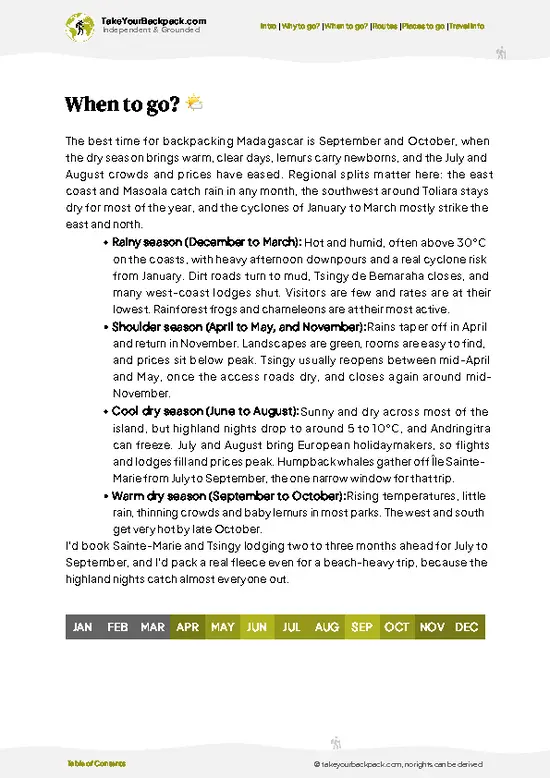
🌤️ When to go?When to go for the best experience


  • Weather: The dry season from May to October is your best bet. Expect clear skies and minimal rain, which means trails stay firm and the ocean calm for snorkeling. The wet season, November to April, brings heavy rains and rough seas, making outdoor plans risky.

  • Temperature: Daytime temps hover between 22-28°C (72-82°F) in the dry months, perfect for hiking without overheating. The wet season can push temps up to 30°C (86°F), but humidity spikes, turning every step into a sweat test.

  • Daylight Hours: Around 11-12 hours of daylight year-round, but the dry season offers more consistent, bright mornings that let you start early and avoid afternoon heat or showers.

  • Crowds: Peak season aligns with the dry months, especially July and August, when European travelers escape their winter. You’ll
  • read more 👉

  • Weather: The dry season from May to October is your best bet. Expect clear skies and minimal rain, which means trails stay firm and the ocean calm for snorkeling. The wet season, November to April, brings heavy rains and rough seas, making outdoor plans risky.

  • Temperature: Daytime temps hover between 22-28°C (72-82°F) in the dry months, perfect for hiking without overheating. The wet season can push temps up to 30°C (86°F), but humidity spikes, turning every step into a sweat test.

  • Daylight Hours: Around 11-12 hours of daylight year-round, but the dry season offers more consistent, bright mornings that let you start early and avoid afternoon heat or showers.

  • Crowds: Peak season aligns with the dry months, especially July and August, when European travelers escape their winter. You’ll find more tourists, but the vibe is lively, and services run full throttle.

  • Seasonal Activities: Whale watching peaks between July and September, adding a rare wildlife spectacle to your trip. Diving and snorkeling conditions also shine in the dry season with clearer water visibility.

  • Price Fluctuations: Expect higher prices during the dry season’s peak months. Booking early can lock in better rates, while the shoulder months of May and October offer a sweet spot of decent weather and fewer crowds at lower costs.


Pro-tip: Aim for late May or early October—when the island still feels fresh after rains or just before the dry season crowds hit. You get the best light, manageable temps, and a quieter, more authentic vibe.


source: climatestotravel.comJANJanuary: fair for travelingFEBFebruary: fair for travelingMARMarch: fair for travelingAPRApril: fair for travelingMAYMay: highly recommended for travelingJUNJune: excellent for travelingJULJuly: excellent for travelingAUGAugust: excellent for travelingSEPSeptember: excellent for travelingOCTOctober: highly recommended for travelingNOVNovember: fair for travelingDECDecember: fair for traveling
when-to-go

✈️ The ultimate backpacker shortcutMadagascar Travel Guide

Skip weeks of research and hit the road with confidence. Get 349 pages of proven routes, transport advice, and real safety insights—built for your phone and 100% offline-ready.
example page 0 from our offline Travel Guide for Madagascarexample page 1 from our offline Travel Guide for Madagascarexample page 2 from our offline Travel Guide for Madagascarexample page 3 from our offline Travel Guide for Madagascarexample page 4 from our offline Travel Guide for Madagascar
🎒 Your 349-page offline travel companion
7, 14 & 21-day routes paced for real travel
107 ranked highlights with honest skip-it advice
Logistics solved: Best areas to stay & transport
Safety blueprints: Common local scams to avoid
No Wi-Fi? No problem: Phone-optimized offline PDF
👉 See all 30+ guide features

📅 Plan smarter in minutes, not weeks
Realistic travel times & pacing
Best months per region
Festivals & national holidays
Budget expectations

🗺️ Go to the right places, skip the overrated ones
107 ranked highlights across the country
Hidden gems beyond the tourist trail
Honest pros & cons of destinations
Top hikes, parks & viewpoints
Lesser-known places most travelers miss
Clear “worth it vs skip it” guidance

🛏️ Travel smoothly without rookie mistakes
Best areas to stay
Transport systems explained simply
Local transport tradeoffs
Common scams & safety advice
SIM cards, money & practical tips
What to expect before arrival

🌍 Understand the country, not just visit it
Culture & traditions
52 Essential phrases & customs
Festivals worth planning around
Traveler-friendly historical context
Insights that make places more meaningful

📱 Built for real travel conditions
Fully downloadable PDF
Works completely offline
Optimized for phone use
Useful in remote areas & buses
Everything in one place
Save weeks of stressful planning
Get instant access to the full guide directly. 30-day money-back guarantee.


Sent to your inbox immediately after payment • 100% Secure Checkout
Best Backpacking Travel Advisor 2025 tourism awardBest Backpacking
Travel Advisor
2025
What others say about Take Your Backpack Guides:
⭐⭐⭐⭐⭐
Fantastic, amazing amount of information!
⭐⭐⭐⭐⭐
My goodness this is amazing, it's what I've been looking for hats off too you!
⭐⭐⭐⭐⭐
I think this is absolutely BRILLIANT
⭐⭐⭐⭐
Very complete and informative. It's still missing places, but I gotta to commend you
⭐⭐⭐⭐⭐
This is truly amazing, thank you, can't wait to explore it with my kids!
⭐⭐⭐⭐⭐
Awesome resource, thank you!
⭐⭐⭐⭐⭐
This is amazing! Can't wait to explore the ones I haven't seen
⭐⭐⭐⭐
I love this! Well done, great idea.
⭐⭐⭐⭐⭐
Thanks for taking the time to make this gem!
⭐⭐⭐⭐⭐
This might be the best website I've ever seen.
⭐⭐⭐⭐⭐
Congratulations, and thank you so much for your work; it's incredibly valuable.
⭐⭐⭐⭐
In all seriousness I think you did a great job pointing out the important spots
⭐⭐⭐⭐⭐
10/10 very good
⭐⭐⭐⭐⭐
As someone who's only just starting to visit regularly this is awesome, thank you.
⭐⭐⭐⭐
Thank you very much! I'm going to visit my dad, it's going to be very useful!
⭐⭐⭐⭐⭐
This is really cool! We'll be travelling for the first time and this definitely come in handy.
⭐⭐⭐⭐⭐
You are now our minister of culture, congratulations 👨‍💼
⭐⭐⭐⭐⭐
Just wanted to tell you that this is a pearl! Going to follow your recommendations.
⭐⭐⭐⭐⭐
This is so cool. I'll definitely be using the resource for my travels soon.
⭐⭐⭐⭐⭐
This is very impressive! Good work.
⭐⭐⭐⭐⭐
This is an amazing and informative site. Very well done!

🛏️ Where to stay?Choosing the right base

Nosy Sakatia’s west coast, especially near the small village by the main dock, is the sweet spot for backpackers. This area hums with a laid-back energy—locals and travelers mingle easily, sharing stories over fresh seafood grilled on open fires. The scent of salt and lemongrass floats on the warm breeze, setting a relaxed tone that’s hard to find elsewhere on the island. It’s safe, with a close-knit community vibe that makes solo travelers feel less like outsiders and more like part of a slow-moving, friendly current.

Hostels here tend to be simple but welcoming, often run by locals who know … read more 👉
Nosy Sakatia’s west coast, especially near the small village by the main dock, is the sweet spot for backpackers. This area hums with a laid-back energy—locals and travelers mingle easily, sharing stories over fresh seafood grilled on open fires. The scent of salt and lemongrass floats on the warm breeze, setting a relaxed tone that’s hard to find elsewhere on the island. It’s safe, with a close-knit community vibe that makes solo travelers feel less like outsiders and more like part of a slow-moving, friendly current.

Hostels here tend to be simple but welcoming, often run by locals who know the island’s rhythms and can hook you up with snorkeling spots or village tours. Compared to the quieter eastern side, which feels more isolated and less social, the west offers a natural meeting point without the touristy hustle. Staying here means you’re steps from the water, the market, and the pulse of island life—perfect for those who want to dive into Madagascar’s coastal charm without losing their budget or their sense of adventure.

🚌 Getting aroundHow to get around Nosy Sakatia

Nosy Sakatia moves at the rhythm of the tides and the sun, not the clock. The island’s pace is a laid-back pulse, where mornings start with fishermen hauling nets and afternoons drift into hammock naps under the shade of tamarind trees. There’s no rush here—just the steady hum of boats, the salty breeze, and the occasional call of lemurs in the canopy. This isn’t a place for rigid schedules; it’s a place where intuition guides you, and the best moments come from flowing with the island’s natural tempo.


  • Walking: The island’s compact size makes walking the ultimate transit. Trails wind through dense forest and along the coastline, offering fresh sea air and the scent of wild ylang-ylang. It’s free, flexible, and the best way to catch glimpses of chameleons and lemurs. Bring sturdy shoes
  • read more 👉
Nosy Sakatia moves at the rhythm of the tides and the sun, not the clock. The island’s pace is a laid-back pulse, where mornings start with fishermen hauling nets and afternoons drift into hammock naps under the shade of tamarind trees. There’s no rush here—just the steady hum of boats, the salty breeze, and the occasional call of lemurs in the canopy. This isn’t a place for rigid schedules; it’s a place where intuition guides you, and the best moments come from flowing with the island’s natural tempo.


  • Walking: The island’s compact size makes walking the ultimate transit. Trails wind through dense forest and along the coastline, offering fresh sea air and the scent of wild ylang-ylang. It’s free, flexible, and the best way to catch glimpses of chameleons and lemurs. Bring sturdy shoes for uneven paths and expect 20-40 minutes between main spots.


  • Pirogue Boats: These traditional dugout canoes are the heartbeat of local transit. They run from early morning until late afternoon, roughly 6 AM to 5 PM, ferrying passengers between Nosy Sakatia and Nosy Be or nearby beaches. Expect a bumpy ride with salt spray and a price around 10,000 MGA ($2.50). It’s slow but scenic, perfect for soaking in the turquoise water and spotting dolphins.


  • Motorcycle Taxis (Motos): For quicker hops across the island, motos zip along dirt roads. They’re affordable (about 5,000 MGA per ride), noisy, and a bit wild, but they save time when the sun is high and the heat is unforgiving. Helmets aren’t always standard, so hold on tight and enjoy the wind and dust.


  • Chartered Speedboats: If you want to skip the wait and splash straight to Nosy Be or other islands, chartering a speedboat is your go-to. It’s pricier (starting around 100,000 MGA) but cuts travel time drastically. Early bookings are smart since availability depends on weather and demand.

👛 Costs (as of 22 October 2025)Travel costs and budget guide for Nosy Sakatia

Backpacking in Nosy Sakatia, Madagascar, means embracing a laid-back island vibe where costs stay modest but the experience feels rich. Here’s the lowdown on what you’ll typically spend each day.
  • Dorm Accommodation: Expect to pay around €10-15 per night for a basic dorm bed. The options are simple but clean, often with a fan and shared bathrooms. It’s not luxury, but it’s enough to crash after a day of snorkeling or hiking.
  • Meals: Local eateries serve up fresh seafood and Malagasy staples for about €3-6 per meal. Street food snacks like sambos or fried bananas cost less than a euro. If you want something a bit more Western or a cold beer, budget closer to €7-10 per meal.
  • Local Transport: Getting around is mostly by pirogue (small boat) or on foot. Boat rides between Nosy Be and Nosy Sakatia
  • read more 👉
Backpacking in Nosy Sakatia, Madagascar, means embracing a laid-back island vibe where costs stay modest but the experience feels rich. Here’s the lowdown on what you’ll typically spend each day.
  • Dorm Accommodation: Expect to pay around €10-15 per night for a basic dorm bed. The options are simple but clean, often with a fan and shared bathrooms. It’s not luxury, but it’s enough to crash after a day of snorkeling or hiking.
  • Meals: Local eateries serve up fresh seafood and Malagasy staples for about €3-6 per meal. Street food snacks like sambos or fried bananas cost less than a euro. If you want something a bit more Western or a cold beer, budget closer to €7-10 per meal.
  • Local Transport: Getting around is mostly by pirogue (small boat) or on foot. Boat rides between Nosy Be and Nosy Sakatia run about €5-7 one way. Once on the island, walking is the norm, so transport costs stay minimal.
  • Basic Activities/Entry Fees: Snorkeling gear rental or guided snorkeling tours typically cost €10-15. Entry to marine reserves or small parks is usually under €5. These activities are the heart of the island’s appeal, so budget accordingly.
  • Miscellaneous Expenses: Think bottled water, occasional snacks, or charging your phone at a local café—around €2-4 daily. Internet can be patchy, so a local SIM card with data might set you back about €5 for a decent bundle.

All told, you’re looking at roughly €30-45 per day to keep things comfortable without cutting corners. Nosy Sakatia’s charm is in its simplicity—spending less here doesn’t mean missing out, it means you’re spending smarter, soaking in the island’s rhythm without the tourist gloss.


source: madagascar-tourisme.com
⚠️ Prices can change and everyone travels differently, so take this as a rough guide. Hope it helps you plan your adventure!

🚌 Day tripsShort trips worth adding

Nosy Sakatia is a backpacker’s dream base, offering easy access to some of Madagascar’s most captivating experiences. The island’s laid-back vibe sets the stage for adventure, and the day trips are where the magic happens.

1. Snorkeling at Nosy Tanikely
Just a short boat ride away, Nosy Tanikely is a marine reserve bursting with life. Picture yourself gliding through crystal-clear waters, surrounded by vibrant coral reefs and schools of colorful fish. The trip takes about 30 minutes, and you can expect to pay around $15 for the boat ride and entrance fee. The best time to go is during the dry season, from May to October, when visibility is at its peak. A common mistake? Forgetting to bring a waterproof bag for your valuables; trust me, you don’t want to risk soggy cash.


2. Exploring read more 👉
Nosy Sakatia is a backpacker’s dream base, offering easy access to some of Madagascar’s most captivating experiences. The island’s laid-back vibe sets the stage for adventure, and the day trips are where the magic happens.

1. Snorkeling at Nosy Tanikely
Just a short boat ride away, Nosy Tanikely is a marine reserve bursting with life. Picture yourself gliding through crystal-clear waters, surrounded by vibrant coral reefs and schools of colorful fish. The trip takes about 30 minutes, and you can expect to pay around $15 for the boat ride and entrance fee. The best time to go is during the dry season, from May to October, when visibility is at its peak. A common mistake? Forgetting to bring a waterproof bag for your valuables; trust me, you don’t want to risk soggy cash.


2. Exploring Lokobe National Park
This lush rainforest is a haven for wildlife enthusiasts. A guided trek through Lokobe reveals unique flora and fauna, including the elusive black lemur. The journey from Nosy Sakatia takes about 45 minutes by boat, with entry fees around $10. Aim for early morning hikes to catch the animals at their most active. Many first-timers underestimate the trail’s difficulty; wear sturdy shoes and be prepared for some muddy patches.
👉 Explore Lokobe National Park

3. Sunset at Nosy Sakatia Beach
Sometimes, the best adventures are right at your doorstep. Spend an evening on the beach, where the sun dips below the horizon, painting the sky in hues of orange and pink. It’s a perfect way to unwind after a day of exploration. Grab a local beer for about $2 and soak in the atmosphere. The best sunsets are from June to September, so plan your evenings accordingly. Don’t miss out on the local food stalls nearby; they serve up fresh seafood that’s worth every bite.


4. Whale Watching at Nosy Be
From July to September, you can hop on a boat to Nosy Be for an unforgettable whale-watching experience. The journey takes about an hour, and costs around $30 for the trip. Witnessing these majestic creatures breach the surface is awe-inspiring. Many travelers forget to bring binoculars; they can make all the difference in spotting these giants from afar.
👉 Explore Nosy Be
Want to know what more Madagascar offers?
The Madagascar Travel Guide describes 107 highlights, from cities to national parks, from beaches to hikes

Get the Travel Guide -

🛡️ SafetySafety Tips and Common Scams in Nosy Sakatia

Nosy Sakatia is generally safe, but a few practical tips can enhance your experience. The main streets are lively, filled with the scent of grilled seafood and the sound of laughter, but stay aware in quieter areas, especially at night. If you’re solo, stick to well-lit paths and consider joining a group for evening outings; it adds a layer of safety and camaraderie.

Scams are rare, but be cautious of overly friendly locals offering unsolicited help—sometimes it leads to unexpected fees. When negotiating prices for boat rides or souvenirs, keep your cool; haggling is part of the culture, and a friendly smile goes a long way. Carry your belongings close and be mindful of your surroundings. This way, you can soak in the island’s charm without unnecessary distractions.

Ideas for continuing your journey

Nosy Sakatia isn’t the only highlight in Madagascar. Explore all what Madagascar has to offer.
Country photo of Madagascar

I 💚 feedbackIs it worth it?

Nosy Sakatia is a slice of paradise, where the air is thick with the scent of frangipani and the sunsets paint the sky in fiery hues. But don’t expect luxury; the infrastructure can be rough around the edges. Embrace the simplicity, and you’ll find that the charm lies in the unpolished moments. It’s a place that rewards patience with beauty, so pack your sense of adventure and let the island work its magic.

✈️ When did I visit Madagascar?
Madagascar I went backpacking in October 2019. With a friend I rented a 4WD and drove around the southern part of Madagascar.

✍️ Help improve this page!
The information on this page is based on my own backpacking experience in Madagascar, supplemented with up-to-date research and feedback from other travelers. Travel details can change, so if you notice anything outdated or incomplete, feel free to let me know.


🙋‍♂️ Give feedback

👋 Meet the authorWho’s Behind Take Your Backpack?

Johan, backpacker and founder of TakeYourBackpackHi, I’m Johan (Netherlands 🇳🇱), the creator of TakeYourBackpack. Over the past decade, I’ve backpacked through 80+ countries across six continents, gaining extensive experience with independent travel, long-term trips, and overland routes.

This site is built on a combination of firsthand travel experience and carefully curated insights from other backpackers. Many guides are based on places I’ve personally visited, while others bring together tips, observations, and practical advice shared by trusted travelers I’ve met along the way.

The goal is to provide realistic, experience-driven guidance — not generic itineraries — so you can explore destinations with better context, clearer expectations, and more confidence.

Get Full Country Guide |
Instant download • 107 highlights • Full Offline guide