×

Madagascar🇲🇬 | villagesNosy Mitsiobasalt columns, remote archipelago, snorkeling reefs | things to do and best time to go

Explore Avenue of the BaobabsExplore Nosy Sakatia

Backpacking in Nosy Mitsio
👍 Recommendedvillage ranked #2
By Johan Kruseman 🇳🇱 | Updated September 3, 2026

The secret most travelers only realize after leaving Nosy Mitsio: the real luxury here is the absence of crowds. You can walk a white-sand beach at sunrise and hear nothing but the wind and the distant slap of a fisherman’s paddle. Nosy Mitsio floats off Madagascar’s northwest coast, a boat ride north from Nosy Be, but it feels like a world apart—raw, salt-tinged, and honest. There’s no town in the classic sense; just a scattering of fishing villages, a few eco-lodges, and the kind of starry nights that make you forget Wi-Fi ever existed. It’s not a base for nightlife or urban comforts—think hammock afternoons, reef snorkeling, and slow, communal meals. Getting here means negotiating with boatmen and surrendering to the tides, but that’s the price of solitude. Compared to Nosy Be’s bustle, Nosy Mitsio is quieter, less polished, and infinitely more personal. Costs run higher than the mainland (everything arrives by boat), but safety is rarely a concern beyond the usual ocean respect. If you want to meet other backpackers, you’ll have to make the first move—here, strangers become friends over shared rice and rum, not hostel bar crawls.

Discover everything you want to know in the 📖 Madagascar Travel Guide.
Loading the map 🌍
CLICK TO FILTER
cities
towns
villages
landmarks
national parks
hikes
beaches
attractions
festivals
regions
SHOW COUNTRY’S BESTSHOW ALL

✨ Why go?
Ranked #2 village in Madagascar
Reasons people choose to visit here

Nosy Mitsio is a backpacker’s haven that serves as a vital stop on the way to Madagascar’s wild beauty. Its walkable streets invite exploration, where you can easily pop into a local eatery for fresh seafood grilled to perfection, the scent of salt and spices mingling in the air. This town is a gateway to nearby hikes, with trails that lead to stunning vistas and secluded beaches, making it perfect for hikers and slow travelers alike.

Accommodations range from small-scale hostels to cozy guesthouses, fostering a friendly social atmosphere where solo travelers and small groups can connect over shared adventures. Most backpackers tend to linger a few days, soaking in the laid-back vibe and the chance to engage with the local culture. While nightlife isn’t the main draw, the evenings are often … read more 👉
Nosy Mitsio is a backpacker’s haven that serves as a vital stop on the way to Madagascar’s wild beauty. Its walkable streets invite exploration, where you can easily pop into a local eatery for fresh seafood grilled to perfection, the scent of salt and spices mingling in the air. This town is a gateway to nearby hikes, with trails that lead to stunning vistas and secluded beaches, making it perfect for hikers and slow travelers alike.

Accommodations range from small-scale hostels to cozy guesthouses, fostering a friendly social atmosphere where solo travelers and small groups can connect over shared adventures. Most backpackers tend to linger a few days, soaking in the laid-back vibe and the chance to engage with the local culture. While nightlife isn’t the main draw, the evenings are often filled with laughter and stories shared under the stars. If you’re looking for a place that balances adventure with community, Nosy Mitsio is a solid choice.
Want to include Nosy Mitsio in your Madagascar route?
Create a personalized Madagascar itinerary that includes Nosy Mitsio and the places that fit your trip — based on your travel style, budget, and available time. Get your route in seconds.

Generate my trip

💡 HighlightsPlaces and moments you shouldn't skip

  • Main village beach — the stretch of sand where local life happens: kids playing, women washing nets, and fishermen hauling pirogues ashore. Great for a relaxed swim and easy conversations with locals.
  • Pirogue landing & fishing quay — an informal harbour where you can watch traditional wooden canoes come in, see the day’s catch negotiated, and learn about local fishing techniques up close.
  • Village reef snorkel entry — the shallow coral garden right off the shore is one of the most accessible snorkeling spots on the island; expect reef fish, occasional turtles, and bright coral without a long boat ride.
  • Granite viewpoint (village outcrop) — a short scramble up the big coastal boulders gives a panoramic view of the village, reefs and neighboring islets — great for sunrise or sunset photos
read more 👉
  • Main village beach — the stretch of sand where local life happens: kids playing, women washing nets, and fishermen hauling pirogues ashore. Great for a relaxed swim and easy conversations with locals.
  • Pirogue landing & fishing quay — an informal harbour where you can watch traditional wooden canoes come in, see the day’s catch negotiated, and learn about local fishing techniques up close.
  • Village reef snorkel entry — the shallow coral garden right off the shore is one of the most accessible snorkeling spots on the island; expect reef fish, occasional turtles, and bright coral without a long boat ride.
  • Granite viewpoint (village outcrop) — a short scramble up the big coastal boulders gives a panoramic view of the village, reefs and neighboring islets — great for sunrise or sunset photos and a breath of sea wind.
  • Boatbuilding and net-mending spot — small workshops where craftsmen patch nets and repair outrigger canoes. Watching the handiwork is a direct window into island livelihoods and skills passed down generations.
  • Community market stalls — a handful of shaded stalls selling fish, manioc, banana, and simple handcrafts. Visiting here is the fastest way to meet people, pick up fresh snack food, and practice a few Malagasy phrases.
  • Village church and gathering house — the local church or community meeting house functions as the social hub; attend a service or a village meeting if invited to understand local rhythms and ceremonies.
  • Schoolyard and children’s projects — the primary school is modest but lively; brief, respectful visits (with permission) let you see local education in action and often result in warm exchanges with students.
  • Ancestral tombs / sacred sites — small family tombs and sacred trees near the village reflect Sakalava funerary traditions. They’re culturally important places — always ask before approaching and observe local customs.
  • Intertidal flats and mangrove edge — where the sea meets the mud: great for low-tide exploration, crab spotting, shorebirds and learning about local shellfish gathering practices.
A few real, visitable highlights just outside the village are the surrounding Mitsio islets and their white sandbanks, Nosy Be (Hell-Ville) and Nosy Komba — all doable as day trips by boat; my personal favorite for a day trip is the twin sandbar beaches at Nosy Iranja.
Spotted a mistake or missing something? Contact us.
⌛️ 1 dayA smart one-day plan

Nosy Mitsio, a small island off Madagascar’s northwest coast, is a slice of paradise that feels untouched by the rush of modern tourism. The air is thick with the scent of salt and wildflowers, and the gentle hum of waves sets the rhythm for your day. Here, you can experience the vibrant local culture while soaking in stunning coastal views.

Start your morning with a stroll through the fishing village of Mitsio. The sun rises over the horizon, casting a golden glow on the colorful pirogues bobbing in the harbor. Grab a fresh breakfast of local bread and fruit from a nearby vendor. The sweet, ripe mangoes are a must-try. As you savor your meal, watch fishermen haul in their catch, a lively scene that encapsulates the island’s spirit.

In the afternoon, head to the lesser-known Ankarana Reserve. … read more 👉
Nosy Mitsio, a small island off Madagascar’s northwest coast, is a slice of paradise that feels untouched by the rush of modern tourism. The air is thick with the scent of salt and wildflowers, and the gentle hum of waves sets the rhythm for your day. Here, you can experience the vibrant local culture while soaking in stunning coastal views.

Start your morning with a stroll through the fishing village of Mitsio. The sun rises over the horizon, casting a golden glow on the colorful pirogues bobbing in the harbor. Grab a fresh breakfast of local bread and fruit from a nearby vendor. The sweet, ripe mangoes are a must-try. As you savor your meal, watch fishermen haul in their catch, a lively scene that encapsulates the island’s spirit.

In the afternoon, head to the lesser-known Ankarana Reserve. It’s a bit of a trek, but the limestone formations and unique wildlife make it worth every step. The air is cooler under the shade of towering trees, and the sound of chirping birds fills the space. You might spot lemurs swinging through the branches or hear the rustle of a chameleon blending into its surroundings. This is Madagascar at its rawest, and it’s a refreshing contrast to the more touristy spots.

As evening approaches, return to Mitsio and find a spot on the beach to watch the sunset. The sky transforms into a canvas of oranges and purples, reflecting on the water. For dinner, seek out a local eatery serving grilled fish caught that day. The flavors are simple yet profound, a true taste of the island.

By the end of your day, you’ll have woven through the heart of Nosy Mitsio, embracing its beauty and charm while creating memories that linger long after you leave.
Turn your Nosy Mitsio visit into an Madagascar adventure
Build a complete Madagascar route with Nosy Mitsio, hidden gems, must-see destinations, and realistic travel times included.

Generate my trip

🌤️ When to go?Seasonal considerations and timing


  • Topic: Weather – The dry season from May to October is your best bet. Expect clear skies and minimal rain, making the turquoise waters around Nosy Mitsio inviting and calm. The wet season (November to April) brings heavy rains and rough seas, which can turn boat rides into a white-knuckle experience.

  • Topic: Temperature – Daytime temps hover between 24-29°C (75-84°F) during the dry months, perfect for hiking and snorkeling without overheating. The wet season is warmer but stickier, often pushing above 30°C (86°F), which can sap your energy fast.

  • Topic: Daylight Hours – Around 11 to 12 hours of daylight year-round, but the dry season offers more consistent, bright mornings that make early starts easier and more rewarding.

  • Topic: Crowds – Nosy Mitsio is still off the beaten path, but
read more 👉

  • Topic: Weather – The dry season from May to October is your best bet. Expect clear skies and minimal rain, making the turquoise waters around Nosy Mitsio inviting and calm. The wet season (November to April) brings heavy rains and rough seas, which can turn boat rides into a white-knuckle experience.

  • Topic: Temperature – Daytime temps hover between 24-29°C (75-84°F) during the dry months, perfect for hiking and snorkeling without overheating. The wet season is warmer but stickier, often pushing above 30°C (86°F), which can sap your energy fast.

  • Topic: Daylight Hours – Around 11 to 12 hours of daylight year-round, but the dry season offers more consistent, bright mornings that make early starts easier and more rewarding.

  • Topic: Crowds – Nosy Mitsio is still off the beaten path, but the dry season draws more adventurous travelers. You’ll find a livelier vibe without feeling overwhelmed, unlike the near solitude of the wet months.

  • Topic: Seasonal Activities – Dry months open up the best conditions for diving, snorkeling, and island hopping. The wet season limits water clarity and access to some trails, dulling the experience.

  • Topic: Price Fluctuations – Expect higher prices on accommodations and boat transfers during the dry season, but the trade-off is worth it for reliable weather and smoother logistics. The wet season offers bargains but comes with unpredictable disruptions.


Pro-tip: Plan your trip for late May or early June—when the rains have just stopped, the island is lush, prices haven’t peaked, and the sea is glassy calm.


source: climatestotravel.comJANJanuary: below average for travelingFEBFebruary: below average for travelingMARMarch: fair for travelingAPRApril: fair for travelingMAYMay: highly recommended for travelingJUNJune: excellent for travelingJULJuly: excellent for travelingAUGAugust: excellent for travelingSEPSeptember: excellent for travelingOCTOctober: highly recommended for travelingNOVNovember: fair for travelingDECDecember: below average for traveling
when-to-go

✈️ The backpacker research shortcutMadagascar Travel Guide

An offline-friendly backpacking guide with optimized travel routes, ranked highlights, transport advice, and the best areas to stay.
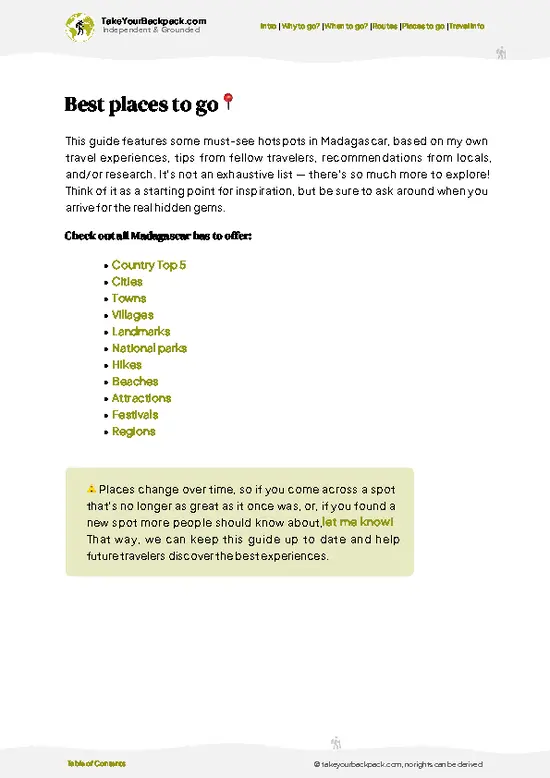
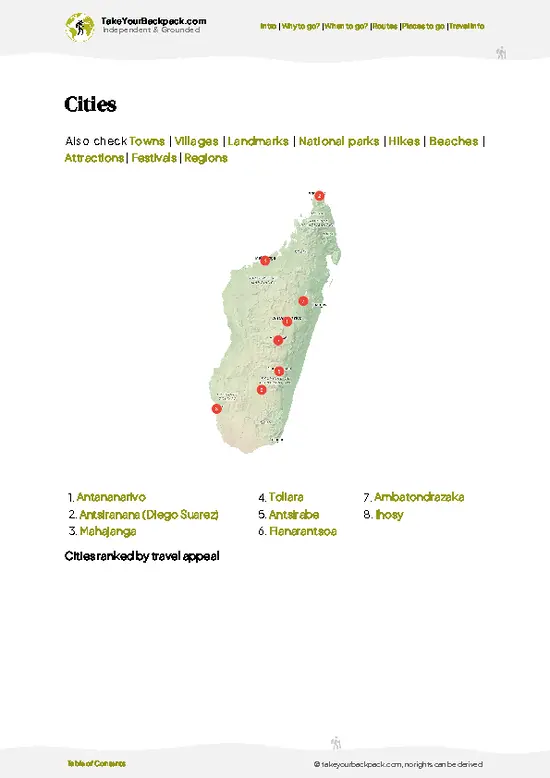
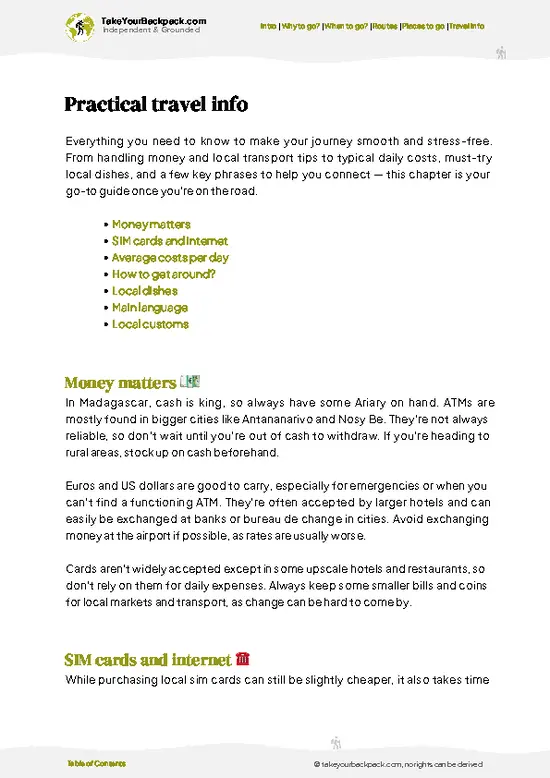
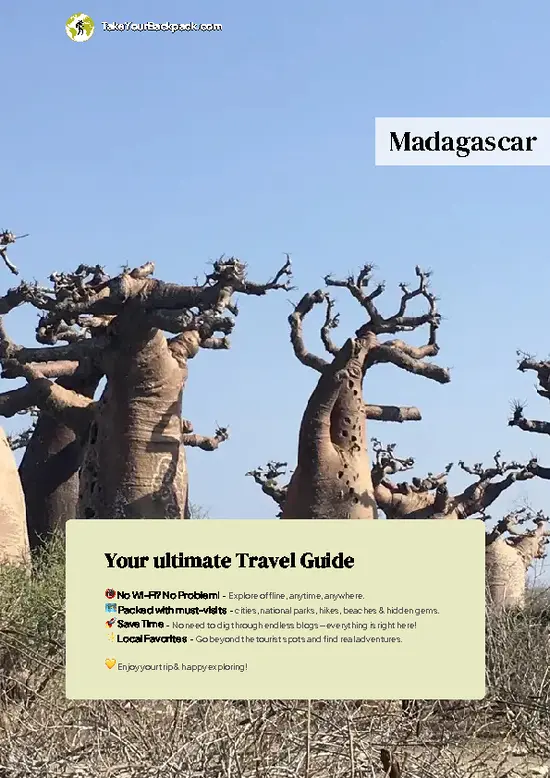
example page 0 from our offline Travel Guide for Madagascar
example page 1 from our offline Travel Guide for Madagascar
example page 2 from our offline Travel Guide for Madagascar
example page 3 from our offline Travel Guide for Madagascar
example page 4 from our offline Travel Guide for Madagascar
example page 5 from our offline Travel Guide for Madagascar
example page 6 from our offline Travel Guide for Madagascar
example page 7 from our offline Travel Guide for Madagascar
The digital guide (418 pages) contains:
110 highlights, ranked by travel appeal
Optimized 7, 14 & 21-day travel routes
Cities, national parks, landmarks, beaches
How to get around
Offline-friendly for travel without Wi-Fi
👉 Click to see all 30+ guide features

📅 Plan smarter in minutes, not weeks
Month by month travel advice
Festivals & national holidays
Budget expectations

🗺️ Go to the right places, skip the overrated ones
Honest pros & cons of destinations
Top hikes, parks & viewpoints
Lesser-known places most travelers miss
Clear “worth it vs skip it” guidance

🛏️ Travel smoothly without rookie mistakes
Best areas to stay
Transport systems explained simply
Common scams & safety advice
SIM cards, money & practical tips

🌍 Understand the country, not just visit it
Culture & traditions
52 Essential phrases & customs
Festivals worth planning around
Traveler-friendly historical context
Insights that make places more meaningful

📱 Built for real travel conditions
Fully downloadable PDF
Works completely offline
Optimized for phone use
Useful in remote areas & buses
Everything in one place
Save weeks of stressful planning
Get instant access to your full guide. 30‑day money-back guarantee.
+ Add another guide for just R$44.25

By proceeding you agree to our terms.
Sent to your inbox immediately after payment • 100% Secure Checkout
Best Backpacking Travel Advisor 2025 tourism awardBest Backpacking
Travel Advisor
2025
What others say about Take Your Backpack Guides:
⭐⭐⭐⭐⭐
Fantastic, amazing amount of information!
⭐⭐⭐⭐⭐
My goodness this is amazing, it's what I've been looking for hats off too you!
⭐⭐⭐⭐⭐
I think this is absolutely BRILLIANT
⭐⭐⭐⭐
Very complete and informative. It's still missing places, but I gotta to commend you
⭐⭐⭐⭐⭐
This is truly amazing, thank you, can't wait to explore it with my kids!
⭐⭐⭐⭐⭐
Awesome resource, thank you!
⭐⭐⭐⭐⭐
This is amazing! Can't wait to explore the ones I haven't seen
⭐⭐⭐⭐
I love this! Well done, great idea.
⭐⭐⭐⭐⭐
Thanks for taking the time to make this gem!
⭐⭐⭐⭐⭐
This might be the best website I've ever seen.
⭐⭐⭐⭐⭐
Congratulations, and thank you so much for your work; it's incredibly valuable.
⭐⭐⭐⭐
In all seriousness I think you did a great job pointing out the important spots
⭐⭐⭐⭐⭐
10/10 very good
⭐⭐⭐⭐⭐
As someone who's only just starting to visit regularly this is awesome, thank you.
⭐⭐⭐⭐
Thank you very much! I'm going to visit my dad, it's going to be very useful!
⭐⭐⭐⭐⭐
This is really cool! We'll be travelling for the first time and this definitely come in handy.
⭐⭐⭐⭐⭐
You are now our minister of culture, congratulations 👨‍💼
⭐⭐⭐⭐⭐
Just wanted to tell you that this is a pearl! Going to follow your recommendations.
⭐⭐⭐⭐⭐
This is so cool. I'll definitely be using the resource for my travels soon.
⭐⭐⭐⭐⭐
This is very impressive! Good work.
⭐⭐⭐⭐⭐
This is an amazing and informative site. Very well done!

🛏️ Where to stay?Best areas to stay in Madagascar

Nosy Mitsio isn’t your typical town with bustling neighborhoods; it’s a cluster of islands where the vibe is raw and the pace slow. For backpackers, the best spots to settle are near the main village piers or small fishing hamlets where locals gather. These areas are naturally safe—everyone knows everyone—and they hum with the quiet energy of daily life: fishermen mending nets, kids chasing crabs along the shore, and the scent of grilled seafood mixing with salty ocean air.

Staying close to the piers means easy access to boats and a chance to meet other travelers swapping stories over a shared … read more 👉
Nosy Mitsio isn’t your typical town with bustling neighborhoods; it’s a cluster of islands where the vibe is raw and the pace slow. For backpackers, the best spots to settle are near the main village piers or small fishing hamlets where locals gather. These areas are naturally safe—everyone knows everyone—and they hum with the quiet energy of daily life: fishermen mending nets, kids chasing crabs along the shore, and the scent of grilled seafood mixing with salty ocean air.

Staying close to the piers means easy access to boats and a chance to meet other travelers swapping stories over a shared meal. Hostels here are few but lean into that communal spirit, offering simple dorms or bungalows where you can connect without the tourist gloss. Compared to more isolated beaches or private lodges, these village hubs keep you grounded in local rhythms and social flow, turning your stay into a genuine exchange rather than a solo retreat. It’s where the island’s soul feels most immediate and welcoming.

🚌 Getting aroundHow to get from A to B

Nosy Mitsio moves at the pace of the ocean tides—unhurried, with a rhythm dictated by the sun and the sea breeze rather than clocks or timetables. The island’s charm isn’t in rigid schedules but in the ebb and flow of daily life: fishermen launching their pirogues at dawn, the scent of salt and grilled seafood mingling with the warm air, and locals greeting each other with a relaxed nod. Here, time is a suggestion, not a rule, and your best bet is to sync your plans with natural cues rather than strict departure times. This means embracing a bit of unpredictability, but also unlocking a deeper connection to the island’s pulse.

Walking: The most reliable way to get around, especially since roads are sandy tracks framed by coconut palms and wildflowers. It’s free, immersive, and perfect for … read more 👉
Nosy Mitsio moves at the pace of the ocean tides—unhurried, with a rhythm dictated by the sun and the sea breeze rather than clocks or timetables. The island’s charm isn’t in rigid schedules but in the ebb and flow of daily life: fishermen launching their pirogues at dawn, the scent of salt and grilled seafood mingling with the warm air, and locals greeting each other with a relaxed nod. Here, time is a suggestion, not a rule, and your best bet is to sync your plans with natural cues rather than strict departure times. This means embracing a bit of unpredictability, but also unlocking a deeper connection to the island’s pulse.

Walking: The most reliable way to get around, especially since roads are sandy tracks framed by coconut palms and wildflowers. It’s free, immersive, and perfect for short hops between villages or beaches. Expect uneven terrain and occasional muddy patches after rain, so sturdy shoes are a must.

Pirogue (Traditional Canoe): The quintessential island ride, these hand-carved boats glide silently through turquoise waters. They don’t run on a fixed schedule—departures depend on tides and fishermen’s availability. Fares are negotiable but generally affordable, around $5-$10 for short trips. It’s slow but scenic, with the wind and salt spray as constant companions.

Motorized Boat Taxi: Faster than a pirogue and more reliable for longer distances, these boats connect Nosy Mitsio to Nosy Be or other nearby islands. They typically leave early morning around 7 AM and return by mid-afternoon. Prices hover around $20-$30 depending on the destination. Expect a bumpy ride and bring a waterproof bag for your gear.

Bicycle Rental: A solid option for exploring the island’s interior at your own pace. Rentals cost about $5-$7 per day. The terrain is mostly flat but sandy, so a sturdy mountain bike is best. This lets you cover more ground than walking while still soaking in the island’s scents and sounds.

Local Minibus (Taxi-Brousse): Limited and irregular on Nosy Mitsio itself, but useful if you’re connecting from Nosy Be’s port. These minibuses run on a loose schedule, usually filling up before departure. They’re cheap, around $2-$4, but expect cramped seating and frequent stops.

Mastering Nosy Mitsio’s flow means blending patience with a sense of adventure. The island’s transport isn’t about speed or precision—it’s about tuning into the natural world and local rhythms, turning every trip into a small journey of discovery.

👛 Costs (as of 3 September 2026)Money, prices, and spending tips

Backpacking in Nosy Mitsio, Madagascar, means embracing a raw, island vibe where every dollar stretches but the experience feels rich. Here’s the real breakdown of what you’ll spend daily.
  • Dorm Accommodation: Expect simple, no-frills bungalows or beach huts. Dorm beds typically run between €10-€15 per night. These places often lack air conditioning but offer ocean breezes and the sound of waves as your nightly soundtrack.
  • Meals: Local eateries serve fresh seafood and Malagasy staples like rice and zebu meat for about €3-€6 per meal. If you’re grabbing snacks or fruit from markets, budget around €1-€2. Cooking your own food is rare here, so plan accordingly.
  • Local Transport: Getting around is mostly by boat or pirogue. Short boat rides between islands or to beaches cost roughly €5-€10. On
read more 👉
Backpacking in Nosy Mitsio, Madagascar, means embracing a raw, island vibe where every dollar stretches but the experience feels rich. Here’s the real breakdown of what you’ll spend daily.
  • Dorm Accommodation: Expect simple, no-frills bungalows or beach huts. Dorm beds typically run between €10-€15 per night. These places often lack air conditioning but offer ocean breezes and the sound of waves as your nightly soundtrack.
  • Meals: Local eateries serve fresh seafood and Malagasy staples like rice and zebu meat for about €3-€6 per meal. If you’re grabbing snacks or fruit from markets, budget around €1-€2. Cooking your own food is rare here, so plan accordingly.
  • Local Transport: Getting around is mostly by boat or pirogue. Short boat rides between islands or to beaches cost roughly €5-€10. On land, walking is common, but if you hire a local pirogue for a day trip, expect to pay €15-€25 depending on distance.
  • Basic Activities/Entry Fees: Nosy Mitsio’s charm is in its natural beauty, so many activities are free or low cost. Snorkeling gear rental runs about €5-€8 per day. Guided hikes or fishing trips can be €10-€20, often negotiable if you’re staying multiple days.
  • Miscellaneous Expenses: Think bottled water (€0.50-€1), occasional internet access (spotty and usually €1-€3 per hour at local spots), and small tips or souvenirs (€1-€5). Electricity can be limited, so charging devices might cost a small fee.

All told, you’re looking at a daily budget around €25-€45. It’s not a luxury escape, but the trade-off is waking up to the smell of salt air and the sight of turquoise waves, which makes every cent feel well spent.


source: madagascar-tourisme.com
⚠️ Prices can change and everyone travels differently, so take this as a rough guide. Hope it helps you plan your adventure!

🚌 Day tripsExploring the surroundings

Nosy Mitsio is a backpacker’s dream base, offering a gateway to Madagascar’s wild beauty. The island’s laid-back vibe and local charm set the stage for unforgettable day trips. Here are some standout options.

Nosy Mitsio Archipelago Exploration
Hop on a pirogue and glide through the turquoise waters to the surrounding islands. The archipelago is a mosaic of white-sand beaches and lush greenery, perfect for snorkeling among vibrant coral reefs. Expect a full day of adventure, with costs around $30 for boat hire and gear rental. The best time to go is during the dry season, from May to October, when the seas are calm. A common mistake? Underestimating the sun—bring plenty of sunscreen and a hat.


Lokobe National Park
A short boat ride takes you to Lokobe, where you’ll trek through dense … read more 👉
Nosy Mitsio is a backpacker’s dream base, offering a gateway to Madagascar’s wild beauty. The island’s laid-back vibe and local charm set the stage for unforgettable day trips. Here are some standout options.

Nosy Mitsio Archipelago Exploration
Hop on a pirogue and glide through the turquoise waters to the surrounding islands. The archipelago is a mosaic of white-sand beaches and lush greenery, perfect for snorkeling among vibrant coral reefs. Expect a full day of adventure, with costs around $30 for boat hire and gear rental. The best time to go is during the dry season, from May to October, when the seas are calm. A common mistake? Underestimating the sun—bring plenty of sunscreen and a hat.


Lokobe National Park
A short boat ride takes you to Lokobe, where you’ll trek through dense rainforest teeming with wildlife. Keep your eyes peeled for lemurs and chameleons as you navigate the trails. The park is a treasure trove of biodiversity, and the entrance fee is about $10. Plan for a half-day trip, ideally in the early morning to catch the wildlife at its most active. Many first-timers miss out on hiring a local guide, which enriches the experience with insights into the flora and fauna.
👉 Explore Lokobe National Park

Nosy Tanikely Marine Reserve
This marine reserve is a snorkeling paradise. Just a 30-minute boat ride from Nosy Mitsio, you’ll find crystal-clear waters and an abundance of marine life. The entrance fee is around $5, making it a budget-friendly option. Aim for a visit during the late morning when the sun illuminates the underwater world. A rookie error is forgetting to bring a waterproof camera—trust me, you’ll want to capture the vibrant fish and coral.


Antsiranana Bay
A longer day trip, but worth every minute. The bay’s dramatic cliffs and sweeping views are breathtaking. It takes about two hours to reach by car, costing around $15 for transport. The best time to visit is during the cooler months, from June to September. Many backpackers overlook the local eateries along the way; stop for a meal to savor authentic Malagasy flavors.
👉 Explore Antsiranana Bay
Want to know what more Madagascar offers?
The Madagascar Travel Guide describes 110 highlights, from cities to national parks, from beaches to hikes

Get the Travel Guide -

🛡️ SafetyScams, Hazards, and Annoyances

Nosy Mitsio is generally safe, but a few practical tips can enhance your experience. The town has a laid-back vibe, but keep your wits about you, especially in crowded markets. Vendors can be persistent, so a polite but firm “no, thank you” works wonders.

If you’re wandering solo, especially at night, stick to well-lit areas and avoid empty streets. The locals are friendly, but it’s wise to blend in rather than stand out.

Watch for common scams like inflated prices for tours or transportation. Always ask for prices upfront and confirm details before committing.

Carry your belongings close, especially in busy spots. A crossbody bag can deter pickpockets while keeping your essentials secure. With these simple strategies, you’ll navigate Nosy Mitsio like a pro, soaking in its charm without a hitch.

FAQTraveler FAQ

You get to Nosy Mitsio by boat from Nosy Be, typically a 2 to 3-hour trip depending on sea conditions. Boats can be arranged through local operators or guesthouses in Nosy Be, with prices around 50 to 100 USD one way. There are no airports on Nosy Mitsio, so sea travel is the only option.
Yes, Nosy Mitsio is worth the trip for its pristine beaches, excellent snorkeling, and remote island experience. It offers a quieter alternative to Nosy Be with fewer tourists and well-preserved natural beauty. The island is ideal for travelers seeking tranquility and marine wildlife.
No, Nosy Mitsio is not suitable for a day trip due to the 2 to 3-hour boat journey each way. Most visitors stay at least one or two nights to fully enjoy the island and avoid rushed travel. Day trips would be exhausting and limit your time to explore.
⚠️ Things can change over time, so always validate details locally before you go.

Other destinations worth considering

Nosy Mitsio isn’t the only highlight in Madagascar. Explore all what Madagascar has to offer.
Country photo of Madagascar

We 💚 feedbackFinal thoughts on visiting Nosy Mitsio

Nosy Mitsio is a slice of paradise where the air is thick with the scent of salt and the sound of waves crashing against rugged cliffs. You’ll find vibrant coral reefs just a swim away, perfect for snorkeling. But be ready for the logistics; getting here isn’t a breeze. The boat rides can be bumpy and long, testing your patience. Still, the reward of untouched beauty makes every wave worth it.

✈️ When did I visit Madagascar?
Madagascar I went backpacking in October 2019. With a friend I rented a 4WD and drove around the southern part of Madagascar.

✍️ Help improve this page!
The information on this page is based on my own backpacking experience in Madagascar, supplemented with up-to-date research and feedback from other travelers. Travel details can change, so if you notice anything outdated or incomplete, feel free to let me know.


🙋‍♂️ Give feedback

👋 Meet the founderWho’s Behind Take Your Backpack?

Johan, backpacker and founder of TakeYourBackpackHi, I’m Johan (Netherlands 🇳🇱), the creator of TakeYourBackpack. Over the past decade, I’ve backpacked through 80+ countries across six continents, gaining extensive experience with independent travel, long-term trips, and overland routes.

This site is built on a combination of firsthand travel experience and carefully curated insights from other backpackers. Many guides are based on places I’ve personally visited, while others bring together tips, observations, and practical advice shared by trusted travelers I’ve met along the way.

The goal is to provide realistic, experience-driven guidance — not generic itineraries — so you can explore destinations with better context, clearer expectations, and more confidence.

Get full Madagascar guide •
Instant download • 110 highlights • Full Offline guide