

×

Maldives🇲🇻 | national parksBaa Atoll Biosphere Reserve
UNESCO site, coral reefs, manta congregation | things to do and best time to go

Explore Addu AtollExplore Hanifaru Bay

Backpacking in Baa Atoll Biosphere Reserve
🏆 Top picknational park ranked #1
By Johan Kruseman 🇳🇱 | last update: 5 April, 2026

The first real decision in Baa Atoll Biosphere Reserve is simple but brutal: do you pay resort prices to be inside the action, or base yourself on a local island and accept more transfers and less comfort. That choice decides whether you’re snorkeling Hanifaru Bay at dawn or watching it on Instagram from another atoll. Baa sits in the central–northwest Maldives, a UNESCO-listed marine reserve rather than a classic land-based national park, and for backpackers it’s both impressive and inconvenient. The scenery is textbook lagoon blues, the “hiking” is just sandy village walks, and the real show is underwater: manta rays, reef sharks, dense coral gardens. Access is via pricey seaplane or domestic flight plus boat, and there’s no camping; budget stays mean simple guesthouses on local islands with strict alcohol rules and limited nightlife. Compared with easier, cheaper atolls like Kaafu or Ari, Baa is wilder, more regulated, more seasonal—and far harder to do on a tight budget without careful planning.

Discover everything you want to know in the 📖 Maldives Travel Guide.
Loading the map 🌍
CLICK TO FILTER
city
town
village
unique site
national park
hike
beach
attraction
festival
region
SHOW COUNTRY‘S BESTSHOW ALL

✨ Why go?
Ranked #1 national park in Maldives
What makes this national park worth exploring

Backpackers flock to Baa Atoll Biosphere Reserve for its blend of independent exploration and affordable options. The park is a haven for those who want to escape the typical resort scene. You can find budget camping and hostels nearby, making it easier to stretch your funds while still enjoying the stunning surroundings.

The trail variety here is impressive. Whether you’re into snorkeling, diving, or simply wandering along the coast, there’s something for everyone. The underwater life is vibrant, and you can explore at your own pace. This is a place where self-guided travelers thrive. You don’t need to rely on tours to experience the beauty; the paths are well-marked, and the locals are friendly and helpful.

However, be mindful of the hidden costs. Some areas may charge entrance fees, and … read more 👉
Backpackers flock to Baa Atoll Biosphere Reserve for its blend of independent exploration and affordable options. The park is a haven for those who want to escape the typical resort scene. You can find budget camping and hostels nearby, making it easier to stretch your funds while still enjoying the stunning surroundings.

The trail variety here is impressive. Whether you’re into snorkeling, diving, or simply wandering along the coast, there’s something for everyone. The underwater life is vibrant, and you can explore at your own pace. This is a place where self-guided travelers thrive. You don’t need to rely on tours to experience the beauty; the paths are well-marked, and the locals are friendly and helpful.

However, be mindful of the hidden costs. Some areas may charge entrance fees, and equipment rentals can add up. Bring your own gear if you can. This way, you preserve your budget for the moments that truly matter—like a sunset on a secluded beach or a spontaneous dive with manta rays. Keep your eyes open, and you’ll find the real treasures of Baa Atoll.
Get the complete Travel Guide for Maldives
Everything organized for offline planning — routes, highlights, costs & tips

See what’s inside 👉

Get the Travel Guide -
  • Hanifaru Bay (manta and whale-shark arena) — The crown jewel: when plankton blooms hit this shallow bay, dozens of reef mantas (and sometimes whale sharks) gather to feed in a tight, dramatic swirl — one of the best large-marine-animal spectacles on earth.
  • Vibrant coral reefs and thilas (submerged pinnacles) — Steep dropoffs, coral gardens and thilas packed with reef fish, turtles and sharks make for world-class snorkeling and diving; coral diversity here is unusually high for the Indian Ocean.
  • Shallow lagoons and powdery sandbanks — Turquoise, waist-deep water ideal for lazy snorkeling, picnics or being the only person on a tiny sandbank — perfect for light, cheap days of exploring without fancy gear.
  • Seagrass meadows and dugong habitat — Important feeding grounds for seagrass specialists;
  • read more 👉
  • Hanifaru Bay (manta and whale-shark arena) — The crown jewel: when plankton blooms hit this shallow bay, dozens of reef mantas (and sometimes whale sharks) gather to feed in a tight, dramatic swirl — one of the best large-marine-animal spectacles on earth.
  • Vibrant coral reefs and thilas (submerged pinnacles) — Steep dropoffs, coral gardens and thilas packed with reef fish, turtles and sharks make for world-class snorkeling and diving; coral diversity here is unusually high for the Indian Ocean.
  • Shallow lagoons and powdery sandbanks — Turquoise, waist-deep water ideal for lazy snorkeling, picnics or being the only person on a tiny sandbank — perfect for light, cheap days of exploring without fancy gear.
  • Seagrass meadows and dugong habitat — Important feeding grounds for seagrass specialists; dugong sightings are rare but possible, and the meadows themselves support a teeming micro-community of life.
  • Sea-turtle nesting beaches — Some islands in the atoll are used by green and hawksbill turtles; guided evening or early-morning walks during nesting season let you watch tracks, nests and sometimes hatchlings with minimal disturbance.
  • Seabird colonies and tiny uninhabited islets — Thin strips of sand and brush host terns, noddies and migratory seabirds — great for quiet birdwatching and seeing how these fragile island ecosystems function.
  • Community island walks and conservation projects — Short, informative walks on local islands introduce traditional Maldivian life and ongoing conservation efforts (coral nurseries, reef monitoring and protected-area rules) — useful context that enriches every swim or dive.
Spotted a mistake or missing something? Contact me.

🌤️ When to go?Best time to explore Baa Atoll Biosphere Reserve


  • Topic: Weather – The Maldives has a tropical climate, but Baa Atoll faces a distinct wet season from May to November. Expect heavy rains and rough seas, which can limit snorkeling and diving visibility. The dry season, December to April, offers clearer skies and calmer waters, ideal for underwater exploration.

  • Topic: Temperature – Temperatures hover between 27°C and 32°C (81°F to 90°F) year-round. Humidity spikes during the wet season, making it feel hotter and stickier. The dry season brings more comfortable warmth with steady sea breezes.

  • Topic: Daylight Hours – Daylight remains consistent, roughly 11 to 12 hours daily, with sunrise around 6:30 AM and sunset near 6:30 PM. This steady rhythm means you can plan activities without worrying about drastic changes in daylight.

  • Topic:
  • read more 👉

  • Topic: Weather – The Maldives has a tropical climate, but Baa Atoll faces a distinct wet season from May to November. Expect heavy rains and rough seas, which can limit snorkeling and diving visibility. The dry season, December to April, offers clearer skies and calmer waters, ideal for underwater exploration.

  • Topic: Temperature – Temperatures hover between 27°C and 32°C (81°F to 90°F) year-round. Humidity spikes during the wet season, making it feel hotter and stickier. The dry season brings more comfortable warmth with steady sea breezes.

  • Topic: Daylight Hours – Daylight remains consistent, roughly 11 to 12 hours daily, with sunrise around 6:30 AM and sunset near 6:30 PM. This steady rhythm means you can plan activities without worrying about drastic changes in daylight.

  • Topic: Crowds – The dry season draws more tourists, especially December through March. Prices rise, and popular dive spots get busy. The wet season sees fewer visitors, offering a quieter experience but with the trade-off of unpredictable weather.

  • Topic: Seasonal Activities – Whale shark and manta ray sightings peak from May to November, coinciding with the wet season. If these encounters are your goal, brace for occasional rain but reward yourself with rare marine life views.

  • Topic: Price Fluctuations – Accommodation and flights spike during the dry season’s peak months. Booking ahead can save money, but traveling in the shoulder months (April or November) often balances cost and weather.


Pro-tip: Aim for April or November to dodge crowds and high prices while catching decent weather and marine life action—your best bet for a balanced backpacking trip.


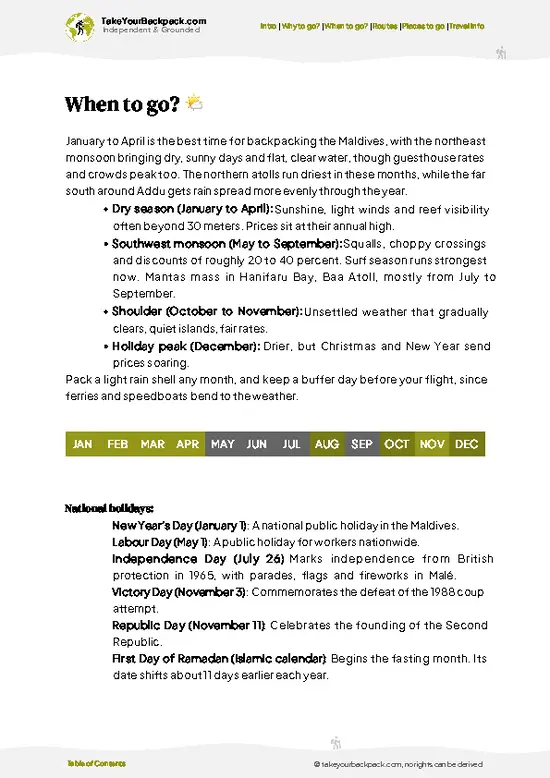
source: climatestotravel.comJANJanuary: excellent for travelingFEBFebruary: excellent for travelingMARMarch: excellent for travelingAPRApril: highly recommended for travelingMAYMay: good for travelingJUNJune: fair for travelingJULJuly: fair for travelingAUGAugust: fair for travelingSEPSeptember: fair for travelingOCTOctober: good for travelingNOVNovember: highly recommended for travelingDECDecember: excellent for traveling
when-to-go

✈️ The ultimate backpacker shortcutMaldives Travel Guide

Skip weeks of research and hit the road with confidence. Get 185 pages of proven routes, transport advice, and real safety insights—built for your phone and 100% offline-ready.
example page 0 from our offline Travel Guide for Maldivesexample page 1 from our offline Travel Guide for Maldivesexample page 2 from our offline Travel Guide for Maldivesexample page 3 from our offline Travel Guide for Maldivesexample page 4 from our offline Travel Guide for Maldives
🎒 Your 185-page offline travel companion
2, 3 & 5-day routes paced for real travel
56 ranked highlights with honest skip-it advice
Logistics solved: Best areas to stay & transport
Safety blueprints: Common local scams to avoid
No Wi-Fi? No problem: Phone-optimized offline PDF
👉 See all 30+ guide features

📅 Plan smarter in minutes, not weeks
Realistic travel times & pacing
Best months per region
Festivals & national holidays
Budget expectations

🗺️ Go to the right places, skip the overrated ones
56 ranked highlights across the country
Hidden gems beyond the tourist trail
Honest pros & cons of destinations
Top hikes, parks & viewpoints
Lesser-known places most travelers miss
Clear “worth it vs skip it” guidance

🛏️ Travel smoothly without rookie mistakes
Best areas to stay
Transport systems explained simply
Local transport tradeoffs
Common scams & safety advice
SIM cards, money & practical tips
What to expect before arrival

🌍 Understand the country, not just visit it
Culture & traditions
52 Essential phrases & customs
Festivals worth planning around
Traveler-friendly historical context
Insights that make places more meaningful

📱 Built for real travel conditions
Fully downloadable PDF
Works completely offline
Optimized for phone use
Useful in remote areas & buses
Everything in one place
Save weeks of stressful planning
Get instant access to the full guide directly. 30-day money-back guarantee.


Sent to your inbox immediately after payment • 100% Secure Checkout
Best Backpacking Travel Advisor 2025 tourism awardBest Backpacking
Travel Advisor
2025
What others say about Take Your Backpack Guides:
⭐⭐⭐⭐⭐
Fantastic, amazing amount of information!
⭐⭐⭐⭐⭐
My goodness this is amazing, it's what I've been looking for hats off too you!
⭐⭐⭐⭐⭐
I think this is absolutely BRILLIANT
⭐⭐⭐⭐
Very complete and informative. It's still missing places, but I gotta to commend you
⭐⭐⭐⭐⭐
This is truly amazing, thank you, can't wait to explore it with my kids!
⭐⭐⭐⭐⭐
Awesome resource, thank you!
⭐⭐⭐⭐⭐
This is amazing! Can't wait to explore the ones I haven't seen
⭐⭐⭐⭐
I love this! Well done, great idea.
⭐⭐⭐⭐⭐
Thanks for taking the time to make this gem!
⭐⭐⭐⭐⭐
This might be the best website I've ever seen.
⭐⭐⭐⭐⭐
Congratulations, and thank you so much for your work; it's incredibly valuable.
⭐⭐⭐⭐
In all seriousness I think you did a great job pointing out the important spots
⭐⭐⭐⭐⭐
10/10 very good
⭐⭐⭐⭐⭐
As someone who's only just starting to visit regularly this is awesome, thank you.
⭐⭐⭐⭐
Thank you very much! I'm going to visit my dad, it's going to be very useful!
⭐⭐⭐⭐⭐
This is really cool! We'll be travelling for the first time and this definitely come in handy.
⭐⭐⭐⭐⭐
You are now our minister of culture, congratulations 👨‍💼
⭐⭐⭐⭐⭐
Just wanted to tell you that this is a pearl! Going to follow your recommendations.
⭐⭐⭐⭐⭐
This is so cool. I'll definitely be using the resource for my travels soon.
⭐⭐⭐⭐⭐
This is very impressive! Good work.
⭐⭐⭐⭐⭐
This is an amazing and informative site. Very well done!

🛏️ Where to stay?Best areas to stay in Maldives

Baa Atoll Biosphere Reserve is a unique slice of the Maldives, but finding the right place to stay can be tricky. There are no traditional hotels inside the reserve itself, but several nearby islands offer solid options for backpackers.

Start with Maalhos. This local island has guesthouses that provide a genuine Maldivian experience. You’ll find affordable accommodations, and the community vibe is welcoming. Plus, it’s a great base for snorkeling trips to Hanifaru Bay, where you can see manta rays and whale sharks.

Next, consider Dharavandhoo. It’s a bit more developed but still retains a laid-back … read more 👉
Baa Atoll Biosphere Reserve is a unique slice of the Maldives, but finding the right place to stay can be tricky. There are no traditional hotels inside the reserve itself, but several nearby islands offer solid options for backpackers.

Start with Maalhos. This local island has guesthouses that provide a genuine Maldivian experience. You’ll find affordable accommodations, and the community vibe is welcoming. Plus, it’s a great base for snorkeling trips to Hanifaru Bay, where you can see manta rays and whale sharks.

Next, consider Dharavandhoo. It’s a bit more developed but still retains a laid-back atmosphere. Guesthouses here often include breakfast and can help arrange excursions. The island is close to some of the best dive sites in the area, so you won’t miss out on the underwater magic.

Don’t overlook the costs associated with transfers. Speedboat rides from Malé can add up, so factor that into your budget. Also, be aware that some guesthouses may charge extra for activities or meals, so clarify what’s included before booking.

By choosing wisely, you can enjoy the beauty of Baa Atoll without breaking the bank. Focus on the experiences that matter, and you’ll leave with memories that last a lifetime.

👛 Costs (as of 4 March 2025)Travel costs and budget guide for Baa Atoll Biosphere Reserve

Visiting Baa Atoll Biosphere Reserve in the Maldives can be a rewarding experience, but it’s essential to be aware of the costs involved to avoid surprises.

Entry fees for the national park are generally around €3 to €5 per person. This fee helps maintain the park and its ecosystems.

Accommodation is where costs can vary significantly. Expect to pay anywhere from €50 for budget guesthouses to over €500 for luxury resorts. Many resorts offer packages that include meals and activities, which can be worth considering to simplify budgeting.

Transportation is another factor. Speedboat transfers from Malé to Baa Atoll can range from €30 to €100 per person, depending on the service and timing. Seaplane transfers are faster but pricier, often costing between €200 and €400 per person.

Food prices … read more 👉
Visiting Baa Atoll Biosphere Reserve in the Maldives can be a rewarding experience, but it’s essential to be aware of the costs involved to avoid surprises.

Entry fees for the national park are generally around €3 to €5 per person. This fee helps maintain the park and its ecosystems.

Accommodation is where costs can vary significantly. Expect to pay anywhere from €50 for budget guesthouses to over €500 for luxury resorts. Many resorts offer packages that include meals and activities, which can be worth considering to simplify budgeting.

Transportation is another factor. Speedboat transfers from Malé to Baa Atoll can range from €30 to €100 per person, depending on the service and timing. Seaplane transfers are faster but pricier, often costing between €200 and €400 per person.

Food prices can also fluctuate. Local eateries might charge €5 to €15 for a meal, while dining at resorts can easily push that to €50 or more.

Activities like snorkeling or diving tours typically range from €30 to €150, depending on the duration and inclusions.

Plan for these costs to ensure your budget aligns with your experience. Being informed helps you focus on the beauty of Baa Atoll without financial stress.


source: visitmaldives.com
⚠️ Prices can change and everyone travels differently, so take this as a rough guide. Hope it helps you plan your adventure!

🥾 TrailsHiking Baa Atoll Biosphere Reserve national park: highlights and difficulty

The Baa Atoll Biosphere Reserve isn’t your typical hiking destination, but it offers some unique opportunities for those willing to explore its stunning scenery. Picture this: white sandy beaches, crystal-clear waters, and vibrant marine life just below the surface. While the terrain isn’t mountainous, the experience of wandering through the lush vegetation and spotting local wildlife is pretty special. Expect to see colorful birds and maybe even some playful dolphins if you’re lucky.

There aren’t many designated trails like you’d find in larger national parks, but you can explore areas like … read more 👉
The Baa Atoll Biosphere Reserve isn’t your typical hiking destination, but it offers some unique opportunities for those willing to explore its stunning scenery. Picture this: white sandy beaches, crystal-clear waters, and vibrant marine life just below the surface. While the terrain isn’t mountainous, the experience of wandering through the lush vegetation and spotting local wildlife is pretty special. Expect to see colorful birds and maybe even some playful dolphins if you’re lucky.

There aren’t many designated trails like you’d find in larger national parks, but you can explore areas like the Kuda Huraa Trail. Here are the details:
  • Length: 3 km
  • Estimated Duration: 1 hour
  • Difficulty Level: Easy
  • Key Features: Scenic coastal views, birdwatching opportunities, and local flora
  • Terrain: Flat, sandy paths with some shaded areas

Getting to the Baa Atoll is relatively straightforward. You can catch a domestic flight from Malé to Dharavandhoo, followed by a short boat ride. As for crowds, it can get busy during peak season, especially around the resorts, but the hiking spots tend to be quieter. Entrance to the reserve is usually free, but check if any specific areas or activities require a fee. Just remember to pack some water and sunscreen—it’s easy to get caught up in the beauty and forget the basics!
⚠️ Hiking info can sometimes be outdated or inaccurate. Before you hit the trail, check the latest conditions with locals. If you do spot anything that's off, I'd love to hear from you, so I can update it for fellow travelers.

🛡️ SafetyStaying Safe: What Travelers Should Know

Baa Atoll Biosphere Reserve offers a generally straightforward hiking experience, but a few practical considerations can enhance your adventure. The weather can shift quickly, so pack a lightweight rain jacket and check forecasts before heading out. The trails are mostly flat, but some sections may be sandy or uneven, requiring sturdy footwear for better footing.

Wildlife encounters are rare but can happen. If you spot a sea turtle or manta ray while snorkeling, keep your distance and avoid touching them. Respect their space to ensure both your safety and theirs.

Timing is key. Early mornings are cooler and less crowded, allowing you to enjoy the trails without the heat or the hustle. Be mindful of your pace; it’s easy to get caught up in the scenery, but staying hydrated and taking breaks … read more 👉
Baa Atoll Biosphere Reserve offers a generally straightforward hiking experience, but a few practical considerations can enhance your adventure. The weather can shift quickly, so pack a lightweight rain jacket and check forecasts before heading out. The trails are mostly flat, but some sections may be sandy or uneven, requiring sturdy footwear for better footing.

Wildlife encounters are rare but can happen. If you spot a sea turtle or manta ray while snorkeling, keep your distance and avoid touching them. Respect their space to ensure both your safety and theirs.

Timing is key. Early mornings are cooler and less crowded, allowing you to enjoy the trails without the heat or the hustle. Be mindful of your pace; it’s easy to get caught up in the scenery, but staying hydrated and taking breaks will keep your energy up for those moments that truly matter. Overall, with a bit of preparation, you can focus on the beauty of Baa Atoll without unnecessary stress.

Other Maldivian national parks near Baa Atoll Biosphere Reserve

Explore more nearby:


👉 Discover all national parks

Or checkout all Maldives has to offer (think cities, towns, villages, national parks, hikes, beaches, festivals)
Country photo of Maldives

I 💚 feedbackKey takeaways before you go

Baa Atoll is a slice of paradise, but don’t let the beauty blind you. The vibe is laid-back, perfect for unwinding, but plan your visits to the local islands wisely. The best surprise? The vibrant marine life—snorkeling here is a must. Just be aware of the seasonal price hikes for accommodations; booking in advance can save you a chunk of change. Keep your energy for the moments that matter, like watching the sunset paint the sky while sipping a coconut.

✍️ Help improve this page!
The information on this page is based on in-depth research, insights shared by experienced travelers, and feedback from the local travel community in Maldives. While every effort is made to keep the information accurate and current, conditions can change — so if you spot anything incorrect or outdated, please get in touch.


🙋‍♂️ Give feedback

👋 Meet the authorWho’s Behind Take Your Backpack?

Johan, backpacker and founder of TakeYourBackpackHi, I’m Johan (Netherlands 🇳🇱), the creator of TakeYourBackpack. Over the past decade, I’ve backpacked through 80+ countries across six continents, gaining extensive experience with independent travel, long-term trips, and overland routes.

This site is built on a combination of firsthand travel experience and carefully curated insights from other backpackers. Many guides are based on places I’ve personally visited, while others bring together tips, observations, and practical advice shared by trusted travelers I’ve met along the way.

The goal is to provide realistic, experience-driven guidance — not generic itineraries — so you can explore destinations with better context, clearer expectations, and more confidence.

Get Full Country Guide |
Instant download • 56 highlights • Full Offline guide