
×

Maldives🇲🇻 | national parksHanifaru Bayplankton blooms, feeding mantas, whale shark hotspot | things to do and best time to go

Explore Baa Atoll Biosphere ReserveExplore Fuvahmulah Nature Park

Backpacking in Hanifaru Bay
🏆 Top picknational park ranked #2
By Johan Kruseman 🇳🇱 | Updated June 3, 2026

Your mask scrapes the surface as you duck under another manta, its white belly filling your vision while plankton-rich water brushes past your lips, warm and slightly gritty, and the only sound is your own breath hammering in your ears. This is Hanifaru Bay, a small inlet inside Baa Atoll Biosphere Reserve in the central-north Maldives, and it’s more marine stadium than classic national park. For backpackers, it’s high-impact but narrow: no hiking trails, no dramatic cliffs, just a shallow bowl of turquoise where mantas and, in season, whale sharks funnel in. Access is by boat only, via nearby resort or local-guesthouse islands, and trips are tightly timed, expensive, and often crowded with snorkelers. You can’t camp, but budget rooms on local islands beat resort prices. Compared with other Maldivian protected areas, Hanifaru is less about scenery variety and more about one intense, short wildlife hit that either justifies the cost for you or doesn’t.

Discover everything you want to know in the 📖 Maldives Travel Guide.


Get your Maldives guide
56 ranked highlights, routes & tips, works offline (223 pages)
Loading the map 🌍
CLICK TO FILTER
cities
towns
villages
landmarks
national parks
hikes
beaches
attractions
festivals
regions
SHOW COUNTRY’S BESTSHOW ALL

✨ Why go?
Ranked #2 national park in Maldives
What makes it a must-see national park

Backpackers flock to Hanifaru Bay in the Maldives for a mix of independent exploration and budget-friendly options. This isn’t just about luxury resorts; it’s about diving into a world where you can camp or find affordable hostels nearby. The park is a haven for those who want to experience the ocean without breaking the bank.

The variety of trails here caters to different interests. Whether you’re keen on snorkeling with manta rays or simply soaking in the scenery, you’ll find paths that suit your pace. This flexibility is a big draw for self-guided travelers. You can set your own itinerary, avoiding the constraints of group tours that often come with hidden costs.

However, be aware of the seasonal restrictions. The best time to visit is during the southwest monsoon, when marine life is … read more 👉
Backpackers flock to Hanifaru Bay in the Maldives for a mix of independent exploration and budget-friendly options. This isn’t just about luxury resorts; it’s about diving into a world where you can camp or find affordable hostels nearby. The park is a haven for those who want to experience the ocean without breaking the bank.

The variety of trails here caters to different interests. Whether you’re keen on snorkeling with manta rays or simply soaking in the scenery, you’ll find paths that suit your pace. This flexibility is a big draw for self-guided travelers. You can set your own itinerary, avoiding the constraints of group tours that often come with hidden costs.

However, be aware of the seasonal restrictions. The best time to visit is during the southwest monsoon, when marine life is most active. Plan accordingly to maximize your experience.

By choosing Hanifaru Bay, you’re not just visiting a national park; you’re embracing a lifestyle that values authenticity and freedom. Keep your eyes open for the unexpected, and you’ll find that the real treasures lie beyond the typical tourist traps.
Want to include Hanifaru Bay in your Maldives route?
Create a personalized Maldives itinerary that includes Hanifaru Bay and the places that fit your trip — based on your travel style, budget, and available time. Get your route in seconds.

Generate my trip

💡 HighlightsMust-see experiences and standout moments

  • Manta ray aggregations — The main draw: dozens of giant reef mantas converge to feed and socialize in shallow water. Seeing them glide inches under the surface in tight, rolling groups is unforgettable and why Hanifaru is world-famous.
  • Plankton bloom feeding frenzies — Seasonal plankton blooms (mostly May-November) fuel the spectacle. The concentrated food creates dramatic surface feeding behavior—mouths open, cephalic lobes flared—and lots of action to watch from a mask.
  • Shallow turquoise lagoon — The bay’s shallow, calm water makes visibility and snorkel-watching easy even for non-experts. That flat, glassy sea with manta silhouettes below is one of those postcard-natural scenes you actually get to swim in.
  • Coral gardens and reef life — Around the bay’s edges and nearby reef bommies
read more 👉
  • Manta ray aggregations — The main draw: dozens of giant reef mantas converge to feed and socialize in shallow water. Seeing them glide inches under the surface in tight, rolling groups is unforgettable and why Hanifaru is world-famous.
  • Plankton bloom feeding frenzies — Seasonal plankton blooms (mostly May-November) fuel the spectacle. The concentrated food creates dramatic surface feeding behavior—mouths open, cephalic lobes flared—and lots of action to watch from a mask.
  • Shallow turquoise lagoon — The bay’s shallow, calm water makes visibility and snorkel-watching easy even for non-experts. That flat, glassy sea with manta silhouettes below is one of those postcard-natural scenes you actually get to swim in.
  • Coral gardens and reef life — Around the bay’s edges and nearby reef bommies you’ll find healthy corals, colorful reef fish, and cleaning stations where smaller fish service the mantas. It’s compact but highly biodiverse for such a small protected area.
  • Occasional whale sharks — Not every day, but when whale sharks show up they add a jaw-dropping scale contrast to the mantas. These gentle giants pass through to feed on the same plankton-rich waters—if you’re lucky, you’ll spot one cruising slowly beneath the surface.
  • Baa Atoll UNESCO Biosphere setting — Hanifaru sits inside the Baa Atoll Biosphere Reserve, which means the area benefits from extra conservation attention and scientific monitoring. That status helps explain the abundant wildlife and strict visitor management.
  • Scenic sandbanks and island viewpoints — Nearby sandbanks and low islands offer classic Maldivian views: white sand, shallow lagoons, and perfect photo angles of the bay. Great for a quick rest between swims and for capturing the scale of the protected waters.
Spotted a mistake or missing something? Contact us.

🌤️ When to go?Seasonal considerations and timing


  • Topic: Weather – The dry season from December to April offers calm seas and clear skies, ideal for snorkeling and diving. The wet season, May to November, brings heavy rains and rough waters, which can limit visibility and safety in Hanifaru Bay.

  • Topic: Temperature – Temperatures hover between 27°C and 32°C (81°F to 90°F) year-round. The heat is consistent, but humidity spikes during the wet season, making it feel hotter and less comfortable for extended outdoor activities.

  • Topic: Daylight Hours – Daylight remains steady at about 11 to 12 hours daily throughout the year, so early starts or late afternoons are your best bets for avoiding peak sun and crowds.

  • Topic: Crowds – Peak tourist season coincides with the dry months, especially December to March. Expect more boats and visitors,
read more 👉

  • Topic: Weather – The dry season from December to April offers calm seas and clear skies, ideal for snorkeling and diving. The wet season, May to November, brings heavy rains and rough waters, which can limit visibility and safety in Hanifaru Bay.

  • Topic: Temperature – Temperatures hover between 27°C and 32°C (81°F to 90°F) year-round. The heat is consistent, but humidity spikes during the wet season, making it feel hotter and less comfortable for extended outdoor activities.

  • Topic: Daylight Hours – Daylight remains steady at about 11 to 12 hours daily throughout the year, so early starts or late afternoons are your best bets for avoiding peak sun and crowds.

  • Topic: Crowds – Peak tourist season coincides with the dry months, especially December to March. Expect more boats and visitors, which can dilute the experience and drive up prices.

  • Topic: Seasonal Activities – Hanifaru Bay is famous for manta ray gatherings from May to November during the monsoon, but rough seas can restrict access. Dry season offers safer, more reliable snorkeling conditions but fewer manta sightings.

  • Topic: Price Fluctuations – Accommodation and transport costs spike in the dry season due to demand. The wet season offers lower prices but comes with the trade-off of unpredictable weather and limited marine activity.


Pro-tip: Aim for the shoulder months—April or November—when crowds thin, prices ease, and you still catch decent weather and marine life action without the full monsoon risk.


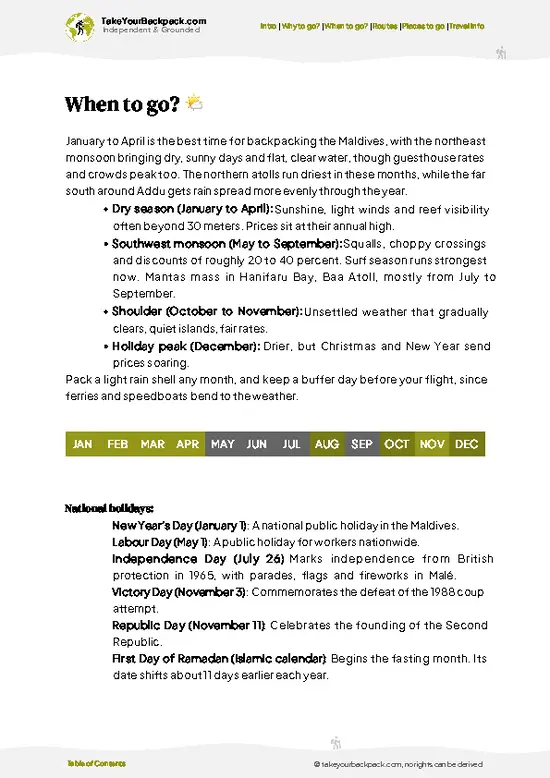
source: climatestotravel.comJANJanuary: highly recommended for travelingFEBFebruary: highly recommended for travelingMARMarch: highly recommended for travelingAPRApril: highly recommended for travelingMAYMay: fair for travelingJUNJune: fair for travelingJULJuly: fair for travelingAUGAugust: fair for travelingSEPSeptember: fair for travelingOCTOctober: fair for travelingNOVNovember: good for travelingDECDecember: highly recommended for traveling
when-to-go

✈️ The backpacker research shortcutMaldives Travel Guide

An offline-friendly backpacking guide with optimized travel routes, ranked highlights, transport advice, and the best areas to stay.
example page 0 from our offline Travel Guide for Maldives
example page 1 from our offline Travel Guide for Maldives
example page 2 from our offline Travel Guide for Maldives
example page 3 from our offline Travel Guide for Maldives
example page 4 from our offline Travel Guide for Maldives
example page 5 from our offline Travel Guide for Maldives
example page 6 from our offline Travel Guide for Maldives
example page 7 from our offline Travel Guide for Maldives
The digital guide (223 pages) contains:
56 highlights, ranked by travel appeal
Optimized 2, 3 & 5-day travel routes
Cities, national parks, landmarks, beaches
How to get around
Offline-friendly for travel without Wi-Fi
👉 Click to see all 30+ guide features

📅 Plan smarter in minutes, not weeks
Month by month travel advice
Festivals & national holidays
Budget expectations

🗺️ Go to the right places, skip the overrated ones
Honest pros & cons of destinations
Top hikes, parks & viewpoints
Lesser-known places most travelers miss
Clear “worth it vs skip it” guidance

🛏️ Travel smoothly without rookie mistakes
Best areas to stay
Transport systems explained simply
Common scams & safety advice
SIM cards, money & practical tips

🌍 Understand the country, not just visit it
Culture & traditions
52 Essential phrases & customs
Festivals worth planning around
Traveler-friendly historical context
Insights that make places more meaningful

📱 Built for real travel conditions
Fully downloadable PDF
Works completely offline
Optimized for phone use
Useful in remote areas & buses
Everything in one place
Save weeks of stressful planning
Get instant access to your full guide. 30‑day money-back guarantee.


By proceeding you agree to our terms.
Sent to your inbox immediately after payment • 100% Secure Checkout
Best Backpacking Travel Advisor 2025 tourism awardBest Backpacking
Travel Advisor
2025
What others say about Take Your Backpack Guides:
⭐⭐⭐⭐⭐
Fantastic, amazing amount of information!
⭐⭐⭐⭐⭐
My goodness this is amazing, it's what I've been looking for hats off too you!
⭐⭐⭐⭐⭐
I think this is absolutely BRILLIANT
⭐⭐⭐⭐
Very complete and informative. It's still missing places, but I gotta to commend you
⭐⭐⭐⭐⭐
This is truly amazing, thank you, can't wait to explore it with my kids!
⭐⭐⭐⭐⭐
Awesome resource, thank you!
⭐⭐⭐⭐⭐
This is amazing! Can't wait to explore the ones I haven't seen
⭐⭐⭐⭐
I love this! Well done, great idea.
⭐⭐⭐⭐⭐
Thanks for taking the time to make this gem!
⭐⭐⭐⭐⭐
This might be the best website I've ever seen.
⭐⭐⭐⭐⭐
Congratulations, and thank you so much for your work; it's incredibly valuable.
⭐⭐⭐⭐
In all seriousness I think you did a great job pointing out the important spots
⭐⭐⭐⭐⭐
10/10 very good
⭐⭐⭐⭐⭐
As someone who's only just starting to visit regularly this is awesome, thank you.
⭐⭐⭐⭐
Thank you very much! I'm going to visit my dad, it's going to be very useful!
⭐⭐⭐⭐⭐
This is really cool! We'll be travelling for the first time and this definitely come in handy.
⭐⭐⭐⭐⭐
You are now our minister of culture, congratulations 👨‍💼
⭐⭐⭐⭐⭐
Just wanted to tell you that this is a pearl! Going to follow your recommendations.
⭐⭐⭐⭐⭐
This is so cool. I'll definitely be using the resource for my travels soon.
⭐⭐⭐⭐⭐
This is very impressive! Good work.
⭐⭐⭐⭐⭐
This is an amazing and informative site. Very well done!

🛏️ Where to stay?Where staying makes the most sense

Hanifaru Bay, known for its incredible manta ray and whale shark sightings, doesn’t have accommodations directly within the national park. Instead, you’ll find your best options in nearby islands like Dharavandhoo and Maalhos.

Dharavandhoo is the closest, just a short boat ride away. It offers a handful of guesthouses that cater to budget-conscious travelers. Places like the Dharavandhoo Stay provide a cozy atmosphere and local charm, perfect for unwinding after a day of snorkeling.

Maalhos, a bit smaller, is another solid choice. The Maalhos Stay is a friendly spot with a laid-back vibe, … read more 👉
Hanifaru Bay, known for its incredible manta ray and whale shark sightings, doesn’t have accommodations directly within the national park. Instead, you’ll find your best options in nearby islands like Dharavandhoo and Maalhos.

Dharavandhoo is the closest, just a short boat ride away. It offers a handful of guesthouses that cater to budget-conscious travelers. Places like the Dharavandhoo Stay provide a cozy atmosphere and local charm, perfect for unwinding after a day of snorkeling.

Maalhos, a bit smaller, is another solid choice. The Maalhos Stay is a friendly spot with a laid-back vibe, ideal for meeting fellow backpackers. Both islands have local eateries where you can savor Maldivian cuisine without breaking the bank.

Expect to pay a bit more for convenience if you opt for resorts, but they often come with added perks like guided tours. Just be aware of the hidden costs—some places charge extra for excursions or meals.

Staying on these islands not only saves you money but also immerses you in local culture. You’ll preserve your energy and budget for the real treasures of Hanifaru Bay: the breathtaking marine life.

👛 Costs (as of 19 March 2025)Money, prices, and spending tips

Visiting Hanifaru Bay in the Maldives can be a magical experience, but it’s essential to be aware of the costs involved to avoid any surprises.

First, the entrance fee to the Hanifaru Bay Marine Protected Area is around $3 to $5 per person. This fee helps preserve the area, so it’s worth it.

If you’re planning to snorkel or dive, expect to pay between $50 and $150 for a guided tour. Prices vary based on the duration and the equipment provided. Some operators include snacks or lunch, which can add value.

Transportation is another factor. A speedboat transfer from nearby islands can cost between $30 and $100, depending on the distance and the service provider. Always confirm the price upfront to avoid last-minute hikes.

Accommodation is another piece of the puzzle. Guesthouses on nearby … read more 👉
Visiting Hanifaru Bay in the Maldives can be a magical experience, but it’s essential to be aware of the costs involved to avoid any surprises.

First, the entrance fee to the Hanifaru Bay Marine Protected Area is around $3 to $5 per person. This fee helps preserve the area, so it’s worth it.

If you’re planning to snorkel or dive, expect to pay between $50 and $150 for a guided tour. Prices vary based on the duration and the equipment provided. Some operators include snacks or lunch, which can add value.

Transportation is another factor. A speedboat transfer from nearby islands can cost between $30 and $100, depending on the distance and the service provider. Always confirm the price upfront to avoid last-minute hikes.

Accommodation is another piece of the puzzle. Guesthouses on nearby islands range from $50 to $150 per night. Resorts can be significantly more expensive, often starting at $200 and going up to $1,000 or more for luxury options.

Food costs can also add up. Expect to pay around $5 to $15 for a meal at a local restaurant. Resort dining will be pricier, often starting at $20 per meal.

Keep these costs in mind as you plan your visit. Being aware of the potential expenses will help you budget wisely and focus on enjoying the stunning marine life and vibrant ecosystem that Hanifaru Bay offers.


source: visitmaldives.com
⚠️ Prices can change and everyone travels differently, so take this as a rough guide. Hope it helps you plan your adventure!

🥾 TrailsTrail guide for Hanifaru Bay national park

The hiking opportunities in Hanifaru Bay are a bit limited since it’s more renowned for its marine life than for trekking. However, the scenery is absolutely stunning, with turquoise waters and lush greenery surrounding the area. The terrain is generally flat, making it accessible for most hikers, but the real magic happens underwater. If you’re keen on exploring, you might find some paths through the mangroves and along the coast that offer glimpses of the unique wildlife.

While there are no well-defined trails like you’d find in larger national parks, you can still wander around. If you’re … read more 👉
The hiking opportunities in Hanifaru Bay are a bit limited since it’s more renowned for its marine life than for trekking. However, the scenery is absolutely stunning, with turquoise waters and lush greenery surrounding the area. The terrain is generally flat, making it accessible for most hikers, but the real magic happens underwater. If you’re keen on exploring, you might find some paths through the mangroves and along the coast that offer glimpses of the unique wildlife.

While there are no well-defined trails like you’d find in larger national parks, you can still wander around. If you’re lucky, you might spot manta rays and whale sharks in the waters nearby, especially during the monsoon season. Just be mindful of the tides and the heat; it can get pretty intense out there.

For practicalities, getting to Hanifaru Bay typically involves a speedboat ride from nearby islands like Dharavandhoo. Public transport can be a bit tricky, but local ferries do operate, though schedules can be a little hit or miss. Crowds can vary; it’s popular with snorkelers and divers, especially during peak season, so be prepared for some company. As for entrance fees, there’s usually a small fee for accessing the marine protected area, but it’s worth it for the chance to see some incredible wildlife. Just make sure to bring plenty of water and sunscreen!
⚠️ Hiking info can sometimes be outdated or inaccurate. Before you hit the trail, check the latest conditions with locals. If you do spot anything that's off, I'd love to hear from you, so I can update it for fellow travelers.

🛡️ SafetyStaying Safe: What Travelers Should Know

Hanifaru Bay is generally a straightforward destination for backpackers, but a few practical considerations can enhance your experience. The weather can shift quickly, so be prepared for sudden rain or sun. Lightweight, breathable clothing and a good rain jacket are essential.

The terrain is mostly flat, but some areas may have uneven footing, especially near the water. Keep your eyes on the ground to avoid tripping. Navigation is simple, but a map or GPS can help if you wander off the main paths.

Wildlife encounters are a highlight, particularly the manta rays. Maintain a respectful distance; don’t touch or feed them. This keeps both you and the animals safe.

First-timers often underestimate the importance of hydration. Bring enough water, especially if you plan to spend hours exploring. … read more 👉
Hanifaru Bay is generally a straightforward destination for backpackers, but a few practical considerations can enhance your experience. The weather can shift quickly, so be prepared for sudden rain or sun. Lightweight, breathable clothing and a good rain jacket are essential.

The terrain is mostly flat, but some areas may have uneven footing, especially near the water. Keep your eyes on the ground to avoid tripping. Navigation is simple, but a map or GPS can help if you wander off the main paths.

Wildlife encounters are a highlight, particularly the manta rays. Maintain a respectful distance; don’t touch or feed them. This keeps both you and the animals safe.

First-timers often underestimate the importance of hydration. Bring enough water, especially if you plan to spend hours exploring. Lastly, practice good trail etiquette: stay on marked paths and pack out what you bring in. This preserves the park’s beauty for everyone.

Other Maldivian national parks near Hanifaru Bay

Explore more nearby:


💡 Not sure where to go next?
Create a personalized itinerary for Maldives including Hanifaru Bay and the places that fit your trip.

Generate my itinerary

👉 Discover all national parks

Or checkout all Maldives has to offer (think cities, towns, villages, national parks, hikes, beaches, festivals)
Country photo of Maldives

We 💚 feedbackIs it worth it?

Hanifaru Bay is a magical spot, but don’t let the postcard-perfect images fool you. The real charm lies in the rhythm of the tides and the dance of the manta rays. Expect a crowd during peak season; it can feel like a bustling aquarium. Book your trips early to avoid inflated prices and ensure you get a spot. The best surprise? Watching those graceful giants glide through the water. Just remember, patience is key—nature doesn’t rush, and neither should you.

✍️ Help improve this page!
The information on this page is based on in-depth research, insights shared by experienced travelers, and feedback from the local travel community in Maldives. While every effort is made to keep the information accurate and current, conditions can change — so if you spot anything incorrect or outdated, please get in touch.


🙋‍♂️ Give feedback

👋 Meet the founderWho’s Behind Take Your Backpack?

Johan, backpacker and founder of TakeYourBackpackHi, I’m Johan (Netherlands 🇳🇱), the creator of TakeYourBackpack. Over the past decade, I’ve backpacked through 80+ countries across six continents, gaining extensive experience with independent travel, long-term trips, and overland routes.

This site is built on a combination of firsthand travel experience and carefully curated insights from other backpackers. Many guides are based on places I’ve personally visited, while others bring together tips, observations, and practical advice shared by trusted travelers I’ve met along the way.

The goal is to provide realistic, experience-driven guidance — not generic itineraries — so you can explore destinations with better context, clearer expectations, and more confidence.

Get full Maldives guide •
Instant download • 56 highlights • Full Offline guide