×

Tanzania🇹🇿 | national parksGombe Stream National Park
steep valleys, chimpanzee research, forest streams, lakeshore | things to do and best time to go

Explore Mahale Mountains National ParkExplore Kitulo National Park

Backpacking in Gombe Stream
🌟 Highlightnational park ranked #9
By Johan Kruseman 🇳🇱 | last update: 6 April, 2026

The first real fork in the road at Gombe Stream National Park is whether you’re willing to pay for the boat ride in—there’s no road access, and that boat is non-negotiable. Gombe sits on the far western edge of Tanzania, hugging Lake Tanganyika, closer to the Congo border than any major Tanzanian city. For backpackers, Gombe is a paradox: the hiking is raw and steep, the forest is dense, and the chimpanzee tracking is as intimate as it gets, but you’ll pay for the privilege—entrance fees are high, and the boat transfer isn’t cheap. Accommodation is basic and limited, and you won’t find crowds, but you also won’t find the safari infrastructure of Serengeti or the easy access of Arusha’s parks. Gombe is for those who want wild, not wide-open savannahs, and who don’t mind earning every moment.

Discover everything you want to know in the 📖 Tanzania Travel Guide.
Loading the map 🌍
CLICK TO FILTER
city
town
unique site
national park
hike
beach
attraction
festival
SHOW COUNTRY‘S BESTSHOW ALL

✨ Why go?
Ranked #9 national park in Tanzania
The unique appeal for travelers

Gombe Stream National Park attracts backpackers for several compelling reasons. First, independent exploration is a major draw. The park’s trails allow you to wander at your own pace, soaking in the rich biodiversity without the constraints of a guided tour.

Budget-conscious travelers appreciate the camping options and nearby hostels, which keep costs low while still providing access to the park’s stunning landscapes.

The variety of trails caters to different skill levels, from leisurely walks to more challenging hikes, ensuring everyone finds their stride.

While some may opt for guided tours, Gombe is well-suited for self-guided travelers who want to immerse themselves in nature without the extra expense. Just be prepared for the occasional steep climb and remember to pack plenty of … read more 👉
Gombe Stream National Park attracts backpackers for several compelling reasons. First, independent exploration is a major draw. The park’s trails allow you to wander at your own pace, soaking in the rich biodiversity without the constraints of a guided tour.

Budget-conscious travelers appreciate the camping options and nearby hostels, which keep costs low while still providing access to the park’s stunning landscapes.

The variety of trails caters to different skill levels, from leisurely walks to more challenging hikes, ensuring everyone finds their stride.

While some may opt for guided tours, Gombe is well-suited for self-guided travelers who want to immerse themselves in nature without the extra expense. Just be prepared for the occasional steep climb and remember to pack plenty of water. This balance of freedom and affordability makes Gombe a standout choice for backpackers.
Get the complete Travel Guide for Tanzania
Everything organized for offline planning — routes, highlights, costs & tips

See what’s inside 👉

Get the Travel Guide -
  • Chimpanzee trekking — The headline act: habituated chimp communities you can watch for up to an hour. Close, natural behaviour (tool use, grooming, play) and strict, small-group rules make it an unforgettable, intimate wildlife encounter.
  • Gombe Stream Research Centre / Jane Goodall legacy — The place where modern chimp research was born. The Centre and nearby field sites give real context to what you see in the forest: decades of observations, conservation projects, and a living scientific history.
  • Kasekela and Mitumba chimp communities — Two distinct chimp clans with different personalities and histories. Guides who know their ranges take you to where each group tends to feed or rest, so you get a sense of chimp culture and social dynamics.
  • Primate diversity beyond chimps — Red colobus
  • read more 👉
  • Chimpanzee trekking — The headline act: habituated chimp communities you can watch for up to an hour. Close, natural behaviour (tool use, grooming, play) and strict, small-group rules make it an unforgettable, intimate wildlife encounter.
  • Gombe Stream Research Centre / Jane Goodall legacy — The place where modern chimp research was born. The Centre and nearby field sites give real context to what you see in the forest: decades of observations, conservation projects, and a living scientific history.
  • Kasekela and Mitumba chimp communities — Two distinct chimp clans with different personalities and histories. Guides who know their ranges take you to where each group tends to feed or rest, so you get a sense of chimp culture and social dynamics.
  • Primate diversity beyond chimps — Red colobus monkeys, olive baboons, blue monkeys and more. Gombe is one of the best places in Africa to see a high concentration of forest primates, which keeps every hike entertaining and noisy.
  • Steep forest trails and ridge viewpoints — The park is tiny but vertically dramatic: expect steep, sweaty climbs through primary forest and sudden ridgeline viewpoints with sweeping views over Lake Tanganyika. Short hikes can feel remote and wild.
  • Lake Tanganyika shoreline — Crystal-clear water against a jungle backdrop. Boat cruises, shoreline walks, and the chance to cool off by the lake make Gombe feel very different from the classic savannah parks.
  • Birdlife and forest streams — A compact hotspot for forest and lakeside birds, plus little streams and waterfalls tucked into the gullies. Good optics and patience will reward you with colorful forest species and the relaxing soundtrack of running water.
Spotted a mistake or missing something? Contact me.

🌤️ When to go?Weather, crowds, and seasonal trade-offs


  • Weather: The dry season from June to October is your best bet. Trails are less muddy, and chimpanzees are easier to spot as they gather around water sources. Avoid the heavy rains of March to May, which can turn paths into slippery messes and limit wildlife visibility.

  • Temperature: Expect daytime highs around 25-28°C (77-82°F) in the dry season, cooling to 15-18°C (59-64°F) at night. The wet season is warmer but more humid, which can sap your energy on long hikes.

  • Daylight Hours: Tanzania sits near the equator, so daylight is fairly consistent year-round—about 12 hours daily. Early starts are essential regardless of season to catch chimpanzees at their most active.

  • Crowds: Peak months (July and August) bring more tourists, which can mean busier trails and higher prices. Visiting just
  • read more 👉

  • Weather: The dry season from June to October is your best bet. Trails are less muddy, and chimpanzees are easier to spot as they gather around water sources. Avoid the heavy rains of March to May, which can turn paths into slippery messes and limit wildlife visibility.

  • Temperature: Expect daytime highs around 25-28°C (77-82°F) in the dry season, cooling to 15-18°C (59-64°F) at night. The wet season is warmer but more humid, which can sap your energy on long hikes.

  • Daylight Hours: Tanzania sits near the equator, so daylight is fairly consistent year-round—about 12 hours daily. Early starts are essential regardless of season to catch chimpanzees at their most active.

  • Crowds: Peak months (July and August) bring more tourists, which can mean busier trails and higher prices. Visiting just before or after this window offers a quieter experience without sacrificing wildlife sightings.

  • Seasonal Activities: Dry months favor chimp tracking and birdwatching. The wet season, while tougher for trekking, brings lush greenery and a surge in butterfly activity if you’re into that sort of detail.

  • Price Fluctuations: Expect higher park fees and accommodation costs during peak dry season. Booking in shoulder months can save you a chunk without compromising the experience.


Pro-tip: Aim for late June or early October to dodge crowds and rain, keeping your energy and budget focused on the chimp encounters that make Gombe special.


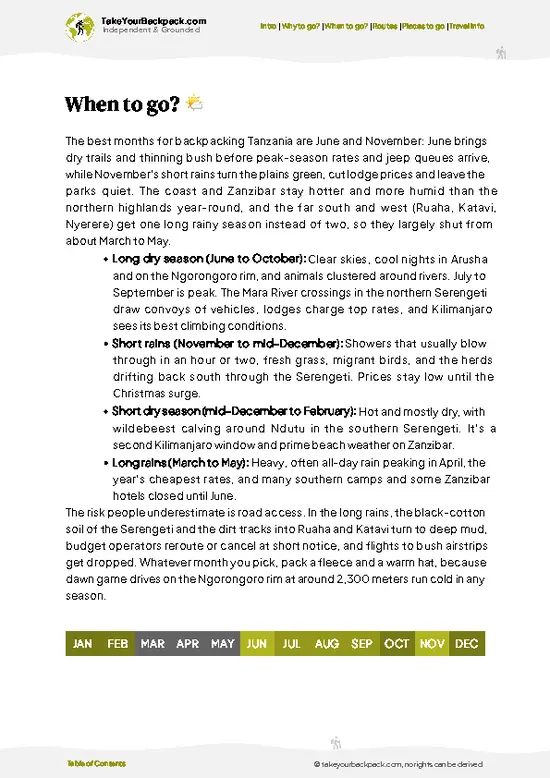
source: climatestotravel.comJANJanuary: fair for travelingFEBFebruary: fair for travelingMARMarch: below average for travelingAPRApril: below average for travelingMAYMay: fair for travelingJUNJune: highly recommended for travelingJULJuly: excellent for travelingAUGAugust: excellent for travelingSEPSeptember: highly recommended for travelingOCTOctober: highly recommended for travelingNOVNovember: good for travelingDECDecember: good for traveling
when-to-go

✈️ The ultimate backpacker shortcutTanzania Travel Guide

Skip weeks of research and hit the road with confidence. Get 320 pages of proven routes, transport advice, and real safety insights—built for your phone and 100% offline-ready.
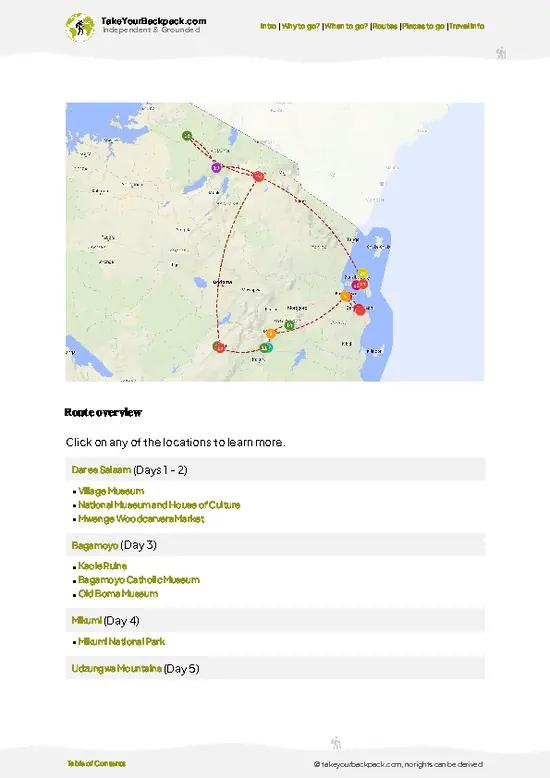
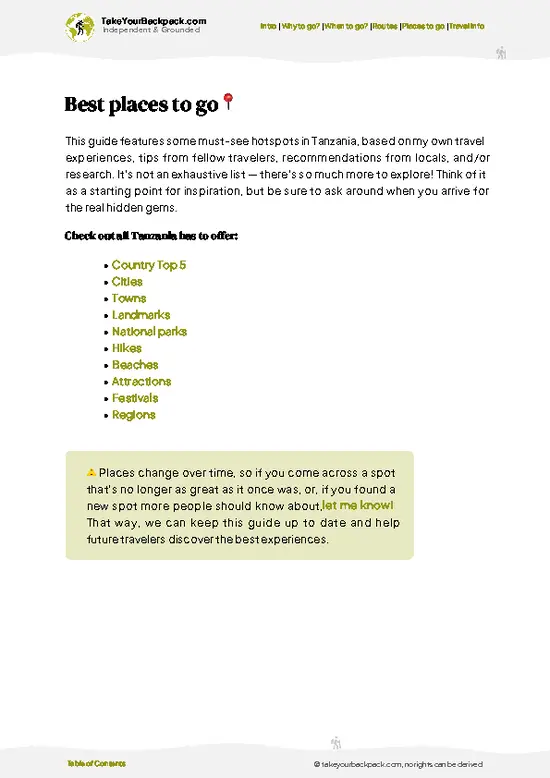
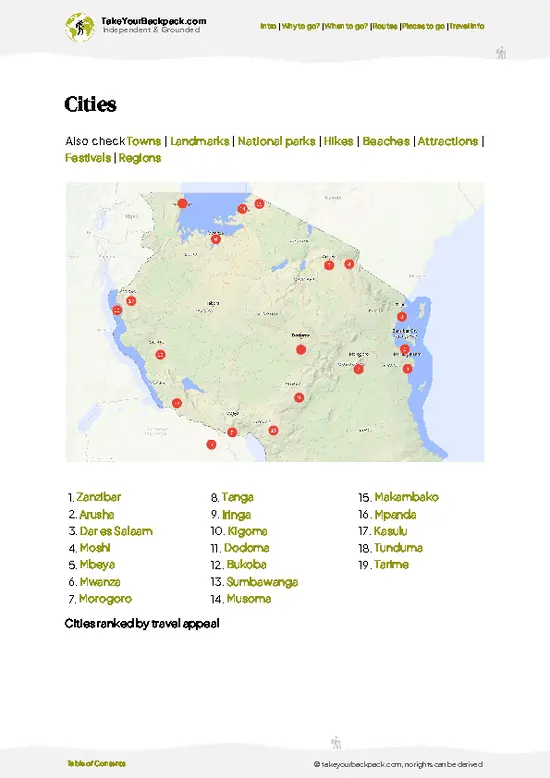
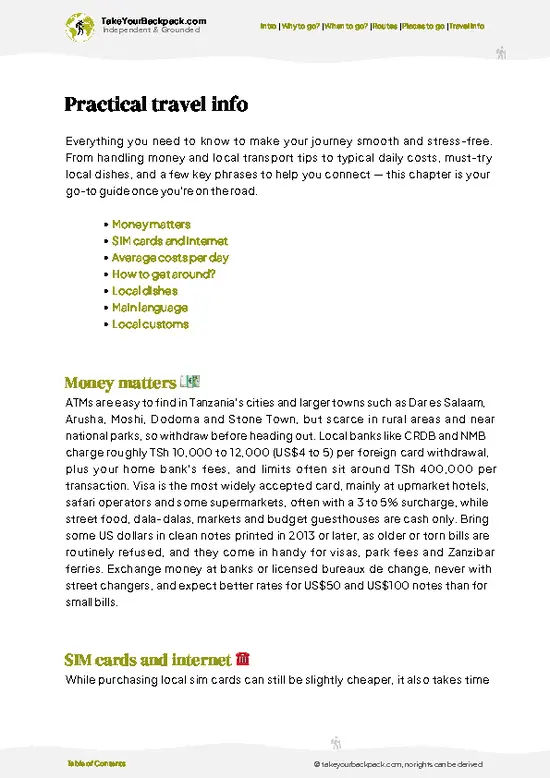
example page 0 from our offline Travel Guide for Tanzaniaexample page 1 from our offline Travel Guide for Tanzaniaexample page 2 from our offline Travel Guide for Tanzaniaexample page 3 from our offline Travel Guide for Tanzaniaexample page 4 from our offline Travel Guide for Tanzania
🎒 Your 320-page offline travel companion
7, 14 & 21-day routes paced for real travel
100 ranked highlights with honest skip-it advice
Logistics solved: Best areas to stay & transport
Safety blueprints: Common local scams to avoid
No Wi-Fi? No problem: Phone-optimized offline PDF
👉 See all 30+ guide features

📅 Plan smarter in minutes, not weeks
Realistic travel times & pacing
Best months per region
Festivals & national holidays
Budget expectations

🗺️ Go to the right places, skip the overrated ones
100 ranked highlights across the country
Hidden gems beyond the tourist trail
Honest pros & cons of destinations
Top hikes, parks & viewpoints
Lesser-known places most travelers miss
Clear “worth it vs skip it” guidance

🛏️ Travel smoothly without rookie mistakes
Best areas to stay
Transport systems explained simply
Local transport tradeoffs
Common scams & safety advice
SIM cards, money & practical tips
What to expect before arrival

🌍 Understand the country, not just visit it
Culture & traditions
52 Essential phrases & customs
Festivals worth planning around
Traveler-friendly historical context
Insights that make places more meaningful

📱 Built for real travel conditions
Fully downloadable PDF
Works completely offline
Optimized for phone use
Useful in remote areas & buses
Everything in one place
Save weeks of stressful planning
Get instant access to the full guide directly. 30-day money-back guarantee.


Sent to your inbox immediately after payment • 100% Secure Checkout
Best Backpacking Travel Advisor 2025 tourism awardBest Backpacking
Travel Advisor
2025
What others say about Take Your Backpack Guides:
⭐⭐⭐⭐⭐
Fantastic, amazing amount of information!
⭐⭐⭐⭐⭐
My goodness this is amazing, it's what I've been looking for hats off too you!
⭐⭐⭐⭐⭐
I think this is absolutely BRILLIANT
⭐⭐⭐⭐
Very complete and informative. It's still missing places, but I gotta to commend you
⭐⭐⭐⭐⭐
This is truly amazing, thank you, can't wait to explore it with my kids!
⭐⭐⭐⭐⭐
Awesome resource, thank you!
⭐⭐⭐⭐⭐
This is amazing! Can't wait to explore the ones I haven't seen
⭐⭐⭐⭐
I love this! Well done, great idea.
⭐⭐⭐⭐⭐
Thanks for taking the time to make this gem!
⭐⭐⭐⭐⭐
This might be the best website I've ever seen.
⭐⭐⭐⭐⭐
Congratulations, and thank you so much for your work; it's incredibly valuable.
⭐⭐⭐⭐
In all seriousness I think you did a great job pointing out the important spots
⭐⭐⭐⭐⭐
10/10 very good
⭐⭐⭐⭐⭐
As someone who's only just starting to visit regularly this is awesome, thank you.
⭐⭐⭐⭐
Thank you very much! I'm going to visit my dad, it's going to be very useful!
⭐⭐⭐⭐⭐
This is really cool! We'll be travelling for the first time and this definitely come in handy.
⭐⭐⭐⭐⭐
You are now our minister of culture, congratulations 👨‍💼
⭐⭐⭐⭐⭐
Just wanted to tell you that this is a pearl! Going to follow your recommendations.
⭐⭐⭐⭐⭐
This is so cool. I'll definitely be using the resource for my travels soon.
⭐⭐⭐⭐⭐
This is very impressive! Good work.
⭐⭐⭐⭐⭐
This is an amazing and informative site. Very well done!

🛏️ Where to stay?How to pick the right area

Gombe Stream National Park is remote, so your accommodation options are limited but worthwhile. Inside the park, there’s the Gombe Forest Lodge. It’s basic but comfortable, offering a unique chance to wake up surrounded by nature. Expect simple amenities and a communal vibe.

If you prefer more choices, head to Kigoma, the nearest town about an hour away by boat. Kigoma has several guesthouses and lodges, like the Ujiji Hotel, which provides a decent balance of comfort and affordability. Staying in Kigoma gives you access to local markets and the lake, adding to your experience.

Be prepared … read more 👉
Gombe Stream National Park is remote, so your accommodation options are limited but worthwhile. Inside the park, there’s the Gombe Forest Lodge. It’s basic but comfortable, offering a unique chance to wake up surrounded by nature. Expect simple amenities and a communal vibe.

If you prefer more choices, head to Kigoma, the nearest town about an hour away by boat. Kigoma has several guesthouses and lodges, like the Ujiji Hotel, which provides a decent balance of comfort and affordability. Staying in Kigoma gives you access to local markets and the lake, adding to your experience.

Be prepared for limited electricity and Wi-Fi in both locations. Bring cash, as ATMs are scarce. Plan your meals ahead, especially if you’re staying in the park. These small preparations will keep your energy up for the unforgettable chimpanzee trekking and stunning views that await you.

👛 Costs (as of 31 December 2024)What things cost and how to budget

Gombe Stream National Park is a unique destination, but it comes with specific costs that can catch you off guard if you’re not prepared.

First, the entrance fee is around $30 per person per day. This fee is essential for park maintenance and conservation efforts. If you plan to hike or participate in guided tours, those costs can add up. Guided chimpanzee tracking tours typically range from $50 to $100 per person, depending on the length and the guide’s expertise.

Accommodation options vary widely. Basic lodges near the park can cost around $50 to $100 per night. If you’re looking for something more upscale, expect to pay between $150 and $300. Booking in advance is crucial, especially during peak seasons, to avoid inflated last-minute prices.

Transportation is another factor. If you’re … read more 👉
Gombe Stream National Park is a unique destination, but it comes with specific costs that can catch you off guard if you’re not prepared.

First, the entrance fee is around $30 per person per day. This fee is essential for park maintenance and conservation efforts. If you plan to hike or participate in guided tours, those costs can add up. Guided chimpanzee tracking tours typically range from $50 to $100 per person, depending on the length and the guide’s expertise.

Accommodation options vary widely. Basic lodges near the park can cost around $50 to $100 per night. If you’re looking for something more upscale, expect to pay between $150 and $300. Booking in advance is crucial, especially during peak seasons, to avoid inflated last-minute prices.

Transportation is another factor. If you’re flying into Kigoma, a domestic flight can cost between $200 and $400, depending on your departure city. From Kigoma to the park, you’ll need to arrange for a boat transfer, which can cost around $30 to $50 per person.

Food is generally affordable, with meals at local eateries costing between $5 and $15. However, if you’re staying at a lodge, dining prices can be higher, so check menus beforehand.

Always factor in additional costs for tips, park regulations, and any unforeseen expenses. Being aware of these details will help you manage your budget effectively and focus on the experiences that truly matter.


source: tanzaniaparks.go.tz
⚠️ Prices can change and everyone travels differently, so take this as a rough guide. Hope it helps you plan your adventure!

🥾 TrailsBest hikes in Gombe Stream national park

Gombe Stream National Park is a gem tucked away along the shores of Lake Tanganyika, famous for its stunning scenery and rich wildlife, especially the resident chimpanzees. The terrain is a mix of steep hills and lush valleys, making for a rewarding yet challenging hike. You’ll wind through dense forests, often hearing the rustle of leaves as monkeys swing overhead. The views of the lake from certain points are breathtaking, especially at sunrise or sunset.

There are a few designated trails to explore, and here’s one to consider:
  • Trail Name: ChimPS Trail
  • Length: 4 km
  • Estimated Duration: 2-3 hours
  • Difficulty
  • read more 👉
Gombe Stream National Park is a gem tucked away along the shores of Lake Tanganyika, famous for its stunning scenery and rich wildlife, especially the resident chimpanzees. The terrain is a mix of steep hills and lush valleys, making for a rewarding yet challenging hike. You’ll wind through dense forests, often hearing the rustle of leaves as monkeys swing overhead. The views of the lake from certain points are breathtaking, especially at sunrise or sunset.

There are a few designated trails to explore, and here’s one to consider:
  • Trail Name: ChimPS Trail
  • Length: 4 km
  • Estimated Duration: 2-3 hours
  • Difficulty Level: Moderate
  • Key Features: Chimpanzee sightings, stunning views of Lake Tanganyika, diverse flora
  • Terrain: Steep and rugged, with some muddy sections after rain

Reaching Gombe can be a bit of an adventure itself. The most common way is to take a boat from Kigoma, which is a scenic ride but can be a bit bumpy. Public transport can get you to Kigoma easily, but the boat ride might require some patience. The park isn’t overly crowded, so you can enjoy the tranquility, but it’s a good idea to book your visit in advance, especially during peak seasons. As for the entrance fee, it’s relatively reasonable, but make sure to check the latest rates before you go.
⚠️ Hiking info can sometimes be outdated or inaccurate. Before you hit the trail, check the latest conditions with locals. If you do spot anything that's off, I'd love to hear from you, so I can update it for fellow travelers.

🛡️ SafetyStaying Safe: What Travelers Should Know

Gombe Stream National Park offers a manageable hiking experience, but a few realities can catch you off guard. Weather can shift quickly; pack a lightweight rain jacket and be ready for humidity. The trails are steep and can be slippery, especially after rain, so sturdy footwear is essential. Navigation is straightforward, but keep an eye on trail markers to avoid wandering off track.

Wildlife encounters are a highlight, particularly with chimpanzees. Maintain a respectful distance and avoid sudden movements. Most importantly, stay calm and quiet to enjoy these moments. Prepare for the physical demands by pacing yourself; this isn’t a sprint. With the right gear and mindset, you’ll preserve your energy for the experiences that truly matter.

Other Tanzanian national parks near Gombe Stream

Explore more nearby:


👉 Discover all national parks

Or checkout all Tanzania has to offer (think cities, towns, villages, national parks, hikes, beaches, festivals)
Country photo of Tanzania

I 💚 feedbackWhat to keep in mind

Gombe Stream National Park is a raw slice of nature, where the air hums with life. Expect to sweat; the trails can be steep and slippery. The best surprise? Watching chimpanzees interact in their natural habitat—it’s a privilege. Just remember, the park’s remote location means limited amenities, so pack wisely and keep your expectations grounded. Save your energy for the moments that matter.

✍️ Help improve this page!
The information on this page is based on in-depth research, insights shared by experienced travelers, and feedback from the local travel community in Tanzania. While every effort is made to keep the information accurate and current, conditions can change — so if you spot anything incorrect or outdated, please get in touch.


🙋‍♂️ Give feedback

👋 Meet the authorWho’s Behind Take Your Backpack?

Johan, backpacker and founder of TakeYourBackpackHi, I’m Johan (Netherlands 🇳🇱), the creator of TakeYourBackpack. Over the past decade, I’ve backpacked through 80+ countries across six continents, gaining extensive experience with independent travel, long-term trips, and overland routes.

This site is built on a combination of firsthand travel experience and carefully curated insights from other backpackers. Many guides are based on places I’ve personally visited, while others bring together tips, observations, and practical advice shared by trusted travelers I’ve met along the way.

The goal is to provide realistic, experience-driven guidance — not generic itineraries — so you can explore destinations with better context, clearer expectations, and more confidence.

Get Full Country Guide |
Instant download • 100 highlights • Full Offline guide