×

Tanzania🇹🇿 | best national parksDiscover the 10 Best national parks Across Tanzania

Tanzania packs more than 20 national parks into one country, and they refuse to feel alike. The northern circuit around Arusha is the famous one: big herds, paved roads, lodges everywhere and park fees that climb past US$60 a day. The southern and western parks flip the script, with long dirt tracks, thin crowds, and a wild, unpolished feel that rewards anyone willing to sweat for access. Then come the mountain and lake parks, where you walk, climb and paddle instead of sitting in a vehicle. Most parks lie far from public transport, so independent travel and backpacking here means smart planning: join group safaris, share vehicles, or pick walkable parks near towns. Decide what you want most (easy wildlife, solitude, or a physical challenge), then choose the region that delivers it. Pack your sense of adventure and go.

By Johan Kruseman 🇳🇱 | Updated October 23, 2026
Explore the best hikes in Tanzania

Why go?Why Travelers Love These Spots

Tanzania hands you an unusual advantage: roughly a quarter of its land sits under some form of wildlife protection, and the country has guarded that land seriously since independence. Its geography does the rest. The Great Rift Valley splits the country, volcanic highlands rise in the north, the Indian Ocean laps the east, and vast miombo woodland and floodplains fill the south and west. That mix creates habitats you can cross in a single trip, from acacia plains to alpine moorland to lakeshore forest.

The cultural backdrop matters too. Tanzania built its conservation model around Swahili-speaking, politically stable communities, and tourism is a major earner, so guiding standards are high and rangers know their trade. Infrastructure is uneven by design. The north has airstrips, tarmac and … read more 👉
Tanzania hands you an unusual advantage: roughly a quarter of its land sits under some form of wildlife protection, and the country has guarded that land seriously since independence. Its geography does the rest. The Great Rift Valley splits the country, volcanic highlands rise in the north, the Indian Ocean laps the east, and vast miombo woodland and floodplains fill the south and west. That mix creates habitats you can cross in a single trip, from acacia plains to alpine moorland to lakeshore forest.

The cultural backdrop matters too. Tanzania built its conservation model around Swahili-speaking, politically stable communities, and tourism is a major earner, so guiding standards are high and rangers know their trade. Infrastructure is uneven by design. The north has airstrips, tarmac and a deep supply of operators, while the south and west lean on rough tracks and small charter flights.

Before you commit, understand the cost structure. Park fees are charged per 24 hours and are paid by card through the national system, and most parks require a registered guide or vehicle, so truly solo wandering is rare. Many parks forbid walking without a ranger. This makes Tanzania less friendly to spontaneous, shoestring hopping than, say, Southeast Asia, but far richer in wildlife density and variety than most of Africa. Budget realistically, book early for the popular parks, and treat shared safaris as your best friend. Do that, and you gain access to ecosystems that few countries can match.
How the List Was Created
The list of best national parks in Tanzania is created based on landscapes, wildlife, adventure opportunities, facilities, and overall experience. If you feel a national park is missing in this list, please let us know.

When to go?Seasonal Guide to Visiting

Best months for wildlife and easy travel: The best months are late June to October, when the long dry season thins the vegetation, pushes animals toward water, and leaves roads firm and passable. Days run around 22 to 30°C on the plains, with cool nights, and highland parks can drop near freezing after dark. This is also the busiest window, so expect fuller lodges and higher accommodation prices, often 30 to 50 percent above low-season rates.
Shoulder seasons: January and February make a strong second choice in the north. Short dry spells, green landscapes and calving herds in the southern Serengeti ecosystem pull in visitors with fewer vehicles. November and early December bring the short rains, usually brief afternoon showers, with lower prices and good birding as migrants arrive.
Rainy season: … read more 👉
Best months for wildlife and easy travel: The best months are late June to October, when the long dry season thins the vegetation, pushes animals toward water, and leaves roads firm and passable. Days run around 22 to 30°C on the plains, with cool nights, and highland parks can drop near freezing after dark. This is also the busiest window, so expect fuller lodges and higher accommodation prices, often 30 to 50 percent above low-season rates.
Shoulder seasons: January and February make a strong second choice in the north. Short dry spells, green landscapes and calving herds in the southern Serengeti ecosystem pull in visitors with fewer vehicles. November and early December bring the short rains, usually brief afternoon showers, with lower prices and good birding as migrants arrive.
Rainy season: The long rains from March to May deliver 150 to 300 mm a month in many regions, turn dirt tracks to mud, and close some camps and roads, especially in the south and west. That is when budgets shine, as lodges often slash rates by 40 percent or more, but expect limited access and thick grass that hides animals. Southern and western parks are the most affected and may be unreachable by road for weeks.
Mountain and coast variations: Kilimanjaro and Mount Meru climbs work best in January to March and June to October, when summit nights are clearest. Western chimpanzee parks prefer the dry months of May to October and December to February, when forest trails are easier to hike. Coastal and island marine reserves do well from June to October, with calmer seas and better visibility for snorkeling.

national park hoppingOptimizing Your Multi-Stop Itinerary

How long to allow: A trip combining several parks needs 8 to 14 days to feel relaxed, and 10 days is the sweet spot for most backpackers. Stay 2 to 3 nights per stop so you get several game drives or walks without exhausting yourself. Mountain climbs are different and usually take 5 to 9 days on their own.
Which regions cluster well: The northern circuit works as one tight loop, with Arusha as the hub and drives of 2 to 4 hours between neighboring areas on mostly paved or decent gravel roads. The southern parks pair well with each other and with Dar es Salaam or Iringa as bases, though the rough roads can stretch a 200 km leg to 5 or 6 hours. The west lies far off the circuit and typically needs flights or long road days from Kigoma or Mpanda, so treat it as its own trip. Moving from north … read more 👉
How long to allow: A trip combining several parks needs 8 to 14 days to feel relaxed, and 10 days is the sweet spot for most backpackers. Stay 2 to 3 nights per stop so you get several game drives or walks without exhausting yourself. Mountain climbs are different and usually take 5 to 9 days on their own.
Which regions cluster well: The northern circuit works as one tight loop, with Arusha as the hub and drives of 2 to 4 hours between neighboring areas on mostly paved or decent gravel roads. The southern parks pair well with each other and with Dar es Salaam or Iringa as bases, though the rough roads can stretch a 200 km leg to 5 or 6 hours. The west lies far off the circuit and typically needs flights or long road days from Kigoma or Mpanda, so treat it as its own trip. Moving from north to south usually means flying, with domestic flights from Arusha or Kilimanjaro to Dar es Salaam taking about 1 to 1.5 hours.
Direction of travel: Start in the north if you want a gentle ramp-up with easy logistics, then fly or bus south if time allows. Reverse that order if you want to finish with an easy coastal wind-down on Zanzibar or the Swahili coast after dusty tracks.
Planning mistakes to avoid: The most common error is cramming too many parks into too few days, which leaves you spending more time in vehicles than watching wildlife. Plan no more than one major transfer day per three days of travel. Another is mixing north and south with only a week to spare, which eats time and money in flights. Pick one region and go deeper. Finally, travelers often forget buffer days for rain delays, flight changes and bus breakdowns, so leave a spare day before any international departure.

The ListMust-Visit national parks in Tanzania

1 Serengeti National Park

Migration crossings, Seronera leopards, kopjes, balloon flights

Chase the wildebeest loop across open plains, from calving grounds near Ndutu to Mara River crossings, with leopards resting in Seronera’s trees.

Tanzania - Serengeti National Park

2 Ngorongoro Conservation Area

Crater floor, Maasai herders, Lake Magadi, Olduvai Gorge

Descend into the caldera for lions, black rhinos and flamingo-edged Lake Magadi, then visit Olduvai’s small museum on early human fossils.

3 Ruaha National Park

Great Ruaha River, baobab hills, big prides, kudu and sable

Follow the sandy Great Ruaha River for elephants and lions, and check rocky kopjes for leopards among the baobab-studded hills.

4 Tarangire National Park

Baobab hills, elephant river, Silale Swamp, lion-in-branches

Watch elephant families cross the sandy Tarangire River beneath giant baobabs, then scan acacias for lions and the swamp for waterbirds.

5 Lake Manyara National Park

Tree-climbing lions, groundwater forest, Rift Wall, flamingo shallows

Scan acacia branches for lions, pass baboon troops under mahogany and fig trees, then stop at the hippo pool on the lakeshore.

6 Mahale Mountains National Park

Mahale chimps, Mount Nkungwe, lake snorkeling, remote shoreline

Track chimpanzees through forested slopes, then snorkel among cichlids off white-gray beaches that sit at the foot of the mountains.

7 Gombe Stream National Park

Chimp tracking, boat-only access, pebble beaches, Kakombe Falls

Follow a ranger uphill through forest toward Kasekela’s chimpanzees, then cool off in Lake Tanganyika after the steep walk back down.

8 Katavi National Park

Katuma hippo pools, Katisunga Plain, buffalo herds, ranger walks

Watch hundreds of hippos crowd the drying Katuma River, then cross open floodplain where buffalo, topi and lions share the grass.

9 Mikumi National Park

Mkata floodplain, highway game, baobab hills, hippo pool

Drive the Mkata floodplain for buffalo, giraffe and elephants, then stop at the hippo pool and look for lions sprawled on rocks.

10 Udzungwa Mountains

Sanje Falls, endemic monkeys, steep forest trails, Kilombero views

Hike steamy forest trails to Sanje Falls and swim in its plunge pool, watching the canopy for Iringa red colobus.

11 Nyerere National Park

Rufiji boats, wild dogs, Lake Tagalala, foot safaris

Glide down the Rufiji past hippos and crocodiles, then walk miombo woodland with a ranger or search for wild dog packs.

12 Rubondo Island

Island forest, sitatunga canoe, Nile perch, shoreline birds

Paddle at dawn for sitatunga in the papyrus, then track chimpanzees slowly through island forest with a ranger.

13 Saadani National Park

Beach-meets-bush, Wami River boats, green turtles, fishing village

Spot giraffes and buffalo near the surf, then glide up the Wami River through mangroves toward hippos, crocodiles and fish eagles.

14 Kitulo National Park

Wild orchids, highland plateau, Livingstone escarpment, rare birds

Hike rolling grassland where dozens of orchid species bloom in the rains, with Mount Rungwe on the horizon and endemic birds overhead.

15 Mkomazi National Park

Black rhino sanctuary, wild dogs, gerenuk, Pare backdrop

Visit the fenced rhino sanctuary and wild dog pack, then drive dusty acacia plains where gerenuk stand on hind legs to browse.

16 Burigi-Chato National Park

Papyrus-fringed lake, sitatunga, guide-only tracks, hilltop views

Scan the papyrus edges of Lake Burigi for sitatunga and hippos, then climb a ridge for wide views over swamp and savanna.


17 Ugalla River National Park

Roan and sable, river hippo pools, miombo floodplains, spare fuel

Scan woodland edges for roan and sable antelope, then track buffalo across open floodplain and watch hippos crowd the river channels.

18 Ibanda-Kyerwa National Park

Kagera River, papyrus banks, ranger walks, near-empty trails

Walk acacia woodland with a ranger along the Kagera River, listening for hippos at dusk and reading elephant and buffalo tracks.

19 Kigosi National Park

Shoebill swamps, miombo woodland, sable and roan, starry camps

Search the Moyowosi-Kigosi papyrus channels for shoebills, then drive woodland tracks where roan antelope, elephants and river hippos turn up.

20 Saanane Island

Rock hyraxes, Mwanza boat ride, granite summit, monitor lizards

Cross Lake Victoria by boat, then stroll granite paths past tame hyraxes and impalas to a summit overlooking the Mwanza skyline.

Think you know Tanzania?

Prove you’re a true local — uncover 10 lesser-known national parks in Tanzania that locals tend to keep to themselves.
Loading the map 🌍

Expert viewInsights from Locals and Experts

How many parks to visit: Three to four parks is the number I would advise for a backpacker on one trip. Fees run US$30 to 70 per person per 24 hours in most parks, and the most famous parks sit at the top of that range. Each extra park adds fees, transfers and a day lost to driving, and the wildlife you see on day six rarely beats day three. Three or four parks gives you variety without turning the trip into a transport marathon.
Choosing between kinds of parks: If wildlife density is your priority, the northern circuit gives the most per day, but it costs the most and attracts the largest crowds. Budget safari companies there run shared camping trips for roughly US$180 to 280 per person per day all in, including fees, vehicle, guide, camping gear and food. The southern and western parks cost … read more 👉
How many parks to visit: Three to four parks is the number I would advise for a backpacker on one trip. Fees run US$30 to 70 per person per 24 hours in most parks, and the most famous parks sit at the top of that range. Each extra park adds fees, transfers and a day lost to driving, and the wildlife you see on day six rarely beats day three. Three or four parks gives you variety without turning the trip into a transport marathon.
Choosing between kinds of parks: If wildlife density is your priority, the northern circuit gives the most per day, but it costs the most and attracts the largest crowds. Budget safari companies there run shared camping trips for roughly US$180 to 280 per person per day all in, including fees, vehicle, guide, camping gear and food. The southern and western parks cost more per day for transport but offer emptier landscapes, and some allow walking safaris, which are the best way to feel the bush at ground level. Expect US$250 to 400 a day for a basic southern trip, as charter flights or private vehicles drive the price. Mountain parks deliver a physical challenge rather than wildlife, and a Kilimanjaro climb typically costs US$1,800 to 3,500 for a budget operator, including mandatory guides and porters. Smaller mountain and lake parks near towns can be done for US$50 to 120 a day, which is the best value if cash is short.
What each choice costs you: Going cheap with a shared group trip saves several hundred dollars, but you give up flexibility over timing and may share a vehicle with strangers who want a different pace. Paying for a private vehicle buys freedom to linger at a sighting, which is worth it if photography matters, yet it often doubles the price. Camping saves US$50 to 150 a night over lodges and puts you closer to the sounds of the night, though you sleep on thin mats and cold ground at altitude. For most backpackers, shared camping safaris in one northern region combined with one cheaper, less visited park give the biggest return for the money.
Guides, tipping and paperwork: Plan on US$15 to 25 per day for a driver-guide tip and US$5 to 10 for the cook, shared among the group. Mountain crews expect more, often 10 to 15 percent of the climb price as a pooled tip. Pay fees by card where possible, as cash is increasingly refused at gates. Book operators registered with the Tanzania Association of Tour Operators and check that the company holds a current license, since unlicensed touts operate heavily in Arusha and Moshi.
Safety and cultural considerations: Stay in the vehicle or with your ranger at all times, as lions, buffalo and elephants can be dangerous on foot. Malaria is present across the country, so take prophylaxis and cover up at dusk. Yellow fever documents may be requested depending on your route. Dress modestly in villages near parks, ask before photographing people, especially Maasai communities, and expect to pay for portraits. Bargain politely and never hand out sweets or money to children. Drones are banned in parks without permits, and plastic bags are prohibited nationwide, so pack reusable ones. Follow these rules, and you will move through the parks with confidence and respect.

✈️ The backpacker research shortcutTanzania Travel Guide

An offline-friendly backpacking guide with optimized travel routes, ranked highlights, transport advice, and the best areas to stay.
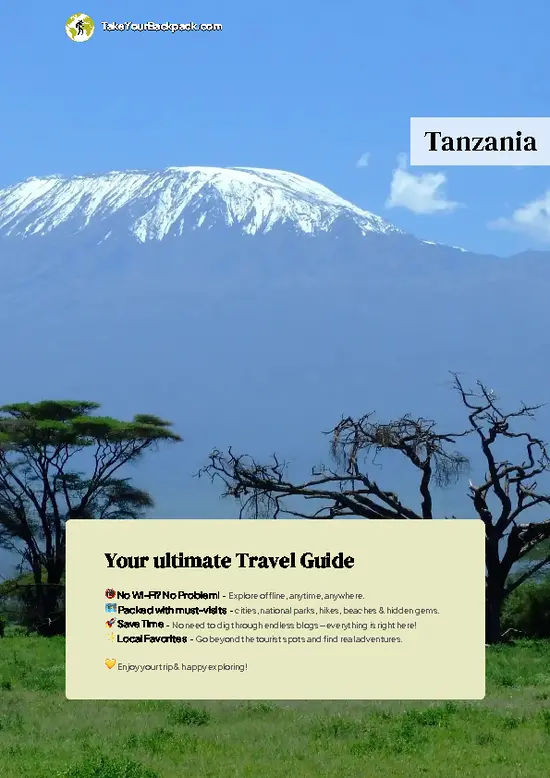
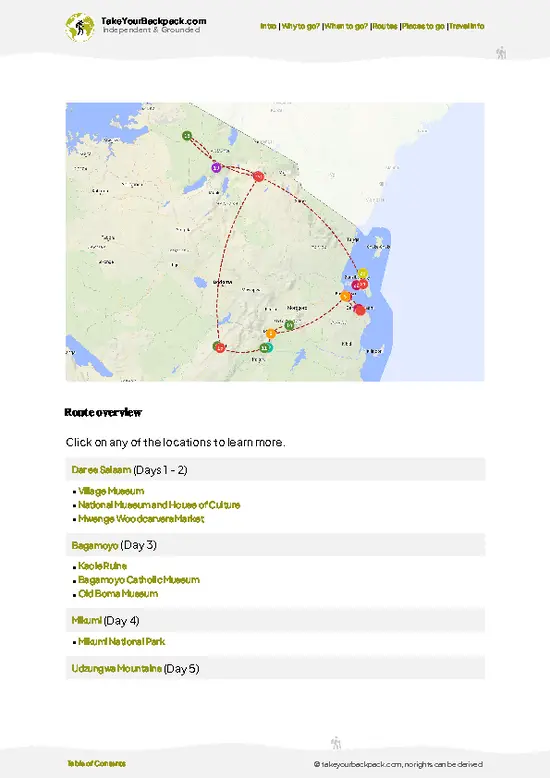
example page 0 from our offline Travel Guide for Tanzania
example page 1 from our offline Travel Guide for Tanzania
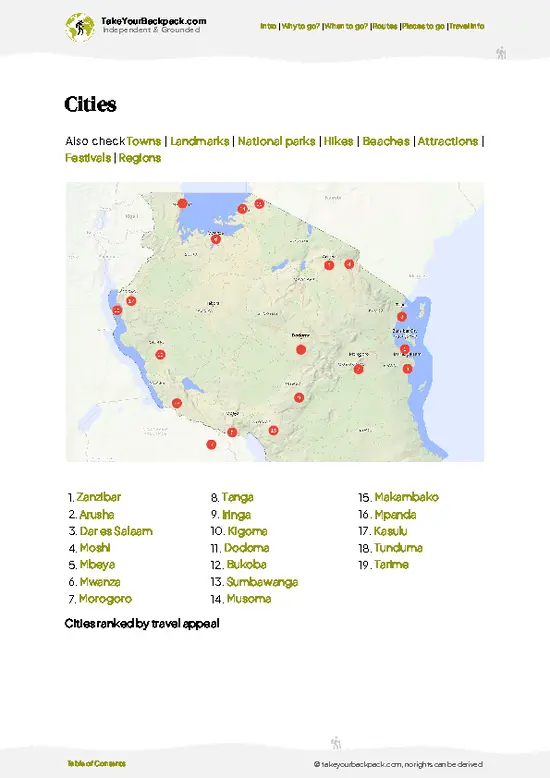
example page 2 from our offline Travel Guide for Tanzania
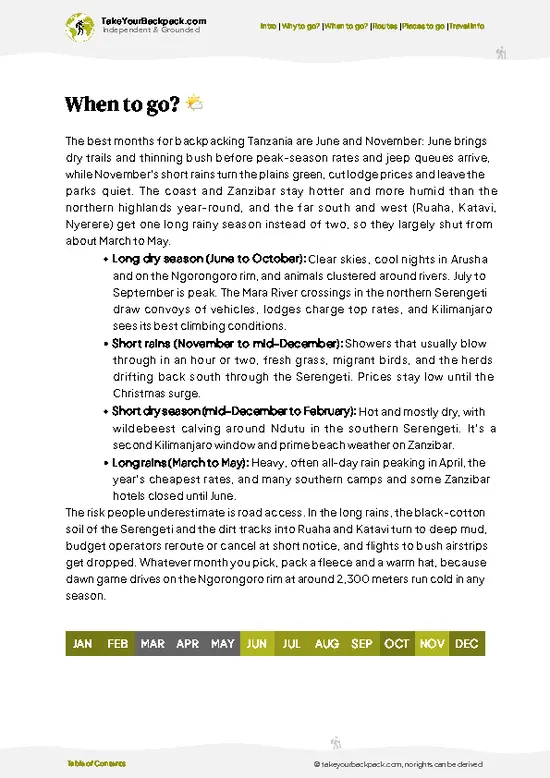
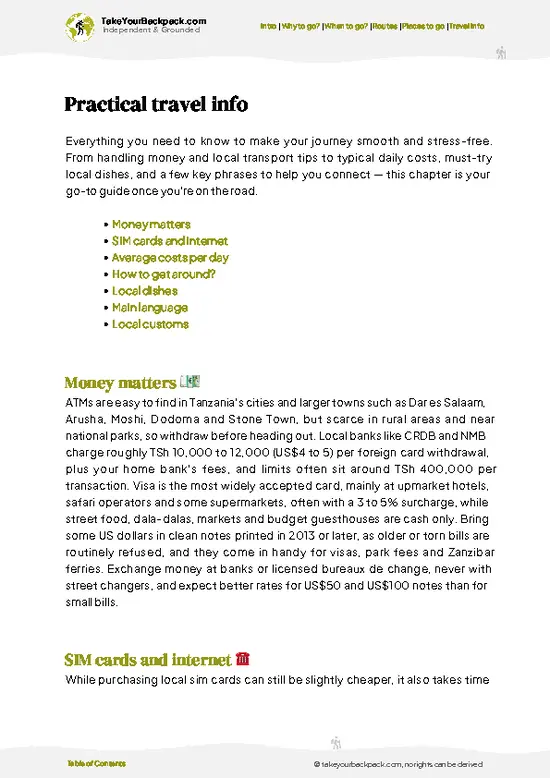
example page 3 from our offline Travel Guide for Tanzania
example page 4 from our offline Travel Guide for Tanzania
example page 5 from our offline Travel Guide for Tanzania
example page 6 from our offline Travel Guide for Tanzania
example page 7 from our offline Travel Guide for Tanzania
The digital guide (396 pages) contains:
✅ 103 highlights, ranked by travel appeal
✅ Optimized 7, 14 & 21-day travel routes
✅ Cities, national parks, landmarks, beaches
✅ How to get around
✅ Offline-friendly for travel without Wi-Fi
👉 Click to see all 30+ guide features

📅 Plan smarter in minutes, not weeks
✅ Month by month travel advice
✅ Festivals & national holidays
✅ Budget expectations

🗺️ Go to the right places, skip the overrated ones
✅ Honest pros & cons of destinations
✅ Top hikes, parks & viewpoints
✅ Lesser-known places most travelers miss
✅ Clear “worth it vs skip it” guidance

🛏️ Travel smoothly without rookie mistakes
✅ Best areas to stay
✅ Transport systems explained simply
✅ Common scams & safety advice
✅ SIM cards, money & practical tips

🌍 Understand the country, not just visit it
✅ Culture & traditions
✅ 52 Essential phrases & customs
✅ Festivals worth planning around
✅ Traveler-friendly historical context
✅ Insights that make places more meaningful

📱 Built for real travel conditions
✅ Fully downloadable PDF
✅ Works completely offline
✅ Optimized for phone use
✅ Useful in remote areas & buses
✅ Everything in one place
Stop searching, start planning
Get instant access to your full guide. 30‑day money-back guarantee.
+ Add another guide for just

By proceeding you agree to our terms.
Sent to your inbox immediately after payment • 100% Secure Checkout
Best Backpacking Travel Advisor 2025 tourism awardBest Backpacking
Travel Advisor
2025
What others say about Take Your Backpack Guides:
⭐⭐⭐⭐⭐
Fantastic, amazing amount of information!
⭐⭐⭐⭐⭐
My goodness this is amazing, it's what I've been looking for hats off too you!
⭐⭐⭐⭐⭐
I think this is absolutely BRILLIANT
⭐⭐⭐⭐
Very complete and informative. It's still missing places, but I gotta to commend you
⭐⭐⭐⭐⭐
This is truly amazing, thank you, can't wait to explore it with my kids!
⭐⭐⭐⭐⭐
Awesome resource, thank you!
⭐⭐⭐⭐⭐
This is amazing! Can't wait to explore the ones I haven't seen
⭐⭐⭐⭐
I love this! Well done, great idea.
⭐⭐⭐⭐⭐
Thanks for taking the time to make this gem!
⭐⭐⭐⭐⭐
This might be the best website I've ever seen.
⭐⭐⭐⭐⭐
Congratulations, and thank you so much for your work; it's incredibly valuable.
⭐⭐⭐⭐
In all seriousness I think you did a great job pointing out the important spots
⭐⭐⭐⭐⭐
10/10 very good
⭐⭐⭐⭐⭐
As someone who's only just starting to visit regularly this is awesome, thank you.
⭐⭐⭐⭐
Thank you very much! I'm going to visit my dad, it's going to be very useful!
⭐⭐⭐⭐⭐
This is really cool! We'll be travelling for the first time and this definitely come in handy.
⭐⭐⭐⭐⭐
You are now our minister of culture, congratulations 👨‍💼
⭐⭐⭐⭐⭐
Just wanted to tell you that this is a pearl! Going to follow your recommendations.
⭐⭐⭐⭐⭐
This is so cool. I'll definitely be using the resource for my travels soon.
⭐⭐⭐⭐⭐
This is very impressive! Good work.
⭐⭐⭐⭐⭐
This is an amazing and informative site. Very well done!

🛏️ Where to stay?Best Stay Options in Tanzania

Backpacking Tanzania is easy on a budget: every traveler hub has hostels and guesthouses, with dorm beds at roughly TSh 25,000 to 50,000 (US$10 to 20) and simple private rooms from about TSh 50,000 (US$20). On Zanzibar, Stone Town puts you within walking distance of the old town and the Forodhani night food market but comes with street noise and persistent touts. Paje on the east coast has the most social hostel scene and kitesurf bars, while Nungwi in the north lets you swim at any tide and parties late. On the mainland, Moshi town center is calm, safe on foot and closest to the Kilimanjaro gates, and central Arusha keeps you next to safari operators but is busier and better done by taxi after … read more 👉
Backpacking Tanzania is easy on a budget: every traveler hub has hostels and guesthouses, with dorm beds at roughly TSh 25,000 to 50,000 (US$10 to 20) and simple private rooms from about TSh 50,000 (US$20). On Zanzibar, Stone Town puts you within walking distance of the old town and the Forodhani night food market but comes with street noise and persistent touts. Paje on the east coast has the most social hostel scene and kitesurf bars, while Nungwi in the north lets you swim at any tide and parties late. On the mainland, Moshi town center is calm, safe on foot and closest to the Kilimanjaro gates, and central Arusha keeps you next to safari operators but is busier and better done by taxi after dark. In Dar es Salaam, the Msasani Peninsula is quieter and safer but pricier than the cheap, chaotic streets around Kariakoo.

If you enjoy meeting fellow travelers, consider choosing hostels with high ratings for atmosphere. On the other hand, if you prefer having your own space, a hotel might be a better option.

TanzaniaWhere to Go Next

👋 Meet the founderWho’s Behind Take Your Backpack?

Johan, backpacker and founder of TakeYourBackpackHi, I’m Johan (Netherlands 🇳🇱), the creator of TakeYourBackpack. Over the past 3 decades, I’ve backpacked through 90+ countries across six continents, gaining extensive experience with independent travel, long-term trips, and overland routes.

This site is built on a combination of firsthand travel experience and carefully curated insights from other backpackers. Many guides are based on places I’ve personally visited, while others bring together tips, observations, and practical advice shared by trusted travelers I’ve met along the way.

The goal is to provide realistic, experience-driven guidance — not generic itineraries — so you can explore destinations with better context, clearer expectations, and more confidence.