×

Tanzania🇹🇿 | national parksMahale Mountains National ParkMahale chimps, Mount Nkungwe, lake snorkeling, remote shoreline | things to do and best time to go

Explore Katavi National ParkExplore Gombe Stream National Park

Backpacking in Mahale Mountains
🌟 Highlightnational park ranked #8
By Johan Kruseman 🇳🇱 | Updated October 22, 2026

Mahale has no roads in or out, and the only ways to reach it are a boat across Lake Tanganyika or a small plane, which is why a few hundred chimps live almost undisturbed. The park sits in western Tanzania on the lake shore, south of Kigoma. Mountains of the Mahale range climb to 2,462 meters (Nkungwe) straight from the beach, with forest, waterfall streams and clear water for swimming. Chimp tracking is the star, and sightings are usually excellent, though steep, humid slopes test your legs and permits are costly. Crowds stay tiny because access is hard. The vibe is quiet, remote and wonderfully offline. Book your permit and boat transfer ahead, since schedules are thin and the park runs on lake logistics, so plan around them.

Discover everything you want to know in the 📖 Tanzania Travel Guide.


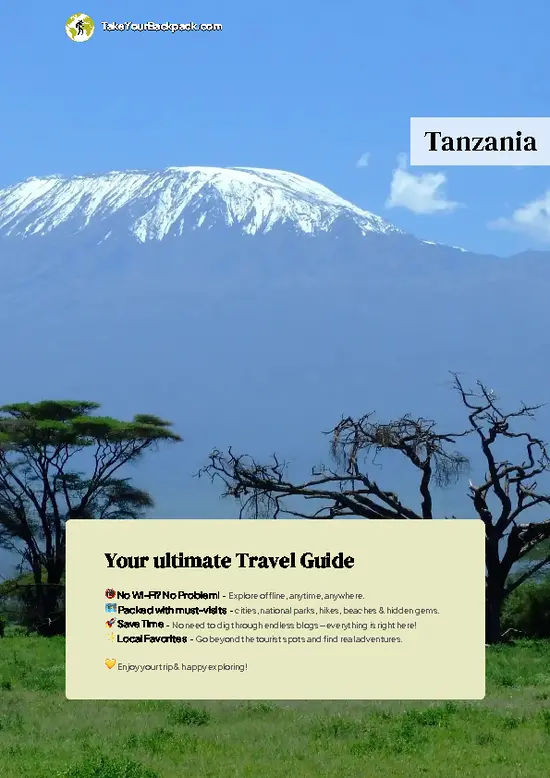
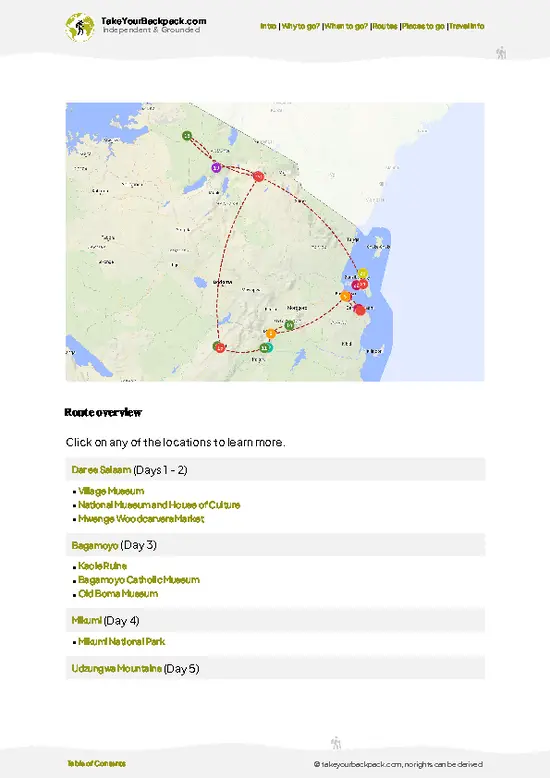
example page 0 from our offline Travel Guide for Tanzania
example page 1 from our offline Travel Guide for Tanzania
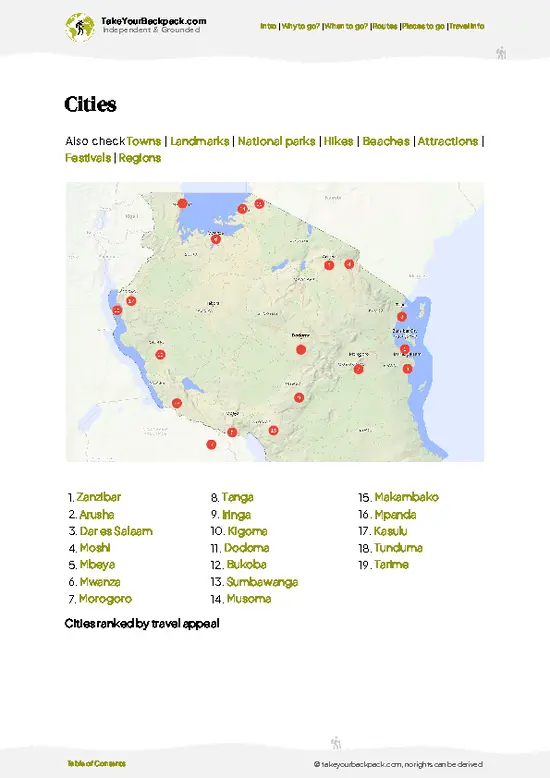
example page 2 from our offline Travel Guide for Tanzania
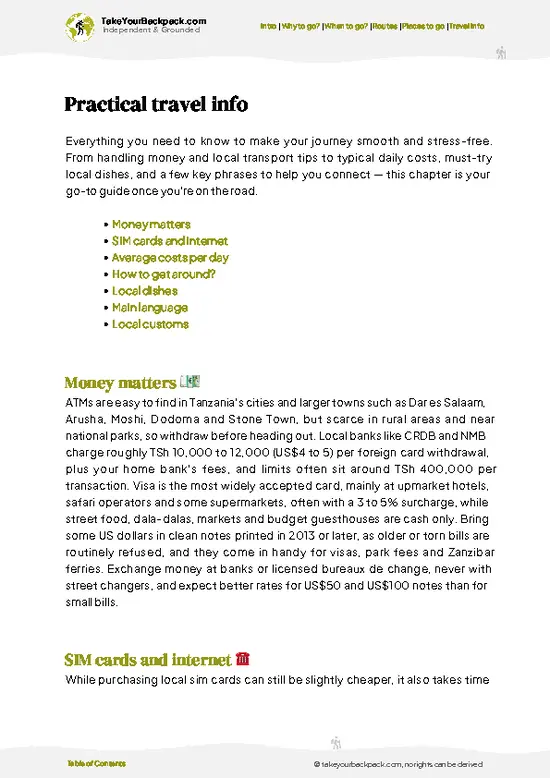
example page 3 from our offline Travel Guide for Tanzania
example page 4 from our offline Travel Guide for Tanzania
example page 5 from our offline Travel Guide for Tanzania
example page 6 from our offline Travel Guide for Tanzania
example page 7 from our offline Travel Guide for Tanzania
Loading the map 🌍
CLICK TO FILTER
cities
towns
landmarks
national parks
hikes
beaches
attractions
festivals
regions
SHOW COUNTRY’S BESTSHOW ALL

✨ Why go?
Ranked #8 national park in Tanzania
The unique appeal for travelers

Mahale National Park draws backpackers who want wilderness without a tour-bus feel. Here, habituated chimpanzee communities are followed on foot by small groups of at most six visitors per group, so you stand a few meters from animals that groom, squabble and nap in the open. The second pull is the lake itself. Lake Tanganyika is one of the deepest in the world, and you can snorkel over colorful cichlid fish just minutes after a hot forest hike. Camping is possible on the beach, which keeps the experience simpler than the luxury lodges suggest. Self-guided wandering is not allowed inland, since rangers lead every trek, but the slow pace, no traffic and long evenings on the shingle suit travelers who like effort and quiet.

💡 HighlightsPlaces and moments you shouldn't skip

  1. Chimpanzee tracking: Rangers lead small groups into the forest to find the Mahale chimp communities, studied since the 1960s. Sightings last up to an hour once you find them, with close views of feeding and grooming.
  2. Mount Nkungwe: The park's highest peak at about 2,460 meters rewards a multi-day climb with views over the lake and forest, passing through montane forest and open grassland.
  3. Lake Tanganyika beaches: Long white-gray shingle shores run along the park, perfect for swimming and resting after treks.
  4. Snorkeling the lake: Clear freshwater is full of small colorful cichlids, many found nowhere else.
  5. Kayaking and dhow trips: Paddling at the shoreline lets you watch fish eagles, monkeys and sometimes chimps from the water.
  6. Mahale Waterfalls: A forest stream drops through shaded ravines, a pleasant
… read more 👉
  1. Chimpanzee tracking: Rangers lead small groups into the forest to find the Mahale chimp communities, studied since the 1960s. Sightings last up to an hour once you find them, with close views of feeding and grooming.
  2. Mount Nkungwe: The park's highest peak at about 2,460 meters rewards a multi-day climb with views over the lake and forest, passing through montane forest and open grassland.
  3. Lake Tanganyika beaches: Long white-gray shingle shores run along the park, perfect for swimming and resting after treks.
  4. Snorkeling the lake: Clear freshwater is full of small colorful cichlids, many found nowhere else.
  5. Kayaking and dhow trips: Paddling at the shoreline lets you watch fish eagles, monkeys and sometimes chimps from the water.
  6. Mahale Waterfalls: A forest stream drops through shaded ravines, a pleasant side hike when the chimps are far up the slope.
  7. Red colobus and other primates: Red colobus, blue monkeys and yellow baboons share the forest, often visible near camp.
Allow three to four days to fit the chimps, a swim and one extra walk, or about a week if you add the Nkungwe climb.
Spotted a mistake or missing something? Contact us.

🌤️ When to go?Seasonal considerations and timing

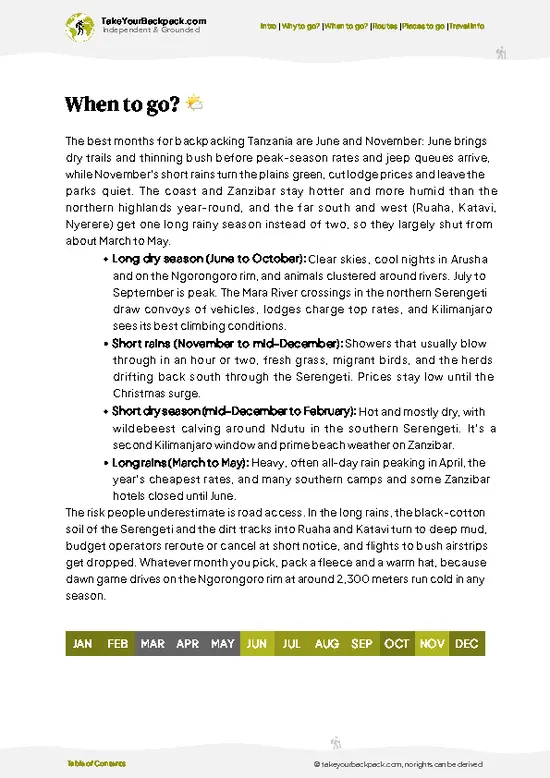
  • Dry Season (late May to October): Chimpanzee tracking is easiest now, because the apes feed lower on the slopes and trails stay firm. Days run 25 to 30°C (77 to 86°F), nights near 17°C (63°F) on the shore. Lake Tanganyika is calm for boat transfers. This is also peak season, so camps fill and rates are highest.
  • Short Rains (November to December): Showers arrive in the afternoons, humidity climbs, and trails get slick. Chimps often move higher, so treks run longer. Rates ease and you see few other visitors.
  • Long Rains (January to early May): Expect heavy downpours, temperatures of 24 to 29°C (75 to 84°F), and mud on every climb. Several camps close, and flights and boats are less dependable. Prices are lowest where lodges stay open.
Book your boat and camp for June to September early, since only a handful of camps serve the whole park.

source: climatestotravel.comJANJanuary: fair for travelingFEBFebruary: fair for travelingMARMarch: fair for travelingAPRApril: fair for travelingMAYMay: fair for travelingJUNJune: highly recommended for travelingJULJuly: excellent for travelingAUGAugust: excellent for travelingSEPSeptember: highly recommended for travelingOCTOctober: highly recommended for travelingNOVNovember: fair for travelingDECDecember: fair for traveling
when-to-go

✈️ The backpacker research shortcutTanzania Travel Guide

An offline-friendly backpacking guide with optimized travel routes, ranked highlights, transport advice, and the best areas to stay.
example page 0 from our offline Travel Guide for Tanzania
example page 1 from our offline Travel Guide for Tanzania
example page 2 from our offline Travel Guide for Tanzania
example page 3 from our offline Travel Guide for Tanzania
example page 4 from our offline Travel Guide for Tanzania
example page 5 from our offline Travel Guide for Tanzania
example page 6 from our offline Travel Guide for Tanzania
example page 7 from our offline Travel Guide for Tanzania
The digital guide (396 pages) contains:
✅ 103 highlights, ranked by travel appeal
✅ Optimized 7, 14 & 21-day travel routes
✅ Cities, national parks, landmarks, beaches
✅ How to get around
✅ Offline-friendly for travel without Wi-Fi
👉 Click to see all 30+ guide features

📅 Plan smarter in minutes, not weeks
✅ Month by month travel advice
✅ Festivals & national holidays
✅ Budget expectations

🗺️ Go to the right places, skip the overrated ones
✅ Honest pros & cons of destinations
✅ Top hikes, parks & viewpoints
✅ Lesser-known places most travelers miss
✅ Clear “worth it vs skip it” guidance

🛏️ Travel smoothly without rookie mistakes
✅ Best areas to stay
✅ Transport systems explained simply
✅ Common scams & safety advice
✅ SIM cards, money & practical tips

🌍 Understand the country, not just visit it
✅ Culture & traditions
✅ 52 Essential phrases & customs
✅ Festivals worth planning around
✅ Traveler-friendly historical context
✅ Insights that make places more meaningful

📱 Built for real travel conditions
✅ Fully downloadable PDF
✅ Works completely offline
✅ Optimized for phone use
✅ Useful in remote areas & buses
✅ Everything in one place
Stop searching, start planning
Get instant access to your full guide. 30‑day money-back guarantee.
+ Add another guide for just

By proceeding you agree to our terms.
Sent to your inbox immediately after payment • 100% Secure Checkout
Best Backpacking Travel Advisor 2025 tourism awardBest Backpacking
Travel Advisor
2025
What others say about Take Your Backpack Guides:
⭐⭐⭐⭐⭐
Fantastic, amazing amount of information!
⭐⭐⭐⭐⭐
My goodness this is amazing, it's what I've been looking for hats off too you!
⭐⭐⭐⭐⭐
I think this is absolutely BRILLIANT
⭐⭐⭐⭐
Very complete and informative. It's still missing places, but I gotta to commend you
⭐⭐⭐⭐⭐
This is truly amazing, thank you, can't wait to explore it with my kids!
⭐⭐⭐⭐⭐
Awesome resource, thank you!
⭐⭐⭐⭐⭐
This is amazing! Can't wait to explore the ones I haven't seen
⭐⭐⭐⭐
I love this! Well done, great idea.
⭐⭐⭐⭐⭐
Thanks for taking the time to make this gem!
⭐⭐⭐⭐⭐
This might be the best website I've ever seen.
⭐⭐⭐⭐⭐
Congratulations, and thank you so much for your work; it's incredibly valuable.
⭐⭐⭐⭐
In all seriousness I think you did a great job pointing out the important spots
⭐⭐⭐⭐⭐
10/10 very good
⭐⭐⭐⭐⭐
As someone who's only just starting to visit regularly this is awesome, thank you.
⭐⭐⭐⭐
Thank you very much! I'm going to visit my dad, it's going to be very useful!
⭐⭐⭐⭐⭐
This is really cool! We'll be travelling for the first time and this definitely come in handy.
⭐⭐⭐⭐⭐
You are now our minister of culture, congratulations 👨‍💼
⭐⭐⭐⭐⭐
Just wanted to tell you that this is a pearl! Going to follow your recommendations.
⭐⭐⭐⭐⭐
This is so cool. I'll definitely be using the resource for my travels soon.
⭐⭐⭐⭐⭐
This is very impressive! Good work.
⭐⭐⭐⭐⭐
This is an amazing and informative site. Very well done!

🛏️ Where to stay?Best areas to stay in Tanzania

No budget beds exist inside Mahale Mountains National Park, and that is the main thing to plan around. Inside the park, the only options are a few luxury tented camps on the Lake Tanganyika shore, such as Greystoke Mahale and Nomad Mahale, priced from roughly US$1,000 per person a night with everything included. Backpackers on a tight budget usually choose the park’s basic public campsite and simple rest house at Bilenge, near park headquarters, where you bring your own tent, food and stove. Rangers charge a small fee for camping, and you must arrange it in advance.

The nearest real town is Kigoma, … read more 👉
No budget beds exist inside Mahale Mountains National Park, and that is the main thing to plan around. Inside the park, the only options are a few luxury tented camps on the Lake Tanganyika shore, such as Greystoke Mahale and Nomad Mahale, priced from roughly US$1,000 per person a night with everything included. Backpackers on a tight budget usually choose the park’s basic public campsite and simple rest house at Bilenge, near park headquarters, where you bring your own tent, food and stove. Rangers charge a small fee for camping, and you must arrange it in advance.

The nearest real town is Kigoma, a lakeside port in western Tanzania. Guesthouses and mid-range hotels there cost about US$15 to 60 a night, and it has banks, supermarkets and the airport. Most travelers stock up on food and cash here before the trip. Ujiji, a short ride away, is a quieter option with a few basic lodgings. Mahale itself has no road access, so plan to arrive from Kigoma by charter boat or by scheduled flight to the airstrip.

👛 Costs (as of 22 October 2026)Travel costs and budget guide for Mahale Mountains

A realistic budget for Mahale Mountains National Park is about US$330 to 370 per person per day if you camp and self-cater, with park fees and chimp permits taking most of it.
CategoryBudget RangeLocal Reality
Park entrance and conservationUS$80 to 100Charged per 24 hours for foreign adults, paid in US dollars or by card through park systems
Chimpanzee tracking permitUS$100 to 150Required for each trek, with a small group and a ranger guide
CampingUS$20 to 30Basic public campsite in the high season, bring your own tent
Rest house or lodge alternativeUS$1,000+Luxury tented camps with meals and transfers included, far above backpacker budgets
Local transportUS$60 to 100Share of a boat from Kigoma per person, with fuel pushing costs up and cheaper sharing when you find other travelers
Food and suppliesUS$15
… read more 👉
A realistic budget for Mahale Mountains National Park is about US$330 to 370 per person per day if you camp and self-cater, with park fees and chimp permits taking most of it.
CategoryBudget RangeLocal Reality
Park entrance and conservationUS$80 to 100Charged per 24 hours for foreign adults, paid in US dollars or by card through park systems
Chimpanzee tracking permitUS$100 to 150Required for each trek, with a small group and a ranger guide
CampingUS$20 to 30Basic public campsite in the high season, bring your own tent
Rest house or lodge alternativeUS$1,000+Luxury tented camps with meals and transfers included, far above backpacker budgets
Local transportUS$60 to 100Share of a boat from Kigoma per person, with fuel pushing costs up and cheaper sharing when you find other travelers
Food and suppliesUS$15 to 25Buy rice, beans, bread and fruit in Kigoma, nothing is sold in the park
Total Daily BudgetUS$335Camping, one trek and shared transport, high season


source: tanzaniaparks.go.tz
⚠️ Prices can change and everyone travels differently, so take this as a rough guide. Hope it helps you plan your adventure!

🥾 TrailsScenic routes and wildlife spotting in Mahale Mountains

Mahale Mountains National Park has few formal named trails, and nearly all walking is done with a ranger guide from the beach camps. Walks start from the lakeshore and climb through thick forest on slippery, rooty slopes.
  • Chimp trek: Groups set out early with rangers and walk from about 1 to 6 hours, depending on where the chimps are feeding. Terrain is steep, humid and muddy, and difficulty is moderate to hard.
  • Mount Nkungwe climb: A multi-day guided ascent through forest to open grassland near the summit. It is demanding, with a big elevation gain and camping on the way.
  • Waterfall walk: A gentler
… read more 👉
Mahale Mountains National Park has few formal named trails, and nearly all walking is done with a ranger guide from the beach camps. Walks start from the lakeshore and climb through thick forest on slippery, rooty slopes.
  • Chimp trek: Groups set out early with rangers and walk from about 1 to 6 hours, depending on where the chimps are feeding. Terrain is steep, humid and muddy, and difficulty is moderate to hard.
  • Mount Nkungwe climb: A multi-day guided ascent through forest to open grassland near the summit. It is demanding, with a big elevation gain and camping on the way.
  • Waterfall walk: A gentler walk along a forest stream to cascades, suitable for a rest day and good for birds and monkeys.
  • Lakeshore strolls: Flat beach walks near camp, easy and ideal for sunsets and hornbill spotting.
Mahale Mountains National Park is reached by boat from Kigoma or by light aircraft from Arusha or other airstrips. Public transport is limited, and the lake ferry schedule is irregular. Visitor numbers are low, so trekking is quiet. A park entrance fee and a separate chimp permit apply, and both are paid in US dollars.
⚠️ Hiking info can sometimes be outdated or inaccurate. Before you hit the trail, check the latest conditions with locals. If you do spot anything that's off, I'd love to hear from you, so I can update it for fellow travelers.

🛡️ SafetyStaying Safe: What Travelers Should Know

Mahale Mountains National Park is calm and well managed, but the real challenges are heat, humidity and steep forest ground. Chimpanzee treks go through dense forest on slippery slopes, sometimes for several hours, so wear shoes with real grip and carry at least 2 to 3 liters of water. Rangers lead every trek and keep groups small. Stay at least 10 meters from the chimps, keep your voice low, and never go if you have a cold or cough, since apes catch human illnesses and you will be turned back. Masks are often required. Tsetse flies and mosquitoes are present, so bring long sleeves and repellent, and talk to a doctor about malaria prevention. Lake Tanganyika can turn rough in afternoon winds, so travel by boat in the morning and ask for a life jacket. Bring cash, since there are no ATMs.

FAQFrequently asked questions about Mahale Mountains

Plan on 3 to 4 days for Mahale Mountains National Park, because getting there takes a full day each way. Most visitors spend two nights on site for one or two chimpanzee treks, plus time for swimming in Lake Tanganyika. Adding a day or two in Kigoma gives you a buffer for boat delays.
No car is useful at Mahale Mountains National Park, because the park has no road access at all. You reach it from Kigoma by a charter or shared boat across Lake Tanganyika, which takes roughly 6 to 10 hours depending on the boat, or by a light aircraft flight from Arusha, Katavi or Kigoma. Inside the park, everything is done on foot with rangers or by small boat.
Yes, Mahale Mountains National Park charges a daily entrance and conservation fee of roughly US$80 to 100 for foreign adults. Chimpanzee tracking needs a separate permit of about US$100 to 150 per trek, and a guide is mandatory. Book through a Kigoma operator or the park authority ahead of time, especially from June to September.
⚠️ Things can change over time, so always validate details locally before you go.

Other Tanzanian national parks near Mahale Mountains

Explore more nearby:


💡 Not sure where to go next?
Create a personalized itinerary for Tanzania including Mahale Mountains and the places that fit your trip.

Generate my itinerary

👉 Discover all national parks

Or checkout all Tanzania has to offer (think cities, towns, villages, national parks, hikes, beaches, festivals)
Country photo of Tanzania

We 💚 feedbackParting advice and final tips

Mahale Mountains National Park works best as the wild second act of a western Tanzania loop. Pair it with Gombe Stream National Park to compare two chimpanzee communities, or with Katavi National Park for hippos and big herds, using Kigoma as your hinge. I would plan around the weekly MV Liemba ferry or a charter boat, because schedules rule everything out here. Bring a rain shell for the forest and leave a spare day for the lake crossing.

✍️ Help improve this page!
The information on this page is based on in-depth research, insights shared by experienced travelers, and feedback from the local travel community in Tanzania. While every effort is made to keep the information accurate and current, conditions can change — so if you spot anything incorrect or outdated, please get in touch.


🙋‍♂️ Give feedback

👋 Meet the founderWho’s Behind Take Your Backpack?

Johan, backpacker and founder of TakeYourBackpackHi, I’m Johan (Netherlands 🇳🇱), the creator of TakeYourBackpack. Over the past 3 decades, I’ve backpacked through 90+ countries across six continents, gaining extensive experience with independent travel, long-term trips, and overland routes.

This site is built on a combination of firsthand travel experience and carefully curated insights from other backpackers. Many guides are based on places I’ve personally visited, while others bring together tips, observations, and practical advice shared by trusted travelers I’ve met along the way.

The goal is to provide realistic, experience-driven guidance — not generic itineraries — so you can explore destinations with better context, clearer expectations, and more confidence.