×

Tanzania🇹🇿 | national parksKigosi National ParkShoebill swamps, miombo woodland, sable and roan, starry camps | things to do and best time to go

Explore Ibanda-Kyerwa National ParkExplore Ugalla River National Park

Backpacking in Kigosi
👀 For curious travelersnational park ranked #21
By Johan Kruseman 🇳🇱 | Updated October 22, 2026

Dry miombo leaves crackle under your boots while a hippo grunts somewhere beyond the next bend of the Moyowosi-Kigosi wetland edge. Kigosi National Park sits in western Tanzania, southwest of Lake Victoria, in a vast, flat wilderness of woodland, floodplain and papyrus. Wildlife is plentiful, roads are rough and rangers outnumber tourists. You get solitude, birds and a sense of discovery, but no marked trails or crowds. Go with a 4x4 and an operator.

Discover everything you want to know in the 📖 Tanzania Travel Guide.


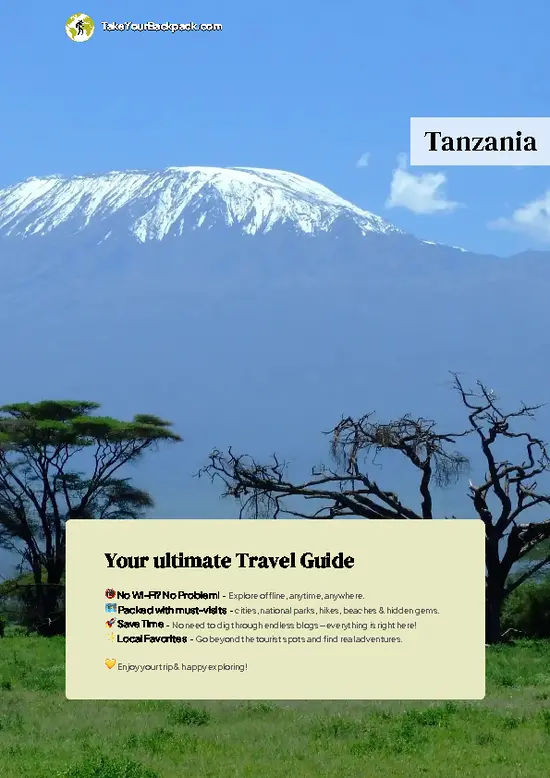
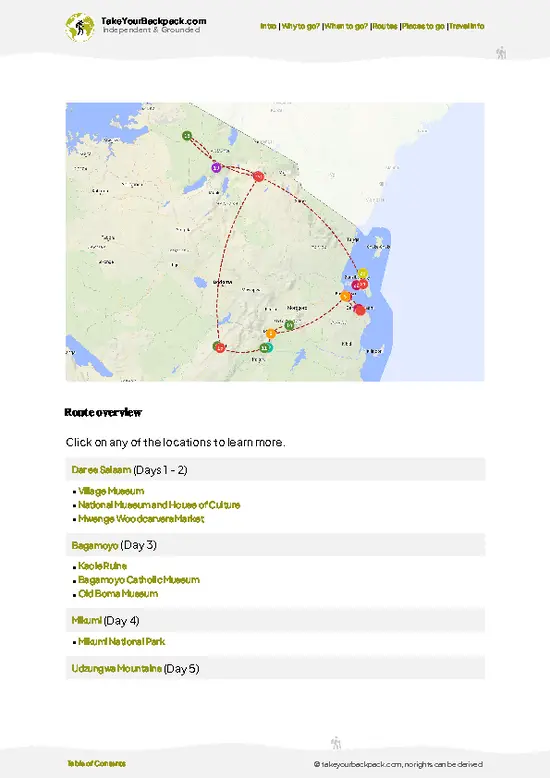
example page 0 from our offline Travel Guide for Tanzania
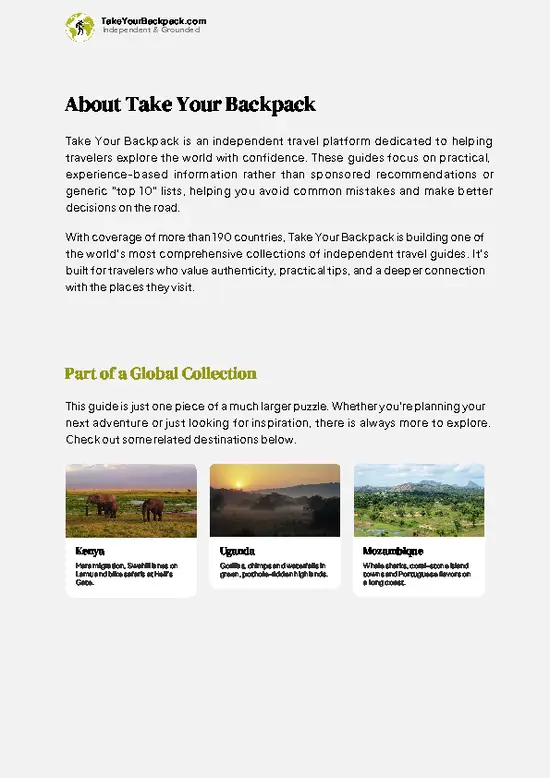
example page 1 from our offline Travel Guide for Tanzania
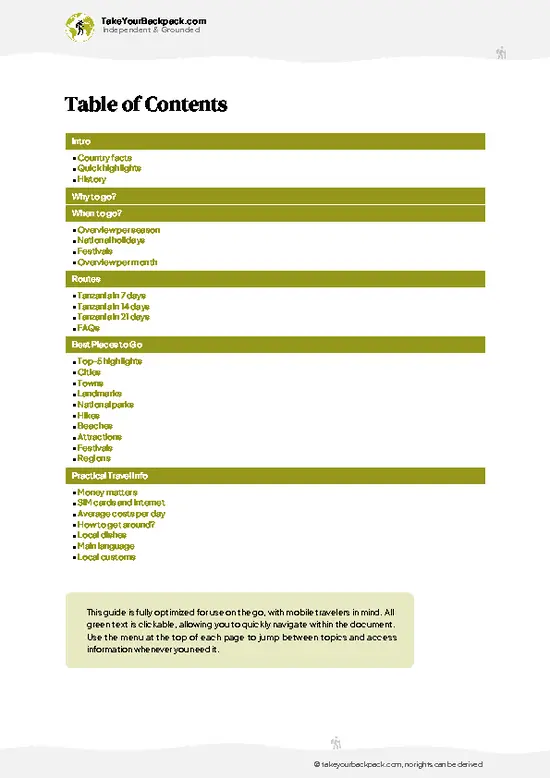
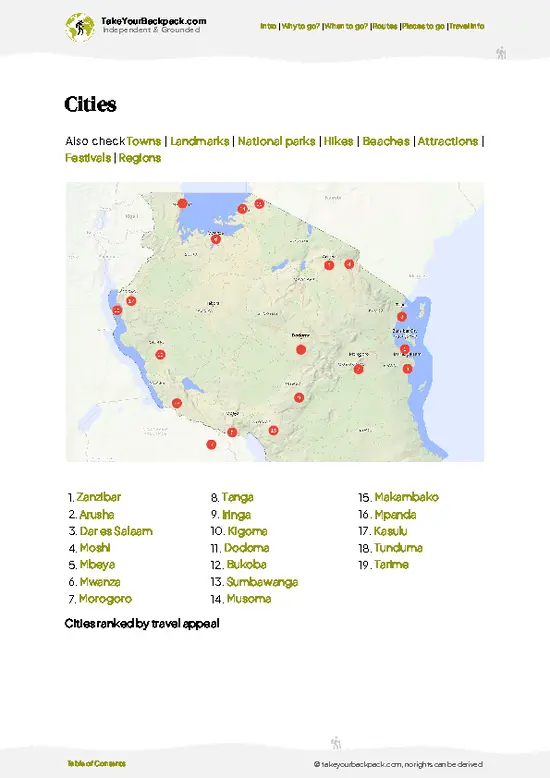
example page 2 from our offline Travel Guide for Tanzania
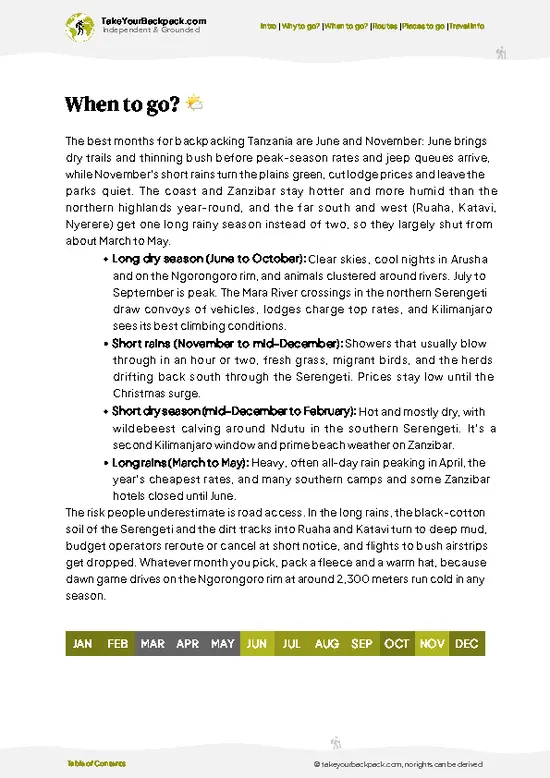
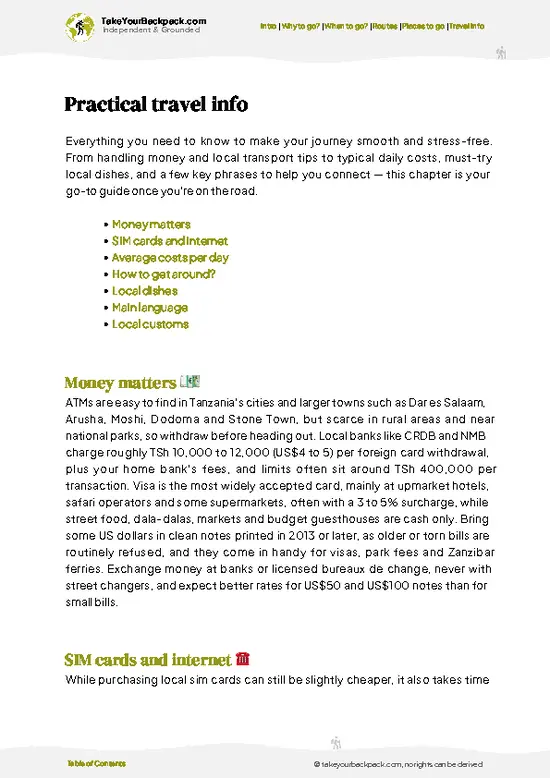
example page 3 from our offline Travel Guide for Tanzania
example page 4 from our offline Travel Guide for Tanzania
example page 5 from our offline Travel Guide for Tanzania
example page 6 from our offline Travel Guide for Tanzania
example page 7 from our offline Travel Guide for Tanzania
Loading the map 🌍
CLICK TO FILTER
cities
towns
landmarks
national parks
hikes
beaches
attractions
festivals
regions
SHOW COUNTRY’S BESTSHOW ALL

✨ Why go?
Ranked #21 national park in Tanzania
The unique appeal for travelers

Kigosi National Park suits travelers who crave empty country over ticking boxes. Established in 2019, it carries almost none of the minibus traffic of the northern circuit, so a sighting of sable antelope or a herd of buffalo is yours alone. Its link to the Moyowosi-Kigosi Ramsar wetlands draws birders hunting the shoebill. Self-driving is hard here, but the park rewards those who accept a guided, camp-based approach and the quiet that comes with it.

💡 HighlightsKey sights and experiences for travelers

  1. Shoebill habitat on the Moyowosi-Kigosi swamps: the prehistoric-looking shoebill stalks the papyrus channels, and it is the bird most birders come here to find.
  2. Kigosi River floodplains: open grassland and seasonal pools where buffalo, waterbuck and hippo gather in the dry months.
  3. Miombo woodland: endless stands of brachystegia trees hold roan and sable antelope, with a soundtrack of hornbills and francolins.
  4. Hippo and crocodile pools: river bends where pods grunt and croak all day, best watched quietly from the bank with a ranger.
  5. Elephant and lion country: the park shelters healthy populations, and fresh tracks along sandy riverbeds tell you what passed overnight.
  6. Night skies from camp: with no towns for many kilometers, the Milky Way blazes over the campfire.
Kigosi National Park has no single … read more 👉
  1. Shoebill habitat on the Moyowosi-Kigosi swamps: the prehistoric-looking shoebill stalks the papyrus channels, and it is the bird most birders come here to find.
  2. Kigosi River floodplains: open grassland and seasonal pools where buffalo, waterbuck and hippo gather in the dry months.
  3. Miombo woodland: endless stands of brachystegia trees hold roan and sable antelope, with a soundtrack of hornbills and francolins.
  4. Hippo and crocodile pools: river bends where pods grunt and croak all day, best watched quietly from the bank with a ranger.
  5. Elephant and lion country: the park shelters healthy populations, and fresh tracks along sandy riverbeds tell you what passed overnight.
  6. Night skies from camp: with no towns for many kilometers, the Milky Way blazes over the campfire.
Kigosi National Park has no single free attraction, but the night sky over camp costs nothing beyond the camping fee you already pay.
Spotted a mistake or missing something? Contact us.

🌤️ When to go?Choosing the right time of year

  • Dry Season (June to October): Roads and tracks are firm, grass is thin and game is easiest to spot around the Kigosi and Moyowosi river channels. Days reach 28 to 32°C (82 to 90°F), nights cool to 14 to 17°C (57 to 63°F). Daylight lasts roughly 12 hours.
  • Short Rains (November to December): Showers start, tracks turn slick and the bush greens up.
  • Long Rains (March to May): Expect 24 to 29°C (75 to 84°F), flooded tracks and many closed camps. Prices drop.
Book a guide and vehicle well ahead for July to September, when the few operators here fill up.

source: climatestotravel.comJANJanuary: fair for travelingFEBFebruary: fair for travelingMARMarch: fair for travelingAPRApril: fair for travelingMAYMay: good for travelingJUNJune: excellent for travelingJULJuly: excellent for travelingAUGAugust: excellent for travelingSEPSeptember: excellent for travelingOCTOctober: excellent for travelingNOVNovember: fair for travelingDECDecember: fair for traveling
when-to-go

✈️ The backpacker research shortcutTanzania Travel Guide

An offline-friendly backpacking guide with optimized travel routes, ranked highlights, transport advice, and the best areas to stay.
example page 0 from our offline Travel Guide for Tanzania
example page 1 from our offline Travel Guide for Tanzania
example page 2 from our offline Travel Guide for Tanzania
example page 3 from our offline Travel Guide for Tanzania
example page 4 from our offline Travel Guide for Tanzania
example page 5 from our offline Travel Guide for Tanzania
example page 6 from our offline Travel Guide for Tanzania
example page 7 from our offline Travel Guide for Tanzania
The digital guide (396 pages) contains:
✅ 103 highlights, ranked by travel appeal
✅ Optimized 7, 14 & 21-day travel routes
✅ Cities, national parks, landmarks, beaches
✅ How to get around
✅ Offline-friendly for travel without Wi-Fi
👉 Click to see all 30+ guide features

📅 Plan smarter in minutes, not weeks
✅ Month by month travel advice
✅ Festivals & national holidays
✅ Budget expectations

🗺️ Go to the right places, skip the overrated ones
✅ Honest pros & cons of destinations
✅ Top hikes, parks & viewpoints
✅ Lesser-known places most travelers miss
✅ Clear “worth it vs skip it” guidance

🛏️ Travel smoothly without rookie mistakes
✅ Best areas to stay
✅ Transport systems explained simply
✅ Common scams & safety advice
✅ SIM cards, money & practical tips

🌍 Understand the country, not just visit it
✅ Culture & traditions
✅ 52 Essential phrases & customs
✅ Festivals worth planning around
✅ Traveler-friendly historical context
✅ Insights that make places more meaningful

📱 Built for real travel conditions
✅ Fully downloadable PDF
✅ Works completely offline
✅ Optimized for phone use
✅ Useful in remote areas & buses
✅ Everything in one place
Stop searching, start planning
Get instant access to your full guide. 30‑day money-back guarantee.
+ Add another guide for just

By proceeding you agree to our terms.
Sent to your inbox immediately after payment • 100% Secure Checkout
Best Backpacking Travel Advisor 2025 tourism awardBest Backpacking
Travel Advisor
2025
What others say about Take Your Backpack Guides:
⭐⭐⭐⭐⭐
Fantastic, amazing amount of information!
⭐⭐⭐⭐⭐
My goodness this is amazing, it's what I've been looking for hats off too you!
⭐⭐⭐⭐⭐
I think this is absolutely BRILLIANT
⭐⭐⭐⭐
Very complete and informative. It's still missing places, but I gotta to commend you
⭐⭐⭐⭐⭐
This is truly amazing, thank you, can't wait to explore it with my kids!
⭐⭐⭐⭐⭐
Awesome resource, thank you!
⭐⭐⭐⭐⭐
This is amazing! Can't wait to explore the ones I haven't seen
⭐⭐⭐⭐
I love this! Well done, great idea.
⭐⭐⭐⭐⭐
Thanks for taking the time to make this gem!
⭐⭐⭐⭐⭐
This might be the best website I've ever seen.
⭐⭐⭐⭐⭐
Congratulations, and thank you so much for your work; it's incredibly valuable.
⭐⭐⭐⭐
In all seriousness I think you did a great job pointing out the important spots
⭐⭐⭐⭐⭐
10/10 very good
⭐⭐⭐⭐⭐
As someone who's only just starting to visit regularly this is awesome, thank you.
⭐⭐⭐⭐
Thank you very much! I'm going to visit my dad, it's going to be very useful!
⭐⭐⭐⭐⭐
This is really cool! We'll be travelling for the first time and this definitely come in handy.
⭐⭐⭐⭐⭐
You are now our minister of culture, congratulations 👨‍💼
⭐⭐⭐⭐⭐
Just wanted to tell you that this is a pearl! Going to follow your recommendations.
⭐⭐⭐⭐⭐
This is so cool. I'll definitely be using the resource for my travels soon.
⭐⭐⭐⭐⭐
This is very impressive! Good work.
⭐⭐⭐⭐⭐
This is an amazing and informative site. Very well done!

🛏️ Where to stay?Best areas and accommodation options

Nobody lives inside Kigosi National Park, and there are no hostels or public lodges within it, so most travelers sleep in nearby towns or on an organized camping trip. Kahama and Kibondo are the practical gateways, and Geita and Biharamulo sit within reach by road. Each has basic guesthouses with private rooms, fans and shared or en suite bathrooms, typically US$8 to 20 a night. Reaching the park itself needs a 4x4 and a licensed operator, who sets up a tented bush camp with a cook. Bring your own sleeping bag and water treatment, since supplies are thin outside the towns.

👛 Costs (as of 22 October 2026)How expensive it really is

Kigosi National Park costs roughly US$150 to 260 a day for a backpacker, because access depends on a guided 4x4 trip.
CategoryBudget RangeLocal Reality
Park entryUS$30 to 50Per person per 24 hours, paid in advance through your operator.
AccommodationUS$10 to 20 (town); US$40 to 70 (bush camp)Guesthouses in Kahama or Kibondo. Camping is arranged by operators.
Local transportUS$40 to 90Share of a 4x4 and driver, plus fuel. Buses reach the gateway towns.
Food and suppliesUS$10 to 25Stock up in town. Camp meals are often included in tours.
Guide and rangerUS$30 to 60Mandatory armed ranger and guide fees.
Total Daily BudgetUS$160Based on one bush camp night in high season.
⚠️ Prices can change and everyone travels differently, so take this as a rough guide. Hope it helps you plan your adventure!

🥾 TrailsExploring Kigosi: trails, terrain, and views

Kigosi National Park has no signed, measured trails, so walks are ranger-led and shaped by the season and the animals you find.
  • Guided bush walks: Start from camp with an armed ranger, usually 2 to 4 hours, flat to gently rolling terrain through miombo and along dry riverbeds. Easy to moderate, with heat the main challenge.
  • Riverbank strolls: Short, slow outings along the Kigosi River to watch hippo, crocodile and waterbirds. Mostly sandy and muddy ground.
  • Wetland edge walks: Dry-season routes toward the swamp margins for shoebill and storks, with soft, uneven ground.
Access is the real challenge. … read more 👉
Kigosi National Park has no signed, measured trails, so walks are ranger-led and shaped by the season and the animals you find.
  • Guided bush walks: Start from camp with an armed ranger, usually 2 to 4 hours, flat to gently rolling terrain through miombo and along dry riverbeds. Easy to moderate, with heat the main challenge.
  • Riverbank strolls: Short, slow outings along the Kigosi River to watch hippo, crocodile and waterbirds. Mostly sandy and muddy ground.
  • Wetland edge walks: Dry-season routes toward the swamp margins for shoebill and storks, with soft, uneven ground.
Access is the real challenge. No public transport reaches the park, so most travelers arrive by 4x4 from Kahama, Kibondo or Biharamulo with a tour operator, and tracks can turn impassable in the rains. Crowds are essentially nonexistent. Park fees are charged, so confirm them with your operator before leaving.
⚠️ Hiking info can sometimes be outdated or inaccurate. Before you hit the trail, check the latest conditions with locals. If you do spot anything that's off, I'd love to hear from you, so I can update it for fellow travelers.

🛡️ SafetyScams, Hazards, and Annoyances

Kigosi is remote, undeveloped wilderness with no marked trails, so go only with a licensed guide and a well-prepared 4x4. Elephants, buffalo and hippos are present, and a few lions too. Keep your distance, stay in the vehicle or beside your guide, and never walk at dusk near water. Tsetse flies are common, so wear long, neutral-colored clothing. Malaria is a risk, so take prophylaxis and a net. Phone signal is patchy, so carry a satellite messenger, a full first-aid kit and extra fuel and water.

FAQCommon questions from travelers

Plan on 3 to 5 days for Kigosi National Park, including a day each way to reach it. A short trip from Kahama or Mwanza gives you two nights in the bush, while four nights let you cover the Kigosi and Moyowosi river areas properly. Road travel in the wet season can add a day.
Kigosi National Park is not practical without a vehicle, and a self-drive trip needs a high-clearance 4x4 with spare fuel. Public buses reach Kahama, Kibondo and Biharamulo, but no transport runs into the park. Most backpackers join a guided trip, with costs of roughly US$150 to 260 a day shared among the group.
Yes, Kigosi National Park charges an entrance fee, typically US$30 to 50 per person per day, plus camping and ranger fees. Access is arranged through the Tanzania National Parks Authority or a licensed operator, who handles permits in advance. Carry your passport, since rangers may check it at the gate or in the bush.
⚠️ Things can change over time, so always validate details locally before you go.

Other Tanzanian national parks near Kigosi

Explore more nearby:

  • Rubondo Island—Island forest, sitatunga canoe, Nile perch, shoreline birds| 164 km away
  • Burigi-Chato National Park—Papyrus-fringed lake, sitatunga, guide-only tracks, hilltop views| 188 km away
  • Saanane Island—Rock hyraxes, Mwanza boat ride, granite summit, monitor lizards| 191 km away

💡 Not sure where to go next?
Create a personalized itinerary for Tanzania including Kigosi and the places that fit your trip.

Generate my itinerary

👉 Discover all national parks

Or checkout all Tanzania has to offer (think cities, towns, villages, national parks, hikes, beaches, festivals)
Country photo of Tanzania

We 💚 feedbackKey takeaways before you go

Kigosi National Park is at its best in the dry months, and at its best in the cool early morning, when animals drink and the wetlands hum with birds. Bring binoculars, a long lens and patience.

✍️ Help improve this page!
The information on this page is based on in-depth research, insights shared by experienced travelers, and feedback from the local travel community in Tanzania. While every effort is made to keep the information accurate and current, conditions can change — so if you spot anything incorrect or outdated, please get in touch.


🙋‍♂️ Give feedback

👋 Meet the founderWho’s Behind Take Your Backpack?

Johan, backpacker and founder of TakeYourBackpackHi, I’m Johan (Netherlands 🇳🇱), the creator of TakeYourBackpack. Over the past 3 decades, I’ve backpacked through 90+ countries across six continents, gaining extensive experience with independent travel, long-term trips, and overland routes.

This site is built on a combination of firsthand travel experience and carefully curated insights from other backpackers. Many guides are based on places I’ve personally visited, while others bring together tips, observations, and practical advice shared by trusted travelers I’ve met along the way.

The goal is to provide realistic, experience-driven guidance — not generic itineraries — so you can explore destinations with better context, clearer expectations, and more confidence.