×

Cuba🇨🇺 | national parksDesembarco del Granma National Park
limestone terraces, sea cliffs, fossil beds | things to do and best time to go

Explore Cienaga de ZapataExplore El Nicho

Backpacking in Desembarco del Granma
UNESCO World Heritage site
🏆 Top picknational park ranked #4
By Johan Kruseman 🇳🇱 | last update: 2 April, 2026

Most people hear “Desembarco del Granma” and assume it’s just a historical monument with a beach and a plaque; it’s actually one of Cuba’s most rugged coastal national parks, and it takes work to reach. The park sits on the southwestern tip of Granma Province, along the Cabo Cruz area facing the Caribbean. For backpackers, it’s a trade: limited buses, rough roads, and sometimes opaque entrance fees in CUC/CUP equivalents, in exchange for dramatic limestone terraces, sea cliffs, and quiet trails where you might see iguanas, birds of prey, and almost no tour groups. Hiking is good but often guide‑dependent, camping is basic and sometimes unofficial, and budget rooms exist but are scattered and can feel improvised. Compared with more accessible parks like Sierra Maestra or Alejandro de Humboldt, Desembarco feels wilder, drier, less lush, and far less curated—great if you value solitude over convenience.

Discover everything you want to know in the 📖 Cuba Travel Guide.
Safety warning

The current risk level for Cuba is high. Check the advice before going.


Get your Cuba Travel Guide
Loading the map 🌍
CLICK TO FILTER
city
town
unique site
national park
hike
beach
attraction
festival
region
SHOW COUNTRY‘S BESTSHOW ALL

✨ Why go?
Ranked #4 national park in Cuba
The unique appeal for travelers

Desembarco del Granma National Park attracts backpackers for several compelling reasons. Independent exploration is a major draw; the park’s well-marked trails allow you to navigate at your own pace, soaking in the stunning coastal views and lush landscapes without a guide. Budget-conscious travelers appreciate the camping options and nearby hostels, which keep costs low while offering a chance to connect with fellow adventurers.

The trail variety caters to different skill levels, from easy walks to more challenging hikes, ensuring everyone finds their sweet spot. Plus, the park is well-suited for self-guided travelers; you can easily access maps and information at the entrance, making it straightforward to plan your day. Avoid the tourist traps and embrace the freedom of the wild—this park … read more 👉
Desembarco del Granma National Park attracts backpackers for several compelling reasons. Independent exploration is a major draw; the park’s well-marked trails allow you to navigate at your own pace, soaking in the stunning coastal views and lush landscapes without a guide. Budget-conscious travelers appreciate the camping options and nearby hostels, which keep costs low while offering a chance to connect with fellow adventurers.

The trail variety caters to different skill levels, from easy walks to more challenging hikes, ensuring everyone finds their sweet spot. Plus, the park is well-suited for self-guided travelers; you can easily access maps and information at the entrance, making it straightforward to plan your day. Avoid the tourist traps and embrace the freedom of the wild—this park is all about the journey, not just the destination.
Get the complete Travel Guide for Cuba
Everything organized for offline planning — routes, highlights, costs & tips

See what’s inside 👉

Get the Travel Guide -
  • Coral reefs and snorkeling spots — Shallow reefs just offshore hide bright reef fish, sponges and chance sightings of sea turtles; great for easy snorkels where visibility is usually good and the underwater life feels intact compared with busier Cuban beaches.
  • Rugged coastal cliffs and panoramic viewpoints — Jagged limestone and volcanic bluffs drop straight to the sea, offering sweeping views of the Caribbean and dramatic photo angles; hike a short ridge for sunsets and salty wind. (Personal favorite — those viewpoints are worth the climb.)
  • Mangrove-lined estuaries and birdwatching — Tidal channels and mangrove tangles host herons, wading birds and migrant species; quiet boat or shoreline walks are the best way to spot secretive wildlife.
  • Quiet beaches and turtle nesting areas — A mix
  • read more 👉
  • Coral reefs and snorkeling spots — Shallow reefs just offshore hide bright reef fish, sponges and chance sightings of sea turtles; great for easy snorkels where visibility is usually good and the underwater life feels intact compared with busier Cuban beaches.
  • Rugged coastal cliffs and panoramic viewpoints — Jagged limestone and volcanic bluffs drop straight to the sea, offering sweeping views of the Caribbean and dramatic photo angles; hike a short ridge for sunsets and salty wind. (Personal favorite — those viewpoints are worth the climb.)
  • Mangrove-lined estuaries and birdwatching — Tidal channels and mangrove tangles host herons, wading birds and migrant species; quiet boat or shoreline walks are the best way to spot secretive wildlife.
  • Quiet beaches and turtle nesting areas — A mix of sand and rocky coves with very few visitors; some stretches serve as nesting sites for marine turtles, so beach walks at dusk can be surprisingly rewarding.
  • Karst caves and small caverns — Limestone pockets and caverns tucked into the coast provide cool, echoing spaces where bats and other critters shelter—easy to explore with a flashlight and a little caution.
  • Coastal hiking trails and link routes — Trails weave between beaches, cliffs and forest patches; none are extreme, but they give rewarding variety in a single day—bring water, sun protection and decent footwear.
  • Endemic flora and terrestrial wildlife — Patches of dry tropical forest and coastal scrub hold Cuban-specialist plants, palms and reptiles; good for anyone who likes spotting orchids, lizards or unusual plant communities up close.
Spotted a mistake or missing something? Contact me.

🌤️ When to go?When to go for the best experience


  • Weather: The dry season from November to April offers the most reliable conditions for hiking and exploring, with less humidity and minimal rain. Avoid the wet season (May to October), when heavy showers and the risk of hurricanes can disrupt plans.

  • Temperature: Expect daytime highs around 28-32°C (82-90°F) during the dry months, which is warm but manageable with early starts. The wet season can feel hotter and stickier, pushing temps closer to 33-35°C (91-95°F), making strenuous hikes tougher.

  • Daylight Hours: Daylight is fairly consistent year-round, roughly 11 to 12 hours daily. Early mornings and late afternoons are your best windows for trekking to avoid midday heat.

  • Crowds: Peak visitor numbers align with Cuba’s high season (December to March), especially around holidays. If
  • read more 👉

  • Weather: The dry season from November to April offers the most reliable conditions for hiking and exploring, with less humidity and minimal rain. Avoid the wet season (May to October), when heavy showers and the risk of hurricanes can disrupt plans.

  • Temperature: Expect daytime highs around 28-32°C (82-90°F) during the dry months, which is warm but manageable with early starts. The wet season can feel hotter and stickier, pushing temps closer to 33-35°C (91-95°F), making strenuous hikes tougher.

  • Daylight Hours: Daylight is fairly consistent year-round, roughly 11 to 12 hours daily. Early mornings and late afternoons are your best windows for trekking to avoid midday heat.

  • Crowds: Peak visitor numbers align with Cuba’s high season (December to March), especially around holidays. If you want solitude, aim for shoulder months like November or April when the park is quieter but still dry.

  • Seasonal Activities: Birdwatching peaks in the dry season when migratory species are present. The wet season brings lush greenery but limits accessibility to some trails.

  • Price Fluctuations: Accommodation and transport costs rise during the high season. Booking in shoulder months can save money without sacrificing weather quality.


Pro-tip: Plan your visit for late November or early April to dodge crowds and rain, keeping your energy focused on the park’s rugged beauty rather than weather headaches or inflated prices.


source: climatestotravel.comJANJanuary: excellent for travelingFEBFebruary: excellent for travelingMARMarch: excellent for travelingAPRApril: highly recommended for travelingMAYMay: fair for travelingJUNJune: fair for travelingJULJuly: fair for travelingAUGAugust: fair for travelingSEPSeptember: below average for travelingOCTOctober: fair for travelingNOVNovember: highly recommended for travelingDECDecember: excellent for traveling
when-to-go

✈️ The ultimate backpacker shortcutCuba Travel Guide

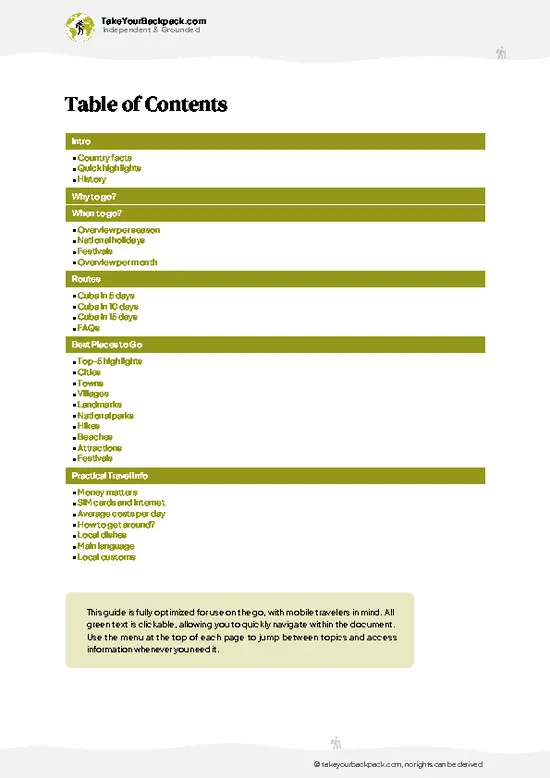
Skip weeks of research and hit the road with confidence. Get 386 pages of proven routes, transport advice, and real safety insights—built for your phone and 100% offline-ready.
example page 0 from our offline Travel Guide for Cubaexample page 1 from our offline Travel Guide for Cubaexample page 2 from our offline Travel Guide for Cubaexample page 3 from our offline Travel Guide for Cubaexample page 4 from our offline Travel Guide for Cuba
🎒 Your 386-page offline travel companion
5, 10 & 15-day routes paced for real travel
121 ranked highlights with honest skip-it advice
Logistics solved: Best areas to stay & transport
Safety blueprints: Common local scams to avoid
No Wi-Fi? No problem: Phone-optimized offline PDF
👉 See all 30+ guide features

📅 Plan smarter in minutes, not weeks
Realistic travel times & pacing
Best months per region
Festivals & national holidays
Budget expectations

🗺️ Go to the right places, skip the overrated ones
121 ranked highlights across the country
Hidden gems beyond the tourist trail
Honest pros & cons of destinations
Top hikes, parks & viewpoints
Lesser-known places most travelers miss
Clear “worth it vs skip it” guidance

🛏️ Travel smoothly without rookie mistakes
Best areas to stay
Transport systems explained simply
Local transport tradeoffs
Common scams & safety advice
SIM cards, money & practical tips
What to expect before arrival

🌍 Understand the country, not just visit it
Culture & traditions
52 Essential phrases & customs
Festivals worth planning around
Traveler-friendly historical context
Insights that make places more meaningful

📱 Built for real travel conditions
Fully downloadable PDF
Works completely offline
Optimized for phone use
Useful in remote areas & buses
Everything in one place
Save weeks of stressful planning
Get instant access to the full guide directly. 30-day money-back guarantee.


Sent to your inbox immediately after payment • 100% Secure Checkout
Best Backpacking Travel Advisor 2025 tourism awardBest Backpacking
Travel Advisor
2025
What others say about Take Your Backpack Guides:
⭐⭐⭐⭐⭐
Fantastic, amazing amount of information!
⭐⭐⭐⭐⭐
My goodness this is amazing, it's what I've been looking for hats off too you!
⭐⭐⭐⭐⭐
I think this is absolutely BRILLIANT
⭐⭐⭐⭐
Very complete and informative. It's still missing places, but I gotta to commend you
⭐⭐⭐⭐⭐
This is truly amazing, thank you, can't wait to explore it with my kids!
⭐⭐⭐⭐⭐
Awesome resource, thank you!
⭐⭐⭐⭐⭐
This is amazing! Can't wait to explore the ones I haven't seen
⭐⭐⭐⭐
I love this! Well done, great idea.
⭐⭐⭐⭐⭐
Thanks for taking the time to make this gem!
⭐⭐⭐⭐⭐
This might be the best website I've ever seen.
⭐⭐⭐⭐⭐
Congratulations, and thank you so much for your work; it's incredibly valuable.
⭐⭐⭐⭐
In all seriousness I think you did a great job pointing out the important spots
⭐⭐⭐⭐⭐
10/10 very good
⭐⭐⭐⭐⭐
As someone who's only just starting to visit regularly this is awesome, thank you.
⭐⭐⭐⭐
Thank you very much! I'm going to visit my dad, it's going to be very useful!
⭐⭐⭐⭐⭐
This is really cool! We'll be travelling for the first time and this definitely come in handy.
⭐⭐⭐⭐⭐
You are now our minister of culture, congratulations 👨‍💼
⭐⭐⭐⭐⭐
Just wanted to tell you that this is a pearl! Going to follow your recommendations.
⭐⭐⭐⭐⭐
This is so cool. I'll definitely be using the resource for my travels soon.
⭐⭐⭐⭐⭐
This is very impressive! Good work.
⭐⭐⭐⭐⭐
This is an amazing and informative site. Very well done!

🛏️ Where to stay?Best areas to stay in Cuba

Desembarco del Granma National Park is a treasure, but finding the right place to stay can save you both energy and money. Inside the park, options are limited. There are a few basic campsites, but they often lack amenities. If you’re looking for comfort, consider heading to nearby towns like Manzanillo or Bayamo.

Manzanillo offers several casas particulares—private homes that rent rooms. They provide a cozy atmosphere and a chance to connect with locals. Bayamo, known for its colonial charm, has more hotels and guesthouses. Both towns are about an hour’s drive from the park entrance, making … read more 👉
Desembarco del Granma National Park is a treasure, but finding the right place to stay can save you both energy and money. Inside the park, options are limited. There are a few basic campsites, but they often lack amenities. If you’re looking for comfort, consider heading to nearby towns like Manzanillo or Bayamo.

Manzanillo offers several casas particulares—private homes that rent rooms. They provide a cozy atmosphere and a chance to connect with locals. Bayamo, known for its colonial charm, has more hotels and guesthouses. Both towns are about an hour’s drive from the park entrance, making them convenient bases for your adventures.

Keep in mind that transportation can be tricky. Taxis and buses may not run on a strict schedule, so plan accordingly. Staying in these towns allows you to explore the park during the day while enjoying a more vibrant local experience in the evenings.

👛 Costs (as of 20 December 2025)Typical daily expenses

Visiting Desembarco del Granma National Park in Cuba can be a rewarding experience, but it’s essential to budget wisely to avoid surprises.

Entry fees are typically around $10 to $15 USD for adults. This fee grants access to the park’s trails and natural beauty. If you’re planning to hike or explore specific areas, consider that some guided tours can range from $30 to $50 USD, depending on the length and inclusions.

Transportation costs can add up. If you’re coming from nearby towns like Manzanillo, expect to pay around $5 to $10 USD for a taxi or shared ride. Renting a bike for the day might set you back about $10 USD, which can be a fun way to explore.

Food options within the park are limited. Budget around $5 to $15 USD for a meal at local eateries. Bringing snacks or a packed lunch … read more 👉
Visiting Desembarco del Granma National Park in Cuba can be a rewarding experience, but it’s essential to budget wisely to avoid surprises.

Entry fees are typically around $10 to $15 USD for adults. This fee grants access to the park’s trails and natural beauty. If you’re planning to hike or explore specific areas, consider that some guided tours can range from $30 to $50 USD, depending on the length and inclusions.

Transportation costs can add up. If you’re coming from nearby towns like Manzanillo, expect to pay around $5 to $10 USD for a taxi or shared ride. Renting a bike for the day might set you back about $10 USD, which can be a fun way to explore.

Food options within the park are limited. Budget around $5 to $15 USD for a meal at local eateries. Bringing snacks or a packed lunch can save you money and keep your energy up for hiking.

Lastly, if you’re considering staying overnight, accommodations nearby can range from $20 to $50 USD for basic lodgings. Always check for availability, as options can fill up quickly during peak seasons.

Being aware of these costs will help you enjoy your visit without financial stress. Prioritize what matters most to you, whether it’s a guided tour or a cozy meal, and keep your budget flexible for those unexpected moments that make travel special.


source: cubatravel.cu
⚠️ Prices can change and everyone travels differently, so take this as a rough guide. Hope it helps you plan your adventure!

🥾 TrailsHiking Desembarco del Granma national park: highlights and difficulty

Desembarco del Granma National Park is a hidden gem for hikers, offering a mix of stunning coastal views and lush tropical landscapes. The terrain varies from rugged cliffs overlooking the Caribbean Sea to gentle trails through dense forests. Wildlife enthusiasts will appreciate the chance to spot endemic birds and perhaps even a few reptiles basking in the sun. Most trails are manageable, but some sections can be steep and slippery, so a bit of caution is advised.

One of the standout hikes is the Sendero de la Playa. Here are the details:
  • Length: 5 km
  • Estimated Duration: 2-3 hours
  • Difficulty Level:
  • read more 👉
Desembarco del Granma National Park is a hidden gem for hikers, offering a mix of stunning coastal views and lush tropical landscapes. The terrain varies from rugged cliffs overlooking the Caribbean Sea to gentle trails through dense forests. Wildlife enthusiasts will appreciate the chance to spot endemic birds and perhaps even a few reptiles basking in the sun. Most trails are manageable, but some sections can be steep and slippery, so a bit of caution is advised.

One of the standout hikes is the Sendero de la Playa. Here are the details:
  • Length: 5 km
  • Estimated Duration: 2-3 hours
  • Difficulty Level: Moderate
  • Key Features: Coastal views, unique rock formations, and opportunities for birdwatching
  • Terrain: Mixed; sandy beach, rocky paths, and forested areas

Getting to the park is relatively straightforward. Public transport options are available from nearby towns, with buses or shared taxis being the most common. Just be prepared for a bit of waiting; things run on ”Cuban time.” The park isn’t usually overcrowded, so you can enjoy the tranquility, but weekends might see more locals. As for entrance fees, it’s quite budget-friendly, making it a great option for travelers looking to stretch their dollars.
⚠️ Hiking info can sometimes be outdated or inaccurate. Before you hit the trail, check the latest conditions with locals. If you do spot anything that's off, I'd love to hear from you, so I can update it for fellow travelers.

🛡️ SafetyTraveler Safety Guide

Desembarco del Granma National Park offers a straightforward hiking experience, but a few realities can enhance your adventure. Weather can shift quickly; pack a light rain jacket and check forecasts before heading out. The terrain is generally manageable, but some trails feature steep sections and rocky footing, so sturdy shoes are essential.

Wildlife is present, including birds and small mammals; keep a respectful distance and avoid feeding them. First-timers often underestimate the importance of hydration—carry enough water, especially on warmer days. Trail etiquette matters; yield to those ascending and keep noise to a minimum to fully appreciate the park’s tranquility. With these tips, you’ll navigate the park smoothly and enjoy its natural beauty.

Other Cuban national parks near Desembarco del Granma

Explore more nearby:


👉 Discover all national parks

Or checkout all Cuba has to offer (think cities, towns, villages, national parks, hikes, beaches, festivals)
Country photo of Cuba
film
0
0
0a
Viñales
film
1
1
1a
Cienaga de Zapata
film
2
2
2a
Sierra del Rosario
Stephan Dames
film
3
3
3a
Parque Nacional Baconao
film
4
4
4a
Parque Nacional Turquino
film
5
5
5a
Parque Nacional Montemar
film
6
6
6a
Parque Nacional Sierra Maestra
film
7
7
7a
Parque Nacional Ciénaga de Lanier

I 💚 feedbackIs it worth it?

Desembarco del Granma National Park is a treasure for those who crave raw nature and rich history. The dramatic cliffs and diverse ecosystems are breathtaking. But be prepared: the trails can be rugged and poorly marked, which might drain your energy if you’re not ready. Embrace the challenge, and you’ll find the park rewards your effort with unforgettable views and a sense of adventure.

✈️ When did I visit Cuba?
As part of my 1.5 year travel around the world trip, I visited Cuba for 6 weeks in February, March 2016, being extremely lucky that that coincided with the free concert of The Rolling Stones.

✍️ Help improve this page!
The information on this page is based on my own backpacking experience in Cuba, supplemented with up-to-date research and feedback from other travelers. Travel details can change, so if you notice anything outdated or incomplete, feel free to let me know.


🙋‍♂️ Give feedback

👋 Meet the authorWho’s Behind Take Your Backpack?

Johan, backpacker and founder of TakeYourBackpackHi, I’m Johan (Netherlands 🇳🇱), the creator of TakeYourBackpack. Over the past decade, I’ve backpacked through 80+ countries across six continents, gaining extensive experience with independent travel, long-term trips, and overland routes.

This site is built on a combination of firsthand travel experience and carefully curated insights from other backpackers. Many guides are based on places I’ve personally visited, while others bring together tips, observations, and practical advice shared by trusted travelers I’ve met along the way.

The goal is to provide realistic, experience-driven guidance — not generic itineraries — so you can explore destinations with better context, clearer expectations, and more confidence.

Get Full Country Guide |
Instant download • 121 highlights • Full Offline guide