×

Cuba🇨🇺 | national parksParque Nacional Ciénaga de LanierCuban crocodile, green parrots, mangrove creeks, island swamp | things to do and best time to go

Explore Parque BaconaoExplore Parque Nacional Punta Francés

Backpacking in Parque Nacional Ciénaga de Lanier
👀 For curious travelersnational park ranked #16
By Johan Kruseman 🇳🇱 | Updated October 23, 2026

Parque Nacional Ciénaga de Lanier covers most of the swampy southern Isla de la Juventud, and the island is reached only by ferry or plane, so almost no one passes through by accident. It lies south of mainland Cuba, below the Gulf of Batabanó. Skip the swamp edges at midday, because birds sit tight in the heat. Go early. I would hire a local guide at the park gate rather than wander the dirt tracks alone, since junctions are unsigned and the guides know where crocodiles and Cuban parrots hide. A morning on the water, then a lazy afternoon in Nueva Gerona, works well.

Discover everything you want to know in the 📖 Cuba Travel Guide.


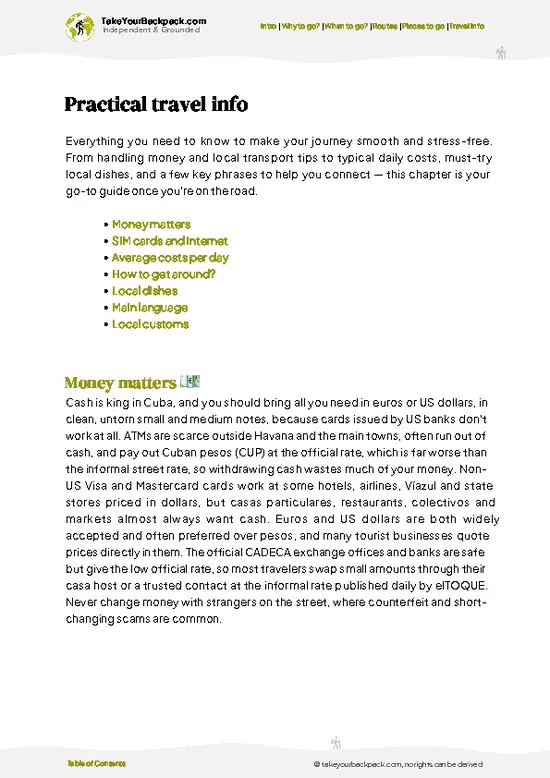
example page 0 from our offline Travel Guide for Cuba
example page 1 from our offline Travel Guide for Cuba
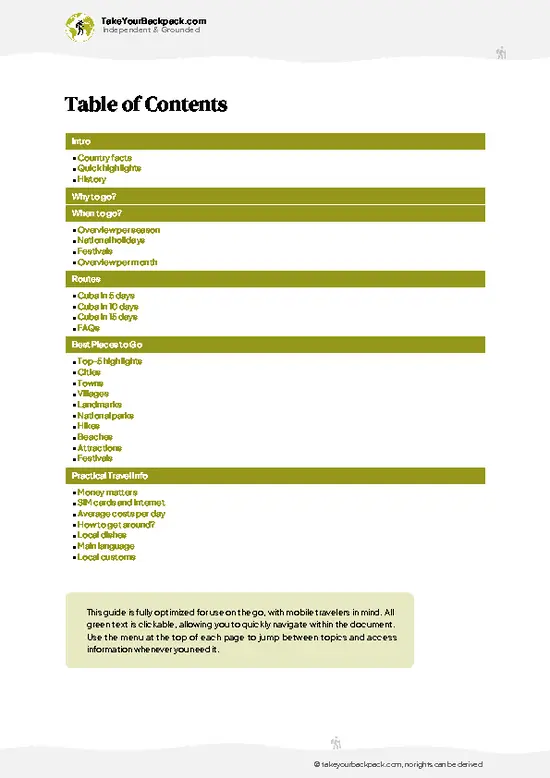
example page 2 from our offline Travel Guide for Cuba
example page 3 from our offline Travel Guide for Cuba
example page 4 from our offline Travel Guide for Cuba
example page 5 from our offline Travel Guide for Cuba
example page 6 from our offline Travel Guide for Cuba
example page 7 from our offline Travel Guide for Cuba
Loading the map 🌍
CLICK TO FILTER
cities
towns
villages
landmarks
national parks
hikes
beaches
attractions
festivals
SHOW COUNTRY’S BESTSHOW ALL

✨ Why go?
Ranked #16 national park in Cuba
Why Parque Nacional Ciénaga de Lanier should be on your travel list

Parque Nacional Ciénaga de Lanier suits backpackers who like their wildlife without a tour bus attached. Roads on the island are quiet, and you can reach the park edge by rented bike or shared taxi, then arrange a local guide on the spot. The draw is the swamp itself: this is one of the few places where you can see the endemic Cuban green parrot and the Cuban crocodile in their own habitat. Just as useful, the island is small, so you can pair the park with the beach at Punta del Este and its pre-Columbian cave paintings, all on your own schedule and for far less than organized packages.

💡 HighlightsThe experiences that define the visit

  1. Cuban crocodile habitat: The swamp shelters one of the rarest crocodile species on earth, which has a restricted range in Cuba. Guides can point out likely basking spots from the tracks.
  2. Cuban green parrot: Flocks screech through the dry forest edges in the early morning, bright green with a white forehead and a rosy throat.
  3. Mangrove channels: Dense red and black mangroves line the tidal creeks, and the roots are nurseries for fish and wading birds.
  4. Birdwatching on the wetlands: Herons, egrets and ibises feed in the shallows, best before the sun gets high.
  5. Southern coast: Remote shoreline with reef, sandy flats and seabirds, usually seen with a guide.
  6. Punta del Este caves: Nearby caves hold hundreds of red and black circular pictographs, among the best known in the Caribbean, set above a white
… read more 👉
  1. Cuban crocodile habitat: The swamp shelters one of the rarest crocodile species on earth, which has a restricted range in Cuba. Guides can point out likely basking spots from the tracks.
  2. Cuban green parrot: Flocks screech through the dry forest edges in the early morning, bright green with a white forehead and a rosy throat.
  3. Mangrove channels: Dense red and black mangroves line the tidal creeks, and the roots are nurseries for fish and wading birds.
  4. Birdwatching on the wetlands: Herons, egrets and ibises feed in the shallows, best before the sun gets high.
  5. Southern coast: Remote shoreline with reef, sandy flats and seabirds, usually seen with a guide.
  6. Punta del Este caves: Nearby caves hold hundreds of red and black circular pictographs, among the best known in the Caribbean, set above a white beach.
  7. Sea turtle nesting beaches: Sandy stretches on the southern coast host turtle nesting in the warmer months, with protected sections.
Parque Nacional Ciénaga de Lanier itself needs a guide arranged on arrival, and the Punta del Este caves charge a small separate entry.
Spotted a mistake or missing something? Contact us.

🌤️ When to go?Choosing the right time of year

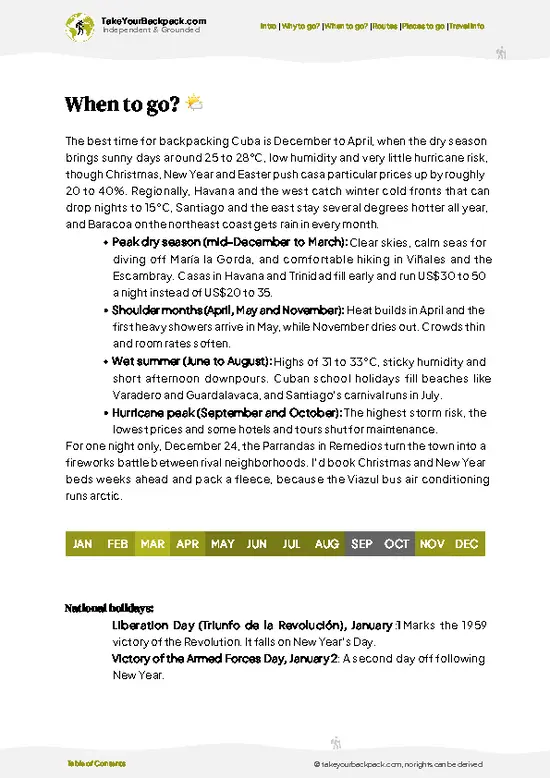
  • Dry Season (November to April): Lowest rain, with highs of 26 to 30°C (79 to 86°F) and cooler nights near 18 to 21°C (64 to 70°F). Roughly 11 to 12 hours of daylight, best for birding and coastal walks.
  • Peak Crowds (December to February, Easter): Cuban holiday visitors and foreign tour groups push up casa particular rates on Isla de la Juventud.
  • Wet Season (May to October): Highs of 31 to 34°C (88 to 93°F), heavy humidity, afternoon downpours, mosquitoes and flooded tracks. Rates drop, and hurricane risk peaks from August to October.
Book a local guide early for February, when migratory birds are most active.

source: climatestotravel.comJANJanuary: highly recommended for travelingFEBFebruary: highly recommended for travelingMARMarch: highly recommended for travelingAPRApril: highly recommended for travelingMAYMay: fair for travelingJUNJune: fair for travelingJULJuly: fair for travelingAUGAugust: fair for travelingSEPSeptember: fair for travelingOCTOctober: fair for travelingNOVNovember: highly recommended for travelingDECDecember: highly recommended for traveling
cuba-national-park-parque-nacional-cienaga-de-lanier
© Google |

✈️ The backpacker research shortcutCuba Travel Guide

An offline-friendly backpacking guide with optimized travel routes, ranked highlights, transport advice, and the best areas to stay.
example page 0 from our offline Travel Guide for Cuba
example page 1 from our offline Travel Guide for Cuba
example page 2 from our offline Travel Guide for Cuba
example page 3 from our offline Travel Guide for Cuba
example page 4 from our offline Travel Guide for Cuba
example page 5 from our offline Travel Guide for Cuba
example page 6 from our offline Travel Guide for Cuba
example page 7 from our offline Travel Guide for Cuba
The digital guide (327 pages) contains:
✅ 113 highlights, ranked by travel appeal
✅ Optimized 5, 10 & 15-day travel routes
✅ Cities, national parks, landmarks, beaches
✅ How to get around
✅ Offline-friendly for travel without Wi-Fi
👉 Click to see all 30+ guide features

📅 Plan smarter in minutes, not weeks
✅ Month by month travel advice
✅ Festivals & national holidays
✅ Budget expectations

🗺️ Go to the right places, skip the overrated ones
✅ Honest pros & cons of destinations
✅ Top hikes, parks & viewpoints
✅ Lesser-known places most travelers miss
✅ Clear “worth it vs skip it” guidance

🛏️ Travel smoothly without rookie mistakes
✅ Best areas to stay
✅ Transport systems explained simply
✅ Common scams & safety advice
✅ SIM cards, money & practical tips

🌍 Understand the country, not just visit it
✅ Culture & traditions
✅ 52 Essential phrases & customs
✅ Festivals worth planning around
✅ Traveler-friendly historical context
✅ Insights that make places more meaningful

📱 Built for real travel conditions
✅ Fully downloadable PDF
✅ Works completely offline
✅ Optimized for phone use
✅ Useful in remote areas & buses
✅ Everything in one place
Stop searching, start planning
Get instant access to your full guide. 30‑day money-back guarantee.
+ Add another guide for just

By proceeding you agree to our terms.
Sent to your inbox immediately after payment • 100% Secure Checkout
Best Backpacking Travel Advisor 2025 tourism awardBest Backpacking
Travel Advisor
2025
What others say about Take Your Backpack Guides:
⭐⭐⭐⭐⭐
Fantastic, amazing amount of information!
⭐⭐⭐⭐⭐
My goodness this is amazing, it's what I've been looking for hats off too you!
⭐⭐⭐⭐⭐
I think this is absolutely BRILLIANT
⭐⭐⭐⭐
Very complete and informative. It's still missing places, but I gotta to commend you
⭐⭐⭐⭐⭐
This is truly amazing, thank you, can't wait to explore it with my kids!
⭐⭐⭐⭐⭐
Awesome resource, thank you!
⭐⭐⭐⭐⭐
This is amazing! Can't wait to explore the ones I haven't seen
⭐⭐⭐⭐
I love this! Well done, great idea.
⭐⭐⭐⭐⭐
Thanks for taking the time to make this gem!
⭐⭐⭐⭐⭐
This might be the best website I've ever seen.
⭐⭐⭐⭐⭐
Congratulations, and thank you so much for your work; it's incredibly valuable.
⭐⭐⭐⭐
In all seriousness I think you did a great job pointing out the important spots
⭐⭐⭐⭐⭐
10/10 very good
⭐⭐⭐⭐⭐
As someone who's only just starting to visit regularly this is awesome, thank you.
⭐⭐⭐⭐
Thank you very much! I'm going to visit my dad, it's going to be very useful!
⭐⭐⭐⭐⭐
This is really cool! We'll be travelling for the first time and this definitely come in handy.
⭐⭐⭐⭐⭐
You are now our minister of culture, congratulations 👨‍💼
⭐⭐⭐⭐⭐
Just wanted to tell you that this is a pearl! Going to follow your recommendations.
⭐⭐⭐⭐⭐
This is so cool. I'll definitely be using the resource for my travels soon.
⭐⭐⭐⭐⭐
This is very impressive! Good work.
⭐⭐⭐⭐⭐
This is an amazing and informative site. Very well done!

🛏️ Where to stay?Best areas and accommodation options

No lodging exists inside Parque Nacional Ciénaga de Lanier, so you sleep in Nueva Gerona, the main town of Isla de la Juventud, roughly 30 to 60 minutes by road from the reserve's edge depending on the access point. Casas particulares are the backpacker choice, typically US$20 to 35 a room, and hosts often arrange breakfast, dinner and a taxi or guide for the park. A few state hotels, such as Rancho El Tesoro on the edge of town, cost more at US$35 to 60. Santa Fe, a small town in the island's interior, has a couple of modest rooms and puts you closer to trailheads, though dining options are thin. … read more 👉
No lodging exists inside Parque Nacional Ciénaga de Lanier, so you sleep in Nueva Gerona, the main town of Isla de la Juventud, roughly 30 to 60 minutes by road from the reserve's edge depending on the access point. Casas particulares are the backpacker choice, typically US$20 to 35 a room, and hosts often arrange breakfast, dinner and a taxi or guide for the park. A few state hotels, such as Rancho El Tesoro on the edge of town, cost more at US$35 to 60. Santa Fe, a small town in the island's interior, has a couple of modest rooms and puts you closer to trailheads, though dining options are thin. Stay in Nueva Gerona for the better food and transport links.

👛 Costs (as of 23 October 2026)Money, prices, and spending tips

Parque Nacional Ciénaga de Lanier costs about US$70 to 125 a day for a backpacker, with a guide and transport as the biggest items.
CategoryBudget RangeLocal Reality
Entrance and guideUS$15 to 35Fees and guiding are usually arranged through park staff or a host, paid in cash.
Accommodation (high season)US$20 to 35Casa particular room in Nueva Gerona, often shared between two people.
Local transportUS$20 to 30Private taxi or arranged car to the park and back, since public buses do not reach it.
Food and suppliesUS$15 to 25Home-cooked dinners cost US$8 to 12; bring snacks and water from town.
Total Daily BudgetUS$70 to 125Splitting a taxi cuts the cost noticeably.


source: cubatravel.cu
⚠️ Prices can change and everyone travels differently, so take this as a rough guide. Hope it helps you plan your adventure!

🥾 TrailsTrail guide for Parque Nacional Ciénaga de Lanier national park

Parque Nacional Ciénaga de Lanier is explored on guided walks and short boat or vehicle trips rather than on long signed trails, and that suits most backpackers. Terrain is flat, wet and hot, so difficulty is easy.
  • Swamp edge walks: Guides lead you from the park access tracks along dry causeways and forest edges, usually two to three hours at a slow birdwatching pace, with crocodile and parrot spotting.
  • Mangrove stretches: Short, muddy sections beside tidal channels, where you pass roots, crabs and wading birds. Wear closed shoes.
  • Coastal approach: Longer outings reach the southern shore, passing
… read more 👉
Parque Nacional Ciénaga de Lanier is explored on guided walks and short boat or vehicle trips rather than on long signed trails, and that suits most backpackers. Terrain is flat, wet and hot, so difficulty is easy.
  • Swamp edge walks: Guides lead you from the park access tracks along dry causeways and forest edges, usually two to three hours at a slow birdwatching pace, with crocodile and parrot spotting.
  • Mangrove stretches: Short, muddy sections beside tidal channels, where you pass roots, crabs and wading birds. Wear closed shoes.
  • Coastal approach: Longer outings reach the southern shore, passing dry scrub, salt flats and sandy tracks. Plan a half day, with water and sun protection.
  • Wildlife: Expect parrots, herons, ibises, iguanas and, with luck, crocodiles. Mosquitoes and sand flies are fierce at dawn and dusk.
Getting there is the hardest part: you need to reach Isla de la Juventud, then continue by taxi, rented bike or arranged transfer from Nueva Gerona, as public transport near the park is thin. Crowds are minimal, often just you and your guide. Access is controlled, and a guide or permit is normally required, so expect to pay a modest fee on arrival, in the local currency or in cash dollars. Bring repellent, since the swamp is humid year-round.
⚠️ Hiking info can sometimes be outdated or inaccurate. Before you hit the trail, check the latest conditions with locals. If you do spot anything that's off, I'd love to hear from you, so I can update it for fellow travelers.

🛡️ SafetyScams, Hazards, and Annoyances

Parque Nacional Ciénaga de Lanier is a flat, low-risk wetland, and the real issues are heat, mosquitoes and mud. Wear long, light sleeves, carry at least 3 liters of water per person and use strong repellent, particularly near dusk. Tracks flood after rain, so waterproof footwear helps. Go with a local guide because paths are unmarked and the mangrove and swamp terrain is easy to get lost in. Cuban crocodiles live in the wetland, so keep your distance, never feed wildlife and stay on guided routes. Phone signal is patchy, so tell your host your return time.

FAQFrequently asked questions about Parque Nacional Ciénaga de Lanier

One full day is enough for Parque Nacional Ciénaga de Lanier, since most guided outings last 4 to 6 hours. Add a second day if you want a dedicated birding morning or a visit to nearby Punta del Este caves, about 1.5 hours from Nueva Gerona. Base yourself in Nueva Gerona and arrange transport there.
Reaching Parque Nacional Ciénaga de Lanier without a car is difficult but possible with a hired taxi from Nueva Gerona, often US$20 to 30 round trip with waiting time. Public buses do not serve the reserve. Some travelers cycle part of the way, though heat and distances of 30 km or more make it demanding.
Parque Nacional Ciénaga de Lanier is a protected reserve, so access is arranged through park staff or an authorized guide rather than a casual walk-in. Expect to pay roughly US$10 to 35 in cash for entry and guiding combined. Ask your Nueva Gerona host to book ahead, especially in the December to February high season.
⚠️ Things can change over time, so always validate details locally before you go.

Other Cuban national parks near Parque Nacional Ciénaga de Lanier

Explore more nearby:


💡 Not sure where to go next?
Create a personalized itinerary for Cuba including Parque Nacional Ciénaga de Lanier and the places that fit your trip.

Generate my itinerary

👉 Discover all national parks

Or checkout all Cuba has to offer (think cities, towns, villages, national parks, hikes, beaches, festivals)
Country photo of Cuba

We 💚 feedbackIs it worth it?

Parque Nacional Ciénaga de Lanier rewards the early riser, and what first-timers overlook is how quickly the birds go quiet once the swamp heats up. I would book the guide the night before in Nueva Gerona, start at first light, and bring plenty of repellent.

✈️ When did I visit Cuba?
As part of my 1.5 year travel around the world trip, I visited Cuba for 6 weeks in February, March 2016, being extremely lucky that that coincided with the free concert of The Rolling Stones.

✍️ Help improve this page!
The information on this page is based on my own backpacking experience in Cuba, supplemented with up-to-date research and feedback from other travelers. Travel details can change, so if you notice anything outdated or incomplete, feel free to let me know.


🙋‍♂️ Give feedback

👋 Meet the founderWho’s Behind Take Your Backpack?

Johan, backpacker and founder of TakeYourBackpackHi, I’m Johan (Netherlands 🇳🇱), the creator of TakeYourBackpack. Over the past 3 decades, I’ve backpacked through 90+ countries across six continents, gaining extensive experience with independent travel, long-term trips, and overland routes.

This site is built on a combination of firsthand travel experience and carefully curated insights from other backpackers. Many guides are based on places I’ve personally visited, while others bring together tips, observations, and practical advice shared by trusted travelers I’ve met along the way.

The goal is to provide realistic, experience-driven guidance — not generic itineraries — so you can explore destinations with better context, clearer expectations, and more confidence.