×

Cuba🇨🇺 | best national parksDiscover the 10 Best national parks Across Cuba

National parks in Cuba are small, guide-led and spread along an island more than 1,200 kilometers long, so the experience depends on which end you pick. The west (tobacco valleys and wetlands) sits within a few hours of Havana and is easy by bus or shared taxi, but it fills with day-trippers. The central mountains and the far east are wetter, slower to reach and far emptier. Expect entry fees and compulsory guides rather than open trails, so multi-day wilderness treks are not on offer. Independent travelers do best sleeping in casas particulares near park gates. Choose the west for convenience, the east for solitude and real jungle.

By Johan Kruseman 🇳🇱 | Updated October 23, 2026
Explore the best hikes in Cuba

Why go?What Makes Them Special

Cuba is the largest island in the Caribbean, and its mix of limestone karst, mangrove wetlands and the high Sierra Maestra has produced unusually high endemism, with roughly half of the island’s plant species found nowhere else. State ownership of land and decades of limited development kept large areas intact, with no resort sprawl at park edges. That is the real strength.

The weakness is infrastructure. Parks are state-run and underfunded, so trail signage is thin, printed maps are rare and visitor centers often have little beyond a ticket desk. Most trails are short, usually 2 to 6 hours, and nearly all require a local guide. If you want long hut-to-hut routes or free wild camping, Cuba is the wrong country.

Before committing, understand the practical limits. Fuel shortages and blackouts … read more 👉
Cuba is the largest island in the Caribbean, and its mix of limestone karst, mangrove wetlands and the high Sierra Maestra has produced unusually high endemism, with roughly half of the island’s plant species found nowhere else. State ownership of land and decades of limited development kept large areas intact, with no resort sprawl at park edges. That is the real strength.

The weakness is infrastructure. Parks are state-run and underfunded, so trail signage is thin, printed maps are rare and visitor centers often have little beyond a ticket desk. Most trails are short, usually 2 to 6 hours, and nearly all require a local guide. If you want long hut-to-hut routes or free wild camping, Cuba is the wrong country.

Before committing, understand the practical limits. Fuel shortages and blackouts make transport unreliable, so build slack into every transfer. Cash matters, since card payments and ATMs fail often, and mobile data is patchy, so download offline maps in advance. Bring insect repellent, sun protection and any specialist gear, because shops outside Havana rarely stock them. Go for birds, caves, cloud forest and quiet, not for comfort.
Our Approach to Ranking
The list of best national parks in Cuba is created based on landscapes, wildlife, adventure opportunities, facilities, and overall experience. If you feel a national park is missing in this list, please let us know.

When to go?Best Time to Visit Cuba for national parks

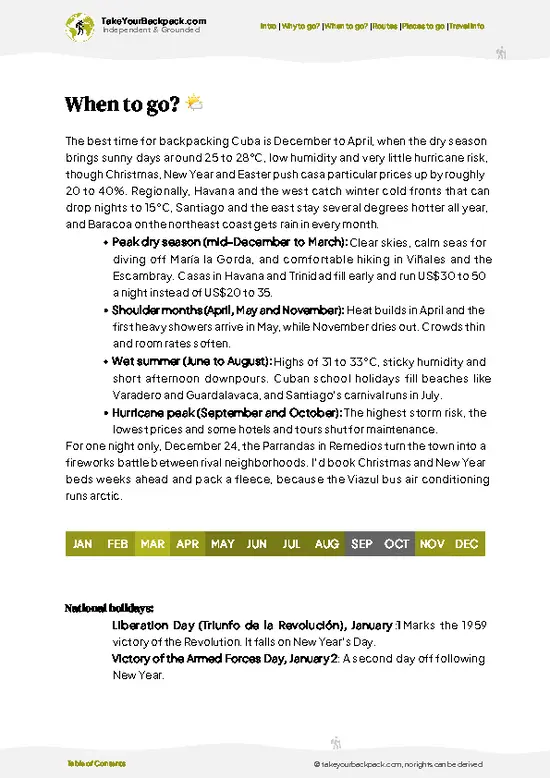
Best months: The best months are November to April, the dry season, when daytime highs sit around 25 to 29°C, humidity drops and trails dry out enough for caves, wetlands and muddy forest paths to be manageable. Monthly rainfall in the west often stays under 60 to 80 mm in this period.Shoulder and wet seasons: May and October are workable shoulder months, with afternoon storms and fewer visitors. From June to September, highs reach 32 to 35°C with heavy humidity, and most of the island’s roughly 1,200 to 1,400 mm of annual rain falls. Mosquitoes peak, trails turn to slick red clay, and boat or cave visits can be canceled. Skip these months for any park with steep or muddy walking.

The hurricane season runs June to November, with the highest risk from August to October. Storms can close roads … read more 👉
Best months: The best months are November to April, the dry season, when daytime highs sit around 25 to 29°C, humidity drops and trails dry out enough for caves, wetlands and muddy forest paths to be manageable. Monthly rainfall in the west often stays under 60 to 80 mm in this period.Shoulder and wet seasons: May and October are workable shoulder months, with afternoon storms and fewer visitors. From June to September, highs reach 32 to 35°C with heavy humidity, and most of the island’s roughly 1,200 to 1,400 mm of annual rain falls. Mosquitoes peak, trails turn to slick red clay, and boat or cave visits can be canceled. Skip these months for any park with steep or muddy walking.

The hurricane season runs June to November, with the highest risk from August to October. Storms can close roads and parks for days, and travel insurance with weather cover is worth checking.Regional differences: The far east, around Guantánamo province, is the wettest part of Cuba, with some mountain areas receiving over 3,000 mm a year. Showers are possible even in February, so pack a rain shell there. The west and south coast stay much drier in winter.Crowds and prices: Peak demand runs from mid-December to February, plus Easter week, when casa rooms cost roughly 20 to 30 percent more and popular western parks fill by 10 a.m. Start walks at 7 or 8 a.m. to beat both crowds and heat. Late March to April is the best compromise.

national park hoppingHow to Combine national parks Into One Trip

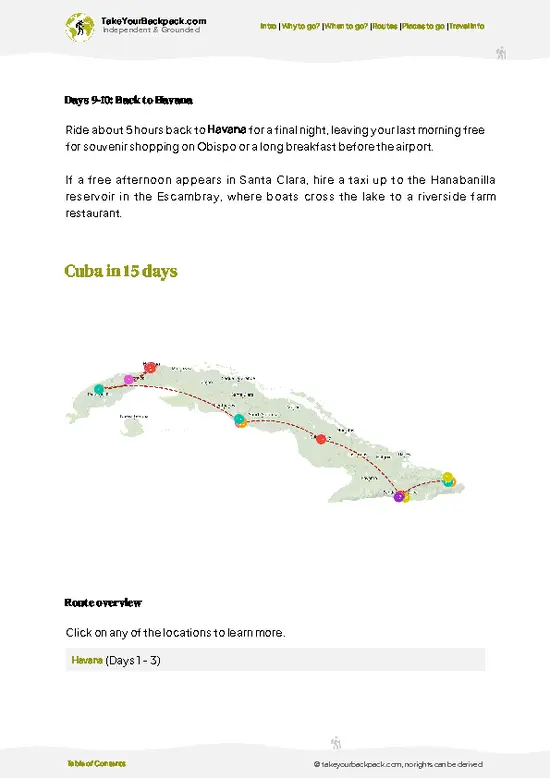
How long you need: A trip linking several national parks in Cuba needs 10 to 14 days, with fewer than 8 only workable if you stay in the west. Plan 1 to 2 nights per park, because most guided routes take 3 to 6 hours and a second night adds little.Which regions group well: Three clusters work. The west (Havana, Viñales, Zapata Peninsula) is connected by road, with Havana to Viñales about 3 hours and Havana to the Zapata wetlands 2.5 to 3 hours. The center (Trinidad area) is 5 to 6 hours from Havana. The east (Santiago de Cuba, Baracoa) is a different trip, with Havana to Santiago taking 14 to 18 hours by road and about 1.5 hours by plane, and Santiago to Baracoa another 5 to 6 hours.

Travel west to east, ending in Santiago or Baracoa, and fly back to Havana. Backtracking by road eats two full … read more 👉
How long you need: A trip linking several national parks in Cuba needs 10 to 14 days, with fewer than 8 only workable if you stay in the west. Plan 1 to 2 nights per park, because most guided routes take 3 to 6 hours and a second night adds little.Which regions group well: Three clusters work. The west (Havana, Viñales, Zapata Peninsula) is connected by road, with Havana to Viñales about 3 hours and Havana to the Zapata wetlands 2.5 to 3 hours. The center (Trinidad area) is 5 to 6 hours from Havana. The east (Santiago de Cuba, Baracoa) is a different trip, with Havana to Santiago taking 14 to 18 hours by road and about 1.5 hours by plane, and Santiago to Baracoa another 5 to 6 hours.

Travel west to east, ending in Santiago or Baracoa, and fly back to Havana. Backtracking by road eats two full days. Viazul buses cover main routes, while shared taxis and private drivers fill the gaps, usually at higher prices.Common planning mistakes: The first is trying to cover both ends of the island by road in under a week. Choose one end, or fly the long leg. The second is relying on a single bus with no spare day, since breakdowns and fuel shortages are routine. Leave a buffer before any flight or fixed tour. The third is booking park visits for the afternoon, when heat and storms arrive. Schedule walks for early morning and transfers for midday.

The ListHighly Recommended national parks of Cuba

1 Ciénaga de Zapata National Park

Sawgrass birding, Zapata sparrow, crocodile lagoon, Cueva de los Peces cenote

Rise before dawn for short flat walks through sawgrass and mangrove, then cool off snorkeling a seaside cenote or boating the reedy lagoon.

cuba-national-park-cienaga-de-zapata-national-park
© Google |

2 Parque Nacional Alejandro de Humboldt

Cloud forest, Monte Iberia frog, Balcón de Iberia, Bahía de Taco

Climb muddy guided trails through endemic forest to a ridge viewpoint, then paddle mangrove channels for birds in a remote eastern corner.

3 Desembarco del Granma National Park

Granma landing site, limestone terraces, Cabo Cruz lighthouse, dry coastal forest

Follow rough roads to the western tip, where uplifted rock terraces, a lone lighthouse, cave walks and the revolution’s landing beach sit mostly empty.

4 Parque Nacional Guanahacabibes

Maria la Gorda diving, turtle nesting, Cabo San Antonio, dry forest

Dive clear coral drop-offs near shore, then join ranger-led walks through dry forest or night patrols to watch turtles nest in summer.

5 Sierra del Rosario

Las Terrazas, ruined coffee estates, San Juan river pools, tody and tocororo

Hike short forest trails past overgrown plantation ruins and swim in cold river pools, with dawn birding for tocororos and tiny todies.

cuba-national-park-sierra-del-rosario
© Google | Stephan Dames

6 Parque Baconao

Gran Piedra steps, coastal highway, coffee house, Laguna Baconao

Climb roughly 450 stone steps to a summit boulder, then work along the shoreline east of Santiago to beaches, a lagoon and a plantation house.

cuba-national-park-parque-baconao
© Google |

7 Parque Nacional Jardines de la Reina

Shark dives, goliath groupers, reef walls, floating hotel

Sleep aboard a moored vessel and dive protected reef walls where sharks and huge groupers circle, with mangrove cays and flats close by.

8 Parque Nacional Pico Cristal

Pico Cristal summit, pine forest, orchids, farmhouse coffee

Start with coffee at a farm, then climb wet pine and cloud forest to the range’s summit, with a waterfall pool for the descent.

9 Parque Nacional La Mensura

Salto El Guayabo, pine ridges, tree ferns, endemic birds

Hike muddy, root-laced trails under tree ferns to a waterfall and cold rock pool, then wander resin-scented pine ridges above Mayarí.

10 Parque Nacional Caguanes

Karst caves, Taíno traces, bat colonies, mangrove shore

Descend with a guide into limestone galleries marked by stalactites and pre-Columbian rock art, then look for herons along the tangled northern coast.

11 Parque Nacional Punta Francés

Coral walls, shipwreck legends, black coral, pale beach

Cross open water by boat to dive walls and caves or snorkel shallow reef off a quiet beach, with pelicans and frigatebirds overhead.

12 Parque Nacional La Bayamesa

Pico Bayamesa, Sierra Maestra cloud forest, tocororo, rebel routes

Hike steep forest paths toward a 1,700-meter peak, passing coffee farms and guerrilla camps, with ferns, orchids and national birds overhead.

13 Parque Nacional Ciénaga de Lanier

Cuban crocodile, green parrots, mangrove creeks, island swamp

Scan tidal channels and wetland edges at first light for rare crocodiles, parrots and wading birds, with turtle beaches and painted caves nearby.

cuba-national-park-parque-nacional-cienaga-de-lanier
© Google |

14 El Nicho

Escambray waterfalls, turquoise pools, tree ferns, trogon trails

Walk a forest trail beside cascading falls and clear basins, swimming in the lower pools or climbing higher for quieter water.

Think you know Cuba?

Prove you’re a true local — uncover 4 lesser-known national parks in Cuba that locals tend to keep to themselves.
Loading the map 🌍

Expert viewWhat You Should Know

How many parks to visit: Three to four national parks is the right number for most backpackers on a two-week trip. Each park needs at least a full morning with a guide, and the transfers between them are slow and unreliable. Visiting five or six turns the trip into a series of bus rides, and the landscapes begin to repeat. More than four is rarely worth the transport hours.Prioritizing by travel style: First-timers and anyone short on time should pick one western karst or valley park, because access is easy and hosts can arrange guides and horses within a day. Birders and wildlife seekers should add a wetland park, where early starts matter far more than distance covered. Hikers wanting genuine wilderness should commit to the eastern mountain parks, which are wetter, steeper and quieter, though … read more 👉
How many parks to visit: Three to four national parks is the right number for most backpackers on a two-week trip. Each park needs at least a full morning with a guide, and the transfers between them are slow and unreliable. Visiting five or six turns the trip into a series of bus rides, and the landscapes begin to repeat. More than four is rarely worth the transport hours.Prioritizing by travel style: First-timers and anyone short on time should pick one western karst or valley park, because access is easy and hosts can arrange guides and horses within a day. Birders and wildlife seekers should add a wetland park, where early starts matter far more than distance covered. Hikers wanting genuine wilderness should commit to the eastern mountain parks, which are wetter, steeper and quieter, though reaching them costs a day or more of travel each way. Skip any park whose main draw is a short viewpoint with a ticket booth and tour buses. The time is better spent in a quieter one.What it costs: Entry fees typically run US$3 to 15 per park, and mandatory guides add roughly US$10 to 35 per group or per person depending on the route. Boat, horse or cave extras cost US$5 to 20. A casa particular room costs US$20 to 40, meals in a casa US$8 to 15, and shared transport between towns US$10 to 30 per seat. Budget US$45 to 75 a day including a park visit, and around US$20 to 50 per park visit on top of normal costs when you add guide, entry and local transport. Bring enough cash for the whole trip, since card payments and ATMs are unreliable and exchange rates vary between official and informal channels.Safety and cultural considerations: Violent crime inside parks is rare. The real risks are heat, dehydration, slippery clay and mosquito-borne illness, since dengue and chikungunya outbreaks occur in some years. Carry 2 to 3 liters of water, repellent with DEET, and closed shoes with grip. Mobile coverage is weak, so tell your host your plan and expected return time.

Use the local guides. They are required in most parks, they know which trails are open after storms, and their fees support rural households with few other income sources. Tip them US$3 to 5 if the day went well. Do not photograph military installations or uniformed personnel, which are sometimes near park entrances, and do not collect plants, shells or feathers. Many parks sit near farms and villages, so ask before entering private land or photographing people. Pack light snacks, soap or school supplies to give hosts, since shortages are common.

✈️ The backpacker research shortcutCuba Travel Guide

An offline-friendly backpacking guide with optimized travel routes, ranked highlights, transport advice, and the best areas to stay.
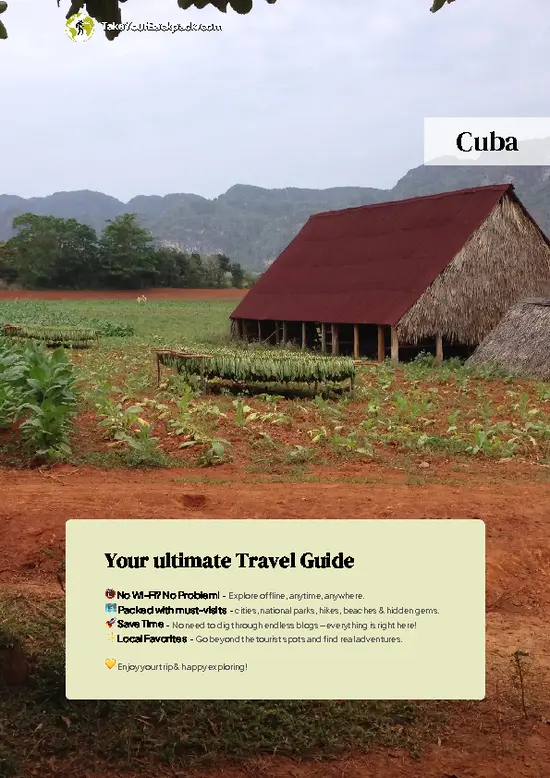
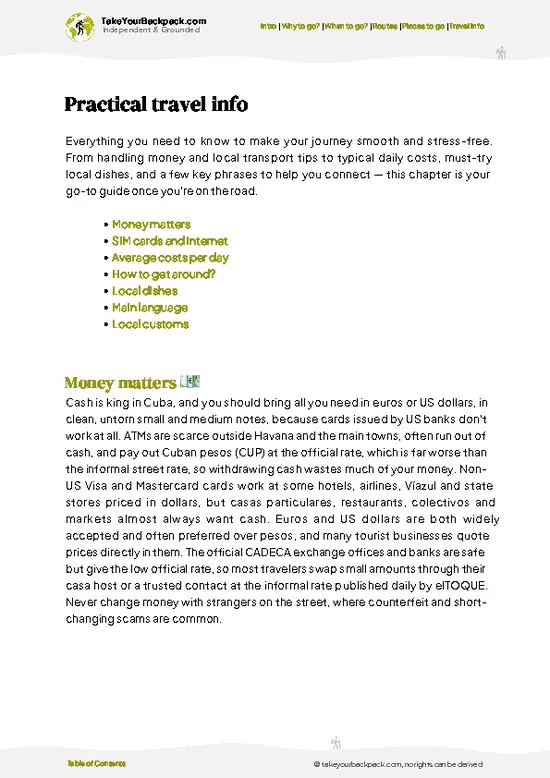
example page 0 from our offline Travel Guide for Cuba
example page 1 from our offline Travel Guide for Cuba
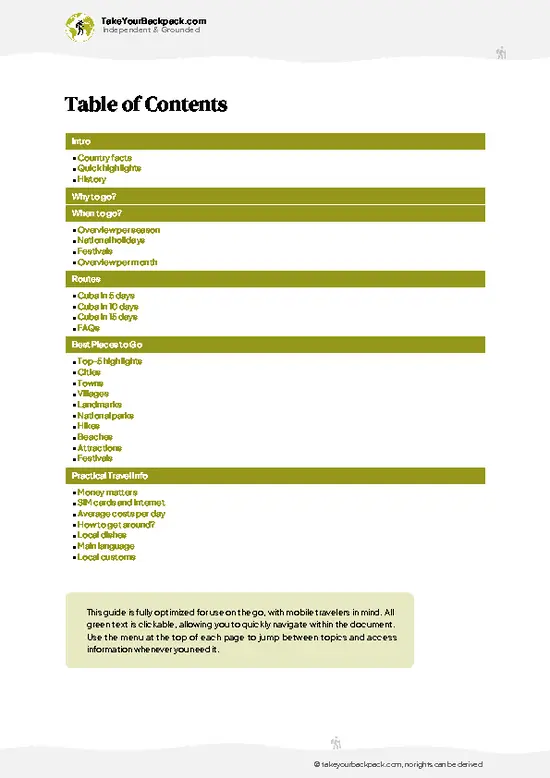
example page 2 from our offline Travel Guide for Cuba
example page 3 from our offline Travel Guide for Cuba
example page 4 from our offline Travel Guide for Cuba
example page 5 from our offline Travel Guide for Cuba
example page 6 from our offline Travel Guide for Cuba
example page 7 from our offline Travel Guide for Cuba
The digital guide (327 pages) contains:
✅ 113 highlights, ranked by travel appeal
✅ Optimized 5, 10 & 15-day travel routes
✅ Cities, national parks, landmarks, beaches
✅ How to get around
✅ Offline-friendly for travel without Wi-Fi
👉 Click to see all 30+ guide features

📅 Plan smarter in minutes, not weeks
✅ Month by month travel advice
✅ Festivals & national holidays
✅ Budget expectations

🗺️ Go to the right places, skip the overrated ones
✅ Honest pros & cons of destinations
✅ Top hikes, parks & viewpoints
✅ Lesser-known places most travelers miss
✅ Clear “worth it vs skip it” guidance

🛏️ Travel smoothly without rookie mistakes
✅ Best areas to stay
✅ Transport systems explained simply
✅ Common scams & safety advice
✅ SIM cards, money & practical tips

🌍 Understand the country, not just visit it
✅ Culture & traditions
✅ 52 Essential phrases & customs
✅ Festivals worth planning around
✅ Traveler-friendly historical context
✅ Insights that make places more meaningful

📱 Built for real travel conditions
✅ Fully downloadable PDF
✅ Works completely offline
✅ Optimized for phone use
✅ Useful in remote areas & buses
✅ Everything in one place
Stop searching, start planning
Get instant access to your full guide. 30‑day money-back guarantee.
+ Add another guide for just

By proceeding you agree to our terms.
Sent to your inbox immediately after payment • 100% Secure Checkout
Best Backpacking Travel Advisor 2025 tourism awardBest Backpacking
Travel Advisor
2025
What others say about Take Your Backpack Guides:
⭐⭐⭐⭐⭐
Fantastic, amazing amount of information!
⭐⭐⭐⭐⭐
My goodness this is amazing, it's what I've been looking for hats off too you!
⭐⭐⭐⭐⭐
I think this is absolutely BRILLIANT
⭐⭐⭐⭐
Very complete and informative. It's still missing places, but I gotta to commend you
⭐⭐⭐⭐⭐
This is truly amazing, thank you, can't wait to explore it with my kids!
⭐⭐⭐⭐⭐
Awesome resource, thank you!
⭐⭐⭐⭐⭐
This is amazing! Can't wait to explore the ones I haven't seen
⭐⭐⭐⭐
I love this! Well done, great idea.
⭐⭐⭐⭐⭐
Thanks for taking the time to make this gem!
⭐⭐⭐⭐⭐
This might be the best website I've ever seen.
⭐⭐⭐⭐⭐
Congratulations, and thank you so much for your work; it's incredibly valuable.
⭐⭐⭐⭐
In all seriousness I think you did a great job pointing out the important spots
⭐⭐⭐⭐⭐
10/10 very good
⭐⭐⭐⭐⭐
As someone who's only just starting to visit regularly this is awesome, thank you.
⭐⭐⭐⭐
Thank you very much! I'm going to visit my dad, it's going to be very useful!
⭐⭐⭐⭐⭐
This is really cool! We'll be travelling for the first time and this definitely come in handy.
⭐⭐⭐⭐⭐
You are now our minister of culture, congratulations 👨‍💼
⭐⭐⭐⭐⭐
Just wanted to tell you that this is a pearl! Going to follow your recommendations.
⭐⭐⭐⭐⭐
This is so cool. I'll definitely be using the resource for my travels soon.
⭐⭐⭐⭐⭐
This is very impressive! Good work.
⭐⭐⭐⭐⭐
This is an amazing and informative site. Very well done!

🛏️ Where to stay?Top Areas to Stay

Cuba has a small number of true hostels (mostly in Havana, Viñales and Trinidad, with dorm beds at roughly US$8 to 15), but most budget travelers stay in casas particulares, licensed private homestays where a double room usually runs US$20 to 35 and breakfast is often available for a few dollars more. In Havana, Habana Vieja puts you within walking distance of the main sights but is loud and touristy, Centro Habana is cheaper and more local but gritty, with more petty theft and blackouts, and Vedado is leafier and quieter, with the city’s best live music and late bars a short taxi ride from the old town. In Trinidad and Viñales, rooms within a few blocks of the central plaza or main street put … read more 👉
Cuba has a small number of true hostels (mostly in Havana, Viñales and Trinidad, with dorm beds at roughly US$8 to 15), but most budget travelers stay in casas particulares, licensed private homestays where a double room usually runs US$20 to 35 and breakfast is often available for a few dollars more. In Havana, Habana Vieja puts you within walking distance of the main sights but is loud and touristy, Centro Habana is cheaper and more local but gritty, with more petty theft and blackouts, and Vedado is leafier and quieter, with the city’s best live music and late bars a short taxi ride from the old town. In Trinidad and Viñales, rooms within a few blocks of the central plaza or main street put you close to the evening music and restaurants, while streets farther out are quieter and slightly cheaper.

If you enjoy meeting fellow travelers, consider choosing hostels with high ratings for atmosphere. On the other hand, if you prefer having your own space, a hotel might be a better option.

CubaDiscover the Country

👋 Meet the founderWho’s Behind Take Your Backpack?

Johan, backpacker and founder of TakeYourBackpackHi, I’m Johan (Netherlands 🇳🇱), the creator of TakeYourBackpack. Over the past 3 decades, I’ve backpacked through 90+ countries across six continents, gaining extensive experience with independent travel, long-term trips, and overland routes.

This site is built on a combination of firsthand travel experience and carefully curated insights from other backpackers. Many guides are based on places I’ve personally visited, while others bring together tips, observations, and practical advice shared by trusted travelers I’ve met along the way.

The goal is to provide realistic, experience-driven guidance — not generic itineraries — so you can explore destinations with better context, clearer expectations, and more confidence.