×

Cuba🇨🇺 | national parksParque Nacional Turquino
summit trails, cloud forest, endemic birds | things to do and best time to go

Explore Viñales National ParkExplore Parque Nacional Caguanes

Backpacking in Parque Nacional Turquino
🌟 Highlightnational park ranked #8
By Johan Kruseman 🇳🇱 | last update: 12 April, 2026

The first real decision with Parque Nacional Turquino is whether you’re willing to trade comfort for bragging rights: do you commit to the long, sweaty climb up Pico Turquino, or stick to easier foothill trails and viewpoints. That choice matters, because this park, in the Sierra Maestra of eastern Cuba (south of Bayamo and Santiago de Cuba), is gorgeous but not gentle. Trails are steep, muddy, and often poorly marked; the cloud forest and coastal views are worth it, yet you earn every meter. Wildlife is more about birds and dense forest than big animals. Access is awkward, permits and guides can feel bureaucratic, and basic camping or refugios beat most “budget” casas nearby. Compared with more accessible parks like Topes de Collantes, Turquino is wilder, rougher, and far less forgiving.

Discover everything you want to know in the 📖 Cuba Travel Guide.
Safety warning

The current risk level for Cuba is high. Check the advice before going.


Get your Cuba Travel Guide
Loading the map 🌍
CLICK TO FILTER
city
town
unique site
national park
hike
beach
attraction
festival
region
SHOW COUNTRY‘S BESTSHOW ALL

✨ Why go?
Ranked #8 national park in Cuba
Why visitors keep coming back

Backpackers flock to Parque Nacional Turquino for its blend of independent exploration and affordable accommodations. The park offers a range of budget camping options and nearby hostels, making it easy to stretch your dollars while soaking in the stunning landscapes.

The trail variety is another draw. From gentle walks to challenging hikes, there’s something for everyone. You can tackle the ascent to Pico Turquino, Cuba’s highest peak, or meander through lush valleys. This diversity allows you to tailor your experience based on your energy levels and interests.

What sets this park apart is its suitability for self-guided travelers. While guided tours exist, many find that navigating the trails independently enhances the experience. You can set your own pace, linger at breathtaking viewpoints, … read more 👉
Backpackers flock to Parque Nacional Turquino for its blend of independent exploration and affordable accommodations. The park offers a range of budget camping options and nearby hostels, making it easy to stretch your dollars while soaking in the stunning landscapes.

The trail variety is another draw. From gentle walks to challenging hikes, there’s something for everyone. You can tackle the ascent to Pico Turquino, Cuba’s highest peak, or meander through lush valleys. This diversity allows you to tailor your experience based on your energy levels and interests.

What sets this park apart is its suitability for self-guided travelers. While guided tours exist, many find that navigating the trails independently enhances the experience. You can set your own pace, linger at breathtaking viewpoints, and truly connect with the environment.

However, be mindful of the weather; conditions can change rapidly. Bring adequate gear and plan your hikes accordingly. This preparation will help you avoid unnecessary fatigue and ensure you enjoy the park’s beauty to the fullest.
Get the complete Travel Guide for Cuba
Everything organized for offline planning — routes, highlights, costs & tips

See what’s inside 👉

Get the Travel Guide -
  • Pico Turquino (Cuba’s highest peak) — The obvious must-do: a tough, rewarding climb to about 1,974 m with sweeping panoramas of the Sierra Maestra and glimpses of the Caribbean on a clear day. The summit vibe—wind, clouds, quiet—is my personal favorite.
  • Cloud forest and high-elevation pine groves — Damp mossy forest, orchids and ferns at higher altitudes; the sudden shift from humid broadleaf to cool pine stands feels like walking into a different world.
  • Endemic wildlife and birdlife — The park shelters Cuban specialists (think the national bird, the tocororo, and several warblers) and is one of the best places in Cuba to try spotting rare endemics that don’t turn up on lowland tours.
  • Ridgetop trails and panoramic viewpoints — Long ridge walks offer constant changing views, dramatic drops
  • read more 👉
  • Pico Turquino (Cuba’s highest peak) — The obvious must-do: a tough, rewarding climb to about 1,974 m with sweeping panoramas of the Sierra Maestra and glimpses of the Caribbean on a clear day. The summit vibe—wind, clouds, quiet—is my personal favorite.
  • Cloud forest and high-elevation pine groves — Damp mossy forest, orchids and ferns at higher altitudes; the sudden shift from humid broadleaf to cool pine stands feels like walking into a different world.
  • Endemic wildlife and birdlife — The park shelters Cuban specialists (think the national bird, the tocororo, and several warblers) and is one of the best places in Cuba to try spotting rare endemics that don’t turn up on lowland tours.
  • Ridgetop trails and panoramic viewpoints — Long ridge walks offer constant changing views, dramatic drops and plenty of photo stops. Trails vary from day-hikes to multi-day treks, so you can pick intensity and solitude.
  • Mountain streams and natural pools — Clear rivers, small waterfalls and swimming holes are perfect for cooling off after hot, sweaty climbs; they also add a pleasant soundtrack to forest hikes.
  • Remnants of guerrilla routes and historic campsites — The Sierra Maestra was a 1950s guerrilla stronghold; scattered paths, campsites and simple memorials give a human, historical layer to the landscape without feeling like a museum.
  • Foothill mosaics: coffee farms, hamlets and biodiversity gradients — The lower slopes mix farmland and secondary forest, where shade-grown coffee, local villages and edges of biodiversity meet—good for short walks and chatting with locals about the land.
Spotted a mistake or missing something? Contact me.

🌤️ When to go?Seasonal considerations and timing


  • Weather: The dry season from November to April offers the most reliable conditions for hiking, with less rain and lower humidity. The wet season, May to October, brings frequent showers and muddy trails that can slow you down and sap your energy.

  • Temperature: Expect daytime highs around 25-28°C (77-82°F) during the dry season, which is comfortable for trekking. The wet season heats up to 30-33°C (86-91°F), making exertion tougher and dehydration a real risk.

  • Daylight Hours: Daylight is fairly consistent year-round, roughly 11-12 hours daily, so early starts are always your friend to maximize hiking time and avoid afternoon heat or rain.

  • Crowds: The park sees fewer visitors overall, but the dry season attracts more local tourists and Cuban hikers, especially around holidays. The wet
  • read more 👉

  • Weather: The dry season from November to April offers the most reliable conditions for hiking, with less rain and lower humidity. The wet season, May to October, brings frequent showers and muddy trails that can slow you down and sap your energy.

  • Temperature: Expect daytime highs around 25-28°C (77-82°F) during the dry season, which is comfortable for trekking. The wet season heats up to 30-33°C (86-91°F), making exertion tougher and dehydration a real risk.

  • Daylight Hours: Daylight is fairly consistent year-round, roughly 11-12 hours daily, so early starts are always your friend to maximize hiking time and avoid afternoon heat or rain.

  • Crowds: The park sees fewer visitors overall, but the dry season attracts more local tourists and Cuban hikers, especially around holidays. The wet season is quieter but less pleasant for trekking.

  • Seasonal Activities: Birdwatching peaks in the dry months when visibility is better and migratory species are present. Wet months limit outdoor activities due to slippery paths and frequent downpours.

  • Price Fluctuations: Accommodation and transport costs tend to rise during the dry season, especially December to February. The off-peak wet season offers better deals but at the cost of comfort and trail conditions.


Pro-tip: Aim for late November or early April—dry enough for solid hiking, fewer crowds than peak winter, and better prices to keep your trip smooth and budget-friendly.


source: climatestotravel.comJANJanuary: excellent for travelingFEBFebruary: excellent for travelingMARMarch: excellent for travelingAPRApril: highly recommended for travelingMAYMay: fair for travelingJUNJune: fair for travelingJULJuly: fair for travelingAUGAugust: fair for travelingSEPSeptember: fair for travelingOCTOctober: fair for travelingNOVNovember: highly recommended for travelingDECDecember: excellent for traveling
cuba-national-park-parque-nacional-turquino
© Google |

✈️ The ultimate backpacker shortcutCuba Travel Guide

Skip weeks of research and hit the road with confidence. Get 386 pages of proven routes, transport advice, and real safety insights—built for your phone and 100% offline-ready.
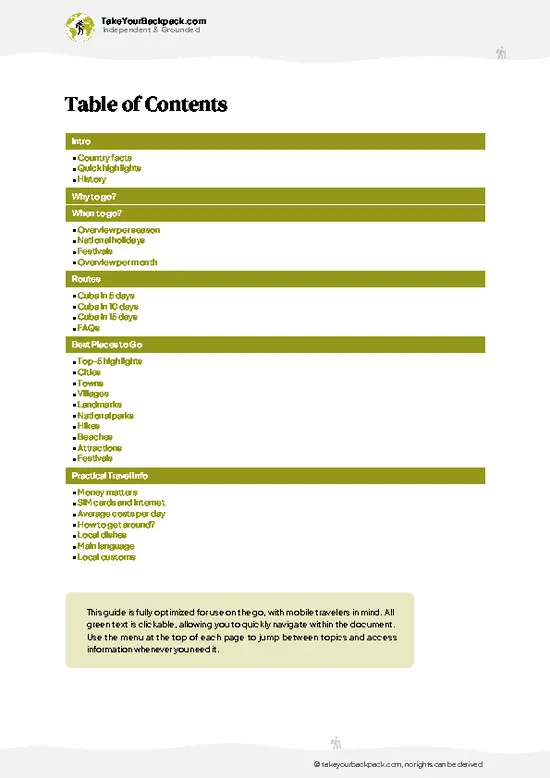
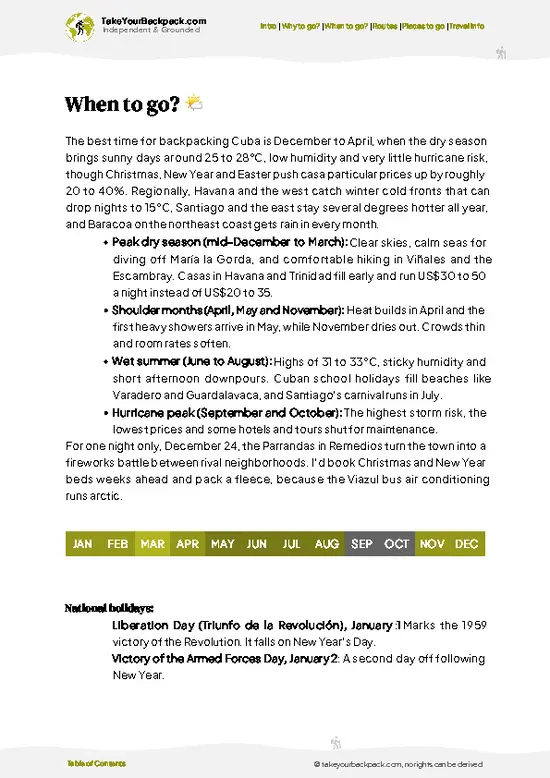
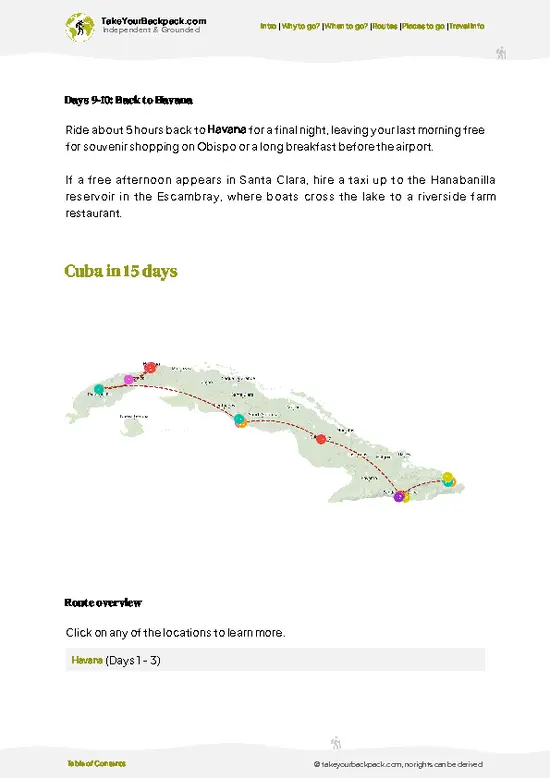
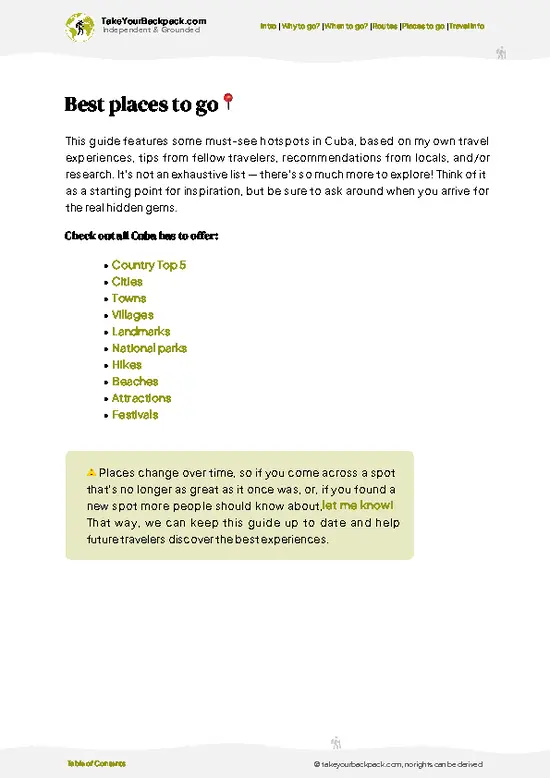
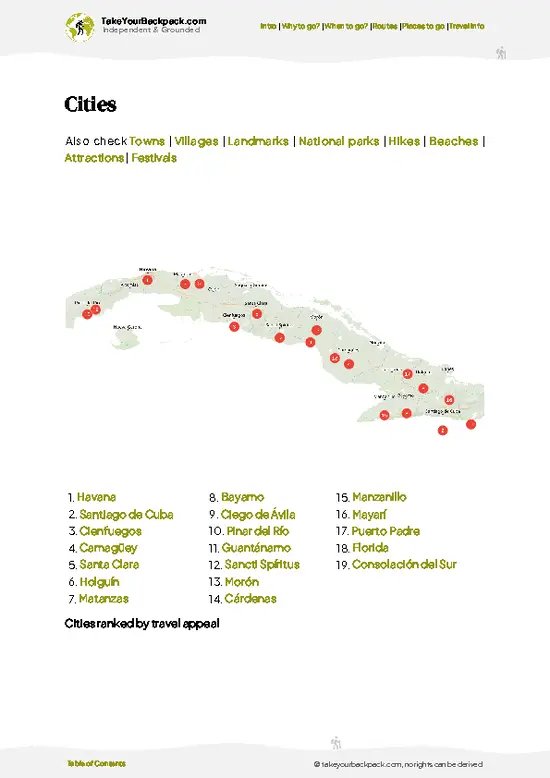
example page 0 from our offline Travel Guide for Cubaexample page 1 from our offline Travel Guide for Cubaexample page 2 from our offline Travel Guide for Cubaexample page 3 from our offline Travel Guide for Cubaexample page 4 from our offline Travel Guide for Cuba
🎒 Your 386-page offline travel companion
5, 10 & 15-day routes paced for real travel
121 ranked highlights with honest skip-it advice
Logistics solved: Best areas to stay & transport
Safety blueprints: Common local scams to avoid
No Wi-Fi? No problem: Phone-optimized offline PDF
👉 See all 30+ guide features

📅 Plan smarter in minutes, not weeks
Realistic travel times & pacing
Best months per region
Festivals & national holidays
Budget expectations

🗺️ Go to the right places, skip the overrated ones
121 ranked highlights across the country
Hidden gems beyond the tourist trail
Honest pros & cons of destinations
Top hikes, parks & viewpoints
Lesser-known places most travelers miss
Clear “worth it vs skip it” guidance

🛏️ Travel smoothly without rookie mistakes
Best areas to stay
Transport systems explained simply
Local transport tradeoffs
Common scams & safety advice
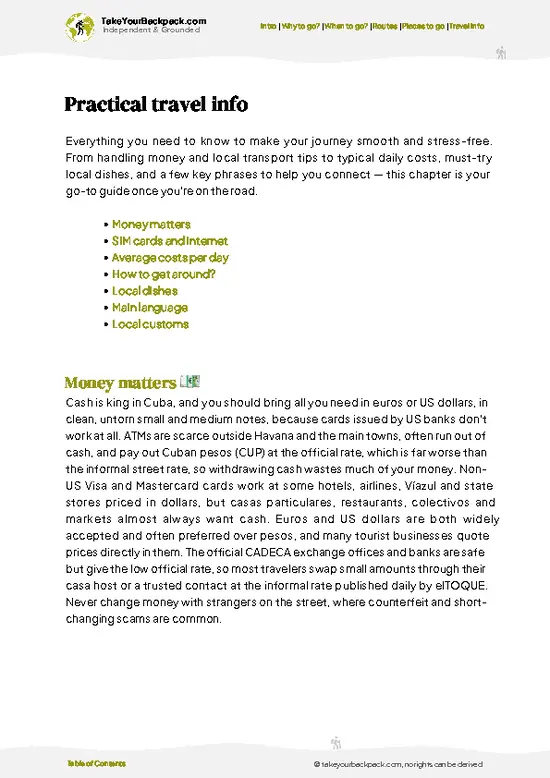
SIM cards, money & practical tips
What to expect before arrival

🌍 Understand the country, not just visit it
Culture & traditions
52 Essential phrases & customs
Festivals worth planning around
Traveler-friendly historical context
Insights that make places more meaningful

📱 Built for real travel conditions
Fully downloadable PDF
Works completely offline
Optimized for phone use
Useful in remote areas & buses
Everything in one place
Save weeks of stressful planning
Get instant access to the full guide directly. 30-day money-back guarantee.


Sent to your inbox immediately after payment • 100% Secure Checkout
Best Backpacking Travel Advisor 2025 tourism awardBest Backpacking
Travel Advisor
2025
What others say about Take Your Backpack Guides:
⭐⭐⭐⭐⭐
Fantastic, amazing amount of information!
⭐⭐⭐⭐⭐
My goodness this is amazing, it's what I've been looking for hats off too you!
⭐⭐⭐⭐⭐
I think this is absolutely BRILLIANT
⭐⭐⭐⭐
Very complete and informative. It's still missing places, but I gotta to commend you
⭐⭐⭐⭐⭐
This is truly amazing, thank you, can't wait to explore it with my kids!
⭐⭐⭐⭐⭐
Awesome resource, thank you!
⭐⭐⭐⭐⭐
This is amazing! Can't wait to explore the ones I haven't seen
⭐⭐⭐⭐
I love this! Well done, great idea.
⭐⭐⭐⭐⭐
Thanks for taking the time to make this gem!
⭐⭐⭐⭐⭐
This might be the best website I've ever seen.
⭐⭐⭐⭐⭐
Congratulations, and thank you so much for your work; it's incredibly valuable.
⭐⭐⭐⭐
In all seriousness I think you did a great job pointing out the important spots
⭐⭐⭐⭐⭐
10/10 very good
⭐⭐⭐⭐⭐
As someone who's only just starting to visit regularly this is awesome, thank you.
⭐⭐⭐⭐
Thank you very much! I'm going to visit my dad, it's going to be very useful!
⭐⭐⭐⭐⭐
This is really cool! We'll be travelling for the first time and this definitely come in handy.
⭐⭐⭐⭐⭐
You are now our minister of culture, congratulations 👨‍💼
⭐⭐⭐⭐⭐
Just wanted to tell you that this is a pearl! Going to follow your recommendations.
⭐⭐⭐⭐⭐
This is so cool. I'll definitely be using the resource for my travels soon.
⭐⭐⭐⭐⭐
This is very impressive! Good work.
⭐⭐⭐⭐⭐
This is an amazing and informative site. Very well done!

🛏️ Where to stay?Best areas to stay in Cuba

When you’re heading to Parque Nacional Turquino, your lodging options can shape your experience. Inside the park, there aren’t formal hotels, but you can find basic accommodations like the Casa de la Cultura in the nearby town of La Platica. It’s a simple spot, but it offers a genuine taste of local life and easy access to trails.

If you prefer a bit more comfort, consider staying in the town of Santiago de Cuba, about an hour away. Here, you’ll find a range of casas particulares—private homes that offer a cozy atmosphere and a chance to connect with locals. Look for places that provide breakfast; … read more 👉
When you’re heading to Parque Nacional Turquino, your lodging options can shape your experience. Inside the park, there aren’t formal hotels, but you can find basic accommodations like the Casa de la Cultura in the nearby town of La Platica. It’s a simple spot, but it offers a genuine taste of local life and easy access to trails.

If you prefer a bit more comfort, consider staying in the town of Santiago de Cuba, about an hour away. Here, you’ll find a range of casas particulares—private homes that offer a cozy atmosphere and a chance to connect with locals. Look for places that provide breakfast; it’s a great way to fuel up before a day of hiking.

Be mindful of transportation costs. Taxis can add up quickly, especially if you’re making multiple trips. Plan your hikes to maximize your time in the park and minimize travel.

Ultimately, the key is to balance comfort with authenticity. Choose a place that keeps you close to the action without draining your budget, so you can focus on the stunning landscapes and rich culture around you.

👛 Costs (as of 31 December 2025)Travel costs and budget guide for Parque Nacional Turquino

Visiting Parque Nacional Turquino in Cuba can be a rewarding experience, but it’s essential to be aware of the costs involved to avoid any surprises.

Entry fees to the park typically range from $5 to $10 USD. This fee grants you access to the park’s trails and natural beauty. However, if you plan to hike to the summit of Pico Turquino, the highest peak in Cuba, be prepared for an additional fee that can range from $10 to $20 USD.

Guided tours are available and can enhance your experience. Prices for these tours vary widely, generally falling between $30 and $100 USD, depending on the length and inclusivity of the package. Some tours include meals and transportation, while others may only cover the guide’s fee.

Accommodation options near the park can also impact your budget. Basic guesthouses … read more 👉
Visiting Parque Nacional Turquino in Cuba can be a rewarding experience, but it’s essential to be aware of the costs involved to avoid any surprises.

Entry fees to the park typically range from $5 to $10 USD. This fee grants you access to the park’s trails and natural beauty. However, if you plan to hike to the summit of Pico Turquino, the highest peak in Cuba, be prepared for an additional fee that can range from $10 to $20 USD.

Guided tours are available and can enhance your experience. Prices for these tours vary widely, generally falling between $30 and $100 USD, depending on the length and inclusivity of the package. Some tours include meals and transportation, while others may only cover the guide’s fee.

Accommodation options near the park can also impact your budget. Basic guesthouses or casas particulares typically charge between $20 and $50 USD per night. If you prefer a more comfortable stay, expect to pay upwards of $70 USD for hotels or eco-lodges.

Transportation costs should not be overlooked. If you’re traveling from Santiago de Cuba, a taxi or shared ride can cost around $30 to $50 USD. Public transport is cheaper but less reliable, so factor in potential delays.

In summary, budgeting around $100 to $200 USD per day should cover entry fees, accommodation, meals, and transportation, depending on your choices. This approach allows you to enjoy the park without stressing over unexpected expenses.


source: cubatravel.cu
⚠️ Prices can change and everyone travels differently, so take this as a rough guide. Hope it helps you plan your adventure!

🥾 TrailsDiscover Parque Nacional Turquino's top trails and natural wonders

Parque Nacional Turquino is a hidden gem in Cuba, perfect for those who love to lace up their hiking boots and embrace nature. The park is home to Cuba’s highest peak, Turquino Peak, which offers stunning views that make the climb worthwhile. Expect a mix of rugged terrain, dense forests, and breathtaking vistas. Wildlife is abundant here, from colorful birds to the occasional sighting of a deer. Just keep your eyes peeled for the unique flora and fauna; it’s a real treat for nature lovers.

One of the standout trails is Sendero al Pico Turquino. Here are the details:
Parque Nacional Turquino is a hidden gem in Cuba, perfect for those who love to lace up their hiking boots and embrace nature. The park is home to Cuba’s highest peak, Turquino Peak, which offers stunning views that make the climb worthwhile. Expect a mix of rugged terrain, dense forests, and breathtaking vistas. Wildlife is abundant here, from colorful birds to the occasional sighting of a deer. Just keep your eyes peeled for the unique flora and fauna; it’s a real treat for nature lovers.

One of the standout trails is Sendero al Pico Turquino. Here are the details:
  • Length: 7 km (4.3 miles)
  • Estimated Duration: 6-8 hours
  • Difficulty Level: Challenging
  • Key Features: Stunning panoramic views, diverse ecosystems, and the thrill of reaching the highest point in Cuba.
  • Terrain: Steep inclines with rocky paths and some muddy sections, especially after rain.

Getting to the park isn’t too tricky. You can catch a bus from Santiago de Cuba, which takes about an hour and a half. Just be aware that public transport can be a bit unpredictable, so give yourself some extra time. The park usually isn’t packed, but weekends can see a few more visitors. As for the entrance fee, it’s pretty budget-friendly, so you won’t break the bank just to enjoy the scenery. Just remember to bring some water and snacks, and you’re all set for an unforgettable adventure!
⚠️ Hiking info can sometimes be outdated or inaccurate. Before you hit the trail, check the latest conditions with locals. If you do spot anything that's off, I'd love to hear from you, so I can update it for fellow travelers.

🛡️ SafetyStaying Safe: What Travelers Should Know

Parque Nacional Turquino offers a rewarding experience, but it’s wise to be prepared. Weather can shift quickly, especially at higher altitudes. Mornings may start cool, but afternoons can bring rain, so pack a lightweight, waterproof jacket.

The trails are generally well-marked, but some sections can be steep and rocky. Good hiking boots with solid grip are essential. Navigation is straightforward, yet a map or GPS can help you stay oriented.

Wildlife encounters are rare, but if you spot a snake or a bird, observe from a distance. Respect their space.

Many first-timers underestimate the park’s elevation. Take your time to acclimatize, especially if you’re coming from sea level. Pace yourself, and don’t rush—this isn’t a race. Enjoy the journey; it’s about the experience, not just the destination.

Other Cuban national parks near Parque Nacional Turquino

Explore more nearby:


👉 Discover all national parks

Or checkout all Cuba has to offer (think cities, towns, villages, national parks, hikes, beaches, festivals)
Country photo of Cuba
film
0
0
0a
Viñales
film
1
1
1a
Cienaga de Zapata
film
2
2
2a
Sierra del Rosario
Stephan Dames
film
3
3
3a
Parque Nacional Baconao
film
4
4
4a
Parque Nacional Montemar
film
5
5
5a
Parque Nacional Sierra Maestra
film
6
6
6a
Parque Nacional Ciénaga de Lanier

I 💚 feedbackSumming up the experience

Parque Nacional Turquino is a treasure for those who crave raw nature. The lush trails and vibrant wildlife offer a genuine escape from the everyday grind. But be prepared: the humidity can be relentless, and the trails are often steep and rugged. It’s not a stroll in the park. Embrace the challenge, and you’ll find the rewards are worth every drop of sweat. Just keep your energy and budget in check for the real moments that matter.

✈️ When did I visit Cuba?
As part of my 1.5 year travel around the world trip, I visited Cuba for 6 weeks in February, March 2016, being extremely lucky that that coincided with the free concert of The Rolling Stones.

✍️ Help improve this page!
The information on this page is based on my own backpacking experience in Cuba, supplemented with up-to-date research and feedback from other travelers. Travel details can change, so if you notice anything outdated or incomplete, feel free to let me know.


🙋‍♂️ Give feedback

👋 Meet the authorWho’s Behind Take Your Backpack?

Johan, backpacker and founder of TakeYourBackpackHi, I’m Johan (Netherlands 🇳🇱), the creator of TakeYourBackpack. Over the past decade, I’ve backpacked through 80+ countries across six continents, gaining extensive experience with independent travel, long-term trips, and overland routes.

This site is built on a combination of firsthand travel experience and carefully curated insights from other backpackers. Many guides are based on places I’ve personally visited, while others bring together tips, observations, and practical advice shared by trusted travelers I’ve met along the way.

The goal is to provide realistic, experience-driven guidance — not generic itineraries — so you can explore destinations with better context, clearer expectations, and more confidence.

Get Full Country Guide |
Instant download • 121 highlights • Full Offline guide