×

Philippines🇵🇭 | citiesCotabato City
river delta, Sultan’s palace, Muslim markets | things to do and best time to go

Explore MarawiExplore Ati-Atihan Festival

Backpacking in Cotabato City
👀 For curious travelerscity ranked #33
By Johan Kruseman 🇳🇱 | last update: 20 April, 2026

Cotabato City is not for people chasing beach bars, hostels, and plug‑and‑play itineraries. It rewards backpackers who like frontier vibes, context, and talking to locals more than other travelers. Sitting in southwestern Mindanao, it’s a low-rise, Muslim-majority city with mosques, markets, and the Grand Mosque as the clear visual anchor. Travel is cheap, infrastructure basic, nightlife low-key, and other foreigners rare. It feels calmer than its reputation, but you need street sense and up-to-date security info.

Discover everything you want to know in the 📖 Philippines Travel Guide.
Loading the map 🌍
CLICK TO FILTER
city
town
unique site
national park
hike
beach
attraction
festival
region
SHOW COUNTRY‘S BESTSHOW ALL

✨ Why go?
Ranked #33 city in Philippines
What makes it a must-see city

Cotabato City is a strategic basecamp for backpackers navigating Mindanao. It offers a mix of affordable hostels and local eateries that keep your budget in check while satisfying your cravings. The city’s walkability makes it easy to explore, and the nightlife has a laid-back vibe perfect for unwinding after a day of adventure. Plus, it’s a gateway to day trips that showcase the region’s natural beauty. While it may not have the flashiest attractions, its authentic atmosphere and easy onward travel options make it a smart stop for those seeking genuine experiences.
Get the complete Travel Guide for Philippines
Everything organized for offline planning — routes, highlights, costs & tips

See what’s inside 👉

Get the Travel Guide -

💡 HighlightsMust-see experiences and standout moments

  1. Sultan Haji Hassanal Bolkiah Grand Mosque — The city’s crown jewel: massive gold-and-blue domes, clean courtyards, and intricate Islamic motifs. Even if you’re not Muslim, the architecture and the calm of the prayer hall are worth the visit; guided entry for tourists is usually possible outside prayer times.
  2. Immaculate Conception Cathedral (Tamontaka Church) — A historic Catholic landmark with a long local history and a lively parish life. Visiting gives you a clear sense of Cotabato’s religious mix and you can stroll the surrounding old neighborhood for everyday local life.
  3. Tamontaka Bridge & Tamontaka Riverfront — The bridge is more than infrastructure: it’s a local vantage point for sunsets, river life, small boat traffic, and street vendors. Walk the river banks for honest, unglamorous
  4. read more 👉
  1. Sultan Haji Hassanal Bolkiah Grand Mosque — The city’s crown jewel: massive gold-and-blue domes, clean courtyards, and intricate Islamic motifs. Even if you’re not Muslim, the architecture and the calm of the prayer hall are worth the visit; guided entry for tourists is usually possible outside prayer times.
  2. Immaculate Conception Cathedral (Tamontaka Church) — A historic Catholic landmark with a long local history and a lively parish life. Visiting gives you a clear sense of Cotabato’s religious mix and you can stroll the surrounding old neighborhood for everyday local life.
  3. Tamontaka Bridge & Tamontaka Riverfront — The bridge is more than infrastructure: it’s a local vantage point for sunsets, river life, small boat traffic, and street vendors. Walk the river banks for honest, unglamorous snapshots of city rhythms.
  4. Cotabato City Public Market — No curated souvenir shop will beat this for local color. Fresh fish, halal butchers, fruits, and prepared foods — great for people-watching, cheap eats, and picking up regional snacks or spices.
  5. Rizal Park / City Plaza — The community’s living room: kids, vendors, and occasional civic events. It’s where you feel the city’s day-to-day pulse and can catch small performances or local gatherings if your timing is right.
  6. Bangsamoro Museum / Cultural Center — A focused spot to learn about the Bangsamoro peoples: artifacts, textiles, and stories that explain local history and identity. Small but informative, it adds necessary context to what you see in the mosque, market, and neighborhoods.
  7. Bangsamoro Government Complex / Parliament area — Politically and symbolically important: the seat of the region’s current government. You can walk around the public spaces to get a sense of the political landscape and modern developments shaping Cotabato.
  8. Old City Hall & Heritage Streets — The area around the municipal buildings has older commercial blocks and façades worth wandering. Look for carved wooden doors, old signage, and family-run shops that have operated for decades.
  9. Halal Food Corridors & Night Stalls (near the Grand Mosque) — Eating is the best way to learn a place. After sundown the streets near the mosque fill with halal stalls selling kebabs, local sweets, and kopi — a real taste of Cotabato’s culinary mix.
  10. Tamontaka Riverside Neighborhoods & Small Boat Rides — Take a short boat or riverside walk through the riverside neighborhoods to see stilt houses, fishing livelihoods, and riverside markets. It’s an intimate way to meet residents and learn how the river structures daily life.
A few great day-trip options outside the city: Lake Sebu (waterfalls, T’boli weaving and zipline adventures — my personal favorite), General Santos City’s huge fish market and tuna scene, and the T’boli weaving villages near Lake Sebu for traditional textiles and crafts.
Spotted a mistake or missing something? Contact us.

🏘️ NeighborhoodsHow different areas shape the experience

Cotabato City offers a unique blend of culture and adventure, perfect for backpackers looking to explore the Philippines off the beaten path.

City Proper: The heart of Cotabato. It’s bustling and vibrant, with local markets and street food. Affordable accommodations are plentiful. Walkable streets make it easy to explore, but nightlife is low-key. Great for short stays.

Tamontaka: A quieter area with a more relaxed vibe. Ideal for longer stays if you want to escape the hustle. It’s less walkable, but local transport is accessible. Enjoy serene parks and a glimpse of local life.

Kalanganan: Known for its lively atmosphere and local eateries. This area has a mix of budget options and is more suited for those who enjoy a bit of nightlife. Transport links are decent, making it easy to venture out.

⌛️ 1 dayWhat you can realistically do in a day

Cotabato City, a vibrant hub in Mindanao, offers a unique blend of cultures and history that’s often overlooked. Start your day in the bustling area of the Central Business District. Grab breakfast at a local eatery, where the aroma of freshly brewed coffee mingles with the scent of warm pandhi, a local pastry.

After fueling up, head to the grand Sultan Haji Hassanal Bolkiah Masjid. Its intricate architecture and serene atmosphere provide a perfect backdrop for reflection. Spend your morning wandering through the nearby neighborhoods, where you can chat with locals and soak in the everyday life that tourists often miss.

In the afternoon, explore the Cotabato City Plaza, a lively spot where you can people-watch and enjoy street food. Don’t skip the nearby Old Cotabato Cathedral, a testament … read more 👉
Cotabato City, a vibrant hub in Mindanao, offers a unique blend of cultures and history that’s often overlooked. Start your day in the bustling area of the Central Business District. Grab breakfast at a local eatery, where the aroma of freshly brewed coffee mingles with the scent of warm pandhi, a local pastry.

After fueling up, head to the grand Sultan Haji Hassanal Bolkiah Masjid. Its intricate architecture and serene atmosphere provide a perfect backdrop for reflection. Spend your morning wandering through the nearby neighborhoods, where you can chat with locals and soak in the everyday life that tourists often miss.

In the afternoon, explore the Cotabato City Plaza, a lively spot where you can people-watch and enjoy street food. Don’t skip the nearby Old Cotabato Cathedral, a testament to the city’s rich history.

As the sun sets, find a cozy spot along the riverbank. The evening light casts a golden hue, making it an ideal time to unwind and savor the day’s experiences. This city may not be on every traveler’s radar, but its charm lies in the moments you create.
Build the Right Itinerary
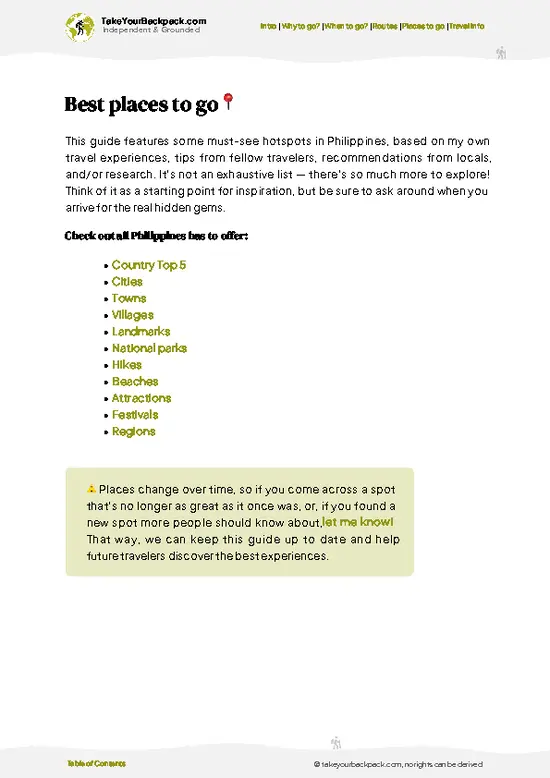
Use the Philippines Travel Guide’s 7, 14 & 21-day routes as a starting point to plan a trip that actually works on the ground.

Get the Travel Guide -

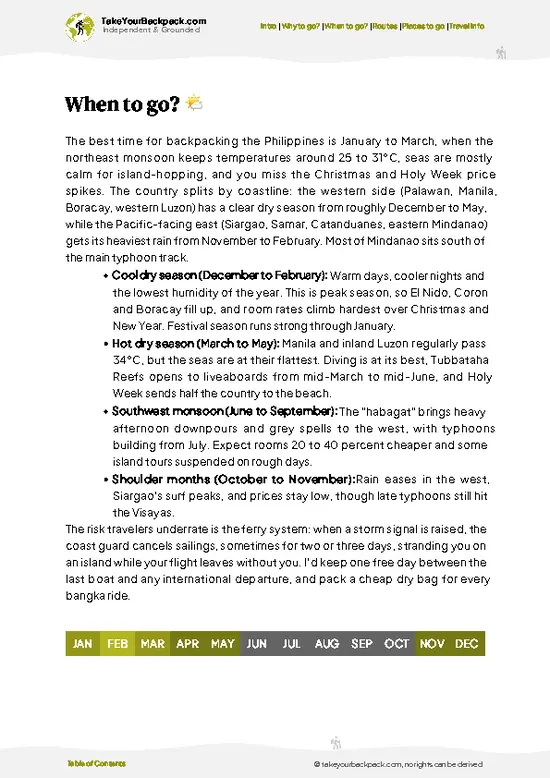
🌤️ When to go?Choosing the right time of year


  • Topic: Weather – The dry season from November to May is your best bet. Expect less rain, which means fewer mudslides and slippery trails. The wet season (June to October) brings heavy downpours that can disrupt plans and dampen spirits.

  • Topic: Temperature – Temperatures hover between 26°C to 32°C (79°F to 90°F) year-round. It’s warm but manageable if you plan hikes early or late in the day to avoid the midday heat.

  • Topic: Daylight Hours – Roughly 11 to 12 hours of daylight year-round, with sunrise around 6 AM and sunset near 6 PM. This consistency helps you plan daily activities without surprises.

  • Topic: Crowds – Peak tourist influx aligns with the dry season, especially around local festivals. Traveling just before or after these times means fewer people and better deals.

  • Topic:
  • read more 👉

  • Topic: Weather – The dry season from November to May is your best bet. Expect less rain, which means fewer mudslides and slippery trails. The wet season (June to October) brings heavy downpours that can disrupt plans and dampen spirits.

  • Topic: Temperature – Temperatures hover between 26°C to 32°C (79°F to 90°F) year-round. It’s warm but manageable if you plan hikes early or late in the day to avoid the midday heat.

  • Topic: Daylight Hours – Roughly 11 to 12 hours of daylight year-round, with sunrise around 6 AM and sunset near 6 PM. This consistency helps you plan daily activities without surprises.

  • Topic: Crowds – Peak tourist influx aligns with the dry season, especially around local festivals. Traveling just before or after these times means fewer people and better deals.

  • Topic: Seasonal Activities – Festivals like the Shariff Kabunsuan Festival in September offer cultural immersion but come with crowds and higher prices. Off-peak months provide quieter, more authentic experiences.

  • Topic: Price Fluctuations – Accommodation and transport costs spike during the dry season and festivals. The wet season sees significant drops, but you trade cost savings for potential weather hassles.


Pro-tip: Aim for the shoulder months—April or November—when the weather is decent, crowds thin, and prices balance out. You get the best of all worlds without feeling like you’re racing the clock or the rain.


source: climatestotravel.comJANJanuary: highly recommended for travelingFEBFebruary: highly recommended for travelingMARMarch: highly recommended for travelingAPRApril: excellent for travelingMAYMay: highly recommended for travelingJUNJune: fair for travelingJULJuly: fair for travelingAUGAugust: fair for travelingSEPSeptember: good for travelingOCTOctober: fair for travelingNOVNovember: excellent for travelingDECDecember: highly recommended for traveling
when-to-go

✈️ The ultimate backpacker shortcutPhilippines Travel Guide

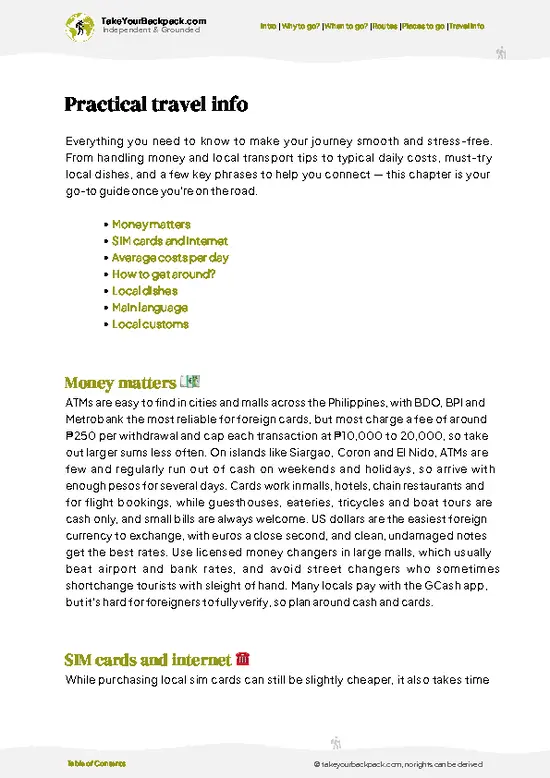
Skip weeks of stressful planning and hit the road with confidence. Our backpacking travel guides are designed specifically for independent travelers who want practical information, realistic itineraries, and honest advice they can actually use on the ground.
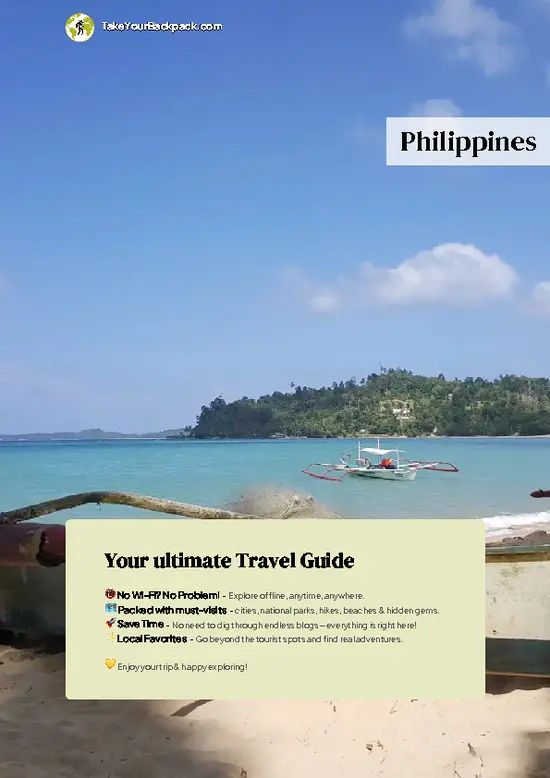
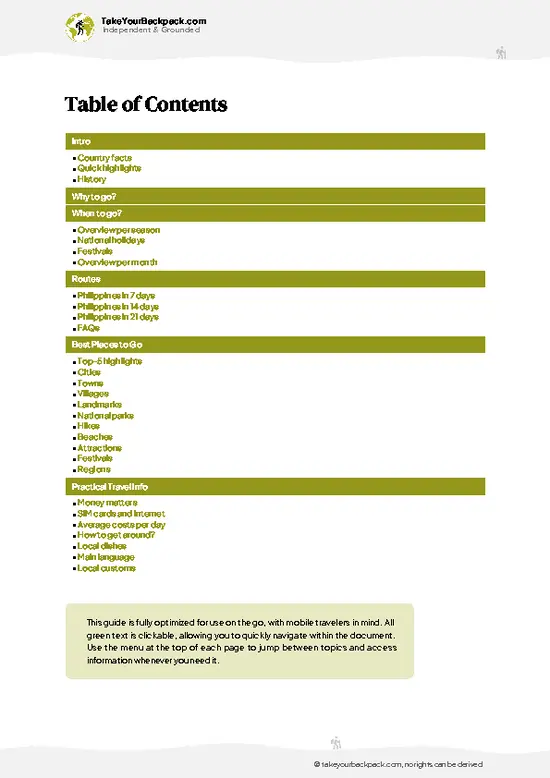
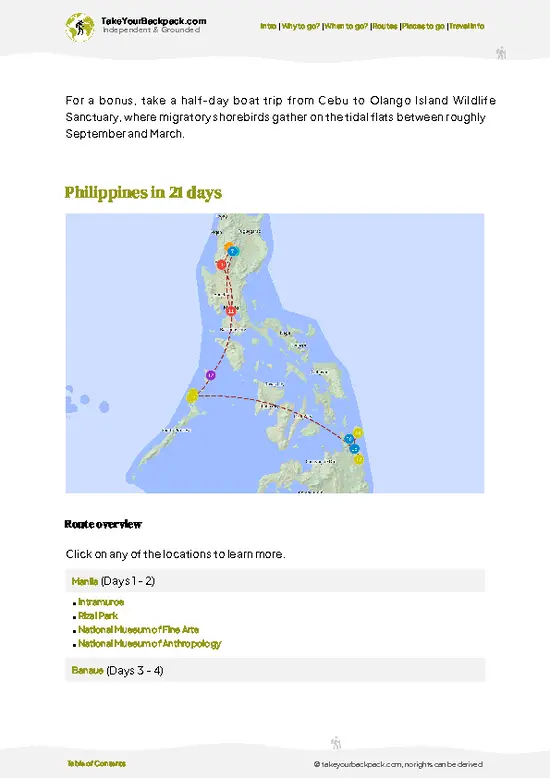
example page 0 from our offline Travel Guide for Philippinesexample page 1 from our offline Travel Guide for Philippinesexample page 2 from our offline Travel Guide for Philippinesexample page 3 from our offline Travel Guide for Philippinesexample page 4 from our offline Travel Guide for Philippines
The guide (429 pages) contains:
7, 14 & 21-day routes paced for real travel
144 ranked highlights with honest advice
Logistics solved: Best areas to stay & transport
Safety: Common local scams to avoid
No Wi-Fi? No problem: Phone-optimized offline PDF
👉 See all 30+ guide features

📅 Plan smarter in minutes, not weeks
Realistic travel times & pacing
Best months per region
Festivals & national holidays
Budget expectations

🗺️ Go to the right places, skip the overrated ones
144 ranked highlights across the country
Hidden gems beyond the tourist trail
Honest pros & cons of destinations
Top hikes, parks & viewpoints
Lesser-known places most travelers miss
Clear “worth it vs skip it” guidance

🛏️ Travel smoothly without rookie mistakes
Best areas to stay
Transport systems explained simply
Local transport tradeoffs
Common scams & safety advice
SIM cards, money & practical tips
What to expect before arrival

🌍 Understand the country, not just visit it
Culture & traditions
52 Essential phrases & customs
Festivals worth planning around
Traveler-friendly historical context
Insights that make places more meaningful

📱 Built for real travel conditions
Fully downloadable PDF
Works completely offline
Optimized for phone use
Useful in remote areas & buses
Everything in one place
Save weeks of stressful planning
Get instant access to the full guide directly. 30-day money-back guarantee.


Sent to your inbox immediately after payment • 100% Secure Checkout
Best Backpacking Travel Advisor 2025 tourism awardBest Backpacking
Travel Advisor
2025
What others say about Take Your Backpack Guides:
⭐⭐⭐⭐⭐
Fantastic, amazing amount of information!
⭐⭐⭐⭐⭐
My goodness this is amazing, it's what I've been looking for hats off too you!
⭐⭐⭐⭐⭐
I think this is absolutely BRILLIANT
⭐⭐⭐⭐
Very complete and informative. It's still missing places, but I gotta to commend you
⭐⭐⭐⭐⭐
This is truly amazing, thank you, can't wait to explore it with my kids!
⭐⭐⭐⭐⭐
Awesome resource, thank you!
⭐⭐⭐⭐⭐
This is amazing! Can't wait to explore the ones I haven't seen
⭐⭐⭐⭐
I love this! Well done, great idea.
⭐⭐⭐⭐⭐
Thanks for taking the time to make this gem!
⭐⭐⭐⭐⭐
This might be the best website I've ever seen.
⭐⭐⭐⭐⭐
Congratulations, and thank you so much for your work; it's incredibly valuable.
⭐⭐⭐⭐
In all seriousness I think you did a great job pointing out the important spots
⭐⭐⭐⭐⭐
10/10 very good
⭐⭐⭐⭐⭐
As someone who's only just starting to visit regularly this is awesome, thank you.
⭐⭐⭐⭐
Thank you very much! I'm going to visit my dad, it's going to be very useful!
⭐⭐⭐⭐⭐
This is really cool! We'll be travelling for the first time and this definitely come in handy.
⭐⭐⭐⭐⭐
You are now our minister of culture, congratulations 👨‍💼
⭐⭐⭐⭐⭐
Just wanted to tell you that this is a pearl! Going to follow your recommendations.
⭐⭐⭐⭐⭐
This is so cool. I'll definitely be using the resource for my travels soon.
⭐⭐⭐⭐⭐
This is very impressive! Good work.
⭐⭐⭐⭐⭐
This is an amazing and informative site. Very well done!

🛏️ Where to stay?Best areas to stay in Philippines

Cotabato City’s sweet spot for backpackers is the area around Rosary Heights and the adjacent downtown district. This zone strikes a rare balance: it’s safe enough to walk after dark, with a steady flow of local life that keeps the streets lively without chaos. Budget travelers find a handful of hostels here, offering basic comfort and a chance to meet fellow adventurers. Compared to the more residential or commercial outskirts, this neighborhood feels social and accessible, cutting down on transport time and costs. You trade a bit of luxury for genuine local interaction and convenience—exactly … read more 👉
Cotabato City’s sweet spot for backpackers is the area around Rosary Heights and the adjacent downtown district. This zone strikes a rare balance: it’s safe enough to walk after dark, with a steady flow of local life that keeps the streets lively without chaos. Budget travelers find a handful of hostels here, offering basic comfort and a chance to meet fellow adventurers. Compared to the more residential or commercial outskirts, this neighborhood feels social and accessible, cutting down on transport time and costs. You trade a bit of luxury for genuine local interaction and convenience—exactly the kind of trade-off that turns a trip into a memorable story.

🚌 Getting aroundTransportation options and practical tips

Cotabato City moves at its own rhythm—a blend of laid-back island time and the pulse of a bustling regional hub. It’s not about strict timetables but about reading the flow of people and vehicles, catching the wave when it comes. Here, the trade-off between time, money, and comfort is a constant negotiation. You can sprint through the city on a fast but cramped ride or stroll at your own pace, soaking in the local vibe. The key is knowing which mode suits your style and budget without sacrificing the experience.


  • Walking: The ultimate budget option. No cost, full control over your pace, and the best way to absorb the city’s textures. Ideal for short distances and spontaneous detours.

  • Jeepneys: The backbone of Cotabato’s transit. Runs roughly from 5 AM to 9 PM, fares hover around PHP 8–15.
  • read more 👉
Cotabato City moves at its own rhythm—a blend of laid-back island time and the pulse of a bustling regional hub. It’s not about strict timetables but about reading the flow of people and vehicles, catching the wave when it comes. Here, the trade-off between time, money, and comfort is a constant negotiation. You can sprint through the city on a fast but cramped ride or stroll at your own pace, soaking in the local vibe. The key is knowing which mode suits your style and budget without sacrificing the experience.


  • Walking: The ultimate budget option. No cost, full control over your pace, and the best way to absorb the city’s textures. Ideal for short distances and spontaneous detours.

  • Jeepneys: The backbone of Cotabato’s transit. Runs roughly from 5 AM to 9 PM, fares hover around PHP 8–15. They’re slow, often packed, but dirt cheap and a cultural immersion in motion.

  • Tricycles: Perfect for short hops or when you’re hauling gear. They run all day, fares start at PHP 10. Faster than walking but less comfortable and can get pricey if you’re not careful with negotiation.

  • Motorcycle Taxis (Habal-Habal): For the adventurous and time-pressed. They dart through traffic with ease, fares vary but expect PHP 20–50 depending on distance. Less safe and no shelter from weather, but unbeatable for speed.

  • Public Buses: Connect Cotabato to nearby towns and cities. Scheduled from early morning until evening, fares depend on distance but generally affordable. More comfortable than jeepneys, with space to stretch, but slower due to multiple stops.

👛 Costs (as of 12 October 2025)Travel costs and budget guide for Cotabato City

Backpacking in Cotabato City, Philippines, offers a straightforward cost structure that lets you balance your budget without sacrificing the essentials of comfort and local flavor.
  • Dorm Accommodation (High Season and Off-Season): Dorm beds in Cotabato City typically range from $8 to $15 per night during the high season, when demand pushes prices up slightly. Off-season rates can drop to around $5 to $10, giving you a bit more breathing room if your schedule is flexible.
  • Meals: Street food and local eateries serve up filling meals for $1.50 to $3 each. If you opt for a mix of street food and modest sit-down restaurants, expect to spend about $5 to $8 daily on food. This covers breakfast, lunch, and dinner without skimping on variety or taste.
  • Local Transport: Jeepneys and tricycles are the
  • read more 👉
Backpacking in Cotabato City, Philippines, offers a straightforward cost structure that lets you balance your budget without sacrificing the essentials of comfort and local flavor.
  • Dorm Accommodation (High Season and Off-Season): Dorm beds in Cotabato City typically range from $8 to $15 per night during the high season, when demand pushes prices up slightly. Off-season rates can drop to around $5 to $10, giving you a bit more breathing room if your schedule is flexible.
  • Meals: Street food and local eateries serve up filling meals for $1.50 to $3 each. If you opt for a mix of street food and modest sit-down restaurants, expect to spend about $5 to $8 daily on food. This covers breakfast, lunch, and dinner without skimping on variety or taste.
  • Local Transport: Jeepneys and tricycles are the go-to options for short hops around the city, costing roughly $0.20 to $0.50 per ride. Budget around $1.50 to $3 daily if you’re moving around frequently but sticking to local routes.
  • City Transport Pass: Cotabato City doesn’t have a formal city transport pass system like larger metro areas. Instead, pay per ride is the norm, which keeps things flexible but requires a bit of mental math to track daily transport expenses.
  • Basic Activities/Entry Fees: Most cultural sites and local attractions charge minimal entry fees, generally between $0.50 and $2. This keeps your sightseeing budget light while still supporting local preservation efforts.
  • Miscellaneous Expenses: This covers essentials like bottled water, snacks, occasional SIM card top-ups, or small souvenirs. A safe estimate is $1 to $3 daily, depending on your habits and needs.

All told, you’re looking at a daily budget between $15 and $30. This range gives you the freedom to choose where to stretch for comfort or save by embracing the local pace. Cotabato City’s affordability means you can focus on the experience without constantly watching the clock or your wallet.
⚠️ Prices can change and everyone travels differently, so take this as a rough guide. Hope it helps you plan your adventure!

🚌 Day tripsShort trips worth adding

Cotabato City is a fantastic launchpad for day trips that blend culture, adventure, and stunning landscapes. Here are some worthwhile excursions that will enrich your experience.

Buluan Lake
Just a 45-minute ride from Cotabato, Buluan Lake offers a serene escape. The lake is perfect for kayaking or simply soaking in the tranquil surroundings. The local community is welcoming, and you might even catch a glimpse of traditional fishing methods. Budget around PHP 200 for transport and a few hundred more for food. Best visited during the dry season, when the waters are calm and the scenery is at its best. A common mistake? Forgetting to bring a camera—this place is Instagram gold!


Mount Iglit
For the adventurous spirit, Mount Iglit is a must. About two hours from the city, this hike rewards … read more 👉
Cotabato City is a fantastic launchpad for day trips that blend culture, adventure, and stunning landscapes. Here are some worthwhile excursions that will enrich your experience.

Buluan Lake
Just a 45-minute ride from Cotabato, Buluan Lake offers a serene escape. The lake is perfect for kayaking or simply soaking in the tranquil surroundings. The local community is welcoming, and you might even catch a glimpse of traditional fishing methods. Budget around PHP 200 for transport and a few hundred more for food. Best visited during the dry season, when the waters are calm and the scenery is at its best. A common mistake? Forgetting to bring a camera—this place is Instagram gold!


Mount Iglit
For the adventurous spirit, Mount Iglit is a must. About two hours from the city, this hike rewards you with panoramic views of the surrounding landscape. The trail can be challenging, so wear sturdy shoes and pack plenty of water. Expect to spend around PHP 300 on transport and snacks. The best time to go is early morning to avoid the heat. Many first-timers underestimate the difficulty; don’t rush it!


Tamontaka Church
A quick 30-minute trip brings you to the historic Tamontaka Church, a beautiful structure with rich cultural significance. The architecture is a blend of Spanish and local influences, making it a unique spot for history buffs. Entry is free, but you might want to spend a little on local snacks. The dry season is ideal for visiting, as the grounds are well-kept. A common oversight is not checking the church’s schedule for special events.
Want to know what more Philippines offers?
The Philippines Travel Guide describes 144 highlights, from cities to national parks, from beaches to hikes

Get the Travel Guide -

🍲 FoodLocal Cuisine & Drinks

In **Cotabato City**, the food scene is a vibrant tapestry of flavors. Don’t miss the **satti**, skewered meat grilled to perfection, often served with a spicy sauce that packs a punch. Pair it with **nasi goreng**, a local fried rice dish that’s a staple at street stalls.

Markets buzz with life, where you can grab **kebab** or **puto** (steamed rice cakes) from vendors. The casual atmosphere invites you to share a table with locals, fostering a sense of community.

When it comes to drinks, try the **barako coffee**—rich and bold, it’s a morning ritual here. Remember, sharing food is a sign of hospitality, so don’t hesitate to offer a taste!

🛡️ SafetyTraveler Safety Guide

Cotabato City is generally safe, but like any urban area, staying aware is key. Stick to well-lit streets at night, especially if you’re solo. Avoid isolated spots and keep your belongings close.

Common scams are rare, but be cautious of overly friendly strangers offering unsolicited help. They might expect a tip. Everyday annoyances include traffic and occasional street vendors who can be persistent. A polite but firm “no, thank you” usually does the trick. Trust your instincts, and you’ll navigate the city just fine.

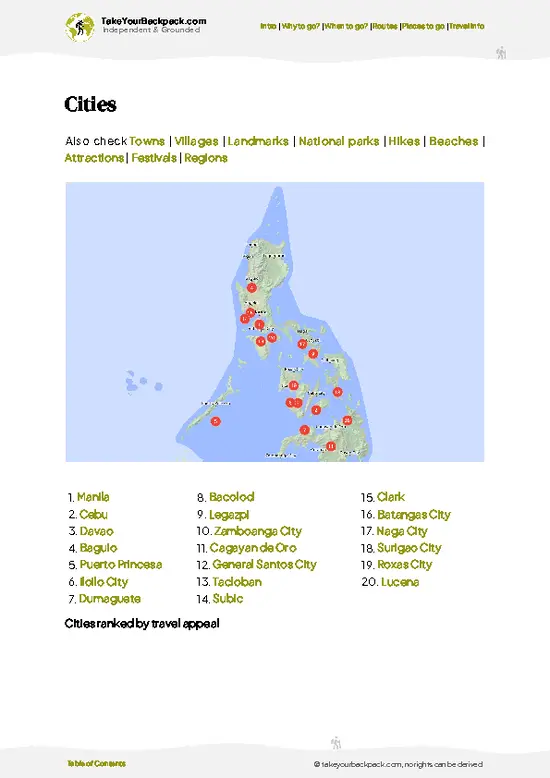
Other Filipino cities near Cotabato City

Explore more nearby:

  • Marawi—lake city, Maranao culture, mosque domes| 92 km away
  • Kidapawan—Mt. Apo trailhead, fruit stands, rural gateway| 93 km away
  • Lake Sebu—T'boli culture, waterfalls, floating fish cages| 113 km away

👉 Discover all cities

Or checkout all Philippines has to offer (think cities, towns, villages, national parks, hikes, beaches, festivals)
Country photo of Philippines

We 💚 feedbackFinal thoughts on visiting Cotabato City

Cotabato City offers a rich tapestry of culture and history, with vibrant local markets and warm, welcoming people. But be prepared: infrastructure can be a bit rough around the edges. Embrace the adventure, and you’ll find the heart of the Philippines here.

✈️ When did I visit Philippines?
Philippines being one of my favorites, due to the people and their mentality. I visited it first in 2010 and came back in January 2016 as part of my 1.5 year world trip.

✍️ Help improve this page!
The information on this page is based on my own backpacking experience in Philippines, supplemented with up-to-date research and feedback from other travelers. Travel details can change, so if you notice anything outdated or incomplete, feel free to let me know.


🙋‍♂️ Give feedback

👋 Meet the founderWho’s Behind Take Your Backpack?

Johan, backpacker and founder of TakeYourBackpackHi, I’m Johan (Netherlands 🇳🇱), the creator of TakeYourBackpack. Over the past decade, I’ve backpacked through 80+ countries across six continents, gaining extensive experience with independent travel, long-term trips, and overland routes.

This site is built on a combination of firsthand travel experience and carefully curated insights from other backpackers. Many guides are based on places I’ve personally visited, while others bring together tips, observations, and practical advice shared by trusted travelers I’ve met along the way.

The goal is to provide realistic, experience-driven guidance — not generic itineraries — so you can explore destinations with better context, clearer expectations, and more confidence.

Get Full Country Guide |
Instant download • 144 highlights • Full Offline guide