×

Timor-Leste🇹🇱 | citiesDilicoastal promenade, colonial-era buildings, mountain backdrop, local markets | things to do and best time to go

Explore BaucauExplore Lospalos

Backpacking in Dili
🏆 Top pickcity ranked #1
By Johan Kruseman 🇳🇱 | Updated September 4, 2026

You land in Dili and hit your first real fork: do you burn precious time and money arranging a boat to Atauro Island for world-class snorkeling, or stay in the city, save cash, and actually understand where you’ve arrived? That choice matters, because Dili is where your Timor-Leste trip either becomes a thoughtful deep-dive…or just a transit stop with sand. Dili sits on the island’s north coast, stretched along a bay backed by dry hills and crowned by the Cristo Rei statue. For backpackers, it’s low-key: a handful of guesthouses, a couple of solid museums like the Resistance Museum, a waterfront promenade, and a small but real bar scene. It’s cheaper than most capitals in Southeast Asia but not rock-bottom, safe if you use normal street sense, and quieter and more functional than places like Baucau or Same. The vibe: slow, slightly scruffy, emotionally heavy history, but disarmingly friendly.

Discover everything you want to know in the 📖 Timor-Leste Travel Guide.
Loading the map 🌍
CLICK TO FILTER
cities
towns
villages
landmarks
national parks
hikes
beaches
attractions
festivals
regions
SHOW COUNTRY’S BESTSHOW ALL

✨ Why go?
Ranked #1 city in Timor-Leste
The unique appeal for travelers

Dili, the capital of Timor-Leste, is a strategic base for backpackers navigating this emerging destination. It’s not just a stopover; it’s a place where you can maximize your experience with minimal hassle. The city offers a solid mix of affordable hostels and guesthouses, making it easy to find a cozy spot without breaking the bank.

Food options range from local eateries serving up delicious street food to more upscale dining, giving you plenty of choices to fuel your adventures. Dili is also walkable, allowing you to explore its vibrant streets and waterfront without needing a taxi.

When it comes to nightlife, the city has a laid-back vibe with a few bars and cafes where you can unwind after a day of exploration. Plus, it serves as a gateway for day trips to stunning beaches and cultural … read more 👉
Dili, the capital of Timor-Leste, is a strategic base for backpackers navigating this emerging destination. It’s not just a stopover; it’s a place where you can maximize your experience with minimal hassle. The city offers a solid mix of affordable hostels and guesthouses, making it easy to find a cozy spot without breaking the bank.

Food options range from local eateries serving up delicious street food to more upscale dining, giving you plenty of choices to fuel your adventures. Dili is also walkable, allowing you to explore its vibrant streets and waterfront without needing a taxi.

When it comes to nightlife, the city has a laid-back vibe with a few bars and cafes where you can unwind after a day of exploration. Plus, it serves as a gateway for day trips to stunning beaches and cultural sites, making it a practical launchpad for deeper adventures.

If you’re looking for a place that balances comfort and value, Dili fits the bill. It’s ideal for those who want to soak in the local culture while keeping their itinerary flexible. Whether you stay for a few days or just a night, Dili offers a taste of Timor-Leste that’s hard to resist.
Want to include Dili in your Timor-Leste route?
Create a personalized Timor-Leste itinerary that includes Dili and the places that fit your trip — based on your travel style, budget, and available time. Get your route in seconds.

Generate my trip

💡 HighlightsTop highlights of Dili

  • Cristo Rei — The iconic 27-m Jesus statue perched on a rocky headland (Fatucama). Easy climb with steps, killer coastal views and small beaches below — perfect for sunset or a sweaty morning walk away from the city buzz.
  • Santa Cruz Cemetery — A quiet, powerful place of memory where the 1991 massacre galvanized the independence movement; plaques, graves and the atmosphere make this a solemn, must-see stop for anyone trying to understand Timor-Leste’s recent history.
  • Museu da Resistência Timorense (Resistance Museum) — Small but honest exhibits, photos and oral histories about the occupation and the independence struggle; it’s where stories you’ve heard on the street get grounded in names and dates.
  • Tasi Tolu (Three Lagoons) — A community waterfront with three shallow lagoons, statues and
read more 👉
  • Cristo Rei — The iconic 27-m Jesus statue perched on a rocky headland (Fatucama). Easy climb with steps, killer coastal views and small beaches below — perfect for sunset or a sweaty morning walk away from the city buzz.
  • Santa Cruz Cemetery — A quiet, powerful place of memory where the 1991 massacre galvanized the independence movement; plaques, graves and the atmosphere make this a solemn, must-see stop for anyone trying to understand Timor-Leste’s recent history.
  • Museu da Resistência Timorense (Resistance Museum) — Small but honest exhibits, photos and oral histories about the occupation and the independence struggle; it’s where stories you’ve heard on the street get grounded in names and dates.
  • Tasi Tolu (Three Lagoons) — A community waterfront with three shallow lagoons, statues and people exercising, fishing and chatting at dawn. It’s as much local hangout as memorial space—great for observing daily life and catching sunrise colors.
  • Dili Cathedral (Our Lady of the Immaculate Conception) — The city’s main Catholic church, an active place of worship with striking architecture and a big role in community life; drop in during quieter hours to see local devotional practices up close.
  • Areia Branca Beach — A sandy, family-friendly beach near central Dili where locals picnic, swim and sell snacks; not a deserted tropical paradise, but excellent for people-watching and an easy, low-cost seaside break.
  • Comoro / Dili Central Market — A chaotic, colorful wet market where you’ll find fruit, fish, spices and bargain toiletries. Great for practicing friendly bartering, tasting street food and seeing how locals shop day-to-day.
  • Tais weaving stalls and workshops — Tais cloth is East Timor’s cultural signature; visit small stalls and cooperative workshops in Dili to watch weaving, learn the symbolism behind patterns and buy directly from makers.
  • Arte Moris Cultural Centre — A live arts space run by local artists offering exhibitions, dance, music and workshops; it’s one of the best places in Dili to connect with contemporary Timorese creativity and youth culture.
  • Waterfront promenade / Praça do Município — The marginal along the harbor with colonial buildings, government palaces and cafes—simple, walkable, and useful for sunsets, people-watching and seeing the city’s official side without a guided tour.
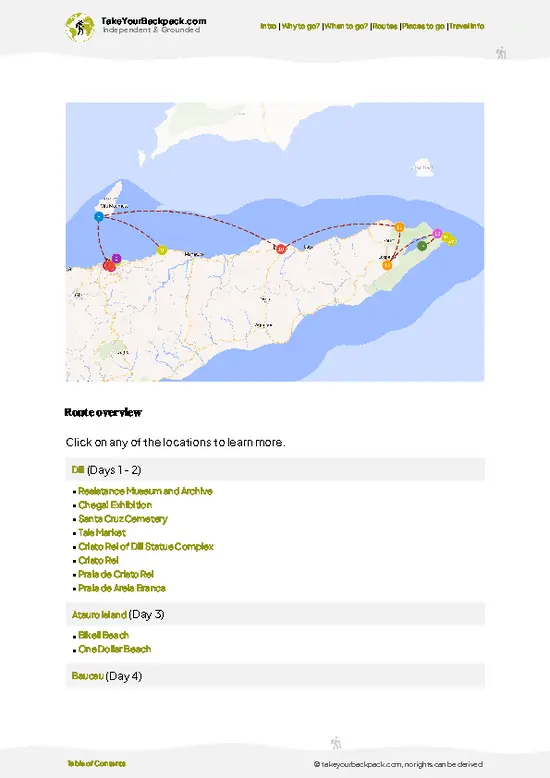
A few excellent day trips from Dili: the diving and relaxed villages of Atauro Island, the Portuguese-era fort and coastal scenery around Maubara/Liquiça, and the historic town of Baucau a few hours east.
Spotted a mistake or missing something? Contact us.

Things to do near Dili

Ratings based on Tripadvisor reviews. When you book through this link, you support our work at no extra cost to you.

🏘️ NeighborhoodsWhere things are and how it's laid out

Dili, the capital of Timor-Leste, is a vibrant blend of culture and coastal beauty. Each neighborhood offers unique advantages for backpackers, shaping your experience based on your priorities.

Baía de Dili: This waterfront area is the heart of Dili. The vibe is lively, with cafes and restaurants lining the coast. It’s perfect for short stays, as you can easily walk to major attractions like the Cristo Rei statue. Prices here can be higher, but the views are worth it. Nightlife is casual, with beach bars offering a relaxed atmosphere.

Comoro: A bit further from the center, Comoro is more residential and budget-friendly. It’s quieter, making it suitable for longer stays. The walkability isn’t as great, but local transport options are available. You’ll find local markets and eateries, giving … read more 👉
Dili, the capital of Timor-Leste, is a vibrant blend of culture and coastal beauty. Each neighborhood offers unique advantages for backpackers, shaping your experience based on your priorities.

Baía de Dili: This waterfront area is the heart of Dili. The vibe is lively, with cafes and restaurants lining the coast. It’s perfect for short stays, as you can easily walk to major attractions like the Cristo Rei statue. Prices here can be higher, but the views are worth it. Nightlife is casual, with beach bars offering a relaxed atmosphere.

Comoro: A bit further from the center, Comoro is more residential and budget-friendly. It’s quieter, making it suitable for longer stays. The walkability isn’t as great, but local transport options are available. You’ll find local markets and eateries, giving you a taste of everyday life.

Colmera: This area is a mix of business and local life. It’s a hub for backpackers seeking affordable accommodations and a taste of local culture. The vibe is laid-back, with easy access to public transport. Nightlife is minimal, but you can find cozy spots to unwind. Ideal for those wanting to immerse themselves in the local scene.

Arsenal: Close to the city center, Arsenal is bustling with activity. It’s great for short visits, with plenty of shops and eateries. The nightlife is vibrant, catering to a younger crowd. Prices can vary, but you’ll find options for every budget. Walkability is excellent, making it easy to explore.

Understanding these neighborhoods helps you make informed choices, balancing time, money, and comfort for a rewarding Dili experience.

⌛️ 1 dayWhat you can realistically do in a day

Dili, the capital of Timor-Leste, is a vibrant blend of history, culture, and stunning coastal views. It’s a city where the scars of its past coexist with a hopeful spirit, making it a fascinating stop for any traveler. You can easily spend a day here, soaking in the local life while uncovering its layers.

Start your morning at the iconic Cristo Rei statue. It’s a short drive from the city center, and the early light casts a beautiful glow over the ocean. Climb the steps for a panoramic view of Dili and the surrounding coastline. The fresh sea breeze and the sight of fishing boats dotting the water set a perfect tone for the day. After soaking in the views, head back down and grab breakfast at a local café in the nearby neighborhood of Praia dos Coqueiros. Try a traditional Timorese dish … read more 👉
Dili, the capital of Timor-Leste, is a vibrant blend of history, culture, and stunning coastal views. It’s a city where the scars of its past coexist with a hopeful spirit, making it a fascinating stop for any traveler. You can easily spend a day here, soaking in the local life while uncovering its layers.

Start your morning at the iconic Cristo Rei statue. It’s a short drive from the city center, and the early light casts a beautiful glow over the ocean. Climb the steps for a panoramic view of Dili and the surrounding coastline. The fresh sea breeze and the sight of fishing boats dotting the water set a perfect tone for the day. After soaking in the views, head back down and grab breakfast at a local café in the nearby neighborhood of Praia dos Coqueiros. Try a traditional Timorese dish like “bubur” (rice porridge) paired with fresh fruit.

In the afternoon, explore the bustling streets of downtown Dili. Visit the Resistance Museum to gain insight into the country’s struggle for independence. It’s not just informative; it’s a testament to the resilience of the Timorese people. Afterward, stroll along the waterfront promenade, where you can watch locals go about their day. If you’re feeling adventurous, take a detour to the lesser-known Tais Market, where you can find beautiful handwoven textiles and interact with local artisans. This is a chance to support the community while picking up a unique souvenir.

As evening approaches, make your way to the beach at Areia Branca. It’s a popular spot for locals to unwind, and you’ll find food stalls serving up fresh seafood. Grab a plate of grilled fish and enjoy it with your toes in the sand as the sun sets over the horizon. This is the perfect way to wrap up your day in Dili, blending comfort with local flavor and leaving you with memories that linger long after you leave.
Turn your Dili visit into an Timor-Leste adventure
Build a complete Timor-Leste route with Dili, hidden gems, must-see destinations, and realistic travel times included.

Generate my trip

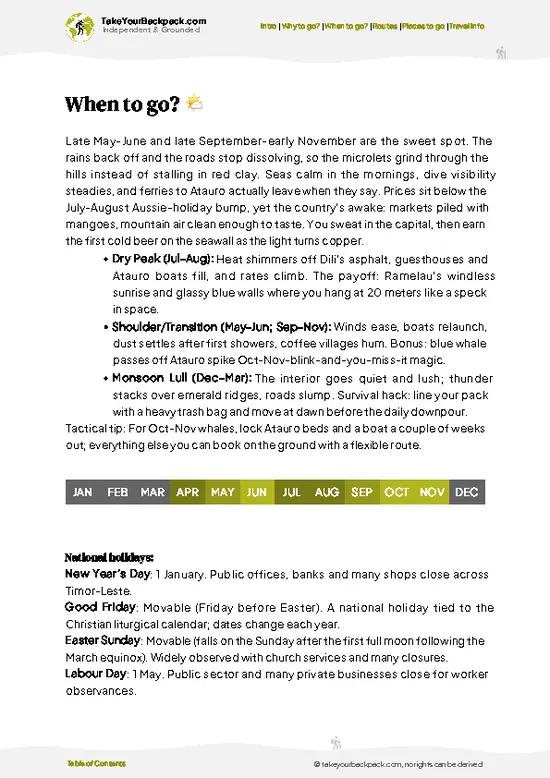
🌤️ When to go?Best time to visit Dili


  • Topic: Weather – Dili’s dry season from May to October is your best bet. Expect clear skies and minimal rain, making trekking and beach days reliable. The wet season, November to April, brings heavy rains and humidity that can turn trails into mudslides and dampen outdoor plans.

  • Topic: Temperature – Temperatures hover between 24°C and 31°C (75°F to 88°F) year-round, but the dry season feels more comfortable with lower humidity. The wet season’s heat combined with moisture can feel sticky and exhausting.

  • Topic: Daylight Hours – Dili sits near the equator, so daylight is steady, about 12 hours daily throughout the year. No drastic shifts mean you can plan hikes or city strolls without worrying about early sunsets.

  • Topic: Crowds – Tourist numbers peak during the dry season, especially
read more 👉

  • Topic: Weather – Dili’s dry season from May to October is your best bet. Expect clear skies and minimal rain, making trekking and beach days reliable. The wet season, November to April, brings heavy rains and humidity that can turn trails into mudslides and dampen outdoor plans.

  • Topic: Temperature – Temperatures hover between 24°C and 31°C (75°F to 88°F) year-round, but the dry season feels more comfortable with lower humidity. The wet season’s heat combined with moisture can feel sticky and exhausting.

  • Topic: Daylight Hours – Dili sits near the equator, so daylight is steady, about 12 hours daily throughout the year. No drastic shifts mean you can plan hikes or city strolls without worrying about early sunsets.

  • Topic: Crowds – Tourist numbers peak during the dry season, especially July and August, when regional travelers flock here. If you want fewer people, shoulder months like May or September offer a quieter vibe without sacrificing weather quality.

  • Topic: Seasonal Activities – The dry season hosts cultural festivals and diving opportunities with clearer waters. Wet months limit outdoor events and water visibility, so plan accordingly if these experiences matter.

  • Topic: Price Fluctuations – Expect accommodation and tour prices to spike in the dry season’s peak months. Traveling just before or after this window can save you money while still enjoying good weather.


Pro-tip: Aim for late May or early September to balance weather, crowd size, and cost—this sweet spot lets you play the timing game like a pro.


source: climatestotravel.comJANJanuary: fair for travelingFEBFebruary: fair for travelingMARMarch: fair for travelingAPRApril: fair for travelingMAYMay: highly recommended for travelingJUNJune: excellent for travelingJULJuly: excellent for travelingAUGAugust: excellent for travelingSEPSeptember: highly recommended for travelingOCTOctober: excellent for travelingNOVNovember: fair for travelingDECDecember: fair for traveling
timor-leste-city-dili
© Google | Mama Africa

✈️ The backpacker research shortcutTimor-Leste Travel Guide

An offline-friendly backpacking guide with optimized travel routes, ranked highlights, transport advice, and the best areas to stay.
example page 0 from our offline Travel Guide for Timor-Leste
example page 1 from our offline Travel Guide for Timor-Leste
example page 2 from our offline Travel Guide for Timor-Leste
example page 3 from our offline Travel Guide for Timor-Leste
example page 4 from our offline Travel Guide for Timor-Leste
example page 5 from our offline Travel Guide for Timor-Leste
example page 6 from our offline Travel Guide for Timor-Leste
example page 7 from our offline Travel Guide for Timor-Leste
The digital guide (205 pages) contains:
49 highlights, ranked by travel appeal
Optimized 2, 3 & 5-day travel routes
Cities, national parks, landmarks, beaches
How to get around
Offline-friendly for travel without Wi-Fi
👉 Click to see all 30+ guide features

📅 Plan smarter in minutes, not weeks
Month by month travel advice
Festivals & national holidays
Budget expectations

🗺️ Go to the right places, skip the overrated ones
Honest pros & cons of destinations
Top hikes, parks & viewpoints
Lesser-known places most travelers miss
Clear “worth it vs skip it” guidance

🛏️ Travel smoothly without rookie mistakes
Best areas to stay
Transport systems explained simply
Common scams & safety advice
SIM cards, money & practical tips

🌍 Understand the country, not just visit it
Culture & traditions
52 Essential phrases & customs
Festivals worth planning around
Traveler-friendly historical context
Insights that make places more meaningful

📱 Built for real travel conditions
Fully downloadable PDF
Works completely offline
Optimized for phone use
Useful in remote areas & buses
Everything in one place
Save weeks of stressful planning
Get instant access to your full guide. 30‑day money-back guarantee.
+ Add another guide for just US$7.80

By proceeding you agree to our terms.
Sent to your inbox immediately after payment • 100% Secure Checkout
Best Backpacking Travel Advisor 2025 tourism awardBest Backpacking
Travel Advisor
2025
What others say about Take Your Backpack Guides:
⭐⭐⭐⭐⭐
Fantastic, amazing amount of information!
⭐⭐⭐⭐⭐
My goodness this is amazing, it's what I've been looking for hats off too you!
⭐⭐⭐⭐⭐
I think this is absolutely BRILLIANT
⭐⭐⭐⭐
Very complete and informative. It's still missing places, but I gotta to commend you
⭐⭐⭐⭐⭐
This is truly amazing, thank you, can't wait to explore it with my kids!
⭐⭐⭐⭐⭐
Awesome resource, thank you!
⭐⭐⭐⭐⭐
This is amazing! Can't wait to explore the ones I haven't seen
⭐⭐⭐⭐
I love this! Well done, great idea.
⭐⭐⭐⭐⭐
Thanks for taking the time to make this gem!
⭐⭐⭐⭐⭐
This might be the best website I've ever seen.
⭐⭐⭐⭐⭐
Congratulations, and thank you so much for your work; it's incredibly valuable.
⭐⭐⭐⭐
In all seriousness I think you did a great job pointing out the important spots
⭐⭐⭐⭐⭐
10/10 very good
⭐⭐⭐⭐⭐
As someone who's only just starting to visit regularly this is awesome, thank you.
⭐⭐⭐⭐
Thank you very much! I'm going to visit my dad, it's going to be very useful!
⭐⭐⭐⭐⭐
This is really cool! We'll be travelling for the first time and this definitely come in handy.
⭐⭐⭐⭐⭐
You are now our minister of culture, congratulations 👨‍💼
⭐⭐⭐⭐⭐
Just wanted to tell you that this is a pearl! Going to follow your recommendations.
⭐⭐⭐⭐⭐
This is so cool. I'll definitely be using the resource for my travels soon.
⭐⭐⭐⭐⭐
This is very impressive! Good work.
⭐⭐⭐⭐⭐
This is an amazing and informative site. Very well done!

🛏️ Where to stay?Where staying makes the most sense

In Dili, the backpacker sweet spot is the area around the waterfront and the central business district (CBD). This zone nails the balance between safety, social buzz, and budget-friendly options. Staying here means you’re close to the pulse of the city—cafes, markets, and a handful of hostels that cater to solo travelers and small groups. It’s not a sprawling backpacker ghetto, but the hostels here are enough to create a low-key community vibe without feeling like a tourist bubble.

Compared to neighborhoods further inland or on the outskirts, this central strip offers a clear advantage: walkability. … read more 👉
In Dili, the backpacker sweet spot is the area around the waterfront and the central business district (CBD). This zone nails the balance between safety, social buzz, and budget-friendly options. Staying here means you’re close to the pulse of the city—cafes, markets, and a handful of hostels that cater to solo travelers and small groups. It’s not a sprawling backpacker ghetto, but the hostels here are enough to create a low-key community vibe without feeling like a tourist bubble.

Compared to neighborhoods further inland or on the outskirts, this central strip offers a clear advantage: walkability. You can hit the beach, grab street food, and mingle with locals and travelers alike without needing a motorbike or taxi. The trade-off? It’s not the cheapest corner of Dili, but the savings on transport and the social opportunities make up for it. Plus, the area feels secure, with a steady police presence and well-lit streets after dark—important for solo backpackers.

If you stray too far into residential zones or industrial areas, you lose that social element and ease of access. Those spots might be quieter and cheaper, but they come with a cost: isolation and extra transport hassle. So, for a backpacker who wants to maximize connection and convenience without blowing the budget, the waterfront-CBD corridor is the smart play. It’s where your time, money, and comfort intersect most efficiently in Dili.

🚌 Getting aroundGetting around like a local

Dili moves at its own rhythm—somewhere between the laid-back pulse of a small coastal town and the unpredictable bursts of a city still finding its feet. The flow here isn’t about strict timetables or polished efficiency; it’s a dance of intuition, local knowledge, and a bit of patience. You’ll find that schedules exist more as guidelines than rules, and the real art is reading the mood of the streets and the people. This is a place where time bends to the human scale, not the other way around. Understanding this is your first win in navigating Dili’s transit: it’s less about rushing and more about syncing with the city’s natural tempo.


  • Walking: The most reliable and cost-free way to get around Dili’s compact center. Streets are generally safe and flat, making it easy to cover key spots
read more 👉
Dili moves at its own rhythm—somewhere between the laid-back pulse of a small coastal town and the unpredictable bursts of a city still finding its feet. The flow here isn’t about strict timetables or polished efficiency; it’s a dance of intuition, local knowledge, and a bit of patience. You’ll find that schedules exist more as guidelines than rules, and the real art is reading the mood of the streets and the people. This is a place where time bends to the human scale, not the other way around. Understanding this is your first win in navigating Dili’s transit: it’s less about rushing and more about syncing with the city’s natural tempo.


  • Walking: The most reliable and cost-free way to get around Dili’s compact center. Streets are generally safe and flat, making it easy to cover key spots on foot. Walking lets you absorb the city’s texture—market chatter, street smells, and the occasional stray dog—without missing a beat. Perfect for short hops and spontaneous detours.


  • Minibus (Hiace Vans): The backbone of local transit, these vans run informal routes connecting neighborhoods and outskirts. They don’t follow strict schedules; vans leave when full, which means you might wait or jump on immediately. Fares are dirt cheap, usually under $1, but expect cramped conditions and a stop-and-go pace. It’s a dive into local life, with no frills but plenty of character.


  • Motorcycle Taxi (Ojek): When time is tight but cash is limited, ojeks offer a fast, flexible option. They dart through traffic with ease, cutting your travel time significantly. Prices are negotiable but generally affordable. Comfort is minimal—helmet quality varies, and you’re exposed to the elements—but the speed and convenience often outweigh the trade-offs.


  • Regular Taxi: Metered taxis exist but are rare and often more expensive than locals expect. They offer comfort and direct routes without the wait, but the price can jump quickly, especially for tourists. Best reserved for airport transfers or when you’re carrying heavy gear and want to avoid the hassle of public transit.


  • Bicycle Rental: A niche but growing option for the adventurous budget traveler. Dili’s relatively flat terrain makes cycling feasible for medium distances. Rentals are inexpensive, and you gain freedom to explore at your own pace. The downside: limited bike lanes and uneven road surfaces demand caution and a bit of local savvy.

👛 Costs (as of 4 September 2026)How expensive it really is

Backpacking in Dili, Timor-Leste, offers a clear-cut trade-off between cost and comfort, with prices reflecting the city’s developing tourism scene and local economy. Here’s the breakdown:
  • Dorm Accommodation (High Season): Expect to pay around €10 to €15 per night. High season pushes prices up slightly due to demand, but options remain basic and clean rather than luxurious.
  • Dorm Accommodation (Off-Season): Prices drop to about €7 to €10 per night. Fewer tourists mean better bargaining power and occasional discounts from hostels.
  • Meals: Street food and local warungs offer meals for €2 to €4. A mix of rice, fresh vegetables, and grilled fish or chicken keeps costs low and flavors authentic. Western-style cafes or restaurants will push closer to €6 to €10 per meal.
  • Local Transport: Minibuses
read more 👉
Backpacking in Dili, Timor-Leste, offers a clear-cut trade-off between cost and comfort, with prices reflecting the city’s developing tourism scene and local economy. Here’s the breakdown:
  • Dorm Accommodation (High Season): Expect to pay around €10 to €15 per night. High season pushes prices up slightly due to demand, but options remain basic and clean rather than luxurious.
  • Dorm Accommodation (Off-Season): Prices drop to about €7 to €10 per night. Fewer tourists mean better bargaining power and occasional discounts from hostels.
  • Meals: Street food and local warungs offer meals for €2 to €4. A mix of rice, fresh vegetables, and grilled fish or chicken keeps costs low and flavors authentic. Western-style cafes or restaurants will push closer to €6 to €10 per meal.
  • Local Transport: Minibuses and shared taxis typically cost €0.30 to €0.50 per trip within the city. They’re slow but cheap, requiring patience and a sense of adventure.
  • City Transport Pass: Dili doesn’t have a formal city transport pass system. Budget travelers rely on cash fares for each ride, so factor in daily transport costs rather than a pass.
  • Basic Activities/Entry Fees: Entry to local museums or cultural sites ranges from €1 to €3. Guided tours or more structured activities can cost €10 to €20, depending on the experience.
  • Miscellaneous Expenses: Budget around €2 to €5 for bottled water, snacks, or small personal items. Internet cafes or SIM cards are affordable, with data packages around €5 for a week.

In total, a backpacker can expect to spend roughly €15 to €30 per day in Dili, depending on season and lifestyle choices. This range balances basic comfort with the freedom to explore without breaking the bank, making it a manageable and rewarding destination for independent travelers.


source: timorleste.tl
⚠️ Prices can change and everyone travels differently, so take this as a rough guide. Hope it helps you plan your adventure!

🚌 Day tripsExploring the surroundings

Dili, Timor-Leste, is a fantastic launchpad for day trips that blend adventure with cultural immersion. Here’s how to make the most of your time without breaking the bank.

Atauro Island
A short 30-minute boat ride from Dili, Atauro Island is a paradise for snorkelers and divers. The vibrant coral reefs teem with marine life, and the island’s laid-back vibe is infectious. You can grab a local meal for under $5 and spend the day exploring pristine beaches or hiking to the island’s summit for panoramic views. Just be sure to check the boat schedule; missing the last ferry can mean an unexpected overnight stay.
👉 Explore Atauro Island

Cristo Rei
Only 20 minutes from Dili, the Cristo Rei statue is a must-see. Standing 27 meters tall, it offers a stunning backdrop for sunrise hikes. The … read more 👉
Dili, Timor-Leste, is a fantastic launchpad for day trips that blend adventure with cultural immersion. Here’s how to make the most of your time without breaking the bank.

Atauro Island
A short 30-minute boat ride from Dili, Atauro Island is a paradise for snorkelers and divers. The vibrant coral reefs teem with marine life, and the island’s laid-back vibe is infectious. You can grab a local meal for under $5 and spend the day exploring pristine beaches or hiking to the island’s summit for panoramic views. Just be sure to check the boat schedule; missing the last ferry can mean an unexpected overnight stay.
👉 Explore Atauro Island

Cristo Rei
Only 20 minutes from Dili, the Cristo Rei statue is a must-see. Standing 27 meters tall, it offers a stunning backdrop for sunrise hikes. The trail is manageable, and the views of Dili and the ocean are breathtaking. You can easily do this trip for less than $10, including transport and snacks. The best time to visit is early morning to avoid the heat and crowds. A common mistake is to underestimate the hike; wear proper shoes and bring water.
👉 Explore Cristo Rei

Jaco Island
For a more adventurous day, head to Jaco Island, about an hour’s drive and a short boat ride from Dili. This uninhabited island boasts some of the most beautiful beaches in the region. The trip can cost around $15-$20, including transport and boat fees. Bring your own food and drinks to keep costs down. The best time to visit is during the dry season, from May to October. Many first-timers forget to pack sunscreen and hats, so don’t make that mistake!
👉 Explore Jaco Island

Maubisse
If you’re in the mood for a cultural experience, Maubisse is about a 90-minute drive from Dili. This highland town is rich in history and offers stunning views of the surrounding mountains. You can explore local markets and enjoy traditional Timorese cuisine for around $10. The best time to visit is during the dry season when the weather is cooler. A common pitfall is not allowing enough time to explore; the area is more expansive than it appears.
👉 Explore Maubisse

Baucau
Rounding out your options, Baucau is a charming town about two hours from Dili. Known for its colonial architecture and beautiful coastline, it’s a great spot for a leisurely day trip. Expect to spend around $15 on transport and food. The best time to visit is early in the day to enjoy the cooler temperatures. Many travelers rush through without taking the time to appreciate the local culture—slow down and soak it in.
👉 Explore Baucau
Want to know what more Timor-Leste offers?
The Timor-Leste Travel Guide describes 49 highlights, from cities to national parks, from beaches to hikes

Get the Travel Guide -

🍲 FoodLocal Flavors for Backpackers

In Dili, the food scene is a vibrant mix of flavors that tells the story of its culture. Start with bubur, a comforting rice porridge often topped with fried shallots and a sprinkle of chili. It’s a breakfast staple that warms you up for the day ahead. Don’t miss out on ikan bakar, grilled fish marinated in local spices, served with a side of tangy sambal. The freshness of the catch is a testament to the coastal lifestyle.

For a true local experience, head to the markets. The bustling atmosphere is intoxicating, with vendors calling out as you navigate through stalls filled with fresh produce and street food. Try pastel, a flaky pastry filled with meat or vegetables, perfect for a quick snack on the go. Pair it with a cup of Timorese coffee, known for its rich flavor and smooth finish.

read more 👉
In Dili, the food scene is a vibrant mix of flavors that tells the story of its culture. Start with bubur, a comforting rice porridge often topped with fried shallots and a sprinkle of chili. It’s a breakfast staple that warms you up for the day ahead. Don’t miss out on ikan bakar, grilled fish marinated in local spices, served with a side of tangy sambal. The freshness of the catch is a testament to the coastal lifestyle.

For a true local experience, head to the markets. The bustling atmosphere is intoxicating, with vendors calling out as you navigate through stalls filled with fresh produce and street food. Try pastel, a flaky pastry filled with meat or vegetables, perfect for a quick snack on the go. Pair it with a cup of Timorese coffee, known for its rich flavor and smooth finish.

When it comes to drinks, arak, a traditional spirit made from fermented palm sap, is a must-try. It’s often shared among friends, embodying the communal spirit of Timorese culture.

Etiquette is simple: enjoy your meal slowly and savor each bite. Meals are a time for connection, so don’t rush. Engage with locals, share stories, and let the flavors of Dili linger on your palate.

🛡️ SafetySafety Tips and Common Scams in Dili

Dili is generally safe for backpackers, but a few smart habits can enhance your experience. Stay aware in crowded areas like the markets, where pickpockets might lurk. Keep your belongings close and avoid flashy displays of wealth.

If you’re traveling solo, especially at night, stick to well-lit streets and avoid wandering too far from populated areas. The waterfront can be lovely after dark, but it’s best enjoyed in groups.

Scams are rare, but be cautious of overly friendly locals who might offer unsolicited help, especially with transportation. They may expect a tip or lead you to a more expensive option.

Everyday annoyances can include aggressive taxi drivers or vendors who won’t take no for an answer. A firm but polite “no, thank you” usually does the trick.

Overall, trust your … read more 👉
Dili is generally safe for backpackers, but a few smart habits can enhance your experience. Stay aware in crowded areas like the markets, where pickpockets might lurk. Keep your belongings close and avoid flashy displays of wealth.

If you’re traveling solo, especially at night, stick to well-lit streets and avoid wandering too far from populated areas. The waterfront can be lovely after dark, but it’s best enjoyed in groups.

Scams are rare, but be cautious of overly friendly locals who might offer unsolicited help, especially with transportation. They may expect a tip or lead you to a more expensive option.

Everyday annoyances can include aggressive taxi drivers or vendors who won’t take no for an answer. A firm but polite “no, thank you” usually does the trick.

Overall, trust your instincts, stay alert, and you’ll navigate Dili with ease, turning potential pitfalls into mere bumps on your adventure.

FAQFrequently asked questions about Dili

3 to 4 days is sufficient to explore Dili, covering main attractions like Cristo Rei statue, the waterfront, and local markets. This allows time for day trips to nearby beaches or cultural sites. Additional days are recommended if planning to explore more of Timor-Leste beyond the city.
Yes, Dili is generally safe for solo backpackers, especially during daylight hours and in well-populated areas. Basic precautions like avoiding isolated places at night and securing belongings are advised. Local police presence is visible, and the city is relatively calm compared to other capitals in the region.
Dili is known for its colonial Portuguese architecture, vibrant markets, and the iconic Cristo Rei statue overlooking the city. It is also recognized for its role in Timor-Leste's independence history and its access to beautiful nearby beaches and diving spots.
⚠️ Things can change over time, so always validate details locally before you go.

Other Timorese cities near Dili

Explore more nearby:

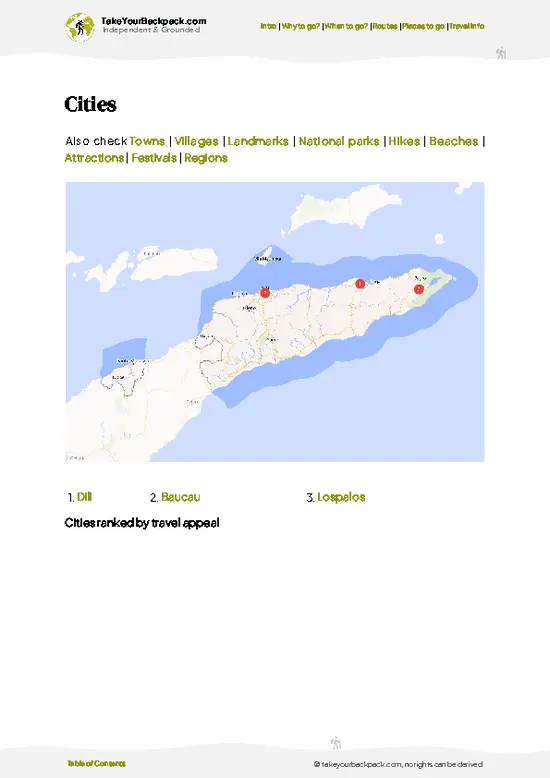
  • Baucau—limestone terraces, old Portuguese town, freshwater springs| 97 km away
  • Lospalos—Fataluku culture, stilt houses, inland plateau| 156 km away

💡 Not sure where to go next?
Create a personalized itinerary for Timor-Leste including Dili and the places that fit your trip.

Generate my itinerary

👉 Discover all cities

Or checkout all Timor-Leste has to offer (think cities, towns, villages, national parks, hikes, beaches, festivals)
Country photo of Timor-Leste

We 💚 feedbackParting advice and final tips

Dili has a laid-back vibe that’s hard to shake off. You’ll find locals eager to share stories over a cup of strong coffee. The best surprise? The vibrant street art that tells the city’s history—each mural a conversation starter. But don’t underestimate the sun; it’s relentless. Pack sunscreen and a hat. Embrace the slow pace; it’s part of the charm. You’re not just visiting a place; you’re stepping into a community that’s still finding its way. Enjoy every moment.

✍️ Help improve this page!
The information on this page is based on in-depth research, insights shared by experienced travelers, and feedback from the local travel community in Timor-Leste. While every effort is made to keep the information accurate and current, conditions can change — so if you spot anything incorrect or outdated, please get in touch.


🙋‍♂️ Give feedback

👋 Meet the founderWho’s Behind Take Your Backpack?

Johan, backpacker and founder of TakeYourBackpackHi, I’m Johan (Netherlands 🇳🇱), the creator of TakeYourBackpack. Over the past decade, I’ve backpacked through 80+ countries across six continents, gaining extensive experience with independent travel, long-term trips, and overland routes.

This site is built on a combination of firsthand travel experience and carefully curated insights from other backpackers. Many guides are based on places I’ve personally visited, while others bring together tips, observations, and practical advice shared by trusted travelers I’ve met along the way.

The goal is to provide realistic, experience-driven guidance — not generic itineraries — so you can explore destinations with better context, clearer expectations, and more confidence.

Get full country guide •
Instant download • 49 highlights • Full Offline guide