×

Timor-Leste🇹🇱 | regionsErmeracoffee plantations, misty highlands, rural markets, eucalyptus forests | things to do and best time to go

Explore Atauro IslandExplore Oecusse

Backpacking in Ermera
👌 Worth visitingregion ranked #3
By Johan Kruseman 🇳🇱 | Updated September 4, 2026

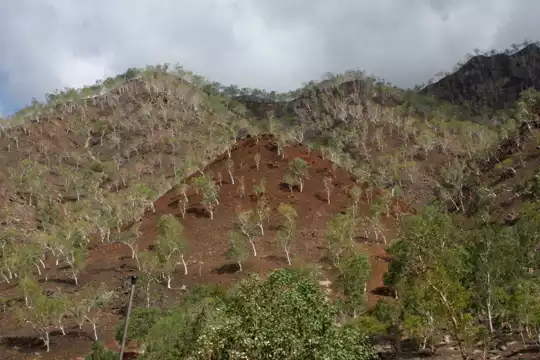
Most people online talk about Ermera like it’s just “coffee country,” but the surprise is how wild and vertical it feels on foot – this is one of the few places in Timor-Leste where a cheap shared truck ride can drop you into genuinely remote mountain villages in under an hour from the capital. Ermera sits inland, west of Dili, climbing up into cool highlands that feel like a different climate and pace. For backpackers, it’s all about steep trails, misty ridges, and staying in basic guesthouses or family homes where nobody is trying to sell you a tour. It’s cheap once you’re there, but slow, cramped transport between towns and rough roads eat time and patience. Compared with coastal Liquiçá or Dili, Ermera has almost no nightlife, very little English, and zero beach time – but if you want raw, rural Timor instead of a polished itinerary, this is where it starts.

Discover everything you want to know in the 📖 Timor-Leste Travel Guide.
Loading the map 🌍
CLICK TO FILTER
cities
towns
villages
landmarks
national parks
hikes
beaches
attractions
festivals
regions
SHOW COUNTRY’S BESTSHOW ALL

✨ Why go?
Ranked #3 region in Timor-Leste
Why visitors keep coming back

Ermera is a backpacker’s playground in Timor-Leste, and here’s why savvy travelers flock there. First off, the variety of landscapes is mind-blowing. You can hike through lush hills, explore coffee plantations, and chill by serene lakes, all without packing up every few days. This means you get to soak in the local vibe while enjoying multiple experiences in one spot.

Transport is another win. You can easily find local transport options that let you roam freely. This flexibility means you can hit the trails or visit traditional villages at your own pace. Plus, the chance to mix nature and culture is golden. You can trek to stunning viewpoints in the morning and then dive into local customs in the afternoon.

Slow travel is the name of the game here. Instead of rushing from one tourist trap … read more 👉
Ermera is a backpacker’s playground in Timor-Leste, and here’s why savvy travelers flock there. First off, the variety of landscapes is mind-blowing. You can hike through lush hills, explore coffee plantations, and chill by serene lakes, all without packing up every few days. This means you get to soak in the local vibe while enjoying multiple experiences in one spot.

Transport is another win. You can easily find local transport options that let you roam freely. This flexibility means you can hit the trails or visit traditional villages at your own pace. Plus, the chance to mix nature and culture is golden. You can trek to stunning viewpoints in the morning and then dive into local customs in the afternoon.

Slow travel is the name of the game here. Instead of rushing from one tourist trap to another, you can savor each moment. Spend time with locals, sample authentic dishes, and truly connect with the land. In Ermera, every choice you make is a step toward a richer experience.
Want to include Ermera in your Timor-Leste route?
Create a personalized Timor-Leste itinerary that includes Ermera and the places that fit your trip — based on your travel style, budget, and available time. Get your route in seconds.

Generate my trip

💡 HighlightsKey sights and experiences for travelers

  • Gleno town and local market — Gleno is Ermera’s administrative centre and the best place to feel the pulse of the region: busy daily markets, roadside stalls selling fresh highland vegetables and coffee cherries, and local cafés where farmers trade news. It’s the practical hub for trips into the surrounding hills and the easiest place to arrange homestays or coffee farm visits.
  • Letefoho coffee terraces and cooperatives — Ermera is famed for high-altitude Arabica and Letefoho is the name you’ll hear most. Walk the steep coffee terraces, meet cooperative-run mills, taste freshly roasted beans at the source, and see how smallholder systems create the distinctive flavors that put Timorese coffee on the specialty map.
  • Hatulia plateau and village markets (hidden gem) — Hatulia is a broad highland
read more 👉
  • Gleno town and local market — Gleno is Ermera’s administrative centre and the best place to feel the pulse of the region: busy daily markets, roadside stalls selling fresh highland vegetables and coffee cherries, and local cafés where farmers trade news. It’s the practical hub for trips into the surrounding hills and the easiest place to arrange homestays or coffee farm visits.
  • Letefoho coffee terraces and cooperatives — Ermera is famed for high-altitude Arabica and Letefoho is the name you’ll hear most. Walk the steep coffee terraces, meet cooperative-run mills, taste freshly roasted beans at the source, and see how smallholder systems create the distinctive flavors that put Timorese coffee on the specialty map.
  • Hatulia plateau and village markets (hidden gem) — Hatulia is a broad highland area where hilltop villages hold lively weekly markets and you’ll catch ceremonies, barter culture, and local produce that don’t show up on tourist maps. The plateau’s wide views, friendly village atmosphere, and unobtrusive homestays make it one of Ermera’s quiet treasures.
  • Railaco village walks and ridge views (hidden gem) — Railaco’s narrow lanes, rice terraces and ridge trails reward slow walking: authentic village life, stone paths carved into slopes, and panoramic mornings with clouds spilling through the valleys. It’s a low-key place for photography and conversation with elders about traditional farming.
  • Village tais weaving sessions (hidden gem) — Small Ermera villages preserve Timor’s tais (handwoven cloth) traditions; visiting a weaving group gives you intimate access to techniques, colors and motifs that vary from place to place. These hands-on encounters are cultural, affordable, and impossible to replicate in a city shop.
Spotted a mistake or missing something? Contact us.

Things to do near Ermera

Ratings based on Tripadvisor reviews. When you book through this link, you support our work at no extra cost to you.

⌛️ 5 daysA smart one-week plan

Day 1: Gleno
Start your journey in Gleno, the capital of Ermera. This town is your gateway to the region, and it’s where you’ll get a feel for local life. The transport options are limited, so take a shared taxi from Dili early in the morning. It’s about an hour’s ride, and you’ll want to maximize your time here. Spend the day exploring the local market and chatting with vendors. The vibrant atmosphere is a great introduction to Timorese culture.

Day 2: Ainaro
From Gleno, head to Ainaro, a scenic drive that takes about two hours. The winding roads offer stunning views, but they can be slow. Ainaro is known for its lush landscapes and cool climate. Spend the afternoon hiking to the nearby waterfalls. This is where you’ll feel the pulse of nature, and it’s a perfect spot for a picnic. … read more 👉
Day 1: Gleno
Start your journey in Gleno, the capital of Ermera. This town is your gateway to the region, and it’s where you’ll get a feel for local life. The transport options are limited, so take a shared taxi from Dili early in the morning. It’s about an hour’s ride, and you’ll want to maximize your time here. Spend the day exploring the local market and chatting with vendors. The vibrant atmosphere is a great introduction to Timorese culture.

Day 2: Ainaro
From Gleno, head to Ainaro, a scenic drive that takes about two hours. The winding roads offer stunning views, but they can be slow. Ainaro is known for its lush landscapes and cool climate. Spend the afternoon hiking to the nearby waterfalls. This is where you’ll feel the pulse of nature, and it’s a perfect spot for a picnic.

Day 3: Hatu Builico
Next, make your way to Hatu Builico, the jumping-off point for Mount Ramelau. The journey takes about an hour, but it’s worth it. This area is quieter, allowing you to soak in the serenity. Spend the night here to prepare for an early morning hike.

Day 4: Mount Ramelau
Rise before dawn for the trek up Mount Ramelau. It’s a challenging climb, but the sunrise views are jaw-dropping. This is the highlight of your trip, and it’s a moment you won’t forget. The sense of accomplishment is palpable as you stand at the summit.

Day 5: Off-Path Reward: Maubisse
On your way back to Gleno, take a detour to Maubisse. It’s a small town with breathtaking views and a chance to interact with locals. Grab a coffee at a local café and enjoy the slower pace.

The must-do day is definitely Day 4. The hike up Mount Ramelau encapsulates the spirit of Ermera and justifies the entire trip. You’ll leave with stories and memories that resonate long after you’ve returned home.
Turn your Ermera visit into an Timor-Leste adventure
Build a complete Timor-Leste route with Ermera, hidden gems, must-see destinations, and realistic travel times included.

Generate my trip

🌤️ When to go?Weather, crowds, and seasonal trade-offs


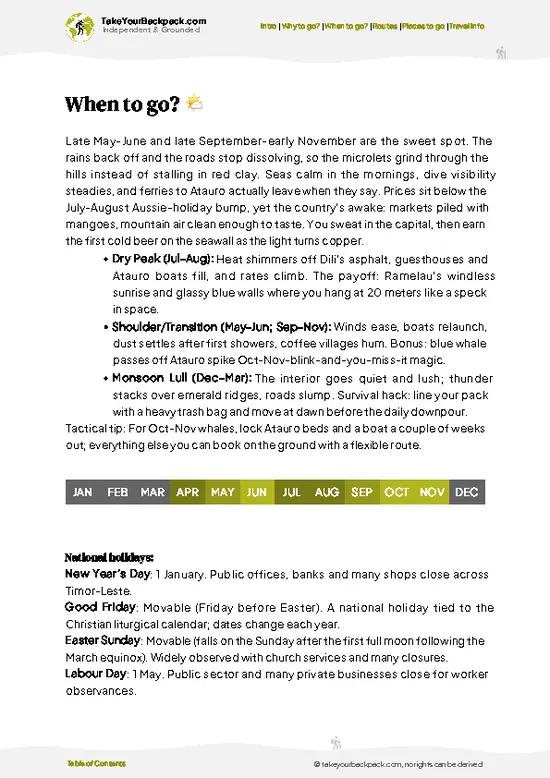
  • Weather: Ermera’s dry season runs May to October, offering clear skies and minimal rain—perfect for trekking without mud battles. The wet season, November to April, means heavy downpours and slippery trails, not ideal unless you’re chasing lush green landscapes and fewer people.

  • Temperature: Daytime temps hover around 24-30°C (75-86°F) year-round, but mornings and evenings in the dry season can dip to a refreshing 15°C (59°F). Pack layers for early starts on the trails.

  • Daylight Hours: Expect roughly 11 to 12 hours of daylight throughout the year. The dry season edges slightly longer days, giving you more daylight to explore without rushing.

  • Crowds: Ermera stays low-key, but the dry season attracts local festivals and a handful of adventurous backpackers. Wet season? You’ll likely
read more 👉

  • Weather: Ermera’s dry season runs May to October, offering clear skies and minimal rain—perfect for trekking without mud battles. The wet season, November to April, means heavy downpours and slippery trails, not ideal unless you’re chasing lush green landscapes and fewer people.

  • Temperature: Daytime temps hover around 24-30°C (75-86°F) year-round, but mornings and evenings in the dry season can dip to a refreshing 15°C (59°F). Pack layers for early starts on the trails.

  • Daylight Hours: Expect roughly 11 to 12 hours of daylight throughout the year. The dry season edges slightly longer days, giving you more daylight to explore without rushing.

  • Crowds: Ermera stays low-key, but the dry season attracts local festivals and a handful of adventurous backpackers. Wet season? You’ll likely have trails to yourself, but at the cost of comfort and accessibility.

  • Seasonal Activities: Dry season is prime for hiking, coffee farm tours, and village visits. Wet season brings vibrant rice planting and harvesting ceremonies, but these can be tough to reach.

  • Price Fluctuations: Accommodation and transport prices peak slightly in the dry season due to demand. Wet season offers better deals but expect some services to be limited or less reliable.


Pro-tip: Aim for late April or early May—just as the rains ease off and before the dry season crowds hit. You’ll snag better prices, decent weather, and a genuine slice of local life.


source: climatestotravel.comJANJanuary: fair for travelingFEBFebruary: fair for travelingMARMarch: fair for travelingAPRApril: good for travelingMAYMay: excellent for travelingJUNJune: excellent for travelingJULJuly: excellent for travelingAUGAugust: excellent for travelingSEPSeptember: excellent for travelingOCTOctober: excellent for travelingNOVNovember: fair for travelingDECDecember: fair for traveling
when-to-go

✈️ The backpacker research shortcutTimor-Leste Travel Guide

An offline-friendly backpacking guide with optimized travel routes, ranked highlights, transport advice, and the best areas to stay.
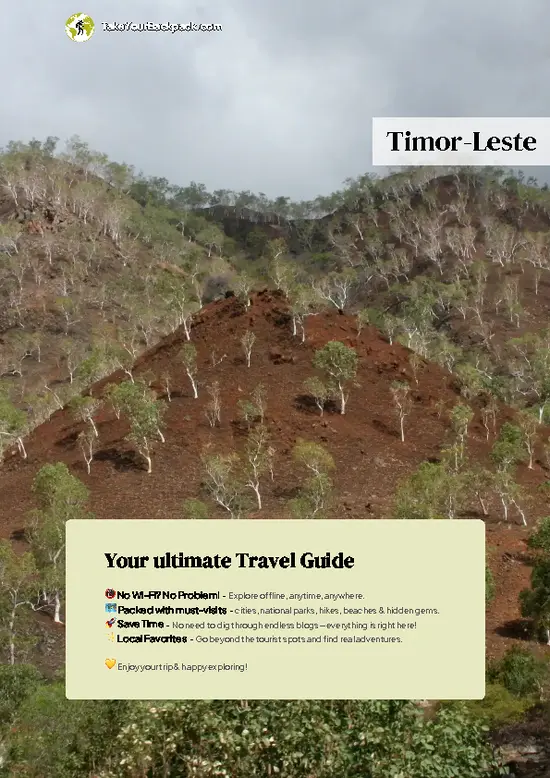
example page 0 from our offline Travel Guide for Timor-Leste
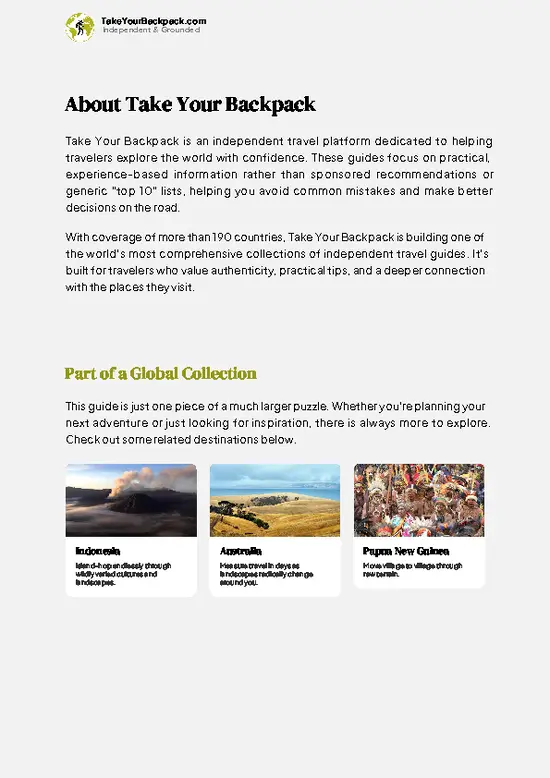
example page 1 from our offline Travel Guide for Timor-Leste
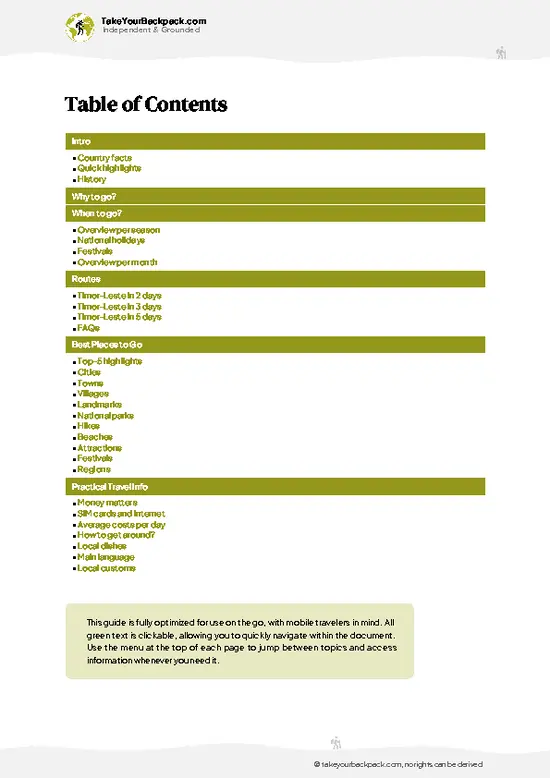
example page 2 from our offline Travel Guide for Timor-Leste
example page 3 from our offline Travel Guide for Timor-Leste
example page 4 from our offline Travel Guide for Timor-Leste
example page 5 from our offline Travel Guide for Timor-Leste
example page 6 from our offline Travel Guide for Timor-Leste
example page 7 from our offline Travel Guide for Timor-Leste
The digital guide (205 pages) contains:
49 highlights, ranked by travel appeal
Optimized 2, 3 & 5-day travel routes
Cities, national parks, landmarks, beaches
How to get around
Offline-friendly for travel without Wi-Fi
👉 Click to see all 30+ guide features

📅 Plan smarter in minutes, not weeks
Month by month travel advice
Festivals & national holidays
Budget expectations

🗺️ Go to the right places, skip the overrated ones
Honest pros & cons of destinations
Top hikes, parks & viewpoints
Lesser-known places most travelers miss
Clear “worth it vs skip it” guidance

🛏️ Travel smoothly without rookie mistakes
Best areas to stay
Transport systems explained simply
Common scams & safety advice
SIM cards, money & practical tips

🌍 Understand the country, not just visit it
Culture & traditions
52 Essential phrases & customs
Festivals worth planning around
Traveler-friendly historical context
Insights that make places more meaningful

📱 Built for real travel conditions
Fully downloadable PDF
Works completely offline
Optimized for phone use
Useful in remote areas & buses
Everything in one place
Save weeks of stressful planning
Get instant access to your full guide. 30‑day money-back guarantee.
+ Add another guide for just US$7.80

By proceeding you agree to our terms.
Sent to your inbox immediately after payment • 100% Secure Checkout
Best Backpacking Travel Advisor 2025 tourism awardBest Backpacking
Travel Advisor
2025
What others say about Take Your Backpack Guides:
⭐⭐⭐⭐⭐
Fantastic, amazing amount of information!
⭐⭐⭐⭐⭐
My goodness this is amazing, it's what I've been looking for hats off too you!
⭐⭐⭐⭐⭐
I think this is absolutely BRILLIANT
⭐⭐⭐⭐
Very complete and informative. It's still missing places, but I gotta to commend you
⭐⭐⭐⭐⭐
This is truly amazing, thank you, can't wait to explore it with my kids!
⭐⭐⭐⭐⭐
Awesome resource, thank you!
⭐⭐⭐⭐⭐
This is amazing! Can't wait to explore the ones I haven't seen
⭐⭐⭐⭐
I love this! Well done, great idea.
⭐⭐⭐⭐⭐
Thanks for taking the time to make this gem!
⭐⭐⭐⭐⭐
This might be the best website I've ever seen.
⭐⭐⭐⭐⭐
Congratulations, and thank you so much for your work; it's incredibly valuable.
⭐⭐⭐⭐
In all seriousness I think you did a great job pointing out the important spots
⭐⭐⭐⭐⭐
10/10 very good
⭐⭐⭐⭐⭐
As someone who's only just starting to visit regularly this is awesome, thank you.
⭐⭐⭐⭐
Thank you very much! I'm going to visit my dad, it's going to be very useful!
⭐⭐⭐⭐⭐
This is really cool! We'll be travelling for the first time and this definitely come in handy.
⭐⭐⭐⭐⭐
You are now our minister of culture, congratulations 👨‍💼
⭐⭐⭐⭐⭐
Just wanted to tell you that this is a pearl! Going to follow your recommendations.
⭐⭐⭐⭐⭐
This is so cool. I'll definitely be using the resource for my travels soon.
⭐⭐⭐⭐⭐
This is very impressive! Good work.
⭐⭐⭐⭐⭐
This is an amazing and informative site. Very well done!

🛏️ Where to stay?Best areas to stay in Timor-Leste

When you’re roaming through Ermera, Timor-Leste, you want to land in spots that feel alive and welcoming. Start in Gleno, the capital of Ermera. It’s a hub for backpackers, buzzing with local markets and street food that’ll make your taste buds dance. The vibe here is friendly, and you’ll find plenty of fellow travelers to swap stories with over a plate of grilled corn.

Next up, consider Aileu, just a short ride from Gleno. This town has a laid-back charm, surrounded by lush hills. It’s perfect for those who want to escape the hustle while still being social. You’ll find cozy cafes where locals … read more 👉
When you’re roaming through Ermera, Timor-Leste, you want to land in spots that feel alive and welcoming. Start in Gleno, the capital of Ermera. It’s a hub for backpackers, buzzing with local markets and street food that’ll make your taste buds dance. The vibe here is friendly, and you’ll find plenty of fellow travelers to swap stories with over a plate of grilled corn.

Next up, consider Aileu, just a short ride from Gleno. This town has a laid-back charm, surrounded by lush hills. It’s perfect for those who want to escape the hustle while still being social. You’ll find cozy cafes where locals gather, and the occasional cultural event that’ll give you a taste of Timorese life.

Don’t overlook Letefoho, a small village that’s a bit off the beaten path. It’s quieter, but that’s where the magic happens. You can connect with nature, hike to stunning viewpoints, and engage with the community. The locals are welcoming, and you’ll feel like you’re part of something special.

Each of these spots offers a unique slice of Ermera. Choose wisely, and you’ll create memories that linger long after you leave.

🚌 Getting aroundTransportation options and practical tips

Ermera is a land where time feels fluid, a place where rigid schedules are more of a suggestion than a rule. Picture this: dusty roads winding through lush hills, the scent of earth after rain, and the sound of laughter echoing from roadside stalls. Here, transport is less about precision and more about intuition. You might find yourself waiting for a ride that arrives when it feels right, or hopping into a shared vehicle that’s just about to fill up. It’s a dance of patience and spontaneity, where every journey is an adventure, and the locals are your best guides.


  • Shared Taxis (Microlets): These are the lifeblood of Ermera’s transport. They run frequently, usually from dawn until around 6 PM. Expect to pay about $1-2 for a ride, depending on distance. They’re a bit cramped but offer a chance
read more 👉
Ermera is a land where time feels fluid, a place where rigid schedules are more of a suggestion than a rule. Picture this: dusty roads winding through lush hills, the scent of earth after rain, and the sound of laughter echoing from roadside stalls. Here, transport is less about precision and more about intuition. You might find yourself waiting for a ride that arrives when it feels right, or hopping into a shared vehicle that’s just about to fill up. It’s a dance of patience and spontaneity, where every journey is an adventure, and the locals are your best guides.


  • Shared Taxis (Microlets): These are the lifeblood of Ermera’s transport. They run frequently, usually from dawn until around 6 PM. Expect to pay about $1-2 for a ride, depending on distance. They’re a bit cramped but offer a chance to mingle with locals and soak in the atmosphere.


  • Motorbike Taxis (Ojek): Need to zip around quickly? Ojek is your go-to. Prices vary, generally around $2-5 for short trips. They’re fast and can navigate the narrow, winding roads with ease. Just be ready for a bit of wind in your hair and the thrill of the ride.


  • Private Car Rentals: If you’re looking for comfort and flexibility, consider renting a car. Prices start around $30 per day, and you’ll have the freedom to explore at your own pace. Just be prepared for some bumpy roads and a few surprises along the way.


  • Public Buses: These are less frequent and can be a bit of a gamble. They usually run from early morning until late afternoon, costing about $1. While they’re the most budget-friendly option, don’t expect luxury; it’s all about the experience.


  • Walking: Don’t underestimate the power of your own two feet. Many of Ermera’s best sights are best explored on foot. It’s free, and you’ll stumble upon local life in a way that no vehicle can offer.


For a smooth ride across Ermera, aim to travel early in the morning or late afternoon. The roads are less crowded, and the light is perfect for those stunning landscape shots. Plus, you’ll avoid the midday heat, making your adventures all the more enjoyable. Embrace the chaos, and let the journey unfold!

🍲 FoodLocal Cuisine & Drinks

In Ermera, the food scene is a delightful dive into local culture. Start with batar daan, a hearty corn porridge that’s a staple here. It’s often served with a side of fresh greens or grilled fish, bursting with flavors that tell stories of the land. Don’t miss out on ikan bakar, grilled fish marinated in spices, smoky and tender, perfect for sharing over a cold drink.

For a true local experience, hit up the markets. The vibrant stalls overflow with fresh produce, spices, and street food. Grab a handful of sambal, a spicy chili paste that’ll kick your taste buds into gear. Pair it with kolo, a traditional rice dish, and you’ve got a meal that’s both filling and authentic.

When it comes to drinks, try arak, a local spirit distilled from palm sap. It’s potent and sweet, best enjoyed in good … read more 👉
In Ermera, the food scene is a delightful dive into local culture. Start with batar daan, a hearty corn porridge that’s a staple here. It’s often served with a side of fresh greens or grilled fish, bursting with flavors that tell stories of the land. Don’t miss out on ikan bakar, grilled fish marinated in spices, smoky and tender, perfect for sharing over a cold drink.

For a true local experience, hit up the markets. The vibrant stalls overflow with fresh produce, spices, and street food. Grab a handful of sambal, a spicy chili paste that’ll kick your taste buds into gear. Pair it with kolo, a traditional rice dish, and you’ve got a meal that’s both filling and authentic.

When it comes to drinks, try arak, a local spirit distilled from palm sap. It’s potent and sweet, best enjoyed in good company.

Dining here is casual and communal. Expect to share tables and dishes, fostering a sense of togetherness. Don’t be shy about trying everything; locals appreciate a good appetite. Just remember to greet your hosts with a smile and a friendly “obrigado” — it goes a long way in this warm-hearted region.

FAQTraveler FAQ

3 to 4 days are sufficient to explore Ermera, allowing time to visit key sites like the coffee plantations and local villages. This duration lets you experience the natural beauty and cultural heritage without rushing.
You can get around Ermera using local minibuses (known as 'bemos') and motorbike taxis, which are common and affordable. Walking is also feasible for short distances within towns and villages.
Ermera is known for its high-quality coffee production, often regarded as some of the best in Timor-Leste. It is also recognized for its lush mountainous landscapes and traditional Timorese culture.
⚠️ Things can change over time, so always validate details locally before you go.

Other Timorese regions near Ermera

Explore more nearby:

  • Atauro Island—coral reefs, remote villages, mountain ridges, local dive sites| 42 km away
  • Oecusse—enclave borders, colonial ruins, savannah hills, river crossings| 134 km away

💡 Not sure where to go next?
Create a personalized itinerary for Timor-Leste including Ermera and the places that fit your trip.

Generate my itinerary

👉 Discover all regions

Or checkout all Timor-Leste has to offer (think cities, towns, villages, national parks, hikes, beaches, festivals)
Country photo of Timor-Leste

We 💚 feedbackIs it worth it?

Ermera is a breath of fresh air in Timor-Leste. The vibe? Laid-back, with locals who genuinely want to share their world. Don’t miss the sunrise at Mount Ramelau; it’s a game-changer. But here’s the scoop: the roads can be rough, so brace yourself for a bumpy ride. Pack snacks and enjoy the journey; it’s part of the charm. You’ll leave with stories that outshine any postcard. Trust me, this place gets under your skin in the best way.

✍️ Help improve this page!
The information on this page is based on in-depth research, insights shared by experienced travelers, and feedback from the local travel community in Timor-Leste. While every effort is made to keep the information accurate and current, conditions can change — so if you spot anything incorrect or outdated, please get in touch.


🙋‍♂️ Give feedback

👋 Meet the founderWho’s Behind Take Your Backpack?

Johan, backpacker and founder of TakeYourBackpackHi, I’m Johan (Netherlands 🇳🇱), the creator of TakeYourBackpack. Over the past decade, I’ve backpacked through 80+ countries across six continents, gaining extensive experience with independent travel, long-term trips, and overland routes.

This site is built on a combination of firsthand travel experience and carefully curated insights from other backpackers. Many guides are based on places I’ve personally visited, while others bring together tips, observations, and practical advice shared by trusted travelers I’ve met along the way.

The goal is to provide realistic, experience-driven guidance — not generic itineraries — so you can explore destinations with better context, clearer expectations, and more confidence.

Get full country guide •
Instant download • 49 highlights • Full Offline guide