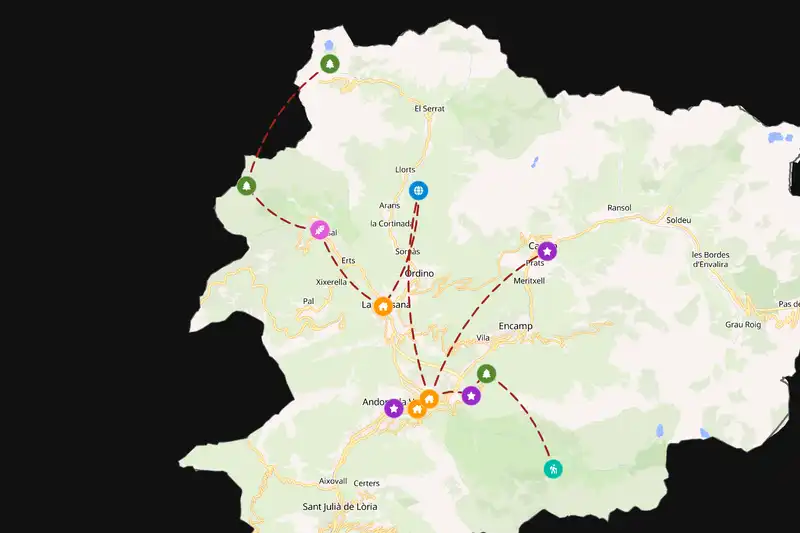
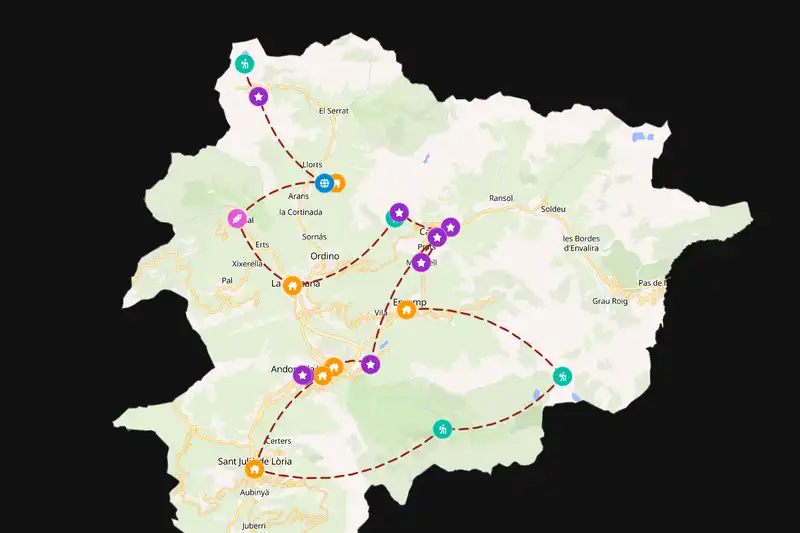
Yes, Andorra is easy to backpack on your own: the country is tiny, trails are well marked, and a bus network links every parish to the capital.
Most travelers arrive by bus from
Barcelona (about 3 to 3.5 hours, roughly €30 to 40) or
Toulouse (about 3 to 3.5 hours). Local rides cost around €2 to 4. The real challenge is budget beds, since hostels are rare. Expect €50 to 80 for a basic double in
Escaldes-Engordany or
Arinsal, or use mountain refuges, where guarded ones like Comapedrosa charge roughly €45 to 55 for half board in summer.
Three to five days covers Andorra well. Two days is enough for the capital and one valley hike, and a week suits serious hikers.
With
2 days, stay in
Escaldes-Engordany and pair
Casa de la Vall with the
Madriu-Perafita-Claror Valley. With
3 days, add
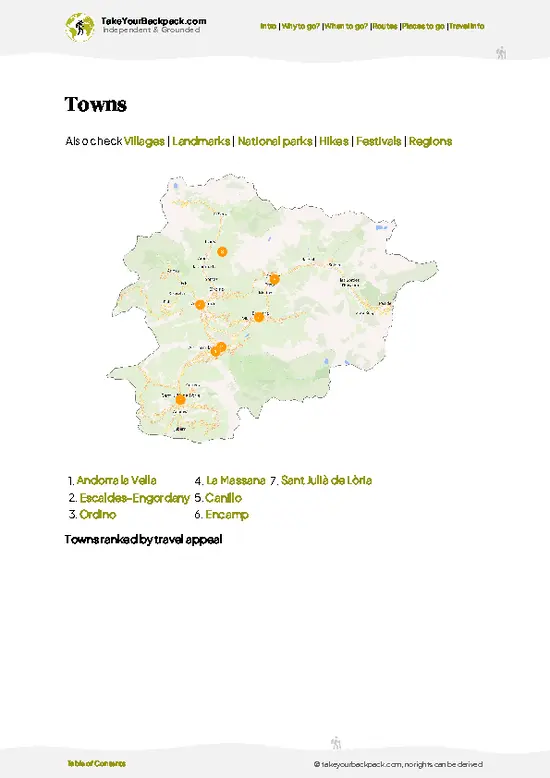
Ordino and
Canillo. With
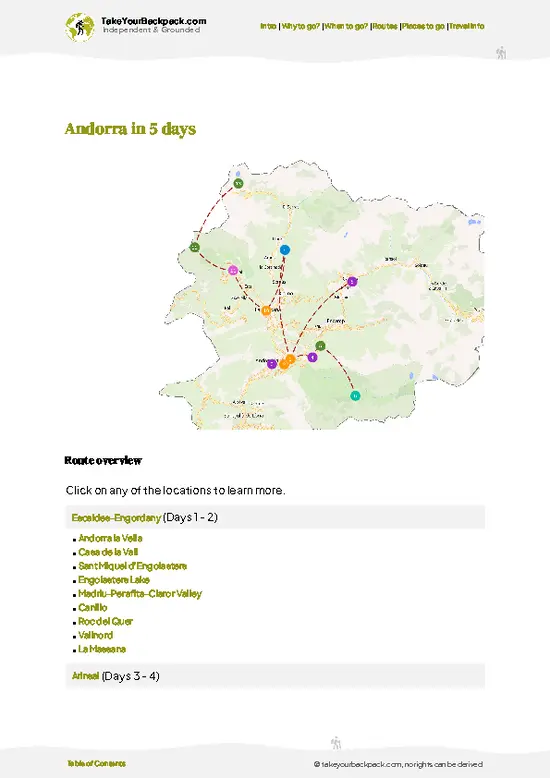
5 days, you can climb Comapedrosa (7 to 8 hours return from Arinsal) and walk the Tristaina lakes. Distances are short, about 30 to 60 minutes by bus between any two valleys, so mountain weather sets your pace more than travel times do.
Yes, you can tour Andorra without a car, because buses run from Andorra la Vella up every main valley, and most trailheads sit within walking distance of a stop.
Most rides cost about €2 to 4. From the capital,
Canillo takes 20 to 30 minutes,
Ordino about 20, and
Arinsal around 30 to 40 with a possible change in
La Massana. The
Madriu trail starts on foot from Escaldes. In summer, extra buses reach high trailheads such as
Ordino-Arcalís for the Tristaina lakes. Evening services thin out, so plan hikes to finish by late afternoon.
The essentials in Andorra are the
Madriu-Perafita-Claror Valley, the
Vall del Comapedrosa Natural Park,
Casa de la Vall in the capital and the
Roc del Quer viewpoint above Canillo.
The Madriu valley is UNESCO-listed and roadless, and you can walk into it straight from Escaldes (4 to 6 hours return). Comapedrosa holds the country’s highest peak at 2,942 meters, reached from
Arinsal. The guided tour of Casa de la Vall takes under an hour, and Roc del Quer needs just 30 minutes. If you add a fifth sight, make it the
Estanys de Tristaina loop, about 2.5 to 3 hours.
If time is short in Andorra, skip the duty-free shopping strip, Pas de la Casa and the southern border town of
Sant Julià de Lòria.
Avinguda Meritxell in
Andorra la Vella is mostly perfume and electronics shops you can find anywhere. Pas de la Casa is a ski and shopping town on the French border, about an hour by bus from the capital, and it adds little in summer.
Encamp is pleasant but easy to pass through. Spend those hours on a valley hike instead, since the Madriu trail starts right in Escaldes and costs nothing.
Yes, our itinerary-planner does exactly that. Set your trip length in days, give your interests and travel style, optionally give start- and end location and/or some mandatory stops you would like to include and the itinerary planner creates your personalized routes for Andorra in seconds. Try it out!
Try the itinerary plannerv2.webp)
 Best Backpacking