×
Côte d’Ivoire 🇨🇮

backpacking Africa Côte d’Ivoire 🇨🇮
Move between forest towns and energetic Atlantic coastlines.

Explore ChadExplore DR Congo

Backpacking Côte d’Ivoire in 2026

A complete guide including when and where to go, costs, transport, itineraries, and practical travel advice.
The big picture before you go

Backpacking Côte d’Ivoire
By Johan Kruseman 🇳🇱 | Updated May 31, 2026

Most travelers expect West Africa to be hard miles and hushed nights; Ivory Coast meets you with swagger, surf light, and a city that hums past midnight. Abidjan feels like a capital of possibility, not a layover. The rest of the country runs on rhythm, cocoa, and rain.

In Abidjan the maquis smoke curls over attiéké and fish while coupé‑décalé shakes the pavement; at Grand‑Bassam the Atlantic throws bright spray at peeling balconies; up in Man, red dust clings as you sweat to Tonkoui’s ridge and stare into layered green; in Taï the rainforest exhales and primates whisper through the canopy; in Comoé, dry season opens tawny savanna and antelope flicker away. Senufo workshops in Korhogo thrum with looms and woodchips, and Dan mask dancers land with a thud you feel in your ribs. Heat presses, checkpoints slow you, roads jar, and French runs fast—but dusk cools, a cold Ivoire beer sweats in your hand, drums find the pocket, and the effort suddenly makes sense.

Ghana is smoother and museum‑ready; Burkina Faso is spare and arts‑forward; Liberia offers raw coast with fewer guardrails; Mali holds deep cultural gravity but demands caution. Ivory Coast is for travelers who want big‑city pulse, true‑green rainforest days, and ritual‑rich nights—and don’t mind a little grit to earn the glow.

Abidjan

If you land and skip Abidjan, you miss the country’s pulse. The air smells of diesel, grilled fish, and wet concrete after a noon squall. Gbaka minibuses groan past open maquis where attiéké and braised chicken arrive fast and cheap by big-city standards. Orange taxis are plentiful; negotiate up front and keep small bills. Lagoons cut the city, so plan for bridges and traffic; water taxis help at rush hour. This rewards street-energy travelers: markets in Treichville, music in Yopougon, late plates in Marcory. The payoff is simple—a cold Flag beer sweating on a plastic table as the heat finally drops and the neon flickers on.

Eastern Coast: Grand-Bassam to Assinie

One straight coastal spine from Abidjan gets you crumbling colonial blocks in Bassam, breeze through casuarinas, and the flat hiss of surf. Shared taxis run all day; expect police checkpoints and bring cash. Weekdays feel slow; weekends bring Abidjaners and raised prices. Mosquitoes hit hard at dusk around the lagoons; repellent isn’t optional. Swim early before the sun bakes the sand and rip currents kick up. This is for decompression after the city—pirogue rides across to sandbars, grilled capitaine with lime, and that first sea-cold bottle under a faded parasol.

Western Highlands: Man and the Dix-Huit Montagnes

Red dirt under your nails and mist in the valleys. Roads buckle in rainy season; the last kilometers often mean a moto-taxi and a muddy walk. Hike Dent de Man or Tonkpi and you’ll earn views that make the sweat make sense—green ridgelines and tin roofs below. La Cascade is for washing off the day, not posing. With patience and local help, you can catch mask dances or a vine bridge; don’t force it. This region pays off for hikers who like cool mornings, cocoa smells, and honest fatigue.

Far North: Korhogo and Senoufo Country

Dry light, dust in your teeth, looms ticking in Waraniéné, blacksmiths in Koni ringing metal into shape. Long-haul buses run the A3 via Bouaké; break the trip there if your spine complains. Harmattan season drops visibility and dries your lips to paper. Moto-taxis handle the last mile to workshops; ask before photos and respect poro spaces. It rewards slow travelers who value process over display. Best moment: dusk, a calabash of tchapalo in a sandy courtyard, balafon notes drifting over the road.

Southwest Rainforest: San-Pédro and Taï National Park

Humidity like a wet blanket, cicadas screaming, cocoa trucks grinding red mud into paste. San-Pédro is your jump-off; from there, permits, guides, and either a 4x4 or a pirogue to reach the forest edge. After rains, expect axle-deep ruts and river shoes. Malaria risk is real; cover up. Wildlife isn’t a guarantee—think patient hours for colobus and Diana monkeys, with the long-shot thrill of a rustle that wasn’t wind. The reward is quiet you can feel, then a river swim, then a cold Castel back at the port as salt air chases the jungle out of your lungs.
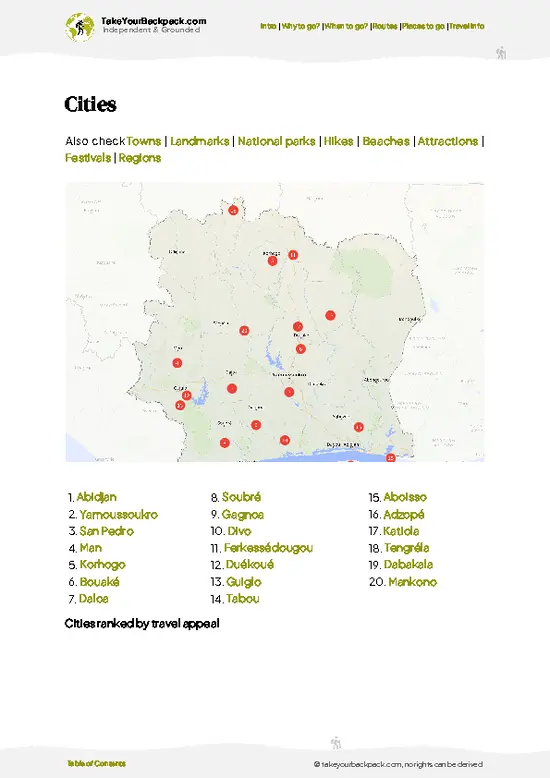
Map of Côte d’Ivoire
Loading the map 🌍
CLICK TO FILTER
city
town
unique site
national park
hike
beach
attraction
festival
region
SHOW COUNTRY’S BESTSHOW ALL
film
0
0
0a
Basilique Notre-Dame de la Paix de Yamoussoukro
film
1
1
1a
Musée des Civilisations de Côte d’Ivoire
film
2
2
2a
Musée National du Costume de Grand-Bassam
film
3
3
3a
Zoo National d’Abidjan
film
4
4
4a
La Pyramide d’Abidjan
film
5
5
5a
Palais de la Culture d’Abidjan
film
6
6
6a
Galerie Cécile Fakhoury
film
7
7
7a
Assinie Beach
film
8
8
8a
Grand Bassam Beach
film
9
9
9a
San Pedro Beach
film
10
10
10a
Korhogo
film
11
11
11a
Bouna
film
12
12
12a
Mount Nimba Trail
film
13
13
13a
La Dent de Man Trail
film
14
14
14a
Man Waterfalls Trail
film
15
15
15a
Mount Tonkoui Trail
film
16
16
16a
Comoé
film
17
17
17a
Banco
film
18
18
18a
Mount Nimba Strict Nature Reserve
film
19
19
19a
Azagny
film
20
20
20a
Marahoué
film
21
21
21a
Bélier Region
film
22
22
22a
Grand-Bassam
film
23
23
23a
Biankouma
film
24
24
24a
Mount Tonkoui
film
25
25
25a
Akwaba Palace

Why go?Reasons people choose to visit

Low cost

Your wallet breathes in Côte d’Ivoire. Street steam rises off garba, alloco, and attiéké with fried fish; you eat with your fingers, salt on your lips, and pay less than a casual café lunch back home. Wôrô-wôrô and gbakas rattle across Abidjan for pocket change, and bush taxis keep long hops sane. Fan rooms in basic auberges stay simple and fair. Open-air maquis pour cold Flag or Bock that actually dents the heat. Cheaper day-to-day than Ghana or … read more 👉
Your wallet breathes in Côte d’Ivoire. Street steam rises off garba, alloco, and attiéké with fried fish; you eat with your fingers, salt on your lips, and pay less than a casual café lunch back home. Wôrô-wôrô and gbakas rattle across Abidjan for pocket change, and bush taxis keep long hops sane. Fan rooms in basic auberges stay simple and fair. Open-air maquis pour cold Flag or Bock that actually dents the heat. Cheaper day-to-day than Ghana or Senegal. Most backpackers glide on a low double‑digit daily average without trimming the fun.
Want the complete picture of Côte d’Ivoire?
The offline Travel Guide brings everything together — routes, highlights & planning.

See what's included in the guide 👉

Get the Travel Guide -

⭐ HighlightsHighlights of Côte d’Ivoire

  • Abidjan: The lagoon breathes damp heat and diesel, gbakas rattle past maquis where smoke from grilled tilapia and attiéké grabs your clothes; then slip into Banco National Park at dawn and let hornbills and buttress roots reset your head. Use orange taxis with meters by day and agree a fare at night; the lagoon shuttle from Plateau is cheap breeze therapy. For off-the-map detours: Azagny National Park, Jacqueville’s sand spit, and river-meets-sea Grand-Lahou.
  • Grand-Bassam: Salt in the air, cracked stucco and jacaranda shade, the old quartier colonial hums softly until the Atlantic hammers the shore; walk the Musée du Costume then take the long light on the Wharf as brown pelicans arrow past. Currents are mean—swim only where locals do—and Sunday traffic chokes the bridge, so arrive early or sleep over. For side quests: the Ehotilé Islands near Adiaké, the palm lanes of Assouindé, and the quiet sands beyond Mondoukou.
  • Man and the western highlands: Red laterite dust sticks to your calves,
read more 👉
  • Abidjan: The lagoon breathes damp heat and diesel, gbakas rattle past maquis where smoke from grilled tilapia and attiéké grabs your clothes; then slip into Banco National Park at dawn and let hornbills and buttress roots reset your head. Use orange taxis with meters by day and agree a fare at night; the lagoon shuttle from Plateau is cheap breeze therapy. For off-the-map detours: Azagny National Park, Jacqueville’s sand spit, and river-meets-sea Grand-Lahou.
  • Grand-Bassam: Salt in the air, cracked stucco and jacaranda shade, the old quartier colonial hums softly until the Atlantic hammers the shore; walk the Musée du Costume then take the long light on the Wharf as brown pelicans arrow past. Currents are mean—swim only where locals do—and Sunday traffic chokes the bridge, so arrive early or sleep over. For side quests: the Ehotilé Islands near Adiaké, the palm lanes of Assouindé, and the quiet sands beyond Mondoukou.
  • Man and the western highlands: Red laterite dust sticks to your calves, cocoa ferments sweet-sour along the lane, and the climb to Mount Tonkoui rewards with cloud shadows sweeping the Guinean ridge; rinse off at La Cascade de Man. Start at first light, hire a moto up to the trailhead, and wear long trousers—razor grass will find skin. Off the map: vine bridges near Lieupleu, Biankouma’s mask carvers, and the Zadepleu falls.
  • Taï National Park: The forest air is thick as soup, cicadas drill, and buttress roots rise like walls; track chimpanzees with a park guide at dawn and take a night walk for eye-shine and soft galago calls. Permits and guides are mandatory, leeches are real in the rains—gaiters help—and there are no ATMs in Taï or Djouroutou, so bring CFA cash and your own trail snacks. Wander further: dirt tracks toward Zagné, pirogue points on the Cavally near Para, and Nawa Falls by Soubré.
  • Yamoussoukro: Wide boulevards, surprising quiet, and the Basilica’s marble cool underfoot as colored glass spills across the nave; step inside at noon, then loop past the caiman lake at the old Presidential Palace for a surreal pause. Dress modestly and carry small bills for donations; moto-taxis make quick work of the distances and evenings get cool on the plateau. Nearby escapes: Abokouamékro Reserve, Lake Kossou’s fishing hamlets, and Baoulé villages around Toumodi.
Spotted a mistake or missing a highlight? Contact us.

But Côte d’Ivoire offers more...

Discover and compare all of its highlights per category

🧭 RoutesLogical itineraries covering the highlights

The 5-Day Abidjan & Coast Taster

The Vibe: A relaxed, coastal-focused escape built around Abidjan’s culture and the easygoing beaches just down the road, with minimal long-distance travel and maximum time to swim, stroll, and snack. You get a strong first taste of Côte d’Ivoire without needing to be a logistics wizard.
The Highlights:
  • City-meets-lagoon energy in Abidjan, from museums to maquis.
  • Colonial-era streets and textile history in Grand-Bassam.
  • Craft shopping that actually feels personal at Grand-Bassam’s artisan center.
  • Soft-sand downtime and lagoon views at Assinie Beach.

The 10-Day Culture & Heartland Circuit

The Vibe: A balanced loop that links Abidjan’s urban buzz, Grand-Bassam’s coastal history, and Yamoussoukro’s monumental calm, with enough time in each stop to feel the shift in pace and personality. It’s ideal if you want depth in a few regions rather than a frantic lap of the whole country.
The Highlights:
  • Three full days to explore Abidjan’s museums, lagoonfront, and forested Banco
read more 👉

The 5-Day Abidjan & Coast Taster

The Vibe: A relaxed, coastal-focused escape built around Abidjan’s culture and the easygoing beaches just down the road, with minimal long-distance travel and maximum time to swim, stroll, and snack. You get a strong first taste of Côte d’Ivoire without needing to be a logistics wizard.
The Highlights:
  • City-meets-lagoon energy in Abidjan, from museums to maquis.
  • Colonial-era streets and textile history in Grand-Bassam.
  • Craft shopping that actually feels personal at Grand-Bassam’s artisan center.
  • Soft-sand downtime and lagoon views at Assinie Beach.

The 10-Day Culture & Heartland Circuit

The Vibe: A balanced loop that links Abidjan’s urban buzz, Grand-Bassam’s coastal history, and Yamoussoukro’s monumental calm, with enough time in each stop to feel the shift in pace and personality. It’s ideal if you want depth in a few regions rather than a frantic lap of the whole country.
The Highlights:
  • Three full days to explore Abidjan’s museums, lagoonfront, and forested Banco National Park.
  • UNESCO-listed Grand-Bassam with its costume museum and artisan workshops.
  • Yamoussoukro’s outsized basilica and wide boulevards in the inland plateau.
  • Contemporary art spaces and women-focused history back in Abidjan.

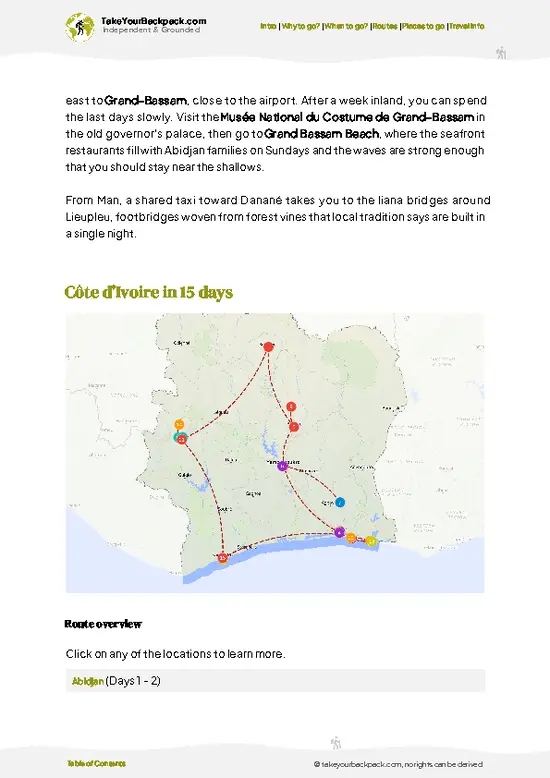
The 15-Day Coast, Rainforest & Highlands Adventure

The Vibe: A full-bodied journey that stitches together city life, historic coast, deep rainforest, and mountain trails, with a few long travel days rewarded by serious scenery and character. It’s for travelers who want to feel like they’ve really crossed the country, not just sampled its capital.
The Highlights:
  • Abidjan as your cultural anchor, from classic museums to cutting-edge galleries.
  • Grand-Bassam and Assinie-Mafia for a one-two punch of history and beach time.
  • Immersive rainforest days in Taï National Park and recovery time on San Pedro Beach.
  • Hikes and waterfalls around Man, plus a stop in Yamoussoukro’s basilica on the way back.
🌍 Want a ready-to-use travel plan for Côte d’Ivoire?
The overview above compares different route options based on your travel time and style. The complete Travel Guide breaks each itinerary down in detail, including maps, stops, highlights, and transport information.

Explore all route details 👉

Get the Travel Guide -

🌤️ When to go?A month-by-month overview

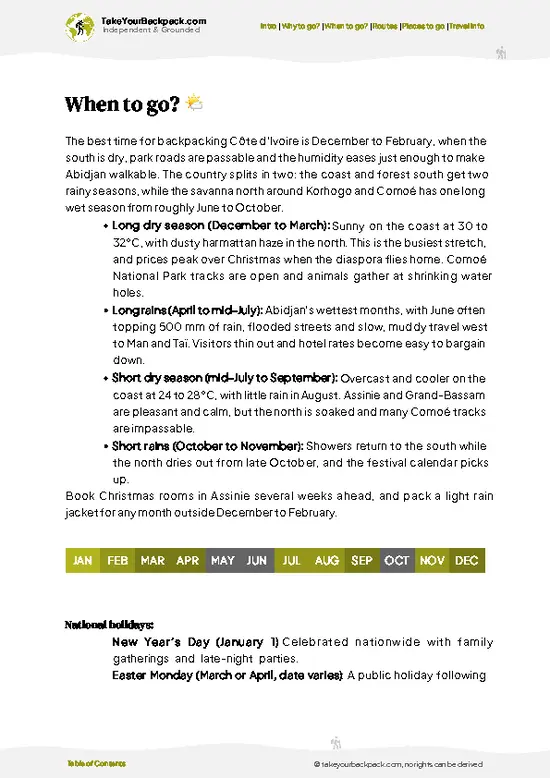
Late January through early March is the sweet spot. The big rains are long gone; harmattan still cools the dawn, but the chalky haze thins so horizons return. Dirt roads into Man and Korhogo bake firm; gbakas make time instead of fishtailing. Coastal swell softens compared to midyear, and beach flags drop more days than they rise. Holiday travelers are back at work; prices ease from their December high. You move, you sweat less, and that first beer in a maquis actually cools you instead of just rinsing heat from your throat.
  • The Crowd/Heat Peak: December holidays and March-April. Prices jump in Abidjan and Assinie, gbakas jam, and the sun slams your shoulders. The trade: festivals crackle, northern paths stay bone-dry, and an ice-cold Flag by the lagoon hits like a reset button.
  • The Transition/Shoulder: Late November-mid December, and late February. Shops roll up shutters, dust settles, guides answer calls again. Roads firm, beaches behave, and rooms ease midweek if you show up with cash and patience.
  • The Off-Peak/Extreme: May-June (plus October in the south). Tin roofs thunder, clay turns to grease, and parks sit empty. Survival hack: line your pack with a contractor bag, switch to rubber sandals in town, and ride dawn buses before ruts deepen.
  • The Little Dry/Overcast: July-August. Cooler air, slate light, rougher surf; trekking breathes easier. Cheaper stays and long coffees under zinc awnings while the city slows to a humid murmur.

For that window, book coastal weekends about a week ahead; inland guesthouses are easiest to negotiate same-day around the main gare routière.

source: climatestotravel.comJANJanuary: excellent for travelingFEBFebruary: highly recommended for travelingMARMarch: good for travelingAPRApril: good for travelingMAYMay: fair for travelingJUNJune: fair for travelingJULJuly: highly recommended for travelingAUGAugust: highly recommended for travelingSEPSeptember: good for travelingOCTOctober: fair for travelingNOVNovember: highly recommended for travelingDECDecember: good for traveling
📅 Traveling in a specific month?
Get a full month-by-month breakdown of weather, crowds, costs, festivals, and seasonal highlights in the complete travel guide.

Get full details when to go 👉

Get the Travel Guide -
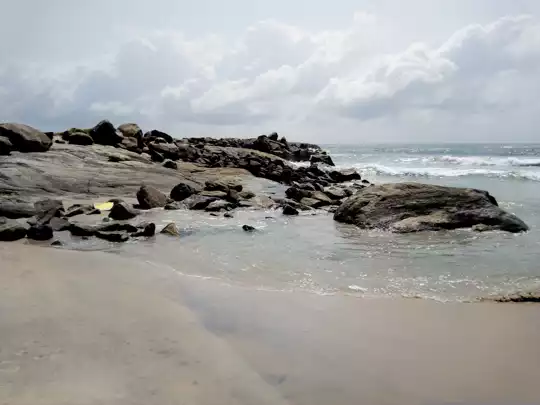
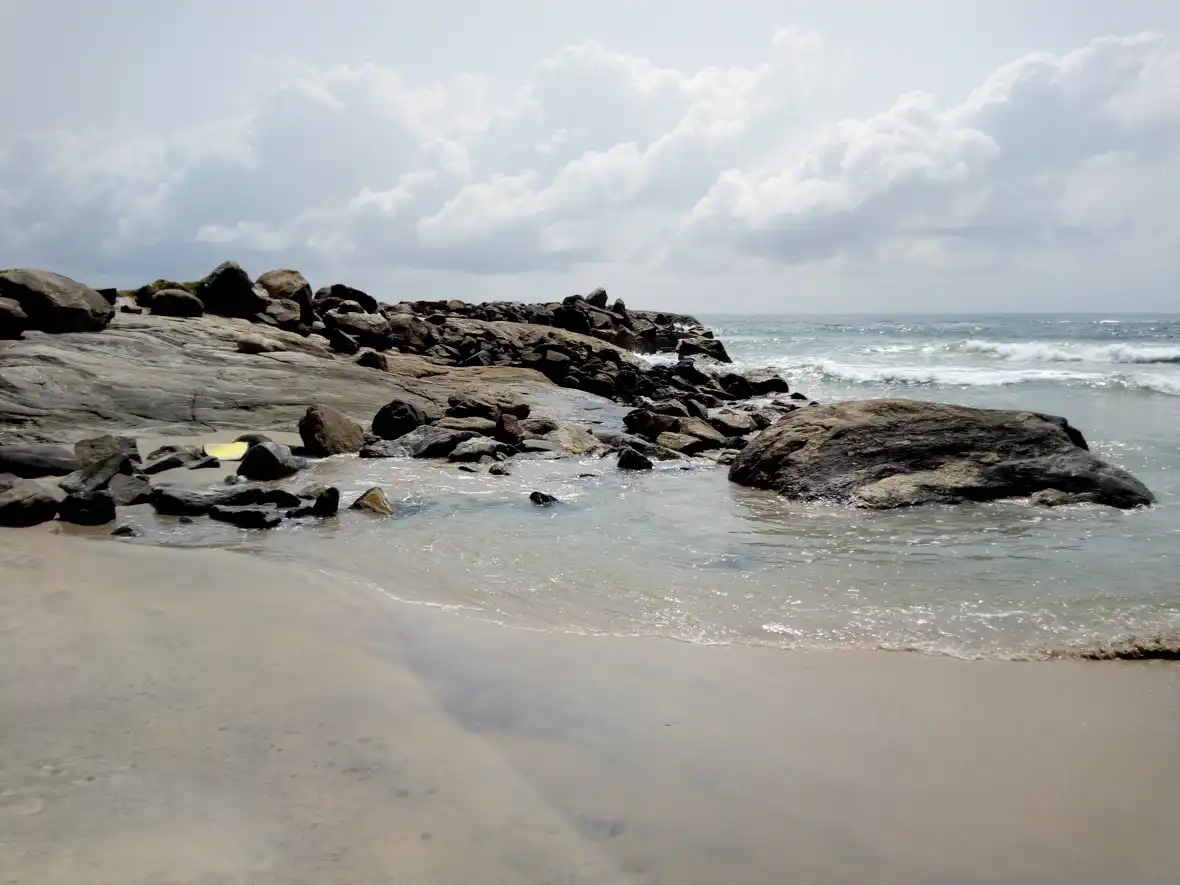
pixabay-ivory coast - sea-3876727

💰 Costs (as of 2026)Travel costs in Côte d’Ivoire

Expect 25,000-35,000 XOF ($40-$60) per day if you stick to dorms, street food, and shared transport—more in Abidjan, less in smaller towns.
  • dorm accommodation: 10,000-18,000 XOF in Abidjan, 6,000-12,000 XOF upcountry or on the coast. Expect thin mattresses, a humming fan, and the occasional power dip; bring earplugs and a mosquito net if you’re picky. System tip: ask for “sans clim” (no AC) and pay cash for a lower “nuitée” rate; many “auberges” quote by the hour first, so state you want all night and negotiate after 6 pm when they see occupancy.
  • meals: Supermarket Survival: baguette, sardines, Laughing Cow, bananas—1,500-3,000 XOF can feed you, but imported cereal, cheese, and yogurt burn cash fast. Street food reality: garba (attiéké + tuna) 300-600 XOF, riz gras or sauce graine 500-1,000, grilled fish with attiéké 1,500-3,000, brochettes 200-400 each, an ice-cold Flag/Bock in a maquis 800-1,200. Cheaper than Dakar, a touch pricier than Benin/Togo, roughly on par with Ghana’s cities.
  • local transport: The cheapest unlock is public and shared: SOTRA buses 200-500 XOF, wôrô-wôrô (shared taxis) 150-300, gbakas (minibuses) 300-600. Intercity taxi-brousse: Abidjan-Grand-Bassam 1,000-1,500;
read more 👉
Expect 25,000-35,000 XOF ($40-$60) per day if you stick to dorms, street food, and shared transport—more in Abidjan, less in smaller towns.
  • dorm accommodation: 10,000-18,000 XOF in Abidjan, 6,000-12,000 XOF upcountry or on the coast. Expect thin mattresses, a humming fan, and the occasional power dip; bring earplugs and a mosquito net if you’re picky. System tip: ask for “sans clim” (no AC) and pay cash for a lower “nuitée” rate; many “auberges” quote by the hour first, so state you want all night and negotiate after 6 pm when they see occupancy.
  • meals: Supermarket Survival: baguette, sardines, Laughing Cow, bananas—1,500-3,000 XOF can feed you, but imported cereal, cheese, and yogurt burn cash fast. Street food reality: garba (attiéké + tuna) 300-600 XOF, riz gras or sauce graine 500-1,000, grilled fish with attiéké 1,500-3,000, brochettes 200-400 each, an ice-cold Flag/Bock in a maquis 800-1,200. Cheaper than Dakar, a touch pricier than Benin/Togo, roughly on par with Ghana’s cities.
  • local transport: The cheapest unlock is public and shared: SOTRA buses 200-500 XOF, wôrô-wôrô (shared taxis) 150-300, gbakas (minibuses) 300-600. Intercity taxi-brousse: Abidjan-Grand-Bassam 1,000-1,500; Abidjan-Yamoussoukro 3,500-5,000; Abidjan-Man 8,000-12,000. Stations are loud and dusty; show up early, sit “devant” if you can, keep small bills handy, and don’t plan on night runs—checkpoints and potholes slow everything. Slightly pricier than Ghana’s trotros, still cheaper than Senegal’s sept-places.
  • activities: The big drain is wilderness: Comoé or Taï require a guide and usually a 4x4; solo, the day can hit 80,000-150,000 XOF once fees, fuel, and camping are real. Build a group to split it or skip. City days are cheap: National Costume Museum in Grand-Bassam 1,000-2,000; Basilica in Yamoussoukro 2,000-5,000; live music cover 3,000-5,000; pirogue through Grand-Lahou mangroves 5,000-10,000 per boat. Pricier than Ghana’s quick park visits; similar to Benin’s serious safari costs.
  • miscellaneous: Budget leaks: SIM + 5-10 GB 3,000-6,000 XOF; ATM fees 2-5%; bottled water 400-600 for 1.5L unless you filter; laundry 1,000-2,000 per basin; AC “supplement” 2,000-5,000 nightly; city taxis after dark 2,000-4,000 per hop; sloppy paperwork can invite “fines” at checkpoints. Beer and data run cheaper than Senegal; rooms and taxis cost more than in Togo/Benin. Avoid the beachside “tourist price” fish trap—ask price per kilo first, watch them weigh it, then enjoy that hard-earned cold beer while it hits the grill.
⚠️ Prices can change and everyone travels differently, so take this as a rough guide. Hope it helps you plan your adventure!

✈️ The backpacker research shortcutCôte d’Ivoire Travel Guide

An offline-friendly backpacking guide with optimized travel routes, ranked highlights, transport advice, and the best areas to stay.
The digital guide (337 pages) contains:
85 highlights, ranked by travel appeal
Optimized 5, 10 & 15-day travel routes
Cities, national parks, beaches, historical sites, ...
How to get around
Offline-friendly for travel without Wi-Fi
👉 Click to see all 30+ guide features

📅 Plan smarter in minutes, not weeks
Month by month travel advice
Festivals & national holidays
Budget expectations

🗺️ Go to the right places, skip the overrated ones
Honest pros & cons of destinations
Top hikes, parks & viewpoints
Lesser-known places most travelers miss
Clear “worth it vs skip it” guidance

🛏️ Travel smoothly without rookie mistakes
Best areas to stay
Transport systems explained simply
Common scams & safety advice
SIM cards, money & practical tips

🌍 Understand the country, not just visit it
Culture & traditions
52 Essential phrases & customs
Festivals worth planning around
Traveler-friendly historical context
Insights that make places more meaningful

📱 Built for real travel conditions
Fully downloadable PDF
Works completely offline
Optimized for phone use
Useful in remote areas & buses
Everything in one place
Save weeks of stressful planning
Get instant access to the full guide directly. 30-day money-back guarantee.


Sent to your inbox immediately after payment • 100% Secure Checkout
Best Backpacking Travel Advisor 2025 tourism awardBest Backpacking
Travel Advisor
2025
What others say about Take Your Backpack Guides:
⭐⭐⭐⭐⭐
Fantastic, amazing amount of information!
⭐⭐⭐⭐⭐
My goodness this is amazing, it's what I've been looking for hats off too you!
⭐⭐⭐⭐⭐
I think this is absolutely BRILLIANT
⭐⭐⭐⭐
Very complete and informative. It's still missing places, but I gotta to commend you
⭐⭐⭐⭐⭐
This is truly amazing, thank you, can't wait to explore it with my kids!
⭐⭐⭐⭐⭐
Awesome resource, thank you!
⭐⭐⭐⭐⭐
This is amazing! Can't wait to explore the ones I haven't seen
⭐⭐⭐⭐
I love this! Well done, great idea.
⭐⭐⭐⭐⭐
Thanks for taking the time to make this gem!
⭐⭐⭐⭐⭐
This might be the best website I've ever seen.
⭐⭐⭐⭐⭐
Congratulations, and thank you so much for your work; it's incredibly valuable.
⭐⭐⭐⭐
In all seriousness I think you did a great job pointing out the important spots
⭐⭐⭐⭐⭐
10/10 very good
⭐⭐⭐⭐⭐
As someone who's only just starting to visit regularly this is awesome, thank you.
⭐⭐⭐⭐
Thank you very much! I'm going to visit my dad, it's going to be very useful!
⭐⭐⭐⭐⭐
This is really cool! We'll be travelling for the first time and this definitely come in handy.
⭐⭐⭐⭐⭐
You are now our minister of culture, congratulations 👨‍💼
⭐⭐⭐⭐⭐
Just wanted to tell you that this is a pearl! Going to follow your recommendations.
⭐⭐⭐⭐⭐
This is so cool. I'll definitely be using the resource for my travels soon.
⭐⭐⭐⭐⭐
This is very impressive! Good work.
⭐⭐⭐⭐⭐
This is an amazing and informative site. Very well done!

🛏️ Where to stay?Choosing the right base for your trip

Yes — hostels and budget guesthouses are available across Côte d’Ivoire, concentrated mainly in Abidjan and in coastal towns like Grand-Bassam and San Pedro.
In Abidjan the best concentration of budget options is in Marcory (Zone 4) and Treichville for cheap stays, Plateau for central access to museums and ferry links, and Cocody for safer, quieter guesthouses that tend to cost more.
Favor Marcory/Zone 4 for nightlife and easy transport but expect noise and mixed safety, pick Treichville for lowest prices and local markets with basic facilities, use Plateau for daytime sightseeing and quieter … read more 👉
Yes — hostels and budget guesthouses are available across Côte d’Ivoire, concentrated mainly in Abidjan and in coastal towns like Grand-Bassam and San Pedro.
In Abidjan the best concentration of budget options is in Marcory (Zone 4) and Treichville for cheap stays, Plateau for central access to museums and ferry links, and Cocody for safer, quieter guesthouses that tend to cost more.
Favor Marcory/Zone 4 for nightlife and easy transport but expect noise and mixed safety, pick Treichville for lowest prices and local markets with basic facilities, use Plateau for daytime sightseeing and quieter nights, choose Cocody when safety and proximity to beaches matter at a premium, and head to Grand-Bassam or San Pedro for beachfront budget stays with fewer services while inland towns like Yamoussoukro and Man offer only limited budget options best suited to short visits.

If you enjoy meeting fellow travelers, consider choosing hostels with high ratings for atmosphere. On the other hand, if you prefer having your own space, a hotel might be a better option.

🚌 Getting aroundTransportation options and logistics

Côte d’Ivoire moves on feel, not clocks. Engines idle in the heat until every seat is claimed, then the whole lane heaves forward like a school of fish dodging buses, handcarts, and goats. Horns talk. Vendors thump sachets of water against the window. You’ll sweat through your shirt at the station, freeze under arctic AC once moving, and step off with dust on your ankles—and then a cold Flag beer in a maquis tastes like you earned it.
  • Intercity Coaches The Efficiency Trade-off: Big-company buses
read more 👉
Côte d’Ivoire moves on feel, not clocks. Engines idle in the heat until every seat is claimed, then the whole lane heaves forward like a school of fish dodging buses, handcarts, and goats. Horns talk. Vendors thump sachets of water against the window. You’ll sweat through your shirt at the station, freeze under arctic AC once moving, and step off with dust on your ankles—and then a cold Flag beer in a maquis tastes like you earned it.
  • Intercity Coaches The Efficiency Trade-off: Big-company buses are the cheapest way to cross the country per kilometer, and the most orderly at the start. Tickets sold at company depots, luggage weighed and tagged, seat number printed. They usually roll near their posted time, especially at dawn, then lose minutes to police checkpoints, snack stops, and a driver who won’t floor it on two-lane roads. Expect 3-4 hours Abidjan-Yamoussoukro on the autoroute, 6-7 to Bouaké, 8-10 to Man or San Pedro if rain or roadworks join the party. Bring a sweater; AC is merciless. Left-side seats catch less afternoon sun. Buy the day-before and sit close to the front if you get motion-sick.
  • Woro-woro (Shared Taxis) The Social Fabric: Inside the city, you squeeze. Four across in the back, one and a half in the front, everyone negotiating knees. Greet when you enter. State your stop clearly, then pass your coins forward; change returns through a chain of hands. Small bills rule; dog-eared notes get refused. Don’t slam doors. If you’re tall, aim for the front and accept the dead seatbelt with a shrug. Music will be loud, opinions louder; it’s half commute, half rolling conversation, and you are expected to be calm, quick, and exact with money.
  • Bateau-bus (Lagoon Boats) The Geometric Unlock: Abidjan’s lagoon is a cheat code when the bridges lock up. Kiosks sell cheap tickets; platforms smell of salt and diesel. Boats stitch Plateau to Treichville and across to the east, skipping an hour of gridlock in ten breezy minutes. Service runs by daylight, so don’t bank on late returns. Keep your pack zipped and your footing steady—decks get slick after a squall. Onshore, you’re spat out right in the working city, not in a taxi queue.
  • Bush Taxis & Shared Cars The Budget Disruptor: At the gares routières, sedans run fixed routes to the next big node, leaving the moment every seat is paid. They’re cheaper than a private hire and often faster than a coach on secondary roads. Pay for two seats if you need space; claim front-right and protect your knees. Haggle baggage fees before loading. These cars reach towns the coaches ignore, and if you start at dawn you’ll beat both heat and checkpoints.

Master tactical tip: Travel at first light, buy your next ticket the moment you arrive, and keep a passport copy plus small bills handy so checkpoints and station chaos never eat your momentum.
The airport sits just outside town—about 8 km (5 miles) from Yamoussoukro’s city center.

Is there an airport bus?
No. As of 2025 there’s no official airport shuttle or city bus serving the terminal directly.

Shared taxis (wôrô-wôrô)
- How it works: Walk out to the airport gate or the main road and flag a shared taxi heading toward “centre-ville.”
- Time: 15-25 minutes, depending on stops.
- Cost: 300-500 XOF per seat. Pay in cash; carry small bills.

Minibuses
- How it works: Local minibuses sometimes pass the main road rather than the terminal itself. You may need to walk a few minutes to a busier junction.
- Time: 20-30 minutes (plus possible waiting).
- Cost: 200-300 XOF per person.

Moto-taxis
- How it works: Riders on motorbikes can take you straight to your hotel or the basilica area. Agree the price first.
- Time: 10-15 minutes.
- Cost: 500-1,000 XOF. Not ideal with big luggage or in heavy rain.

Private taxis
- How it works: A few may wait outside arrivals; if not, ask airport staff to call one or pre-arrange with your hotel.
- Time: 10-15 minutes.
- Cost: Typically 2,000-4,000 XOF for the whole car. Taxis aren’t metered here—negotiate before you go.

Quick notes
- No Uber/Bolt/Yango in Yamoussoukro as of 2025.
- Services thin out late at night; if you arrive after dark, a pre-booked hotel car (around 3,000-6,000 XOF) or a private taxi is the safest bet.
- Cash only for most options.
⚠️ Prices and routes can change, so take this as a rough guide and ask for local advice when you arrive.

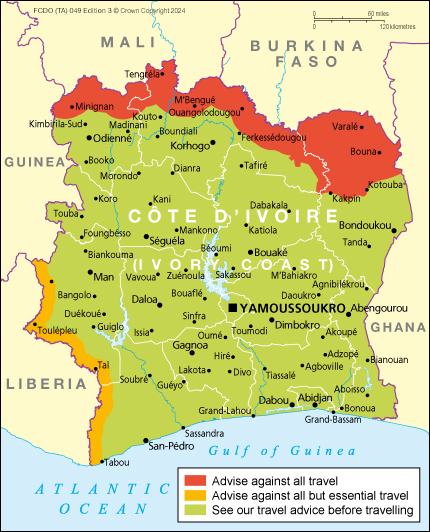
🔒 Safety (risk Level: medium)Staying safe while traveling

Safety for solo travelers, including women and LGBTQ+ individuals
Côte d’Ivoire is generally safe for solo travelers, including women and LGBTQ+ individuals, but like anywhere, it’s wise to stay aware of your surroundings. Stick to populated areas, especially at night, and use reliable transportation like registered taxis or ride-sharing apps. LGBTQ+ travelers should exercise caution, as societal attitudes can be conservative. Always keep local emergency numbers handy and consider reaching out to fellow travelers or expats for current safety tips.
safety image

source: www.gov.uk

✈️ VisaWhat travelers should know about visas

Most travelers need a visa to visit Côte d’Ivoire, but some nationalities are exempt. If you require a visa, apply online for an e-Visa through the official Côte d’Ivoire e-Visa portal, then pick it up at the Port Bouet Airport in Abidjan upon arrival. Always double-check with your local embassy for the most current requirements.

source: diplomatie.gouv.ci
⚠️ Visa requirements can change over time, so always check the latest visa requirements with the official embassy or government website before you travel.

🎒 What to pack?A practical packing list

Côte d’Ivoire’s climate is a mix of hot and humid, especially along the coast, and you’ll find rain pretty consistently from May to November. If you’re heading into the mountains or exploring the lush jungles, you’ll need something a bit more breathable for those sweaty treks. When wandering through towns and villages, keep it respectful with modest clothing—covering shoulders and knees is usually a good rule of thumb. Remember that while beaches are beautiful, they’re not necessarily the place for bikinis, as locals tend to dress more conservatively.

Apart from this country specific advice, I have also crafted a general packing list that should help on any trip. authorOver the years, I've learned the importance of packing minimally. It's so much easier to jump on the back of a truck or squeeze yourself into the last spot of a minibus without that supersized backpack. If you're headed to a warm destination, leave your winter jacket at home; for colder regions, opt for thin thermal underlayers. Instead of packing your entire wardrobe, bring just three sets of clothes, as laundry facilities are available everywhere.

View the full list 👉
🎒 Planning the practical side of your trip?
Get detailed information on transport, daily budgets, internet access, local customs, food, language, and other essentials in the complete Travel Guide.

Get detailed practical information 👉

Get the Travel Guide -

🙋 FAQTravel questions about Côte d’Ivoire

Trip Planning


Personal tip: I normally search on good rating for atmosphere (for meeting people) and location (for easy exploring). Cleanliness as a bonus.


Travel Essentials

Yellow fever vaccination is mandatory for entry into Côte d’Ivoire. Carry your International Certificate of Vaccination. Recommended vaccines include hepatitis A, hepatitis B, typhoid, and rabies. Consider meningococcal vaccine if traveling during the dry season. Routine vaccines like MMR, DPT, and chickenpox should be up-to-date. Consult a healthcare provider for personalized advice.


vaccination requirements
When I first started traveling, I often spent part of my first day in a new country hunting for a local SIM card. While this can still be slightly cheaper, it also takes time and planning.

These days, it's much simpler to install an eSIM before leaving home. Once you arrive in Côte d’Ivoire, you can activate it immediately and have mobile data from the moment you land — which is especially useful for ordering transport or navigating away from busy airports.

There are many providers nowadays, and price differences are usually small. I personally go with Airalo, as it offers excellent network coverage throughout the country and strong global coverage, so you can manage multiple countries from a single app.


Get your e-sim for Côte d’Ivoire

Culture & Customs

Respect elders by greeting them first and using formal titles. Handshakes are common, and it’s polite to shake hands upon meeting and leaving. Dress modestly, especially in rural areas—cover shoulders and knees. Avoid discussing politics or religion unless you’re sure of the other person’s views. When visiting someone’s home, bring a small gift like fruit.

For LGBTQ+ travelers, caution is advised as homosexuality is not widely accepted. Public displays of affection, regardless of orientation, might attract attention. Women should be aware that solo travel can invite unwanted attention; travel groups can offer more comfort. Always ask before taking photos of people, especially in rural areas.
Trying traditional food is always a great way to experience the culture. Here are some must-try dishes for Côte d’Ivoire.
  • Attiéké: A staple food in Ivory Coast, attiéké is fermented cassava that’s similar in texture to couscous. It’s often served with grilled fish or meat and a spicy sauce. Its popularity comes from its versatility and its role as a communal meal that brings people together.
  • Fufu: Made from boiled and pounded yams, plantains, or cassava, fufu is a doughy staple that’s usually eaten with stews or soups. It’s a key part of many West African meals and represents the region’s traditional culinary practices.
  • Kedjenou: This is a spicy stew, typically made with chicken or guinea fowl, cooked with vegetables in a sealed pot, often over an open fire. It’s a dish that showcases the Ivorian love for rich, hearty flavors and is often prepared for special occasions.
  • Alloco: Fried plantains seasoned with a bit of chili and salt, alloco is a popular street food. It’s loved for its sweet and savory taste and is a common snack or side dish that captures the essence of Ivorian street cuisine.
  • Garba: A quick, cheap meal consisting of attiéké topped with fried fish and spicy pepper sauce. It’s a favorite among locals and is known for its affordability and satisfying taste, making it a go-to for budget-conscious travelers.
Tap water in Côte d’Ivoire is not recommended for tourists to drink, even though locals might consume it. It’s safer to stick to bottled or filtered water to avoid any stomach issues. Always check the seal on bottled water to ensure it’s not been tampered with.
The main language in Côte d’Ivoire is French. Backpacking is way more rewarding if you know a bit of the local language, so I'd suggest brushing up on the basics just in case your French skills have become a bit rusty.

Want to understand locals better?
The complete Travel Guide for Côte d’Ivoire includes 52 essential words and phrases — greetings, thank-yous, ordering food, transport, numbers, and common local expressions you'll actually hear.

Get your local basic phrases 👉

Get the Travel Guide -


In Côte d’Ivoire, French is the official language and the most widely spoken language across the country. While English is not commonly spoken, it is increasingly taught in schools and used in business contexts, particularly in urban areas like Abidjan. However, proficiency varies significantly among locals.

In tourist areas, some people, especially in hospitality and service industries, may speak basic English. Still, outside of these environments, English speakers can be rare. Travelers are often encouraged to learn a few phrases in French to facilitate communication, as it can enhance interactions and experiences.

In summary, while English is not widely spoken in Côte d’Ivoire, there are pockets of English speakers, particularly in cities and tourist areas. Knowing some French will greatly benefit travelers navigating the country.

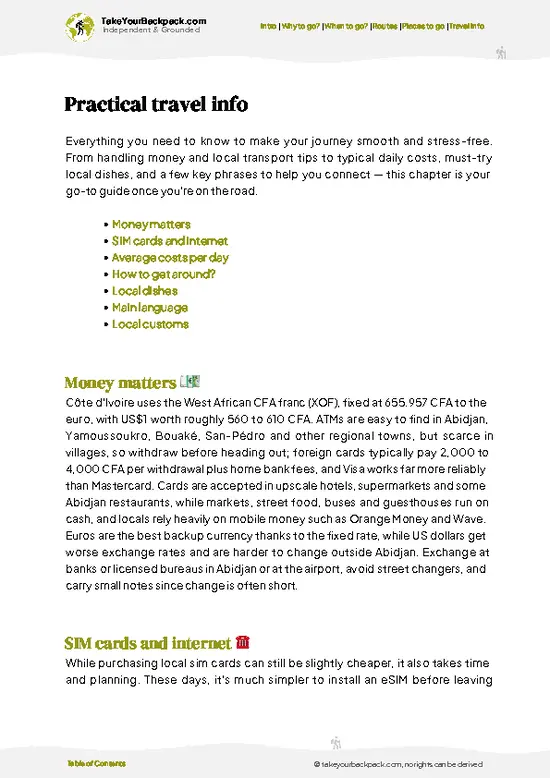
Money & Payments

The local currency of Côte d’Ivoire is XOF (CFA Franc BCEAO).

When backpacking through Côte d’Ivoire, having a mix of cash and cards is crucial. ATMs are mostly available in larger cities like Abidjan and Yamoussoukro, so plan your withdrawals accordingly. Remember, Visa is more widely accepted than Mastercard. It’s a good idea to carry some cash in CFA francs for smaller towns and rural areas where card machines are scarce.

Both US dollars and euros are generally accepted for exchange, but you’ll get a better rate if you bring euros. The best places to exchange money are in banks and official exchange bureaus in cities. Avoid street changers as the rates can be sketchy, not to mention the risk of scams.

Credit card acceptance varies, with larger hotels and restaurants in cities often accepting them, but don’t count on it elsewhere. Always have some cash on hand for markets, transport, and smaller eateries. Lastly, keep an eye on your bank’s foreign transaction fees to avoid unpleasant surprises.

Tipping in Côte d’Ivoire isn’t obligatory but is appreciated, especially in restaurants and for services like taxis. Leaving a 5-10% tip is a nice gesture if the service was good. Always check your bill since some higher-end places might include a service charge.

🧩 Nearby countriesSimilar backpacking destinations

We 💚 feedbackIs Côte d’Ivoire worth visiting?

Côte d’Ivoire pays off if you lean into the grit. Abidjan slaps you with diesel and drumlines, gbakas packed tight, sweat-slick noon heat. Then the maquis smoke rolls over you, grilled fish and attiéké land, and an ice-cold Bock erases the road dust. Grand-Bassam at dusk—salt air, rusting balconies, waves—feels earned. Minor downside: roadside checkpoints can nibble at your patience; stay polite and carry copies. Strategic tip: move at first light—cooler buses, better seats, fewer hassles, and you’re clinking bottles by sunset.

✍️ Help improve this page!
The information on this page is based on in-depth research, insights shared by experienced travelers, and feedback from the local travel community in Côte d’Ivoire. While every effort is made to keep the information accurate and current, conditions can change — so if you spot anything incorrect or outdated, please get in touch.


🙋‍♂️ Give feedback

👋 Meet the founderWho’s Behind Take Your Backpack?

Johan, backpacker and founder of TakeYourBackpackHi, I’m Johan (Netherlands 🇳🇱), the creator of TakeYourBackpack. Over the past decade, I’ve backpacked through 80+ countries across six continents, gaining extensive experience with independent travel, long-term trips, and overland routes.

This site is built on a combination of firsthand travel experience and carefully curated insights from other backpackers. Many guides are based on places I’ve personally visited, while others bring together tips, observations, and practical advice shared by trusted travelers I’ve met along the way.

The goal is to provide realistic, experience-driven guidance — not generic itineraries — so you can explore destinations with better context, clearer expectations, and more confidence.

Get full country guide •
Instant download • 85 highlights • Full Offline guide