×

The Bahamas🇧🇸 | landmarksDean’s Blue Hole202-meter sinkhole, freediving lines, white sand cove, ledge jumps | things to do and best time to go

Explore Bimini RoadExplore Glass Window Bridge

Backpacking in Dean’s Blue Hole
🌟 Highlightunique site ranked #3
By Johan Kruseman 🇳🇱 | Updated October 20, 2026

You step off the limestone ledge and the water closes over you, cool and salty, with the bottom gone from sight. Below your fins the color slides from pale turquoise to ink blue. Dean’s Blue Hole sits in the south of Long Island in the Bahamas, a short drive from Clarence Town, and it is the deepest saltwater blue hole known, plunging to roughly 202 meters (663 feet). Be honest with yourself about the logistics: Long Island is a flight or ferry away from Nassau, rental cars are nearly a must, and the gear for freediving or diving costs real money. The reward is a nearly empty beach, a crescent of white sand wrapped around a hole so dark it looks painted on. Arrive early, before the sun flattens the color and the few tour groups show up. For a first day, swim the rim at opening-morning calm, then lie on the sand and watch the freedivers.

Discover everything you want to know in the 📖 The Bahamas Travel Guide.


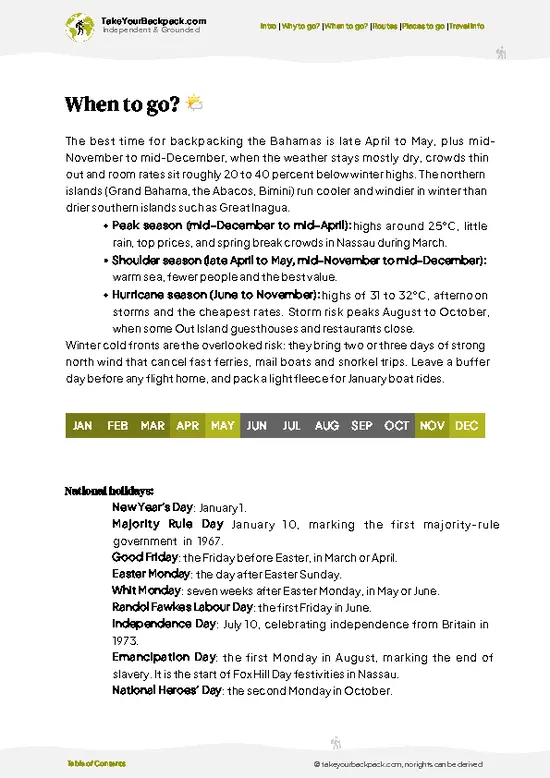
example page 0 from our offline Travel Guide for Bahamas
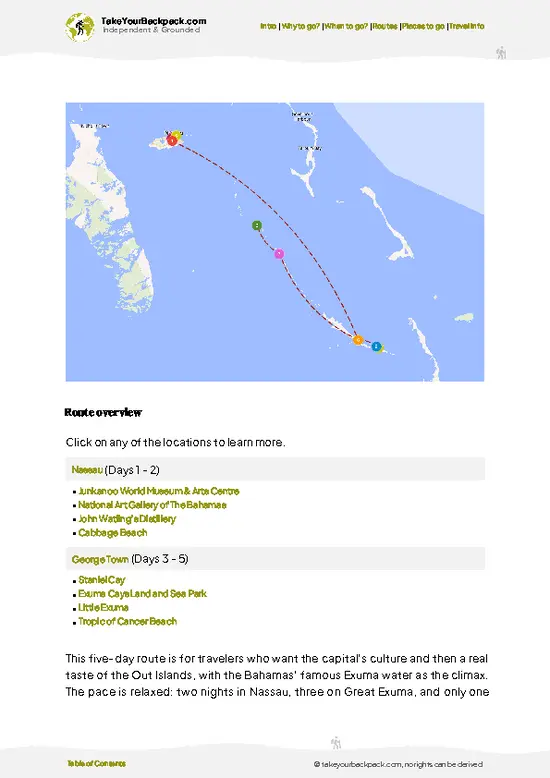
example page 1 from our offline Travel Guide for Bahamas
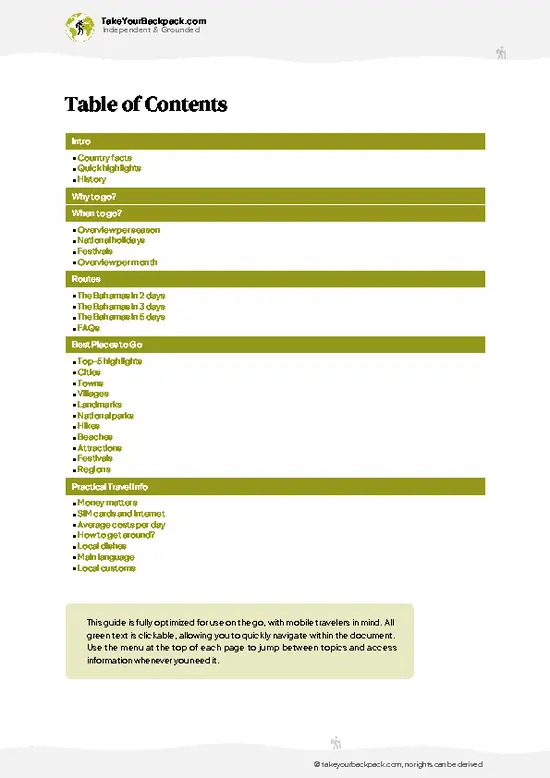
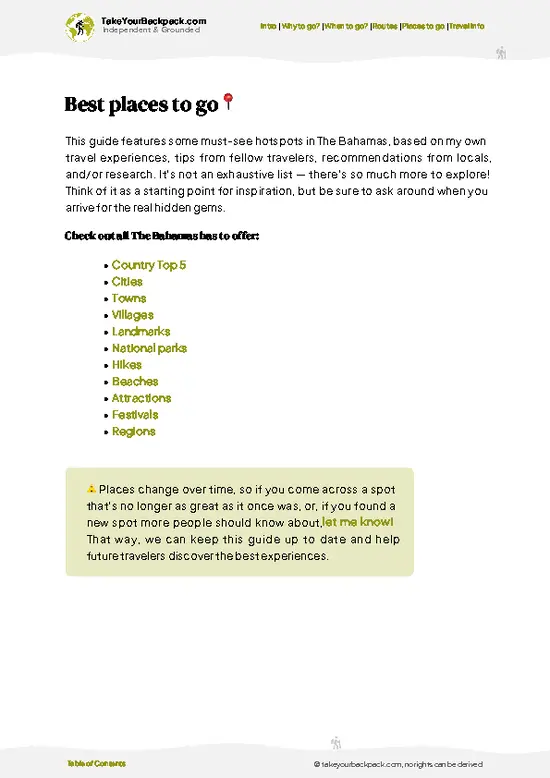
example page 2 from our offline Travel Guide for Bahamas
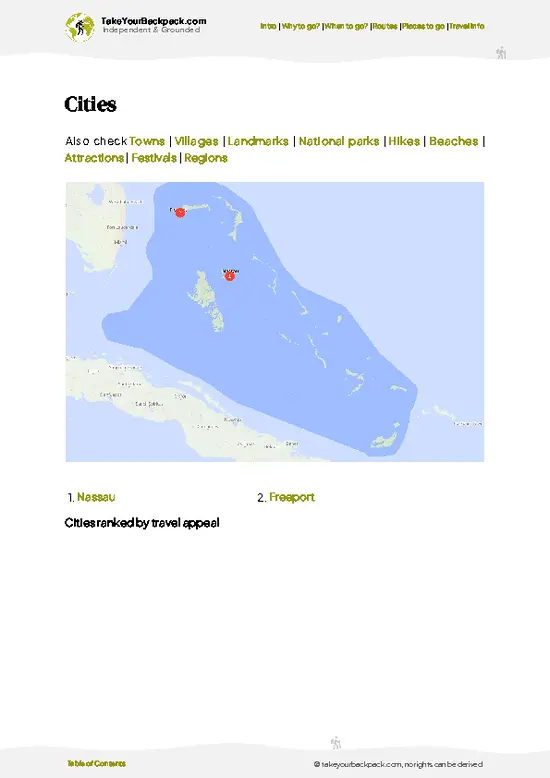
example page 3 from our offline Travel Guide for Bahamas
example page 4 from our offline Travel Guide for Bahamas
example page 5 from our offline Travel Guide for Bahamas
example page 6 from our offline Travel Guide for Bahamas
example page 7 from our offline Travel Guide for Bahamas
Loading the map 🌍
CLICK TO FILTER
cities
towns
villages
landmarks
national parks
hikes
beaches
attractions
festivals
regions
SHOW COUNTRY’S BESTSHOW ALL

✨ Why go?
Ranked #3 unique site in The Bahamas
Why Dean’s Blue Hole should be on your travel list

Dean’s Blue Hole is a place where the depth is the whole point, and you can feel it from the surface. The pit drops roughly 202 meters (663 feet), and it is the deepest known saltwater blue hole on the planet. Even if you never dive, snorkeling the edge in clear, calm water is a spectacle: the wall falls away under your belly and you hover over nothing. Freedivers come to train here, and watching one vanish down a line and return a couple of minutes later makes you rethink what a body can do. It is also the rare big-name natural sight in the Bahamas with no admission gate and almost no queue. Pairing it with Long Island works well, because the island’s long, quiet road runs past Clarence Town’s twin hilltop churches, pink-sand beaches, and small settlements with conch shacks. The effort of … read more 👉
Dean’s Blue Hole is a place where the depth is the whole point, and you can feel it from the surface. The pit drops roughly 202 meters (663 feet), and it is the deepest known saltwater blue hole on the planet. Even if you never dive, snorkeling the edge in clear, calm water is a spectacle: the wall falls away under your belly and you hover over nothing. Freedivers come to train here, and watching one vanish down a line and return a couple of minutes later makes you rethink what a body can do. It is also the rare big-name natural sight in the Bahamas with no admission gate and almost no queue. Pairing it with Long Island works well, because the island’s long, quiet road runs past Clarence Town’s twin hilltop churches, pink-sand beaches, and small settlements with conch shacks. The effort of getting here filters the crowds, and that is exactly what makes a swim here feel like yours alone. Bring your own mask and fins, since rentals are scarce.

💡 HighlightsKey sights and experiences for travelers

  1. The Blue Hole itself. A near-circular sinkhole about 25 meters (82 feet) wide at the surface that opens to roughly 202 meters (663 feet) deep, widening below into a huge chamber. The water shifts from pale green at the rim to deep navy in the middle. Entry is free.
  2. Snorkeling the rim. The shelf around the edge is shallow and calm, with small reef fish along the wall. It is the easiest way to get the sense of the drop without any certification.
  3. Freediving sessions. The hole is a world-famous freediving site, and the vertical line setups let you watch athletes descend and surface. Beginners can take courses with local instructors on the beach.
  4. The beach and sand cove. A pale, protected strip of sand curves along one side of the hole. The waters beyond are shallow and clear, good for wading and
… read more 👉
  1. The Blue Hole itself. A near-circular sinkhole about 25 meters (82 feet) wide at the surface that opens to roughly 202 meters (663 feet) deep, widening below into a huge chamber. The water shifts from pale green at the rim to deep navy in the middle. Entry is free.
  2. Snorkeling the rim. The shelf around the edge is shallow and calm, with small reef fish along the wall. It is the easiest way to get the sense of the drop without any certification.
  3. Freediving sessions. The hole is a world-famous freediving site, and the vertical line setups let you watch athletes descend and surface. Beginners can take courses with local instructors on the beach.
  4. The beach and sand cove. A pale, protected strip of sand curves along one side of the hole. The waters beyond are shallow and clear, good for wading and floating, and it is a fine place to eat a picnic lunch.
  5. Cliff jumping from the ledges. Low limestone shelves on the far side let confident swimmers jump into deep water. Check the depth, watch for rock edges, and go in feet first.
  6. Color-watching in changing light. Midday sun turns the center an electric cobalt against the pale shallows, which is when photographs work best, especially from above if you carry a drone where permitted.
  7. Dean’s Blue Hole at dusk. When the day visitors drive off, the sand empties and the surface turns glassy. It is quiet, and the walk back along the track passes scrub and low trees.
Start with the rim snorkel soon after you arrive, while the water is still calm and the light is high enough to show the drop clearly.
Spotted a mistake or missing something? Contact us.

Things to do near Dean’s Blue Hole

Ratings based on Tripadvisor reviews. When you book through this link, you support our work at no extra cost to you.

🌤️ When to go?Seasonal considerations and timing

  • Winter and Early Spring (December to April): Dry, sunny and comfortable, with highs of 24 to 28°C (75 to 82°F) and cooler nights near 18°C (64°F). The water is clear but chilly for long swims, and freediving training and visitors are busiest, so book rooms early.
  • Competition Season (spring to early summer): Dean’s Blue Hole hosts the Vertical Blue freediving event, usually in spring, with athletes and spectators crowding the small beach and nearby Long Island lodging. Prices on rooms and rental cars rise.
  • Summer (May to October): Hot and humid, 30 to 33°C (86 to 91°F), with water around 28°C (82°F). Days run long, so you get more hours to swim and snorkel. Expect afternoon thunderstorms and hurricane risk from August through October, though crowds are thin and rates drop.
  • November: Storm risk
… read more 👉
  • Winter and Early Spring (December to April): Dry, sunny and comfortable, with highs of 24 to 28°C (75 to 82°F) and cooler nights near 18°C (64°F). The water is clear but chilly for long swims, and freediving training and visitors are busiest, so book rooms early.
  • Competition Season (spring to early summer): Dean’s Blue Hole hosts the Vertical Blue freediving event, usually in spring, with athletes and spectators crowding the small beach and nearby Long Island lodging. Prices on rooms and rental cars rise.
  • Summer (May to October): Hot and humid, 30 to 33°C (86 to 91°F), with water around 28°C (82°F). Days run long, so you get more hours to swim and snorkel. Expect afternoon thunderstorms and hurricane risk from August through October, though crowds are thin and rates drop.
  • November: Storm risk fades, temperatures ease to 26 to 28°C (79 to 82°F), and the hole sits nearly empty on weekdays.
Aim to arrive mid-morning on a sunny day, when the sun is high enough to light the blue drop-off below the cliff walls.


source: climatestotravel.comJANJanuary: excellent for travelingFEBFebruary: excellent for travelingMARMarch: excellent for travelingAPRApril: highly recommended for travelingMAYMay: good for travelingJUNJune: fair for travelingJULJuly: fair for travelingAUGAugust: fair for travelingSEPSeptember: fair for travelingOCTOctober: good for travelingNOVNovember: good for travelingDECDecember: excellent for traveling
bahamas-unique-site-deans-blue-hole
© Google | Hyly Moss

✈️ The backpacker research shortcutThe Bahamas Travel Guide

An offline-friendly backpacking guide with optimized travel routes, ranked highlights, transport advice, and the best areas to stay.
example page 0 from our offline Travel Guide for Bahamas
example page 1 from our offline Travel Guide for Bahamas
example page 2 from our offline Travel Guide for Bahamas
example page 3 from our offline Travel Guide for Bahamas
example page 4 from our offline Travel Guide for Bahamas
example page 5 from our offline Travel Guide for Bahamas
example page 6 from our offline Travel Guide for Bahamas
example page 7 from our offline Travel Guide for Bahamas
The digital guide (185 pages) contains:
✅ 55 highlights, ranked by travel appeal
✅ Optimized 2, 3 & 5-day travel routes
✅ Cities, national parks, landmarks, beaches
✅ How to get around
✅ Offline-friendly for travel without Wi-Fi
👉 Click to see all 30+ guide features

📅 Plan smarter in minutes, not weeks
✅ Month by month travel advice
✅ Festivals & national holidays
✅ Budget expectations

🗺️ Go to the right places, skip the overrated ones
✅ Honest pros & cons of destinations
✅ Top hikes, parks & viewpoints
✅ Lesser-known places most travelers miss
✅ Clear “worth it vs skip it” guidance

🛏️ Travel smoothly without rookie mistakes
✅ Best areas to stay
✅ Transport systems explained simply
✅ Common scams & safety advice
✅ SIM cards, money & practical tips

🌍 Understand the country, not just visit it
✅ Culture & traditions
✅ Local customs
✅ Festivals worth planning around
✅ Traveler-friendly historical context
✅ Insights that make places more meaningful

📱 Built for real travel conditions
✅ Fully downloadable PDF
✅ Works completely offline
✅ Optimized for phone use
✅ Useful in remote areas & buses
✅ Everything in one place
Stop searching, start planning
Get instant access to your full guide. 30‑day money-back guarantee.
+ Add another guide for just

By proceeding you agree to our terms.
Sent to your inbox immediately after payment • 100% Secure Checkout
Best Backpacking Travel Advisor 2025 tourism awardBest Backpacking
Travel Advisor
2025
What others say about Take Your Backpack Guides:
⭐⭐⭐⭐⭐
Fantastic, amazing amount of information!
⭐⭐⭐⭐⭐
My goodness this is amazing, it's what I've been looking for hats off too you!
⭐⭐⭐⭐⭐
I think this is absolutely BRILLIANT
⭐⭐⭐⭐
Very complete and informative. It's still missing places, but I gotta to commend you
⭐⭐⭐⭐⭐
This is truly amazing, thank you, can't wait to explore it with my kids!
⭐⭐⭐⭐⭐
Awesome resource, thank you!
⭐⭐⭐⭐⭐
This is amazing! Can't wait to explore the ones I haven't seen
⭐⭐⭐⭐
I love this! Well done, great idea.
⭐⭐⭐⭐⭐
Thanks for taking the time to make this gem!
⭐⭐⭐⭐⭐
This might be the best website I've ever seen.
⭐⭐⭐⭐⭐
Congratulations, and thank you so much for your work; it's incredibly valuable.
⭐⭐⭐⭐
In all seriousness I think you did a great job pointing out the important spots
⭐⭐⭐⭐⭐
10/10 very good
⭐⭐⭐⭐⭐
As someone who's only just starting to visit regularly this is awesome, thank you.
⭐⭐⭐⭐
Thank you very much! I'm going to visit my dad, it's going to be very useful!
⭐⭐⭐⭐⭐
This is really cool! We'll be travelling for the first time and this definitely come in handy.
⭐⭐⭐⭐⭐
You are now our minister of culture, congratulations 👨‍💼
⭐⭐⭐⭐⭐
Just wanted to tell you that this is a pearl! Going to follow your recommendations.
⭐⭐⭐⭐⭐
This is so cool. I'll definitely be using the resource for my travels soon.
⭐⭐⭐⭐⭐
This is very impressive! Good work.
⭐⭐⭐⭐⭐
This is an amazing and informative site. Very well done!

🛏️ Where to stay?Where staying makes the most sense

Clarence Town is the best base, because Dean’s Blue Hole sits a short drive south of the settlement on Long Island’s eastern side. Expect a quiet village of two hilltop churches, a few small guesthouses, and a local bar or two. Backpackers here are mostly freedivers, sailors and anglers, so conversation comes easily, though nightlife stays low-key. Evenings are safe for a walk, and everyone seems to know everyone.

Simms and Deadman’s Cay, farther north, offer more options. Deadman’s Cay has the airport, groceries, car rental contacts and takeaway food, so it suits anyone arriving by air who needs … read more 👉
Clarence Town is the best base, because Dean’s Blue Hole sits a short drive south of the settlement on Long Island’s eastern side. Expect a quiet village of two hilltop churches, a few small guesthouses, and a local bar or two. Backpackers here are mostly freedivers, sailors and anglers, so conversation comes easily, though nightlife stays low-key. Evenings are safe for a walk, and everyone seems to know everyone.

Simms and Deadman’s Cay, farther north, offer more options. Deadman’s Cay has the airport, groceries, car rental contacts and takeaway food, so it suits anyone arriving by air who needs to stock up. Accommodation here tends to be a little cheaper and easier to find than near the hole. Staying there means a drive of roughly 25 to 35 minutes to the blue hole, so a rental car or a pre-arranged ride is necessary.

On the west side, Salt Pond and Stella Maris have beach cottages and a livelier mix of divers, with dive shops and restaurants. Stella Maris is farther, around an hour by road, but it gives the strongest social scene on the island. Book ahead during competition season, since beds across Long Island fill quickly.

👛 Costs (as of 20 October 2026)Money, prices, and spending tips

Dean’s Blue Hole costs about US$165 to 310 per day for a backpacker on Long Island, and the site itself is free. Most of the money goes to a rental car and lodging, since public transport is almost nonexistent. Prices are in US dollars, which are accepted everywhere alongside the local currency at par.
CategoryBudget RangeLocal Reality
EntryUS$0The beach and cliff access are open to the public without a ticket.
Accommodation (high season)US$80 to 150Small guesthouses and cottages around Clarence Town and Deadman’s Cay. Dorms are rare, so budget for a private room.
FoodUS$25 to 45Takeaway conch, fried fish or chicken with peas and rice runs US$10 to 20 per plate. Groceries cost more than on the mainland because they arrive by mail boat.
TransportUS$60 to 90A rental car costs around US$75 to 110
… read more 👉
Dean’s Blue Hole costs about US$165 to 310 per day for a backpacker on Long Island, and the site itself is free. Most of the money goes to a rental car and lodging, since public transport is almost nonexistent. Prices are in US dollars, which are accepted everywhere alongside the local currency at par.
CategoryBudget RangeLocal Reality
EntryUS$0The beach and cliff access are open to the public without a ticket.
Accommodation (high season)US$80 to 150Small guesthouses and cottages around Clarence Town and Deadman’s Cay. Dorms are rare, so budget for a private room.
FoodUS$25 to 45Takeaway conch, fried fish or chicken with peas and rice runs US$10 to 20 per plate. Groceries cost more than on the mainland because they arrive by mail boat.
TransportUS$60 to 90A rental car costs around US$75 to 110 a day. Taxis from Deadman’s Cay run roughly US$40 to 60 each way.
Gear and ActivitiesUS$0 to 25Bring your own mask and snorkel. Rentals and guided freediving courses cost extra and are arranged through local operators.
Total Daily BudgetUS$165 to 310The figure counts one high-season room, food, a car and a modest activity budget. Splitting a car and room drops it sharply.


source: bahamas.com
⚠️ Prices can change and everyone travels differently, so take this as a rough guide. Hope it helps you plan your adventure!

FAQCommon questions from travelers

Dean’s Blue Hole is a deep, water-filled sinkhole on Long Island, near Clarence Town. It plunges to about 202 meters (663 feet), making it among the deepest known blue holes in the world. The surrounding cliffs form a sheltered swimming cove with a small sandy beach, and the site hosts the Vertical Blue freediving competition.
Dean’s Blue Hole needs about two to three hours for a swim, a snorkel and photos from the cliff edge. Plan a half day if you want to combine it with lunch in Clarence Town and its two hilltop churches. Freedivers or anyone taking a course usually spend several days on Long Island.
Reaching Dean’s Blue Hole means flying to Deadman’s Cay Airport on Long Island, with regular flights from Nassau taking about 45 to 60 minutes. From there it is roughly 25 to 35 minutes by rental car or taxi south to Clarence Town and the hole, and a taxi costs about US$40 to 60. Mail boats from Nassau also serve Long Island, but the crossing takes many hours and runs on a weekly schedule.
⚠️ Things can change over time, so always validate details locally before you go.

Other Bahamian landmarks near Dean’s Blue Hole

Explore more nearby:

  • Swimming Pigs—Exuma cays, wild pigs, shallow beaches| 118 km away
  • Rock Sound Ocean Hole—Round saltwater pool, tidal tunnels, bread-fed snapper, Eleuthera roadside stop| 228 km away
  • Glass Window Bridge—Narrow rock cut, Atlantic versus Bight, spray blowholes, roadside crafts| 306 km away

💡 Not sure where to go next?
Create a personalized itinerary for The Bahamas including Dean’s Blue Hole and the places that fit your trip.

Generate my itinerary

👉 Discover all landmarks

Or checkout all The Bahamas has to offer (think cities, towns, villages, national parks, hikes, beaches, festivals)
Country photo of The Bahamas

We 💚 feedbackWhat to keep in mind

Dean’s Blue Hole deserves two full days, not a rushed stop. Spend the first morning simply swimming and watching, then come back at a different hour to see how the light shifts. Rent a car and stay near Clarence Town. Pack your own snorkel gear and a lot of sunscreen, because shade here is scarce.

✍️ Help improve this page!
The information on this page is based on in-depth research, insights shared by experienced travelers, and feedback from the local travel community in The Bahamas. While every effort is made to keep the information accurate and current, conditions can change — so if you spot anything incorrect or outdated, please get in touch.


🙋‍♂️ Give feedback

👋 Meet the founderWho’s Behind Take Your Backpack?

Johan, backpacker and founder of TakeYourBackpackHi, I’m Johan (Netherlands 🇳🇱), the creator of TakeYourBackpack. Over the past 3 decades, I’ve backpacked through 90+ countries across six continents, gaining extensive experience with independent travel, long-term trips, and overland routes.

This site is built on a combination of firsthand travel experience and carefully curated insights from other backpackers. Many guides are based on places I’ve personally visited, while others bring together tips, observations, and practical advice shared by trusted travelers I’ve met along the way.

The goal is to provide realistic, experience-driven guidance — not generic itineraries — so you can explore destinations with better context, clearer expectations, and more confidence.