×

British Virgin Islands🇻🇬 | villagesCarrot Bay
Seaside cottages, fishing boats, quiet shoreline | things to do and best time to go

Explore Sandy SpitExplore Trellis Bay

Backpacking in Carrot Bay
👌 Worth visitingvillage ranked #5
By Johan Kruseman 🇳🇱 | Updated April 23, 2026

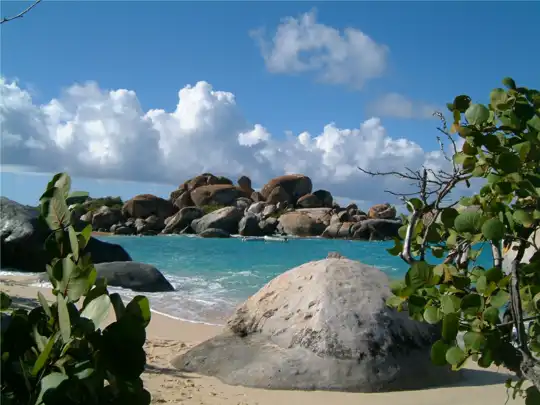
Carrot Bay is not for anyone chasing resort pools, bar crawls, or glossy yacht-scene energy. It’s for when you want to hear waves under a corrugated tin roof and smell fry fish and wood smoke at dusk. On Tortola’s quieter north shore in the British Virgin Islands, Carrot Bay works less as a “destination” and more as a slow, local-feeling pause between headline spots like Cane Garden Bay and West End.

The village is strung along the coastal road: houses on the hillside, sea right there, a couple of rum shacks, roadside food, and small churches. No real hostel scene, so it’s harder to meet other backpackers than in Cane Garden Bay, but cheaper rooms and food help offset BVI’s high prices. You’ll rely on shared taxis or hitching; walking is fine inside the village. It’s calmer and more lived-in than touristy beach hubs, ideal as a one- or two-night base for nearby beaches and viewpoints rather than a long stay.

Discover everything you want to know in the 📖 British Virgin Islands Travel Guide.
Loading the map 🌍
CLICK TO FILTER
town
village
unique site
national park
hike
beach
attraction
festival
region
SHOW COUNTRY‘S BESTSHOW ALL

✨ Why go?
Ranked #5 village in British Virgin Islands
Why visitors keep coming back

Carrot Bay in the British Virgin Islands is a backpacker’s haven for those seeking a blend of convenience and authenticity. Nestled near the hiking trails of Sage Mountain, it serves as a perfect base for adventurers eager to explore the island’s lush interior. The walkable streets invite you to meander from your small-scale hostel to local eateries, where the scent of freshly grilled fish mingles with the salty sea air.

Travelers often linger here for a few days, soaking in the friendly social atmosphere that encourages connections among solo travelers and small groups alike. The beaches are nearby, offering a tranquil spot to unwind after a day of exploration. While nightlife isn’t the main draw, the laid-back vibe makes it easy to share stories over a cold drink at sunset.

This town … read more 👉
Carrot Bay in the British Virgin Islands is a backpacker’s haven for those seeking a blend of convenience and authenticity. Nestled near the hiking trails of Sage Mountain, it serves as a perfect base for adventurers eager to explore the island’s lush interior. The walkable streets invite you to meander from your small-scale hostel to local eateries, where the scent of freshly grilled fish mingles with the salty sea air.

Travelers often linger here for a few days, soaking in the friendly social atmosphere that encourages connections among solo travelers and small groups alike. The beaches are nearby, offering a tranquil spot to unwind after a day of exploration. While nightlife isn’t the main draw, the laid-back vibe makes it easy to share stories over a cold drink at sunset.

This town suits slow travelers who appreciate the balance of nature and community. If you’re looking for a place to recharge and connect, Carrot Bay is more than just a stop; it’s a chapter in your journey.
Get the complete Travel Guide for British Virgin Islands
Everything organized for offline planning — routes, highlights, costs & tips

See what’s inside 👉

Get the Travel Guide -

💡 HighlightsPlaces and moments you shouldn't skip

  1. Carrot Bay Beach — The obvious heart of the village: a long, sheltered sandy bay where locals swim, kids play, and you can laze without big crowds. Great for snorkel-from-shore afternoons and proper island sunsets if you stay late.
  2. Shoreline Snorkel Spots — Small reefs and rocks right off the beach make for easy, equipment-light snorkeling; you’ll see reef fish, sea grass beds and tidepools without needing a boat. Perfect for a quick half-hour dip between meals.
  3. Fishing Wharf and Working Boats — A working slice of local life: fishermen land their catch, mend nets, and swap stories here in the morning. Best time to visit is early—buy fresh fish direct or just watch the choreography of a small coastal economy.
  4. Carrot Bay Ridge Lookouts — Short, steep walks up the road or footpaths lead
read more 👉
  1. Carrot Bay Beach — The obvious heart of the village: a long, sheltered sandy bay where locals swim, kids play, and you can laze without big crowds. Great for snorkel-from-shore afternoons and proper island sunsets if you stay late.
  2. Shoreline Snorkel Spots — Small reefs and rocks right off the beach make for easy, equipment-light snorkeling; you’ll see reef fish, sea grass beds and tidepools without needing a boat. Perfect for a quick half-hour dip between meals.
  3. Fishing Wharf and Working Boats — A working slice of local life: fishermen land their catch, mend nets, and swap stories here in the morning. Best time to visit is early—buy fresh fish direct or just watch the choreography of a small coastal economy.
  4. Carrot Bay Ridge Lookouts — Short, steep walks up the road or footpaths lead to viewpoints that frame Sir Francis Drake Channel and neighboring islands. The views are simple but real: sailboats, reefs and a true sense of where Tortola sits in the BVI.
  5. Village Road Stroll — Walk the main lane to absorb everyday Carrot Bay: wooden houses, roadside gardens, the occasional shop or stall and the unhurried pace that’s the village’s personality. It’s where you pick up small conversations and local tips.
  6. Roadside Eateries & Food Shacks — Scattered little spots serve home-style fish, roti, johnnycakes and cold drinks—nothing fancy, but often the best food and banter you’ll find. Eating here is cultural research in delicious form.
  7. Community Church and Meeting Spot — The local church or community hall (check service times) is where festivals, events and Sunday routines happen; attending a service or market gives direct insight into island rhythms and hospitality.
  8. Eastern Headland & Tidepools — A short walk to rocky outcrops at the bay’s edge reveals tidepools, seabirds and quiet micro-ecosystems—good for low-key exploration and photos away from the sand.
  9. Quiet Coves and Pocket Beaches — Small, tucked-away beaches and rocky coves along the Carrot Bay shoreline are perfect for private swims, reading in shade or watching fishermen work the channel. They feel like little discoveries even though they’re walkable from the village center.
  10. Everyday Local Life (markets, gardens, kids at play) — Not a single landmark, but the sum of small scenes: backyard gardens, roadside fruit sellers, kids playing cricket or football, and neighbors chatting on stoops. Those everyday moments are the best way to understand Carrot Bay.
A few excellent day trips nearby: the Baths on Virgin Gorda, Cane Garden Bay and the Callwood Rum Distillery on Tortola, and the beaches and bars of Jost Van Dyke — all short boat or road rides away.
Spotted a mistake or missing something? Contact us.

⌛️ 1 dayWhat you can realistically do in a day

Carrot Bay, a charming slice of the British Virgin Islands, offers a laid-back vibe that feels like a well-kept secret. With its turquoise waters and swaying palms, it’s a place where the rhythm of life slows down, inviting you to soak in the beauty around you. The scent of salt and fresh fish fills the air, hinting at the day’s adventures.

Start your morning with a stroll along the beach. The soft sand beneath your feet and the gentle sound of waves create a serene backdrop. Grab a coffee at a local spot like the Carrot Bay Café, where the barista knows just how to brew the perfect cup. Pair it with a fresh pastry, and you’re set for the day.

As the sun climbs higher, head to the nearby Sage Mountain National Park. This isn’t on every tourist’s radar, but the hike rewards you with breathtaking … read more 👉
Carrot Bay, a charming slice of the British Virgin Islands, offers a laid-back vibe that feels like a well-kept secret. With its turquoise waters and swaying palms, it’s a place where the rhythm of life slows down, inviting you to soak in the beauty around you. The scent of salt and fresh fish fills the air, hinting at the day’s adventures.

Start your morning with a stroll along the beach. The soft sand beneath your feet and the gentle sound of waves create a serene backdrop. Grab a coffee at a local spot like the Carrot Bay Café, where the barista knows just how to brew the perfect cup. Pair it with a fresh pastry, and you’re set for the day.

As the sun climbs higher, head to the nearby Sage Mountain National Park. This isn’t on every tourist’s radar, but the hike rewards you with breathtaking views of the islands. The trail winds through lush greenery, and the scent of wildflowers fills the air. It’s a bit of a climb, but the panoramic vistas at the top are worth every step.

In the afternoon, return to Carrot Bay and explore the local shops. The vibrant colors of handmade crafts and the warmth of the locals make for a delightful experience. Don’t miss the chance to chat with artisans who can share stories about their work and the island’s culture.

As evening approaches, settle in at a beachside restaurant like the infamous “The Sugar Mill.” Enjoy fresh seafood while the sun sets, painting the sky in hues of orange and pink. The sound of laughter and clinking glasses creates a lively atmosphere, perfect for reflecting on your day.

Carrot Bay is more than just a destination; it’s an experience that unfolds with every moment spent there.
Build the Right Itinerary
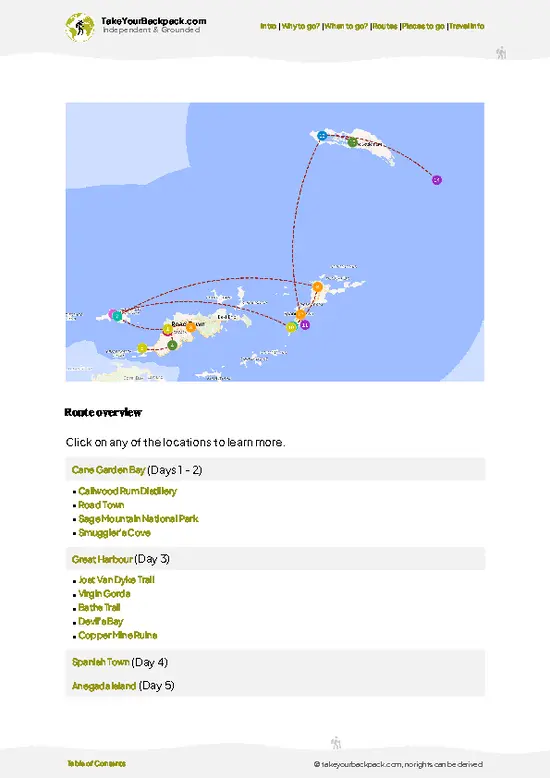
Use the British Virgin Islands Travel Guide’s 2, 3 & 5-day routes as a starting point to plan a trip that actually works on the ground.

Get the Travel Guide -

🌤️ When to go?When to go for the best experience


  • Weather: The dry season from December to April offers clear skies and gentle trade winds, making the air feel crisp and salt-kissed. Rain is rare, so your gear stays dry and your plans stay intact. The wet season, May through November, brings sudden tropical showers that can soak you in minutes, turning trails slippery and the atmosphere heavy with humidity.

  • Temperature: Daytime highs hover around 27–30°C (80–86°F) year-round, but the dry season feels more comfortable with lower humidity. Nights cool to about 22°C (72°F), perfect for sleeping under a mosquito net without waking up drenched in sweat.

  • Daylight Hours: Expect roughly 11 to 12 hours of daylight year-round, with sunsets around 6:30 to 7:00 PM. Early mornings are golden and calm, ideal for beach walks or scouting trails before
read more 👉

  • Weather: The dry season from December to April offers clear skies and gentle trade winds, making the air feel crisp and salt-kissed. Rain is rare, so your gear stays dry and your plans stay intact. The wet season, May through November, brings sudden tropical showers that can soak you in minutes, turning trails slippery and the atmosphere heavy with humidity.

  • Temperature: Daytime highs hover around 27–30°C (80–86°F) year-round, but the dry season feels more comfortable with lower humidity. Nights cool to about 22°C (72°F), perfect for sleeping under a mosquito net without waking up drenched in sweat.

  • Daylight Hours: Expect roughly 11 to 12 hours of daylight year-round, with sunsets around 6:30 to 7:00 PM. Early mornings are golden and calm, ideal for beach walks or scouting trails before the sun climbs high and the heat intensifies.

  • Crowds: Peak tourist season aligns with the dry months, especially around Christmas and spring break, when the town buzzes with visitors and prices spike. Off-season offers solitude and a more authentic vibe, but some services may scale back.

  • Seasonal Activities: Sailing regattas and local festivals light up the dry season, adding a festive pulse to the town. The wet season is quieter but perfect for snorkeling when the water is warmer and marine life more active.

  • Price Fluctuations: Accommodation and ferry fares surge 30–50% during the dry season’s holidays. Booking early is essential. The wet season offers better deals but requires flexibility for weather interruptions.


Pro-tip: Aim for late April or early December—just before or after the crowds—when the weather is still kind, prices ease, and the island’s rhythm feels like a well-kept secret waiting for you.


source: climatestotravel.comJANJanuary: excellent for travelingFEBFebruary: excellent for travelingMARMarch: excellent for travelingAPRApril: highly recommended for travelingMAYMay: fair for travelingJUNJune: fair for travelingJULJuly: fair for travelingAUGAugust: fair for travelingSEPSeptember: below average for travelingOCTOctober: fair for travelingNOVNovember: fair for travelingDECDecember: highly recommended for traveling
when-to-go

✈️ The backpacker research shortcutBritish Virgin Islands Travel Guide

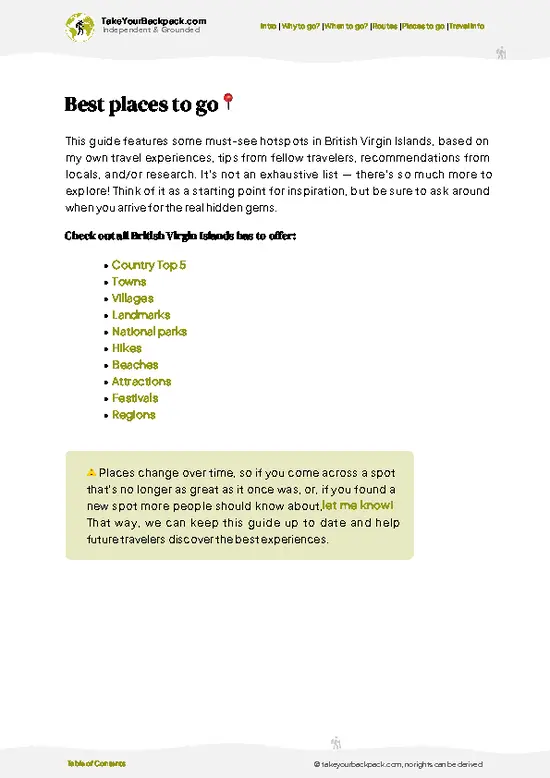
An offline-friendly backpacking guide with optimized travel routes, ranked highlights, transport advice, and the best areas to stay.
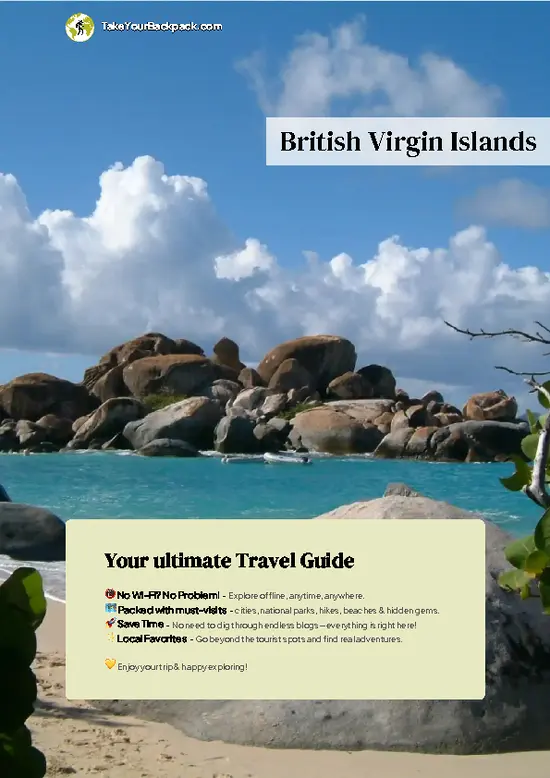
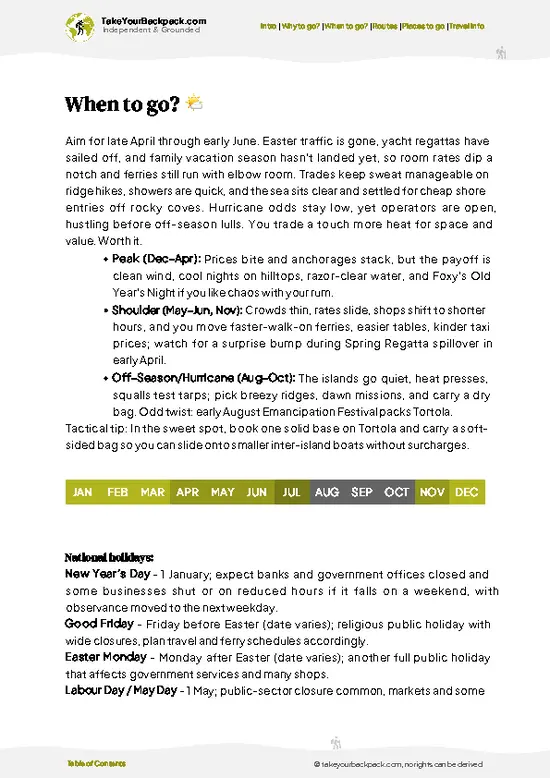
example page 0 from our offline Travel Guide for British Virgin Islandsexample page 1 from our offline Travel Guide for British Virgin Islandsexample page 2 from our offline Travel Guide for British Virgin Islandsexample page 3 from our offline Travel Guide for British Virgin Islandsexample page 4 from our offline Travel Guide for British Virgin Islandsexample page 5 from our offline Travel Guide for British Virgin Islands
The digital guide (126 pages) contains:
32 highlights, ranked by travel appeal
Optimized 2, 3 & 5-day travel routes
Best neighborhoods to stay
How to get around
Offline-friendly for travel without Wi-Fi
👉 See all 30+ guide features

📅 Plan smarter in minutes, not weeks
Month by month travel advice
Festivals & national holidays
Budget expectations

🗺️ Go to the right places, skip the overrated ones
Honest pros & cons of destinations
Top hikes, parks & viewpoints
Lesser-known places most travelers miss
Clear “worth it vs skip it” guidance

🛏️ Travel smoothly without rookie mistakes
Best areas to stay
Transport systems explained simply
Common scams & safety advice
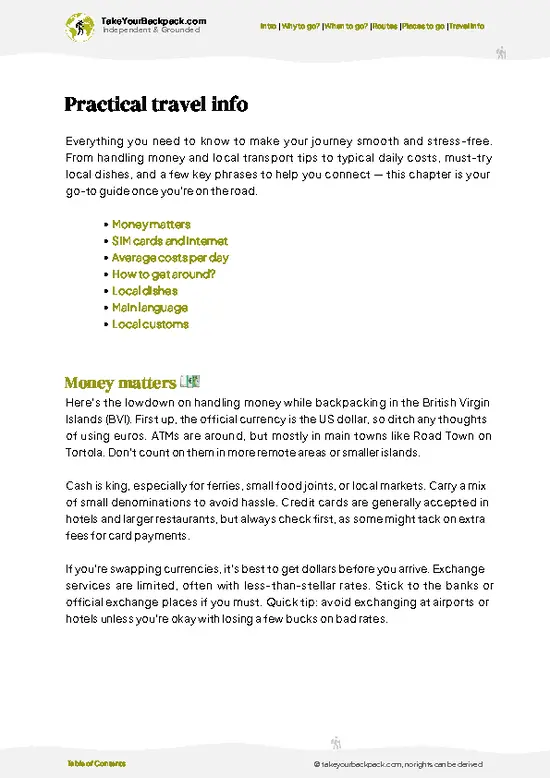
SIM cards, money & practical tips

🌍 Understand the country, not just visit it
Culture & traditions
Local customs
Festivals worth planning around
Traveler-friendly historical context
Insights that make places more meaningful

📱 Built for real travel conditions
Fully downloadable PDF
Works completely offline
Optimized for phone use
Useful in remote areas & buses
Everything in one place
Save weeks of stressful planning
Get instant access to the full guide directly. 30-day money-back guarantee.


Sent to your inbox immediately after payment • 100% Secure Checkout
Best Backpacking Travel Advisor 2025 tourism awardBest Backpacking
Travel Advisor
2025
What others say about Take Your Backpack Guides:
⭐⭐⭐⭐⭐
Fantastic, amazing amount of information!
⭐⭐⭐⭐⭐
My goodness this is amazing, it's what I've been looking for hats off too you!
⭐⭐⭐⭐⭐
I think this is absolutely BRILLIANT
⭐⭐⭐⭐
Very complete and informative. It's still missing places, but I gotta to commend you
⭐⭐⭐⭐⭐
This is truly amazing, thank you, can't wait to explore it with my kids!
⭐⭐⭐⭐⭐
Awesome resource, thank you!
⭐⭐⭐⭐⭐
This is amazing! Can't wait to explore the ones I haven't seen
⭐⭐⭐⭐
I love this! Well done, great idea.
⭐⭐⭐⭐⭐
Thanks for taking the time to make this gem!
⭐⭐⭐⭐⭐
This might be the best website I've ever seen.
⭐⭐⭐⭐⭐
Congratulations, and thank you so much for your work; it's incredibly valuable.
⭐⭐⭐⭐
In all seriousness I think you did a great job pointing out the important spots
⭐⭐⭐⭐⭐
10/10 very good
⭐⭐⭐⭐⭐
As someone who's only just starting to visit regularly this is awesome, thank you.
⭐⭐⭐⭐
Thank you very much! I'm going to visit my dad, it's going to be very useful!
⭐⭐⭐⭐⭐
This is really cool! We'll be travelling for the first time and this definitely come in handy.
⭐⭐⭐⭐⭐
You are now our minister of culture, congratulations 👨‍💼
⭐⭐⭐⭐⭐
Just wanted to tell you that this is a pearl! Going to follow your recommendations.
⭐⭐⭐⭐⭐
This is so cool. I'll definitely be using the resource for my travels soon.
⭐⭐⭐⭐⭐
This is very impressive! Good work.
⭐⭐⭐⭐⭐
This is an amazing and informative site. Very well done!

🛏️ Where to stay?Where staying makes the most sense

Carrot Bay’s charm is in its laid-back, salt-tinged air and the way the afternoon light softens the hillsides. For backpackers, the best spot to drop your pack is the area just west of the main pier—call it the “social hub” without the tourist crush. This neighborhood hums with a mix of locals and budget travelers, creating a vibe that’s both welcoming and lively without feeling like a party zone gone wild. It’s safe, with well-lit streets and a steady flow of people, so solo travelers won’t feel isolated.

Hostel options here are modest but clean, often family-run, which means you get more than … read more 👉
Carrot Bay’s charm is in its laid-back, salt-tinged air and the way the afternoon light softens the hillsides. For backpackers, the best spot to drop your pack is the area just west of the main pier—call it the “social hub” without the tourist crush. This neighborhood hums with a mix of locals and budget travelers, creating a vibe that’s both welcoming and lively without feeling like a party zone gone wild. It’s safe, with well-lit streets and a steady flow of people, so solo travelers won’t feel isolated.

Hostel options here are modest but clean, often family-run, which means you get more than just a bed—you get stories, tips, and sometimes a shared meal. The scent of grilled seafood drifts from nearby shacks, and the sound of waves mingles with distant reggae beats. Compared to the quieter, more residential east side, this area offers a better chance to meet fellow backpackers and join impromptu beach bonfires or boat trips. It’s the sweet spot where affordability meets community, making your stay feel like part of the island’s pulse rather than just a stopover.

🚌 Getting aroundTransportation options and practical tips

Carrot Bay moves at its own rhythm—part laid-back fishing village, part bustling market hub. The sun slants low in the late afternoon, casting long shadows over the cracked pavement where locals haggle over fresh catch and tourists shuffle between stalls. Time here isn’t measured by strict schedules but by the ebb and flow of tides, the chatter of vendors, and the occasional honk of a weathered minibus. You’ll find that patience isn’t just a virtue; it’s the currency that unlocks the best experiences. The scent of salt and grilled fish hangs in the air, mingling with the occasional waft of diesel from the minibuses that dart through narrow streets. Understanding this pulse means you don’t just get from point A to B—you become part of the town’s living, breathing story.

Walking: The most straightforward … read more 👉
Carrot Bay moves at its own rhythm—part laid-back fishing village, part bustling market hub. The sun slants low in the late afternoon, casting long shadows over the cracked pavement where locals haggle over fresh catch and tourists shuffle between stalls. Time here isn’t measured by strict schedules but by the ebb and flow of tides, the chatter of vendors, and the occasional honk of a weathered minibus. You’ll find that patience isn’t just a virtue; it’s the currency that unlocks the best experiences. The scent of salt and grilled fish hangs in the air, mingling with the occasional waft of diesel from the minibuses that dart through narrow streets. Understanding this pulse means you don’t just get from point A to B—you become part of the town’s living, breathing story.

Walking: The most straightforward way to soak in Carrot Bay’s character. Streets are compact, and most key spots—markets, beaches, and eateries—are within a 20-minute stroll. Walking costs nothing, but be ready for uneven sidewalks and the occasional stray dog. Early mornings and late afternoons offer the best light and cooler air, making your steps feel less like a chore and more like a discovery.

Minibus: The backbone of local transit. These shared vans run roughly from 6 a.m. to 8 p.m., weaving through the town and connecting to nearby villages. Fares hover around $0.50 to $1, making them the cheapest motorized option. Expect a bumpy ride, packed interiors, and a stop-anywhere vibe—perfect if you want to dive into local life but less so if you’re in a rush.

Motorcycle Taxi (Boda Boda): When time is tight or you’re carrying gear, these nimble two-wheelers are your best bet. They’re everywhere, ready to dart through traffic and narrow lanes. Prices start at about $1 for short hops, but always agree on the fare upfront. The wind in your face and the scent of the sea make this a sensory ride, but hold on tight—helmets aren’t guaranteed.

Bicycle Rental: For the budget traveler who wants speed without losing the open-air feel, renting a bike is a smart move. Daily rates are around $5 to $7, and the flat terrain makes pedaling easy. It’s a quiet way to explore beyond the main drag, especially early or late when the sun softens the landscape.

Water Taxi: If your itinerary includes nearby islands or coastal spots, water taxis operate on a flexible schedule, usually from 7 a.m. to 6 p.m. Prices vary by distance but expect around $3 to $5 for short trips. The ride offers a refreshing breeze and a different perspective on Carrot Bay’s shoreline, but be prepared for sudden weather changes and a splash or two.

👛 Costs (as of 28 January 2026)Travel costs and budget guide for Carrot Bay

Backpacking in Carrot Bay, British Virgin Islands, carries a price tag that reflects its island charm and relative remoteness, but with smart choices, you can keep costs manageable without missing out on the essence of the place.
  • Dorm Accommodation: Expect to pay around $40 to $70 per night for a bunk in a basic guesthouse or hostel-style setup. Options are limited and tend to lean towards small, family-run spots rather than large hostels, so booking ahead is wise, especially in peak season.
  • Meals: Local eateries and food stands offer meals for about $8 to $15. Fresh seafood and island staples like rice and peas or roti are common and filling. Cooking your own food is tricky here due to limited grocery options, so budget for eating out most days.
  • Local Transport: Public transport is minimal;
read more 👉
Backpacking in Carrot Bay, British Virgin Islands, carries a price tag that reflects its island charm and relative remoteness, but with smart choices, you can keep costs manageable without missing out on the essence of the place.
  • Dorm Accommodation: Expect to pay around $40 to $70 per night for a bunk in a basic guesthouse or hostel-style setup. Options are limited and tend to lean towards small, family-run spots rather than large hostels, so booking ahead is wise, especially in peak season.
  • Meals: Local eateries and food stands offer meals for about $8 to $15. Fresh seafood and island staples like rice and peas or roti are common and filling. Cooking your own food is tricky here due to limited grocery options, so budget for eating out most days.
  • Local Transport: Public transport is minimal; most rely on taxis or rental scooters. Taxi rides within the bay area typically cost $5 to $10 per trip. Renting a scooter can run about $40 to $60 per day, giving you freedom but adding to your daily spend.
  • Basic Activities/Entry Fees: Many natural attractions like beaches and hiking trails are free, but organized tours or water activities such as snorkeling trips start around $30 and can go up to $70. Budget for at least one or two paid activities to experience the island fully.
  • Miscellaneous Expenses: Think bottled water, occasional snacks, and small tips—around $5 to $10 daily. Internet access can be patchy and sometimes requires buying data packages, so factor in about $5 if you need reliable connectivity.

The reality is that Carrot Bay isn’t a budget backpacker’s bargain basement, but it rewards you with a laid-back island vibe that feels worth every dollar. Plan on spending roughly $90 to $160 per day to cover essentials comfortably, balancing modest accommodation, local meals, and a couple of activities that bring the island’s spirit to life.


source: bvitourism.com
⚠️ Prices can change and everyone travels differently, so take this as a rough guide. Hope it helps you plan your adventure!

🚌 Day tripsBest day trips from Carrot Bay

Carrot Bay is a perfect launchpad for exploring the British Virgin Islands. With its laid-back vibe and easy access to stunning destinations, you can dive into adventure without breaking the bank.

1. Jost Van Dyke
A quick ferry ride from Tortola, Jost Van Dyke is a must. Picture this: white sand beaches, crystal-clear waters, and the famous Soggy Dollar Bar, where you can sip a Painkiller while your toes dig into the sand. The ferry takes about 30 minutes, and you’ll spend around $30 round trip. Aim for a weekday to avoid the crowds and soak in the island’s charm. A common rookie mistake? Forgetting to bring cash; many places don’t accept cards.


2. Virgin Gorda
Head to Virgin Gorda for the iconic Baths, a surreal landscape of giant boulders and hidden pools. The ferry ride is about … read more 👉
Carrot Bay is a perfect launchpad for exploring the British Virgin Islands. With its laid-back vibe and easy access to stunning destinations, you can dive into adventure without breaking the bank.

1. Jost Van Dyke
A quick ferry ride from Tortola, Jost Van Dyke is a must. Picture this: white sand beaches, crystal-clear waters, and the famous Soggy Dollar Bar, where you can sip a Painkiller while your toes dig into the sand. The ferry takes about 30 minutes, and you’ll spend around $30 round trip. Aim for a weekday to avoid the crowds and soak in the island’s charm. A common rookie mistake? Forgetting to bring cash; many places don’t accept cards.


2. Virgin Gorda
Head to Virgin Gorda for the iconic Baths, a surreal landscape of giant boulders and hidden pools. The ferry ride is about 45 minutes, costing around $40 round trip. Best to go early in the morning to beat the heat and the day-trippers. Bring your snorkel gear; the underwater life is vibrant. Many first-timers miss the trail that leads to the less crowded Devil’s Bay—don’t be one of them!
👉 Explore Virgin Gorda

3. Anegada
For a taste of the untouched, Anegada is your spot. Known for its stunning beaches and lobster shacks, it’s a bit more remote, taking about an hour by ferry for around $50. The best time to visit is during the dry season, from December to April. Don’t rush your visit; the island’s beauty lies in its slow pace. A common misstep is underestimating the ferry schedule—plan ahead to avoid long waits.


4. Tortola’s North Shore
Just a short drive from Carrot Bay, the North Shore of Tortola offers breathtaking views and secluded beaches like Cane Garden Bay. Rent a scooter for about $30 a day and explore at your own pace. The drive takes about 30 minutes, and you can easily spend the day lounging or hiking. Many backpackers overlook the local food trucks; don’t miss out on the fresh fish tacos!


Each of these trips offers a unique slice of island life, making your base in Carrot Bay feel like the heart of your adventure.
Want to know what more British Virgin Islands offers?
The British Virgin Islands Travel Guide describes 32 highlights, from cities to national parks, from beaches to hikes

Get the Travel Guide -

🛡️ SafetySafety Tips and Common Scams in Carrot Bay

Carrot Bay is generally safe, but a little awareness goes a long way. Stick to well-lit areas at night, especially if you’re solo. The waterfront is lively, but quieter streets can feel a bit isolated after dark.

Watch for the occasional hustle at local markets; vendors can be persistent. If you’re not interested, a polite “no, thank you” usually suffices.

Keep your belongings close, especially at the beach. It’s easy to get lost in the moment, but a quick glance at your bag can save you from a minor annoyance.

The real charm lies in the locals, who are friendly and often eager to share stories. Engage with them, but trust your instincts. If something feels off, it’s okay to walk away. Enjoy the laid-back vibe, and let the island’s rhythm guide you.

Other Virgin Islander villages near Carrot Bay

Explore more nearby:

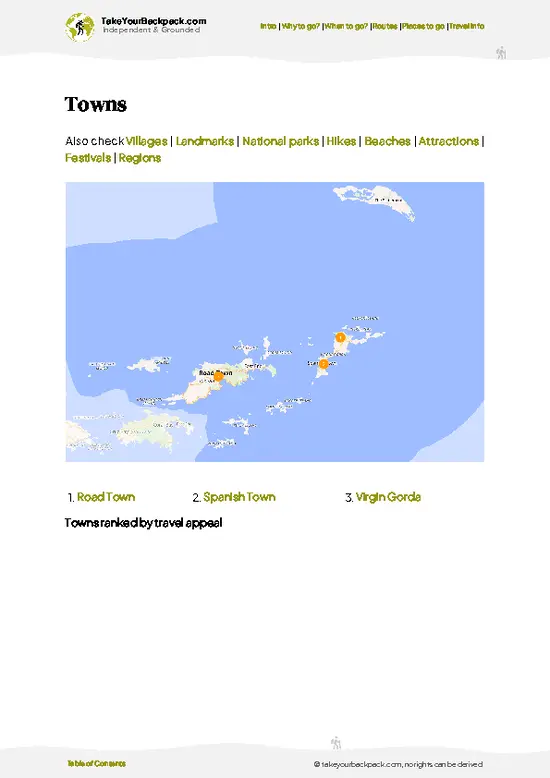
  • Trellis Bay—Art studios, beach fires, airport access| 7 km away
  • Great Harbour—Harborfront bars, yacht moorings, local gatherings| 16 km away

👉 Discover all villages

Or checkout all British Virgin Islands has to offer (think cities, towns, villages, national parks, hikes, beaches, festivals)
Country photo of British Virgin Islands

We 💚 feedbackKey takeaways before you go

Carrot Bay has this laid-back vibe that feels like a warm hug. The scent of salt and grilled fish fills the air, and you can’t help but smile as you watch the waves lap against the shore. Don’t miss the local rum punch; it’s a delightful surprise that sneaks up on you. Just a heads-up: the roads can be a bit bumpy, so take it slow. Embrace the journey; it’s all part of the charm.

✍️ Help improve this page!
The information on this page is based on in-depth research, insights shared by experienced travelers, and feedback from the local travel community in British Virgin Islands. While every effort is made to keep the information accurate and current, conditions can change — so if you spot anything incorrect or outdated, please get in touch.


🙋‍♂️ Give feedback

👋 Meet the founderWho’s Behind Take Your Backpack?

Johan, backpacker and founder of TakeYourBackpackHi, I’m Johan (Netherlands 🇳🇱), the creator of TakeYourBackpack. Over the past decade, I’ve backpacked through 80+ countries across six continents, gaining extensive experience with independent travel, long-term trips, and overland routes.

This site is built on a combination of firsthand travel experience and carefully curated insights from other backpackers. Many guides are based on places I’ve personally visited, while others bring together tips, observations, and practical advice shared by trusted travelers I’ve met along the way.

The goal is to provide realistic, experience-driven guidance — not generic itineraries — so you can explore destinations with better context, clearer expectations, and more confidence.

Get Full Country Guide |
Instant download • 32 highlights • Full Offline guide