×

Chile🇨🇱 | beachesBahía InglesaShallow turquoise bay, scallops, kayaks, fossil country | things to do and best time to go

Explore Churches of ChiloéExplore Playa Anakena

Backpacking in Bahía Inglesa
🏆 Top pickbeach ranked #1
By Johan Kruseman 🇳🇱 | Updated October 19, 2026

Bahía Inglesa sits on ground packed with fossils: the sedimentary hills behind the bay have yielded whale, shark and sea lion remains, which is why the paleontology museum in nearby Caldera is worth a look. The beach lies in the north of Chile, in the Atacama region, just south of Caldera. The setting works because the desert meets a sheltered bay: almost no rain, so sun is dependable, and the curve of the shore blocks most swell, which gives you flat, pale turquoise water. That same shelter means little surf. Sand is clean and the promenade is tidy, but weekends in high summer fill the strip with Chilean families. Food is seafood shacks and simple cafés, while the cheapest beds are in Caldera. I walked along the waterline away from the main strip, and the crowd thinned after the first rocks, leaving room to spread a towel. Suits sun seekers, scallop lovers and relaxed kayakers. Nightlife hunters and surfers will be bored.

Discover everything you want to know in the 📖 Chile Travel Guide.


example page 0 from our offline Travel Guide for Chile
example page 1 from our offline Travel Guide for Chile
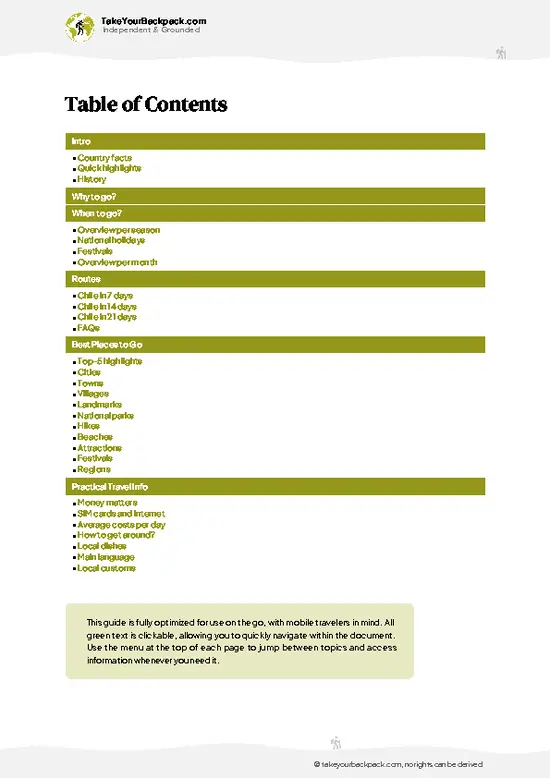
example page 2 from our offline Travel Guide for Chile
example page 3 from our offline Travel Guide for Chile
example page 4 from our offline Travel Guide for Chile
example page 5 from our offline Travel Guide for Chile
example page 6 from our offline Travel Guide for Chile
example page 7 from our offline Travel Guide for Chile
Loading the map 🌍
CLICK TO FILTER
cities
towns
villages
landmarks
national parks
hikes
beaches
attractions
festivals
regions
SHOW COUNTRY’S BESTSHOW ALL

✨ Why go?
Ranked #1 beach in Chile
Why visitors keep coming back

Bahía Inglesa beach earns its stop because it is the one place on this stretch of the Atacama coast where you can lie down and swim in pale, calm water instead of just looking at it from a cliff. The bay is shallow and sheltered, so kids, nervous swimmers and paddleboard beginners are all comfortable here. Spread along the shore are the open stretch of Playa Las Machas and quieter coves like Playa La Piscina, so you can pick social or empty. The second pull is food. This bay is a center for farmed scallops, and ostiones show up grilled with cheese, raw with lemon or in empanadas at small waterfront places. Eating them within sight of where they grow is a fair reason to linger. Finally, the beach works as a connector. It breaks the long desert run between Copiapó and the national parks and … read more 👉
Bahía Inglesa beach earns its stop because it is the one place on this stretch of the Atacama coast where you can lie down and swim in pale, calm water instead of just looking at it from a cliff. The bay is shallow and sheltered, so kids, nervous swimmers and paddleboard beginners are all comfortable here. Spread along the shore are the open stretch of Playa Las Machas and quieter coves like Playa La Piscina, so you can pick social or empty. The second pull is food. This bay is a center for farmed scallops, and ostiones show up grilled with cheese, raw with lemon or in empanadas at small waterfront places. Eating them within sight of where they grow is a fair reason to linger. Finally, the beach works as a connector. It breaks the long desert run between Copiapó and the national parks and wild beaches further north and south, and it pairs easily with Caldera, where the fishing pier and fish market give a more local, less polished view of the coast.

💡 HighlightsWhat this place is best known for

  1. Playa Las Machas: The main beach and the reason most people come. The sand is pale, the water is shallow and turquoise, and the bay is protected enough that you can float without fighting waves. Kayaks and paddleboards are easy to find in season, and the water looks best under midday sun.
  2. Playa La Piscina: A short walk or drive from the main strip, this small cove is ringed by rocks that keep the water almost still, which makes it the easiest spot for young children. It is quieter than the central sand and a good spot for a long afternoon with a book.
  3. Playa Blanca: A wider, whiter stretch a little way along the coast, where the crowd is smaller and the sand feels more open. Bring water and shade, because there is little shelter, and go on a weekday for the most space.
  4. Scallops on the waterfront:
… read more 👉
  1. Playa Las Machas: The main beach and the reason most people come. The sand is pale, the water is shallow and turquoise, and the bay is protected enough that you can float without fighting waves. Kayaks and paddleboards are easy to find in season, and the water looks best under midday sun.
  2. Playa La Piscina: A short walk or drive from the main strip, this small cove is ringed by rocks that keep the water almost still, which makes it the easiest spot for young children. It is quieter than the central sand and a good spot for a long afternoon with a book.
  3. Playa Blanca: A wider, whiter stretch a little way along the coast, where the crowd is smaller and the sand feels more open. Bring water and shade, because there is little shelter, and go on a weekday for the most space.
  4. Scallops on the waterfront: Bahía Inglesa is known for its ostiones, and small seafood places along the shore serve them grilled with cheese, raw with lemon or tucked into empanadas. Order them in the hour before sunset, when the beach crowd drifts to the tables.
  5. The evening promenade: After dark the activity is calm rather than loud. Families walk the front, cafés stay open late in summer and the bay goes quiet. It suits you if you want a slow sunset, a drink and an early night, not a club.
For a first visit, start with Playa Las Machas, then end the day with scallops at the shore.
Spotted a mistake or missing something? Contact us.

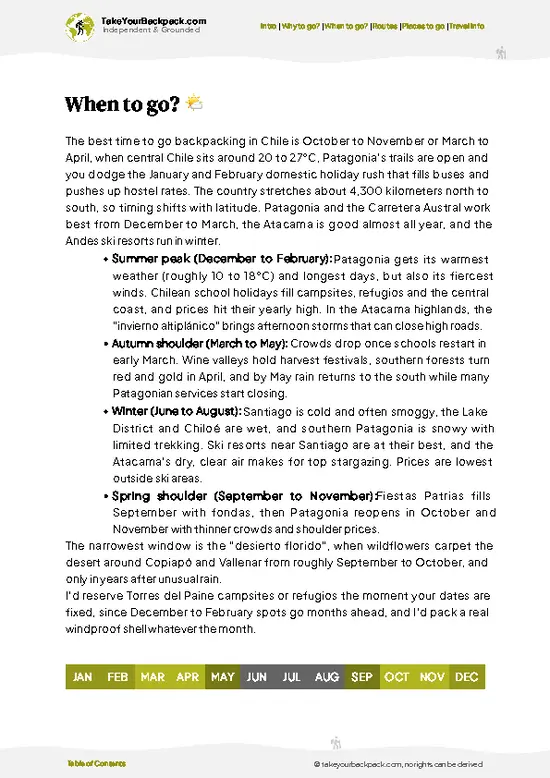
🌤️ When to go?Seasonal considerations and timing

  • Summer (December to February): Bahía Inglesa is at its busiest, with daytime highs of 24 to 28°C (75 to 82°F) and nights near 14°C (57°F). Skies are nearly always clear, and daylight runs about 14 hours. Chilean families fill the town, and beds cost 40 to 60% more than in the low season.
  • Autumn (March to May): Highs ease to 20 to 24°C (68 to 75°F) and the crowds thin fast after Easter. The turquoise water still looks great, though it stays cold, around 14 to 16°C (57 to 61°F).
  • Winter (June to August): Expect 16 to 19°C (61 to 66°F) by day and 8 to 10°C (46 to 50°F) at night. Morning cloud is common, daylight drops to about 10 hours, and the town is nearly empty. Rain is rare, usually a few light showers a year, and prices are lowest.
  • Spring (September to November): Temperatures climb from 19
… read more 👉
  • Summer (December to February): Bahía Inglesa is at its busiest, with daytime highs of 24 to 28°C (75 to 82°F) and nights near 14°C (57°F). Skies are nearly always clear, and daylight runs about 14 hours. Chilean families fill the town, and beds cost 40 to 60% more than in the low season.
  • Autumn (March to May): Highs ease to 20 to 24°C (68 to 75°F) and the crowds thin fast after Easter. The turquoise water still looks great, though it stays cold, around 14 to 16°C (57 to 61°F).
  • Winter (June to August): Expect 16 to 19°C (61 to 66°F) by day and 8 to 10°C (46 to 50°F) at night. Morning cloud is common, daylight drops to about 10 hours, and the town is nearly empty. Rain is rare, usually a few light showers a year, and prices are lowest.
  • Spring (September to November): Temperatures climb from 19 to 23°C (66 to 73°F), and the desert can bloom after wet winters. Weekends are calm and rates stay moderate.
Arrive midweek in January or February if you want a quieter beach and a better shot at a room.


source: climatestotravel.comJANJanuary: excellent for travelingFEBFebruary: excellent for travelingMARMarch: excellent for travelingAPRApril: highly recommended for travelingMAYMay: good for travelingJUNJune: fair for travelingJULJuly: fair for travelingAUGAugust: fair for travelingSEPSeptember: good for travelingOCTOctober: highly recommended for travelingNOVNovember: highly recommended for travelingDECDecember: excellent for traveling
chile-beach-bahia-inglesa
© Google |

✈️ The backpacker research shortcutChile Travel Guide

An offline-friendly backpacking guide with optimized travel routes, ranked highlights, transport advice, and the best areas to stay.
example page 0 from our offline Travel Guide for Chile
example page 1 from our offline Travel Guide for Chile
example page 2 from our offline Travel Guide for Chile
example page 3 from our offline Travel Guide for Chile
example page 4 from our offline Travel Guide for Chile
example page 5 from our offline Travel Guide for Chile
example page 6 from our offline Travel Guide for Chile
example page 7 from our offline Travel Guide for Chile
The digital guide (333 pages) contains:
✅ 107 highlights, ranked by travel appeal
✅ Optimized 7, 14 & 21-day travel routes
✅ Cities, national parks, landmarks, beaches
✅ How to get around
✅ Offline-friendly for travel without Wi-Fi
👉 Click to see all 30+ guide features

📅 Plan smarter in minutes, not weeks
✅ Month by month travel advice
✅ Festivals & national holidays
✅ Budget expectations

🗺️ Go to the right places, skip the overrated ones
✅ Honest pros & cons of destinations
✅ Top hikes, parks & viewpoints
✅ Lesser-known places most travelers miss
✅ Clear “worth it vs skip it” guidance

🛏️ Travel smoothly without rookie mistakes
✅ Best areas to stay
✅ Transport systems explained simply
✅ Common scams & safety advice
✅ SIM cards, money & practical tips

🌍 Understand the country, not just visit it
✅ Culture & traditions
✅ 52 Essential phrases & customs
✅ Festivals worth planning around
✅ Traveler-friendly historical context
✅ Insights that make places more meaningful

📱 Built for real travel conditions
✅ Fully downloadable PDF
✅ Works completely offline
✅ Optimized for phone use
✅ Useful in remote areas & buses
✅ Everything in one place
Stop searching, start planning
Get instant access to your full guide. 30‑day money-back guarantee.
+ Add another guide for just

By proceeding you agree to our terms.
Sent to your inbox immediately after payment • 100% Secure Checkout
Best Backpacking Travel Advisor 2025 tourism awardBest Backpacking
Travel Advisor
2025
What others say about Take Your Backpack Guides:
⭐⭐⭐⭐⭐
Fantastic, amazing amount of information!
⭐⭐⭐⭐⭐
My goodness this is amazing, it's what I've been looking for hats off too you!
⭐⭐⭐⭐⭐
I think this is absolutely BRILLIANT
⭐⭐⭐⭐
Very complete and informative. It's still missing places, but I gotta to commend you
⭐⭐⭐⭐⭐
This is truly amazing, thank you, can't wait to explore it with my kids!
⭐⭐⭐⭐⭐
Awesome resource, thank you!
⭐⭐⭐⭐⭐
This is amazing! Can't wait to explore the ones I haven't seen
⭐⭐⭐⭐
I love this! Well done, great idea.
⭐⭐⭐⭐⭐
Thanks for taking the time to make this gem!
⭐⭐⭐⭐⭐
This might be the best website I've ever seen.
⭐⭐⭐⭐⭐
Congratulations, and thank you so much for your work; it's incredibly valuable.
⭐⭐⭐⭐
In all seriousness I think you did a great job pointing out the important spots
⭐⭐⭐⭐⭐
10/10 very good
⭐⭐⭐⭐⭐
As someone who's only just starting to visit regularly this is awesome, thank you.
⭐⭐⭐⭐
Thank you very much! I'm going to visit my dad, it's going to be very useful!
⭐⭐⭐⭐⭐
This is really cool! We'll be travelling for the first time and this definitely come in handy.
⭐⭐⭐⭐⭐
You are now our minister of culture, congratulations 👨‍💼
⭐⭐⭐⭐⭐
Just wanted to tell you that this is a pearl! Going to follow your recommendations.
⭐⭐⭐⭐⭐
This is so cool. I'll definitely be using the resource for my travels soon.
⭐⭐⭐⭐⭐
This is very impressive! Good work.
⭐⭐⭐⭐⭐
This is an amazing and informative site. Very well done!

🛏️ Where to stay?Choosing the right base

The best base for backpackers is Bahía Inglesa itself, a small, walkable village where the sand is a few minutes from every bed. Budget options here are limited, so most travelers pick between this village and Caldera. Expect dorm beds and basic rooms at US$15 to 35 a night in the low season, and noticeably more in January and February.
Staying in the village means you can walk to the beach at sunrise, share a grill with other guests and be in the water before the day-trippers arrive. The seafront strip has the small restaurants, a few cafés and the evening crowd. Streets set back from the shore … read more 👉
The best base for backpackers is Bahía Inglesa itself, a small, walkable village where the sand is a few minutes from every bed. Budget options here are limited, so most travelers pick between this village and Caldera. Expect dorm beds and basic rooms at US$15 to 35 a night in the low season, and noticeably more in January and February.
Staying in the village means you can walk to the beach at sunrise, share a grill with other guests and be in the water before the day-trippers arrive. The seafront strip has the small restaurants, a few cafés and the evening crowd. Streets set back from the shore tend to be quieter and cheaper. It is the better choice for meeting other travelers, especially in summer when the guesthouses fill with Chilean groups and a handful of foreigners.
Caldera, about 6 km (4 miles) away, is the practical alternative. It is a working port town with supermarkets, cheap set lunches (US$5 to 8), the bus terminal and more rooms at lower prices, typically US$12 to 25 for a bed or basic double. Colectivos and local buses run between the two, so you can sleep in Caldera and spend the day on the sand.
Camping is available near the beaches around Bahía Inglesa, which suits those with a tent and a wish to save money. Book ahead for January weekends and holidays.

🛡️ SafetySafety Tips and Common Scams in Bahía Inglesa

Bahía Inglesa beach is calm and sheltered, and it is one of the easier places on this coast to swim. The bay is shallow and protected, so waves are small and rips are not a typical problem. The main issue is the temperature: the Humboldt Current keeps the water cool, around 14 to 18°C (57 to 64°F), so cold is the main thing you will feel, not danger. Locals swim along the central stretch near the restaurants, where families and staff keep an eye on things in summer. Jellyfish and sharks are not a concern here.
Sun is the real hazard. Skies are clear most of the year, UV is strong and the afternoon wind can hide how much you are burning, so bring sunscreen, a hat and water. Mornings are usually still, and a breeze picks up after lunch.
Petty theft is occasional, as at any busy beach in peak season. … read more 👉
Bahía Inglesa beach is calm and sheltered, and it is one of the easier places on this coast to swim. The bay is shallow and protected, so waves are small and rips are not a typical problem. The main issue is the temperature: the Humboldt Current keeps the water cool, around 14 to 18°C (57 to 64°F), so cold is the main thing you will feel, not danger. Locals swim along the central stretch near the restaurants, where families and staff keep an eye on things in summer. Jellyfish and sharks are not a concern here.
Sun is the real hazard. Skies are clear most of the year, UV is strong and the afternoon wind can hide how much you are burning, so bring sunscreen, a hat and water. Mornings are usually still, and a breeze picks up after lunch.
Petty theft is occasional, as at any busy beach in peak season. Keep your phone and wallet with you or leave them locked in your lodging, and avoid leaving a bag unattended while you swim.

FAQCommon questions from travelers

Getting to Bahía Inglesa beach means heading for Caldera, which is about 75 km (47 miles) west of Copiapó, roughly a 1-hour drive. Buses from Copiapó to Caldera cost about US$3 to 5, and from Caldera you take a short taxi or local bus for about 6 km (4 miles) to the shore. Long-distance buses from Santiago take around 12 to 13 hours, and fares run roughly US$30 to 60. Copiapó also has an airport with flights from Santiago in about 1 hour 20 minutes.
Bahía Inglesa beach is very good for swimming and relaxing, thanks to its sheltered, shallow turquoise water, though the water is cool at 14 to 18°C (57 to 64°F). Surfing is not the draw here because the bay is protected and waves are small, so surfers head to exposed breaks elsewhere along the coast. Snorkeling is possible in clear days, and local operators offer diving and kayak trips in the area. Scallops are the local specialty, so expect them on menus, usually for around US$10 to 18 a plate.
Yes, Bahía Inglesa beach is free to visit, with no entry fee and open public access along the sand. You will pay only for extras such as sun loungers and umbrellas, typically US$5 to 15 a day in summer, and for parking if the nearby areas are managed. Showers and toilets at some beachfront businesses may cost a small fee, around US$1 to 2. Bringing your own towel, water and snacks keeps the day close to free.
⚠️ Things can change over time, so always validate details locally before you go.

Other Chilean beaches near Bahía Inglesa

Explore more nearby:

  • Playa La Virgen—Clear free bay, beach camping, no shade, desert hills| 31 km away
  • Playa Reñaca—Sloping sand, apartment towers, beach volleyball, late bars| 656 km away
  • Playa Cavancha—Breakwater cove, city promenade, sea lion rocks, dune paragliding| 767 km away

💡 Not sure where to go next?
Create a personalized itinerary for Chile including Bahía Inglesa and the places that fit your trip.

Generate my itinerary

👉 Discover all beaches

Or checkout all Chile has to offer (think cities, towns, villages, national parks, hikes, beaches, festivals)
Country photo of Chile

We 💚 feedbackSumming up the experience

Many travelers treat Bahía Inglesa beach as a ten-minute photo stop on the way north and leave before the bay shows what it is. I would stay through sunset, walk to Playa Blanca for a quieter patch of sand and plan a weekday visit, since summer weekends are packed.

✈️ When did I visit Chile?
I have visited Chile, together with Argentina, in September 2012.

✍️ Help improve this page!
The information on this page is based on my own backpacking experience in Chile, supplemented with up-to-date research and feedback from other travelers. Travel details can change, so if you notice anything outdated or incomplete, feel free to let me know.


🙋‍♂️ Give feedback

👋 Meet the founderWho’s Behind Take Your Backpack?

Johan, backpacker and founder of TakeYourBackpackHi, I’m Johan (Netherlands 🇳🇱), the creator of TakeYourBackpack. Over the past 3 decades, I’ve backpacked through 90+ countries across six continents, gaining extensive experience with independent travel, long-term trips, and overland routes.

This site is built on a combination of firsthand travel experience and carefully curated insights from other backpackers. Many guides are based on places I’ve personally visited, while others bring together tips, observations, and practical advice shared by trusted travelers I’ve met along the way.

The goal is to provide realistic, experience-driven guidance — not generic itineraries — so you can explore destinations with better context, clearer expectations, and more confidence.