Johan Kruseman
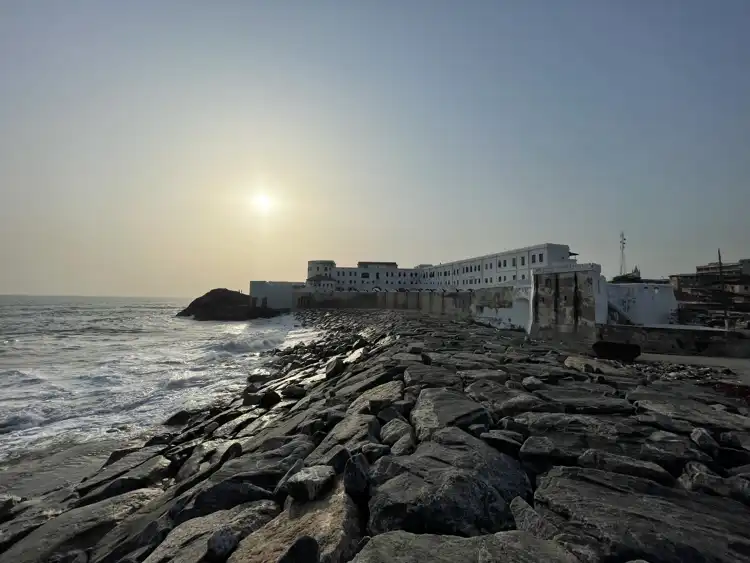
Not even 24 hours in Ghana, I found myself in Cape Coast Castle, the place from which enslaved people were transported across the Atlantic Ocean. Everyone knows about this pitch-black chapter in human history. But when you’re standing there in the dungeons where enslaved people were “stored” for three months, waiting for the next ship to take them, it really hits you.
It’s this dark tunnel, with no light, where they were chained, sitting in their own waste, waiting. People would regularly die in their chains from sickness or starvation, and their bodies would be removed within a day to make room for someone new.
When a ship finally arrived, the strongest would be selected and led through a low tunnel to the ocean. In the dead of night, so they couldn’t see anything, they were brought on board. They must have thought the hell was over, but the conditions on the ships were probably even worse.
The most cynical part? A church was built right above these tunnels, with small viewing windows at the entrance where you could see how horribly the enslaved people were kept down below.
I listened to all of this alongside three other Europeans and twenty Ghanaians. And even though I don’t feel personally connected to the people who did this in the past, I felt deeply ashamed that humans could organize something so systematic and dehumanizing. It’s incredible how the Ghanaians seem to hold no grudge and are focused on moving forward.
As I sat on the edge of the fortress wall, trying to process everything I’d just heard, a boy with eyes full of hope, threw a stone wrapped in paper up to me.