×

Guinea-Bissau🇬🇼 | regionsSao Vicentesavanna landscape, cashew orchards, rural settlements, seasonal rivers | things to do and best time to go

Explore BubaqueExplore Bafatá

Backpacking in Sao Vicente
By Johan Kruseman 🇳🇱 | Updated May 13, 2026

Here’s the real fork in the road: do you splurge on a private pirogue to hop between Sao Vicente’s sleepy villages, or sweat it out on the battered public minibus, saving cash but losing hours? Sao Vicente sits in the north of Guinea-Bissau, wedged between the tangled Cacheu mangroves and the Casamance borderlands. For backpackers, it’s a raw, sun-baked patchwork of salt flats, wild beaches, and villages where you’ll hear more Balanta than Portuguese. It’s cheap, rarely crowded, and feels worlds away from the tourist gloss of the Bijagos Islands, but you’ll trade convenience for authenticity—transport is slow, and English is rare. If you want a region where the rhythm is set by tides and market days, not Instagram, Sao Vicente is your move.

Discover everything you want to know in the 📖 Guinea-Bissau Travel Guide.
Loading the map 🌍
CLICK TO FILTER
city
town
unique site
national park
hike
beach
attraction
festival
region
SHOW COUNTRY’S BESTSHOW ALL

✨ Why go?
Ranked #99 region in Guinea-Bissau
What makes this region worth visiting

In Sao Vicente, Guinea-Bissau, backpackers find a sweet spot where time, money, and comfort align beautifully. This region offers a variety of landscapes—from lush mangroves to sandy beaches—without the hassle of constant relocation. You can soak in the natural beauty and still dive into the local culture, making it a prime spot for slow travel.

Transport options are surprisingly flexible. You can hop on a shared taxi or rent a bike, allowing you to explore at your own pace. This means you can linger longer at that beachside café or take an extra hour to chat with a local fisherman. The ability to mix nature and culture is a game-changer.

You’re not just ticking boxes; you’re creating memories. Spend a day hiking, then transition to a vibrant market in the evening. This blend of experiences … read more 👉
In Sao Vicente, Guinea-Bissau, backpackers find a sweet spot where time, money, and comfort align beautifully. This region offers a variety of landscapes—from lush mangroves to sandy beaches—without the hassle of constant relocation. You can soak in the natural beauty and still dive into the local culture, making it a prime spot for slow travel.

Transport options are surprisingly flexible. You can hop on a shared taxi or rent a bike, allowing you to explore at your own pace. This means you can linger longer at that beachside café or take an extra hour to chat with a local fisherman. The ability to mix nature and culture is a game-changer.

You’re not just ticking boxes; you’re creating memories. Spend a day hiking, then transition to a vibrant market in the evening. This blend of experiences makes every moment feel rich and rewarding. So, if you’re looking for high-value adventures without the tourist traps, Sao Vicente is your playground.
Get the complete Travel Guide for Guinea-Bissau
Everything organized for offline planning — routes, highlights, costs & tips

See what’s inside 👉

Get the Travel Guide -

💡 HighlightsThe experiences that define the visit

  1. São Vicente mangrove channels and tidal flats — A maze of shallow channels and exposed mud at low tide that’s perfect for quiet boat trips, crab and shell gathering with locals, and seeing shorebirds up close; this tidal landscape gives the island its character and is unlike mainland riverbanks.
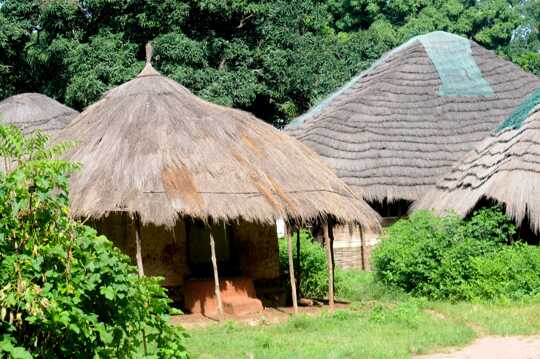
  2. Village life and Bijagós cultural visits — Traditional thatched compounds, matriarchal family structures, and everyday crafts happen here; visiting a village lets you see unique boat-building, basket weaving, and local ceremonies that you won’t find in a city.
  3. Long empty beaches and sea-turtle nesting stretches — Wide, undeveloped sandy shores where local communities run seasonal turtle protection and night patrols; great for low-key beach walks and seeing turtle tracks or hatchling releases when
read more 👉
  1. São Vicente mangrove channels and tidal flats — A maze of shallow channels and exposed mud at low tide that’s perfect for quiet boat trips, crab and shell gathering with locals, and seeing shorebirds up close; this tidal landscape gives the island its character and is unlike mainland riverbanks.
  2. Village life and Bijagós cultural visits — Traditional thatched compounds, matriarchal family structures, and everyday crafts happen here; visiting a village lets you see unique boat-building, basket weaving, and local ceremonies that you won’t find in a city.
  3. Long empty beaches and sea-turtle nesting stretches — Wide, undeveloped sandy shores where local communities run seasonal turtle protection and night patrols; great for low-key beach walks and seeing turtle tracks or hatchling releases when in season.
  4. Fishing with local crews at low tide — Hands-on experiences hauling nets or hand-gathering bait in the flats alongside small fishing teams; you get a working glimpse into the island economy and fresh, straight-off-the-boat meals.
  5. Salt pans and lagoon birdwatching — A patchwork of shallow lagoons and evaporative pools that attract waders, terns and migratory species; mornings and late afternoons are prime for quietly spotting distinctive coastal birds and flamingo-like flocks.
  6. Hidden gem: off-market village stall scene — Small, informal markets where islanders trade cashews, smoked fish, dried shrimp and handmade goods; it’s the best place to taste real local snacks and pick up simple, local-made souvenirs.
  7. Hidden gem: sacred groves and local healer sites — Small, tucked-away forest patches used for traditional medicine and rituals; visiting respectfully reveals plant-based remedies and the spiritual side of island life that outsiders seldom see.
  8. Hidden gem: sunset canoe runs through narrow channels — Short, private canoe trips through the narrower mangrove tunnels at dusk that turn ordinary scenery into glowing silhouettes and quiet wildlife encounters; a slow, local-led way to experience the island’s shoreline.
Spotted a mistake or missing something? Contact us.
⌛️ 5 daysWhat you can realistically do in a week

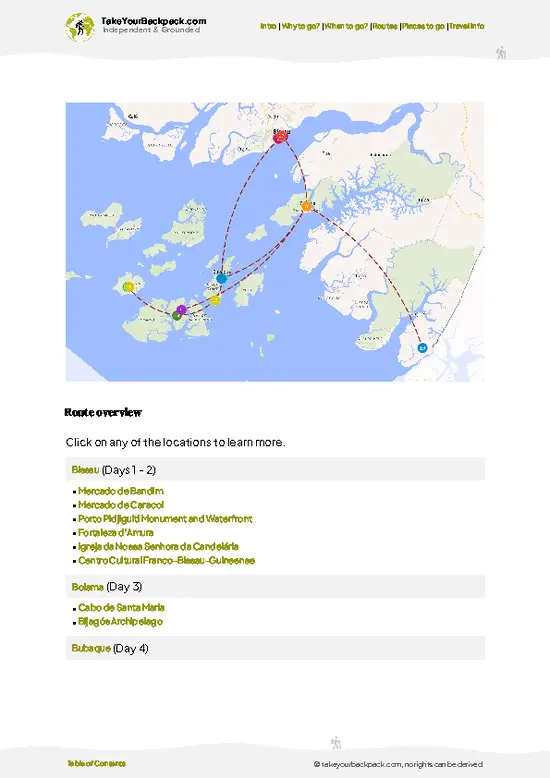
Day 1: Bissau
Start your journey in the capital, Bissau. This is where the transport web begins. You’ll find the main bus station buzzing with life. Grab a local meal at a nearby eatery; the grilled fish is a must. Spend the day acclimating and exploring the vibrant markets. This sets the tone for your adventure. You’ll want to understand the rhythm of the region before diving deeper.

Day 2: Bissau to São Vicente
Catch an early morning ferry to São Vicente. The ride is about two hours, but it’s a scenic introduction to the islands. The ferry schedule can be erratic, so aim for the first departure. Once you arrive, the laid-back vibe is palpable. Spend the afternoon wandering the beaches or chatting with locals. This is where you start to feel the pulse of Guinea-Bissau.

Day 3: São Vicente … read more 👉
Day 1: Bissau
Start your journey in the capital, Bissau. This is where the transport web begins. You’ll find the main bus station buzzing with life. Grab a local meal at a nearby eatery; the grilled fish is a must. Spend the day acclimating and exploring the vibrant markets. This sets the tone for your adventure. You’ll want to understand the rhythm of the region before diving deeper.

Day 2: Bissau to São Vicente
Catch an early morning ferry to São Vicente. The ride is about two hours, but it’s a scenic introduction to the islands. The ferry schedule can be erratic, so aim for the first departure. Once you arrive, the laid-back vibe is palpable. Spend the afternoon wandering the beaches or chatting with locals. This is where you start to feel the pulse of Guinea-Bissau.

Day 3: São Vicente Exploration
Dedicate this day to exploring São Vicente. Rent a bike and hit the coastal paths. The island’s charm lies in its simplicity. Stop by the fishing villages and soak in the culture. Here’s your Off-Path Reward: take a short hike to the lighthouse for stunning views. It’s a bit of a trek, but the payoff is worth it.

Day 4: São Vicente to Bolama
Head back to Bissau and then take a ferry to Bolama. This is a longer travel day, but Bolama’s colonial architecture and history are captivating. Spend the night here to soak in the unique atmosphere.

Day 5: Bolama to Bissau
Return to Bissau for your final day. Use this time to revisit your favorite spots or discover new ones. The must-do day is definitely Day 3 in São Vicente. The combination of exploration, culture, and stunning views makes it the highlight of your trip. Embrace the pace and enjoy the ride.
Build the Right Itinerary
Use the Guinea-Bissau Travel Guide’s 2, 3 & 5-day routes as a starting point to plan a trip that actually works on the ground.

Get the Travel Guide -

🌤️ When to go?Seasonal considerations and timing


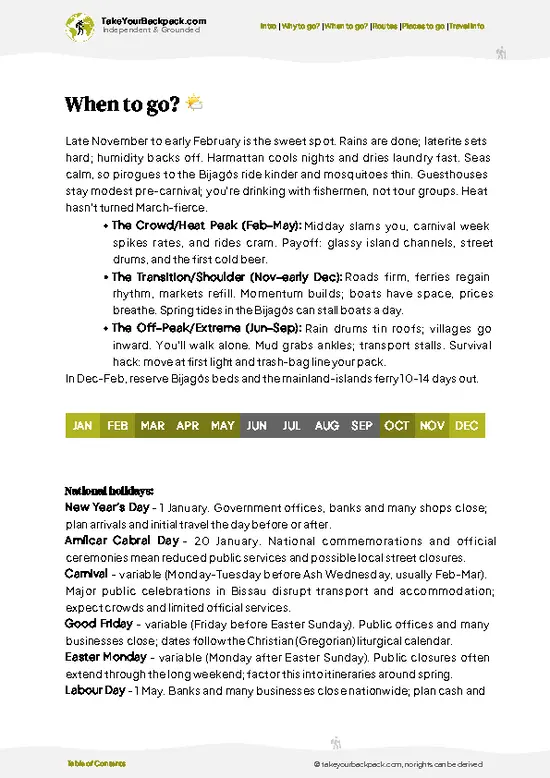
  • Weather: The dry season from November to May is your best bet—expect clear skies and minimal rain. The wet season (June to October) brings heavy downpours that can turn trails into mudslides.

  • Temperature: Daytime highs hover around 28-32°C (82-90°F) during the dry months, perfect for hiking without melting. The wet season feels hotter and stickier, pushing 33-35°C (91-95°F).

  • Daylight Hours: Roughly 11-12 hours year-round, but the dry season’s consistent sun means you can plan long treks without worrying about early darkness.

  • Crowds: Expect fewer tourists overall, but the dry season draws more visitors, especially around December and January. The wet season is quieter but less accessible.

  • Seasonal Activities: Dry months are prime for fishing, island hopping, and cultural festivals.
read more 👉

  • Weather: The dry season from November to May is your best bet—expect clear skies and minimal rain. The wet season (June to October) brings heavy downpours that can turn trails into mudslides.

  • Temperature: Daytime highs hover around 28-32°C (82-90°F) during the dry months, perfect for hiking without melting. The wet season feels hotter and stickier, pushing 33-35°C (91-95°F).

  • Daylight Hours: Roughly 11-12 hours year-round, but the dry season’s consistent sun means you can plan long treks without worrying about early darkness.

  • Crowds: Expect fewer tourists overall, but the dry season draws more visitors, especially around December and January. The wet season is quieter but less accessible.

  • Seasonal Activities: Dry months are prime for fishing, island hopping, and cultural festivals. Wet season limits outdoor adventures but offers lush landscapes if you don’t mind the rain.

  • Price Fluctuations: Accommodation and transport costs spike during the dry season’s peak months. Off-peak wet season means better deals but prepare for travel hiccups.


Pro-tip: Aim for the shoulder months of November or May—dry enough to explore comfortably, but with fewer crowds and better prices.


source: climatestotravel.comJANJanuary: excellent for travelingFEBFebruary: excellent for travelingMARMarch: excellent for travelingAPRApril: excellent for travelingMAYMay: highly recommended for travelingJUNJune: fair for travelingJULJuly: fair for travelingAUGAugust: fair for travelingSEPSeptember: fair for travelingOCTOctober: fair for travelingNOVNovember: highly recommended for travelingDECDecember: excellent for traveling
when-to-go

✈️ The backpacker research shortcutGuinea-Bissau Travel Guide

An offline-friendly backpacking guide with optimized travel routes, ranked highlights, transport advice, and the best areas to stay.
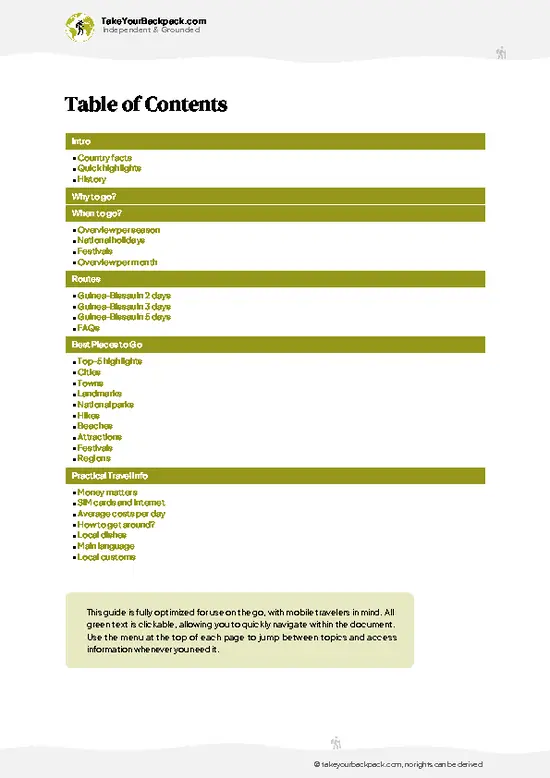
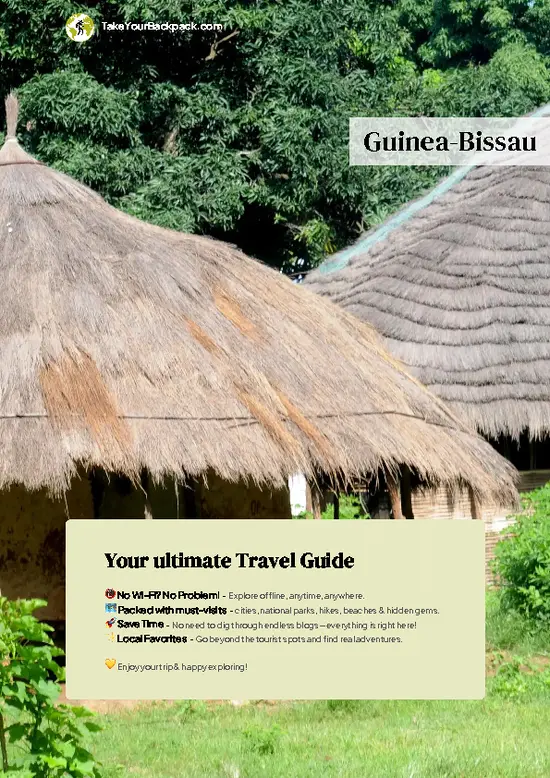
example page 0 from our offline Travel Guide for Guinea-Bissauexample page 1 from our offline Travel Guide for Guinea-Bissauexample page 2 from our offline Travel Guide for Guinea-Bissauexample page 3 from our offline Travel Guide for Guinea-Bissauexample page 4 from our offline Travel Guide for Guinea-Bissauexample page 5 from our offline Travel Guide for Guinea-Bissauexample page 6 from our offline Travel Guide for Guinea-Bissauexample page 7 from our offline Travel Guide for Guinea-Bissau
The digital guide (232 pages) contains:
53 highlights, ranked by travel appeal
Optimized 2, 3 & 5-day travel routes
Cities, national parks, beaches, historical sites, ...
How to get around
Offline-friendly for travel without Wi-Fi
👉 Click to see all 30+ guide features

📅 Plan smarter in minutes, not weeks
Month by month travel advice
Festivals & national holidays
Budget expectations

🗺️ Go to the right places, skip the overrated ones
Honest pros & cons of destinations
Top hikes, parks & viewpoints
Lesser-known places most travelers miss
Clear “worth it vs skip it” guidance

🛏️ Travel smoothly without rookie mistakes
Best areas to stay
Transport systems explained simply
Common scams & safety advice
SIM cards, money & practical tips

🌍 Understand the country, not just visit it
Culture & traditions
52 Essential phrases & customs
Festivals worth planning around
Traveler-friendly historical context
Insights that make places more meaningful

📱 Built for real travel conditions
Fully downloadable PDF
Works completely offline
Optimized for phone use
Useful in remote areas & buses
Everything in one place
Save weeks of stressful planning
Get instant access to the full guide directly. 30-day money-back guarantee.


Sent to your inbox immediately after payment • 100% Secure Checkout
Best Backpacking Travel Advisor 2025 tourism awardBest Backpacking
Travel Advisor
2025
What others say about Take Your Backpack Guides:
⭐⭐⭐⭐⭐
Fantastic, amazing amount of information!
⭐⭐⭐⭐⭐
My goodness this is amazing, it's what I've been looking for hats off too you!
⭐⭐⭐⭐⭐
I think this is absolutely BRILLIANT
⭐⭐⭐⭐
Very complete and informative. It's still missing places, but I gotta to commend you
⭐⭐⭐⭐⭐
This is truly amazing, thank you, can't wait to explore it with my kids!
⭐⭐⭐⭐⭐
Awesome resource, thank you!
⭐⭐⭐⭐⭐
This is amazing! Can't wait to explore the ones I haven't seen
⭐⭐⭐⭐
I love this! Well done, great idea.
⭐⭐⭐⭐⭐
Thanks for taking the time to make this gem!
⭐⭐⭐⭐⭐
This might be the best website I've ever seen.
⭐⭐⭐⭐⭐
Congratulations, and thank you so much for your work; it's incredibly valuable.
⭐⭐⭐⭐
In all seriousness I think you did a great job pointing out the important spots
⭐⭐⭐⭐⭐
10/10 very good
⭐⭐⭐⭐⭐
As someone who's only just starting to visit regularly this is awesome, thank you.
⭐⭐⭐⭐
Thank you very much! I'm going to visit my dad, it's going to be very useful!
⭐⭐⭐⭐⭐
This is really cool! We'll be travelling for the first time and this definitely come in handy.
⭐⭐⭐⭐⭐
You are now our minister of culture, congratulations 👨‍💼
⭐⭐⭐⭐⭐
Just wanted to tell you that this is a pearl! Going to follow your recommendations.
⭐⭐⭐⭐⭐
This is so cool. I'll definitely be using the resource for my travels soon.
⭐⭐⭐⭐⭐
This is very impressive! Good work.
⭐⭐⭐⭐⭐
This is an amazing and informative site. Very well done!

🛏️ Where to stay?How to pick the right area

When you’re roaming around São Vicente in Guinea-Bissau, the right spot to lay your head can make all the difference.

Start in Bissau, the capital. It’s buzzing with life, and you’ll find a mix of locals and travelers. The waterfront area is particularly lively, perfect for grabbing a cold drink and swapping stories with fellow backpackers. The vibe here is friendly, and you can easily connect with others over shared meals or spontaneous adventures.

Next up, check out Bolama. This island has a laid-back charm that feels worlds away from the hustle of Bissau. It’s safe, and the locals are welcoming. … read more 👉
When you’re roaming around São Vicente in Guinea-Bissau, the right spot to lay your head can make all the difference.

Start in Bissau, the capital. It’s buzzing with life, and you’ll find a mix of locals and travelers. The waterfront area is particularly lively, perfect for grabbing a cold drink and swapping stories with fellow backpackers. The vibe here is friendly, and you can easily connect with others over shared meals or spontaneous adventures.

Next up, check out Bolama. This island has a laid-back charm that feels worlds away from the hustle of Bissau. It’s safe, and the locals are welcoming. You can explore colonial ruins by day and unwind on the beach by night. The slower pace allows for deeper connections, both with the place and the people.

Don’t overlook Canchungo, a smaller town that’s often missed. It’s a great base for exploring the surrounding nature and offers a more authentic experience. You’ll find fewer tourists here, which means you can immerse yourself in local culture without the usual distractions.

Each of these spots offers a unique flavor of Guinea-Bissau, balancing comfort, social opportunities, and budget-friendly options. Choose wisely, and you’ll unlock the region’s true essence.

🚌 Getting aroundMoving around without the hassle

Sao Vicente is a whirlwind of vibrant energy and laid-back chaos. Picture this: the sun-drenched streets pulse with life, where schedules are more of a suggestion than a rule. You’ll find yourself swept along by the rhythm of the locals, where a bus might leave when it’s full, or a shared taxi might take off the moment you hop in. It’s not about rigid timetables; it’s about embracing the flow. This is a place where intuition reigns, and the journey becomes part of the adventure. You’ll want to be flexible, ready to adapt, and open to the unexpected.


  • Shared Taxis - These are your best bet for quick, budget-friendly travel. They typically run from 6 AM to 6 PM, costing around 1000 CFA (about $1.50) for short hops. Expect a cozy ride with up to five passengers crammed in, but it’s a great way
read more 👉
Sao Vicente is a whirlwind of vibrant energy and laid-back chaos. Picture this: the sun-drenched streets pulse with life, where schedules are more of a suggestion than a rule. You’ll find yourself swept along by the rhythm of the locals, where a bus might leave when it’s full, or a shared taxi might take off the moment you hop in. It’s not about rigid timetables; it’s about embracing the flow. This is a place where intuition reigns, and the journey becomes part of the adventure. You’ll want to be flexible, ready to adapt, and open to the unexpected.


  • Shared Taxis - These are your best bet for quick, budget-friendly travel. They typically run from 6 AM to 6 PM, costing around 1000 CFA (about $1.50) for short hops. Expect a cozy ride with up to five passengers crammed in, but it’s a great way to meet locals and share stories.


  • Minibuses - A step up in comfort, these minibuses operate on set routes but still embrace that local spontaneity. Prices hover around 1500 CFA ($2.25), and they usually run from dawn until dusk. They’re a bit slower, but you’ll enjoy the scenery and the chatter of fellow travelers.


  • Bicycles for Rent - If you’re feeling adventurous, renting a bike can be a game-changer. Prices start at 2000 CFA ($3) for a day. You’ll cover more ground than on foot, and you can stop wherever your heart desires. Just be ready for some bumpy roads!


  • Ferries - For those looking to explore nearby islands, ferries are essential. They leave from the main port, with departures typically at 8 AM and 3 PM. Prices vary, but expect to pay around 3000 CFA ($4.50) for a round trip. The ride is scenic, and you’ll get a taste of the local maritime life.


Here’s your master tactical tip: always ask locals about the best times to travel. They know the ins and outs better than any guidebook. If you can, aim for early mornings or late afternoons when the heat is less intense and the transport options are more plentiful. Embrace the chaos, and you’ll find that getting around Sao Vicente is part of the charm.

🍲 FoodLocal Cuisine & Drinks

In São Vicente, the culinary scene is a vibrant tapestry of flavors that tells the story of its people. Dive into jollof rice, a fragrant dish cooked with tomatoes and spices, often served with grilled fish or chicken. The catch of the day is a must-try; fresh and simply seasoned, it embodies the essence of coastal living. Pair it with a local palm wine, a sweet, fermented drink that’s as refreshing as it is potent.

For a true local experience, hit up the bustling markets. Vendors shout over each other, selling everything from ripe mangoes to spicy pepper sauces. Grab a plate of street food—think fried plantains or spicy meat skewers. It’s quick, delicious, and gives you a taste of daily life.

Dining here is casual and communal. Expect to share plates and stories with new friends. Don’t … read more 👉
In São Vicente, the culinary scene is a vibrant tapestry of flavors that tells the story of its people. Dive into jollof rice, a fragrant dish cooked with tomatoes and spices, often served with grilled fish or chicken. The catch of the day is a must-try; fresh and simply seasoned, it embodies the essence of coastal living. Pair it with a local palm wine, a sweet, fermented drink that’s as refreshing as it is potent.

For a true local experience, hit up the bustling markets. Vendors shout over each other, selling everything from ripe mangoes to spicy pepper sauces. Grab a plate of street food—think fried plantains or spicy meat skewers. It’s quick, delicious, and gives you a taste of daily life.

Dining here is casual and communal. Expect to share plates and stories with new friends. Don’t be surprised if you’re invited to join a group; it’s all part of the charm. Just remember to eat with your right hand—it’s a sign of respect.

So, embrace the flavors and the warmth of the locals. Each bite is a connection to the heart of São Vicente.

Other Bissau-Guinean regions near Sao Vicente

Explore more nearby:

  • Bijagós Archipelago—tidal mangroves, remote islands, matriarchal villages, sea turtle nesting| 21 km away
  • Bubaque—island market, sandy tracks, palm-fringed beaches, local fishing boats| 83 km away

👉 Discover all regions

Or checkout all Guinea-Bissau has to offer (think cities, towns, villages, national parks, hikes, beaches, festivals)
Country photo of Guinea-Bissau

We 💚 feedbackSumming up the experience

Sao Vicente is a slice of laid-back paradise. The vibe? Chill, with locals who genuinely welcome you. Don’t miss the market on Saturdays; it’s a sensory overload of colors and flavors. You’ll find the best grilled fish there—trust me, it’s a game changer. Just a heads-up: the roads can be rough, so don’t rush your journey. Embrace the slow pace; it’s part of the charm. You’ll leave with stories that outshine any postcard.

✍️ Help improve this page!
The information on this page is based on in-depth research, insights shared by experienced travelers, and feedback from the local travel community in Guinea-Bissau. While every effort is made to keep the information accurate and current, conditions can change — so if you spot anything incorrect or outdated, please get in touch.


🙋‍♂️ Give feedback

👋 Meet the founderWho’s Behind Take Your Backpack?

Johan, backpacker and founder of TakeYourBackpackHi, I’m Johan (Netherlands 🇳🇱), the creator of TakeYourBackpack. Over the past decade, I’ve backpacked through 80+ countries across six continents, gaining extensive experience with independent travel, long-term trips, and overland routes.

This site is built on a combination of firsthand travel experience and carefully curated insights from other backpackers. Many guides are based on places I’ve personally visited, while others bring together tips, observations, and practical advice shared by trusted travelers I’ve met along the way.

The goal is to provide realistic, experience-driven guidance — not generic itineraries — so you can explore destinations with better context, clearer expectations, and more confidence.

Get full country guide •
Instant download • 53 highlights • Full Offline guide