v2.webp)
- Ajloun Castle (Qalʿat ar-Rabad) — A 12th-century hilltop fortress built by the Ayyubids; walking the towers, cisterns and ramparts gives a direct feel for the military architecture and the commanding views over the Jordan Valley. Don’t skip the small onsite displays that explain how the castle controlled trade routes.
- Castle interpretation displays & terraces — The castle isn’t just walls: the little exhibition rooms, engraved stones, and the rooftop terraces each tell different parts of the story. The terraces are especially worth lingering on for layered views and sunset photos.
- Ajloun Old Town (the souk area) — Narrow streets, small grocery stalls, and family bakeries; an honest slice of daily life where you can buy local bread, sip black coffee, and watch vendors trade olives and herbs.
- Ajloun Castle (Qalʿat ar-Rabad) — A 12th-century hilltop fortress built by the Ayyubids; walking the towers, cisterns and ramparts gives a direct feel for the military architecture and the commanding views over the Jordan Valley. Don’t skip the small onsite displays that explain how the castle controlled trade routes.
- Castle interpretation displays & terraces — The castle isn’t just walls: the little exhibition rooms, engraved stones, and the rooftop terraces each tell different parts of the story. The terraces are especially worth lingering on for layered views and sunset photos.
- Ajloun Old Town (the souk area) — Narrow streets, small grocery stalls, and family bakeries; an honest slice of daily life where you can buy local bread, sip black coffee, and watch vendors trade olives and herbs. It’s low-key but very real.
- Local olive-oil presses and cooperatives — Ajloun’s hills are full of olive groves; several small, family or cooperative presses in town let you watch pressing in season and taste fresh extra-virgin oil. It’s a hands-on way to understand local agriculture and cuisine.
- Short village walks and viewpoints around Jabal Ajloun — A handful of marked and informal paths start from the town and lead to nearby ridgelines and viewpoints. You’ll pass terraced fields, small orchards and get up-close views of rural life without needing a long drive.
- Ajloun Forest Reserve visitor hub (town access point) — The reserve’s main trails and facilities are accessed from Ajloun town; the visitor hub gives maps, trail advice and info on fauna and flora before you head into the pine and oak slopes. Great for easy half-day hikes.
- Traditional bakeries and taboun ovens — Watch or buy bread straight from a taboun (clay oven) in the town’s bakeries; the smell, rhythm and simple communal vibe offer a small cultural snapshot that’s easy to miss if you stick to guides.
- Local craft stalls and small workshops — Around the castle and market you’ll find artisans repairing tools, weaving simple goods or selling embroidered pieces. These micro-workshops aren’t tourist factories — they’re parts of everyday craft traditions.
- Friday market and neighborhood bazaars — If your timing is right, the weekly market is a lively scene for fresh produce, livestock trade and bargaining. It’s chaotic, honest and one of the best ways to see how people in the area actually shop.
- Small neighborhood mosques and community spaces — The town’s mosques and adjoining plazas are social hubs; visiting respectfully (outside prayer times if you’re not Muslim) gives insight into local architectural details and social rhythms that you won’t get from monuments alone.
Spotted a mistake or missing something? Contact us.

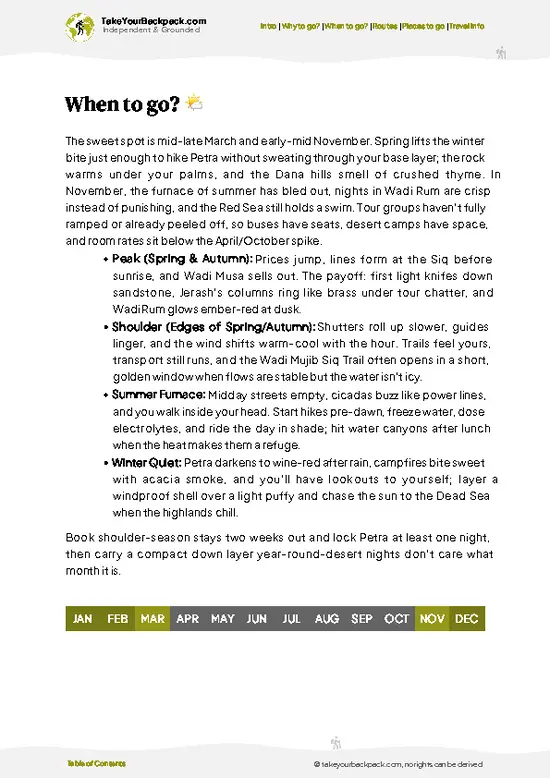
Trip to Jerash, Ajloun and Umm Qais
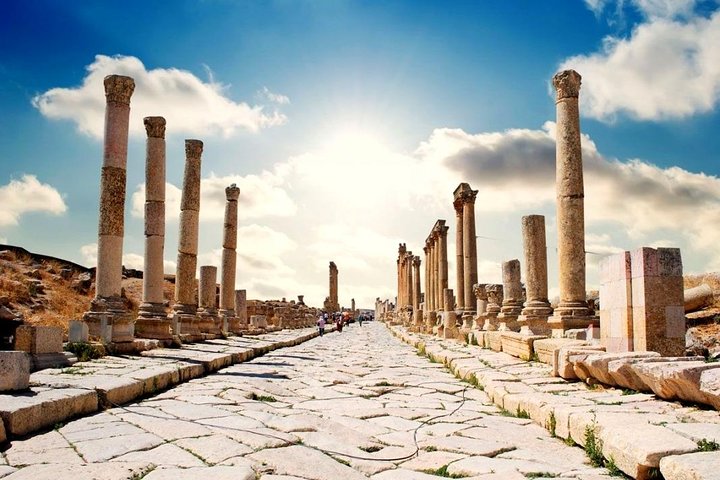
Day Tour to Jerash, Ajloun Castle and Dead Sea

4 days private tour in Jordan with pick up

The Ultimate Jordan Experience - 8 Full Days Private Tour

Full day Tour Jerash، Ajloun and Um Qais from Amman

From Amman: Jerash and Ajloun castle Private Full Day Trip

3-Day Private Tour in Jordan with Pick Up

From Amman: Private Full Day Group Tour Jerash Ajloun and Amman

8 Days - 7 Nights Jordan Private Luxury Tour All Inclusive


 Best Backpacking
.jpg) Hi, I’m Johan (Netherlands 🇳🇱), the creator of TakeYourBackpack. Over the past decade, I’ve backpacked through 80+ countries across six continents, gaining extensive experience with independent travel, long-term trips, and overland routes.
Hi, I’m Johan (Netherlands 🇳🇱), the creator of TakeYourBackpack. Over the past decade, I’ve backpacked through 80+ countries across six continents, gaining extensive experience with independent travel, long-term trips, and overland routes.