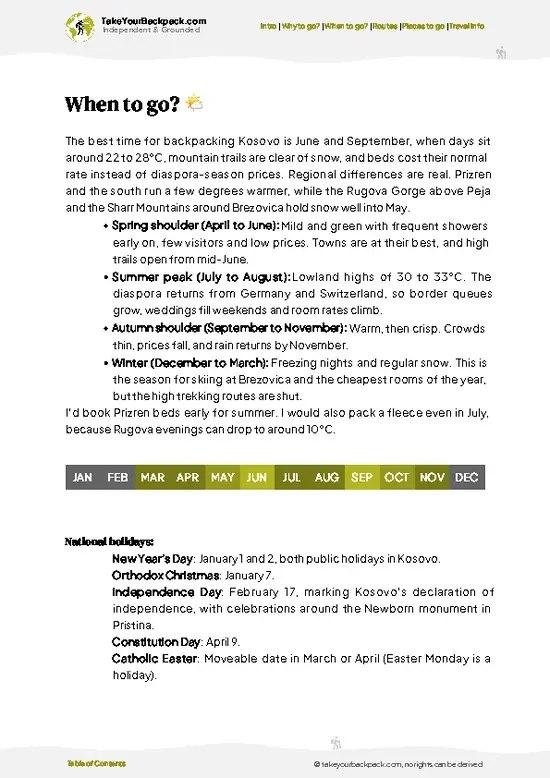
Yes, Kosovo is one of the easiest places in the Balkans to backpack on your own: distances are short, buses are frequent and English is widely spoken by anyone under 40.
Hostel dorms in
Pristina,
Prizren and
Peja run about €10 to 15 a night, a burek breakfast costs €1 to 2 and a sit-down dinner €5 to 8. The currency is the euro, so there is no exchange hassle. Most intercity bus rides, such as Pristina to Prizren, take 1.5 to 2 hours. The one planning point is Serbia: if you entered Kosovo from Albania, North Macedonia or Montenegro, Serbian border guards may refuse you onward entry, so route your exit through a third country.
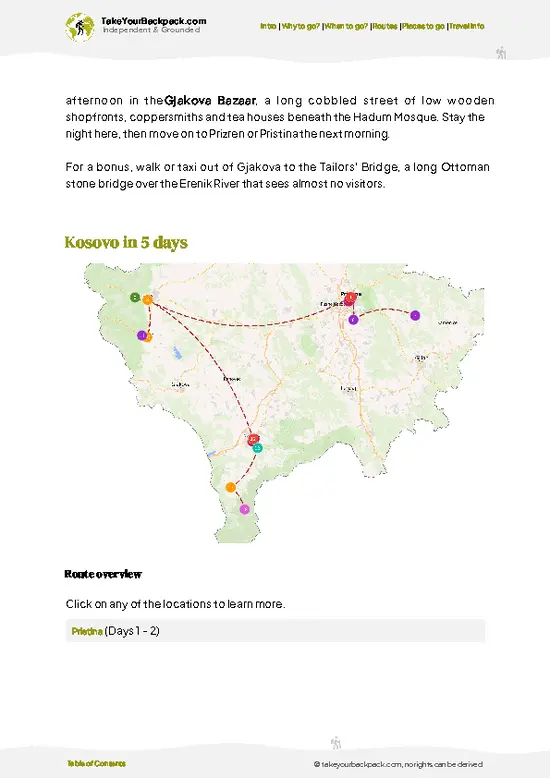
Five to seven days covers Kosovo well, enough for Pristina, Prizren and the western mountains around Peja at a comfortable pace.
With 2 days, base yourself in
Peja for Rugova Canyon and Visoki Dečani Monastery. With 3 days, pair
Pristina with two nights in
Prizren. With 5 days, add Gjakova and Peja to complete a loop; no leg takes more than 2 hours by bus. Hikers should add time: Gjeravica, the country’s highest peak at 2,656 meters, needs a full day from Deçan or Peja, and the cross-border Peaks of the Balkans trail through Kosovo, Albania and Montenegro takes 10 to 12 days end to end.
You can get around Kosovo comfortably without a car, because buses link every town and run often on the main routes.
Pristina to
Prizren takes about 1.5 hours for €4 to 5, and Pristina to
Peja 1.5 to 2 hours for about the same. Prizren to Gjakova is roughly 1 hour (€2 to 3), and Gjakova to Peja about 45 minutes, passing through Deçan. Buses on the Pristina routes leave at least hourly through the day. A car or taxi only becomes useful for mountain trailheads: Rugova Canyon from Peja costs about €10 to 15 each way by taxi, and the Prevalla pass above Prizren around €25 to 35 return.
In Kosovo, the places you should not miss are
Prizren,
Visoki Dečani Monastery and the mountains of
Rugova Canyon above Peja.
Prizren has the finest old town in the country, with the 1615 Sinan Pasha Mosque beside the river and a fortress viewpoint above. Visoki Dečani, a 14th-century UNESCO-listed monastery, holds over a thousand fresco scenes; bring your passport for the KFOR gate. Rugova starts a few kilometers from
Peja and offers via ferrata routes for about €25 to 40 with a guide. Give
Pristina one day for the Newborn Monument and Ethnological Museum, and add
Gjakova Bazaar if you have a fifth day.
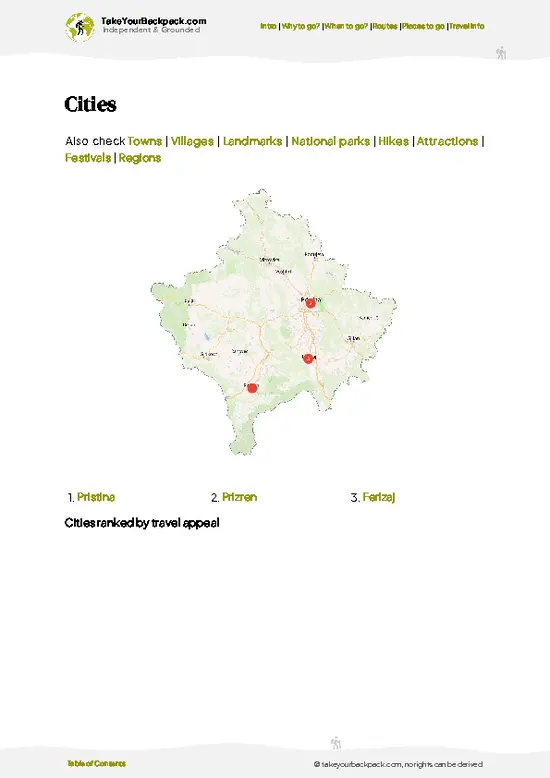
If time is tight in Kosovo, skip Ferizaj and the smaller central towns, and keep Pristina to a single day.
Ferizaj, Shtime and Suhareka are pleasant enough but have little you cannot see better in Prizren or Peja. The
Bill Clinton Statue in Pristina is a five-minute photo stop, so pass it on your way to somewhere else rather than making a trip for it. Germia Park is a local weekend escape, and the Sharr or Rugova mountains do the same thing far better. Mitrovica is worth a visit for its divided-city history, though on a 3-day trip it costs half a day of travel.
Yes, our itinerary-planner does exactly that. Set your trip length in days, give your interests and travel style, optionally give start- and end location and/or some mandatory stops you would like to include and the itinerary planner creates your personalized routes for Kosovo in seconds. Try it out!
Try the itinerary plannerv2.webp)
 Best Backpacking

