×

Paraguay🇵🇾 | regionsChaco Regiondry plains, Mennonite settlements, wildlife reserves | things to do and best time to go

Explore YbyrarobanaExplore Areguá

Backpacking in Chaco Region
🏆 Top pickregion ranked #1
By Johan Kruseman 🇳🇱 | Updated May 16, 2026

You land in Paraguay and everyone says, “Go to Iguazú, go to Encarnación,” but the real fork in the road is this: do you burn two long, dusty days and a chunk of your budget to push into the Chaco, or stay comfy in the green, easy-to-reach south and east? That choice matters, because the Chaco almost always costs you time and comfort, and only sometimes saves you money.

The Chaco Region sprawls across western Paraguay, a huge, dry, sparsely populated half of the country, west of the Río Paraguay and north of Asunción. For backpackers, it’s raw and oddly addictive: endless sky, red dirt, Mennonite colonies with German bakeries, Guaraní communities, and wildlife-heavy areas like Parque Nacional Defensores del Chaco and the wetlands around Fortín Toledo. It’s cheap once you’re there, but transport between towns is slow, irregular, and often overnight. Compared with the lush, easygoing Paraná corridor, the Chaco feels harsher, lonelier, and far more authentic—less “hostel bar crawl,” more “did I just hitchhike with a cattle truck into the middle of nowhere?”

Discover everything you want to know in the 📖 Paraguay Travel Guide.
Loading the map 🌍
CLICK TO FILTER
city
town
unique site
national park
hike
beach
attraction
festival
region
SHOW COUNTRY’S BESTSHOW ALL

✨ Why go?
Ranked #1 region in Paraguay
Why Chaco Region should be on your travel list

In the Chaco Region of Paraguay, backpackers find a unique blend of landscapes and experiences that make it a worthy stop. You won’t be hopping from one place to another every day; instead, you can settle in and soak up the surroundings. This area offers vast plains, dense forests, and even wetlands, all within a few hours’ drive.

The transport flexibility here is a game changer. Local buses and shared taxis make it easy to explore without the stress of constant relocation. You can dive into nature one day—think birdwatching or hiking—and then immerse yourself in local culture the next, perhaps at a nearby indigenous community or a bustling market.

This is where slow travel shines. You can take your time, savoring the authentic experiences that come from lingering in one spot. It’s not … read more 👉
In the Chaco Region of Paraguay, backpackers find a unique blend of landscapes and experiences that make it a worthy stop. You won’t be hopping from one place to another every day; instead, you can settle in and soak up the surroundings. This area offers vast plains, dense forests, and even wetlands, all within a few hours’ drive.

The transport flexibility here is a game changer. Local buses and shared taxis make it easy to explore without the stress of constant relocation. You can dive into nature one day—think birdwatching or hiking—and then immerse yourself in local culture the next, perhaps at a nearby indigenous community or a bustling market.

This is where slow travel shines. You can take your time, savoring the authentic experiences that come from lingering in one spot. It’s not just about ticking boxes; it’s about connecting with the land and its people. So, if you’re looking for a place that balances comfort and adventure, the Chaco Region is your ticket.
Get the complete Travel Guide for Paraguay
Everything organized for offline planning — routes, highlights, costs & tips

See what’s inside 👉

Get the Travel Guide -

💡 HighlightsWhat this place is best known for

  • Filadelfia (Mennonite colony town) — The beating heart of Paraguayan Chaco life: Mennonite-built streets, simple blocky architecture, German-influenced bakeries and strong community-run cooperatives. Good place to feel how agriculture and community planning shaped the region, buy fresh cheese, and get straight answers about local logistics and tours.
  • Museo Regional del Chaco (Filadelfia) — hidden gem — A small local museum most outsiders skip that stitches together Mennonite history, indigenous artifacts and the natural history of the Chaco. It’s compact, low-fuss, and full of context that makes the big landscapes make sense.
  • Loma Plata — A working agricultural town that shows the Chaco’s transformation: irrigated fields, cooperative factories and rural markets. Walk the market in the
read more 👉
  • Filadelfia (Mennonite colony town) — The beating heart of Paraguayan Chaco life: Mennonite-built streets, simple blocky architecture, German-influenced bakeries and strong community-run cooperatives. Good place to feel how agriculture and community planning shaped the region, buy fresh cheese, and get straight answers about local logistics and tours.
  • Museo Regional del Chaco (Filadelfia) — hidden gem — A small local museum most outsiders skip that stitches together Mennonite history, indigenous artifacts and the natural history of the Chaco. It’s compact, low-fuss, and full of context that makes the big landscapes make sense.
  • Loma Plata — A working agricultural town that shows the Chaco’s transformation: irrigated fields, cooperative factories and rural markets. Walk the market in the morning, try field-fresh dairy, and watch the enormous machinery that keeps this dry land productive.
  • Ruta Transchaco (Trans-Chaco Highway) — Driving the Trans-Chaco is an experience in itself: long straight roads through quebracho forests, roadside shrines and sudden salt-pans or lagoons after rains. Stop at small rural trading points, watch birds off the road and appreciate how remote settlement lines were drawn across harsh landscape.
  • Parque Nacional Defensores del Chaco — Paraguay’s largest national park and the Chaco’s best spot for intact dry forest, large mammals and rare birds. It’s not lush rainforest, but the open woodlands, giant termite mounds and sparse sky create a distinct ecology you won’t find elsewhere in Paraguay.
  • Boquerón battlefield and memorial — The site of the first major battle of the Chaco War; you can still see trenches, small monuments and the local museum pieces. It’s quiet, meditative and gives insight into how the conflict shaped national memory in the region.
  • Puerto Casado — tannin ruins & locomotive graveyard — hidden gem — Walk among rusting locomotives and tannin factory ruins from the late 19th/early 20th century; Puerto Casado tells the gritty story of resource extraction on the Paraguay River. Photogenic, eerie and full of local anecdotes—rarely crowded by tourists.
  • Fuerte Olimpo — Riverfront gateway to northern Chaco wetlands: old fort ruins, a tight riverside town life and easy access to boat trips into seasonal marshes. Great for birding, meeting river communities and watching dramatic sunsets over broad waterways.
  • Bahía Negra and its river islands — hidden gem — A tiny riverside town that’s the jumping-off for fishing, small island camps and visits to informal riverside villages. Locals come here to fish, harvest wild fruits and trade—real Chaco river culture, rarely seen on packaged tours.
  • Estancia and indigenous community visits (around Filadelfia, Loma Plata, Puerto Casado) — Spend a night on a working Chaco estancia or arrange an ethical visit with Enxet/Nivaclé/Ayoreo communities to learn hunting, crafts and local ecology. These hands-on, place-specific experiences—staying with families, trying local food and learning survival knowledge—are uniquely Chaco and can’t be copied elsewhere.
Spotted a mistake or missing something? Contact us.
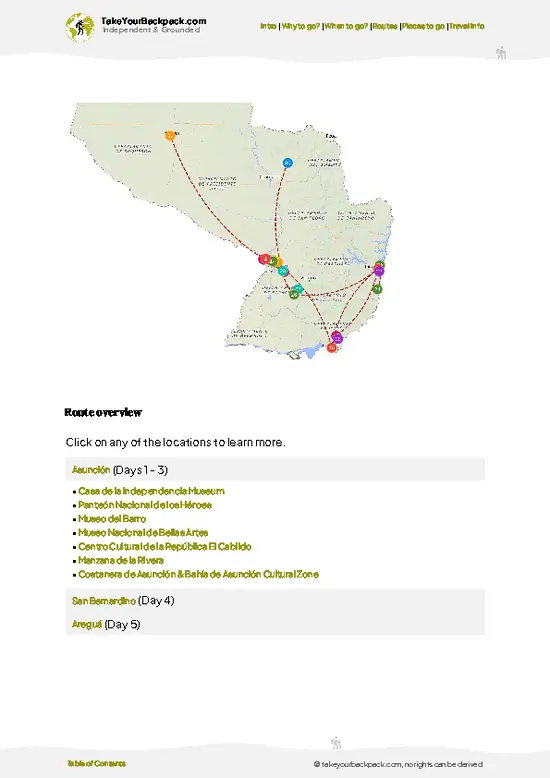
⌛️ 5 daysA smart one-week plan

Day 1: Asunción
Start your journey in Asunción, the capital. This is your launchpad. The city’s transport links are solid, with buses and taxis ready to whisk you away. Spend the day exploring the local markets and grabbing a bite of traditional Paraguayan food. The energy here is palpable, and it sets the tone for your adventure. You’ll want to stock up on supplies for the road ahead, so hit the markets early.

Day 2: Asunción to Filadelfia
Catch a morning bus to Filadelfia. This ride takes about 8 hours, but it’s a chance to soak in the landscape. The Chaco is vast and wild, and you’ll see it unfold outside your window. Filadelfia is the gateway to the region’s Mennonite culture. Spend the afternoon visiting local farms and learning about their unique way of life. This is where the … read more 👉
Day 1: Asunción
Start your journey in Asunción, the capital. This is your launchpad. The city’s transport links are solid, with buses and taxis ready to whisk you away. Spend the day exploring the local markets and grabbing a bite of traditional Paraguayan food. The energy here is palpable, and it sets the tone for your adventure. You’ll want to stock up on supplies for the road ahead, so hit the markets early.

Day 2: Asunción to Filadelfia
Catch a morning bus to Filadelfia. This ride takes about 8 hours, but it’s a chance to soak in the landscape. The Chaco is vast and wild, and you’ll see it unfold outside your window. Filadelfia is the gateway to the region’s Mennonite culture. Spend the afternoon visiting local farms and learning about their unique way of life. This is where the Chaco’s heart beats, and you’ll feel it.

Day 3: Filadelfia to Loma Plata
A short bus ride gets you to Loma Plata, just 30 minutes away. This town is quieter, but it’s rich in history. Explore the Mennonite museum and take a stroll through the town. The slower pace allows you to connect with locals. Grab a homemade pastry at a local bakery; it’s a small pleasure that makes a big difference.

Day 4: Loma Plata to Chaco National Park
Head to Chaco National Park, about an hour away. Here’s where the adventure kicks up a notch. The park is a haven for wildlife and offers stunning trails. Spend the day hiking and absorbing the raw beauty of the Chaco. The park’s remoteness means fewer tourists, so you’ll feel like you’ve discovered something special.

Day 5: Off-Path Reward: Ybycuí National Park
Take a detour to Ybycuí National Park on your way back to Asunción. It’s a bit out of the way, but the waterfalls and lush greenery are worth it. You’ll find tranquility here, a stark contrast to the Chaco’s arid landscape.

The must-do day? Day 4 in Chaco National Park. It encapsulates the spirit of the region, blending adventure with the chance to connect with nature. This is what makes the trip worthwhile.
Build the Right Itinerary
Use the Paraguay Travel Guide’s 5, 10 & 15-day routes as a starting point to plan a trip that actually works on the ground.

Get the Travel Guide -

🌤️ When to go?Best time to visit Chaco Region


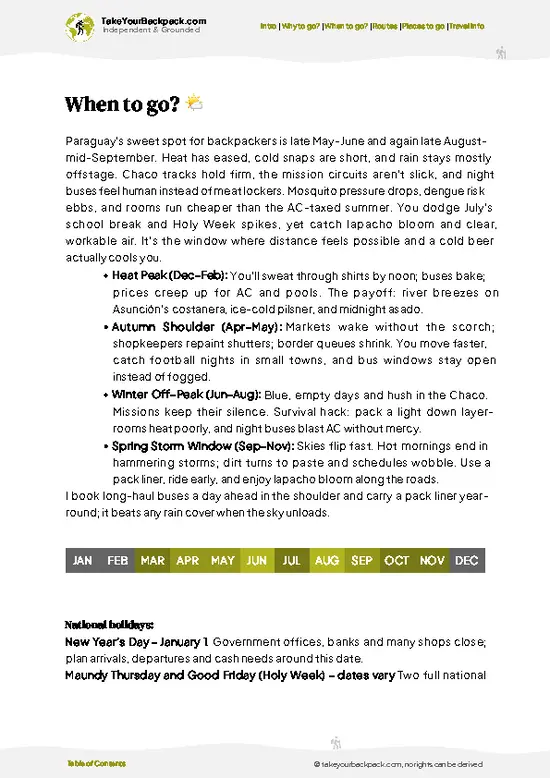
  • Topic: Weather and Temperature – The Chaco Region bakes under a brutal sun from October to March, with highs often hitting 38°C (100°F). If you want to avoid feeling like a roasted marshmallow, aim for the cooler months, April to September, when temperatures drop to a more bearable 20-25°C (68-77°F).

  • Topic: Daylight Hours – Longer days stretch from November through February, giving you more daylight to explore. But remember, the heat can sap your energy fast, so early mornings and late afternoons are your best bets for hitting the trails.

  • Topic: Crowds – The Chaco isn’t exactly a tourist hotspot, but the dry season (May to September) draws more eco-tourists and bird watchers. If you want near solitude, travel just before or after this window.

  • Topic: Seasonal Activities – Dry season
read more 👉

  • Topic: Weather and Temperature – The Chaco Region bakes under a brutal sun from October to March, with highs often hitting 38°C (100°F). If you want to avoid feeling like a roasted marshmallow, aim for the cooler months, April to September, when temperatures drop to a more bearable 20-25°C (68-77°F).

  • Topic: Daylight Hours – Longer days stretch from November through February, giving you more daylight to explore. But remember, the heat can sap your energy fast, so early mornings and late afternoons are your best bets for hitting the trails.

  • Topic: Crowds – The Chaco isn’t exactly a tourist hotspot, but the dry season (May to September) draws more eco-tourists and bird watchers. If you want near solitude, travel just before or after this window.

  • Topic: Seasonal Activities – Dry season is prime for spotting wildlife and trekking without mud slowing you down. The wet season floods parts of the region, making some trails impassable but turning the landscape lush and alive.

  • Topic: Price Fluctuations – Expect higher prices and limited availability during the dry season when guided tours and lodges fill up. Off-season travel can score you better deals but requires flexibility due to unpredictable weather.


Pro-tip: Book your Chaco trip for late April or early September—cooler temps, fewer crowds, and a sweet spot between wet and dry seasons that locals swear by.


source: climatestotravel.comJANJanuary: fair for travelingFEBFebruary: fair for travelingMARMarch: fair for travelingAPRApril: highly recommended for travelingMAYMay: excellent for travelingJUNJune: excellent for travelingJULJuly: excellent for travelingAUGAugust: excellent for travelingSEPSeptember: highly recommended for travelingOCTOctober: fair for travelingNOVNovember: good for travelingDECDecember: fair for traveling
when-to-go

✈️ The backpacker research shortcutParaguay Travel Guide

An offline-friendly backpacking guide with optimized travel routes, ranked highlights, transport advice, and the best areas to stay.
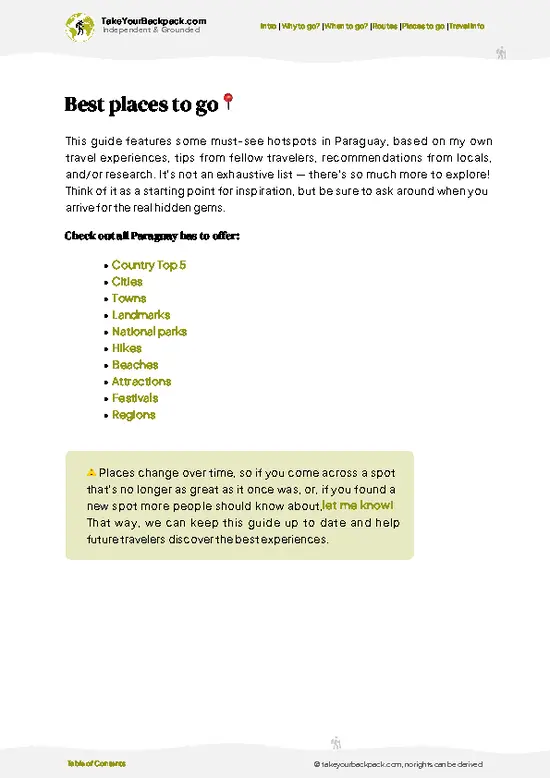
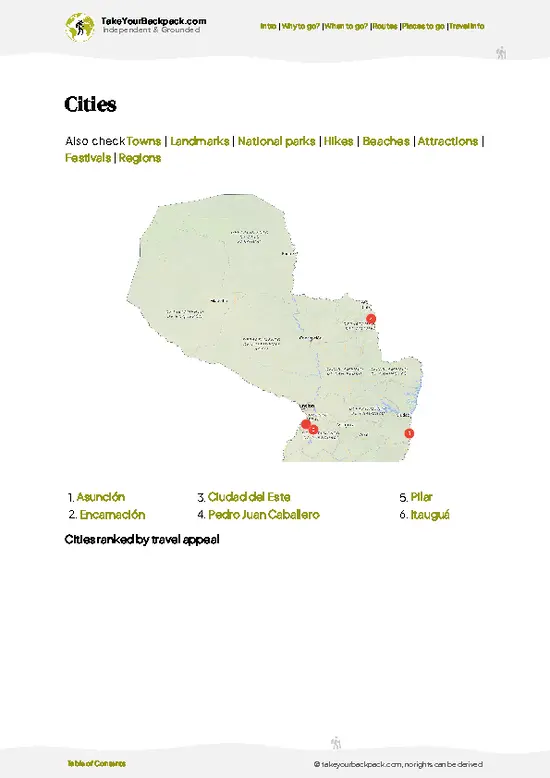
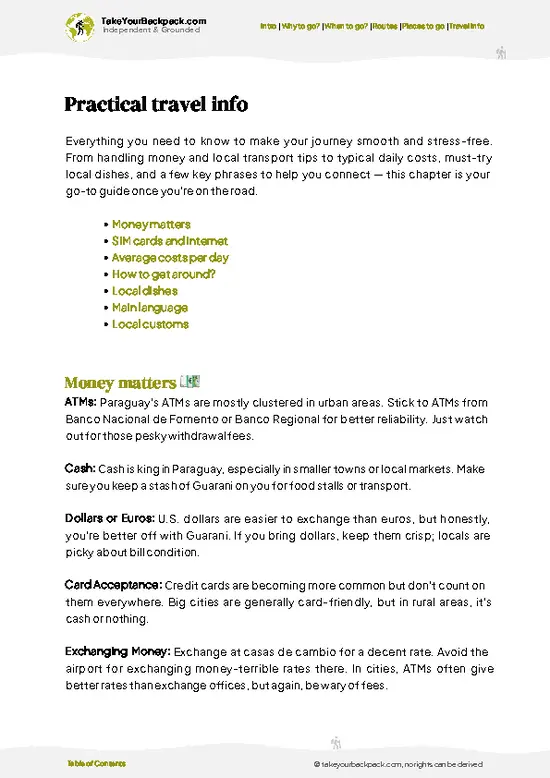
example page 0 from our offline Travel Guide for Paraguayexample page 1 from our offline Travel Guide for Paraguayexample page 2 from our offline Travel Guide for Paraguayexample page 3 from our offline Travel Guide for Paraguayexample page 4 from our offline Travel Guide for Paraguayexample page 5 from our offline Travel Guide for Paraguayexample page 6 from our offline Travel Guide for Paraguayexample page 7 from our offline Travel Guide for Paraguay
The digital guide (352 pages) contains:
90 highlights, ranked by travel appeal
Optimized 5, 10 & 15-day travel routes
Cities, national parks, beaches, historical sites, ...
How to get around
Offline-friendly for travel without Wi-Fi
👉 Click to see all 30+ guide features

📅 Plan smarter in minutes, not weeks
Month by month travel advice
Festivals & national holidays
Budget expectations

🗺️ Go to the right places, skip the overrated ones
Honest pros & cons of destinations
Top hikes, parks & viewpoints
Lesser-known places most travelers miss
Clear “worth it vs skip it” guidance

🛏️ Travel smoothly without rookie mistakes
Best areas to stay
Transport systems explained simply
Common scams & safety advice
SIM cards, money & practical tips

🌍 Understand the country, not just visit it
Culture & traditions
52 Essential phrases & customs
Festivals worth planning around
Traveler-friendly historical context
Insights that make places more meaningful

📱 Built for real travel conditions
Fully downloadable PDF
Works completely offline
Optimized for phone use
Useful in remote areas & buses
Everything in one place
Save weeks of stressful planning
Get instant access to the full guide directly. 30-day money-back guarantee.


Sent to your inbox immediately after payment • 100% Secure Checkout
Best Backpacking Travel Advisor 2025 tourism awardBest Backpacking
Travel Advisor
2025
What others say about Take Your Backpack Guides:
⭐⭐⭐⭐⭐
Fantastic, amazing amount of information!
⭐⭐⭐⭐⭐
My goodness this is amazing, it's what I've been looking for hats off too you!
⭐⭐⭐⭐⭐
I think this is absolutely BRILLIANT
⭐⭐⭐⭐
Very complete and informative. It's still missing places, but I gotta to commend you
⭐⭐⭐⭐⭐
This is truly amazing, thank you, can't wait to explore it with my kids!
⭐⭐⭐⭐⭐
Awesome resource, thank you!
⭐⭐⭐⭐⭐
This is amazing! Can't wait to explore the ones I haven't seen
⭐⭐⭐⭐
I love this! Well done, great idea.
⭐⭐⭐⭐⭐
Thanks for taking the time to make this gem!
⭐⭐⭐⭐⭐
This might be the best website I've ever seen.
⭐⭐⭐⭐⭐
Congratulations, and thank you so much for your work; it's incredibly valuable.
⭐⭐⭐⭐
In all seriousness I think you did a great job pointing out the important spots
⭐⭐⭐⭐⭐
10/10 very good
⭐⭐⭐⭐⭐
As someone who's only just starting to visit regularly this is awesome, thank you.
⭐⭐⭐⭐
Thank you very much! I'm going to visit my dad, it's going to be very useful!
⭐⭐⭐⭐⭐
This is really cool! We'll be travelling for the first time and this definitely come in handy.
⭐⭐⭐⭐⭐
You are now our minister of culture, congratulations 👨‍💼
⭐⭐⭐⭐⭐
Just wanted to tell you that this is a pearl! Going to follow your recommendations.
⭐⭐⭐⭐⭐
This is so cool. I'll definitely be using the resource for my travels soon.
⭐⭐⭐⭐⭐
This is very impressive! Good work.
⭐⭐⭐⭐⭐
This is an amazing and informative site. Very well done!

🛏️ Where to stay?Choosing the right base

In the Chaco Region of Paraguay, you want to find spots that balance safety, social vibes, and budget-friendliness. Here are the places that’ll make you feel like you’re in the know.

Start in Filadelfia. This town is the heart of the Mennonite community, and it’s a hub for backpackers. The atmosphere is laid-back, with plenty of opportunities to meet fellow travelers. Grab a bike and explore the surrounding countryside; it’s a great way to soak in the unique landscape without breaking the bank.

Next up is Asunción, the capital. While it’s not strictly in the Chaco, it’s your gateway. The city … read more 👉
In the Chaco Region of Paraguay, you want to find spots that balance safety, social vibes, and budget-friendliness. Here are the places that’ll make you feel like you’re in the know.

Start in Filadelfia. This town is the heart of the Mennonite community, and it’s a hub for backpackers. The atmosphere is laid-back, with plenty of opportunities to meet fellow travelers. Grab a bike and explore the surrounding countryside; it’s a great way to soak in the unique landscape without breaking the bank.

Next up is Asunción, the capital. While it’s not strictly in the Chaco, it’s your gateway. The city has a vibrant backpacker scene, especially around the historic center. You’ll find local markets and street food that won’t dent your wallet. Plus, the nightlife is buzzing, making it easy to connect with others.

Don’t overlook Ybycuí, a small town known for its national park. It’s perfect for those who want a quieter experience. The park offers stunning trails and a chance to immerse yourself in nature.

Each of these spots has its own charm, and they’re all safe enough to wander around at night. Choose wisely, and you’ll unlock the true essence of the Chaco.

🚌 Getting aroundGetting around like a local

The Chaco Region of Paraguay is a wild frontier where the rhythm of life dances between the structured and the spontaneous. Here, schedules can feel like suggestions rather than rules, and the pulse of the land is dictated by the whims of the weather and the spirit of the people. You’ll find that getting around isn’t just about reaching your destination; it’s about embracing the journey. Expect a mix of dusty roads, unexpected delays, and the occasional burst of laughter with locals who are more than willing to share a ride or a story. This is a place where intuition reigns, and the best experiences often come from the unplanned detours.


  • Bus: The backbone of Chaco transport, buses run from major towns like Asunción to places like Filadelfia. Prices hover around 50,000 PYG ($7), with departures
read more 👉
The Chaco Region of Paraguay is a wild frontier where the rhythm of life dances between the structured and the spontaneous. Here, schedules can feel like suggestions rather than rules, and the pulse of the land is dictated by the whims of the weather and the spirit of the people. You’ll find that getting around isn’t just about reaching your destination; it’s about embracing the journey. Expect a mix of dusty roads, unexpected delays, and the occasional burst of laughter with locals who are more than willing to share a ride or a story. This is a place where intuition reigns, and the best experiences often come from the unplanned detours.


  • Bus: The backbone of Chaco transport, buses run from major towns like Asunción to places like Filadelfia. Prices hover around 50,000 PYG ($7), with departures typically starting at 6 AM and the last ones around 8 PM. Expect a bumpy ride, but the views of the vast landscape are worth it.


  • Shared Taxi (Remis): For a bit more comfort, shared taxis are a solid option. They usually leave when full, which can mean waiting a bit, but the cost is around 100,000 PYG ($14) per seat. They’re faster than buses, often zipping you to your destination in half the time.


  • Motorbike Rentals: Feeling adventurous? Renting a motorbike can set you back about 150,000 PYG ($21) per day. This gives you the freedom to explore the backroads and hidden spots at your own pace. Just be prepared for some rough terrain and keep an eye on the weather.


  • Pickup Trucks: In rural areas, hitching a ride on a pickup truck is common. It’s a no-cost option if you’re friendly and willing to share a story or two. Just flag one down and hop in; it’s a quintessential Chaco experience.


  • Bicycle Rentals: For the eco-conscious traveler, bicycles are available in some towns for about 30,000 PYG ($4) a day. It’s a leisurely way to soak in the scenery, but be ready for the heat and some challenging paths.


To navigate the Chaco efficiently, always ask locals about the best times to travel. They know the ins and outs, and their tips can save you hours. If you can, travel early in the morning or later in the afternoon to avoid the midday heat and maximize your chances of snagging a ride. Embrace the chaos, and you’ll find that the journey becomes just as rewarding as the destination.

🍲 FoodEating & Drinking in Chaco Region

In the Chaco Region, food is a celebration of local culture and flavors. You can’t miss trying sopa paraguaya, a cornbread that’s more like a savory cake, with a texture that’s both fluffy and dense. Pair it with asado, a communal barbecue that brings people together. The aroma of grilled meats wafts through the air, inviting you to join in.

For drinks, tereré is the local favorite. This cold infusion of yerba mate is refreshing, especially in the heat. You’ll see locals sharing their gourd and bombilla, a ritual that’s as much about connection as it is about the drink itself.

When it comes to dining, skip the tourist traps. Head to bustling markets where vendors serve up steaming bowls of locro, a hearty stew made with corn and meat. Street food stalls offer empanadas filled with everything … read more 👉
In the Chaco Region, food is a celebration of local culture and flavors. You can’t miss trying sopa paraguaya, a cornbread that’s more like a savory cake, with a texture that’s both fluffy and dense. Pair it with asado, a communal barbecue that brings people together. The aroma of grilled meats wafts through the air, inviting you to join in.

For drinks, tereré is the local favorite. This cold infusion of yerba mate is refreshing, especially in the heat. You’ll see locals sharing their gourd and bombilla, a ritual that’s as much about connection as it is about the drink itself.

When it comes to dining, skip the tourist traps. Head to bustling markets where vendors serve up steaming bowls of locro, a hearty stew made with corn and meat. Street food stalls offer empanadas filled with everything from cheese to spicy meat, perfect for a quick bite while you explore.

Dining here is casual and communal. Don’t be surprised if you’re invited to share a table or a drink. Embrace the laid-back vibe, and remember to say “gracias” with a smile. It’s all part of the experience, and it’ll make you feel like you belong.

Other Paraguayan regions near Chaco Region

Explore more nearby:

  • Valle de los Ríos—rolling farmland, river crossings, colonial-era towns| 151 km away
  • Ybyrarobana—dense forests, remote villages, borderland hills| 275 km away

👉 Discover all regions

Or checkout all Paraguay has to offer (think cities, towns, villages, national parks, hikes, beaches, festivals)
Country photo of Paraguay

We 💚 feedbackKey takeaways before you go

The Chaco Region is a wild, untamed beauty that feels like stepping into another world. The wildlife is incredible, and the sunsets? Pure magic. But here’s the kicker: it’s remote. You’ll sacrifice some comfort and convenience, so be ready for long drives and limited services. Embrace the adventure, and you’ll find it’s worth every bump in the road. This place isn’t just a destination; it’s an experience that sticks with you.

✈️ When did I visit Paraguay?
Before visiting Argentina in September 2012, I crossed through Paraguay, ending up at the magical Iguazu Falls.

✍️ Help improve this page!
The information on this page is based on my own backpacking experience in Paraguay, supplemented with up-to-date research and feedback from other travelers. Travel details can change, so if you notice anything outdated or incomplete, feel free to let me know.


🙋‍♂️ Give feedback

👋 Meet the founderWho’s Behind Take Your Backpack?

Johan, backpacker and founder of TakeYourBackpackHi, I’m Johan (Netherlands 🇳🇱), the creator of TakeYourBackpack. Over the past decade, I’ve backpacked through 80+ countries across six continents, gaining extensive experience with independent travel, long-term trips, and overland routes.

This site is built on a combination of firsthand travel experience and carefully curated insights from other backpackers. Many guides are based on places I’ve personally visited, while others bring together tips, observations, and practical advice shared by trusted travelers I’ve met along the way.

The goal is to provide realistic, experience-driven guidance — not generic itineraries — so you can explore destinations with better context, clearer expectations, and more confidence.

Get full Paraguay guide •
Instant download • 90 highlights • Full Offline guide