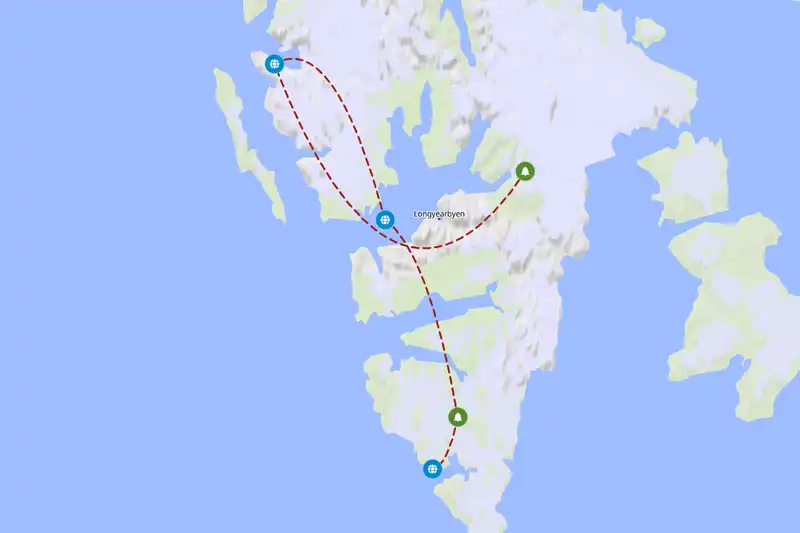
Short version: Svalbard is not an easy classic backpacking destination, but you can travel there semi-independently if you accept strict rules, high prices, and limited freedom outside town.
Longyearbyen itself is easy to handle solo: you can walk almost everywhere in town, there are hostels and guesthouses, a supermarket, and a clear tourist infrastructure. For a budget traveler, the challenge starts the moment you want to leave the settlement.
Outside Longyearbyen, you are in serious polar bear territory. By law and common sense, you must carry a rifle and know how to use it, or be with someone who does. That instantly kills the usual “wander off with a tent and see what happens” backpacker style. Renting a rifle, buying flares, and getting proper training is expensive and not something to fake.
So the realistic independent strategy is: stay based in Longyearbyen, do day hikes within the safe zone around town (clearly marked and explained by the tourist office), and then join a few targeted budget-ish tours for the big-ticket wilderness experiences. Think of it as independent trip planning with guided modules, not a fully self-guided trek.
If your idea of backpacking is cheap buses, wild camping anywhere, and improvising, Svalbard will feel restrictive and pricey. If you’re okay with hostel life, cooking your own food, and spending money on a couple of carefully chosen tours instead of constant movement, it works very well.
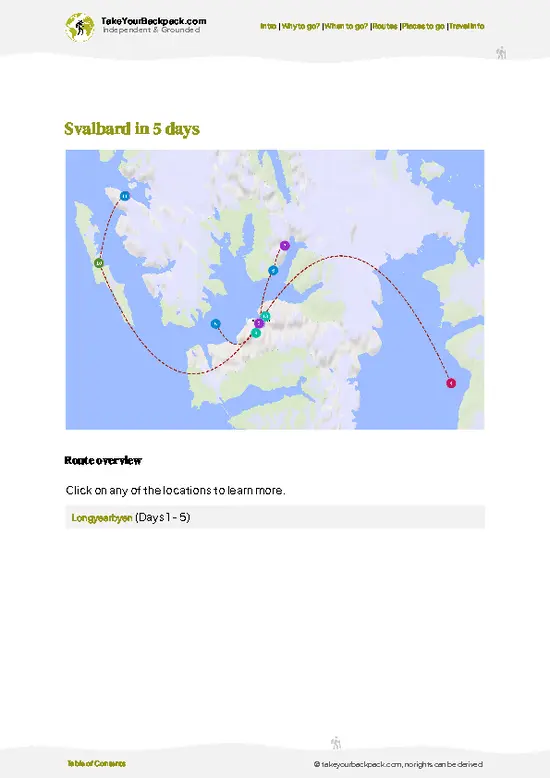
For a budget-conscious backpacker, 4–5 full days on Svalbard hits the sweet spot between cost and experience.
Rough breakdown:
3 days (absolute minimum)- Day 1: Arrive, settle into hostel, explore Longyearbyen on foot, visit the Svalbard Museum, walk to the old coal mining structures and viewpoints.
- Day 2: One big wilderness tour (boat trip to a glacier or fjord, or a guided hike) to actually see the Arctic landscape beyond town.
- Day 3: Another half- or full-day activity (kayaking, another hike, or a cheaper cultural/mining tour), plus buffer for weather delays.
This works if you’re tight on money and time, but you’ll feel rushed.
4–5 days (ideal for most backpackers)- Gives you 2–3 days for tours and hikes, plus 1–2 slower days to wander, cook, and just absorb the place.
- You can pick one more expensive “headline” trip (like a longer boat tour) and one or two cheaper options (short hikes, mine tour, museum, local walks).
- Extra days are useful because weather can cancel or shift tours, and you don’t want your only big activity to vanish.
7+ days (only if you have a clear plan)- Worth it if you’re doing a multi-day guided expedition (ski, kayak, or camping) or you’re a photographer who wants time to chase light and conditions.
- If you’re just hanging around town with no big trips, a week can feel long and expensive; daily costs add up fast.
For most budget travelers, planning 4–5 days and being mentally ready to stretch to 6 if flights line up well is the most efficient use of money and time.
Inside Longyearbyen and its immediate surroundings, you can absolutely get around without a car; beyond that, you’ll rely on tours and transfers rather than self-driving.
Within Longyearbyen- The town is compact. You can walk between the airport shuttle drop-off, supermarket, hostels, museum, and most restaurants in 10–25 minutes.
- There’s a local bus, but most budget travelers skip it and just walk unless it’s brutally cold or they’re carrying a lot of gear.
To and from the airport- There’s an airport shuttle that stops at the main accommodations. It’s cheaper and easier than renting a car.
Outside the settlement- Roads are limited and don’t connect to other towns, so a rental car doesn’t unlock much anyway.
- To reach glaciers, fjords, wildlife areas, or other settlements, you’ll use organized boat trips (summer) or snowmobile tours (winter/spring). These are your “public transport” equivalents.
For hikers and backpackers- You can do several hikes directly from Longyearbyen on foot, staying within the safe zone where you don’t need a rifle. These are perfect for low-cost days.
- Anything beyond that safe zone requires a rifle and polar bear safety knowledge, which for most budget travelers means joining a guided hike or tour instead of going solo.
So you don’t need a car, and for most backpackers it would be a waste of money. Plan to walk in town, use the airport shuttle, and book a couple of targeted tours for anything beyond the immediate valley.
For a budget traveler, the must-visits are less about ticking every far-flung fjord and more about getting a balanced taste of town life, Arctic nature, and history without torching your savings.
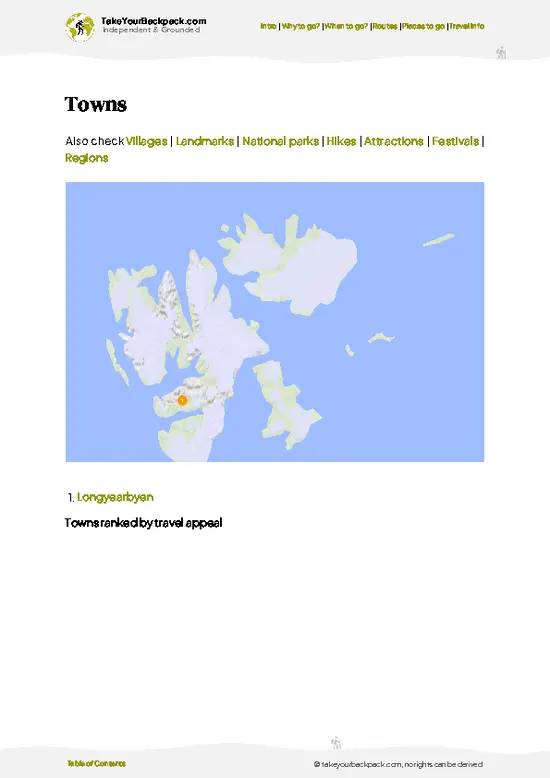
1. Longyearbyen itself- This is your base and a destination in its own right. Walk the whole town: colorful houses, the old coal mining structures on the hills, the church, and the waterfront.
- The Svalbard Museum is essential. It’s relatively affordable and gives you context on polar exploration, wildlife, and mining, which makes every other experience richer.
- The small Galleri Svalbard and local art/craft shops are worth a look if you like culture and design.
2. A glacier or fjord by boat (summer/shoulder season)- At least one boat trip out of Isfjorden is the single best “big spend” for a backpacker. You get cliffs, birdlife, maybe whales, and usually a glacier front.
- Destinations like Nordenskiöldbreen, Billefjorden, or other nearby fjords are common; the exact name matters less than getting out of the town valley and seeing the scale of the landscape.
3. One solid guided hike or outdoor day- A guided hike to a viewpoint, glacier front, or mountain near Longyearbyen gives you the feeling of being in the Arctic on your own feet, not just from a boat deck.
- Options like hiking to a nearby summit, glacier hike with crampons, or a long valley walk are usually cheaper than multi-day expeditions but still feel wild.
4. A taste of Svalbard’s mining history- A guided tour of an old coal mine (like Mine 3, if operating) is surprisingly atmospheric and relatively budget-friendly compared to big wilderness trips.
- It explains why the town exists at all and gives you a break from pure nature activities.
5. Low-cost local walks and viewpoints- Walk out to the edge of town toward the dog yards, the coastline, and the valley viewpoints within the safe zone. These are free, give you big-sky views, and are perfect for off-days between pricier tours.
If you hit those five categories—town, museum, one boat trip, one guided hike, and a mine tour—you’ll leave feeling like you actually met Svalbard, not just its airport.
When time and money are tight, you skip anything that duplicates experiences or eats a full day without adding something truly new.
1. Multiple similar boat trips- One good fjord/glacier boat trip is usually enough for a backpacker. Doing two or three to slightly different glaciers or bays often feels repetitive: same style of boat, similar scenery, similar commentary.
- If you’re short on time, pick the one that offers the most variety (glacier + wildlife + maybe a settlement or landing) and skip the rest.
2. Overpriced fine dining experiences- Svalbard has some high-end restaurants and tasting menus. They can be great, but if you’re on a backpacker budget and short on time, they don’t add much to your understanding of the place.
- Better to cook in your hostel, maybe treat yourself to one mid-range meal, and put the savings into a boat trip or hike.
3. Long, gear-heavy expeditions if you’re not specifically into them- Multi-day snowmobile safaris, long ski expeditions, or multi-day kayak trips are incredible but expensive and time-consuming.
- If you’re not already passionate about that activity, a shorter day tour gives you the flavor without swallowing your entire schedule and budget.
4. Chasing every minor museum or gallery- The main Svalbard Museum is worth it. Smaller side museums or multiple galleries can be skipped if you’re rushing; they’re nice extras, not core experiences.
5. Trying to visit multiple settlements on a short trip- Places like Barentsburg or Pyramiden are interesting, but getting there usually means a full-day boat trip or more. If you only have 3–4 days, trying to squeeze in several settlements can leave you exhausted and broke.
- If you really want that Soviet-era mining-town vibe, pick just one (often Pyramiden) and skip the rest.
In a tight itinerary, focus on: Longyearbyen + Svalbard Museum, one strong boat trip, one guided hike, and a mine tour. Skip duplicate tours, luxury meals, and extra side-settlements so your limited time and money go into the most distinct experiences.