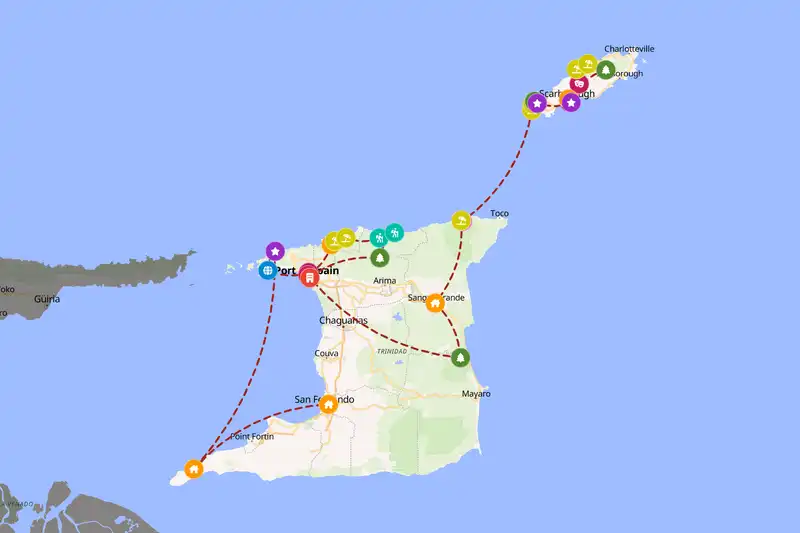
Short answer: yes, but it’s not a “just wing it” Southeast Asia situation. Trinidad and Tobago are absolutely doable for independent backpackers if you’re comfortable with a bit of planning and paying attention to your surroundings.
Trinidad feels more like a working, industrial island than a resort bubble, which is exactly why it’s interesting but also why you need to be switched on. You’ll use shared taxis, maxis (minibuses), and local food spots, not hostels-on-every-corner. English is the main language, people are generally friendly and direct, and prices are reasonable if you eat and move like a local.
The main frictions: limited classic “backpacker” infrastructure, spread-out sights, and some areas where you should avoid walking at night or flashing valuables (especially in and around Port of Spain and San Fernando). You solve this by: booking your first couple of nights in advance, choosing central but safe neighborhoods (St. Ann’s, St. Clair, Woodbrook in Port of Spain; Buccoo or Crown Point in Tobago), using registered taxis at night, and asking locals which routes and times are fine.
If you’ve backpacked in Latin America or the Caribbean before, Trinidad and Tobago will feel straightforward. If this is your first trip outside Europe or North America, it’s still doable, but you’ll enjoy it more if you read up on neighborhoods, plan your base locations, and don’t treat it like a walk-everywhere city break.
For a solid backpacking-style trip, 7–10 days is the sweet spot, split between both islands.
If you have 3–4 days: base in Tobago. Focus on beaches, a rainforest hike, and maybe a boat/snorkel day. You’ll get the laid-back side of the country but miss most of Trinidad’s culture.
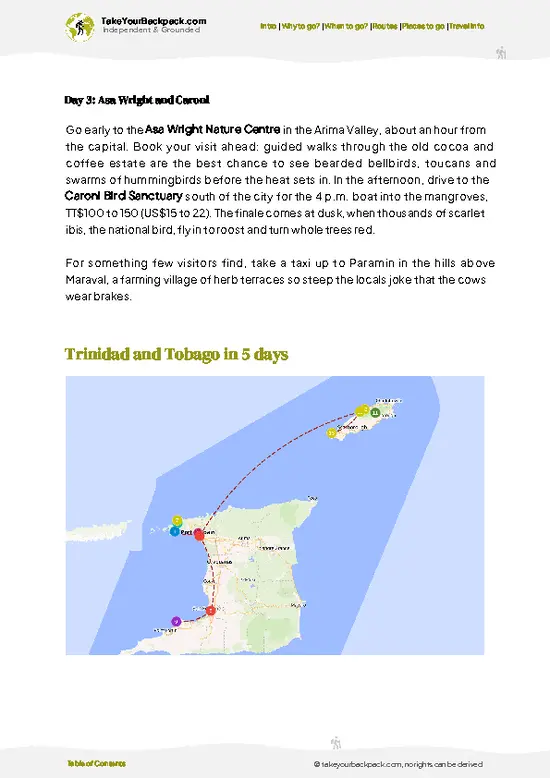
If you have 5–7 days: do 2–3 nights in Trinidad and 3–4 in Tobago. In Trinidad, you can hit Port of Spain, a Caroni Swamp tour, a day in the Northern Range (Asa Wright or a waterfall hike), and maybe Maracas or Las Cuevas beach. Then hop to Tobago for beaches, snorkeling, and a rainforest walk.
If you have 10–14 days: you can slow down and actually live a bit. In Trinidad, add more hikes (Avocat, Paria, or Rio Seco), a day in the south (San Fernando and nearby beaches), and more food exploring. In Tobago, add extra time in the east (Speyside, Charlotteville) and maybe a dive course.
More than two weeks only makes sense if you’re diving, birding, or working remotely and using the islands as a base. For most budget travelers, 8–10 days gives you a strong feel for both islands without rushing or overspending on transport.
You can get around without a car, but you trade money for time and flexibility. For a pure backpacker trip, it’s workable; for hardcore hiking or remote beaches, a rental or shared rides make life easier.
On Trinidad, you’ll rely on:
- Maxis (minibuses) and route taxis: cheap, frequent on main corridors (Port of Spain–Arima, San Fernando, Chaguanas, etc.). Great for budget travelers who don’t mind a bit of chaos.
- Private taxis: essential at night and for point-to-point trips. Always agree the fare before you get in.
- Tours or arranged transport: useful for places like Caroni Swamp, some waterfalls, and early-morning birding spots where public transport is patchy.
On Tobago, public transport exists but is slower and less frequent. You can still manage with:
- Route taxis and shared cars along the main road (Crown Point–Scarborough–Roxborough).
- Occasional buses, which are cheap but not time-efficient.
- Walking for short distances in Crown Point, Buccoo, and parts of Scarborough.
If you’re on a tight budget and don’t want to rent a car, choose your bases strategically: in Trinidad, stay where maxis and taxis are easy (Port of Spain area); in Tobago, stay in Crown Point or Buccoo for beach access and simple logistics. For remote bays and trailheads, ask your guesthouse to help you share a taxi with other travelers or locals. You won’t see absolutely everything, but you’ll see plenty without driving.
For a backpacker on a budget, these are the places that actually earn your time and money:
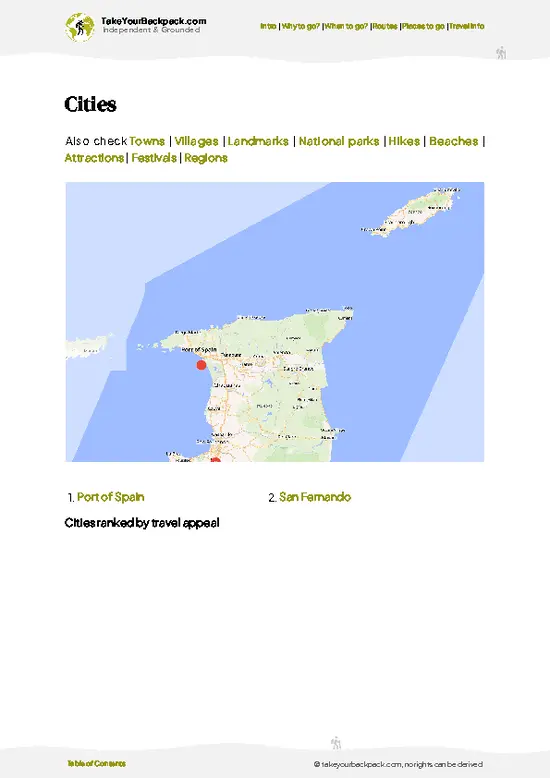
1. Port of Spain (Trinidad)Not for beaches, but for energy, food, and culture. Lime on Ariapita Avenue in the evening, walk around the Savannah, check the Magnificent Seven mansions from the outside, and hit local bakeries and roti shops. If you’re there around Carnival season, this is the heartbeat.
2. Maracas and Las Cuevas Bays (Trinidad)Easy day trip from Port of Spain. The drive over the Northern Range is half the fun, and the payoff is classic Caribbean sand and surf. Eat a bake and shark at Maracas, then escape to quieter Las Cuevas if you want more space.
3. Caroni Swamp (Trinidad)A late-afternoon boat tour to see the scarlet ibis coming in to roost is one of those globally strong wildlife experiences that’s still affordable. You also get mangroves, other birdlife, and a different side of Trinidad than the highways.
4. Northern Range hikes and waterfalls (Trinidad)Avocat, Rio Seco, Paria Bay, and similar trails give you jungle, rivers, and beaches in one hit. Go with a reputable local guide or group for safety and navigation; it’s worth the small extra cost.
5. Tobago’s western beaches (Crown Point area)Pigeon Point (even with the fee), Store Bay, and nearby stretches are easy to reach, swimmable, and lined with cheap food stalls. This is where you can actually live the barefoot, walk-to-the-beach backpacker life.
6. Tobago Main Ridge Forest ReserveOne of the oldest legally protected forests in the Western Hemisphere. A guided walk here is cheap by global standards and gives you birds, giant trees, and a break from the sun-and-rum loop.
7. Buccoo and Sunday School (Tobago)Buccoo is a good budget base with a local feel. If you’re there on a Sunday, the Sunday School street party is a fun, low-frills way to hear steelpan, meet locals, and dance without paying club prices.
8. Tobago’s east (Speyside / Charlotteville)Quieter, cheaper, and more old-school than the west. Good for snorkeling, diving, and just existing somewhere that still feels like a small island community rather than a resort strip.
If you’re short on time or cash, skip anything that eats hours of transport for a “nice but not unique” payoff.
1. Deep south Trinidad beach-hoppingPlaces like Los Iros and Erin are cool if you have local friends or a car, but they’re far, not especially swimmable compared to Tobago, and logistically annoying by public transport. Prioritize Northern Range hikes and Tobago beaches instead.
2. Trying to see every waterfallPick one or two good ones (Avocat, Rio Seco, or a Paria hike) instead of chasing every named cascade. The experiences start to blur, and you’ll burn days on buses and taxis.
3. Multiple days in central Trinidad malls and highwaysYou’ll probably pass through Chaguanas or similar areas in transit, but there’s no reason to linger unless you’re visiting friends. It’s everyday Trinidad life, which is interesting for an afternoon, not a whole chunk of a short trip.
4. Over-scheduling Tobago’s toursYou don’t need to do every glass-bottom boat, every reef, and every bay by tour. Do one solid reef/snorkel or boat trip, one rainforest walk, and then enjoy free or cheap beach days. Paying for three versions of the same boat ride is a budget leak.
5. Chasing luxury resort experiencesIf you’re backpacking, you don’t need to burn money on day passes to high-end resorts just to use a pool and a lounger. The public beaches and small guesthouses give you more character for a fraction of the price.
6. Island-hopping within the islands just to tick namesLittle Tobago, Nylon Pool, and a couple of offshore spots are worth it if you’re into snorkeling or birding, but you don’t need to hit every islet. If time is tight, focus on one well-reviewed trip instead of a checklist of boat rides.
In a 5–7 day trip, the smart move is: Port of Spain + one or two Trinidad nature days + Tobago west (plus maybe a quick dip into the east). Anything that demands long, awkward transfers for a “pretty but not special” view can safely wait for another visit.