×

Venezuela🇻🇪 | festivalsFestival de la Cruz de MayoFlowered crosses, all-night velorio, improvised décimas, neighborhood altars | things to do and best time to go

Explore Festival de la TradiciónExplore Fiesta de la Divina Pastora

Backpacking in de la Cruz de Mayo
👌 Worth visitingfestival ranked #10
By Johan Kruseman 🇳🇱 | Updated October 19, 2026

Decades ago, Festival de la Cruz de Mayo was mostly a neighborhood and family affair, with crosses raised in front yards and church patios. Today it is still devotional and local, but travelers now find organized parades, stages and street food around it. It runs through May in towns across Venezuela, with strong traditions along the central coast, in Miranda state, the Andes and the east. Expect fulías and galerones, cuatro and maracas, flower-covered crosses and a mostly Venezuelan crowd. Skip it if you want headline concerts, a camping scene or a fixed schedule. Go for family-run rituals, live folk music and homemade sweets. It suits curious travelers with some Spanish who like village culture. It won't suit anyone chasing nightlife or polished production.

Discover everything you want to know in the 📖 Venezuela Travel Guide.
Safety warning

The current risk level for Venezuela is high. Check the advice before going.


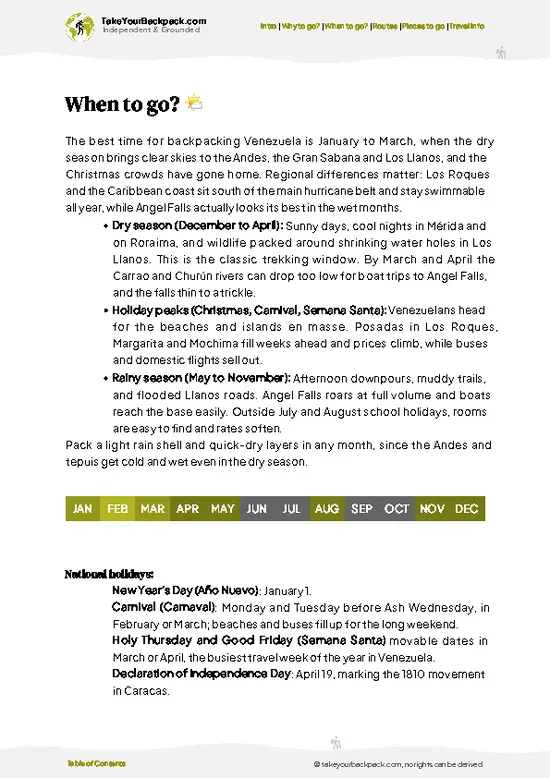
example page 0 from our offline Travel Guide for Venezuela
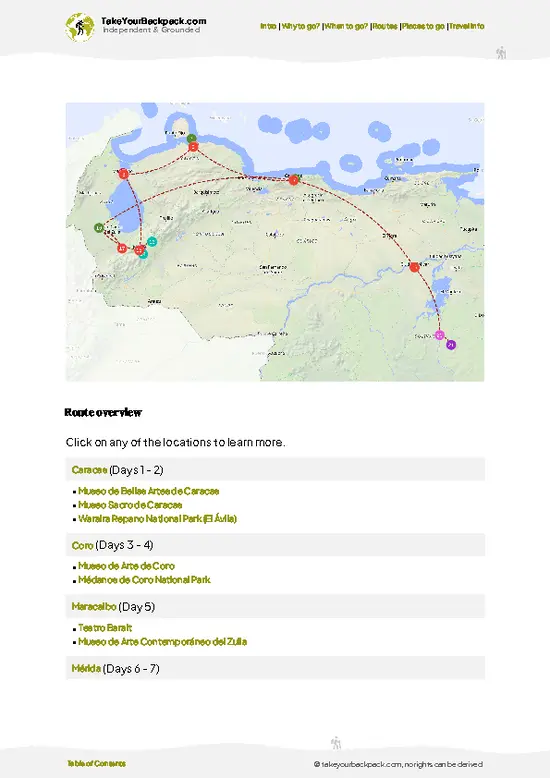
example page 1 from our offline Travel Guide for Venezuela
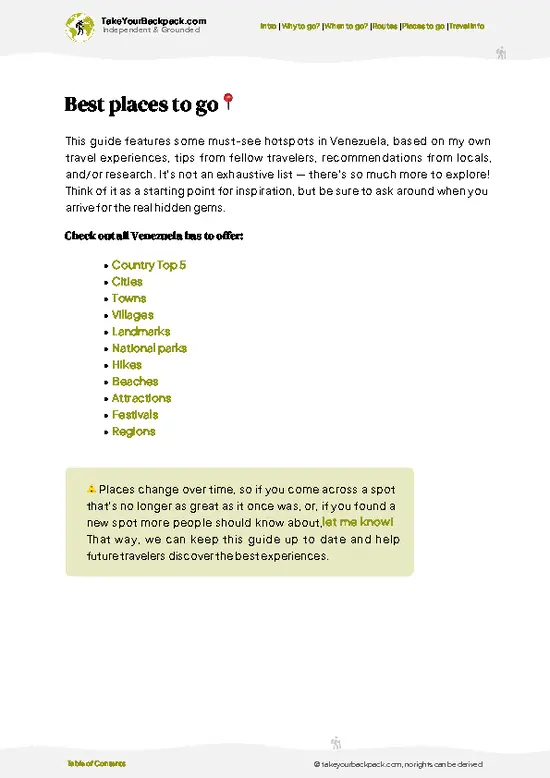
example page 2 from our offline Travel Guide for Venezuela
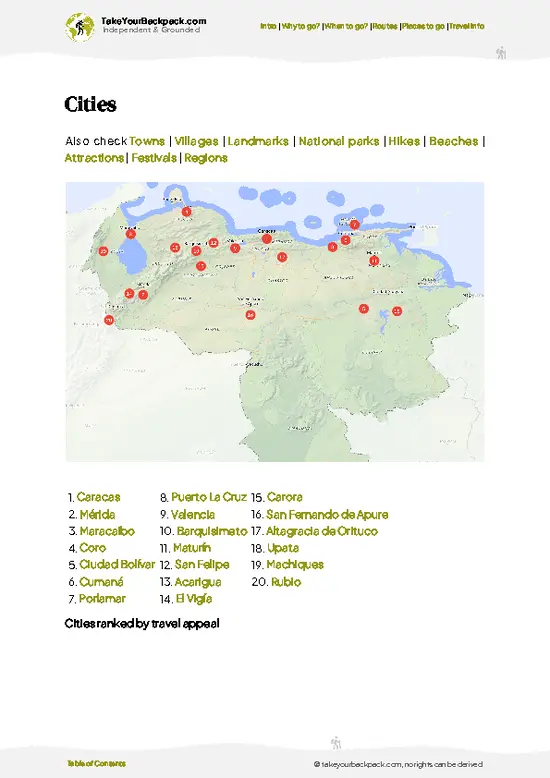
example page 3 from our offline Travel Guide for Venezuela
example page 4 from our offline Travel Guide for Venezuela
example page 5 from our offline Travel Guide for Venezuela
example page 6 from our offline Travel Guide for Venezuela
example page 7 from our offline Travel Guide for Venezuela
Loading the map 🌍
CLICK TO FILTER
cities
towns
villages
landmarks
national parks
hikes
beaches
attractions
festivals
regions
SHOW COUNTRY’S BESTSHOW ALL

✨ Why go?
Ranked #10 festival in Venezuela
Why visitors keep coming back

Festival de la Cruz de Mayo pulls backpackers because it shows Venezuelan folk Catholicism as people actually live it, not staged for visitors. The velorio de la Cruz is the core: neighbors gather around a decorated cross to sing fulías and cantos until late, and a respectful stranger is usually handed a drink or a plate. That open-door hospitality is rare at events with tickets and wristbands, and costs next to nothing. The other reason is timing. May lets you link coastal towns such as those in Barlovento with Andean or eastern stops in one trip, so the festival gives a long route a clear theme. Learn a few verses or bring a small contribution of food, and you will be treated as a guest rather than an observer.

💡 HighlightsEssential experiences to have while celebrating the de la Cruz de Mayo

  1. Velorio de la Cruz: The all-night vigil is the heart of the festival. A cross covered in flowers, fruit and ribbons is set on an altar at a home or church, and neighbors sing fulías and décimas around it.
  2. Fulías and Cantos de Velorio: Singers trade improvised verses over cuatro, maracas and guitar. Even without perfect Spanish, the call-and-response is easy to follow and hard to forget.
  3. Decorated Altars and Crosses: Families compete in dressing their crosses with paper flowers, palm fronds, fruit and colored cloth. Walk the streets by day and you can see each neighborhood’s style.
  4. Street Processions: Crosses are carried through town with drums, chanting and crowds following. Processions pass quickly, so ask locals at midday when the next one forms.
  5. Local Food and Sweets: Altars and street stalls
… read more 👉
  1. Velorio de la Cruz: The all-night vigil is the heart of the festival. A cross covered in flowers, fruit and ribbons is set on an altar at a home or church, and neighbors sing fulías and décimas around it.
  2. Fulías and Cantos de Velorio: Singers trade improvised verses over cuatro, maracas and guitar. Even without perfect Spanish, the call-and-response is easy to follow and hard to forget.
  3. Decorated Altars and Crosses: Families compete in dressing their crosses with paper flowers, palm fronds, fruit and colored cloth. Walk the streets by day and you can see each neighborhood’s style.
  4. Street Processions: Crosses are carried through town with drums, chanting and crowds following. Processions pass quickly, so ask locals at midday when the next one forms.
  5. Local Food and Sweets: Altars and street stalls offer coconut sweets, papelón drinks, corn arepas and rum or aguardiente. Eating here is part of the ritual, and sharing is expected.
If time is short, skip the daytime stalls and spend your hours at an evening velorio instead.
Spotted a mistake or missing something? Contact us.

🌤️ When to go?When is the celebration of Festival de la Cruz de Mayo?

Festival de la Cruz de Mayo is held across Venezuela around May 3, with celebrations running from a few days before to a weekend after, and the biggest events in Caribbean coastal and Andean towns such as Chuao, El Hatillo and Los Teques.
  • Best day: May 3 itself, when crosses are blessed, decorated and carried in procession. Weekends around it add dancing and fulía singing.
  • Weather: Early rainy season, so 24 to 32°C (75 to 90°F) on the coast, cooler in the highlands. Afternoon downpours are common, so bring a light rain jacket and sandals that dry fast.
  • Booking: Book beds two to three weeks ahead, since rooms in small towns fill and prices rise 20 to 40 percent.
  • Transport: Leave mornings, as buses and roads clog on the Friday before and Monday after.
Arrive the evening of May 2 to watch altars being built.

source: climatestotravel.comJANJanuary: not recommended for travelingFEBFebruary: not recommended for travelingMARMarch: not recommended for travelingAPRApril: not recommended for travelingMAYMay: excellent for travelingJUNJune: not recommended for travelingJULJuly: not recommended for travelingAUGAugust: not recommended for travelingSEPSeptember: not recommended for travelingOCTOctober: not recommended for travelingNOVNovember: not recommended for travelingDECDecember: not recommended for traveling

✈️ The backpacker research shortcutVenezuela Travel Guide

An offline-friendly backpacking guide with optimized travel routes, ranked highlights, transport advice, and the best areas to stay.
example page 0 from our offline Travel Guide for Venezuela
example page 1 from our offline Travel Guide for Venezuela
example page 2 from our offline Travel Guide for Venezuela
example page 3 from our offline Travel Guide for Venezuela
example page 4 from our offline Travel Guide for Venezuela
example page 5 from our offline Travel Guide for Venezuela
example page 6 from our offline Travel Guide for Venezuela
example page 7 from our offline Travel Guide for Venezuela
The digital guide (290 pages) contains:
✅ 91 highlights, ranked by travel appeal
✅ Optimized 5, 10 & 15-day travel routes
✅ Cities, national parks, landmarks, beaches
✅ How to get around
✅ Offline-friendly for travel without Wi-Fi
👉 Click to see all 30+ guide features

📅 Plan smarter in minutes, not weeks
✅ Month by month travel advice
✅ Festivals & national holidays
✅ Budget expectations

🗺️ Go to the right places, skip the overrated ones
✅ Honest pros & cons of destinations
✅ Top hikes, parks & viewpoints
✅ Lesser-known places most travelers miss
✅ Clear “worth it vs skip it” guidance

🛏️ Travel smoothly without rookie mistakes
✅ Best areas to stay
✅ Transport systems explained simply
✅ Common scams & safety advice
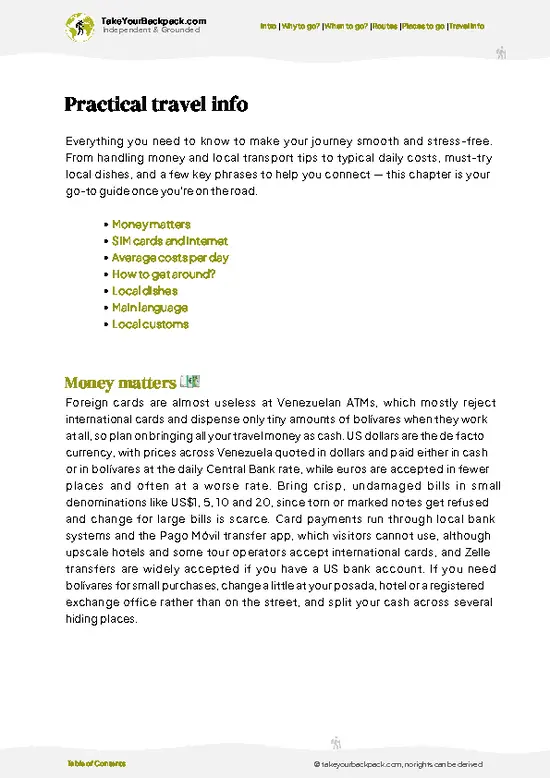
✅ SIM cards, money & practical tips

🌍 Understand the country, not just visit it
✅ Culture & traditions
✅ 52 Essential phrases & customs
✅ Festivals worth planning around
✅ Traveler-friendly historical context
✅ Insights that make places more meaningful

📱 Built for real travel conditions
✅ Fully downloadable PDF
✅ Works completely offline
✅ Optimized for phone use
✅ Useful in remote areas & buses
✅ Everything in one place
Stop searching, start planning
Get instant access to your full guide. 30‑day money-back guarantee.
+ Add another guide for just

By proceeding you agree to our terms.
Sent to your inbox immediately after payment • 100% Secure Checkout
Best Backpacking Travel Advisor 2025 tourism awardBest Backpacking
Travel Advisor
2025
What others say about Take Your Backpack Guides:
⭐⭐⭐⭐⭐
Fantastic, amazing amount of information!
⭐⭐⭐⭐⭐
My goodness this is amazing, it's what I've been looking for hats off too you!
⭐⭐⭐⭐⭐
I think this is absolutely BRILLIANT
⭐⭐⭐⭐
Very complete and informative. It's still missing places, but I gotta to commend you
⭐⭐⭐⭐⭐
This is truly amazing, thank you, can't wait to explore it with my kids!
⭐⭐⭐⭐⭐
Awesome resource, thank you!
⭐⭐⭐⭐⭐
This is amazing! Can't wait to explore the ones I haven't seen
⭐⭐⭐⭐
I love this! Well done, great idea.
⭐⭐⭐⭐⭐
Thanks for taking the time to make this gem!
⭐⭐⭐⭐⭐
This might be the best website I've ever seen.
⭐⭐⭐⭐⭐
Congratulations, and thank you so much for your work; it's incredibly valuable.
⭐⭐⭐⭐
In all seriousness I think you did a great job pointing out the important spots
⭐⭐⭐⭐⭐
10/10 very good
⭐⭐⭐⭐⭐
As someone who's only just starting to visit regularly this is awesome, thank you.
⭐⭐⭐⭐
Thank you very much! I'm going to visit my dad, it's going to be very useful!
⭐⭐⭐⭐⭐
This is really cool! We'll be travelling for the first time and this definitely come in handy.
⭐⭐⭐⭐⭐
You are now our minister of culture, congratulations 👨‍💼
⭐⭐⭐⭐⭐
Just wanted to tell you that this is a pearl! Going to follow your recommendations.
⭐⭐⭐⭐⭐
This is so cool. I'll definitely be using the resource for my travels soon.
⭐⭐⭐⭐⭐
This is very impressive! Good work.
⭐⭐⭐⭐⭐
This is an amazing and informative site. Very well done!

🛏️ Where to stay?Best areas and accommodation options

Stay in a town with a real center and short walks to the plaza, because the crosses, dances and processions all happen within a few blocks. Venezuela’s celebrations are spread across many towns, so pick one that fits your route.
El Hatillo, a colonial-style town on the edge of Caracas, is the easiest and safest base. It has small posadas, craft shops and plenty of Caracas-based travelers, so you meet people easily. Rooms run roughly US$25 to 50.
On the central coast, Choroní and Puerto Colombia are the social favorites for backpackers. Posadas around the main plaza and the beach attract solo travelers, … read more 👉
Stay in a town with a real center and short walks to the plaza, because the crosses, dances and processions all happen within a few blocks. Venezuela’s celebrations are spread across many towns, so pick one that fits your route.
El Hatillo, a colonial-style town on the edge of Caracas, is the easiest and safest base. It has small posadas, craft shops and plenty of Caracas-based travelers, so you meet people easily. Rooms run roughly US$25 to 50.
On the central coast, Choroní and Puerto Colombia are the social favorites for backpackers. Posadas around the main plaza and the beach attract solo travelers, and everything is walkable after dark. Beds cost about US$12 to 30. Getting to Chuao means a boat or a rough road from here.
In the Andes, Mérida is the budget hub, with hostel-style guesthouses and travelers of every nationality. Plan day trips to nearby villages.
Avoid arriving late anywhere and book ahead. Stay central and take taxis at night.

👛 Costs (as of 19 October 2026)Typical daily expenses

A realistic budget for Festival de la Cruz de Mayo is about US$37 to 85 a day for an independent traveler, based on high-season accommodation.
CategoryBudget RangeLocal Reality
Festival ticketsUS$0Processions, dances and altars in plazas are free. Some private concerts charge US$3 to 10.
AccommodationUS$15 to 35Posadas and guesthouses cost more around May 3. Book early in small towns.
Local transportUS$5 to 20Shared taxis and buses are cheap. Boats to Chuao cost more.
Food & drinksUS$12 to 20Stall snacks cost US$1 to 3 and sit-down meals US$5 to 8.
Miscellaneous expensesUS$5 to 10Cacao treats, small donations, sunscreen and rain gear.
Total Daily BudgetUS$37 to 85Mid-range planning figure is around US$55 to 80 a day.
⚠️ Prices can change and everyone travels differently, so take this as a rough guide. Hope it helps you plan your adventure!

🍲 FoodLocal Cuisine & Drinks

Expect the food to be rural and generous. Around the crosses, neighbors and church groups set up stalls selling arepas stuffed with cheese or shredded meat, empanadas, fried yuca and cachapas with soft white cheese. On the coast, look for fish soup and sweets made with cacao, especially near Chuao and Choroní, where the cacao is grown and sold as chocolate bars and truffles.
To drink, try chicha, a sweet rice drink, plus papelón con limón (cane sugar and lime), cold beer and, after dark, ron shared from a bottle. Fresh coconut water is sold on coastal streets.
For the real experience, eat near the altars and listen to the fulía singers, then try whatever the cooks are serving. Portions are large, so share with other travelers.
Bring cash in small US dollar bills or bolívares, since card machines … read more 👉
Expect the food to be rural and generous. Around the crosses, neighbors and church groups set up stalls selling arepas stuffed with cheese or shredded meat, empanadas, fried yuca and cachapas with soft white cheese. On the coast, look for fish soup and sweets made with cacao, especially near Chuao and Choroní, where the cacao is grown and sold as chocolate bars and truffles.
To drink, try chicha, a sweet rice drink, plus papelón con limón (cane sugar and lime), cold beer and, after dark, ron shared from a bottle. Fresh coconut water is sold on coastal streets.
For the real experience, eat near the altars and listen to the fulía singers, then try whatever the cooks are serving. Portions are large, so share with other travelers.
Bring cash in small US dollar bills or bolívares, since card machines are unreliable in small towns. Lines move slowly and quickly fill after processions. Eat before the evening crowd, and carry water for the hot afternoons.

FAQFrequently asked questions about de la Cruz de Mayo

Festival de la Cruz de Mayo takes place around May 3, with events starting a few days earlier and often continuing through the following weekend. Main celebrations are held in towns such as Chuao, El Hatillo and Los Teques. Each local celebration lasts one to three days.
Attending Festival de la Cruz de Mayo is mostly free, as processions, singing and altars are in public plazas. Plan on US$37 to 85 a day for a bed, food and local transport. Beds cost US$15 to 35, and stall snacks run US$1 to 3.
Festival de la Cruz de Mayo needs no tickets for the main public events, which take place in plazas and streets. What you should book early is accommodation, ideally two to three weeks ahead for small towns like Chuao or Choroní. Some private concerts charge about US$3 to 10 at the door.
⚠️ Things can change over time, so always validate details locally before you go.

Other Venezuelan festivals near de la Cruz de Mayo

Explore more nearby:

  • Carnaval—El Callao madamas, calypso bands, foam and flour, Margarita beach parties
  • Feria del Sol—Bullring concerts, Reina del Sol, Andean city nights, ice cream flavors
  • Feria de la Chinita—La Chinita basilica, furro drum, November 18 dawn, El Saladillo

💡 Not sure where to go next?
Create a personalized itinerary for Venezuela including de la Cruz de Mayo and the places that fit your trip.

Generate my itinerary

👉 Discover all festivals

Or checkout all Venezuela has to offer (think cities, towns, villages, national parks, hikes, beaches, festivals)
Country photo of Venezuela

We 💚 feedbackFinal thoughts on celebrating the de la Cruz de Mayo

Festival de la Cruz de Mayo suits travelers who like listening more than watching: folk-music fans, anyone curious about village religion, and people happy to sit on a plastic chair until midnight. Bring small cash, a modest outfit and patience. Ask before photographing altars.

✍️ Help improve this page!
The information on this page is based on in-depth research, insights shared by experienced travelers, and feedback from the local travel community in Venezuela. While every effort is made to keep the information accurate and current, conditions can change — so if you spot anything incorrect or outdated, please get in touch.


🙋‍♂️ Give feedback

👋 Meet the founderWho’s Behind Take Your Backpack?

Johan, backpacker and founder of TakeYourBackpackHi, I’m Johan (Netherlands 🇳🇱), the creator of TakeYourBackpack. Over the past 3 decades, I’ve backpacked through 90+ countries across six continents, gaining extensive experience with independent travel, long-term trips, and overland routes.

This site is built on a combination of firsthand travel experience and carefully curated insights from other backpackers. Many guides are based on places I’ve personally visited, while others bring together tips, observations, and practical advice shared by trusted travelers I’ve met along the way.

The goal is to provide realistic, experience-driven guidance — not generic itineraries — so you can explore destinations with better context, clearer expectations, and more confidence.