×

Albania🇦🇱 | attractionsOnufri Iconography Museumpainted icons, Orthodox art, cathedral interior | things to do and best time to go

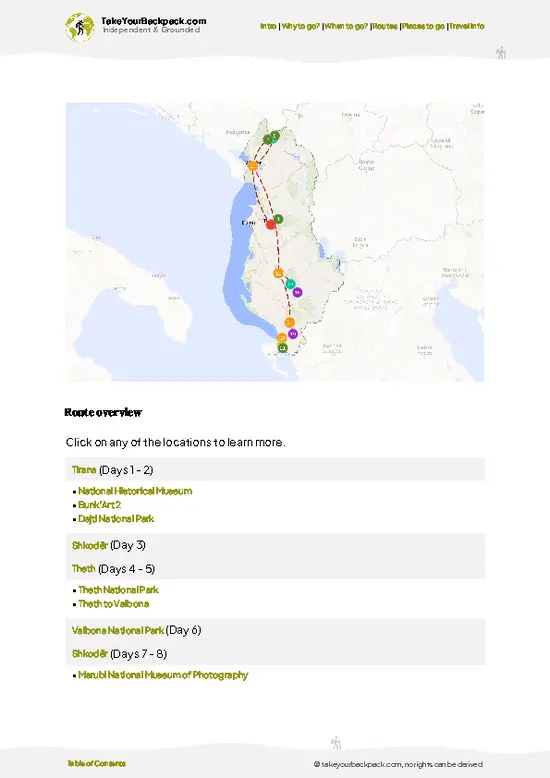
Explore Marubi National Museum of PhotographyExplore National Theatre of Opera and Ballet

Backpacking in Onufri Iconography Museum
👌 Worth visitingattraction ranked #8
By Johan Kruseman 🇳🇱 | Updated September 4, 2026

A wooden floor creaks under your boots as you step into a cool hush, the scent of centuries-old varnish and candle wax hanging in the air. Gold leaf flickers in the half-light, not from some Instagram filter, but from the real, battered halos of saints staring down at you—faces painted with the kind of intensity that makes you forget the outside world. This is the Onufri Iconography Museum, tucked inside the fortress walls of Berat, central Albania.

Let’s cut through the fantasy: you won’t find crowds jostling for selfies here, and you won’t need to sell a kidney to pay the entry fee. The wow-factor isn’t about size or spectacle—it’s the raw, almost defiant artistry of Onufri’s icons, painted when the Ottomans were trying to erase this culture. It’s quiet, sometimes eerily so, and the vibe is contemplative, not adrenaline-pumping. If you’re chasing the big-ticket, beach-party Albania, this isn’t it. But if you want a gut-punch of history and soul, this museum delivers something you can’t fake or filter.

Discover everything you want to know in the 📖 Albania Travel Guide.


Get your Albania guide
80 ranked highlights, routes & tips, works offline (315 pages)
Loading the map 🌍
CLICK TO FILTER
cities
towns
villages
landmarks
national parks
hikes
beaches
attractions
festivals
regions
SHOW COUNTRY’S BESTSHOW ALL

✨ Why go?
Ranked #8 attraction in Albania
Why Onufri Iconography Museum should be on your travel list

The Onufri Iconography Museum in Albania isn’t just another stop on the tourist checklist—it’s a deep dive into a world where art meets history with raw intensity. Sure, it’s not tucked away in some untouched corner; it draws crowds, especially during peak season. But here’s the kicker: those crowds are a testament to its significance, not a sign to skip it. This museum houses the works of Onufri, a 16th-century master whose icons aren’t just religious artifacts—they’re vibrant, almost electric expressions of Albanian identity and resilience. The colors are richer than anything you’ll find in typical European iconography, and the craftsmanship tells stories of faith under pressure, cultural survival, and artistic rebellion. For backpackers threading through Albania’s rugged landscapes, this … read more 👉
The Onufri Iconography Museum in Albania isn’t just another stop on the tourist checklist—it’s a deep dive into a world where art meets history with raw intensity. Sure, it’s not tucked away in some untouched corner; it draws crowds, especially during peak season. But here’s the kicker: those crowds are a testament to its significance, not a sign to skip it. This museum houses the works of Onufri, a 16th-century master whose icons aren’t just religious artifacts—they’re vibrant, almost electric expressions of Albanian identity and resilience. The colors are richer than anything you’ll find in typical European iconography, and the craftsmanship tells stories of faith under pressure, cultural survival, and artistic rebellion. For backpackers threading through Albania’s rugged landscapes, this museum is a milestone that connects the dots between the country’s turbulent past and its fierce cultural pride. It’s not about flashy displays or Instagram-ready moments; it’s about standing in a room where centuries-old paintings challenge you to see history through a local lens. The effort to get here—whether by winding mountain roads or a detour from the coast—is rewarded with a cultural punch that’s as real as it gets. This isn’t just a museum; it’s a checkpoint in understanding Albania’s soul.
Want to include Onufri Iconography Museum in your Albania route?
Create a personalized Albania itinerary that includes Onufri Iconography Museum and the places that fit your trip — based on your travel style, budget, and available time. Get your route in seconds.

Generate my trip

💡 HighlightsDon't-miss highlights and experiences

The Onufri Room: The Red That Outshines Instagram Filters
Let’s get real: most people come for the color. The Onufri Room is where you’ll find the museum’s namesake icons, painted by Onufri himself in the 16th century. His signature? A red so bold it makes digital saturation look timid. This isn’t just pigment—it’s a defiant Albanian fingerprint, a color that survived centuries of empire and iconoclasm. Stand in front of his “Christ Pantocrator” and you’ll see why art historians still argue about how he mixed that red. No photo does it justice. This is the room where you finally understand why people risked everything to keep these icons hidden during the Communist era.

The Cathedral Setting: Sacred Space, Not Just a Backdrop
Forget sterile glass cases. The museum is inside the 18th-century … read more 👉
The Onufri Room: The Red That Outshines Instagram Filters
Let’s get real: most people come for the color. The Onufri Room is where you’ll find the museum’s namesake icons, painted by Onufri himself in the 16th century. His signature? A red so bold it makes digital saturation look timid. This isn’t just pigment—it’s a defiant Albanian fingerprint, a color that survived centuries of empire and iconoclasm. Stand in front of his “Christ Pantocrator” and you’ll see why art historians still argue about how he mixed that red. No photo does it justice. This is the room where you finally understand why people risked everything to keep these icons hidden during the Communist era.

The Cathedral Setting: Sacred Space, Not Just a Backdrop
Forget sterile glass cases. The museum is inside the 18th-century St. Mary’s Cathedral, and the icons are displayed where they were meant to be seen: surrounded by stone, candlelight, and the faint echo of centuries-old hymns. The building itself is part of the show. You’ll feel the weight of history in the creaking floorboards and the cool, incense-soaked air. This isn’t a white-cube gallery; it’s a living relic, and the icons feel alive because of it.

The Iconostasis: Albania’s Answer to the Sistine Chapel
Here’s where the crowds get it wrong. They snap a quick photo and move on, but the iconostasis—the carved wooden screen separating nave from altar—is a riot of detail. Look up. Every inch is carved, painted, and gilded, a visual overload that rewards patience. The saints’ faces are expressive, almost mischievous. The woodwork is so intricate you’ll wonder how it survived earthquakes, looters, and decades of neglect. This is the kind of craftsmanship that makes you want to slow down and actually look.

The Onufri School: Generations of Defiance
Onufri wasn’t a one-man show. The museum traces the “Onufri School”—his son Nikola and other disciples who kept the tradition alive. Their icons are here, too, and you can see the evolution: the colors shift, the faces change, but the rebellious spirit stays. It’s a crash course in how art can be both deeply local and quietly revolutionary.

Personal Favorite: The Hidden Faces in the Crowd
Here’s the secret: the real magic isn’t just in the icons, but in the faces you’ll see reflected in the glass—locals who still come to light a candle, art students sketching in the corner, the old caretaker who’ll tell you which icon was his grandmother’s favorite. The museum isn’t just a collection; it’s a living memory bank. If you linger, you’ll catch the quiet moments that never make it to Instagram—the whispered prayers, the pride, the sense that these icons still matter. That’s the moment you realize you’re not just looking at art; you’re part of a story that’s still being written.
Spotted a mistake or missing something? Contact us.

Things to do around Onufri Iconography Museum

Ratings based on Tripadvisor reviews. When you book through this link, you support our work at no extra cost to you.

🌤️ When to go?Seasonal considerations and timing


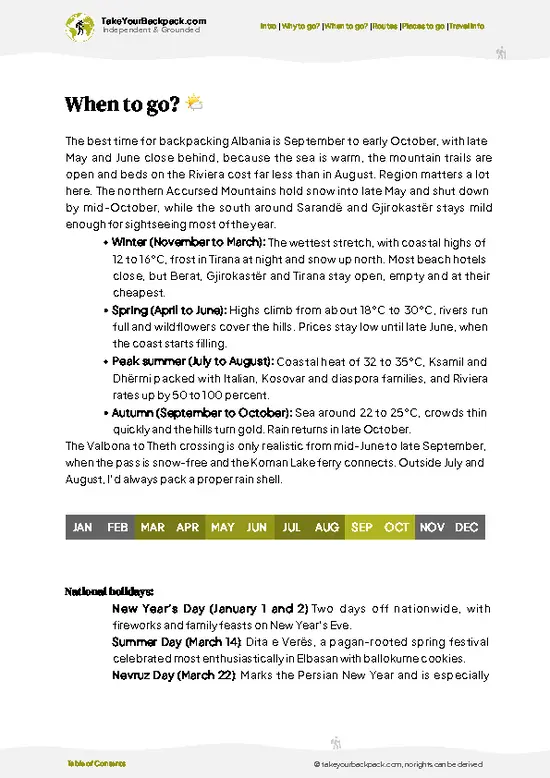
  • Weather: The best weather hits between May and September, with warm, dry days perfect for wandering the museum and nearby sites. Winters (December to February) bring cold, damp conditions that can make the experience less pleasant and some nearby attractions less accessible.

  • Temperature: From late spring to early fall, expect highs around 22-30°C (72-86°F), ideal for exploring without overheating. Winter months dip to 5-10°C (41-50°F), which can feel chilly indoors if the museum’s heating isn’t top-notch.

  • Daylight Hours: Long summer days in June and July offer up to 15 hours of light, giving you plenty of time to soak in the art and the surrounding town. Short winter days mean less time for sightseeing outside museum hours.

  • Crowds: July and August bring the tourist rush, especially from cruise
read more 👉

  • Weather: The best weather hits between May and September, with warm, dry days perfect for wandering the museum and nearby sites. Winters (December to February) bring cold, damp conditions that can make the experience less pleasant and some nearby attractions less accessible.

  • Temperature: From late spring to early fall, expect highs around 22-30°C (72-86°F), ideal for exploring without overheating. Winter months dip to 5-10°C (41-50°F), which can feel chilly indoors if the museum’s heating isn’t top-notch.

  • Daylight Hours: Long summer days in June and July offer up to 15 hours of light, giving you plenty of time to soak in the art and the surrounding town. Short winter days mean less time for sightseeing outside museum hours.

  • Crowds: July and August bring the tourist rush, especially from cruise groups and day-trippers, which can dilute the intimate vibe of the museum. Shoulder seasons like May, June, and September strike a better balance with fewer people and still great weather.

  • Seasonal Activities: Spring and early fall offer local festivals and markets nearby, adding cultural layers to your visit. Winter is quiet, with fewer events but a chance to see the museum in a more contemplative, less commercialized setting.

  • Price Fluctuations: Expect higher prices for accommodation and transport in peak summer months. Visiting in May or September can save you money while still delivering a full experience without the crush.


Pro-tip: Aim for late May or early September—this window nails the sweet spot of weather, crowd control, and wallet-friendly costs, letting you experience the museum’s soul without the noise.


source: climatestotravel.comJANJanuary: fair for travelingFEBFebruary: fair for travelingMARMarch: good for travelingAPRApril: good for travelingMAYMay: excellent for travelingJUNJune: highly recommended for travelingJULJuly: good for travelingAUGAugust: good for travelingSEPSeptember: excellent for travelingOCTOctober: good for travelingNOVNovember: good for travelingDECDecember: fair for traveling
albania-attraction-onufri-iconography-museum
© Google |

✈️ The backpacker research shortcutAlbania Travel Guide

An offline-friendly backpacking guide with optimized travel routes, ranked highlights, transport advice, and the best areas to stay.
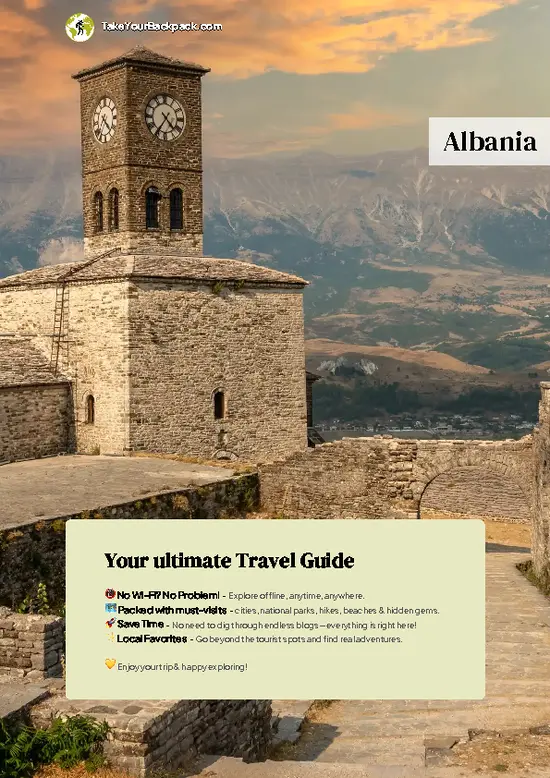
example page 0 from our offline Travel Guide for Albania
example page 1 from our offline Travel Guide for Albania
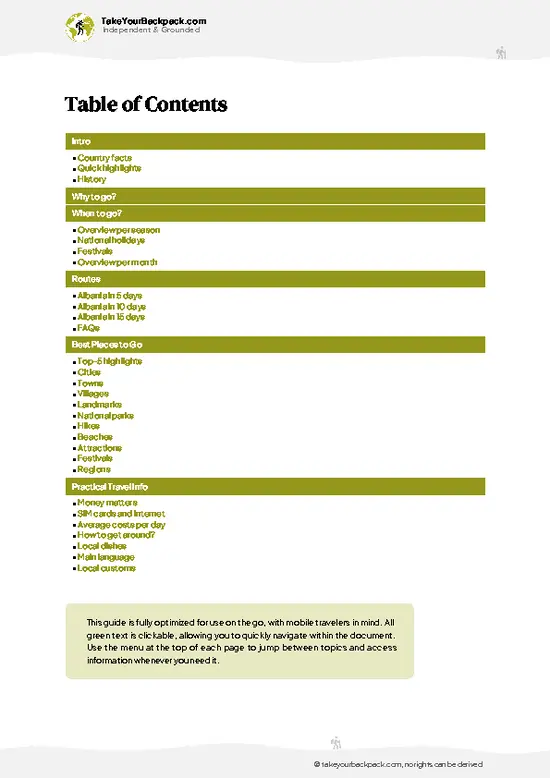
example page 2 from our offline Travel Guide for Albania
example page 3 from our offline Travel Guide for Albania
example page 4 from our offline Travel Guide for Albania
example page 5 from our offline Travel Guide for Albania
example page 6 from our offline Travel Guide for Albania
example page 7 from our offline Travel Guide for Albania
The digital guide (315 pages) contains:
80 highlights, ranked by travel appeal
Optimized 5, 10 & 15-day travel routes
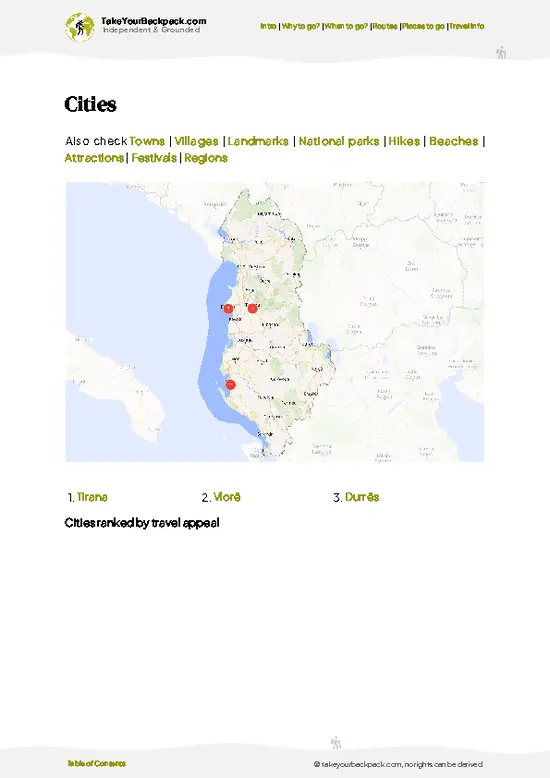
Cities, national parks, landmarks, beaches
How to get around
Offline-friendly for travel without Wi-Fi
👉 Click to see all 30+ guide features

📅 Plan smarter in minutes, not weeks
Month by month travel advice
Festivals & national holidays
Budget expectations

🗺️ Go to the right places, skip the overrated ones
Honest pros & cons of destinations
Top hikes, parks & viewpoints
Lesser-known places most travelers miss
Clear “worth it vs skip it” guidance

🛏️ Travel smoothly without rookie mistakes
Best areas to stay
Transport systems explained simply
Common scams & safety advice
SIM cards, money & practical tips

🌍 Understand the country, not just visit it
Culture & traditions
52 Essential phrases & customs
Festivals worth planning around
Traveler-friendly historical context
Insights that make places more meaningful

📱 Built for real travel conditions
Fully downloadable PDF
Works completely offline
Optimized for phone use
Useful in remote areas & buses
Everything in one place
Save weeks of stressful planning
Get instant access to your full guide. 30‑day money-back guarantee.
+ Add another guide for just US$7.80

By proceeding you agree to our terms.
Sent to your inbox immediately after payment • 100% Secure Checkout
Best Backpacking Travel Advisor 2025 tourism awardBest Backpacking
Travel Advisor
2025
What others say about Take Your Backpack Guides:
⭐⭐⭐⭐⭐
Fantastic, amazing amount of information!
⭐⭐⭐⭐⭐
My goodness this is amazing, it's what I've been looking for hats off too you!
⭐⭐⭐⭐⭐
I think this is absolutely BRILLIANT
⭐⭐⭐⭐
Very complete and informative. It's still missing places, but I gotta to commend you
⭐⭐⭐⭐⭐
This is truly amazing, thank you, can't wait to explore it with my kids!
⭐⭐⭐⭐⭐
Awesome resource, thank you!
⭐⭐⭐⭐⭐
This is amazing! Can't wait to explore the ones I haven't seen
⭐⭐⭐⭐
I love this! Well done, great idea.
⭐⭐⭐⭐⭐
Thanks for taking the time to make this gem!
⭐⭐⭐⭐⭐
This might be the best website I've ever seen.
⭐⭐⭐⭐⭐
Congratulations, and thank you so much for your work; it's incredibly valuable.
⭐⭐⭐⭐
In all seriousness I think you did a great job pointing out the important spots
⭐⭐⭐⭐⭐
10/10 very good
⭐⭐⭐⭐⭐
As someone who's only just starting to visit regularly this is awesome, thank you.
⭐⭐⭐⭐
Thank you very much! I'm going to visit my dad, it's going to be very useful!
⭐⭐⭐⭐⭐
This is really cool! We'll be travelling for the first time and this definitely come in handy.
⭐⭐⭐⭐⭐
You are now our minister of culture, congratulations 👨‍💼
⭐⭐⭐⭐⭐
Just wanted to tell you that this is a pearl! Going to follow your recommendations.
⭐⭐⭐⭐⭐
This is so cool. I'll definitely be using the resource for my travels soon.
⭐⭐⭐⭐⭐
This is very impressive! Good work.
⭐⭐⭐⭐⭐
This is an amazing and informative site. Very well done!

🛏️ Where to stay?Where staying makes the most sense

If you’re backpacking to see the Onufri Iconography Museum in Berat, forget the glossy brochures that make it look like a quiet, untouched village. The truth? The museum sits smack in the middle of Berat’s old town, a place that swells with tourists during peak season. Crowds can be a pain, but that’s part of the deal here. The real magic isn’t just the museum’s priceless frescoes—it’s the vibe of the Mangalem and Gorica quarters just a short walk away.

These neighborhoods are where you want to crash. They’re safe, packed with narrow cobblestone streets, and buzzing with other budget travelers … read more 👉
If you’re backpacking to see the Onufri Iconography Museum in Berat, forget the glossy brochures that make it look like a quiet, untouched village. The truth? The museum sits smack in the middle of Berat’s old town, a place that swells with tourists during peak season. Crowds can be a pain, but that’s part of the deal here. The real magic isn’t just the museum’s priceless frescoes—it’s the vibe of the Mangalem and Gorica quarters just a short walk away.

These neighborhoods are where you want to crash. They’re safe, packed with narrow cobblestone streets, and buzzing with other budget travelers and solo backpackers who want to swap stories over cheap coffee or a local raki. You’ll find guesthouses and small inns that feel more like staying with a local family than a sterile hotel. Plus, being close means you can hit the museum early, beat the crowds, and then wander the Ottoman-era houses and riverside cafes without rushing. It’s the perfect balance of social energy and authentic charm, all within easy reach of the museum’s treasures.

👛 Costs (as of 4 September 2026)How expensive it really is

The Onufri Iconographic Museum in Berat charges an entrance fee of 200 Albanian Lek (ALL) for adults. Additional costs may include a 300 ALL fee for accessing the Berat Castle, where the museum is located. Therefore, the total average daily cost for visiting the museum ranges from €2 to €3. ([albania.al](https://albania.al/activity/culture/onufris-red/?utm_source=openai))

source: muzeumet-berat.al
⚠️ Prices can change and everyone travels differently, so take this as a rough guide. Hope it helps you plan your adventure!

FAQFrequently asked questions about Onufri Iconography Museum

1 to 2 hours is sufficient to visit the Onufri Iconography Museum. This allows enough time to view the key exhibits and appreciate the detailed religious icons. The museum is compact but rich in history and art.
Yes, the Onufri Iconography Museum is worth the entrance fee, which is around 300 Albanian Lek (approximately 3 USD). It offers a unique insight into Albanian religious art and the work of the famous 16th-century icon painter Onufri. The quality and rarity of the icons justify the cost.
The Onufri Iconography Museum is located in Berat, inside the Berat Castle complex. You can reach it by walking from the city center, about 1.5 kilometers uphill, or by taking a local taxi. The castle is well-signposted and a popular tourist destination.
⚠️ Things can change over time, so always validate details locally before you go.

Other Albanian attractions near Onufri Iconography Museum

Explore more nearby:


💡 Not sure where to go next?
Create a personalized itinerary for Albania including Onufri Iconography Museum and the places that fit your trip.

Generate my itinerary

👉 Discover all attractions

Or checkout all Albania has to offer (think cities, towns, villages, national parks, hikes, beaches, festivals)
Country photo of Albania

We 💚 feedbackIs it worth it?

The Onufri Iconography Museum isn’t your typical tourist stop swamped with selfie sticks—it’s a deep dive into Albania’s soul through its sacred art. The colors and craftsmanship hit differently when you realize these icons survived centuries of upheaval. But heads up: it’s small and can feel a bit cramped when busy, so timing your visit early or late in the day makes all the difference. This place rewards patience with a quiet, powerful connection to history you won’t find in guidebooks.

✈️ When did I visit Albania?
Albania I’ve visited twice, first from Tirana down along the coast in July 2017 and later hiking the Peaks of the Balcan in October 2025.

✍️ Help improve this page!
The information on this page is based on my own backpacking experience in Albania, supplemented with up-to-date research and feedback from other travelers. Travel details can change, so if you notice anything outdated or incomplete, feel free to let me know.


🙋‍♂️ Give feedback

👋 Meet the founderWho’s Behind Take Your Backpack?

Johan, backpacker and founder of TakeYourBackpackHi, I’m Johan (Netherlands 🇳🇱), the creator of TakeYourBackpack. Over the past decade, I’ve backpacked through 80+ countries across six continents, gaining extensive experience with independent travel, long-term trips, and overland routes.

This site is built on a combination of firsthand travel experience and carefully curated insights from other backpackers. Many guides are based on places I’ve personally visited, while others bring together tips, observations, and practical advice shared by trusted travelers I’ve met along the way.

The goal is to provide realistic, experience-driven guidance — not generic itineraries — so you can explore destinations with better context, clearer expectations, and more confidence.

Get full Albania guide •
Instant download • 80 highlights • Full Offline guide