×

Angola🇦🇴 | attractionsEstádio 11 de NovembroPalancas Negras, match-day crowds, 2010 stadium, street snacks | things to do and best time to go

Explore Cine AtlânticoExplore Cine Karl Marx

Backpacking in Estádio 11 de Novembro
👌 Worth visitingattraction ranked #11
By Johan Kruseman 🇳🇱 | Updated October 13, 2026

Dust hangs gold in the late-afternoon floodlight haze as vendors hawk grilled corn and cold Cuca beer, and the concrete terraces hum with thousands of loud voices. Estádio 11 de Novembro sits on the Kilamba Kiaxi side of Luanda, roughly 15 kilometers south of the city center, built for the 2010 Africa Cup of Nations. The modern bowl, seating about 50,000, looks glorious from the highway and feels remote on foot. Taxis are the realistic way in, event days mean traffic and heat, and tours are not routine. Still, a match here shows Angola at full volume.

Discover everything you want to know in the 📖 Angola Travel Guide.


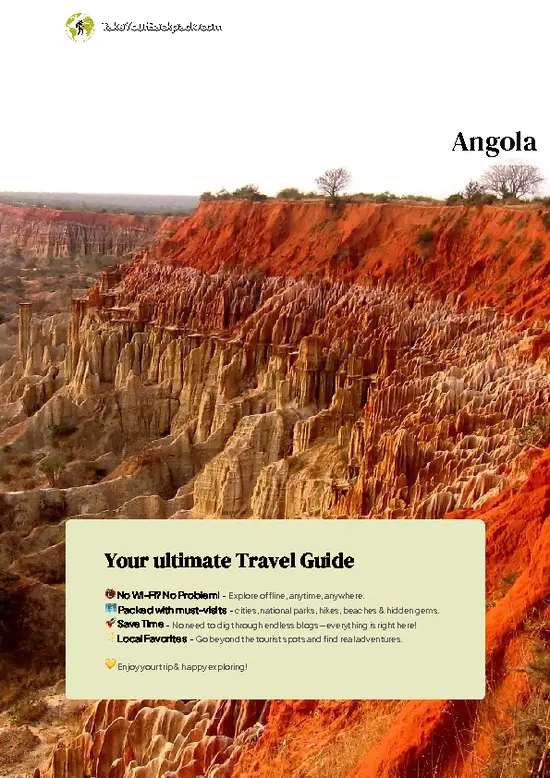
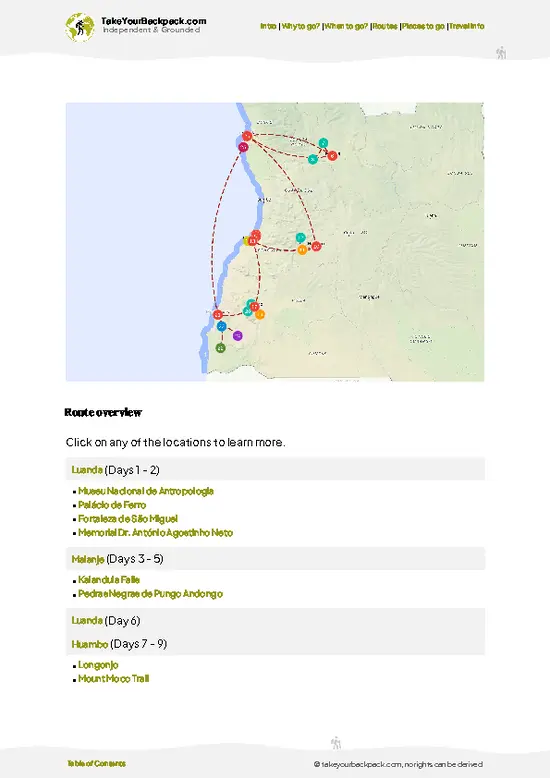
example page 0 from our offline Travel Guide for Angola
example page 1 from our offline Travel Guide for Angola
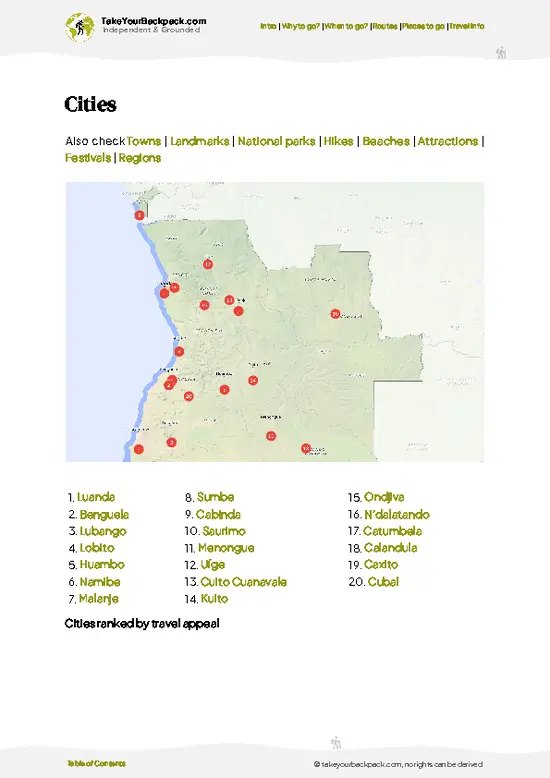
example page 2 from our offline Travel Guide for Angola
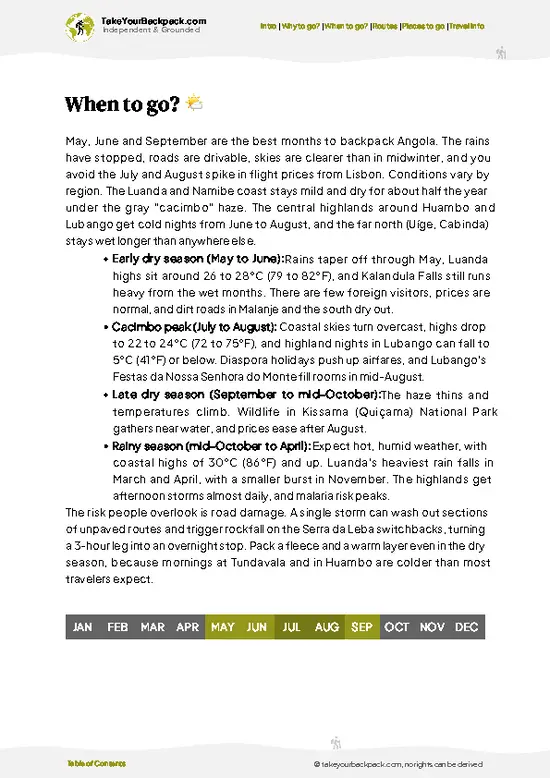
example page 3 from our offline Travel Guide for Angola
example page 4 from our offline Travel Guide for Angola
example page 5 from our offline Travel Guide for Angola
example page 6 from our offline Travel Guide for Angola
example page 7 from our offline Travel Guide for Angola
Loading the map 🌍
CLICK TO FILTER
cities
towns
landmarks
national parks
hikes
beaches
attractions
festivals
regions
SHOW COUNTRY’S BESTSHOW ALL

✨ Why go?
Ranked #11 attraction in Angola
The unique appeal for travelers

Estádio 11 de Novembro is the biggest football ground in Angola, and the reason to come is simple: seats for about 50,000 people in Camama, south of central Luanda, built by a Chinese contractor for the 2010 Africa Cup of Nations. It is named for 11 November 1975, the day Angola declared independence from Portugal, so the stadium carries real national weight. A match or concert here tells you more about Luanda’s mood than most museums do. Inside, you hear the drums, the vuvuzela-style horns and the roar when Petro de Luanda or Primeiro de Agosto score, and you see how seriously the city takes its football. Seeing the stadium also works as a quick milestone for a capital stop, because it sits in the Kilamba Kiaxi area south of the center, within reach of a taxi ride. Go for a fixture or an … read more 👉
Estádio 11 de Novembro is the biggest football ground in Angola, and the reason to come is simple: seats for about 50,000 people in Camama, south of central Luanda, built by a Chinese contractor for the 2010 Africa Cup of Nations. It is named for 11 November 1975, the day Angola declared independence from Portugal, so the stadium carries real national weight. A match or concert here tells you more about Luanda’s mood than most museums do. Inside, you hear the drums, the vuvuzela-style horns and the roar when Petro de Luanda or Primeiro de Agosto score, and you see how seriously the city takes its football. Seeing the stadium also works as a quick milestone for a capital stop, because it sits in the Kilamba Kiaxi area south of the center, within reach of a taxi ride. Go for a fixture or an event, since empty days mean closed gates and a view from the fence. Then the 11 November independence story fits into a single afternoon.

💡 HighlightsTop highlights of Estádio 11 de Novembro

  1. The independence name: The stadium is named for 11 November 1975, when Angola declared independence from Portugal, so it doubles as a quiet nod to national history.
  2. Palancas Negras match day: The national team is named for the giant sable antelope, and a home game brings drums, chants and a sea of red, black and yellow.
  3. Local derby atmosphere: Fixtures involving Petro de Luanda or 1º de Agosto, when scheduled here, bring loud, partisan crowds that are well worth watching.
  4. The 2010 architecture: Built for the Africa Cup of Nations, the modern bowl with its large capacity and steep stands looks impressive from the approach road.
  5. Street food outside the gates: Expect grilled meat, roasted corn and cold drinks sold by vendors in the dust before kickoff.
  6. Fan culture on the terraces: Brass, drumming
… read more 👉
  1. The independence name: The stadium is named for 11 November 1975, when Angola declared independence from Portugal, so it doubles as a quiet nod to national history.
  2. Palancas Negras match day: The national team is named for the giant sable antelope, and a home game brings drums, chants and a sea of red, black and yellow.
  3. Local derby atmosphere: Fixtures involving Petro de Luanda or 1º de Agosto, when scheduled here, bring loud, partisan crowds that are well worth watching.
  4. The 2010 architecture: Built for the Africa Cup of Nations, the modern bowl with its large capacity and steep stands looks impressive from the approach road.
  5. Street food outside the gates: Expect grilled meat, roasted corn and cold drinks sold by vendors in the dust before kickoff.
  6. Fan culture on the terraces: Brass, drumming and call-and-response songs run through the whole game, whatever the scoreline.
  7. Concerts and big events: When the stadium hosts major gatherings beyond football, the same bowl fills with sound and a very different crowd.
Start with a Palancas Negras match day if one is scheduled, because the crowd is the main event and everything else is background to it.
Spotted a mistake or missing something? Contact us.

Things to do near Estádio 11 de Novembro

Ratings based on Tripadvisor reviews. When you book through this link, you support our work at no extra cost to you.

🌤️ When to go?Best time to visit Estádio 11 de Novembro

The best window for Estádio 11 de Novembro in Luanda is the dry season from May to September, when days stay dry and the heat eases.
  • Cacimbo (May to September): Highs of 24 to 28°C (75 to 82°F), lows near 18°C (64°F), gray skies and almost no rain. Sunset comes around 5:45 pm, and event days are comfortable.
  • Hot Rainy Season (November to April): Highs of 29 to 33°C (84 to 91°F), humid, with heavy downpours peaking in March and April. Streets near the stadium flood and traffic crawls.
  • Event Days: Concerts and big matches pull crowds and push hotel rates up across the city, whatever the month.
Check the fixture or concert calendar before booking, since a sold-out night can double nearby room prices.

source: climatestotravel.comJANJanuary: fair for travelingFEBFebruary: fair for travelingMARMarch: fair for travelingAPRApril: fair for travelingMAYMay: highly recommended for travelingJUNJune: good for travelingJULJuly: good for travelingAUGAugust: good for travelingSEPSeptember: highly recommended for travelingOCTOctober: fair for travelingNOVNovember: fair for travelingDECDecember: fair for traveling
when-to-go

✈️ The backpacker research shortcutAngola Travel Guide

An offline-friendly backpacking guide with optimized travel routes, ranked highlights, transport advice, and the best areas to stay.
example page 0 from our offline Travel Guide for Angola
example page 1 from our offline Travel Guide for Angola
example page 2 from our offline Travel Guide for Angola
example page 3 from our offline Travel Guide for Angola
example page 4 from our offline Travel Guide for Angola
example page 5 from our offline Travel Guide for Angola
example page 6 from our offline Travel Guide for Angola
example page 7 from our offline Travel Guide for Angola
The digital guide (246 pages) contains:
✅ 71 highlights, ranked by travel appeal
✅ Optimized 7, 14 & 21-day travel routes
✅ Cities, national parks, landmarks, beaches
✅ How to get around
✅ Offline-friendly for travel without Wi-Fi
👉 Click to see all 30+ guide features

📅 Plan smarter in minutes, not weeks
✅ Month by month travel advice
✅ Festivals & national holidays
✅ Budget expectations

🗺️ Go to the right places, skip the overrated ones
✅ Honest pros & cons of destinations
✅ Top hikes, parks & viewpoints
✅ Lesser-known places most travelers miss
✅ Clear “worth it vs skip it” guidance

🛏️ Travel smoothly without rookie mistakes
✅ Best areas to stay
✅ Transport systems explained simply
✅ Common scams & safety advice
✅ SIM cards, money & practical tips

🌍 Understand the country, not just visit it
✅ Culture & traditions
✅ 52 Essential phrases & customs
✅ Festivals worth planning around
✅ Traveler-friendly historical context
✅ Insights that make places more meaningful

📱 Built for real travel conditions
✅ Fully downloadable PDF
✅ Works completely offline
✅ Optimized for phone use
✅ Useful in remote areas & buses
✅ Everything in one place
Stop searching, start planning
Get instant access to your full guide. 30‑day money-back guarantee.
+ Add another guide for just

By proceeding you agree to our terms.
Sent to your inbox immediately after payment • 100% Secure Checkout
Best Backpacking Travel Advisor 2025 tourism awardBest Backpacking
Travel Advisor
2025
What others say about Take Your Backpack Guides:
⭐⭐⭐⭐⭐
Fantastic, amazing amount of information!
⭐⭐⭐⭐⭐
My goodness this is amazing, it's what I've been looking for hats off too you!
⭐⭐⭐⭐⭐
I think this is absolutely BRILLIANT
⭐⭐⭐⭐
Very complete and informative. It's still missing places, but I gotta to commend you
⭐⭐⭐⭐⭐
This is truly amazing, thank you, can't wait to explore it with my kids!
⭐⭐⭐⭐⭐
Awesome resource, thank you!
⭐⭐⭐⭐⭐
This is amazing! Can't wait to explore the ones I haven't seen
⭐⭐⭐⭐
I love this! Well done, great idea.
⭐⭐⭐⭐⭐
Thanks for taking the time to make this gem!
⭐⭐⭐⭐⭐
This might be the best website I've ever seen.
⭐⭐⭐⭐⭐
Congratulations, and thank you so much for your work; it's incredibly valuable.
⭐⭐⭐⭐
In all seriousness I think you did a great job pointing out the important spots
⭐⭐⭐⭐⭐
10/10 very good
⭐⭐⭐⭐⭐
As someone who's only just starting to visit regularly this is awesome, thank you.
⭐⭐⭐⭐
Thank you very much! I'm going to visit my dad, it's going to be very useful!
⭐⭐⭐⭐⭐
This is really cool! We'll be travelling for the first time and this definitely come in handy.
⭐⭐⭐⭐⭐
You are now our minister of culture, congratulations 👨‍💼
⭐⭐⭐⭐⭐
Just wanted to tell you that this is a pearl! Going to follow your recommendations.
⭐⭐⭐⭐⭐
This is so cool. I'll definitely be using the resource for my travels soon.
⭐⭐⭐⭐⭐
This is very impressive! Good work.
⭐⭐⭐⭐⭐
This is an amazing and informative site. Very well done!

🛏️ Where to stay?Where staying makes the most sense

The most practical base for backpackers is Ilha de Luanda or the central Baixa and Ingombota area, 30 to 60 minutes from the stadium by taxi, depending on traffic.
Ingombota puts you near restaurants, the Fortaleza de São Miguel and the Marginal waterfront promenade, and it is the area where most expats and visiting travelers cluster, so you will meet people and find an easier time with taxis. Streets are lit and busy into the evening, though you should still take a taxi after dark rather than walk.
Maianga and Alvalade are quieter residential districts with guesthouses and apartment rentals, a … read more 👉
The most practical base for backpackers is Ilha de Luanda or the central Baixa and Ingombota area, 30 to 60 minutes from the stadium by taxi, depending on traffic.
Ingombota puts you near restaurants, the Fortaleza de São Miguel and the Marginal waterfront promenade, and it is the area where most expats and visiting travelers cluster, so you will meet people and find an easier time with taxis. Streets are lit and busy into the evening, though you should still take a taxi after dark rather than walk.
Maianga and Alvalade are quieter residential districts with guesthouses and apartment rentals, a good fit if you want a calmer street and a kitchen. They sit closer to the stadium, which helps on match or concert nights when roads clog.
Budget beds are scarce in Luanda, so book ahead and expect to pay more than elsewhere in Africa. Choose a place with a secure gate and a recommended driver.

👛 Costs (as of 13 October 2026)Money, prices, and spending tips

Visiting Estádio 11 de Novembro costs little in itself, but Luanda is one of the priciest cities in Africa, so plan around the surrounding expenses. Prices below are in US dollars, which many travelers use alongside kwanza (AOA).
CategoryBudget RangeLocal Reality
Match or event ticketUSD 3 to 40League matches are cheap, while concerts and national team games cost more and sell out.
Stadium tourUsually unavailableAccess is generally limited to event days, so check with organizers.
Food and drink at the venueUSD 2 to 8Street vendors outside sell grilled snacks, water and beer.
Taxi or ride-hailingUSD 5 to 15 per rideApps and taxis are the safest options, and fares rise on event nights.
Shared minibus (candongueiro)USD 0.30 to 1Cheap but crowded, and tricky for newcomers.
AccommodationUSD 60 to 150Budget
… read more 👉
Visiting Estádio 11 de Novembro costs little in itself, but Luanda is one of the priciest cities in Africa, so plan around the surrounding expenses. Prices below are in US dollars, which many travelers use alongside kwanza (AOA).
CategoryBudget RangeLocal Reality
Match or event ticketUSD 3 to 40League matches are cheap, while concerts and national team games cost more and sell out.
Stadium tourUsually unavailableAccess is generally limited to event days, so check with organizers.
Food and drink at the venueUSD 2 to 8Street vendors outside sell grilled snacks, water and beer.
Taxi or ride-hailingUSD 5 to 15 per rideApps and taxis are the safest options, and fares rise on event nights.
Shared minibus (candongueiro)USD 0.30 to 1Cheap but crowded, and tricky for newcomers.
AccommodationUSD 60 to 150Budget guesthouses are rare, and prices run high for the standard offered.
MealsUSD 8 to 25Local grilled fish and funge are cheaper than restaurants in the center.
⚠️ Prices can change and everyone travels differently, so take this as a rough guide. Hope it helps you plan your adventure!

FAQCommon questions from travelers

Plan on three to four hours for a match, including arrival, security checks and the exit crowd. Gates usually open an hour or two before kickoff and a game lasts about 90 minutes plus a 15-minute break. Without a fixture there is little to do inside, so a quick photo stop outside takes 20 to 30 minutes.
It is worth the fee only if you attend a match, and ticket prices for domestic fixtures are generally modest, often a few thousand kwanza (roughly US$3 to 15 depending on the game and seat). A national team game costs more and sells out faster. Without an event you gain little from the visit, so check the schedule first.
Take a taxi or ride-hailing car from central Luanda, about 15 kilometers and 30 to 60 minutes depending on traffic, typically costing roughly 5,000 to 12,000 kwanza (US$6 to 14). Blue-and-white candongueiro minibuses run nearby routes but are confusing for visitors. On match days leave early and arrange a return ride, since traffic is heavy afterward.
⚠️ Things can change over time, so always validate details locally before you go.

Other Angolan attractions near Estádio 11 de Novembro

Explore more nearby:

  • Cine Karl Marx—Revolutionary name, worn foyer, projector hum, night screenings| 16 km away
  • Cine Atlântico—Open-air bowl, 1,500 seats, kizomba and semba nights, 1960s concrete| 16 km away
  • Centro Cultural Njinga Mbande—Queen Njinga namesake, Portuguese-language plays, rehearsal yard, evening shows| 17 km away

💡 Not sure where to go next?
Create a personalized itinerary for Angola including Estádio 11 de Novembro and the places that fit your trip.

Generate my itinerary

👉 Discover all attractions

Or checkout all Angola has to offer (think cities, towns, villages, national parks, hikes, beaches, festivals)
Country photo of Angola

We 💚 feedbackParting advice and final tips

I expected a cold, oversized monument and found the opposite: the people around me turned a stranger into a seatmate within minutes, sharing snacks and explaining the offside rule I knew perfectly well. Arrive early, carry small bills, and book a taxi back in advance because the post-match road jams.

✍️ Help improve this page!
The information on this page is based on in-depth research, insights shared by experienced travelers, and feedback from the local travel community in Angola. While every effort is made to keep the information accurate and current, conditions can change — so if you spot anything incorrect or outdated, please get in touch.


🙋‍♂️ Give feedback

👋 Meet the founderWho’s Behind Take Your Backpack?

Johan, backpacker and founder of TakeYourBackpackHi, I’m Johan (Netherlands 🇳🇱), the creator of TakeYourBackpack. Over the past 3 decades, I’ve backpacked through 90+ countries across six continents, gaining extensive experience with independent travel, long-term trips, and overland routes.

This site is built on a combination of firsthand travel experience and carefully curated insights from other backpackers. Many guides are based on places I’ve personally visited, while others bring together tips, observations, and practical advice shared by trusted travelers I’ve met along the way.

The goal is to provide realistic, experience-driven guidance — not generic itineraries — so you can explore destinations with better context, clearer expectations, and more confidence.