×

Aruba🇦🇼 | festivalsAruba International Film FestivalIndie features, short blocks, director Q&As, after-dark screenings | things to do and best time to go

Explore Aruba Hi-WindsExplore Aruba Carnival

Backpacking in Aruba International Film
By Johan Kruseman 🇳🇱 | Updated October 22, 2026

Screenings run in the evenings, so keep your days for the beach and show up fresh after dark. Aruba International Film Festival is best known for its mix of independent features, shorts and documentaries from the Caribbean, Latin America and beyond, shown on this island in and around Oranjestad, the capital on the southwest coast. Venues have included cinema halls and hotel-area spaces, so the setup can shift from one edition to the next. The crowd is a blend of filmmakers, local cinephiles, and travelers who happened to land at the right moment, and the mood is relaxed and chatty. Expect a long weekend to roughly a week of programming, usually with Q&As where you can talk to directors directly. It suits you if you like cinema more than club nights. Check the current dates and venue list before booking a bed, since Aruba fills up fast.

Discover everything you want to know in the 📖 Aruba Travel Guide.


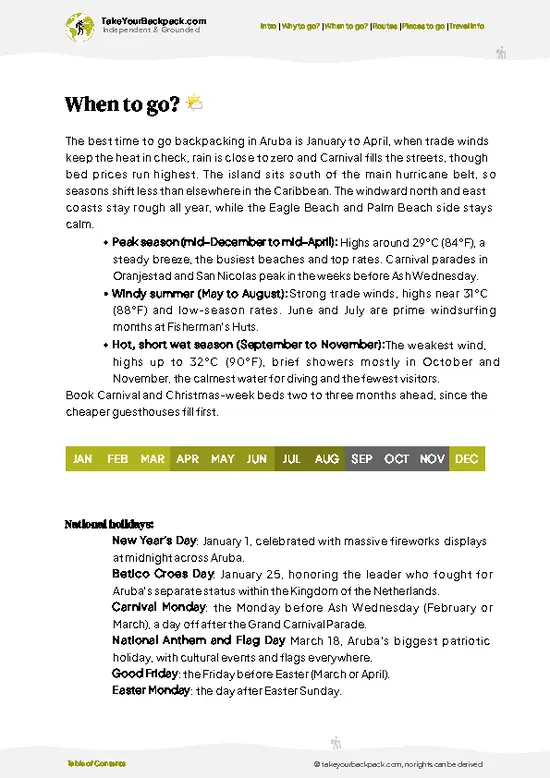
example page 0 from our offline Travel Guide for Aruba
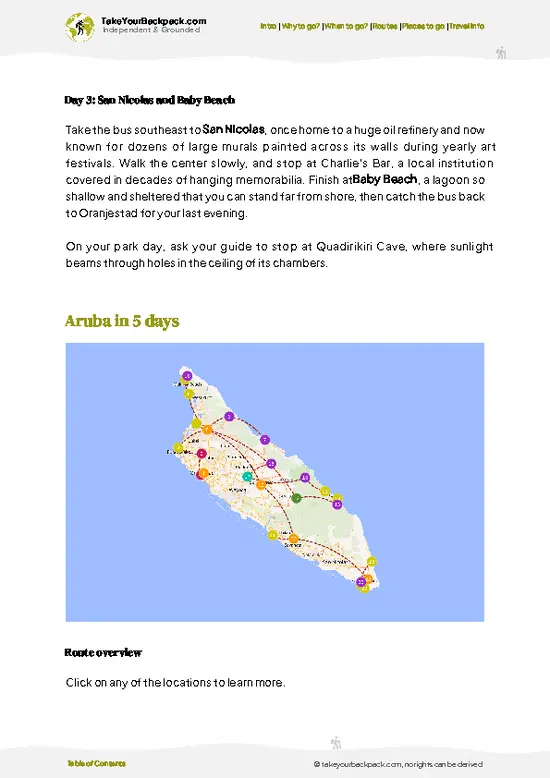
example page 1 from our offline Travel Guide for Aruba
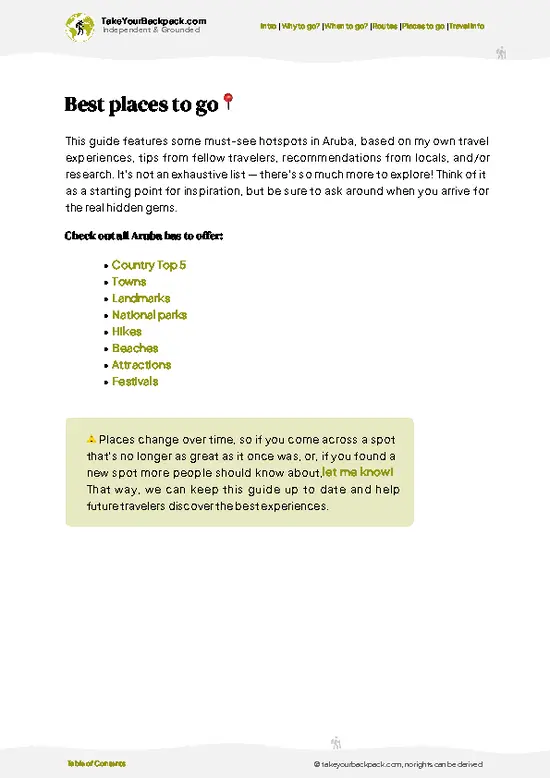
example page 2 from our offline Travel Guide for Aruba
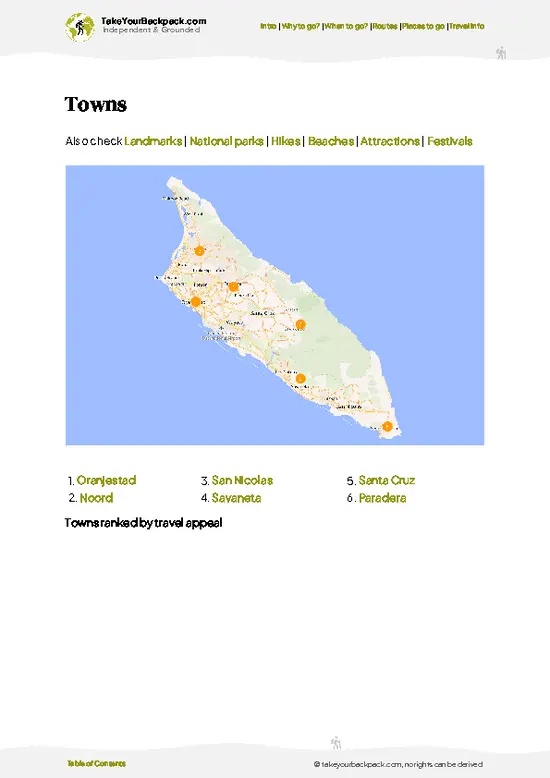
example page 3 from our offline Travel Guide for Aruba
example page 4 from our offline Travel Guide for Aruba
example page 5 from our offline Travel Guide for Aruba
example page 6 from our offline Travel Guide for Aruba
example page 7 from our offline Travel Guide for Aruba
Loading the map 🌍
CLICK TO FILTER
towns
landmarks
national parks
hikes
beaches
attractions
festivals
SHOW COUNTRY’S BESTSHOW ALL

✨ Why go?
Ranked #99 festival in Aruba
What makes it a must-see festival

Aruba International Film Festival gives you a reason to plan around a calendar date on an island people usually treat as a pure beach stop. The first draw is the Q&A sessions with directors, where a small audience means you can actually ask a question and then keep talking at the after-screening drinks. That kind of access is rare at larger festivals, and it builds a quick, temporary circle of film people, locals and fellow travelers.

The second is the mix of Caribbean and Latin American stories. Seeing how neighboring islands and countries portray themselves tells you more about the region than a week of sightseeing. Plenty of these films never get a cinema release back home.

It also fits neatly into a longer Caribbean or South American loop. Pair it with beach days, a few evenings of films, … read more 👉
Aruba International Film Festival gives you a reason to plan around a calendar date on an island people usually treat as a pure beach stop. The first draw is the Q&A sessions with directors, where a small audience means you can actually ask a question and then keep talking at the after-screening drinks. That kind of access is rare at larger festivals, and it builds a quick, temporary circle of film people, locals and fellow travelers.

The second is the mix of Caribbean and Latin American stories. Seeing how neighboring islands and countries portray themselves tells you more about the region than a week of sightseeing. Plenty of these films never get a cinema release back home.

It also fits neatly into a longer Caribbean or South American loop. Pair it with beach days, a few evenings of films, and a flight onward to Colombia, Curaçao or Bonaire, all within easy reach of the island.

💡 HighlightsThe experiences that define the visit

  1. Evening feature screenings in Oranjestad: The core of the festival, with independent films from the Caribbean, Latin America and further afield. Seats are limited, so arrive early for the popular titles.
  2. Short film programs: Packed blocks of shorts let you sample six or eight directors in one sitting. They are the quickest way to find a new favorite voice.
  3. Director Q&A sessions: After many screenings, filmmakers take questions from the audience. Conversations often continue informally outside the hall.
  4. Documentary screenings: Documentaries tend to cover regional history, environment and culture, giving context you will not get from a guidebook.
  5. Opening and closing events: These gatherings bring organizers, guests and locals together for the festive moments. Dress casually but neatly, and use them
… read more 👉
  1. Evening feature screenings in Oranjestad: The core of the festival, with independent films from the Caribbean, Latin America and further afield. Seats are limited, so arrive early for the popular titles.
  2. Short film programs: Packed blocks of shorts let you sample six or eight directors in one sitting. They are the quickest way to find a new favorite voice.
  3. Director Q&A sessions: After many screenings, filmmakers take questions from the audience. Conversations often continue informally outside the hall.
  4. Documentary screenings: Documentaries tend to cover regional history, environment and culture, giving context you will not get from a guidebook.
  5. Opening and closing events: These gatherings bring organizers, guests and locals together for the festive moments. Dress casually but neatly, and use them to meet people before the main programming begins.
Aruba International Film Festival can be covered in two or three evenings if you pick your screenings, while a full run of its program takes several days.
Spotted a mistake or missing something? Contact us.

Things to do around Aruba International Film Festival

Ratings based on Tripadvisor reviews. When you book through this link, you support our work at no extra cost to you.

🌤️ When to go?When is the celebration of Aruba International Film Festival?

The Aruba International Film Festival usually runs for about five days in June, with screenings in Oranjestad and the Eagle Beach and Palm Beach resort strip, and the dates are set by the festival each year rather than tied to a holiday.
  • Best day: The opening night draws filmmakers and the most energy, while weekday afternoon screenings are quieter and easier to get into. Beach screenings after dark are the most atmospheric.
  • Weather: Expect hot, breezy days around 30 to 32°C (86 to 90°F), with warm nights near 26°C (79°F). Showers are brief and uncommon. Bring a hat, reef-safe sunscreen, a refillable bottle and a light layer for chilly air-conditioned cinemas.
  • Booking: Reserve a bed two to three months ahead. Rates in the resort area can rise 10 to 30 percent during festival week, so Oranjestad
… read more 👉
The Aruba International Film Festival usually runs for about five days in June, with screenings in Oranjestad and the Eagle Beach and Palm Beach resort strip, and the dates are set by the festival each year rather than tied to a holiday.
  • Best day: The opening night draws filmmakers and the most energy, while weekday afternoon screenings are quieter and easier to get into. Beach screenings after dark are the most atmospheric.
  • Weather: Expect hot, breezy days around 30 to 32°C (86 to 90°F), with warm nights near 26°C (79°F). Showers are brief and uncommon. Bring a hat, reef-safe sunscreen, a refillable bottle and a light layer for chilly air-conditioned cinemas.
  • Booking: Reserve a bed two to three months ahead. Rates in the resort area can rise 10 to 30 percent during festival week, so Oranjestad guesthouses are the cheaper choice. Buy passes for popular screenings early.
  • Crowds: Traffic is heaviest along the hotel strip around evening showtimes. Take the public bus from Oranjestad, arrive 30 minutes early, and leave right after the credits to catch the last runs.
Book flights and your room together, because both fill first for the opening weekend.


source: climatestotravel.comJANJanuary: not recommended for travelingFEBFebruary: not recommended for travelingMARMarch: not recommended for travelingAPRApril: not recommended for travelingMAYMay: not recommended for travelingJUNJune: excellent for travelingJULJuly: not recommended for travelingAUGAugust: not recommended for travelingSEPSeptember: not recommended for travelingOCTOctober: not recommended for travelingNOVNovember: not recommended for travelingDECDecember: not recommended for traveling

✈️ The backpacker research shortcutAruba Travel Guide

An offline-friendly backpacking guide with optimized travel routes, ranked highlights, transport advice, and the best areas to stay.
example page 0 from our offline Travel Guide for Aruba
example page 1 from our offline Travel Guide for Aruba
example page 2 from our offline Travel Guide for Aruba
example page 3 from our offline Travel Guide for Aruba
example page 4 from our offline Travel Guide for Aruba
example page 5 from our offline Travel Guide for Aruba
example page 6 from our offline Travel Guide for Aruba
example page 7 from our offline Travel Guide for Aruba
The digital guide (121 pages) contains:
✅ 32 highlights, ranked by travel appeal
✅ Optimized 2, 3 & 5-day travel routes
✅ Cities, national parks, landmarks, beaches
✅ How to get around
✅ Offline-friendly for travel without Wi-Fi
👉 Click to see all 30+ guide features

📅 Plan smarter in minutes, not weeks
✅ Month by month travel advice
✅ Festivals & national holidays
✅ Budget expectations

🗺️ Go to the right places, skip the overrated ones
✅ Honest pros & cons of destinations
✅ Top hikes, parks & viewpoints
✅ Lesser-known places most travelers miss
✅ Clear “worth it vs skip it” guidance

🛏️ Travel smoothly without rookie mistakes
✅ Best areas to stay
✅ Transport systems explained simply
✅ Common scams & safety advice
✅ SIM cards, money & practical tips

🌍 Understand the country, not just visit it
✅ Culture & traditions
✅ 52 Essential phrases & customs
✅ Festivals worth planning around
✅ Traveler-friendly historical context
✅ Insights that make places more meaningful

📱 Built for real travel conditions
✅ Fully downloadable PDF
✅ Works completely offline
✅ Optimized for phone use
✅ Useful in remote areas & buses
✅ Everything in one place
Stop searching, start planning
Get instant access to your full guide. 30‑day money-back guarantee.
+ Add another guide for just

By proceeding you agree to our terms.
Sent to your inbox immediately after payment • 100% Secure Checkout
Best Backpacking Travel Advisor 2025 tourism awardBest Backpacking
Travel Advisor
2025
What others say about Take Your Backpack Guides:
⭐⭐⭐⭐⭐
Fantastic, amazing amount of information!
⭐⭐⭐⭐⭐
My goodness this is amazing, it's what I've been looking for hats off too you!
⭐⭐⭐⭐⭐
I think this is absolutely BRILLIANT
⭐⭐⭐⭐
Very complete and informative. It's still missing places, but I gotta to commend you
⭐⭐⭐⭐⭐
This is truly amazing, thank you, can't wait to explore it with my kids!
⭐⭐⭐⭐⭐
Awesome resource, thank you!
⭐⭐⭐⭐⭐
This is amazing! Can't wait to explore the ones I haven't seen
⭐⭐⭐⭐
I love this! Well done, great idea.
⭐⭐⭐⭐⭐
Thanks for taking the time to make this gem!
⭐⭐⭐⭐⭐
This might be the best website I've ever seen.
⭐⭐⭐⭐⭐
Congratulations, and thank you so much for your work; it's incredibly valuable.
⭐⭐⭐⭐
In all seriousness I think you did a great job pointing out the important spots
⭐⭐⭐⭐⭐
10/10 very good
⭐⭐⭐⭐⭐
As someone who's only just starting to visit regularly this is awesome, thank you.
⭐⭐⭐⭐
Thank you very much! I'm going to visit my dad, it's going to be very useful!
⭐⭐⭐⭐⭐
This is really cool! We'll be travelling for the first time and this definitely come in handy.
⭐⭐⭐⭐⭐
You are now our minister of culture, congratulations 👨‍💼
⭐⭐⭐⭐⭐
Just wanted to tell you that this is a pearl! Going to follow your recommendations.
⭐⭐⭐⭐⭐
This is so cool. I'll definitely be using the resource for my travels soon.
⭐⭐⭐⭐⭐
This is very impressive! Good work.
⭐⭐⭐⭐⭐
This is an amazing and informative site. Very well done!

🛏️ Where to stay?Where staying makes the most sense

Oranjestad is the smartest base if you are here for the films, because the main screening venues, the bus terminal and the harbor restaurants sit within a short walk or ride. The center is calm in the daytime and quieter after dark, but the waterfront and main streets near the cruise terminal are well lit and generally comfortable for solo travelers.
Eagle Beach and the stretch toward Palm Beach suit backpackers who want sand and a social scene. Eagle Beach is more relaxed, with guesthouses, small apartments and shared stays, and the Arubus line connects it to town in about 15 to 20 minutes. Palm … read more 👉
Oranjestad is the smartest base if you are here for the films, because the main screening venues, the bus terminal and the harbor restaurants sit within a short walk or ride. The center is calm in the daytime and quieter after dark, but the waterfront and main streets near the cruise terminal are well lit and generally comfortable for solo travelers.
Eagle Beach and the stretch toward Palm Beach suit backpackers who want sand and a social scene. Eagle Beach is more relaxed, with guesthouses, small apartments and shared stays, and the Arubus line connects it to town in about 15 to 20 minutes. Palm Beach is livelier and easier for meeting other travelers over beach bars, though rooms cost more.
Noord, the northern residential district near Palm Beach, is a smart compromise. Supermarkets, local snack bars and apartments with kitchens help you keep costs down, and the evenings are sociable without being loud.
Avoid staying far from the bus routes, such as the remote east or south coast, because late-night transport back from evening screenings is limited. Book early, share an apartment if you can, and choose somewhere along the main bus line.

👛 Costs (as of 22 October 2026)What things cost and how to budget

Aruba International Film Festival costs most independent travelers about US$185 a day, including a mid-range bed in high season, food, buses and a few screenings.
CategoryBudget RangeLocal Reality
Festival ticketsUS$10 to 25 per screeningIndividual film tickets are cheapest. Galas and special events cost more. Budget about US$20 a day.
AccommodationUS$90 to 150 per nightGuesthouses and apartments in Oranjestad, Eagle Beach and Noord. Festival week adds a premium, so US$110 is typical in high season.
Local transportUS$2.60 to 15 per dayArubus single fare is about US$2.60 and a day pass is US$15. Taxis are fixed-rate and cost US$15 to 30 for most town-to-beach trips. Budget US$8.
Food & drinksUS$25 to 60 per dayPastechi cost US$2 to 4, local lunch plates US$12 to 18, dinners US$20 to 35, and
… read more 👉
Aruba International Film Festival costs most independent travelers about US$185 a day, including a mid-range bed in high season, food, buses and a few screenings.
CategoryBudget RangeLocal Reality
Festival ticketsUS$10 to 25 per screeningIndividual film tickets are cheapest. Galas and special events cost more. Budget about US$20 a day.
AccommodationUS$90 to 150 per nightGuesthouses and apartments in Oranjestad, Eagle Beach and Noord. Festival week adds a premium, so US$110 is typical in high season.
Local transportUS$2.60 to 15 per dayArubus single fare is about US$2.60 and a day pass is US$15. Taxis are fixed-rate and cost US$15 to 30 for most town-to-beach trips. Budget US$8.
Food & drinksUS$25 to 60 per dayPastechi cost US$2 to 4, local lunch plates US$12 to 18, dinners US$20 to 35, and a beer US$4 to 6. Budget about US$35.
MiscellaneousUS$5 to 25 per daySunscreen, water, tips and small souvenirs. Budget about US$12.
Total Daily BudgetUS$185Per person, per day, in high season.
⚠️ Prices can change and everyone travels differently, so take this as a rough guide. Hope it helps you plan your adventure!

🍲 FoodWhat to Eat & Drink

Expect the festival food to mirror Aruba's mix of Caribbean, Dutch and Latin flavors rather than a dedicated street-food circuit, so you eat around the screenings in Oranjestad.
For authenticity, try pastechi, fried pastries filled with cheese, ham or meat, which make a cheap pre-film snack. A plate of keshi yena, baked cheese stuffed with spiced chicken or beef, is the island's signature dish. Fresh grilled catch of the day with funchi (cornmeal) and fried plantain appears at local restaurants near the harbor, and pan bati, a soft sweet pancake bread, is worth hunting down.
For drinks, local Balashi beer is the standard cold option, and rum punch turns up around the waterfront bars. Coffee and fresh juices keep you going between daytime screenings.
For etiquette, carry a little cash for small … read more 👉
Expect the festival food to mirror Aruba's mix of Caribbean, Dutch and Latin flavors rather than a dedicated street-food circuit, so you eat around the screenings in Oranjestad.
For authenticity, try pastechi, fried pastries filled with cheese, ham or meat, which make a cheap pre-film snack. A plate of keshi yena, baked cheese stuffed with spiced chicken or beef, is the island's signature dish. Fresh grilled catch of the day with funchi (cornmeal) and fried plantain appears at local restaurants near the harbor, and pan bati, a soft sweet pancake bread, is worth hunting down.
For drinks, local Balashi beer is the standard cold option, and rum punch turns up around the waterfront bars. Coffee and fresh juices keep you going between daytime screenings.
For etiquette, carry a little cash for small snack stands and vendors, though most restaurants take cards and US dollars are widely accepted. Portions at sit-down places are generous, so sharing a main between two is common. Service in restaurants is relaxed, so allow extra time before a screening, and check whether a tip is already added to the bill.

FAQFrequently asked questions about Aruba International Film

The Aruba International Film Festival is usually held in June and lasts about five to six days. Screenings take place mainly in Oranjestad, with some events along the hotel strip near Palm Beach. Exact dates shift each year, so confirm them before booking flights and rooms.
Attending the Aruba International Film Festival typically costs US$10 to 25 per screening, with galas and special events priced higher. A realistic daily budget is around US$185 with a mid-range bed, meals, buses and a few films. Accommodation is the biggest cost, at about US$90 to 150 a night in festival week.
Yes, buying tickets ahead is wise for the Aruba International Film Festival, especially for opening night, galas and screenings in smaller venues. Tickets usually go on sale a few weeks before the festival, and popular showings can sell out within days. Some entries are cheaper or free for specific events, but plan to reserve at least a week early.
⚠️ Things can change over time, so always validate details locally before you go.

Other Aruban festivals near Aruba International Film

Explore more nearby:

  • Aruba Carnival—Feathered troupes, Lighting Parade, J’ouvert paint, Tumba rhythm, King Momo bonfire| 0 km away
  • Soul Beach Music Festival—Memorial Day weekend, R&B headliners, pool parties, Palm Beach after-parties| 1 km away
  • Aruba Hi-Winds—Windsurf heats, kite freestyle, Fisherman’s Huts, Hadicurari flat water| 9 km away

💡 Not sure where to go next?
Create a personalized itinerary for Aruba including Aruba International Film and the places that fit your trip.

Generate my itinerary

👉 Discover all festivals

Or checkout all Aruba has to offer (think cities, towns, villages, national parks, hikes, beaches, festivals)
Country photo of Aruba

We 💚 feedbackIs it worth it?

Aruba International Film Festival works best as the evening anchor of a beach-heavy week in Oranjestad, with snorkeling or a drive to the rugged north coast filling the days. I would book two or three screenings, not a marathon, and finish the trip with a hop to Curaçao or Bonaire. Bring a light layer, since cinemas run cold.

✍️ Help improve this page!
The information on this page is based on in-depth research, insights shared by experienced travelers, and feedback from the local travel community in Aruba. While every effort is made to keep the information accurate and current, conditions can change — so if you spot anything incorrect or outdated, please get in touch.


🙋‍♂️ Give feedback

👋 Meet the founderWho’s Behind Take Your Backpack?

Johan, backpacker and founder of TakeYourBackpackHi, I’m Johan (Netherlands 🇳🇱), the creator of TakeYourBackpack. Over the past 3 decades, I’ve backpacked through 90+ countries across six continents, gaining extensive experience with independent travel, long-term trips, and overland routes.

This site is built on a combination of firsthand travel experience and carefully curated insights from other backpackers. Many guides are based on places I’ve personally visited, while others bring together tips, observations, and practical advice shared by trusted travelers I’ve met along the way.

The goal is to provide realistic, experience-driven guidance — not generic itineraries — so you can explore destinations with better context, clearer expectations, and more confidence.