

×

Aruba🇦🇼 | landmarksBushiribana Gold Mill Ruinsstone ruins, gold rush relics, windswept plateau | things to do and best time to go

Explore Ayo Rock FormationsExplore California Lighthouse

Backpacking in Bushiribana Gold Mill Ruins
👍 Recommendedunique site ranked #5
By Johan Kruseman 🇳🇱 | Updated May 25, 2026

Your fingers come away dusty and warm from the sun-baked stone, wind shoving salty air in your face while waves slam the black rocks just beyond the crumbling walls. A kid’s drone buzzes overhead. Someone’s Bluetooth speaker leaks reggaeton into what used to be a 19th‑century gold mill. This is Bushiribana Gold Mill Ruins, out on Aruba’s wild north coast, past the resorts and paved comfort.

For backpackers, it’s not a jaw-dropper in the “world wonder” sense, but it is a sharp mood swing from Palm Beach polish. Free to enter, easy by rental car or ATV, and photogenic in a raw, end-of-the-world way, it delivers big on atmosphere and coastline views, less on deep historical interpretation. Expect other visitors, off-road tours, and a slightly chaotic vibe, but also enough broken walls and open sky to feel like you’ve stepped into Aruba’s rougher, realer side.

Discover everything you want to know in the 📖 Aruba Travel Guide.


Get your Aruba guide
37 ranked highlights, routes & tips, works offline (145 pages)
Loading the map 🌍
CLICK TO FILTER
towns
landmarks
national parks
hikes
beaches
attractions
festivals
SHOW COUNTRY’S BESTSHOW ALL

✨ Why go?
Ranked #5 unique site in Aruba
Reasons people choose to visit here

The Bushiribana Gold Mill Ruins in Aruba are a must-see, but not for the reasons you might think. Sure, the Instagram crowd flocks here for the picturesque backdrop, but the real magic lies in the history and atmosphere. Built in the 19th century, these ruins whisper tales of a gold rush that never quite panned out.

You won’t find overpriced entry fees or long lines. It’s free to explore, making it a perfect pit stop on your way to the island’s rugged north coast. The craggy cliffs and turquoise waters surrounding the site create a stunning contrast, and you can almost feel the ghosts of miners past as you wander through the crumbling walls.

Pair this with a visit to nearby Natural Bridge or Arikok National Park, and you’ve got a day packed with adventure. The effort-to-reward ratio is … read more 👉
The Bushiribana Gold Mill Ruins in Aruba are a must-see, but not for the reasons you might think. Sure, the Instagram crowd flocks here for the picturesque backdrop, but the real magic lies in the history and atmosphere. Built in the 19th century, these ruins whisper tales of a gold rush that never quite panned out.

You won’t find overpriced entry fees or long lines. It’s free to explore, making it a perfect pit stop on your way to the island’s rugged north coast. The craggy cliffs and turquoise waters surrounding the site create a stunning contrast, and you can almost feel the ghosts of miners past as you wander through the crumbling walls.

Pair this with a visit to nearby Natural Bridge or Arikok National Park, and you’ve got a day packed with adventure. The effort-to-reward ratio is off the charts here. Don’t just check it off your list; soak in the authenticity that Aruba has to offer.
Want to include Bushiribana Gold Mill Ruins in your Aruba route?
Create a personalized Aruba itinerary that includes Bushiribana Gold Mill Ruins and the places that fit your trip — based on your travel style, budget, and available time. Get your route in seconds.

Generate my trip

💡 HighlightsTop highlights of Bushiribana Gold Mill Ruins

  • Weathered brick arches and furnace remains: The most striking thing is the big arched façade and crumbling brickwork — the skeleton of the 19th-century mill. Up close you can see how the structure was built to house heavy machinery, and the textures make for excellent detail shots.
  • Crashing north-coast surf: The ruins sit right on the cliff edge, so waves slam against the rocks below. It’s dramatic, noisy, and a reminder that this was an industrial site exposed to harsh sea weather — great for wide-angle photos or just standing there with your hair in your face.
  • Golden-hour silhouette views: Come at sunset. The ruins make a striking silhouette against the low sun and colorful sky, and the light hits the pale limestone and red brick in a way that’s almost cinematic — no tripod required
read more 👉
  • Weathered brick arches and furnace remains: The most striking thing is the big arched façade and crumbling brickwork — the skeleton of the 19th-century mill. Up close you can see how the structure was built to house heavy machinery, and the textures make for excellent detail shots.
  • Crashing north-coast surf: The ruins sit right on the cliff edge, so waves slam against the rocks below. It’s dramatic, noisy, and a reminder that this was an industrial site exposed to harsh sea weather — great for wide-angle photos or just standing there with your hair in your face.
  • Golden-hour silhouette views: Come at sunset. The ruins make a striking silhouette against the low sun and colorful sky, and the light hits the pale limestone and red brick in a way that’s almost cinematic — no tripod required for decent photos.
  • Short, tangible lesson in Aruba’s gold history: There are no museum walls here, just the remains and a few signs, but that’s the point — you can feel how small, brief and gritty Aruba’s gold boom was. The site helps connect the story: imported machinery, tough coastal logistics, and why the operation didn’t last long.
  • Rugged coastal geology and textures: The contrast between the coral limestone cliffs, white salt-scoured rock, and the mildewed bricks is visually and geologically interesting. It’s a compact place to study erosion, sea spray effects, and island rock formations.
  • Low-effort hike through cactus scrub: The walk from the parking area is short but pleasant — dry scrub, divi-divi shadows, and hardy cacti. It’s a good quick nature stop where you’ll likely spot lizards and seabirds while dodging prickly plants.
  • Easy day-trip connector (Balashi & coastal stops): Bushiribana pairs well with nearby Balashi ruins and north-coast lookout points. Make a loop: quick ruin visit, cliffside photos, then continue to other historic or natural spots along the coast for a fuller half-day.
Spotted a mistake or missing something? Contact us.

Things to do around Bushiribana Gold Mill Ruins

Ratings based on Tripadvisor reviews. When you book through this link, you support our work at no extra cost to you.

🌤️ When to go?Best time to visit Bushiribana Gold Mill Ruins


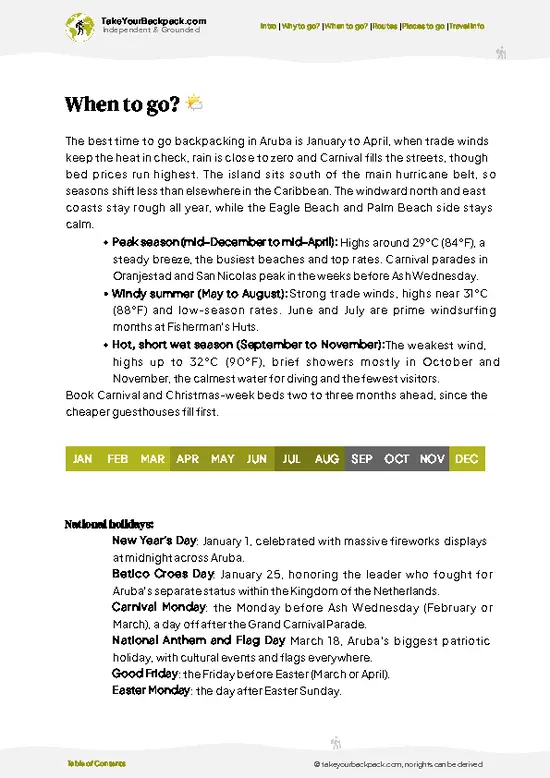
  • Weather: Aruba’s climate is reliably dry and sunny year-round, but from October to January, you might catch some rare showers. It’s not a dealbreaker, but if you want zero risk of rain, avoid those months.

  • Temperature: Expect highs around 29-32°C (85-90°F) consistently. Nights cool down to a comfortable 24-26°C (75-79°F). No drastic swings here, so pack light layers for evenings.

  • Daylight Hours: Aruba enjoys roughly 12 hours of daylight year-round, so timing your visit won’t hinge on daylight changes. Sunrise around 6:30 AM, sunset near 6:30 PM.

  • Crowds: The ruins attract a steady trickle of tourists, but peak season (December to April) sees more day-trippers from cruise ships. Visit early morning or late afternoon to dodge the busiest times.

  • Seasonal Activities: The nearby coastal
read more 👉

  • Weather: Aruba’s climate is reliably dry and sunny year-round, but from October to January, you might catch some rare showers. It’s not a dealbreaker, but if you want zero risk of rain, avoid those months.

  • Temperature: Expect highs around 29-32°C (85-90°F) consistently. Nights cool down to a comfortable 24-26°C (75-79°F). No drastic swings here, so pack light layers for evenings.

  • Daylight Hours: Aruba enjoys roughly 12 hours of daylight year-round, so timing your visit won’t hinge on daylight changes. Sunrise around 6:30 AM, sunset near 6:30 PM.

  • Crowds: The ruins attract a steady trickle of tourists, but peak season (December to April) sees more day-trippers from cruise ships. Visit early morning or late afternoon to dodge the busiest times.

  • Seasonal Activities: The nearby coastal trails and beaches are always accessible, but the Aruba Carnival (January-February) brings a festive buzz island-wide, which can add color but also crowds.

  • Price Fluctuations: Accommodation and flights spike during the high season (December-April). Visiting in the shoulder months (May-June or September-November) can save you a chunk without sacrificing much.


Pro-tip: Hit the ruins just after sunrise for cooler temps, fewer people, and that golden light that actually makes the crumbling mill look like a story worth telling—not just an Instagram backdrop.


source: climatestotravel.comJANJanuary: good for travelingFEBFebruary: good for travelingMARMarch: highly recommended for travelingAPRApril: highly recommended for travelingMAYMay: excellent for travelingJUNJune: excellent for travelingJULJuly: excellent for travelingAUGAugust: excellent for travelingSEPSeptember: excellent for travelingOCTOctober: highly recommended for travelingNOVNovember: excellent for travelingDECDecember: good for traveling
aruba-unique-site-bushiribana-gold-mill-ruins
© Google | Carlos Lozano

✈️ The backpacker research shortcutAruba Travel Guide

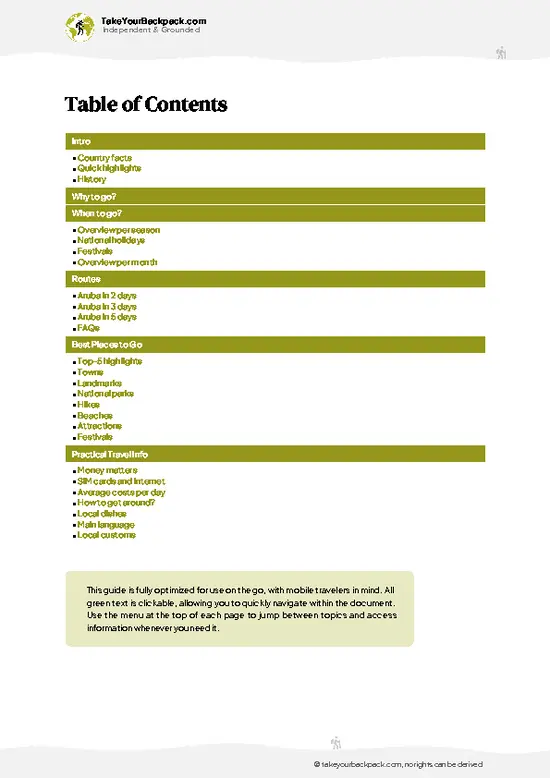
An offline-friendly backpacking guide with optimized travel routes, ranked highlights, transport advice, and the best areas to stay.
example page 0 from our offline Travel Guide for Aruba
example page 1 from our offline Travel Guide for Aruba
example page 2 from our offline Travel Guide for Aruba
example page 3 from our offline Travel Guide for Aruba
example page 4 from our offline Travel Guide for Aruba
example page 5 from our offline Travel Guide for Aruba
example page 6 from our offline Travel Guide for Aruba
example page 7 from our offline Travel Guide for Aruba
The digital guide (145 pages) contains:
37 highlights, ranked by travel appeal
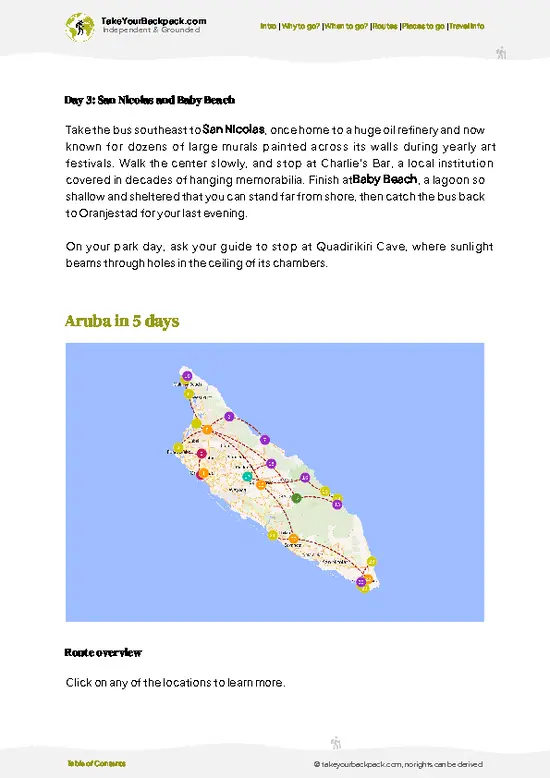
Optimized 2, 3 & 5-day travel routes
Cities, national parks, landmarks, beaches
How to get around
Offline-friendly for travel without Wi-Fi
👉 Click to see all 30+ guide features

📅 Plan smarter in minutes, not weeks
Month by month travel advice
Festivals & national holidays
Budget expectations

🗺️ Go to the right places, skip the overrated ones
Honest pros & cons of destinations
Top hikes, parks & viewpoints
Lesser-known places most travelers miss
Clear “worth it vs skip it” guidance

🛏️ Travel smoothly without rookie mistakes
Best areas to stay
Transport systems explained simply
Common scams & safety advice
SIM cards, money & practical tips

🌍 Understand the country, not just visit it
Culture & traditions
52 Essential phrases & customs
Festivals worth planning around
Traveler-friendly historical context
Insights that make places more meaningful

📱 Built for real travel conditions
Fully downloadable PDF
Works completely offline
Optimized for phone use
Useful in remote areas & buses
Everything in one place
Save weeks of stressful planning
Get instant access to your full guide. 30‑day money-back guarantee.


By proceeding you agree to our terms.
Sent to your inbox immediately after payment • 100% Secure Checkout
Best Backpacking Travel Advisor 2025 tourism awardBest Backpacking
Travel Advisor
2025
What others say about Take Your Backpack Guides:
⭐⭐⭐⭐⭐
Fantastic, amazing amount of information!
⭐⭐⭐⭐⭐
My goodness this is amazing, it's what I've been looking for hats off too you!
⭐⭐⭐⭐⭐
I think this is absolutely BRILLIANT
⭐⭐⭐⭐
Very complete and informative. It's still missing places, but I gotta to commend you
⭐⭐⭐⭐⭐
This is truly amazing, thank you, can't wait to explore it with my kids!
⭐⭐⭐⭐⭐
Awesome resource, thank you!
⭐⭐⭐⭐⭐
This is amazing! Can't wait to explore the ones I haven't seen
⭐⭐⭐⭐
I love this! Well done, great idea.
⭐⭐⭐⭐⭐
Thanks for taking the time to make this gem!
⭐⭐⭐⭐⭐
This might be the best website I've ever seen.
⭐⭐⭐⭐⭐
Congratulations, and thank you so much for your work; it's incredibly valuable.
⭐⭐⭐⭐
In all seriousness I think you did a great job pointing out the important spots
⭐⭐⭐⭐⭐
10/10 very good
⭐⭐⭐⭐⭐
As someone who's only just starting to visit regularly this is awesome, thank you.
⭐⭐⭐⭐
Thank you very much! I'm going to visit my dad, it's going to be very useful!
⭐⭐⭐⭐⭐
This is really cool! We'll be travelling for the first time and this definitely come in handy.
⭐⭐⭐⭐⭐
You are now our minister of culture, congratulations 👨‍💼
⭐⭐⭐⭐⭐
Just wanted to tell you that this is a pearl! Going to follow your recommendations.
⭐⭐⭐⭐⭐
This is so cool. I'll definitely be using the resource for my travels soon.
⭐⭐⭐⭐⭐
This is very impressive! Good work.
⭐⭐⭐⭐⭐
This is an amazing and informative site. Very well done!

🛏️ Where to stay?Best areas to stay in Aruba

Staying near the Bushiribana Gold Mill Ruins in Aruba? You’ve got options that keep you close to the action without breaking the bank.

Head to the area around Noord. It’s a lively spot where backpackers mingle, and you’ll find a mix of budget-friendly accommodations. The vibe is social, with plenty of opportunities to meet fellow travelers. Plus, it’s just a short drive to the ruins, making those early morning explorations a breeze.

Another solid choice is Oranjestad. This area offers a blend of local culture and tourist amenities. You’ll find affordable guesthouses and hostels that cater to … read more 👉
Staying near the Bushiribana Gold Mill Ruins in Aruba? You’ve got options that keep you close to the action without breaking the bank.

Head to the area around Noord. It’s a lively spot where backpackers mingle, and you’ll find a mix of budget-friendly accommodations. The vibe is social, with plenty of opportunities to meet fellow travelers. Plus, it’s just a short drive to the ruins, making those early morning explorations a breeze.

Another solid choice is Oranjestad. This area offers a blend of local culture and tourist amenities. You’ll find affordable guesthouses and hostels that cater to solo adventurers. The streets are bustling, and you can easily hop on public transport to reach the ruins or hit the beach afterward.

Don’t overlook the charm of smaller, family-run places. They often provide a more authentic experience and insider tips on exploring the island. Just remember, Aruba can get crowded, especially during peak season. Plan your visits to the ruins early in the day to dodge the throngs and soak in the history without the hustle.

👛 Costs (as of 13 May 2026)How expensive it really is

Visiting the Bushiribana Gold Mill Ruins in Aruba is a unique experience, but let’s cut through the fluff and get real about the costs involved.
  • Entry Fees: Good news! There’s no entry fee for the Bushiribana Gold Mill Ruins. You can stroll through the ruins and soak in the history without spending a dime. This is a rare find in a tourist-heavy destination like Aruba.
  • Transportation: Getting there is where you’ll see some costs. If you’re renting a car, expect to pay around $40 to $70 per day. Taxis can run you about $25 to $40 one way, depending on your starting point. Public transport is cheaper, but it’s less convenient and may take longer.
  • Parking: If you drive, parking is free at the site. This is a nice perk that saves you a few bucks compared to other attractions where parking fees can
read more 👉
Visiting the Bushiribana Gold Mill Ruins in Aruba is a unique experience, but let’s cut through the fluff and get real about the costs involved.
  • Entry Fees: Good news! There’s no entry fee for the Bushiribana Gold Mill Ruins. You can stroll through the ruins and soak in the history without spending a dime. This is a rare find in a tourist-heavy destination like Aruba.
  • Transportation: Getting there is where you’ll see some costs. If you’re renting a car, expect to pay around $40 to $70 per day. Taxis can run you about $25 to $40 one way, depending on your starting point. Public transport is cheaper, but it’s less convenient and may take longer.
  • Parking: If you drive, parking is free at the site. This is a nice perk that saves you a few bucks compared to other attractions where parking fees can add up.
  • Food and Drinks: There are no facilities at the ruins, so plan ahead. Grab a meal or snacks before you go. A meal at a nearby restaurant can range from $15 to $30 per person. Bring water and snacks to keep costs down and enjoy a picnic with a view.
  • Guided Tours: If you want a deeper dive into the history, consider a guided tour. Prices typically range from $50 to $100 per person. This can be worth it if you’re keen on learning the backstory of the ruins.

The Bushiribana Gold Mill Ruins offer a glimpse into Aruba’s past without breaking the bank. Just be smart about your transportation and food choices, and you’ll have a rewarding experience without the usual tourist trap costs.


source: aruba.com
⚠️ Prices can change and everyone travels differently, so take this as a rough guide. Hope it helps you plan your adventure!

Other Aruban landmarks near Bushiribana Gold Mill Ruins

Explore more nearby:

  • Ayo Rock Formations—boulder clusters, ancient petroglyphs, desert landscape| 5 km away
  • Natural Pool—volcanic rock basin, crashing surf, remote swim spot| 5 km away
  • Cave Pool—hidden grotto, tidal pool, rocky inlet| 8 km away

💡 Not sure where to go next?
Create a personalized itinerary for Aruba including Bushiribana Gold Mill Ruins and the places that fit your trip.

Generate my itinerary

👉 Discover all landmarks

Or checkout all Aruba has to offer (think cities, towns, villages, national parks, hikes, beaches, festivals)
Country photo of Aruba

We 💚 feedbackIs it worth it?

Bushiribana Gold Mill Ruins? It’s a mixed bag. Expect crowds snapping selfies, but don’t let that fool you. The real magic is in the crumbling stone and the wild coastline. Climb around the ruins, and you might just find a quiet spot to soak in the waves crashing against the rocks. Just watch your step—those stones can be slippery. It’s not just a photo op; it’s a slice of Aruba’s gritty history that deserves your time.

✍️ Help improve this page!
The information on this page is based on in-depth research, insights shared by experienced travelers, and feedback from the local travel community in Aruba. While every effort is made to keep the information accurate and current, conditions can change — so if you spot anything incorrect or outdated, please get in touch.


🙋‍♂️ Give feedback

👋 Meet the founderWho’s Behind Take Your Backpack?

Johan, backpacker and founder of TakeYourBackpackHi, I’m Johan (Netherlands 🇳🇱), the creator of TakeYourBackpack. Over the past decade, I’ve backpacked through 80+ countries across six continents, gaining extensive experience with independent travel, long-term trips, and overland routes.

This site is built on a combination of firsthand travel experience and carefully curated insights from other backpackers. Many guides are based on places I’ve personally visited, while others bring together tips, observations, and practical advice shared by trusted travelers I’ve met along the way.

The goal is to provide realistic, experience-driven guidance — not generic itineraries — so you can explore destinations with better context, clearer expectations, and more confidence.

Get full Aruba guide •
Instant download • 37 highlights • Full Offline guide