×

Aruba🇦🇼 | landmarksCunucu Abaotraditional houses, rural farmland, local gardens | things to do and best time to go

Explore Cave PoolExplore Natural Pool

Backpacking in Cunucu Abao
👀 For curious travelersunique site ranked #9
By Johan Kruseman 🇳🇱 | Updated June 10, 2026

Your flip-flops crunch on pale coral gravel, goats bleat somewhere behind a low stone wall, and the late-afternoon heat smells like dust, aloe, and someone’s dinner drifting from a cinderblock porch. This is Cunucu Abao, a residential neighborhood in the middle of Aruba, inland from the resort strip, where backpackers end up when they’re chasing “real island life” instead of poolside playlists. There’s zero wow-factor in the Instagram sense: no dramatic cliffs, no turquoise bay, just boxy houses, barking dogs, and kids on bikes. That’s the point. It’s cheap, calm, and easy to reach by bus or on foot, with almost no tourists and very few obvious photo ops. The vibe is local, slow, and quietly interesting if you actually like people more than postcards.

Discover everything you want to know in the 📖 Aruba Travel Guide.


Get your Aruba guide
37 ranked highlights, routes & tips, works offline (145 pages)
Loading the map 🌍
CLICK TO FILTER
towns
landmarks
national parks
hikes
beaches
attractions
festivals
SHOW COUNTRY’S BESTSHOW ALL

✨ Why go?
Ranked #9 unique site in Aruba
The unique appeal for travelers

Cunucu Abao isn’t just another stop on your Aruba itinerary; it’s a raw slice of history that cuts through the glossy tourist facade. Yes, you’ll find crowds, especially during peak season, but the authenticity of this site makes it worth the effort. The cost? Minimal. You can wander through these ancient structures without shelling out a fortune, making it a budget-friendly addition to your trip.

What sets Cunucu Abao apart is its uniqueness. These traditional Aruban homes, built from local materials, tell stories of resilience and culture that you won’t find in a guidebook. Plus, it fits seamlessly into a broader route—combine it with a visit to the nearby Arikok National Park for a day filled with adventure.

So, while others chase selfies at the beach, you’ll be soaking in the real magicread more 👉
Cunucu Abao isn’t just another stop on your Aruba itinerary; it’s a raw slice of history that cuts through the glossy tourist facade. Yes, you’ll find crowds, especially during peak season, but the authenticity of this site makes it worth the effort. The cost? Minimal. You can wander through these ancient structures without shelling out a fortune, making it a budget-friendly addition to your trip.

What sets Cunucu Abao apart is its uniqueness. These traditional Aruban homes, built from local materials, tell stories of resilience and culture that you won’t find in a guidebook. Plus, it fits seamlessly into a broader route—combine it with a visit to the nearby Arikok National Park for a day filled with adventure.

So, while others chase selfies at the beach, you’ll be soaking in the real magic of Aruba’s heritage. Trust me, this is where the island’s soul truly shines.
Want to include Cunucu Abao in your Aruba route?
Create a personalized Aruba itinerary that includes Cunucu Abao and the places that fit your trip — based on your travel style, budget, and available time. Get your route in seconds.

Generate my trip

💡 HighlightsTop highlights of Cunucu Abao

  • Traditional Cunucu House Architecture — thick, whitewashed stone or coral-rubble walls, small shuttered windows and a low, single-storey footprint built to stay cool in Aruba’s dry heat. The simple layout, exposed beams and verandas are distinct to Aruban rural building traditions and show how locals adapted European and Caribbean influences to a harsh island climate.
  • Cunuculands: family farms and agro-history — cunucu refers to the small family plots that dot Aruba’s interior; they tell the story of subsistence farming, goat herding and small-scale cultivation that sustained island communities for centuries. Visiting the site gives a direct sense of how land use shaped local life and identity.
  • Rainwater cisterns and dry-land survival techniques — many cunucu properties include stone cisterns,
read more 👉
  • Traditional Cunucu House Architecture — thick, whitewashed stone or coral-rubble walls, small shuttered windows and a low, single-storey footprint built to stay cool in Aruba’s dry heat. The simple layout, exposed beams and verandas are distinct to Aruban rural building traditions and show how locals adapted European and Caribbean influences to a harsh island climate.
  • Cunuculands: family farms and agro-history — cunucu refers to the small family plots that dot Aruba’s interior; they tell the story of subsistence farming, goat herding and small-scale cultivation that sustained island communities for centuries. Visiting the site gives a direct sense of how land use shaped local life and identity.
  • Rainwater cisterns and dry-land survival techniques — many cunucu properties include stone cisterns, terraces and rock walls used to capture scarce rain and manage erosion. These practical features are a clear, tangible example of local ingenuity in an arid environment.
Spotted a mistake or missing something? Contact us.

Things to do around Cunucu Abao

Ratings based on Tripadvisor reviews. When you book through this link, you support our work at no extra cost to you.

🌤️ When to go?Choosing the right time of year


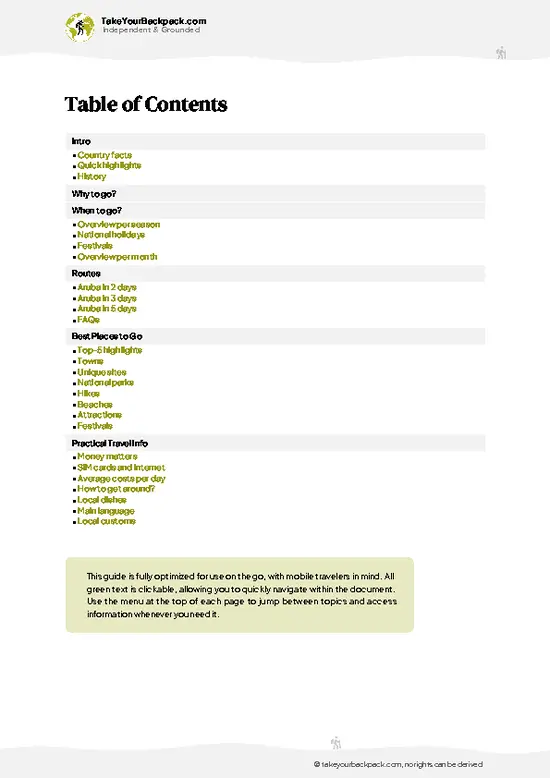
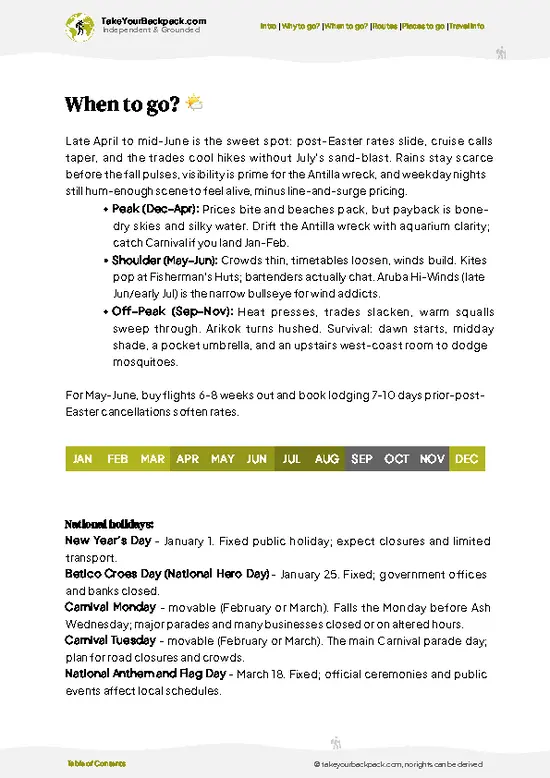
  • Weather: Aruba’s dry climate means Cunucu Abao is mostly sunny year-round, but from October to January, brief showers can surprise you. It’s not a jungle, but don’t expect a desert either.

  • Temperature: Expect highs around 29-32°C (84-90°F) and lows rarely dipping below 24°C (75°F). It’s warm, but the trade winds keep it from feeling like a sauna.

  • Daylight Hours: Roughly 11 to 12 hours of daylight year-round, so you get plenty of time to explore without rushing.

  • Crowds: Peak tourist season (mid-December to April) means more people and higher prices. Cunucu Abao isn’t overrun, but expect more noise and less solitude.

  • Seasonal Activities: The island’s cultural festivals peak in spring and early summer, adding local color but also more visitors.

  • Price Fluctuations: Accommodation and
read more 👉

  • Weather: Aruba’s dry climate means Cunucu Abao is mostly sunny year-round, but from October to January, brief showers can surprise you. It’s not a jungle, but don’t expect a desert either.

  • Temperature: Expect highs around 29-32°C (84-90°F) and lows rarely dipping below 24°C (75°F). It’s warm, but the trade winds keep it from feeling like a sauna.

  • Daylight Hours: Roughly 11 to 12 hours of daylight year-round, so you get plenty of time to explore without rushing.

  • Crowds: Peak tourist season (mid-December to April) means more people and higher prices. Cunucu Abao isn’t overrun, but expect more noise and less solitude.

  • Seasonal Activities: The island’s cultural festivals peak in spring and early summer, adding local color but also more visitors.

  • Price Fluctuations: Accommodation and flights spike in winter months. Visiting in shoulder seasons (May-June or September-November) scores better deals and quieter trails.


Pro-tip: Aim for late spring or early fall to dodge crowds and heat, snag better prices, and experience Cunucu Abao’s raw charm without the tourist gloss.


source: climatestotravel.comJANJanuary: good for travelingFEBFebruary: highly recommended for travelingMARMarch: highly recommended for travelingAPRApril: highly recommended for travelingMAYMay: excellent for travelingJUNJune: excellent for travelingJULJuly: highly recommended for travelingAUGAugust: highly recommended for travelingSEPSeptember: excellent for travelingOCTOctober: excellent for travelingNOVNovember: excellent for travelingDECDecember: good for traveling
aruba-unique-site-cunucu-abao v1
© Google |

✈️ The backpacker research shortcutAruba Travel Guide

An offline-friendly backpacking guide with optimized travel routes, ranked highlights, transport advice, and the best areas to stay.
example page 0 from our offline Travel Guide for Aruba
example page 1 from our offline Travel Guide for Aruba
example page 2 from our offline Travel Guide for Aruba
example page 3 from our offline Travel Guide for Aruba
example page 4 from our offline Travel Guide for Aruba
example page 5 from our offline Travel Guide for Aruba
example page 6 from our offline Travel Guide for Aruba
example page 7 from our offline Travel Guide for Aruba
The digital guide (145 pages) contains:
37 highlights, ranked by travel appeal
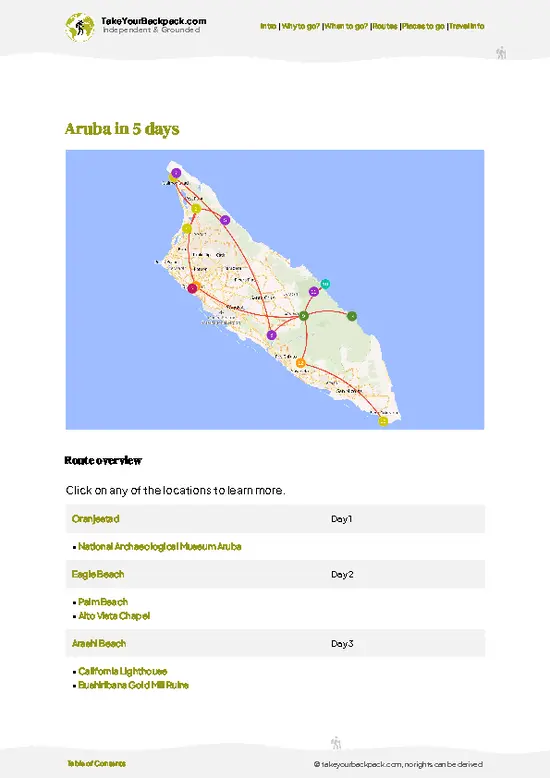
Optimized 2, 3 & 5-day travel routes
Cities, national parks, landmarks, beaches
How to get around
Offline-friendly for travel without Wi-Fi
👉 Click to see all 30+ guide features

📅 Plan smarter in minutes, not weeks
Month by month travel advice
Festivals & national holidays
Budget expectations

🗺️ Go to the right places, skip the overrated ones
Honest pros & cons of destinations
Top hikes, parks & viewpoints
Lesser-known places most travelers miss
Clear “worth it vs skip it” guidance

🛏️ Travel smoothly without rookie mistakes
Best areas to stay
Transport systems explained simply
Common scams & safety advice
SIM cards, money & practical tips

🌍 Understand the country, not just visit it
Culture & traditions
52 Essential phrases & customs
Festivals worth planning around
Traveler-friendly historical context
Insights that make places more meaningful

📱 Built for real travel conditions
Fully downloadable PDF
Works completely offline
Optimized for phone use
Useful in remote areas & buses
Everything in one place
Save weeks of stressful planning
Get instant access to your full guide. 30‑day money-back guarantee.


By proceeding you agree to our terms.
Sent to your inbox immediately after payment • 100% Secure Checkout
Best Backpacking Travel Advisor 2025 tourism awardBest Backpacking
Travel Advisor
2025
What others say about Take Your Backpack Guides:
⭐⭐⭐⭐⭐
Fantastic, amazing amount of information!
⭐⭐⭐⭐⭐
My goodness this is amazing, it's what I've been looking for hats off too you!
⭐⭐⭐⭐⭐
I think this is absolutely BRILLIANT
⭐⭐⭐⭐
Very complete and informative. It's still missing places, but I gotta to commend you
⭐⭐⭐⭐⭐
This is truly amazing, thank you, can't wait to explore it with my kids!
⭐⭐⭐⭐⭐
Awesome resource, thank you!
⭐⭐⭐⭐⭐
This is amazing! Can't wait to explore the ones I haven't seen
⭐⭐⭐⭐
I love this! Well done, great idea.
⭐⭐⭐⭐⭐
Thanks for taking the time to make this gem!
⭐⭐⭐⭐⭐
This might be the best website I've ever seen.
⭐⭐⭐⭐⭐
Congratulations, and thank you so much for your work; it's incredibly valuable.
⭐⭐⭐⭐
In all seriousness I think you did a great job pointing out the important spots
⭐⭐⭐⭐⭐
10/10 very good
⭐⭐⭐⭐⭐
As someone who's only just starting to visit regularly this is awesome, thank you.
⭐⭐⭐⭐
Thank you very much! I'm going to visit my dad, it's going to be very useful!
⭐⭐⭐⭐⭐
This is really cool! We'll be travelling for the first time and this definitely come in handy.
⭐⭐⭐⭐⭐
You are now our minister of culture, congratulations 👨‍💼
⭐⭐⭐⭐⭐
Just wanted to tell you that this is a pearl! Going to follow your recommendations.
⭐⭐⭐⭐⭐
This is so cool. I'll definitely be using the resource for my travels soon.
⭐⭐⭐⭐⭐
This is very impressive! Good work.
⭐⭐⭐⭐⭐
This is an amazing and informative site. Very well done!

🛏️ Where to stay?Choosing the right base

Cunucu Abao is a slice of Aruba that feels worlds away from the crowded beaches and overpriced resorts. To soak in the real vibe, consider staying in the nearby area of San Nicolas. This town has a local pulse, with colorful murals and a genuine community spirit. It’s safe, and you’ll find fellow backpackers eager to share stories over a cold Balashi.

Another option is Oranjestad, where you can mingle with locals at street markets and food stalls. It’s a bit more touristy, but you can still find budget-friendly accommodations. Look for spots near the waterfront for easy access to both the beach … read more 👉
Cunucu Abao is a slice of Aruba that feels worlds away from the crowded beaches and overpriced resorts. To soak in the real vibe, consider staying in the nearby area of San Nicolas. This town has a local pulse, with colorful murals and a genuine community spirit. It’s safe, and you’ll find fellow backpackers eager to share stories over a cold Balashi.

Another option is Oranjestad, where you can mingle with locals at street markets and food stalls. It’s a bit more touristy, but you can still find budget-friendly accommodations. Look for spots near the waterfront for easy access to both the beach and the cultural scene.

If you’re feeling adventurous, check out the camping options around the national parks. It’s a unique way to connect with nature and meet other travelers. Just be prepared for the elements and pack wisely. Embrace the quirks of each area, and you’ll uncover the authentic magic of Aruba beyond the Instagram filters.

👛 Costs (as of 29 May 2026)Typical daily expenses

Visiting Cunucu Abao in Aruba isn’t just about the stunning views; it’s about navigating the costs that come with it. Here’s a breakdown of what you can expect to spend:
  • Entrance Fee: Access to Cunucu Abao is generally free. However, if you’re looking to join a guided tour, expect to pay around $50 to $100 per person. This often includes transportation and a local guide who knows the area well.
  • Transportation: If you’re renting a car, budget around $40 to $70 per day. Taxis can be pricey, with fares starting at about $15 for short rides. Public transport is cheaper but less convenient, typically costing around $2 per ride.
  • Food and Drink: Dining options vary widely. A meal at a local restaurant can range from $15 to $30. If you want to grab a quick bite or snacks, budget around $5 to $10. Don’t
read more 👉
Visiting Cunucu Abao in Aruba isn’t just about the stunning views; it’s about navigating the costs that come with it. Here’s a breakdown of what you can expect to spend:
  • Entrance Fee: Access to Cunucu Abao is generally free. However, if you’re looking to join a guided tour, expect to pay around $50 to $100 per person. This often includes transportation and a local guide who knows the area well.
  • Transportation: If you’re renting a car, budget around $40 to $70 per day. Taxis can be pricey, with fares starting at about $15 for short rides. Public transport is cheaper but less convenient, typically costing around $2 per ride.
  • Food and Drink: Dining options vary widely. A meal at a local restaurant can range from $15 to $30. If you want to grab a quick bite or snacks, budget around $5 to $10. Don’t forget to factor in drinks; a local beer might set you back $3 to $5.
  • Activities: If you’re interested in activities like snorkeling or guided hikes, expect to pay between $30 and $80. These experiences often provide gear and local insights that enhance your visit.
  • Souvenirs: Local crafts and souvenirs can range from $5 for small items to $50 for more intricate pieces. It’s worth investing in something that captures the essence of your experience.

Cunucu Abao offers a slice of Aruba that’s often overlooked. The costs can add up, but the authentic experience is what makes it worthwhile.


source: aruba.com
⚠️ Prices can change and everyone travels differently, so take this as a rough guide. Hope it helps you plan your adventure!

Other Aruban landmarks near Cunucu Abao

Explore more nearby:


💡 Not sure where to go next?
Create a personalized itinerary for Aruba including Cunucu Abao and the places that fit your trip.

Generate my itinerary

👉 Discover all landmarks

Or checkout all Aruba has to offer (think cities, towns, villages, national parks, hikes, beaches, festivals)
Country photo of Aruba

We 💚 feedbackIs it worth it?

Cunucu Abao isn’t the Instagram paradise you might expect. It’s raw, a bit rugged, and definitely not devoid of crowds. But here’s the kicker: the local vibe is electric. Grab a cold drink from a nearby stand and soak in the laughter and music that spills from the homes. Just be ready for the heat—bring plenty of water. The real magic? Those spontaneous moments with locals that you won’t find in any guidebook.

✍️ Help improve this page!
The information on this page is based on in-depth research, insights shared by experienced travelers, and feedback from the local travel community in Aruba. While every effort is made to keep the information accurate and current, conditions can change — so if you spot anything incorrect or outdated, please get in touch.


🙋‍♂️ Give feedback

👋 Meet the founderWho’s Behind Take Your Backpack?

Johan, backpacker and founder of TakeYourBackpackHi, I’m Johan (Netherlands 🇳🇱), the creator of TakeYourBackpack. Over the past decade, I’ve backpacked through 80+ countries across six continents, gaining extensive experience with independent travel, long-term trips, and overland routes.

This site is built on a combination of firsthand travel experience and carefully curated insights from other backpackers. Many guides are based on places I’ve personally visited, while others bring together tips, observations, and practical advice shared by trusted travelers I’ve met along the way.

The goal is to provide realistic, experience-driven guidance — not generic itineraries — so you can explore destinations with better context, clearer expectations, and more confidence.

Get full Aruba guide •
Instant download • 37 highlights • Full Offline guide