×

Australia🇦🇺 | attractionsAustralian MuseumVenomous creatures, megafauna skeletons, Victorian cases, opals | things to do and best time to go

Explore National Gallery of VictoriaExplore Queensland Museum

Backpacking in Australian Museum
👌 Worth visitingattraction ranked #13
By Johan Kruseman 🇳🇱 | Updated October 15, 2026

General admission is free for everyone, so the museum costs less than a pub lunch nearby. The Australian Museum sits on College Street, on the eastern edge of Sydney’s CBD in Australia, facing Hyde Park. I once queued for the permanent galleries, not realizing they need no separate ticket and sit behind the main entry, and I paid for a special exhibition I didn’t want. Check what your ticket covers at the desk, and remember that general admission is free. Skip the weekend school-holiday crush by arriving at opening. Just inside, a towering Indigenous Australian carved pole stands near the entrance.

Discover everything you want to know in the 📖 Australia Travel Guide.


example page 0 from our offline Travel Guide for Australia
example page 1 from our offline Travel Guide for Australia
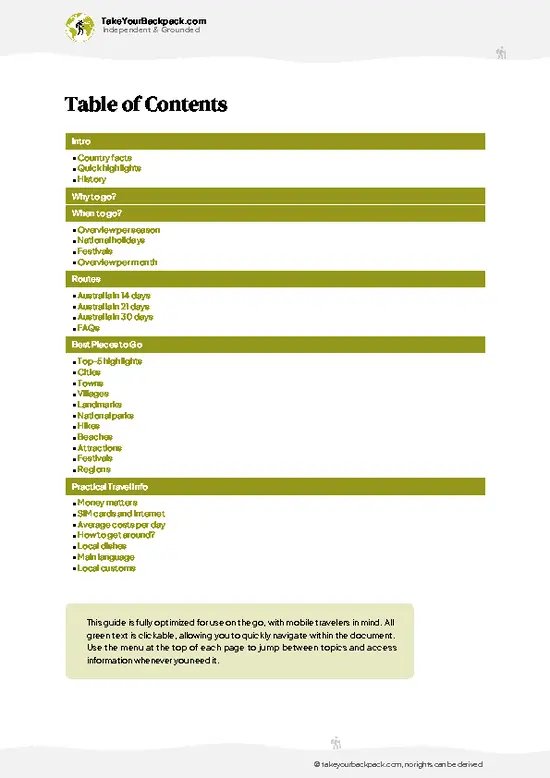
example page 2 from our offline Travel Guide for Australia
example page 3 from our offline Travel Guide for Australia
example page 4 from our offline Travel Guide for Australia
example page 5 from our offline Travel Guide for Australia
example page 6 from our offline Travel Guide for Australia
example page 7 from our offline Travel Guide for Australia
Loading the map 🌍
CLICK TO FILTER
cities
towns
villages
landmarks
national parks
hikes
beaches
attractions
festivals
regions
SHOW COUNTRY’S BESTSHOW ALL

✨ Why go?
Ranked #13 attraction in Australia
The unique appeal for travelers

This is the oldest museum in Australia, and it is the best single stop for understanding the continent’s wildlife without a long trip into the bush. Where else can you compare a thylacine specimen and a saltwater crocodile skeleton within a few steps, then head outside and spot living relatives? For a backpacker heading to the outback or the Great Barrier Reef, the galleries give names and context to what you will see later.

The museum’s First Nations galleries add depth to the Dreaming stories you may hear on tours. It is also a dry, central refuge on a wet Sydney day, within easy walking distance of Museum station and the hostels around Central.

💡 HighlightsThe experiences that define the visit

  1. Surviving Australia: A gallery of venomous snakes, spiders and other dangerous animals, which neatly explains which ones actually deserve your caution.
  2. Dinosaurs: Skeletons and casts of Australian dinosaurs and giant extinct megafauna, including a huge diprotodon.
  3. Wild Planet: Thousands of mounted animals arranged to show the sheer variety of life, from insects to a blue whale model overhead.
  4. Westpac Long Gallery: The museum’s original nineteenth-century hall, now home to the free 200 Treasures exhibition of remarkable objects and the people behind them.
  5. Minerals: Glittering opals, gold and crystals from across Australia, useful if you plan to visit opal country.
  6. Australia’s First Nations collection: Objects, stories and art that explain Aboriginal and Torres Strait Islander cultures through their
… read more 👉
  1. Surviving Australia: A gallery of venomous snakes, spiders and other dangerous animals, which neatly explains which ones actually deserve your caution.
  2. Dinosaurs: Skeletons and casts of Australian dinosaurs and giant extinct megafauna, including a huge diprotodon.
  3. Wild Planet: Thousands of mounted animals arranged to show the sheer variety of life, from insects to a blue whale model overhead.
  4. Westpac Long Gallery: The museum’s original nineteenth-century hall, now home to the free 200 Treasures exhibition of remarkable objects and the people behind them.
  5. Minerals: Glittering opals, gold and crystals from across Australia, useful if you plan to visit opal country.
  6. Australia’s First Nations collection: Objects, stories and art that explain Aboriginal and Torres Strait Islander cultures through their own voices.
  7. Skeletons: Whales, a giant squid and other bones displayed so you can see how bodies are built.
  8. Pacific Spirit: Masks, carvings and tools from across the Pacific, a calm room most people walk straight past.
Most visitors miss the Pacific Spirit gallery because it sits away from the main flow, yet its carved figures and canoe pieces are among the finest objects in the building.
Spotted a mistake or missing something? Contact us.

Things to do around Australian Museum

Ratings based on Tripadvisor reviews. When you book through this link, you support our work at no extra cost to you.

🌤️ When to go?Seasonal considerations and timing

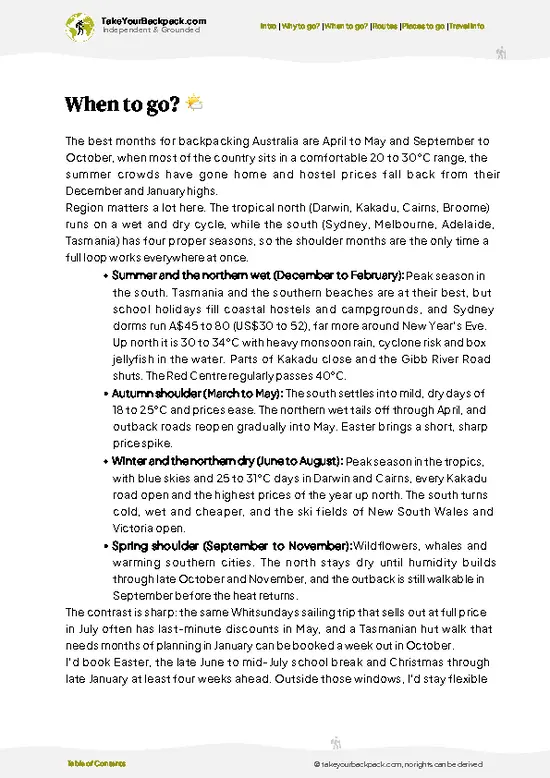
The Australian Museum in Sydney is an indoor stop, so any month works, but March to May and September to November give the most comfortable walking weather between exhibits and the neighboring Hyde Park.
  • Summer (Dec to Feb): Hot and humid, 19 to 27°C (66 to 81°F), with daylight past 7:30 p.m. School holidays from late December pack the museum with families.
  • Autumn (Mar to May): Mild, 14 to 25°C (57 to 77°F), with clear skies and thinner crowds.
  • Winter (Jun to Aug): Cool and sometimes wet, 9 to 17°C (48 to 63°F), with sunset around 5 p.m. A good rainy-day refuge, though July school holidays bring queues.
  • Spring (Sep to Nov): Warming, 13 to 24°C (55 to 75°F), with the best light and fair prices.
Visit on a weekday morning right at opening to have the galleries nearly to yourself.

source: climatestotravel.comJANJanuary: fair for travelingFEBFebruary: fair for travelingMARMarch: highly recommended for travelingAPRApril: excellent for travelingMAYMay: excellent for travelingJUNJune: good for travelingJULJuly: good for travelingAUGAugust: good for travelingSEPSeptember: excellent for travelingOCTOctober: highly recommended for travelingNOVNovember: highly recommended for travelingDECDecember: fair for traveling
when-to-go

✈️ The backpacker research shortcutAustralia Travel Guide

An offline-friendly backpacking guide with optimized travel routes, ranked highlights, transport advice, and the best areas to stay.
example page 0 from our offline Travel Guide for Australia
example page 1 from our offline Travel Guide for Australia
example page 2 from our offline Travel Guide for Australia
example page 3 from our offline Travel Guide for Australia
example page 4 from our offline Travel Guide for Australia
example page 5 from our offline Travel Guide for Australia
example page 6 from our offline Travel Guide for Australia
example page 7 from our offline Travel Guide for Australia
The digital guide (414 pages) contains:
✅ 143 highlights, ranked by travel appeal
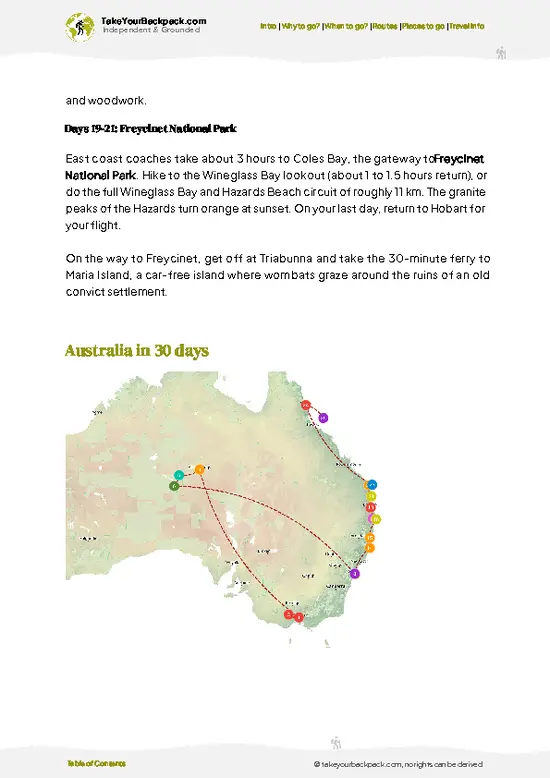
✅ Optimized 14, 21 & 30-day travel routes
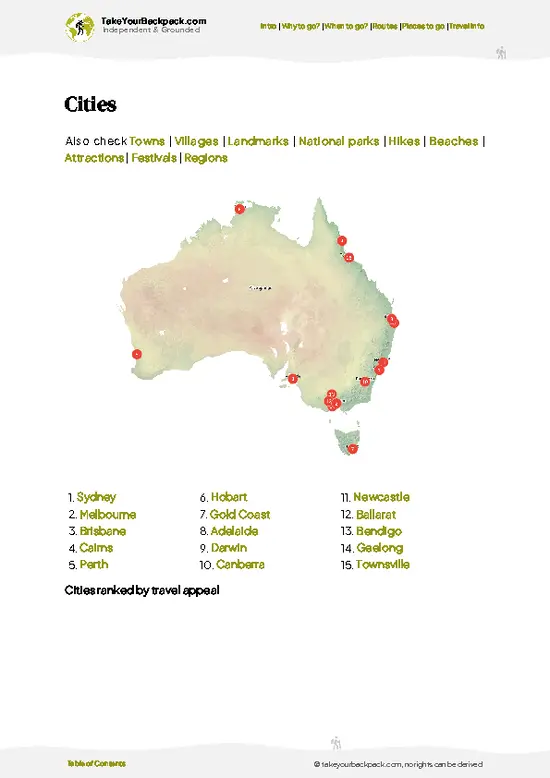
✅ Cities, national parks, landmarks, beaches
✅ How to get around
✅ Offline-friendly for travel without Wi-Fi
👉 Click to see all 30+ guide features

📅 Plan smarter in minutes, not weeks
✅ Month by month travel advice
✅ Festivals & national holidays
✅ Budget expectations

🗺️ Go to the right places, skip the overrated ones
✅ Honest pros & cons of destinations
✅ Top hikes, parks & viewpoints
✅ Lesser-known places most travelers miss
✅ Clear “worth it vs skip it” guidance

🛏️ Travel smoothly without rookie mistakes
✅ Best areas to stay
✅ Transport systems explained simply
✅ Common scams & safety advice
✅ SIM cards, money & practical tips

🌍 Understand the country, not just visit it
✅ Culture & traditions
✅ Local customs
✅ Festivals worth planning around
✅ Traveler-friendly historical context
✅ Insights that make places more meaningful

📱 Built for real travel conditions
✅ Fully downloadable PDF
✅ Works completely offline
✅ Optimized for phone use
✅ Useful in remote areas & buses
✅ Everything in one place
Stop searching, start planning
Get instant access to your full guide. 30‑day money-back guarantee.
+ Add another guide for just

By proceeding you agree to our terms.
Sent to your inbox immediately after payment • 100% Secure Checkout
Best Backpacking Travel Advisor 2025 tourism awardBest Backpacking
Travel Advisor
2025
What others say about Take Your Backpack Guides:
⭐⭐⭐⭐⭐
Fantastic, amazing amount of information!
⭐⭐⭐⭐⭐
My goodness this is amazing, it's what I've been looking for hats off too you!
⭐⭐⭐⭐⭐
I think this is absolutely BRILLIANT
⭐⭐⭐⭐
Very complete and informative. It's still missing places, but I gotta to commend you
⭐⭐⭐⭐⭐
This is truly amazing, thank you, can't wait to explore it with my kids!
⭐⭐⭐⭐⭐
Awesome resource, thank you!
⭐⭐⭐⭐⭐
This is amazing! Can't wait to explore the ones I haven't seen
⭐⭐⭐⭐
I love this! Well done, great idea.
⭐⭐⭐⭐⭐
Thanks for taking the time to make this gem!
⭐⭐⭐⭐⭐
This might be the best website I've ever seen.
⭐⭐⭐⭐⭐
Congratulations, and thank you so much for your work; it's incredibly valuable.
⭐⭐⭐⭐
In all seriousness I think you did a great job pointing out the important spots
⭐⭐⭐⭐⭐
10/10 very good
⭐⭐⭐⭐⭐
As someone who's only just starting to visit regularly this is awesome, thank you.
⭐⭐⭐⭐
Thank you very much! I'm going to visit my dad, it's going to be very useful!
⭐⭐⭐⭐⭐
This is really cool! We'll be travelling for the first time and this definitely come in handy.
⭐⭐⭐⭐⭐
You are now our minister of culture, congratulations 👨‍💼
⭐⭐⭐⭐⭐
Just wanted to tell you that this is a pearl! Going to follow your recommendations.
⭐⭐⭐⭐⭐
This is so cool. I'll definitely be using the resource for my travels soon.
⭐⭐⭐⭐⭐
This is very impressive! Good work.
⭐⭐⭐⭐⭐
This is an amazing and informative site. Very well done!

🛏️ Where to stay?Where staying makes the most sense

Stay in the Sydney CBD or Haymarket, because the museum sits on the edge of Hyde Park at the top of William Street and both are a 10 to 15 minute walk away. Haymarket and Chinatown have the densest cluster of backpacker hostels, plus cheap Asian food courts, a late-night scene and Central Station nearby for trains to the airport and beyond. Museum Station is right beside the park, so you can reach almost anywhere quickly. Kings Cross and Potts Point, a 15 minute walk east, are livelier at night, with more bars and a party-leaning crowd, though some streets feel rough after midnight. Surry Hills, … read more 👉
Stay in the Sydney CBD or Haymarket, because the museum sits on the edge of Hyde Park at the top of William Street and both are a 10 to 15 minute walk away. Haymarket and Chinatown have the densest cluster of backpacker hostels, plus cheap Asian food courts, a late-night scene and Central Station nearby for trains to the airport and beyond. Museum Station is right beside the park, so you can reach almost anywhere quickly. Kings Cross and Potts Point, a 15 minute walk east, are livelier at night, with more bars and a party-leaning crowd, though some streets feel rough after midnight. Surry Hills, just south, suits those who prefer cafes and a quieter, more local feel, with fewer dorms. Wherever you land, pick a spot within walking distance of a train station and book early for weekends and New Year.

👛 Costs (as of 15 October 2026)Typical daily expenses

A day around the Australian Museum in Sydney runs about US$62 to 98 for a backpacker, because general admission is free and only the special exhibitions charge.
CategoryBudget RangeLocal Reality
General admissionUS$0Free for everyone. The permanent galleries (dinosaurs, Indigenous Australian collections, skeletons, minerals) need no ticket.
Special exhibitionsUS$15 to 25Ticketed touring shows change through the year. Skip them if you are watching your budget, since the free floors fill a morning.
Dorm bed (high season)US$30 to 48Hostels cluster around Central Station and Kings Cross, a short walk or train hop away. Prices peak in December and January.
Dorm bed (low season)US$22 to 35June to August is cheaper, though still pricey by world standards.
Local transportUS$3 to 9St James and Museum stations
… read more 👉
A day around the Australian Museum in Sydney runs about US$62 to 98 for a backpacker, because general admission is free and only the special exhibitions charge.
CategoryBudget RangeLocal Reality
General admissionUS$0Free for everyone. The permanent galleries (dinosaurs, Indigenous Australian collections, skeletons, minerals) need no ticket.
Special exhibitionsUS$15 to 25Ticketed touring shows change through the year. Skip them if you are watching your budget, since the free floors fill a morning.
Dorm bed (high season)US$30 to 48Hostels cluster around Central Station and Kings Cross, a short walk or train hop away. Prices peak in December and January.
Dorm bed (low season)US$22 to 35June to August is cheaper, though still pricey by world standards.
Local transportUS$3 to 9St James and Museum stations are both next door. Pay with a contactless card or an Opal card, as daily fares are capped at roughly US$10 on weekdays.
FoodUS$14 to 30A café lunch in Hyde Park or nearby Chinatown costs around US$9 to 15. Museum café meals cost more.
Optional extrasUS$0 to 10Donations at the door are welcome but not required. Lockers and a coffee fill the rest.
Total Daily BudgetUS$62 to 98Includes a high-season dorm bed, transport and food, with free entry.


source: australian.museum
⚠️ Prices can change and everyone travels differently, so take this as a rough guide. Hope it helps you plan your adventure!

FAQCommon questions from travelers

Plan on 1.5 to 3 hours for the Australian Museum, which is enough to cover the dinosaur gallery, the Surviving Australia exhibition and the minerals hall. Add another hour if you book a special exhibition. Opening hours are usually 10 a.m. to 5 p.m. daily, and it sits beside Hyde Park, so many travelers combine it with a half-day CBD walk.
Yes for most travelers, especially because general entry to the permanent galleries is free, while special exhibitions cost roughly A$20 to 30. The collection of Australian wildlife, Indigenous cultural displays and dinosaur skeletons is a solid rainy-day option. Kids and natural history fans get the most from it, while travelers short on time can skip paid shows.
The museum is at 1 William Street, on the corner of College Street opposite Hyde Park, and Museum Station on the City Circle is a 2 minute walk. From Central Station it is about a 15 minute walk or one stop by train, and from Circular Quay roughly 20 minutes on foot or a short train ride. Buses along Elizabeth and College Streets also stop nearby, and Opal card fares are capped at about A$19 a day.
⚠️ Things can change over time, so always validate details locally before you go.

Other Australian attractions near Australian Museum

Explore more nearby:


💡 Not sure where to go next?
Create a personalized itinerary for Australia including Australian Museum and the places that fit your trip.

Generate my itinerary

👉 Discover all attractions

Or checkout all Australia has to offer (think cities, towns, villages, national parks, hikes, beaches, festivals)
Country photo of Australia

We 💚 feedbackFinal thoughts on visiting Australian Museum

Families, wildlife nerds and anyone about to leave Sydney for the outback will enjoy this most. If you want art or beaches, skip it. I would give it two hours, start with Surviving Australia and keep the older halls for last.

✈️ When did I visit Australia?
On my trip to New Zealand in 1993, I had a short stop in Australia as well.

✍️ Help improve this page!
The information on this page is based on my own backpacking experience in Australia, supplemented with up-to-date research and feedback from other travelers. Travel details can change, so if you notice anything outdated or incomplete, feel free to let me know.


🙋‍♂️ Give feedback

👋 Meet the founderWho’s Behind Take Your Backpack?

Johan, backpacker and founder of TakeYourBackpackHi, I’m Johan (Netherlands 🇳🇱), the creator of TakeYourBackpack. Over the past 3 decades, I’ve backpacked through 90+ countries across six continents, gaining extensive experience with independent travel, long-term trips, and overland routes.

This site is built on a combination of firsthand travel experience and carefully curated insights from other backpackers. Many guides are based on places I’ve personally visited, while others bring together tips, observations, and practical advice shared by trusted travelers I’ve met along the way.

The goal is to provide realistic, experience-driven guidance — not generic itineraries — so you can explore destinations with better context, clearer expectations, and more confidence.