×

The Bahamas🇧🇸 | citiesNassaucolonial architecture, bustling port, straw market, pastel facades | things to do and best time to go

Explore FreeportExplore Eleuthera All That Jazz Festival

Backpacking in Nassau
🏆 Top pickcity ranked #1
By Johan Kruseman 🇳🇱 | Updated June 14, 2026

Most people only realize on the flight home that Nassau’s biggest advantage is how much “Caribbean” you can sample in a single long weekend: easy flights, walkable core, and fast access to beaches and out-islands without burning days on transit. It sits on New Providence Island, roughly in the center of The Bahamas, and works as the country’s main hub whether you’re ferry-hopping or flying onward. For backpackers, Nassau is a paradox: it’s busy, cruise-ship heavy, and pricier than smaller Bahamian islands, but it also has the most hostels, the best chance of meeting other travelers, and the simplest logistics. Downtown gives you real texture—Queen’s Staircase, the pastel government buildings around Rawson Square, the Pirates of Nassau museum—while Junkanoo Beach and nearby Cable Beach scratch the turquoise-water itch. Nightlife is loud and resorty, petty crime exists but feels manageable with normal street sense, and compared with quieter islands, Nassau trades serenity for convenience and social energy.

Discover everything you want to know in the 📖 The Bahamas Travel Guide.


Get your Bahamas guide
64 ranked highlights, routes & tips, works offline (240 pages)
Loading the map 🌍
CLICK TO FILTER
cities
towns
villages
landmarks
national parks
hikes
beaches
attractions
festivals
regions
SHOW COUNTRY’S BESTSHOW ALL

✨ Why go?
Ranked #1 city in The Bahamas
Why Nassau should be on your travel list

Nassau, the capital of The Bahamas, is a strategic stop for backpackers looking to balance time, money, and comfort. It’s a city that offers a mix of highlights and activities without overwhelming your schedule. You can explore the vibrant local culture, but you can also use it as a basecamp for day trips to nearby islands.

Hostels here are affordable and often buzzing with fellow travelers, making it easy to swap stories and tips. The food scene is diverse, from street vendors to sit-down spots, so you can eat well without breaking the bank. Plus, Nassau is walkable, allowing you to soak in the atmosphere without needing constant transportation.

When the sun sets, the nightlife kicks in, offering everything from laid-back beach bars to lively clubs. This makes it a great place to unwind … read more 👉
Nassau, the capital of The Bahamas, is a strategic stop for backpackers looking to balance time, money, and comfort. It’s a city that offers a mix of highlights and activities without overwhelming your schedule. You can explore the vibrant local culture, but you can also use it as a basecamp for day trips to nearby islands.

Hostels here are affordable and often buzzing with fellow travelers, making it easy to swap stories and tips. The food scene is diverse, from street vendors to sit-down spots, so you can eat well without breaking the bank. Plus, Nassau is walkable, allowing you to soak in the atmosphere without needing constant transportation.

When the sun sets, the nightlife kicks in, offering everything from laid-back beach bars to lively clubs. This makes it a great place to unwind after a day of exploration.

If you’re planning to move on, Nassau’s easy onward travel options connect you to other islands or back to the mainland. It’s a practical choice for those who want a taste of The Bahamas without committing to a lengthy stay.
Want to include Nassau in your The Bahamas route?
Create a personalized The Bahamas itinerary that includes Nassau and the places that fit your trip — based on your travel style, budget, and available time. Get your route in seconds.

Generate my trip

💡 HighlightsMust-see experiences and standout moments

  1. Queen’s Staircase — 66 hand-cut steps hewn out of limestone by enslaved Africans; an evocative walk that links Nassau’s colonial past with great city views and easy access to nearby forts.
  2. Fort Fincastle — A small, ship-shaped fort on Bennet’s Hill with old cannons and one of the best lookout points over Nassau and the harbour; short, atmospheric visit that ties directly to the island’s defensive history.
  3. Fort Charlotte — The largest of Nassau’s forts with ramparts, a dry moat and faded cannon emplacements; it’s quieter than the tourist spots and gives a real sense of 18th-19th century military life.
  4. Pirates of Nassau Museum — A hands-on museum with a reconstructed sloop and immersive exhibits about the Golden Age of Piracy; fun, informative and surprisingly well done for understanding
read more 👉
  1. Queen’s Staircase — 66 hand-cut steps hewn out of limestone by enslaved Africans; an evocative walk that links Nassau’s colonial past with great city views and easy access to nearby forts.
  2. Fort Fincastle — A small, ship-shaped fort on Bennet’s Hill with old cannons and one of the best lookout points over Nassau and the harbour; short, atmospheric visit that ties directly to the island’s defensive history.
  3. Fort Charlotte — The largest of Nassau’s forts with ramparts, a dry moat and faded cannon emplacements; it’s quieter than the tourist spots and gives a real sense of 18th-19th century military life.
  4. Pirates of Nassau Museum — A hands-on museum with a reconstructed sloop and immersive exhibits about the Golden Age of Piracy; fun, informative and surprisingly well done for understanding the myths and realities of pirate life here.
  5. Pompey Museum of Slavery & Emancipation (Vendue House) — Small but powerful museum in a historic downtown building that focuses on slavery, resistance and emancipation in the Bahamas; essential for context you won’t get from postcard sites.
  6. National Art Gallery of the Bahamas (Villa Doyle) — The go-to place for contemporary and historical Bahamian art housed in a restored colonial building; great for seeing local voices and visual culture beyond the resorts.
  7. Graycliff Hotel & Cigar/Chocolate Workshops — Historic 18th-century mansion where you can tour the cigar factory, try hand-made chocolate, or eat at a renowned restaurant — a sensory dive into local craftsmanship and colonial layers.
  8. John Watling’s Distillery (Buena Vista Estate) — Rum tours on a lovely estate with tastings and scenic grounds; you learn about Bahamian spirits production and get a postcard view of Nassau rooftops.
  9. Arawak Cay (The Fish Fry) — A cluster of open-air eateries and bars where locals eat — think conch fritters, fried snapper and rum punch; noisy, delicious and one of the most authentic food experiences in the city.
  10. National Museum of the Bahamas (Downtown) — In a historic colonial building near Rawson Square, this museum lays out the islands’ story from Lucayan times through colonialism to independence, with artifacts and local narratives.
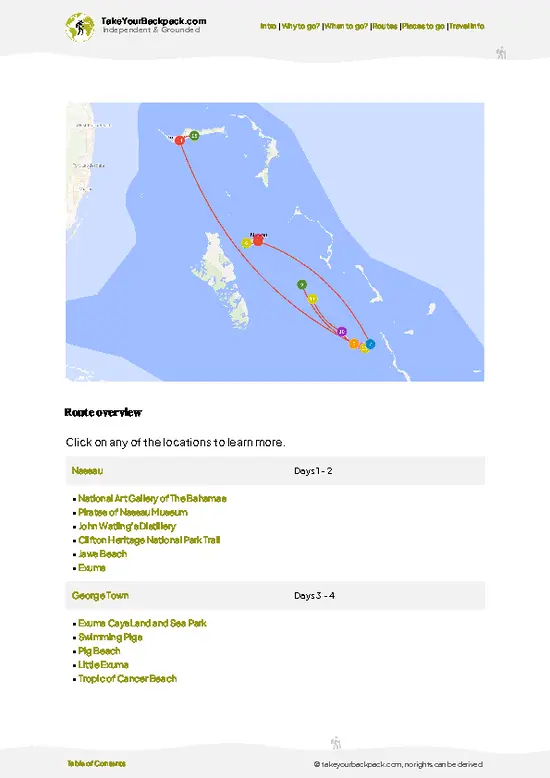
For easy day trips outside the city, consider Blue Lagoon Island (short boat ride for beaches and marine encounters), Clifton Heritage National Park (historical ruins, snorkeling and coastal trails) or laid-back Rose Island for quiet beaches and good snorkeling.
Spotted a mistake or missing something? Contact us.

Things to do in Nassau

Ratings based on Tripadvisor reviews. When you book through this link, you support our work at no extra cost to you.

🏘️ NeighborhoodsWhere things are and how it's laid out

Nassau, the capital of The Bahamas, is a vibrant mix of culture, history, and beach life. Each neighborhood offers a unique flavor, making it essential for backpackers to choose wisely.

Downtown Nassau: This is the heartbeat of the city. You’ll find colorful markets, local eateries, and historical sites like the Queen’s Staircase. It’s walkable, with plenty of public transport options. The nightlife here is lively, but it can get touristy. Ideal for short stays where you want to soak up the local vibe quickly.

Paradise Island: Known for its luxury resorts, this area is a bit pricier. While it’s stunning, it’s less suited for budget backpackers. The beaches are beautiful, but you’ll need to plan your transport carefully. If you’re looking for a splurge day, this is your spot, but don’t expect … read more 👉
Nassau, the capital of The Bahamas, is a vibrant mix of culture, history, and beach life. Each neighborhood offers a unique flavor, making it essential for backpackers to choose wisely.

Downtown Nassau: This is the heartbeat of the city. You’ll find colorful markets, local eateries, and historical sites like the Queen’s Staircase. It’s walkable, with plenty of public transport options. The nightlife here is lively, but it can get touristy. Ideal for short stays where you want to soak up the local vibe quickly.

Paradise Island: Known for its luxury resorts, this area is a bit pricier. While it’s stunning, it’s less suited for budget backpackers. The beaches are beautiful, but you’ll need to plan your transport carefully. If you’re looking for a splurge day, this is your spot, but don’t expect a local experience.

Cable Beach: A great balance of relaxation and activity. This area has affordable accommodations and is known for its stunning sunsets. It’s walkable, with a mix of local bars and restaurants. Perfect for longer stays if you want beach time without breaking the bank.

Old Fort Bay: A quieter, more residential area. It’s not as walkable, but you’ll find some hidden local spots. Great for those who prefer a slower pace and want to escape the tourist hustle. Ideal for longer stays if you’re looking to immerse yourself in local life.

Fish Fry: This is where you’ll find authentic Bahamian food. It’s lively and a bit chaotic, but that’s part of the charm. While not the best for quiet nights, it’s a must-visit for food lovers. Perfect for short stays focused on culinary experiences.

⌛️ 1 dayWhat you can realistically do in a day

Nassau, the capital of The Bahamas, is a vibrant blend of history, culture, and stunning coastal beauty. With its colonial architecture, lively markets, and crystal-clear waters, it’s a place where every corner has a story. You can easily spend a day here, soaking in the local flavor while balancing time, money, and comfort.

Start your morning in the historic downtown area. Grab a quick breakfast at a local café like the Twisted Lime, where you can enjoy a hearty Bahamian dish like conch fritters or a fresh fruit smoothie. After fueling up, stroll over to the Queen’s Staircase. This impressive 66-step limestone staircase, carved by slaves in the late 18th century, offers a glimpse into the island’s past and leads you to Fort Fincastle, where you can take in panoramic views of the harbor.
read more 👉
Nassau, the capital of The Bahamas, is a vibrant blend of history, culture, and stunning coastal beauty. With its colonial architecture, lively markets, and crystal-clear waters, it’s a place where every corner has a story. You can easily spend a day here, soaking in the local flavor while balancing time, money, and comfort.

Start your morning in the historic downtown area. Grab a quick breakfast at a local café like the Twisted Lime, where you can enjoy a hearty Bahamian dish like conch fritters or a fresh fruit smoothie. After fueling up, stroll over to the Queen’s Staircase. This impressive 66-step limestone staircase, carved by slaves in the late 18th century, offers a glimpse into the island’s past and leads you to Fort Fincastle, where you can take in panoramic views of the harbor.

In the afternoon, head to the vibrant Fish Fry at Arawak Cay. This local hotspot is a feast for the senses, with the aroma of grilled fish wafting through the air. Sample some authentic Bahamian dishes like cracked conch or fried snapper. Afterward, take a leisurely walk along the beach at Cable Beach, where the soft sand and turquoise waters invite you to relax. If you’re feeling adventurous, rent a kayak or paddleboard to explore the coastline.

As the sun begins to set, make your way to the less-traveled neighborhood of Bain Town. Here, you’ll find the National Art Gallery of The Bahamas, showcasing local artists and their work. It’s a perfect way to immerse yourself in the culture. For dinner, head back to downtown and try the Poop Deck, known for its fresh seafood and stunning harbor views.

Nassau is a place where every moment counts. By choosing local experiences over tourist traps, you’ll leave with a deeper appreciation for this beautiful city.
Turn your Nassau visit into an The Bahamas adventure
Build a complete The Bahamas route with Nassau, hidden gems, must-see destinations, and realistic travel times included.

Generate my trip

🌤️ When to go?Best time to visit Nassau


  • Topic: Weather – Nassau enjoys a tropical climate, but the best backpacking window is between November and April. This period avoids the hot, sticky summer months when temperatures often climb above 32°C (90°F) and humidity can sap your energy. Rainfall is also lower, reducing the chance of soggy gear and disrupted plans.

  • Topic: Temperature – During the ideal season, expect daytime highs around 24-28°C (75-82°F), perfect for exploring without overheating. Nights dip to a comfortable 18-22°C (65-72°F), so pack a light layer. Outside this window, summer heat and humidity can feel relentless, especially if you’re carrying a pack.

  • Topic: Daylight Hours – Nassau offers roughly 10 to 12 hours of daylight year-round, but the dry season brings clearer skies, maximizing your trekking and sightseeing
read more 👉

  • Topic: Weather – Nassau enjoys a tropical climate, but the best backpacking window is between November and April. This period avoids the hot, sticky summer months when temperatures often climb above 32°C (90°F) and humidity can sap your energy. Rainfall is also lower, reducing the chance of soggy gear and disrupted plans.

  • Topic: Temperature – During the ideal season, expect daytime highs around 24-28°C (75-82°F), perfect for exploring without overheating. Nights dip to a comfortable 18-22°C (65-72°F), so pack a light layer. Outside this window, summer heat and humidity can feel relentless, especially if you’re carrying a pack.

  • Topic: Daylight Hours – Nassau offers roughly 10 to 12 hours of daylight year-round, but the dry season brings clearer skies, maximizing your trekking and sightseeing time. Longer daylight means more hours to squeeze in beach time or cultural stops without rushing.

  • Topic: Crowds – Peak tourist season aligns with the dry months, especially December through March. Expect busier beaches and higher prices. For a quieter experience, aim for shoulder months like November or April, when the vibe is more relaxed but the weather still cooperates.

  • Topic: Seasonal Activities – The dry season hosts key events like Junkanoo festivals and sailing regattas, adding cultural spice to your trip. However, these can also drive up prices and crowd levels, so weigh the trade-off between immersion and solitude.

  • Topic: Price Fluctuations – Accommodation and flights spike during the dry season and holidays. Booking early can save you, but if you’re flexible, the wet season (May to October) offers steep discounts—just be ready for occasional showers and heat.


Pro-tip: Target the shoulder months of November or April to balance weather, crowds, and cost—giving you the smartest, most enjoyable backpacking window in Nassau.


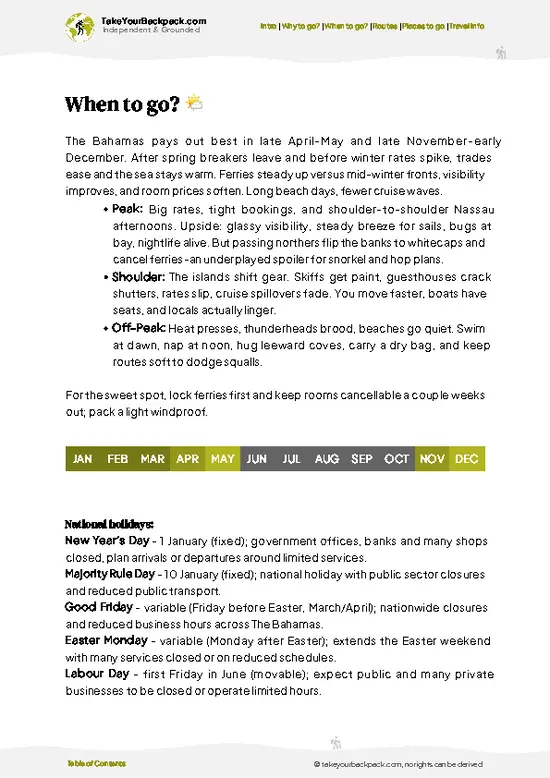
source: climatestotravel.comJANJanuary: excellent for travelingFEBFebruary: excellent for travelingMARMarch: excellent for travelingAPRApril: highly recommended for travelingMAYMay: fair for travelingJUNJune: fair for travelingJULJuly: fair for travelingAUGAugust: fair for travelingSEPSeptember: fair for travelingOCTOctober: fair for travelingNOVNovember: highly recommended for travelingDECDecember: excellent for traveling
bahamas-city-nassau
© Google | Eric Alard

✈️ The backpacker research shortcutThe Bahamas Travel Guide

An offline-friendly backpacking guide with optimized travel routes, ranked highlights, transport advice, and the best areas to stay.
example page 0 from our offline Travel Guide for Bahamas
example page 1 from our offline Travel Guide for Bahamas
example page 2 from our offline Travel Guide for Bahamas
example page 3 from our offline Travel Guide for Bahamas
example page 4 from our offline Travel Guide for Bahamas
example page 5 from our offline Travel Guide for Bahamas
example page 6 from our offline Travel Guide for Bahamas
example page 7 from our offline Travel Guide for Bahamas
The digital guide (240 pages) contains:
64 highlights, ranked by travel appeal
Optimized 2, 3 & 5-day travel routes
Cities, national parks, landmarks, beaches
How to get around
Offline-friendly for travel without Wi-Fi
👉 Click to see all 30+ guide features

📅 Plan smarter in minutes, not weeks
Month by month travel advice
Festivals & national holidays
Budget expectations

🗺️ Go to the right places, skip the overrated ones
Honest pros & cons of destinations
Top hikes, parks & viewpoints
Lesser-known places most travelers miss
Clear “worth it vs skip it” guidance

🛏️ Travel smoothly without rookie mistakes
Best areas to stay
Transport systems explained simply
Common scams & safety advice
SIM cards, money & practical tips

🌍 Understand the country, not just visit it
Culture & traditions
Local customs
Festivals worth planning around
Traveler-friendly historical context
Insights that make places more meaningful

📱 Built for real travel conditions
Fully downloadable PDF
Works completely offline
Optimized for phone use
Useful in remote areas & buses
Everything in one place
Save weeks of stressful planning
Get instant access to your full guide. 30‑day money-back guarantee.


By proceeding you agree to our terms.
Sent to your inbox immediately after payment • 100% Secure Checkout
Best Backpacking Travel Advisor 2025 tourism awardBest Backpacking
Travel Advisor
2025
What others say about Take Your Backpack Guides:
⭐⭐⭐⭐⭐
Fantastic, amazing amount of information!
⭐⭐⭐⭐⭐
My goodness this is amazing, it's what I've been looking for hats off too you!
⭐⭐⭐⭐⭐
I think this is absolutely BRILLIANT
⭐⭐⭐⭐
Very complete and informative. It's still missing places, but I gotta to commend you
⭐⭐⭐⭐⭐
This is truly amazing, thank you, can't wait to explore it with my kids!
⭐⭐⭐⭐⭐
Awesome resource, thank you!
⭐⭐⭐⭐⭐
This is amazing! Can't wait to explore the ones I haven't seen
⭐⭐⭐⭐
I love this! Well done, great idea.
⭐⭐⭐⭐⭐
Thanks for taking the time to make this gem!
⭐⭐⭐⭐⭐
This might be the best website I've ever seen.
⭐⭐⭐⭐⭐
Congratulations, and thank you so much for your work; it's incredibly valuable.
⭐⭐⭐⭐
In all seriousness I think you did a great job pointing out the important spots
⭐⭐⭐⭐⭐
10/10 very good
⭐⭐⭐⭐⭐
As someone who's only just starting to visit regularly this is awesome, thank you.
⭐⭐⭐⭐
Thank you very much! I'm going to visit my dad, it's going to be very useful!
⭐⭐⭐⭐⭐
This is really cool! We'll be travelling for the first time and this definitely come in handy.
⭐⭐⭐⭐⭐
You are now our minister of culture, congratulations 👨‍💼
⭐⭐⭐⭐⭐
Just wanted to tell you that this is a pearl! Going to follow your recommendations.
⭐⭐⭐⭐⭐
This is so cool. I'll definitely be using the resource for my travels soon.
⭐⭐⭐⭐⭐
This is very impressive! Good work.
⭐⭐⭐⭐⭐
This is an amazing and informative site. Very well done!

🛏️ Where to stay?Where staying makes the most sense

In Nassau, the trade-off between time, money, and comfort boils down to where you plant your backpack. The best spot for budget travelers and solo backpackers is the downtown area, especially around Bay Street and the nearby East Bay Street corridor. This zone is the city’s pulse—safe enough with a steady police presence and bustling with locals and tourists alike. You’re close to ferry terminals, markets, and street food stalls, which means less time and money spent on transport and more on soaking in the local rhythm.

Hostels cluster here, offering social vibes that make solo travel less lonely. … read more 👉
In Nassau, the trade-off between time, money, and comfort boils down to where you plant your backpack. The best spot for budget travelers and solo backpackers is the downtown area, especially around Bay Street and the nearby East Bay Street corridor. This zone is the city’s pulse—safe enough with a steady police presence and bustling with locals and tourists alike. You’re close to ferry terminals, markets, and street food stalls, which means less time and money spent on transport and more on soaking in the local rhythm.

Hostels cluster here, offering social vibes that make solo travel less lonely. You’ll find communal spaces where conversations spark easily, and the energy is casual but lively. Compared to the quieter, more residential suburbs or the resort-heavy Cable Beach area, downtown Nassau trades a bit of comfort for connection and convenience. The resorts offer plush comfort but at a steep price and with less authentic interaction. Meanwhile, the suburbs can feel isolated, forcing you to spend more time and money on taxis or buses.

Choosing downtown Nassau means you’re optimizing your trip’s value: you sacrifice some quiet and luxury for immersion, affordability, and the chance to meet fellow travelers. It’s a strategic base that turns logistics into a game of maximizing experience without blowing your budget or wasting time.

🚌 Getting aroundTransportation options and practical tips

Nassau moves at its own rhythm—a blend of laid-back island time and bursts of urban hustle. It’s not a place where you’ll find trains running like clockwork or buses that never miss a beat. Instead, the city’s flow leans on a mix of informal systems and local know-how. You’ll quickly learn that timing here is more about reading the vibe than consulting a strict schedule. This means your choices between time, money, and comfort aren’t just about picking a transit mode—they’re about playing the city’s game on its terms.


  • Walking: The most reliable and cost-free way to get around downtown Nassau. Streets are compact, and many key spots—like the Straw Market, government buildings, and the cruise port—are within a 20-minute stroll. Walking costs zero but demands good shoes and some sun tolerance.
read more 👉
Nassau moves at its own rhythm—a blend of laid-back island time and bursts of urban hustle. It’s not a place where you’ll find trains running like clockwork or buses that never miss a beat. Instead, the city’s flow leans on a mix of informal systems and local know-how. You’ll quickly learn that timing here is more about reading the vibe than consulting a strict schedule. This means your choices between time, money, and comfort aren’t just about picking a transit mode—they’re about playing the city’s game on its terms.


  • Walking: The most reliable and cost-free way to get around downtown Nassau. Streets are compact, and many key spots—like the Straw Market, government buildings, and the cruise port—are within a 20-minute stroll. Walking costs zero but demands good shoes and some sun tolerance. It’s slow but immersive, perfect if you want to soak in the city’s textures and avoid traffic hassles.


  • Jitneys (Public Minibuses): The backbone of budget transit here. These shared vans run on set routes but without fixed schedules—expect them to leave when full, not on the clock. Fares hover around $1-$2 BSD (Bahamian dollars), making them a steal. They’re faster than walking but can get cramped and unpredictable during peak hours. Comfort is minimal, but the price and local flavor are unbeatable.


  • City Buses: Operated by the Bahamas Public Transport Company, these buses cover longer distances and some suburban routes. They run roughly from 6 a.m. to 10 p.m., with fares around $1.50 BSD. They’re more spacious than jitneys but less frequent. If you’re heading beyond the downtown core, they offer a balance of cost and comfort, though you’ll need to plan around their limited timetable.


  • Taxis: Readily available but pricey compared to other options. Taxis don’t use meters; fares are negotiated upfront, often starting around $10 BSD for short trips. They’re the fastest and most comfortable way to get around, especially if you’re traveling with luggage or in a group. For solo budget travelers, taxis are a luxury trade-off—great for saving time but costly.


  • Rental Scooters/Bikes: A niche option for the adventurous budget traveler. Rentals cost about $30-$50 BSD per day. They offer unmatched freedom and speed on Nassau’s narrow streets but require confidence in local traffic patterns and some physical stamina. Comfort varies with weather and road conditions, but the payoff is a personalized pace and access to spots public transit can’t reach.


Understanding Nassau’s transit is about balancing what you’re willing to sacrifice: time for money, comfort for authenticity, or vice versa. Walking and jitneys keep your wallet happy but demand patience and flexibility. Buses and scooters add layers of control and speed but come with their own quirks and costs. Taxis offer a shortcut to comfort but at a premium. Mastering these trade-offs means you’re not just getting from A to B—you’re hacking the city’s pulse and making your trip truly your own.

👛 Costs (as of 20 June 2026)Money, prices, and spending tips

Backpacking in Nassau, The Bahamas, demands a clear-eyed view of where your money goes. The city leans toward the pricier side, but knowing the trade-offs lets you pick your battles.
  • Dorm Accommodation (High Season): Expect to pay around $40 to $60 per night. High season drives prices up due to demand, especially in popular hostels near the waterfront or downtown.
  • Dorm Accommodation (Off-Season): Prices drop to about $25 to $40 per night. Off-season means fewer tourists, so you can snag better deals if your schedule is flexible.
  • Meals: Budget $10 to $20 per meal if you stick to local eateries or street food. Tourist spots push prices higher, often $25 or more for a meal. Cooking your own food can cut costs but requires access to kitchen facilities.
  • Local Transport: The jitneys (shared
read more 👉
Backpacking in Nassau, The Bahamas, demands a clear-eyed view of where your money goes. The city leans toward the pricier side, but knowing the trade-offs lets you pick your battles.
  • Dorm Accommodation (High Season): Expect to pay around $40 to $60 per night. High season drives prices up due to demand, especially in popular hostels near the waterfront or downtown.
  • Dorm Accommodation (Off-Season): Prices drop to about $25 to $40 per night. Off-season means fewer tourists, so you can snag better deals if your schedule is flexible.
  • Meals: Budget $10 to $20 per meal if you stick to local eateries or street food. Tourist spots push prices higher, often $25 or more for a meal. Cooking your own food can cut costs but requires access to kitchen facilities.
  • Local Transport: The jitneys (shared minibuses) cost about $1 to $2 per ride, making them the cheapest way to get around. Taxis are convenient but start around $10 for short trips, quickly adding up.
  • City Transport Pass: Nassau doesn’t have a formal city transport pass system. Your best bet is to budget for jitney rides or occasional taxis depending on your itinerary.
  • Basic Activities/Entry Fees: Expect to spend $10 to $30 for common attractions like the Pirates Museum or the Queen’s Staircase. Beach access is generally free, but some private beaches or tours can cost $40 or more.
  • Miscellaneous Expenses: Factor in $5 to $15 daily for things like bottled water, snacks, or small souvenirs. Internet cafes or SIM cards for data can run around $10 to $20 depending on your needs.

Nassau’s daily backpacking budget typically ranges from $50 on the leanest days in off-season dorms with jitney rides and street food, up to $100 or more if you lean into comfort, taxis, and paid activities. Understanding these trade-offs lets you tailor your trip to what matters most—whether that’s stretching every dollar or splurging smartly on experiences.


source: numbeo.com
⚠️ Prices can change and everyone travels differently, so take this as a rough guide. Hope it helps you plan your adventure!

🚌 Day tripsExploring the surroundings

Nassau is a fantastic launchpad for exploring the Bahamas, offering a mix of culture, adventure, and stunning landscapes. Here are some day trips that pack a punch without draining your wallet or time.

Exuma Cays Adventure
A trip to the Exuma Cays is like stepping into a postcard. You’ll find yourself swimming with pigs, snorkeling in crystal-clear waters, and lounging on pristine beaches. The boat ride takes about 1.5 to 2 hours, but the experience is worth every minute. Expect to spend around $150 for a day tour, which usually includes lunch and gear. The best time to go is between December and April when the weather is perfect. A common mistake? Underestimating the sun—bring plenty of sunscreen and a hat.


Blue Lagoon Island
Just a short ferry ride from Nassau, Blue Lagoon Island … read more 👉
Nassau is a fantastic launchpad for exploring the Bahamas, offering a mix of culture, adventure, and stunning landscapes. Here are some day trips that pack a punch without draining your wallet or time.

Exuma Cays Adventure
A trip to the Exuma Cays is like stepping into a postcard. You’ll find yourself swimming with pigs, snorkeling in crystal-clear waters, and lounging on pristine beaches. The boat ride takes about 1.5 to 2 hours, but the experience is worth every minute. Expect to spend around $150 for a day tour, which usually includes lunch and gear. The best time to go is between December and April when the weather is perfect. A common mistake? Underestimating the sun—bring plenty of sunscreen and a hat.


Blue Lagoon Island
Just a short ferry ride from Nassau, Blue Lagoon Island is a slice of paradise. Spend your day relaxing on the beach, swimming in the lagoon, or trying out water sports like paddleboarding. The ferry ride is about 30 minutes, and a round-trip ticket costs around $30. Aim for a weekday visit to avoid crowds. Many first-timers forget to check the ferry schedule, so plan ahead to maximize your beach time.


Harbour Island
Known for its pink sand beaches, Harbour Island is a must-see. The ferry ride takes about 2 hours, and you can explore the charming town or just relax by the beach. Budget around $70 for the ferry and lunch. The best time to visit is during the dry season, from November to April. A common pitfall is not allowing enough time to explore; make sure to catch the last ferry back!
👉 Explore Harbour Island

Andros Island
For a more off-the-beaten-path experience, head to Andros Island. Known for its blue holes and rich biodiversity, it’s perfect for snorkeling and diving. The trip takes about 2.5 hours by boat, and you can expect to spend around $100 for a guided tour. The ideal time to visit is during the dry season. First-timers often overlook the need for a guide to navigate the blue holes, so don’t skip this step.
👉 Explore Andros Island

Paradise Island
Just across the bridge from Nassau, Paradise Island offers a mix of luxury and leisure. You can explore the Atlantis Resort or relax on its beaches. The trip is practically instantaneous, costing around $20 for a day pass to the resort. Visit during the week to avoid the weekend crowds. Many backpackers miss out on the free public beaches, so do your research before splurging on resort access.
Want to know what more The Bahamas offers?
The Bahamas Travel Guide describes 64 highlights, from cities to national parks, from beaches to hikes

Get the Travel Guide -

🍲 FoodLocal Flavors for Backpackers

In Nassau, The Bahamas, food and drinks are a vibrant tapestry of flavors and experiences. Start with conch fritters—crispy, golden bites that burst with the taste of the sea. These are often served with a tangy dipping sauce, and you’ll find them at local food stalls or casual eateries. Don’t miss cracked conch, a local favorite that’s tender and seasoned just right.

For a refreshing drink, try a Bahama Mama. This cocktail blends rum, coconut, and pineapple juice, capturing the island vibe in every sip. You’ll find it at beach bars where the sound of waves mixes with laughter.

Backpackers often gravitate toward markets and street vendors for authentic bites. The Fish Fry at Arawak Cay is a must-visit, where you can sample grilled fish and local sides while mingling with locals.

Eating … read more 👉
In Nassau, The Bahamas, food and drinks are a vibrant tapestry of flavors and experiences. Start with conch fritters—crispy, golden bites that burst with the taste of the sea. These are often served with a tangy dipping sauce, and you’ll find them at local food stalls or casual eateries. Don’t miss cracked conch, a local favorite that’s tender and seasoned just right.

For a refreshing drink, try a Bahama Mama. This cocktail blends rum, coconut, and pineapple juice, capturing the island vibe in every sip. You’ll find it at beach bars where the sound of waves mixes with laughter.

Backpackers often gravitate toward markets and street vendors for authentic bites. The Fish Fry at Arawak Cay is a must-visit, where you can sample grilled fish and local sides while mingling with locals.

Eating customs here are relaxed. It’s common to share dishes, so don’t hesitate to ask for recommendations. When it comes to drinks, toasting with a hearty “Cheers!” is the norm. Embrace the laid-back atmosphere, and savor the flavors that make Nassau a culinary adventure.

🛡️ SafetyScams, Hazards, and Annoyances

Nassau is generally safe for backpackers, but a little awareness goes a long way. Stick to well-lit areas at night, especially if you’re solo. The downtown area is lively, but some side streets can feel sketchy after dark. Trust your instincts; if something feels off, it probably is.

Scams are rare, but be cautious of overly friendly locals offering unsolicited help. They might expect a tip or lead you to shops with inflated prices. When haggling at markets, keep your cool; it’s part of the game.

Another annoyance? The aggressive taxi drivers. They can be persistent, but a firm “no, thank you” usually does the trick. Always confirm fares before getting in.

Stay aware of your surroundings, keep your belongings secure, and engage with locals who seem genuine. This approach not only enhances … read more 👉
Nassau is generally safe for backpackers, but a little awareness goes a long way. Stick to well-lit areas at night, especially if you’re solo. The downtown area is lively, but some side streets can feel sketchy after dark. Trust your instincts; if something feels off, it probably is.

Scams are rare, but be cautious of overly friendly locals offering unsolicited help. They might expect a tip or lead you to shops with inflated prices. When haggling at markets, keep your cool; it’s part of the game.

Another annoyance? The aggressive taxi drivers. They can be persistent, but a firm “no, thank you” usually does the trick. Always confirm fares before getting in.

Stay aware of your surroundings, keep your belongings secure, and engage with locals who seem genuine. This approach not only enhances your experience but also helps you navigate Nassau’s vibrant streets with confidence.

Ideas for continuing your journey

Nassau isn’t the only highlight in The Bahamas. Explore all what The Bahamas has to offer.
Country photo of The Bahamas

We 💚 feedbackParting advice and final tips

Nassau has a laid-back vibe that’s hard to shake off. You’ll find yourself sipping rum punch while listening to local musicians, and that’s the magic. The best surprise? The food scene—don’t skip the conch fritters from a roadside stand; they’re a game-changer. Just a heads-up: the beaches can get crowded, especially near the resorts. If you’re after solitude, venture a bit off the beaten path. Embrace the rhythm, and you’ll leave with stories worth sharing.

✍️ Help improve this page!
The information on this page is based on in-depth research, insights shared by experienced travelers, and feedback from the local travel community in The Bahamas. While every effort is made to keep the information accurate and current, conditions can change — so if you spot anything incorrect or outdated, please get in touch.


🙋‍♂️ Give feedback

👋 Meet the founderWho’s Behind Take Your Backpack?

Johan, backpacker and founder of TakeYourBackpackHi, I’m Johan (Netherlands 🇳🇱), the creator of TakeYourBackpack. Over the past decade, I’ve backpacked through 80+ countries across six continents, gaining extensive experience with independent travel, long-term trips, and overland routes.

This site is built on a combination of firsthand travel experience and carefully curated insights from other backpackers. Many guides are based on places I’ve personally visited, while others bring together tips, observations, and practical advice shared by trusted travelers I’ve met along the way.

The goal is to provide realistic, experience-driven guidance — not generic itineraries — so you can explore destinations with better context, clearer expectations, and more confidence.

Get full country guide •
Instant download • 64 highlights • Full Offline guide