

×

Bangladesh🇧🇩 | attractionsLalbagh FortMughal fort, garden courtyards, unfinished palace | things to do and best time to go

Explore Ruins of the Buddhist Vihara at PaharpurExplore Ahsan Manzil

Backpacking in Lalbagh Fort
🏆 Top pickattraction ranked #1
By Johan Kruseman 🇳🇱 | Updated May 29, 2026

Forget the Instagram fantasy: Lalbagh Fort is not some untouched Mughal palace where you’ll have the ramparts to yourself at golden hour. It’s smack in the heart of Old Dhaka, Bangladesh’s most chaotic district, and you’ll be sharing the grounds with local families, school groups, and selfie squads. Here’s the real deal: Lalbagh Fort is a half-finished 17th-century fortress that feels more alive than most “complete” monuments. The walls are battered, the gardens are surprisingly lush, and the air hums with the energy of a city that never really slows down. Entry is cheap, but the real cost is your patience—expect lines, noise, and the occasional tout. Still, if you’re chasing the pulse of Bangladesh, this is where you’ll find it. The fort’s history is tangled, the architecture is raw, and the vibe is pure, unfiltered Dhaka—messy, fascinating, and absolutely worth the detour if you want more than just postcard perfection.

Discover everything you want to know in the 📖 Bangladesh Travel Guide.
Loading the map 🌍
CLICK TO FILTER
cities
towns
landmarks
national parks
hikes
beaches
attractions
festivals
regions
SHOW COUNTRY’S BESTSHOW ALL

✨ Why go?
Ranked #1 attraction in Bangladesh
Why Lalbagh Fort should be on your travel list

Lalbagh Fort is not some polished postcard spot where you’ll find Instagram-perfect crowds posing in choreographed lines. It’s gritty, weathered, and yes, often busy—but that’s part of its raw charm. This 17th-century Mughal fortress stands as a stubborn relic of Bangladesh’s layered history, a place where you can feel the weight of centuries pressing down through crumbling walls and moss-covered red bricks. Backpackers don’t just come here for pretty views; they come because Lalbagh Fort is a tangible connection to the Mughal Empire’s reach into Bengal, a cultural crossroads where architecture, politics, and local stories collide.

The adrenaline here isn’t from adrenaline-pumping activities but from the slow burn of discovery. Navigating the maze of courtyards, mosques, and tombs rewards … read more 👉
Lalbagh Fort is not some polished postcard spot where you’ll find Instagram-perfect crowds posing in choreographed lines. It’s gritty, weathered, and yes, often busy—but that’s part of its raw charm. This 17th-century Mughal fortress stands as a stubborn relic of Bangladesh’s layered history, a place where you can feel the weight of centuries pressing down through crumbling walls and moss-covered red bricks. Backpackers don’t just come here for pretty views; they come because Lalbagh Fort is a tangible connection to the Mughal Empire’s reach into Bengal, a cultural crossroads where architecture, politics, and local stories collide.

The adrenaline here isn’t from adrenaline-pumping activities but from the slow burn of discovery. Navigating the maze of courtyards, mosques, and tombs rewards you with moments of quiet reflection amid the chaos of Dhaka’s relentless pace. It’s a milestone on any Bangladesh route because it demands you slow down and absorb history in a way that’s visceral, not sanitized. The entry fee is modest, but the payoff is huge: a deep dive into a pivotal era that shaped the region’s identity. If you’re after authenticity over gloss, Lalbagh Fort delivers in spades.
Want to include Lalbagh Fort in your Bangladesh route?
Create a personalized Bangladesh itinerary that includes Lalbagh Fort and the places that fit your trip — based on your travel style, budget, and available time. Get your route in seconds.

Generate my trip

💡 HighlightsMust-see experiences and standout moments

The South Gate (Shahi Darwaza)
Forget the Instagram shots of empty courtyards—this is where the real Dhaka pulses. The South Gate is the fort’s main artery, and it’s rarely quiet. You’ll dodge selfie sticks, sure, but you’ll also see local families picnicking, teenagers staging impromptu cricket matches, and old-timers debating politics in the shade. The gate itself is a hulking slab of Mughal ambition, with weathered brickwork that’s seen more history than most textbooks. If you want to feel the city’s heartbeat, stand here at sunset and just listen.


The Audience Hall and Hammam
This isn’t your average “palace room.” The Audience Hall is where the Mughal governor would have held court, but the real kicker is the attached hammam (bathhouse). The walls are thick enough to muffle the chaos … read more 👉
The South Gate (Shahi Darwaza)
Forget the Instagram shots of empty courtyards—this is where the real Dhaka pulses. The South Gate is the fort’s main artery, and it’s rarely quiet. You’ll dodge selfie sticks, sure, but you’ll also see local families picnicking, teenagers staging impromptu cricket matches, and old-timers debating politics in the shade. The gate itself is a hulking slab of Mughal ambition, with weathered brickwork that’s seen more history than most textbooks. If you want to feel the city’s heartbeat, stand here at sunset and just listen.


The Audience Hall and Hammam
This isn’t your average “palace room.” The Audience Hall is where the Mughal governor would have held court, but the real kicker is the attached hammam (bathhouse). The walls are thick enough to muffle the chaos outside, and the domed ceilings play tricks with the light. You can still see the ancient heating system—yes, the Mughals had underfloor heating centuries before it was cool. It’s a rare, tactile glimpse into how the elite actually lived, sweated, and schemed.


The Mosque
Three domes, one stark white façade, and a sense of calm that’s almost defiant given the city’s relentless noise. The Lalbagh Fort Mosque isn’t the biggest or the flashiest, but it’s the most honest. Locals still come here to pray, and if you visit during a quiet hour, you’ll hear nothing but the wind and the distant call to prayer. It’s a living monument, not a museum piece.


Bibi Pari’s Tomb
This is the emotional core of Lalbagh. The tomb of Bibi Pari, daughter of the fort’s builder, is a lesson in Mughal restraint—delicate marble, subtle ornamentation, and a story that’s more tragedy than triumph. The legend goes that her untimely death halted the fort’s construction, and you can feel that unfinished energy in the air. It’s not grandiose, but it’s haunting in a way that sticks with you long after you leave.


The Gardens and Water Channels
Don’t expect Versailles, but do expect a slice of green that’s rare in Dhaka. The gardens are geometric, with water channels that once shimmered with fountains. Today, kids splash in the pools and couples claim shady corners. The symmetry is classic Mughal, but the vibe is pure, unfiltered Bangladesh—messy, lively, and real. If you want a break from the city’s concrete, this is your spot.


The Museum
Skip the expectation of blockbuster artifacts. The museum is small and a bit dusty, but it’s packed with quirky relics—old coins, weapons, and faded paintings that tell the fort’s story in fits and starts. What makes it worthwhile is the context: you’re standing inside the history, not just looking at it through glass. It’s the kind of place where you’ll learn something unexpected, if you’re willing to slow down and read the captions.
Spotted a mistake or missing something? Contact us.

Things to do around Lalbagh Fort

Ratings based on Tripadvisor reviews. When you book through this link, you support our work at no extra cost to you.

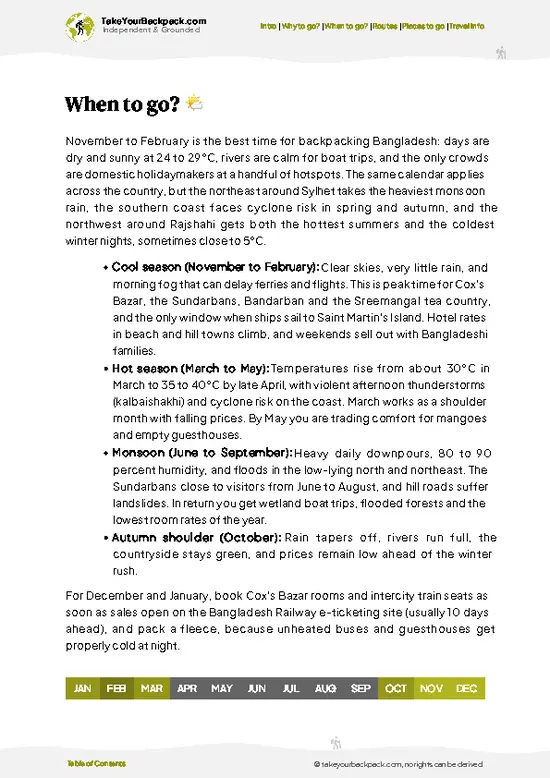
🌤️ When to go?Choosing the right time of year


  • Weather: The best time to visit Lalbagh Fort is during the cooler, drier months from November to February. Expect temperatures around 15-25°C (59-77°F), which is far more comfortable than the oppressive heat and humidity of the summer months.

  • Temperature: Avoid April to September when temperatures soar above 30°C (86°F) and humidity makes exploring the fort a sweaty slog. The winter months offer crisp air that makes wandering the grounds enjoyable rather than exhausting.

  • Daylight Hours: From November to February, daylight lasts roughly 10-11 hours, giving you ample time to explore without rushing. Longer summer days can be tempting but come with the trade-off of brutal heat.

  • Crowds: Weekends and public holidays see a spike in local visitors, especially in December and January. If
read more 👉

  • Weather: The best time to visit Lalbagh Fort is during the cooler, drier months from November to February. Expect temperatures around 15-25°C (59-77°F), which is far more comfortable than the oppressive heat and humidity of the summer months.

  • Temperature: Avoid April to September when temperatures soar above 30°C (86°F) and humidity makes exploring the fort a sweaty slog. The winter months offer crisp air that makes wandering the grounds enjoyable rather than exhausting.

  • Daylight Hours: From November to February, daylight lasts roughly 10-11 hours, giving you ample time to explore without rushing. Longer summer days can be tempting but come with the trade-off of brutal heat.

  • Crowds: Weekends and public holidays see a spike in local visitors, especially in December and January. If you want some breathing room, aim for weekday mornings during the cooler months.

  • Seasonal Activities: The winter months sometimes feature cultural events nearby, adding layers to your visit beyond just the fort’s history. Summer monsoon months can shut down outdoor activities with heavy rains.

  • Price Fluctuations: Entry fees remain stable year-round, but travel and accommodation costs spike during the cooler season when tourists flock to Dhaka. Booking ahead in November and December can save you some cash.


Pro-tip: Visit early on a weekday in December or January to dodge crowds, enjoy perfect weather, and catch any local events that bring the fort’s history to life.


source: climatestotravel.comJANJanuary: excellent for travelingFEBFebruary: excellent for travelingMARMarch: good for travelingAPRApril: fair for travelingMAYMay: fair for travelingJUNJune: below average for travelingJULJuly: below average for travelingAUGAugust: below average for travelingSEPSeptember: fair for travelingOCTOctober: good for travelingNOVNovember: excellent for travelingDECDecember: excellent for traveling
when-to-go

✈️ The backpacker research shortcutBangladesh Travel Guide

An offline-friendly backpacking guide with optimized travel routes, ranked highlights, transport advice, and the best areas to stay.
example page 0 from our offline Travel Guide for Bangladeshexample page 1 from our offline Travel Guide for Bangladeshexample page 2 from our offline Travel Guide for Bangladeshexample page 3 from our offline Travel Guide for Bangladeshexample page 4 from our offline Travel Guide for Bangladeshexample page 5 from our offline Travel Guide for Bangladeshexample page 6 from our offline Travel Guide for Bangladeshexample page 7 from our offline Travel Guide for Bangladesh
The digital guide (369 pages) contains:
107 highlights, ranked by travel appeal
Optimized 7, 14 & 21-day travel routes
Cities, national parks, landmarks, beaches
How to get around
Offline-friendly for travel without Wi-Fi
👉 Click to see all 30+ guide features

📅 Plan smarter in minutes, not weeks
Month by month travel advice
Festivals & national holidays
Budget expectations

🗺️ Go to the right places, skip the overrated ones
Honest pros & cons of destinations
Top hikes, parks & viewpoints
Lesser-known places most travelers miss
Clear “worth it vs skip it” guidance

🛏️ Travel smoothly without rookie mistakes
Best areas to stay
Transport systems explained simply
Common scams & safety advice
SIM cards, money & practical tips

🌍 Understand the country, not just visit it
Culture & traditions
52 Essential phrases & customs
Festivals worth planning around
Traveler-friendly historical context
Insights that make places more meaningful

📱 Built for real travel conditions
Fully downloadable PDF
Works completely offline
Optimized for phone use
Useful in remote areas & buses
Everything in one place
Save weeks of stressful planning
Get instant access to your full guide. 30‑day money-back guarantee.


By proceeding you agree to our terms.
Sent to your inbox immediately after payment • 100% Secure Checkout
Best Backpacking Travel Advisor 2025 tourism awardBest Backpacking
Travel Advisor
2025
What others say about Take Your Backpack Guides:
⭐⭐⭐⭐⭐
Fantastic, amazing amount of information!
⭐⭐⭐⭐⭐
My goodness this is amazing, it's what I've been looking for hats off too you!
⭐⭐⭐⭐⭐
I think this is absolutely BRILLIANT
⭐⭐⭐⭐
Very complete and informative. It's still missing places, but I gotta to commend you
⭐⭐⭐⭐⭐
This is truly amazing, thank you, can't wait to explore it with my kids!
⭐⭐⭐⭐⭐
Awesome resource, thank you!
⭐⭐⭐⭐⭐
This is amazing! Can't wait to explore the ones I haven't seen
⭐⭐⭐⭐
I love this! Well done, great idea.
⭐⭐⭐⭐⭐
Thanks for taking the time to make this gem!
⭐⭐⭐⭐⭐
This might be the best website I've ever seen.
⭐⭐⭐⭐⭐
Congratulations, and thank you so much for your work; it's incredibly valuable.
⭐⭐⭐⭐
In all seriousness I think you did a great job pointing out the important spots
⭐⭐⭐⭐⭐
10/10 very good
⭐⭐⭐⭐⭐
As someone who's only just starting to visit regularly this is awesome, thank you.
⭐⭐⭐⭐
Thank you very much! I'm going to visit my dad, it's going to be very useful!
⭐⭐⭐⭐⭐
This is really cool! We'll be travelling for the first time and this definitely come in handy.
⭐⭐⭐⭐⭐
You are now our minister of culture, congratulations 👨‍💼
⭐⭐⭐⭐⭐
Just wanted to tell you that this is a pearl! Going to follow your recommendations.
⭐⭐⭐⭐⭐
This is so cool. I'll definitely be using the resource for my travels soon.
⭐⭐⭐⭐⭐
This is very impressive! Good work.
⭐⭐⭐⭐⭐
This is an amazing and informative site. Very well done!

🛏️ Where to stay?How to pick the right area

Lalbagh Fort is a major draw in Dhaka, but let’s cut through the hype: the area around it isn’t a backpacker’s paradise in the traditional sense. It’s crowded, noisy, and the streets can feel chaotic—think honking rickshaws, vendors shouting, and a swirl of locals going about their day. If you’re expecting a quiet, Instagram-perfect neighborhood, you’ll be disappointed. But here’s the real deal: staying near Lalbagh Fort puts you right in the thick of Dhaka’s raw, unfiltered energy.

For backpackers, the best spots are the neighborhoods just north and east of the fort, like Old Dhaka’s Shankhari … read more 👉
Lalbagh Fort is a major draw in Dhaka, but let’s cut through the hype: the area around it isn’t a backpacker’s paradise in the traditional sense. It’s crowded, noisy, and the streets can feel chaotic—think honking rickshaws, vendors shouting, and a swirl of locals going about their day. If you’re expecting a quiet, Instagram-perfect neighborhood, you’ll be disappointed. But here’s the real deal: staying near Lalbagh Fort puts you right in the thick of Dhaka’s raw, unfiltered energy.

For backpackers, the best spots are the neighborhoods just north and east of the fort, like Old Dhaka’s Shankhari Bazaar area or the neighborhoods near the Buriganga River. These places are gritty but safe enough if you keep your wits about you. They’re buzzing with street food stalls, tiny tea shops, and markets where you can rub elbows with locals rather than tourists. It’s social in the truest sense—no curated hostel common rooms, just real human interaction on the streets.

Budget travelers and solo backpackers will find the vibe here authentic and alive, a stark contrast to sanitized tourist zones. You won’t find luxury, but you will find stories, smells, and sounds that stick with you long after you leave. If you want to experience Dhaka beyond the postcard, this is where you want to be.

👛 Costs (as of 22 March 2026)How expensive it really is

As of the most recent estimates, the entrance fee for Lalbagh Fort in Dhaka, Bangladesh, varies based on nationality: Bangladeshi adults pay approximately 20 Bangladeshi Taka (BDT), SAARC country citizens 100 BDT, and other foreign visitors 200 BDT. Children under 5 years old enter free of charge. Additional costs may include a camera fee of 200 BDT for DSLR cameras; photography with mobile phones is typically free. The fort is closed on Sundays and during major public holidays.

source: citytravelerbd.com
⚠️ Prices can change and everyone travels differently, so take this as a rough guide. Hope it helps you plan your adventure!

Other Bangladeshi attractions near Lalbagh Fort

Explore more nearby:


💡 Not sure where to go next?
Create a personalized itinerary for Bangladesh including Lalbagh Fort and the places that fit your trip.

Generate my itinerary

👉 Discover all attractions

Or checkout all Bangladesh has to offer (think cities, towns, villages, national parks, hikes, beaches, festivals)
Country photo of Bangladesh

We 💚 feedbackWhat to keep in mind

Lalbagh Fort isn’t some polished postcard spot. Expect crowds, especially midday, and a few rough edges where history’s wear shows. But here’s the kicker: wander past the main gate, and the quiet courtyards hit you with a calm that’s rare in Dhaka. The faded Mughal architecture, the mossy walls, the way the light filters through—it’s a slow, soulful kind of magic. Don’t rush it. Bring water, dodge peak hours, and let the place whisper its stories. It’s worth the patience.

✍️ Help improve this page!
The information on this page is based on in-depth research, insights shared by experienced travelers, and feedback from the local travel community in Bangladesh. While every effort is made to keep the information accurate and current, conditions can change — so if you spot anything incorrect or outdated, please get in touch.


🙋‍♂️ Give feedback

👋 Meet the founderWho’s Behind Take Your Backpack?

Johan, backpacker and founder of TakeYourBackpackHi, I’m Johan (Netherlands 🇳🇱), the creator of TakeYourBackpack. Over the past decade, I’ve backpacked through 80+ countries across six continents, gaining extensive experience with independent travel, long-term trips, and overland routes.

This site is built on a combination of firsthand travel experience and carefully curated insights from other backpackers. Many guides are based on places I’ve personally visited, while others bring together tips, observations, and practical advice shared by trusted travelers I’ve met along the way.

The goal is to provide realistic, experience-driven guidance — not generic itineraries — so you can explore destinations with better context, clearer expectations, and more confidence.

Get full Bangladesh guide •
Instant download • 107 highlights • Full Offline guide