×

Barbados🇧🇧 | regionsScotland DistrictRidge roads, Atlantic surf, clay potteries, sugar mill, steep green hills | things to do and best time to go

Explore BimshireExplore Holetown

Backpacking in Scotland District
🏆 Top pickregion ranked #1
By Johan Kruseman 🇳🇱 | Updated October 20, 2026

Scotland District is not a district of Scots at all, and it isn’t flat beach country either: the name comes from the hills, which reminded early settlers of Scotland’s highlands. It sits in the northeast of Barbados, in the parish of St. Andrew and parts of St. Joseph and St. John, and it is the island’s steepest, greenest, least developed corner. Here is how it works. Buses are infrequent and the roads twist along ridges, so experienced travelers hire a driver or rent a small car and let the GPS take second place to a paper map. Swimming on the Atlantic side is dangerous because of currents, so you go for views, not laps. The trade is real: no resort strip, few restaurants, but wild coastline, chattel-house villages, and almost no crowds. Start at Cherry Tree Hill in the morning before haze builds, then drift down toward Bathsheba for lunch.

Discover everything you want to know in the 📖 Barbados Travel Guide.


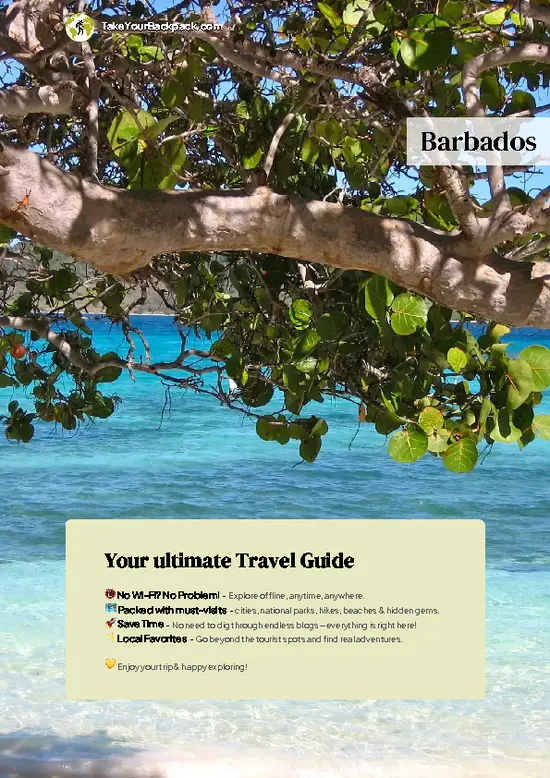
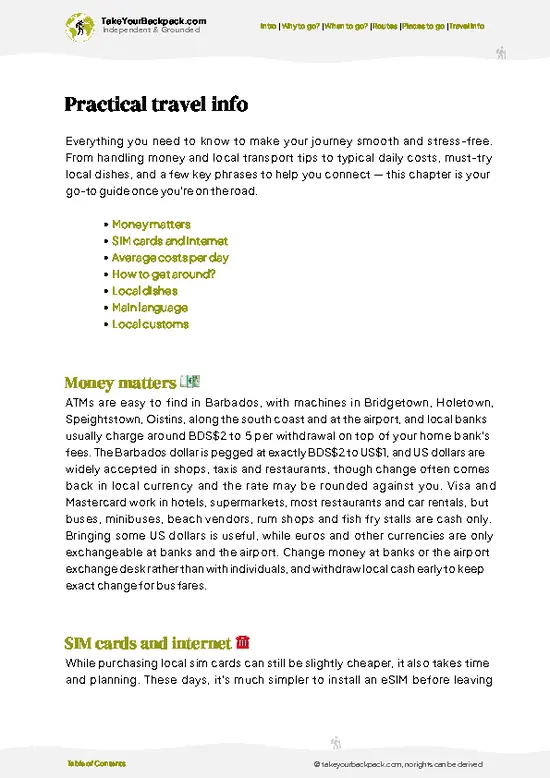
example page 0 from our offline Travel Guide for Barbados
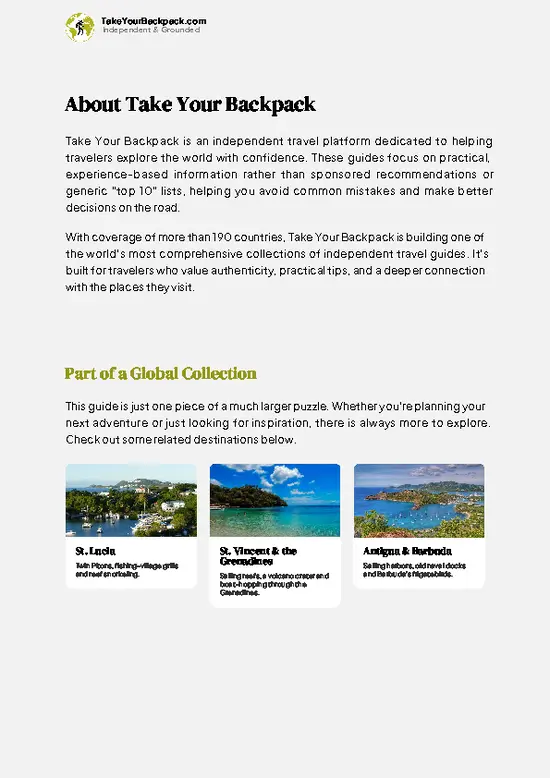
example page 1 from our offline Travel Guide for Barbados
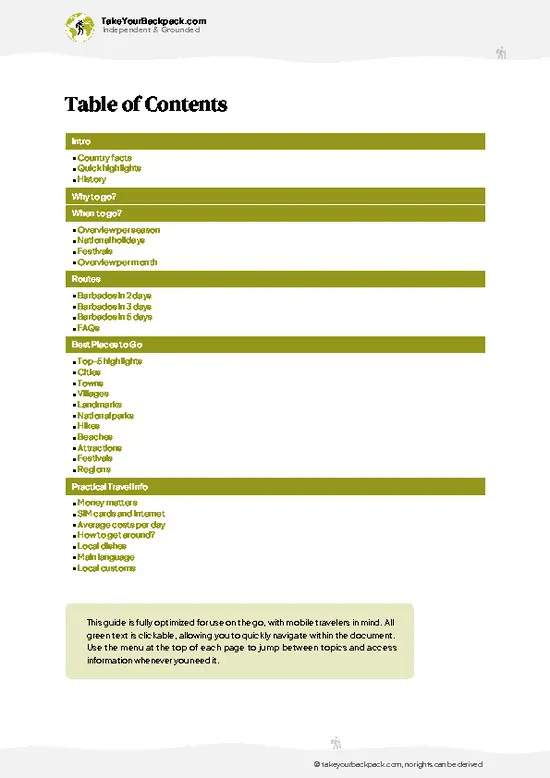
example page 2 from our offline Travel Guide for Barbados
example page 3 from our offline Travel Guide for Barbados
example page 4 from our offline Travel Guide for Barbados
example page 5 from our offline Travel Guide for Barbados
example page 6 from our offline Travel Guide for Barbados
example page 7 from our offline Travel Guide for Barbados
Loading the map 🌍
CLICK TO FILTER
cities
towns
villages
landmarks
national parks
hikes
beaches
attractions
festivals
regions
SHOW COUNTRY’S BESTSHOW ALL

✨ Why go?
Ranked #1 region in Barbados
Why visitors keep coming back

Scotland District rewards backpackers who are tired of the west coast’s polished beaches and want the island’s other face. The main draw is how much changes in a short space: you can stand on the ridge at Hackleton’s Cliff, about 1,000 feet up, looking over the Atlantic and the rolling hills below, then be at the boulder-strewn shore of Bathsheba within a morning. That means you can mix hiking, rum-shop culture and sea views from one base without constantly packing your bag. The second reason is the pace. Villages here are still working farming and fishing communities, so a slow walk along a back lane brings you past mahogany and cabbage palm stands, small plots of sweet potato, and neighbors who will say good morning. Gullies like Joe’s River hold some of the island’s last tropical woodland, … read more 👉
Scotland District rewards backpackers who are tired of the west coast’s polished beaches and want the island’s other face. The main draw is how much changes in a short space: you can stand on the ridge at Hackleton’s Cliff, about 1,000 feet up, looking over the Atlantic and the rolling hills below, then be at the boulder-strewn shore of Bathsheba within a morning. That means you can mix hiking, rum-shop culture and sea views from one base without constantly packing your bag. The second reason is the pace. Villages here are still working farming and fishing communities, so a slow walk along a back lane brings you past mahogany and cabbage palm stands, small plots of sweet potato, and neighbors who will say good morning. Gullies like Joe’s River hold some of the island’s last tropical woodland, and wooded trails there make good walking days. Because the area is compact, a local taxi driver can link everything in a day.

💡 HighlightsThe experiences that define the visit

  1. Cherry Tree Hill: a ridge road lined with old mahogany trees, with a broad view of the east coast and the green hills falling toward the Atlantic. It is the sight most people come for, and the viewpoint is free.
  2. Hackleton’s Cliff: a limestone escarpment, about 1,000 feet above the sea, with one of the widest views on the island. Go on a clear morning when the coast is sharp.
  3. St. John Parish Church: a hilltop church from the 17th century, rebuilt after hurricane damage, with a graveyard that looks down over the east coast. The tomb of Ferdinando Paleologus, said to descend from the Byzantine emperors, lies here.
  4. Bathsheba Beach and the Soup Bowl: giant mushroom-shaped rocks and heavy surf, known to surfers worldwide. Watch from the shore and paddle only in the sheltered rock pools at low tide.
… read more 👉
  1. Cherry Tree Hill: a ridge road lined with old mahogany trees, with a broad view of the east coast and the green hills falling toward the Atlantic. It is the sight most people come for, and the viewpoint is free.
  2. Hackleton’s Cliff: a limestone escarpment, about 1,000 feet above the sea, with one of the widest views on the island. Go on a clear morning when the coast is sharp.
  3. St. John Parish Church: a hilltop church from the 17th century, rebuilt after hurricane damage, with a graveyard that looks down over the east coast. The tomb of Ferdinando Paleologus, said to descend from the Byzantine emperors, lies here.
  4. Bathsheba Beach and the Soup Bowl: giant mushroom-shaped rocks and heavy surf, known to surfers worldwide. Watch from the shore and paddle only in the sheltered rock pools at low tide.
  5. Morgan Lewis Sugar Mill: a restored 18th-century windmill, among the few left intact in the Caribbean, with sails that still turn. Entry is a few dollars.
  6. Chalky Mount Potteries: a village of clay hills where local potters have worked for generations. You can watch them shape and fire pieces, then buy directly.
  7. Joe’s River Tropical Rainforest: a small patch of woodland with a trail through dense growth, fern gullies and old trees. Lesser known, and often empty.
  8. Barclays Park: a seaside park on the coast road, with picnic tables and a view of the Atlantic. Locals come on Sundays for lunch.
  9. Hillaby Hill and Mount Hillaby: the island’s highest point, at about 1,100 feet, reached by a local lane. A modest summit, but quiet and rural.
  10. Cattlewash Beach: a long, wide stretch of sand, ideal for walking at dawn and watching fishing boats. Swimming is unsafe, so keep to the shoreline.
Scotland District has no major attraction that needs advance booking, though Morgan Lewis Sugar Mill charges a small entry fee and potters at Chalky Mount are best visited by arrangement with a local guide.
Spotted a mistake or missing something? Contact us.

Things to do around Scotland District

Ratings based on Tripadvisor reviews. When you book through this link, you support our work at no extra cost to you.

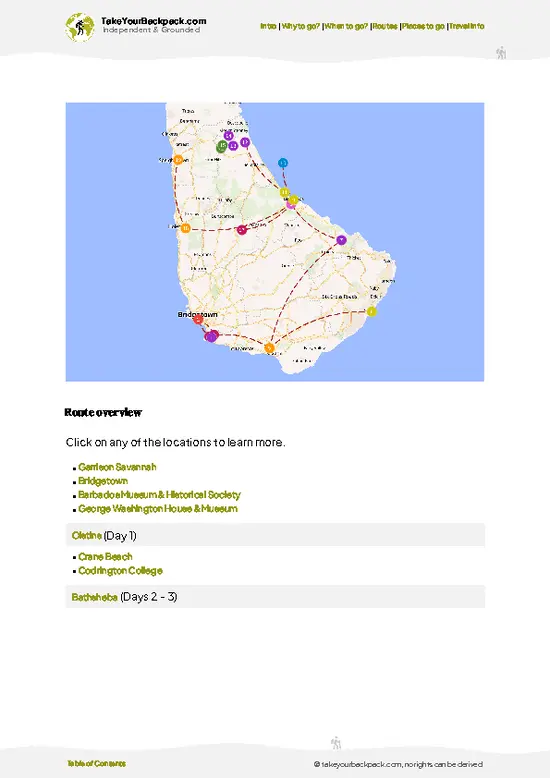
⌛️ 5 daysHow to make the most of Scotland District

Plan on taxi hops between sights and short walks at each stop, with a pause in the shade through the hottest hours, because buses here are sparse and the ridge roads run steeply. A driver for the day makes the logistics simple.
Day 1: Cherry Tree Hill: Begin on the ridge in the cool of morning, when the view over the east coast is clear. Move on to Morgan Lewis Sugar Mill, close enough to reach in a short drive, then spend the afternoon at St. John Parish Church, where the hilltop graveyard gives a second view over the coast.
Day 2: Bathsheba: Base yourself near the sea and walk the beach in the morning to see the rock formations before the sun is high. Eat lunch at a local spot, rest through the afternoon, then come back as light softens over the surf.
Day 3: Joe’s River: Hike the wooded trail … read more 👉
Plan on taxi hops between sights and short walks at each stop, with a pause in the shade through the hottest hours, because buses here are sparse and the ridge roads run steeply. A driver for the day makes the logistics simple.
Day 1: Cherry Tree Hill: Begin on the ridge in the cool of morning, when the view over the east coast is clear. Move on to Morgan Lewis Sugar Mill, close enough to reach in a short drive, then spend the afternoon at St. John Parish Church, where the hilltop graveyard gives a second view over the coast.
Day 2: Bathsheba: Base yourself near the sea and walk the beach in the morning to see the rock formations before the sun is high. Eat lunch at a local spot, rest through the afternoon, then come back as light softens over the surf.
Day 3: Joe’s River: Hike the wooded trail early. The woods hold humidity, so start before midday. The afternoon belongs to a slow walk along back lanes through the farming villages nearby.
Day 4: Chalky Mount: Visit the potteries, then climb the clay hills for views over the coast. This is a good day to buy something handmade. Detour: Hackleton’s Cliff, a short ride off the main line, gives the widest panorama and fits neatly between the pottery and a late lunch.
Day 5: Cattlewash: Finish with a long beach walk and a Sunday-style picnic at Barclays Park if your timing allows.

If you have only one day to justify the whole trip, make it Day 1: the ridge, the windmill and the church show the district’s character in a single loop.

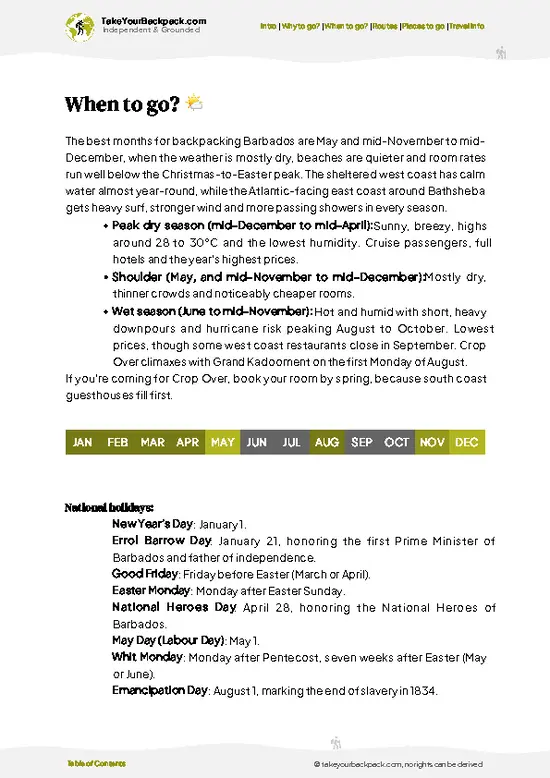
🌤️ When to go?Best time to visit Scotland District

  • Dry Season (December to May): Days run 28 to 31°C (82 to 88°F) with steady trade-wind breezes, and the cliff roads and Cattlewash coast are at their driest. Daylight lasts about 11 to 12 hours. Rooms on the nearby south and west coasts cost the most from mid-December to April, but the parish is rural and rarely crowded.
  • Wet Season (June to November): Expect 26 to 31°C (79 to 88°F), humid air and short, heavy downpours that turn the steep hill roads slick. Hurricane risk peaks from August to October, though Barbados is hit less often than islands to the north and west. Prices drop, and the green hillsides look their best.
  • Festival Season (July to early August): Crop Over fills the island with events, and rooms book up and cost more. Rural spots in Scotland District stay calm, and make an easy
… read more 👉
  • Dry Season (December to May): Days run 28 to 31°C (82 to 88°F) with steady trade-wind breezes, and the cliff roads and Cattlewash coast are at their driest. Daylight lasts about 11 to 12 hours. Rooms on the nearby south and west coasts cost the most from mid-December to April, but the parish is rural and rarely crowded.
  • Wet Season (June to November): Expect 26 to 31°C (79 to 88°F), humid air and short, heavy downpours that turn the steep hill roads slick. Hurricane risk peaks from August to October, though Barbados is hit less often than islands to the north and west. Prices drop, and the green hillsides look their best.
  • Festival Season (July to early August): Crop Over fills the island with events, and rooms book up and cost more. Rural spots in Scotland District stay calm, and make an easy escape from the noise.
  • Surf Months (November to March): Atlantic swells build at Bathsheba, and the Soup Bowl draws surfers from around the world.
Go for sunrise on the east coast in the dry months, when cloud is least likely to blur the horizon.


source: climatestotravel.comJANJanuary: excellent for travelingFEBFebruary: excellent for travelingMARMarch: excellent for travelingAPRApril: highly recommended for travelingMAYMay: fair for travelingJUNJune: fair for travelingJULJuly: fair for travelingAUGAugust: fair for travelingSEPSeptember: fair for travelingOCTOctober: fair for travelingNOVNovember: good for travelingDECDecember: highly recommended for traveling

✈️ The backpacker research shortcutBarbados Travel Guide

An offline-friendly backpacking guide with optimized travel routes, ranked highlights, transport advice, and the best areas to stay.
example page 0 from our offline Travel Guide for Barbados
example page 1 from our offline Travel Guide for Barbados
example page 2 from our offline Travel Guide for Barbados
example page 3 from our offline Travel Guide for Barbados
example page 4 from our offline Travel Guide for Barbados
example page 5 from our offline Travel Guide for Barbados
example page 6 from our offline Travel Guide for Barbados
example page 7 from our offline Travel Guide for Barbados
The digital guide (172 pages) contains:
✅ 44 highlights, ranked by travel appeal
✅ Optimized 2, 3 & 5-day travel routes
✅ Cities, national parks, landmarks, beaches
✅ How to get around
✅ Offline-friendly for travel without Wi-Fi
👉 Click to see all 30+ guide features

📅 Plan smarter in minutes, not weeks
✅ Month by month travel advice
✅ Festivals & national holidays
✅ Budget expectations

🗺️ Go to the right places, skip the overrated ones
✅ Honest pros & cons of destinations
✅ Top hikes, parks & viewpoints
✅ Lesser-known places most travelers miss
✅ Clear “worth it vs skip it” guidance

🛏️ Travel smoothly without rookie mistakes
✅ Best areas to stay
✅ Transport systems explained simply
✅ Common scams & safety advice
✅ SIM cards, money & practical tips

🌍 Understand the country, not just visit it
✅ Culture & traditions
✅ Local customs
✅ Festivals worth planning around
✅ Traveler-friendly historical context
✅ Insights that make places more meaningful

📱 Built for real travel conditions
✅ Fully downloadable PDF
✅ Works completely offline
✅ Optimized for phone use
✅ Useful in remote areas & buses
✅ Everything in one place
Stop searching, start planning
Get instant access to your full guide. 30‑day money-back guarantee.
+ Add another guide for just

By proceeding you agree to our terms.
Sent to your inbox immediately after payment • 100% Secure Checkout
Best Backpacking Travel Advisor 2025 tourism awardBest Backpacking
Travel Advisor
2025
What others say about Take Your Backpack Guides:
⭐⭐⭐⭐⭐
Fantastic, amazing amount of information!
⭐⭐⭐⭐⭐
My goodness this is amazing, it's what I've been looking for hats off too you!
⭐⭐⭐⭐⭐
I think this is absolutely BRILLIANT
⭐⭐⭐⭐
Very complete and informative. It's still missing places, but I gotta to commend you
⭐⭐⭐⭐⭐
This is truly amazing, thank you, can't wait to explore it with my kids!
⭐⭐⭐⭐⭐
Awesome resource, thank you!
⭐⭐⭐⭐⭐
This is amazing! Can't wait to explore the ones I haven't seen
⭐⭐⭐⭐
I love this! Well done, great idea.
⭐⭐⭐⭐⭐
Thanks for taking the time to make this gem!
⭐⭐⭐⭐⭐
This might be the best website I've ever seen.
⭐⭐⭐⭐⭐
Congratulations, and thank you so much for your work; it's incredibly valuable.
⭐⭐⭐⭐
In all seriousness I think you did a great job pointing out the important spots
⭐⭐⭐⭐⭐
10/10 very good
⭐⭐⭐⭐⭐
As someone who's only just starting to visit regularly this is awesome, thank you.
⭐⭐⭐⭐
Thank you very much! I'm going to visit my dad, it's going to be very useful!
⭐⭐⭐⭐⭐
This is really cool! We'll be travelling for the first time and this definitely come in handy.
⭐⭐⭐⭐⭐
You are now our minister of culture, congratulations 👨‍💼
⭐⭐⭐⭐⭐
Just wanted to tell you that this is a pearl! Going to follow your recommendations.
⭐⭐⭐⭐⭐
This is so cool. I'll definitely be using the resource for my travels soon.
⭐⭐⭐⭐⭐
This is very impressive! Good work.
⭐⭐⭐⭐⭐
This is an amazing and informative site. Very well done!

🛏️ Where to stay?How to pick the right area

Bathsheba is the best place to stay in Scotland District, because it is the one village with a real traveler scene. The coastline is rugged, with giant boulders sitting in the surf, and the sound of the Atlantic follows you everywhere. A small cluster of guesthouses, surf shops and beach bars means you will meet other travelers at breakfast or on the sea wall, and most people arrive to surf, hike or just unwind. Solo travelers will find it easy to strike up a conversation, and the village feels safe by day and relaxed in the evening. Rooms are modest and typically US$50 to 110 a night, and there … read more 👉
Bathsheba is the best place to stay in Scotland District, because it is the one village with a real traveler scene. The coastline is rugged, with giant boulders sitting in the surf, and the sound of the Atlantic follows you everywhere. A small cluster of guesthouses, surf shops and beach bars means you will meet other travelers at breakfast or on the sea wall, and most people arrive to surf, hike or just unwind. Solo travelers will find it easy to strike up a conversation, and the village feels safe by day and relaxed in the evening. Rooms are modest and typically US$50 to 110 a night, and there are few dorm-style options, so book ahead in the dry season.
Cattlewash, just to the north, is a quieter alternative with long empty sand and a few small guesthouses. It suits people who want to read, walk the beach and sleep to the sound of waves, though nightlife is minimal. Parts of the coast have strong currents, so swim only where locals do.
If you want more nightlife, restaurants and a social crowd, base yourself on the south coast around Oistins or St. Lawrence Gap and ride the bus in for the day. It is an easier route for late nights, since buses to the east side thin out after dark. The inland villages like Chalky Mount are for day visits rather than overnight stays.

🚌 Getting aroundGetting around like a local

The easiest way for a backpacker to get around Scotland District is the public ZR minibus and the yellow-and-blue government buses, because they are cheap and run the main roads that wind through the hills. Fares are a flat US$1.50 for any single ride, and you can pay in Barbadian dollars or sometimes US dollars, though exact change is smart since drivers rarely make change. Service thins out after dark, so plan your day around daylight.
  • Government buses: Routes from Bridgetown reach Bathsheba and the east coast for US$1.50, usually every 30 to 60 minutes, and the ride takes 45 to 75 minutes. They are slower than minibuses because they stick to the schedule, but the seats are roomier. Wait at the marked stops, and flag the bus with a wave or it may roll past.
  • ZR minibuses: These white vans with
… read more 👉
The easiest way for a backpacker to get around Scotland District is the public ZR minibus and the yellow-and-blue government buses, because they are cheap and run the main roads that wind through the hills. Fares are a flat US$1.50 for any single ride, and you can pay in Barbadian dollars or sometimes US dollars, though exact change is smart since drivers rarely make change. Service thins out after dark, so plan your day around daylight.
  • Government buses: Routes from Bridgetown reach Bathsheba and the east coast for US$1.50, usually every 30 to 60 minutes, and the ride takes 45 to 75 minutes. They are slower than minibuses because they stick to the schedule, but the seats are roomier. Wait at the marked stops, and flag the bus with a wave or it may roll past.
  • ZR minibuses: These white vans with a colored stripe cost US$1.50 and run quickly on the inland routes. They fill up fast around school and work times, so travel mid-morning when there is space. Drivers play loud music, and you ring the bell or call out when you want to stop.
  • Route taxis and private taxis: Taxis do not use meters, so you agree on a fare before getting in. A ride from Bathsheba to nearby spots costs around US$15 to 30, and a half-day driver tour of the district runs about US$75 to 120. Locals call a driver they trust and keep the number, and you can ask your guesthouse host to recommend one.
  • Rental car or mini-moke: Rentals cost US$50 to 90 a day, and a local permit of about US$5 is required on top of your home license. Roads climb steeply and twist narrowly, and driving is on the left. Rent just for one day, since buses cover the rest and parking is limited.
Start early, since buses are most frequent before 10 a.m. and the last return from the east coast can leave by early evening. Tell the driver your destination when boarding, and locals will happily point out the right stop.

🍲 FoodLocal Flavors for Backpackers

Food in Scotland District is rural Bajan cooking at its most honest. Try flying fish with cou-cou, a soft cornmeal and okra mash, the national dish, served with a spicy gravy that clings to everything. Pudding and souse is a Saturday ritual of pickled pork with sweet potato, tart with lime and cucumber and hot with bird pepper. Order a cold Banks beer, fresh coconut water cracked open by a vendor, or a glass of mauby, a bittersweet bark drink that surprises first-timers. A splash of rum is never far away.
Bathsheba has small, casual seaside cafés and rum shops where plates of fried fish, macaroni pie and rice and peas come out hot and the sea air hangs salty over the tables. Roadside bakeries and snack counters sell salt bread, fish cutters and fresh fruit, which suits hikers heading out for … read more 👉
Food in Scotland District is rural Bajan cooking at its most honest. Try flying fish with cou-cou, a soft cornmeal and okra mash, the national dish, served with a spicy gravy that clings to everything. Pudding and souse is a Saturday ritual of pickled pork with sweet potato, tart with lime and cucumber and hot with bird pepper. Order a cold Banks beer, fresh coconut water cracked open by a vendor, or a glass of mauby, a bittersweet bark drink that surprises first-timers. A splash of rum is never far away.
Bathsheba has small, casual seaside cafés and rum shops where plates of fried fish, macaroni pie and rice and peas come out hot and the sea air hangs salty over the tables. Roadside bakeries and snack counters sell salt bread, fish cutters and fresh fruit, which suits hikers heading out for the day. Prices are usually US$8 to 20 for a plate, and a cutter sandwich costs a few dollars.
Greet people with a “good morning” or “good afternoon” as you walk in, since skipping it comes across as rude. Service is unhurried, so settle in and watch the surf. Many small spots close early or on certain days, so carry some cash, and eat your main meal at midday when more places are open.

FAQFrequently asked questions about Scotland District

Two days is enough to see Scotland District, though three lets you slow down. Spend one day on the Bathsheba and Cattlewash coast with its beaches and rock pools, and another exploring the hill villages like Chalky Mount and the Cherry Tree Hill viewpoint. Surfers often stay four or five days to catch the Soup Bowl in the November to March swell.
Buses are the simplest way to get around Scotland District without a car. Government buses and ZR minibuses run from Bridgetown to Bathsheba and cost US$1.50 per ride, with the trip taking about 45 to 75 minutes. Services thin out by early evening, so many travelers also hire a local taxi driver for a half-day circuit at roughly US$75 to 120.
Scotland District is known for its wild Atlantic coastline, dramatic hills and a quiet pace unlike the rest of Barbados. Bathsheba’s Soup Bowl is among the best surf breaks in the Caribbean, and the sea-sculpted boulders make the beach a favorite for photographers. Inland, you will find Chalky Mount’s pottery community and sweeping views from Cherry Tree Hill.
⚠️ Things can change over time, so always validate details locally before you go.

Ideas for continuing your journey

Scotland District isn’t the only highlight in Barbados. Explore all what Barbados has to offer.
Country photo of Barbados

We 💚 feedbackSumming up the experience

Scotland District suits curious walkers, photographers and anyone who prefers a farm lane to a beach bar. If you want sunbeds and cocktails, stay west. I would hire a local driver for a day, bring a rain jacket for the sudden showers on the ridge, and skip swimming on the Atlantic side entirely.

✍️ Help improve this page!
The information on this page is based on in-depth research, insights shared by experienced travelers, and feedback from the local travel community in Barbados. While every effort is made to keep the information accurate and current, conditions can change — so if you spot anything incorrect or outdated, please get in touch.


🙋‍♂️ Give feedback

👋 Meet the founderWho’s Behind Take Your Backpack?

Johan, backpacker and founder of TakeYourBackpackHi, I’m Johan (Netherlands 🇳🇱), the creator of TakeYourBackpack. Over the past 3 decades, I’ve backpacked through 90+ countries across six continents, gaining extensive experience with independent travel, long-term trips, and overland routes.

This site is built on a combination of firsthand travel experience and carefully curated insights from other backpackers. Many guides are based on places I’ve personally visited, while others bring together tips, observations, and practical advice shared by trusted travelers I’ve met along the way.

The goal is to provide realistic, experience-driven guidance — not generic itineraries — so you can explore destinations with better context, clearer expectations, and more confidence.