

×

Botswana🇧🇼 | hikesChobe Riverfrontfloodplain trails, elephant herds, riverine forest, birdwatching | things to do and best time to go

Explore Central Kalahari Game ReserveExplore Tsodilo Hills

Backpacking in Chobe Riverfront
👍 Recommendedhike ranked #4
By Johan Kruseman 🇳🇱 | Updated June 9, 2026

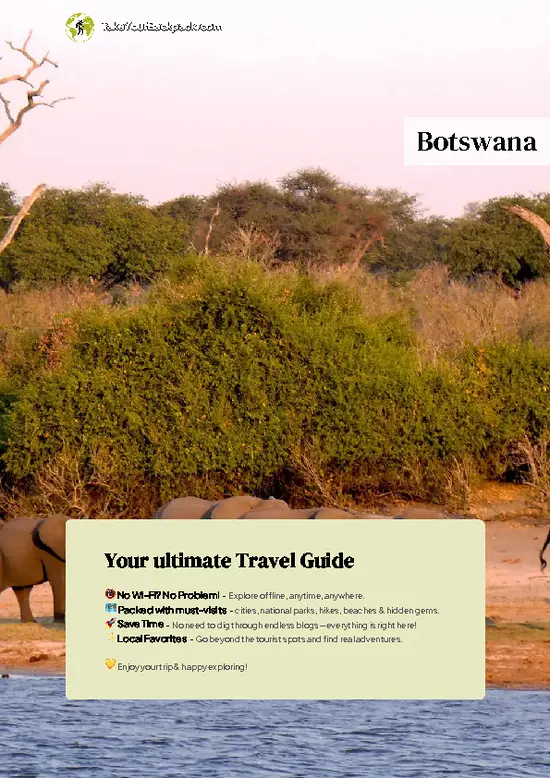
Your boots crunch over sun-baked earth as a herd of elephants materializes from the mopane haze—close enough to hear the flap of their ears, far enough that your pulse stays just on the right side of panic. This is Chobe Riverfront, the northern edge of Botswana, where the land tilts toward the Zambezi and the river draws every living thing for miles. The hike itself isn’t a mapped-out trail so much as a guided bushwalk—raw, unpredictable, and absolutely electric. You’ll sweat under the weight of the sun, swat at tsetse flies, and sometimes slog through sand that grabs your ankles. But the payoff? Herds of buffalo, crocs sliding into the water, and sunsets that turn the river to molten copper. It’s not a walk in the park—expect a few hours of moderate effort, always with a guide, and public transport drops you in Kasane, a dusty jump-off town. Compared to the Okavango’s labyrinth or the Kalahari’s endlessness, Chobe is visceral, immediate, and alive—less about solitude, more about sharing space with giants.

Discover everything you want to know in the 📖 Botswana Travel Guide.
Best time to go: April - October
Duration: 3 to 5 days
Distance: 5 to 20 kilometers
Total ascent: 0 meters


Get your Botswana guide
58 ranked highlights, routes & tips, works offline (257 pages)
Loading the map 🌍
CLICK TO FILTER
cities
towns
villages
landmarks
national parks
hikes
attractions
festivals
regions
SHOW COUNTRY’S BESTSHOW ALL

✨ Why go?
Ranked #4 hike in Botswana
What sets this place apart

The Chobe Riverfront hike in Botswana is a magnet for backpackers craving both adventure and reward. Picture this: you’re striding along the riverbank, the sun dipping low, painting the sky in fiery hues. The scenery-to-effort ratio here is off the charts. You’ll sweat a bit, but the payoff? Jaw-dropping views of elephants splashing in the water and hippos lounging in the shallows.

Access is a breeze. Public transport can drop you right at the trailhead, making it easy to fit into your broader backpacking route. You can choose your distance—whether you’re up for a quick jaunt or a full day of exploration, the flexibility is yours.

And let’s talk cost: this hike won’t break the bank. It’s a low-cost way to immerse yourself in Botswana’s wild heart. After a day on the trail, you can kick … read more 👉
The Chobe Riverfront hike in Botswana is a magnet for backpackers craving both adventure and reward. Picture this: you’re striding along the riverbank, the sun dipping low, painting the sky in fiery hues. The scenery-to-effort ratio here is off the charts. You’ll sweat a bit, but the payoff? Jaw-dropping views of elephants splashing in the water and hippos lounging in the shallows.

Access is a breeze. Public transport can drop you right at the trailhead, making it easy to fit into your broader backpacking route. You can choose your distance—whether you’re up for a quick jaunt or a full day of exploration, the flexibility is yours.

And let’s talk cost: this hike won’t break the bank. It’s a low-cost way to immerse yourself in Botswana’s wild heart. After a day on the trail, you can kick back with a cold beer at a local lodge, relishing the satisfaction of your efforts. The Chobe Riverfront isn’t just a hike; it’s a vibrant experience that seamlessly blends the thrill of exploration with the beauty of nature.
Want to include Chobe Riverfront in your Botswana route?
Create a personalized Botswana itinerary that includes Chobe Riverfront and the places that fit your trip — based on your travel style, budget, and available time. Get your route in seconds.

Generate my trip

💡 HighlightsDon't-miss highlights and experiences

  1. Massive Elephant Herds on the Banks — Chobe’s claim to fame: huge, often noisy herds that come down to drink and cross the river. On foot (with a guide) you feel their scale and presence in a way vehicle safaris don’t—tusks, mud-slinging and all—making this more than a “spot and drive on” experience.
  2. Mirror-like Sunsets over the River — wide water, low horizon and animals silhouetted against molten gold. The riverfront’s reflections and long vistas turn ordinary sunsets into photographic stunners and slow, quiet moments you won’t get in dense bush trails.
  3. Birdlife Bonanza — a riverine mix of kingfishers, African skimmers, giant herons, pelicans and the iconic fish eagle. The variety and sheer numbers along the water’s edge make this a top spot for birding—every pool and reed-bed brings
read more 👉
  1. Massive Elephant Herds on the Banks — Chobe’s claim to fame: huge, often noisy herds that come down to drink and cross the river. On foot (with a guide) you feel their scale and presence in a way vehicle safaris don’t—tusks, mud-slinging and all—making this more than a “spot and drive on” experience.
  2. Mirror-like Sunsets over the River — wide water, low horizon and animals silhouetted against molten gold. The riverfront’s reflections and long vistas turn ordinary sunsets into photographic stunners and slow, quiet moments you won’t get in dense bush trails.
  3. Birdlife Bonanza — a riverine mix of kingfishers, African skimmers, giant herons, pelicans and the iconic fish eagle. The variety and sheer numbers along the water’s edge make this a top spot for birding—every pool and reed-bed brings a new species into view.
  4. Shifting Floodplains and Channel Islands — the landscape changes with the seasons: braided channels, oxbow lagoons and temporary islands that concentrate game. Hiking here means seeing dynamic water-driven scenery—a constantly remade habitat that makes each visit feel different.
  5. River-bank Drama: Hippos, Crocs and Local River Life — pods of hippos, lounging crocodiles and fishermen in small boats give the riverfront a raw, real edge. Add the ferry and riverside villages near Kazungula for a dash of local culture; it’s wildlife and human life rubbing shoulders in a way unique to Chobe.
Spotted a mistake or missing something? Contact us.

Things to do near Chobe Riverfront

Ratings based on Tripadvisor reviews. When you book through this link, you support our work at no extra cost to you.

🌤️ When to go?Choosing the right time of year


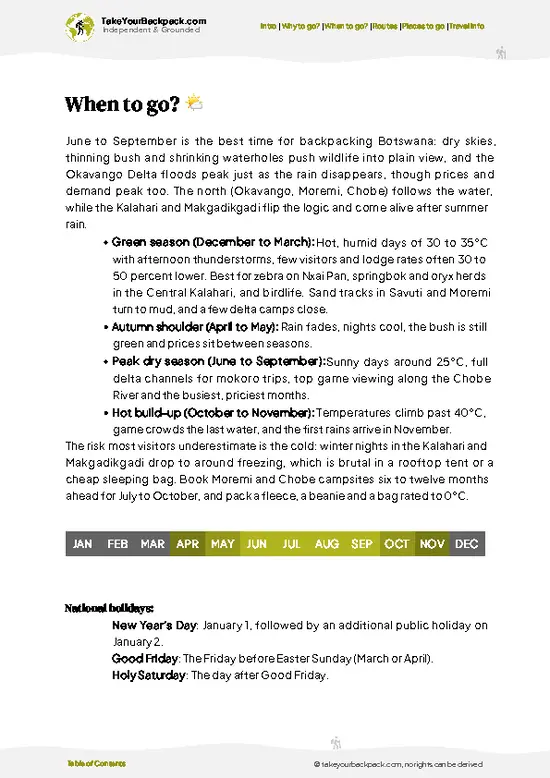
  • Weather: The dry season from May to October is prime time. The heat drops to a manageable 20-25°C (68-77°F), and the lack of rain means trails stay firm and the riverfront clears up for wildlife spotting.

  • Temperature: Daytime highs hover around 25°C (77°F), but nights can dip to 5-10°C (41-50°F). Layer up for early mornings and evenings; the sun’s warmth is a welcome boost midday.

  • Daylight Hours: Expect roughly 11 to 12 hours of daylight, enough to pack in long hikes and game drives without rushing, but not so much that you burn out before sunset.

  • Crowds: Peak dry season draws more safari groups, especially July and August. If you want fewer people, aim for May or late September when the wildlife is still active but the crowds thin out.

  • Seasonal Activities: Dry months concentrate
read more 👉

  • Weather: The dry season from May to October is prime time. The heat drops to a manageable 20-25°C (68-77°F), and the lack of rain means trails stay firm and the riverfront clears up for wildlife spotting.

  • Temperature: Daytime highs hover around 25°C (77°F), but nights can dip to 5-10°C (41-50°F). Layer up for early mornings and evenings; the sun’s warmth is a welcome boost midday.

  • Daylight Hours: Expect roughly 11 to 12 hours of daylight, enough to pack in long hikes and game drives without rushing, but not so much that you burn out before sunset.

  • Crowds: Peak dry season draws more safari groups, especially July and August. If you want fewer people, aim for May or late September when the wildlife is still active but the crowds thin out.

  • Seasonal Activities: Dry months concentrate animals near water, turning the riverfront into a wildlife magnet. Boat safaris and guided walks hit their stride here, offering intense, close-up encounters.

  • Price Fluctuations: Expect rates to spike during peak dry months, especially July and August. Booking early or targeting shoulder months can save you cash without sacrificing the experience.


Pro-tip: Hit the Chobe Riverfront just as the dry season settles in—when the air is crisp, the animals gather, and the trails are firm enough to push hard without slipping.


source: climatestotravel.comJANJanuary: fair for travelingFEBFebruary: fair for travelingMARMarch: fair for travelingAPRApril: good for travelingMAYMay: highly recommended for travelingJUNJune: excellent for travelingJULJuly: excellent for travelingAUGAugust: excellent for travelingSEPSeptember: highly recommended for travelingOCTOctober: highly recommended for travelingNOVNovember: fair for travelingDECDecember: fair for traveling
botswana-hike-chobe-riverfront
© Google |

✈️ The backpacker research shortcutBotswana Travel Guide

An offline-friendly backpacking guide with optimized travel routes, ranked highlights, transport advice, and the best areas to stay.
example page 0 from our offline Travel Guide for Botswana
example page 1 from our offline Travel Guide for Botswana
example page 2 from our offline Travel Guide for Botswana
example page 3 from our offline Travel Guide for Botswana
example page 4 from our offline Travel Guide for Botswana
example page 5 from our offline Travel Guide for Botswana
example page 6 from our offline Travel Guide for Botswana
example page 7 from our offline Travel Guide for Botswana
The digital guide (257 pages) contains:
58 highlights, ranked by travel appeal
Optimized 5, 10 & 15-day travel routes
Cities, national parks, landmarks, beaches
How to get around
Offline-friendly for travel without Wi-Fi
👉 Click to see all 30+ guide features

📅 Plan smarter in minutes, not weeks
Month by month travel advice
Festivals & national holidays
Budget expectations

🗺️ Go to the right places, skip the overrated ones
Honest pros & cons of destinations
Top hikes, parks & viewpoints
Lesser-known places most travelers miss
Clear “worth it vs skip it” guidance

🛏️ Travel smoothly without rookie mistakes
Best areas to stay
Transport systems explained simply
Common scams & safety advice
SIM cards, money & practical tips

🌍 Understand the country, not just visit it
Culture & traditions
52 Essential phrases & customs
Festivals worth planning around
Traveler-friendly historical context
Insights that make places more meaningful

📱 Built for real travel conditions
Fully downloadable PDF
Works completely offline
Optimized for phone use
Useful in remote areas & buses
Everything in one place
Save weeks of stressful planning
Get instant access to your full guide. 30‑day money-back guarantee.


By proceeding you agree to our terms.
Sent to your inbox immediately after payment • 100% Secure Checkout
Best Backpacking Travel Advisor 2025 tourism awardBest Backpacking
Travel Advisor
2025
What others say about Take Your Backpack Guides:
⭐⭐⭐⭐⭐
Fantastic, amazing amount of information!
⭐⭐⭐⭐⭐
My goodness this is amazing, it's what I've been looking for hats off too you!
⭐⭐⭐⭐⭐
I think this is absolutely BRILLIANT
⭐⭐⭐⭐
Very complete and informative. It's still missing places, but I gotta to commend you
⭐⭐⭐⭐⭐
This is truly amazing, thank you, can't wait to explore it with my kids!
⭐⭐⭐⭐⭐
Awesome resource, thank you!
⭐⭐⭐⭐⭐
This is amazing! Can't wait to explore the ones I haven't seen
⭐⭐⭐⭐
I love this! Well done, great idea.
⭐⭐⭐⭐⭐
Thanks for taking the time to make this gem!
⭐⭐⭐⭐⭐
This might be the best website I've ever seen.
⭐⭐⭐⭐⭐
Congratulations, and thank you so much for your work; it's incredibly valuable.
⭐⭐⭐⭐
In all seriousness I think you did a great job pointing out the important spots
⭐⭐⭐⭐⭐
10/10 very good
⭐⭐⭐⭐⭐
As someone who's only just starting to visit regularly this is awesome, thank you.
⭐⭐⭐⭐
Thank you very much! I'm going to visit my dad, it's going to be very useful!
⭐⭐⭐⭐⭐
This is really cool! We'll be travelling for the first time and this definitely come in handy.
⭐⭐⭐⭐⭐
You are now our minister of culture, congratulations 👨‍💼
⭐⭐⭐⭐⭐
Just wanted to tell you that this is a pearl! Going to follow your recommendations.
⭐⭐⭐⭐⭐
This is so cool. I'll definitely be using the resource for my travels soon.
⭐⭐⭐⭐⭐
This is very impressive! Good work.
⭐⭐⭐⭐⭐
This is an amazing and informative site. Very well done!

🛏️ Where to stay?Choosing the right base

If you enjoy meeting fellow travelers, consider choosing hostels with high ratings for atmosphere. On the other hand, if you prefer having your own space, a hotel might be a better option.

🥾 Hike detailsTrail overview: what to expect on the hike

Total Distance: The Chobe Riverfront trail covers approximately 30 kilometers (about 18.6 miles) if you decide to hike the full stretch along the river.

Estimated Duration: Plan for around 2 to 4 days to complete the hike, depending on your pace and how much time you spend soaking in the scenery or wildlife spotting.

Difficulty Level: This trail is generally considered moderate. You’ll encounter some uneven terrain and occasional steep sections, but nothing too extreme if you’re reasonably fit.

Starting Point: The trail typically begins at Kasane, a small town near the Chobe National Park. … read more 👉
Total Distance: The Chobe Riverfront trail covers approximately 30 kilometers (about 18.6 miles) if you decide to hike the full stretch along the river.

Estimated Duration: Plan for around 2 to 4 days to complete the hike, depending on your pace and how much time you spend soaking in the scenery or wildlife spotting.

Difficulty Level: This trail is generally considered moderate. You’ll encounter some uneven terrain and occasional steep sections, but nothing too extreme if you’re reasonably fit.

Starting Point: The trail typically begins at Kasane, a small town near the Chobe National Park. To get there by public transport, you can take a bus from major cities like Livingstone in Zambia or Victoria Falls in Zimbabwe. The ride usually takes a few hours, so be prepared for a bit of a journey.

Major Landmarks Along the Route:
  • Chobe National Park: You’ll be hiking right alongside this iconic park, famous for its large elephant population.
  • Chobe River: The river itself is a stunning backdrop, offering opportunities to spot hippos and crocodiles.
  • Kasane Forest Reserve: This area features diverse ecosystems and is great for birdwatching.

Type of Terrain and Scenery: Expect a mix of sandy paths, riverbanks, and some rocky outcrops. The scenery is breathtaking, with sweeping views of the Chobe River and surrounding landscapes, especially at sunrise and sunset.

Typical Vegetation: The trail is lined with a variety of vegetation, including acacia trees, mopane woodlands, and tall grasses. You’ll also see riverine forests along the banks, which provide habitat for many animals.

Wildlife: This area is a wildlife haven. Keep your eyes peeled for:
  • Elephants: They’re everywhere, often seen drinking from the river.
  • Buffalo: You might spot herds grazing in the open areas.
  • Birds: Over 450 species inhabit the region, including kingfishers and fish eagles.
  • Predators: You might catch a glimpse of lions or leopards if you’re lucky.

Make sure to carry plenty of water, wear sturdy shoes, and keep your camera ready. The Chobe Riverfront is an unforgettable experience for any independent hiker!
⚠️ Hiking info can sometimes be outdated or inaccurate. Before you hit the trail, check the latest conditions with locals. If you do spot anything that's off, I'd love to hear from you, so I can update it for fellow travelers.

🛡️ SafetyScams, Hazards, and Annoyances

The Chobe Riverfront hike is a thrilling blend of adventure and nature, but it demands your attention. Weather can shift quickly; the sun can scorch, and sudden rain can drench you. Dress in layers and keep a rain jacket handy.

The terrain is mostly flat, but watch your footing—some sections can be rocky or uneven. Navigation is straightforward, but pay attention to trail markers. River crossings are rare, but if you encounter one, assess the current before proceeding.

Wildlife is a highlight here. Elephants often roam nearby, and while they’re generally non-aggressive, keep your distance. If you spot one, stop, observe, and let it pass.

Preparation is key. Bring enough water and snacks; dehydration sneaks up on you. A good pair of hiking boots will save your feet from fatigue. Timing … read more 👉
The Chobe Riverfront hike is a thrilling blend of adventure and nature, but it demands your attention. Weather can shift quickly; the sun can scorch, and sudden rain can drench you. Dress in layers and keep a rain jacket handy.

The terrain is mostly flat, but watch your footing—some sections can be rocky or uneven. Navigation is straightforward, but pay attention to trail markers. River crossings are rare, but if you encounter one, assess the current before proceeding.

Wildlife is a highlight here. Elephants often roam nearby, and while they’re generally non-aggressive, keep your distance. If you spot one, stop, observe, and let it pass.

Preparation is key. Bring enough water and snacks; dehydration sneaks up on you. A good pair of hiking boots will save your feet from fatigue. Timing your hike for early morning or late afternoon not only avoids the heat but also offers the best chances for wildlife sightings. Embrace the challenge, and the rewards will be worth every step.

Other Botswanan hikes near Chobe Riverfront

Explore more nearby:


💡 Not sure where to go next?
Create a personalized itinerary for Botswana including Chobe Riverfront and the places that fit your trip.

Generate my itinerary

👉 Discover all hikes

Or checkout all Botswana has to offer (think cities, towns, villages, national parks, hikes, beaches, festivals)
Country photo of Botswana

We 💚 feedbackWhat to keep in mind

The Chobe Riverfront is electric. Picture this: you’re on a boat, the sun dipping low, and elephants are splashing in the water. It’s wild, it’s raw, and it’s a feast for the senses. The best surprise? The sheer number of animals—hippos, crocs, and birds everywhere. Just a heads-up: the heat can be relentless, so hydrate like it’s your job. But when that first cold beer hits after a day of exploring, you’ll know every drop of sweat was worth it.

✍️ Help improve this page!
The information on this page is based on in-depth research, insights shared by experienced travelers, and feedback from the local travel community in Botswana. While every effort is made to keep the information accurate and current, conditions can change — so if you spot anything incorrect or outdated, please get in touch.


🙋‍♂️ Give feedback

👋 Meet the founderWho’s Behind Take Your Backpack?

Johan, backpacker and founder of TakeYourBackpackHi, I’m Johan (Netherlands 🇳🇱), the creator of TakeYourBackpack. Over the past decade, I’ve backpacked through 80+ countries across six continents, gaining extensive experience with independent travel, long-term trips, and overland routes.

This site is built on a combination of firsthand travel experience and carefully curated insights from other backpackers. Many guides are based on places I’ve personally visited, while others bring together tips, observations, and practical advice shared by trusted travelers I’ve met along the way.

The goal is to provide realistic, experience-driven guidance — not generic itineraries — so you can explore destinations with better context, clearer expectations, and more confidence.

Get full Botswana guide •
Instant download • 58 highlights • Full Offline guide