×

Botswana🇧🇼 | best national parksExplore the 11 Best national parks in Botswana

Botswana’s national parks are a tapestry of diverse landscapes and rich wildlife, each offering unique experiences for backpackers and independent travelers. Defined by their commitment to conservation, these parks vary significantly in accessibility, wildlife density, and adventure opportunities. For instance, Chobe National Park is renowned for its elephant population, while Moremi Game Reserve offers a blend of wetlands and savannahs, ideal for those seeking varied ecosystems.

Choosing the right park impacts your budget, safety, and cultural immersion. Some parks are more remote, requiring careful planning for logistics, while others are easily accessible from major towns. Seasonal nuances also play a role; the dry season attracts more wildlife, enhancing your chances of memorable encounters. Understanding these factors ensures a smoother, more rewarding exploration of Botswana’s natural wonders.

By Johan Kruseman 🇳🇱 | Updated June 11, 2026
Explore the best hikes in Botswana

Why go?Key Factors That Shape the Experience

Botswana’s national parks stand out due to their vast landscapes and rich biodiversity. Unlike many countries, Botswana has prioritized conservation, resulting in expansive protected areas that harbor a variety of wildlife, including elephants, lions, and rare species like the African wild dog. This commitment to conservation is rooted in the country’s historical context, where the preservation of natural resources has become a cornerstone of national identity and economic strategy.

However, the infrastructure can be a double-edged sword. While Botswana boasts well-maintained roads and campsites, accessibility varies significantly. Some parks are remote, requiring long travel times that can detract from the overall experience. This trade-off means that while you may spend hours getting to … read more 👉
Botswana’s national parks stand out due to their vast landscapes and rich biodiversity. Unlike many countries, Botswana has prioritized conservation, resulting in expansive protected areas that harbor a variety of wildlife, including elephants, lions, and rare species like the African wild dog. This commitment to conservation is rooted in the country’s historical context, where the preservation of natural resources has become a cornerstone of national identity and economic strategy.

However, the infrastructure can be a double-edged sword. While Botswana boasts well-maintained roads and campsites, accessibility varies significantly. Some parks are remote, requiring long travel times that can detract from the overall experience. This trade-off means that while you may spend hours getting to a park, the reward is often a more immersive experience with fewer tourists. The remoteness can lead to a deeper connection with the landscape, but it also demands careful planning.

The climatic conditions further influence the experience. The dry season offers excellent wildlife viewing, but the heat can be intense, making early morning or late afternoon excursions preferable. Travelers must weigh the benefits of optimal wildlife sightings against the physical demands of the environment.

Ultimately, Botswana’s national parks offer a unique blend of adventure opportunities and natural beauty, but understanding the trade-offs in accessibility, travel time, and climate is essential for a fulfilling experience.
Behind the Scenes of Selection
The list of best national parks in Botswana is created based on landscapes, wildlife, adventure opportunities, facilities, and overall experience. If you feel a national park is missing in this list, please let us know.

When to go?Timing Your Visit for the Best Experience

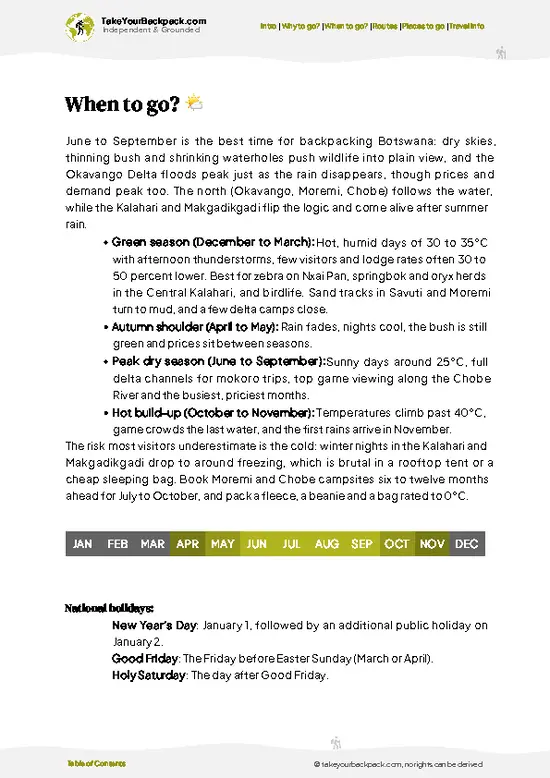
Seasonality significantly impacts wildlife visibility and overall experience in Botswana’s national parks. The dry season, typically from May to October, offers the best opportunities for spotting animals. Water sources dwindle, drawing wildlife closer to rivers and waterholes. This period also features cooler temperatures, making it comfortable for exploration. However, it coincides with peak tourist season, leading to crowded trails and higher costs.

Rainfall begins in November, marking the start of the wet season. While the landscape transforms into a lush green, wildlife becomes more dispersed, making sightings less predictable. The rains peak from December to February, bringing heavy downpours that can affect trail conditions. Some areas may become inaccessible, limiting exploration … read more 👉
Seasonality significantly impacts wildlife visibility and overall experience in Botswana’s national parks. The dry season, typically from May to October, offers the best opportunities for spotting animals. Water sources dwindle, drawing wildlife closer to rivers and waterholes. This period also features cooler temperatures, making it comfortable for exploration. However, it coincides with peak tourist season, leading to crowded trails and higher costs.

Rainfall begins in November, marking the start of the wet season. While the landscape transforms into a lush green, wildlife becomes more dispersed, making sightings less predictable. The rains peak from December to February, bringing heavy downpours that can affect trail conditions. Some areas may become inaccessible, limiting exploration options. However, this is also the time for newborn animals, adding a unique charm to the experience.

Shoulder seasons, such as late October and early November or March and April, present a balanced choice. These months often feature fewer crowds and lower prices while still offering decent wildlife visibility. Travelers should weigh the trade-offs: the allure of vibrant landscapes against the potential for less predictable wildlife encounters. Understanding these seasonal patterns allows for more informed planning, ensuring a smoother and more rewarding visit.

national park hoppingOptimizing Your Multi-Stop Itinerary

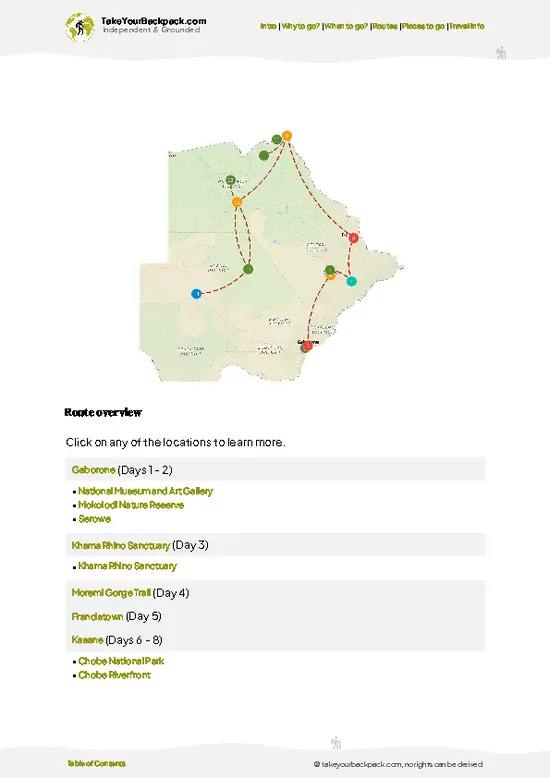
Combining national parks in Botswana requires strategic planning to maximize both experience and efficiency. Start by clustering parks regionally. The northern parks, like Chobe and Moremi, are close together, making them ideal for a multi-stop itinerary. Traveling south, the Kalahari and Makgadikgadi offer a different landscape and wildlife experience. This regional approach minimizes travel time and allows for deeper exploration.

Typical visits to each park should be planned for at least two to three days. This duration allows for game drives, guided walks, and relaxation. However, if time is limited, prioritize parks based on interests—Chobe for elephants, Moremi for diverse ecosystems, and the Kalahari for unique landscapes. Balancing time spent in each park is crucial; rushing through read more 👉
Combining national parks in Botswana requires strategic planning to maximize both experience and efficiency. Start by clustering parks regionally. The northern parks, like Chobe and Moremi, are close together, making them ideal for a multi-stop itinerary. Traveling south, the Kalahari and Makgadikgadi offer a different landscape and wildlife experience. This regional approach minimizes travel time and allows for deeper exploration.

Typical visits to each park should be planned for at least two to three days. This duration allows for game drives, guided walks, and relaxation. However, if time is limited, prioritize parks based on interests—Chobe for elephants, Moremi for diverse ecosystems, and the Kalahari for unique landscapes. Balancing time spent in each park is crucial; rushing through multiple parks can lead to fatigue and missed opportunities.

Common mistakes include underestimating travel distances and over-scheduling activities. Botswana’s roads can be challenging, and travel times may exceed expectations. Flexibility is key; allow for spontaneous detours or extended stays if a park captivates. Consider budget constraints as well; some parks have higher accommodation costs, which can impact overall trip expenses.

Ultimately, the trade-off between speed and depth of experience is significant. A well-planned route that allows for both exploration and relaxation will yield the most rewarding adventure.

The ListHighly Recommended national parks of Botswana

1 Okavango Delta

Inland delta, mokoro trails, reed islands, seasonal flooding

Glide through labyrinthine channels by dugout canoe, exploring a watery wilderness teeming with life and shifting with the rains.

botswana-national-park-okavango-delta
© Google |

2 Chobe National Park

Elephant herds, Chobe River, riverine forest, boat safaris

Watch elephants gather at the water’s edge and drift past hippos on a river cruise through a landscape shaped by seasonal floods.

Botswana - Chobe National Park

3 Moremi Game Reserve

Floodplains, mopane woodland, birdlife diversity, predator sightings

Navigate a mosaic of wetlands and forests where prolific wildlife and shifting water levels create ever-changing safari scenes.

botswana-national-park-moremi-game-reserve
© Google |

4 Makgadikgadi Pans National Park

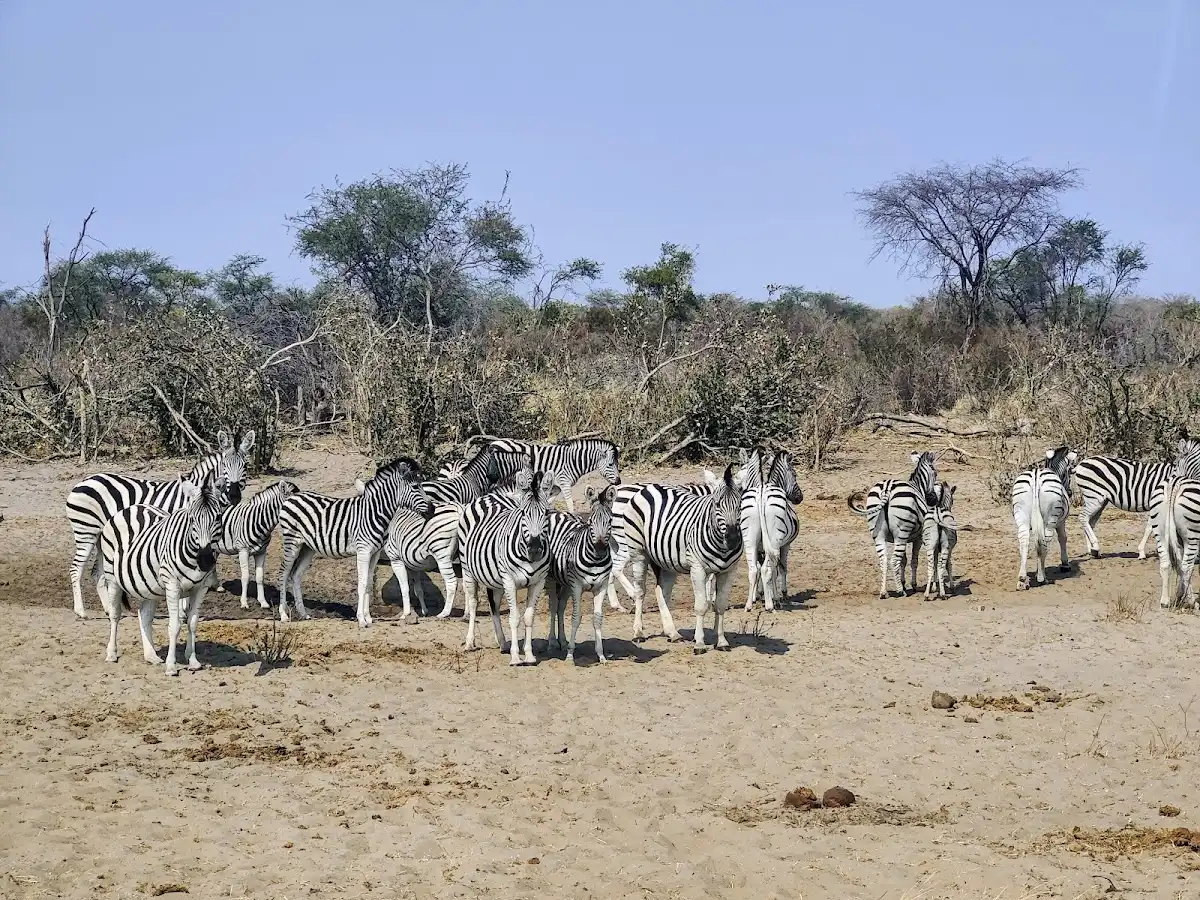
Salt flats, zebra migration, baobab trees, lunar landscape

Traverse endless white pans and witness seasonal migrations across a stark, open expanse dotted with ancient trees.

botswana-national-park-makgadikgadi-pans-national-park
© Google |

5 Nxai Pan National Park

Open grasslands, springbok herds, Baines’ Baobabs, seasonal waterholes

Experience wide horizons and dramatic skies as antelope gather at waterholes and iconic baobabs rise from the plains.

botswana-national-park-nxai-pan-national-park v1
© Google |

6 Linyanti Wildlife Reserve

Remote wetlands, wild dog territory, papyrus channels, private concessions

Venture into secluded marshes where rare predators roam and waterways attract wildlife in a setting far from crowds.

7 Kgalagadi Transfrontier Park

Red dunes, black-maned lions, arid savanna, border wilderness

Cross into a vast semi-desert where shifting sands, stark horizons, and elusive predators define the rhythm of each day.

8 Tuli Block

Rocky outcrops, riverine forests, ancient baobabs, cross-border trails

Follow elephant paths through dramatic rock formations and river valleys where three countries meet and wildlife moves freely.

botswana-national-park-tuli-block v1
© Google |

9 Mabuasehube Game Reserve

Isolated pans, sandy tracks, self-drive adventure, wilderness camping

Tackle rugged tracks to reach secluded pans, relying on self-sufficiency and solitude in a landscape shaped by wind and silence.

10 Khutse Game Reserve

Kalahari sands, acacia scrub, remote campsites, desert antelope

Camp under open skies in a quiet reserve where hardy wildlife and sparse vegetation reveal the subtle beauty of the Kalahari.

botswana-national-park-khutse-game-reserve
© Google |

11 Gaborone Game Reserve

Urban wildlife, birdwatching hides, picnic spots, short walking trails

Escape city bustle for a quick encounter with antelope and birds in a compact reserve easily explored on foot or by car.

Loading the map 🌍

Expert viewTips and Advice from Travelers

Terrain Botswana’s national parks showcase a remarkable variety of landscapes, from the arid Kalahari Desert to the lush Okavango Delta. Each park offers a unique terrain that influences the type of wildlife you’ll encounter and the activities available. For instance, the Delta is a water-based ecosystem, ideal for mokoro (dugout canoe) excursions, while Chobe National Park features riverfront areas that attract large herds of elephants. Understanding these differences is crucial for planning your visit. If you’re keen on seeing specific wildlife, like the elusive leopard, you might prioritize parks with dense bush and trees, such as Moremi Game Reserve. However, be prepared for longer travel times between parks, especially if you aim to cover multiple regions.

Park Infrastructure The infrastructure … read more 👉
Terrain Botswana’s national parks showcase a remarkable variety of landscapes, from the arid Kalahari Desert to the lush Okavango Delta. Each park offers a unique terrain that influences the type of wildlife you’ll encounter and the activities available. For instance, the Delta is a water-based ecosystem, ideal for mokoro (dugout canoe) excursions, while Chobe National Park features riverfront areas that attract large herds of elephants. Understanding these differences is crucial for planning your visit. If you’re keen on seeing specific wildlife, like the elusive leopard, you might prioritize parks with dense bush and trees, such as Moremi Game Reserve. However, be prepared for longer travel times between parks, especially if you aim to cover multiple regions.

Park Infrastructure The infrastructure in Botswana’s national parks varies significantly. Some parks, like Chobe, have well-established lodges and campsites, making them accessible for both novice and seasoned travelers. Others, such as Nxai Pan, offer more rustic accommodations, which can enhance the experience but may require more effort in terms of logistics. When planning, consider how much comfort you need versus the authenticity of the experience. If you’re willing to rough it a bit, you can immerse yourself in the wild, but this often means less reliable access to amenities. The trade-off here is between comfort and a deeper connection to the environment.

Wildlife Activity Wildlife activity is another critical factor. The dry season, from May to October, is generally the best time for game viewing, as animals congregate around water sources. However, this is also peak tourist season, which can lead to crowded viewing areas. If you prefer a quieter experience, consider visiting during the shoulder months, like April or November, when wildlife is still active but the crowds are thinner. This timing can also affect your budget; traveling off-peak often means lower rates for accommodations and tours. The key is to balance your desire for wildlife encounters with the experience of solitude in nature.

Time Spent per Park When deciding how many parks to visit, aim for two to three, depending on your travel style. Each park deserves a minimum of two to three days to fully appreciate its offerings. Rushing through parks can lead to missed opportunities for wildlife sightings and cultural experiences. If you’re short on time, prioritize parks based on your interests—whether it’s birdwatching, big game, or unique landscapes. The trade-off here is between breadth and depth; visiting more parks means less time in each, potentially sacrificing the richness of the experience.

Planning and Prioritizing Prioritize parks based on your interests and logistical considerations. If you’re keen on a diverse experience, start with Chobe for elephants and then head to the Okavango Delta for a different ecosystem. Consider travel times between parks; some routes can be lengthy and may require overnight stops. Local culture plays a role too; engaging with communities can enrich your experience but may require additional planning. Always check for seasonal accessibility, as some parks may be less accessible during the rainy season.

Safety & Cultural Considerations Safety is paramount. While Botswana is relatively safe for travelers, always stay aware of your surroundings, especially in remote areas. Respect local customs and practices; this not only enhances your experience but fosters goodwill. Engage with local guides who can provide insights into both wildlife and cultural contexts. This connection can transform your visit from a simple sightseeing trip into a meaningful journey.

In summary, understanding the terrain, infrastructure, wildlife activity, and cultural context of Botswana’s national parks will help you make informed decisions. Prioritize your interests, plan realistically, and embrace the unique experiences each park offers.

✈️ The backpacker research shortcutBotswana Travel Guide

An offline-friendly backpacking guide with optimized travel routes, ranked highlights, transport advice, and the best areas to stay.
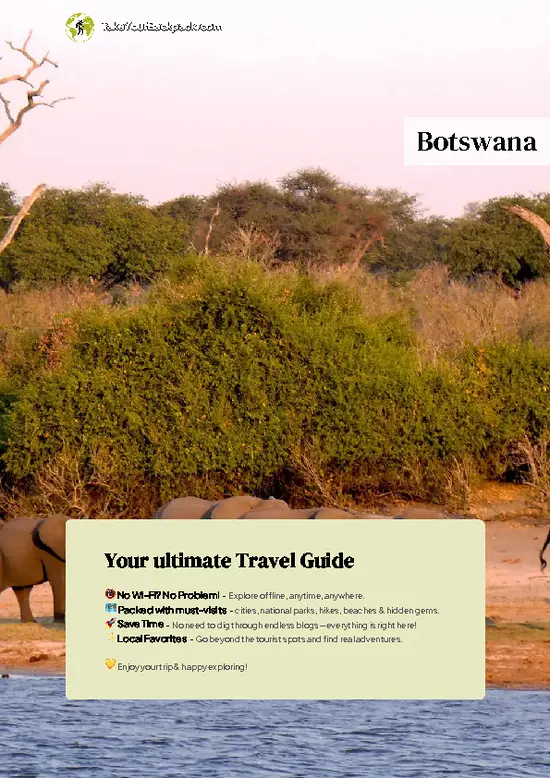
example page 0 from our offline Travel Guide for Botswana
example page 1 from our offline Travel Guide for Botswana
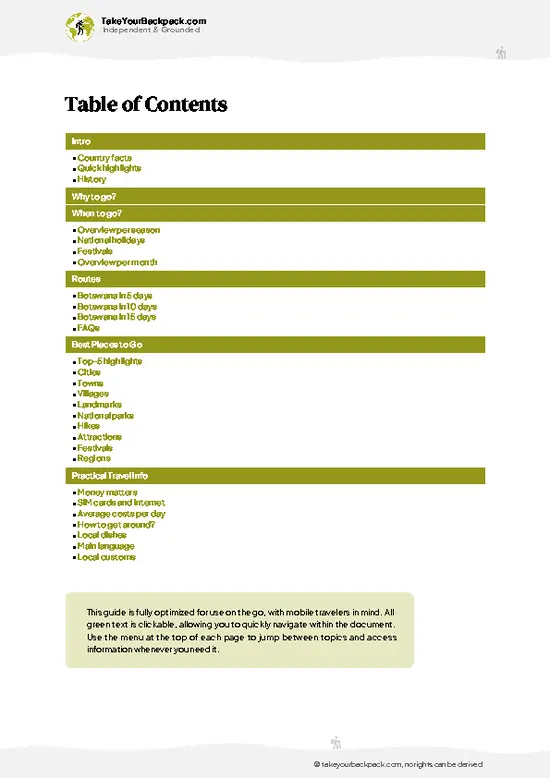
example page 2 from our offline Travel Guide for Botswana
example page 3 from our offline Travel Guide for Botswana
example page 4 from our offline Travel Guide for Botswana
example page 5 from our offline Travel Guide for Botswana
example page 6 from our offline Travel Guide for Botswana
example page 7 from our offline Travel Guide for Botswana
The digital guide (257 pages) contains:
58 highlights, ranked by travel appeal
Optimized 5, 10 & 15-day travel routes
Cities, national parks, landmarks, beaches
How to get around
Offline-friendly for travel without Wi-Fi
👉 Click to see all 30+ guide features

📅 Plan smarter in minutes, not weeks
Month by month travel advice
Festivals & national holidays
Budget expectations

🗺️ Go to the right places, skip the overrated ones
Honest pros & cons of destinations
Top hikes, parks & viewpoints
Lesser-known places most travelers miss
Clear “worth it vs skip it” guidance

🛏️ Travel smoothly without rookie mistakes
Best areas to stay
Transport systems explained simply
Common scams & safety advice
SIM cards, money & practical tips

🌍 Understand the country, not just visit it
Culture & traditions
52 Essential phrases & customs
Festivals worth planning around
Traveler-friendly historical context
Insights that make places more meaningful

📱 Built for real travel conditions
Fully downloadable PDF
Works completely offline
Optimized for phone use
Useful in remote areas & buses
Everything in one place
Save weeks of stressful planning
Get instant access to your full guide. 30‑day money-back guarantee.


By proceeding you agree to our terms.
Sent to your inbox immediately after payment • 100% Secure Checkout
Best Backpacking Travel Advisor 2025 tourism awardBest Backpacking
Travel Advisor
2025
What others say about Take Your Backpack Guides:
⭐⭐⭐⭐⭐
Fantastic, amazing amount of information!
⭐⭐⭐⭐⭐
My goodness this is amazing, it's what I've been looking for hats off too you!
⭐⭐⭐⭐⭐
I think this is absolutely BRILLIANT
⭐⭐⭐⭐
Very complete and informative. It's still missing places, but I gotta to commend you
⭐⭐⭐⭐⭐
This is truly amazing, thank you, can't wait to explore it with my kids!
⭐⭐⭐⭐⭐
Awesome resource, thank you!
⭐⭐⭐⭐⭐
This is amazing! Can't wait to explore the ones I haven't seen
⭐⭐⭐⭐
I love this! Well done, great idea.
⭐⭐⭐⭐⭐
Thanks for taking the time to make this gem!
⭐⭐⭐⭐⭐
This might be the best website I've ever seen.
⭐⭐⭐⭐⭐
Congratulations, and thank you so much for your work; it's incredibly valuable.
⭐⭐⭐⭐
In all seriousness I think you did a great job pointing out the important spots
⭐⭐⭐⭐⭐
10/10 very good
⭐⭐⭐⭐⭐
As someone who's only just starting to visit regularly this is awesome, thank you.
⭐⭐⭐⭐
Thank you very much! I'm going to visit my dad, it's going to be very useful!
⭐⭐⭐⭐⭐
This is really cool! We'll be travelling for the first time and this definitely come in handy.
⭐⭐⭐⭐⭐
You are now our minister of culture, congratulations 👨‍💼
⭐⭐⭐⭐⭐
Just wanted to tell you that this is a pearl! Going to follow your recommendations.
⭐⭐⭐⭐⭐
This is so cool. I'll definitely be using the resource for my travels soon.
⭐⭐⭐⭐⭐
This is very impressive! Good work.
⭐⭐⭐⭐⭐
This is an amazing and informative site. Very well done!

🛏️ Where to stay?Where to Stay: Botswana Edition

Yes — hostels, backpacker lodges and budget guesthouses are available in Botswana’s main towns and tourist gateways, though options are sparse outside urban centres and tend to sell out in peak season so book ahead or expect to pay for transfers from camps.
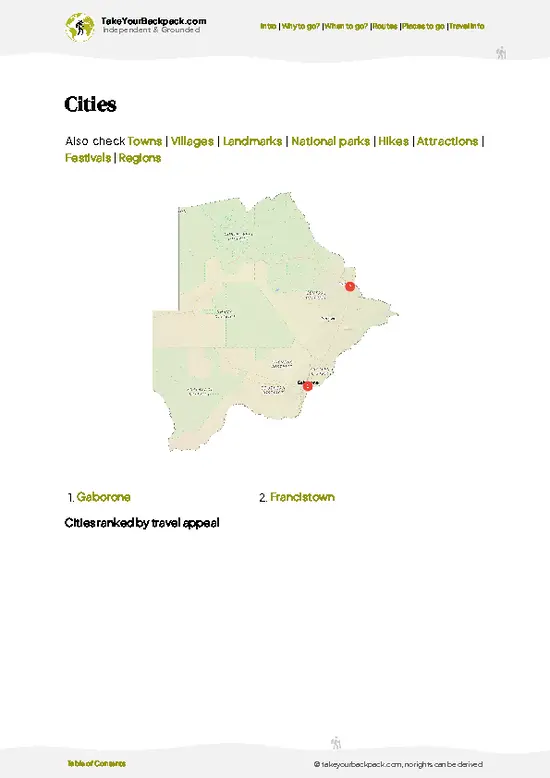
Most budget beds cluster in the city-centre/downtown area of Gaborone, the town-centre and riverside precinct of Maun (Okavango gateway), and the town/park-adjacent zone of Kasane, with smaller selections in Francistown and close to major park entrances.
Gaborone city-centre offers the best nightlife and transport links but is busier and less quiet after dark; Maun’s town and riverside areas put you nearest Okavango departures with decent … read more 👉
Yes — hostels, backpacker lodges and budget guesthouses are available in Botswana’s main towns and tourist gateways, though options are sparse outside urban centres and tend to sell out in peak season so book ahead or expect to pay for transfers from camps.
Most budget beds cluster in the city-centre/downtown area of Gaborone, the town-centre and riverside precinct of Maun (Okavango gateway), and the town/park-adjacent zone of Kasane, with smaller selections in Francistown and close to major park entrances.
Gaborone city-centre offers the best nightlife and transport links but is busier and less quiet after dark; Maun’s town and riverside areas put you nearest Okavango departures with decent tourist services but slightly higher prices and limited late-night options; Kasane’s park-side belts are ideal for early Chobe safaris and quiet evenings but have minimal nightlife and often require paid transfers to reserves.

If you enjoy meeting fellow travelers, consider choosing hostels with high ratings for atmosphere. On the other hand, if you prefer having your own space, a hotel might be a better option.

BotswanaExplore Beyond This Category

👋 Meet the founderWho’s Behind Take Your Backpack?

Johan, backpacker and founder of TakeYourBackpackHi, I’m Johan (Netherlands 🇳🇱), the creator of TakeYourBackpack. Over the past decade, I’ve backpacked through 80+ countries across six continents, gaining extensive experience with independent travel, long-term trips, and overland routes.

This site is built on a combination of firsthand travel experience and carefully curated insights from other backpackers. Many guides are based on places I’ve personally visited, while others bring together tips, observations, and practical advice shared by trusted travelers I’ve met along the way.

The goal is to provide realistic, experience-driven guidance — not generic itineraries — so you can explore destinations with better context, clearer expectations, and more confidence.

Get full Botswana guide •
Instant download • 58 highlights • Full Offline guide