
×

Botswana🇧🇼 | hikesTsodilo Hillsrock art sites, sacred hills, panoramic views, ancient baobabs | things to do and best time to go

Explore Chobe RiverfrontExplore Matsieng Footprints Trail

Backpacking in Tsodilo Hills
🏆 Top pickhike ranked #1
By Johan Kruseman 🇳🇱 | Updated June 12, 2026

Most people only realize after the fact: at Tsodilo Hills, you can camp right at the base, waking up with the rocks blazing gold in the sunrise—no need to rush in from a distant lodge or town. Tsodilo Hills sits in Botswana’s northwest, far from the safari crowds, where the Kalahari’s edge meets ancient stone. The hike itself is a test of patience and calves. Trails snake up and around the four main hills—Male, Female, Child, and North—each one pockmarked with San rock art that’s older than most civilizations. The climb isn’t Everest, but the heat and loose scree will humble you, especially if you’re used to the gentle boardwalks of Gaborone’s Kgale Hill or the tame sand of the Okavango’s island strolls. Public transport is a headache; you’ll need grit, a 4x4, or a friendly local. But when you crest the ridge and the Kalahari rolls out beneath you, the silence is cathedral-like. That’s the payoff.

Discover everything you want to know in the 📖 Botswana Travel Guide.
Best time to go: May - October
Duration: 2 to 3 days
Distance: 30 kilometers
Total ascent: 400 meters


Get your Botswana guide
58 ranked highlights, routes & tips, works offline (257 pages)
Loading the map 🌍
CLICK TO FILTER
cities
towns
villages
landmarks
national parks
hikes
attractions
festivals
regions
SHOW COUNTRY’S BESTSHOW ALL

✨ Why go?
Ranked #1 hike in Botswana
What makes it a must-see hike

The Tsodilo Hills in Botswana are a backpacker’s playground, where the scenery-to-effort ratio is off the charts. You’ll find yourself scaling ancient rock formations, each step revealing a new vista that makes the sweat worth it. The public transport access is surprisingly smooth; hop on a bus from Maun, and you’re just a few hours away from this UNESCO World Heritage site.

What’s more, the low cost of entry means you can dive into this adventure without breaking the bank. Trails vary in length, allowing you to choose your own challenge—whether you’re up for a quick jaunt or a full-day trek. This flexibility makes it easy to fit into a longer backpacking route through Botswana, seamlessly connecting you to other incredible spots.

As you hike, the air thick with history and the thrill of … read more 👉
The Tsodilo Hills in Botswana are a backpacker’s playground, where the scenery-to-effort ratio is off the charts. You’ll find yourself scaling ancient rock formations, each step revealing a new vista that makes the sweat worth it. The public transport access is surprisingly smooth; hop on a bus from Maun, and you’re just a few hours away from this UNESCO World Heritage site.

What’s more, the low cost of entry means you can dive into this adventure without breaking the bank. Trails vary in length, allowing you to choose your own challenge—whether you’re up for a quick jaunt or a full-day trek. This flexibility makes it easy to fit into a longer backpacking route through Botswana, seamlessly connecting you to other incredible spots.

As you hike, the air thick with history and the thrill of discovery, you’ll find that the real reward isn’t just the breathtaking views but the sense of accomplishment that comes with every uphill push. And when you finally crack open that first cold beer at the end of the day, you’ll know you’ve earned every drop.
Want to include Tsodilo Hills in your Botswana route?
Create a personalized Botswana itinerary that includes Tsodilo Hills and the places that fit your trip — based on your travel style, budget, and available time. Get your route in seconds.

Generate my trip

💡 HighlightsTop highlights of Tsodilo Hills

  1. Rock-art galleries — Tsodilo’s claim to fame: literally thousands of paintings (UNESCO counts over 4,500) tucked into shallow caves and overhangs. On the hike you get eye-level access to ochre figures of eland, people and abstract motifs — seeing the art in the original setting, with faded brushstrokes and flaking pigment, beats a museum any day.
  2. Ridge and summit viewpoints — the trails run along narrow red-sand ridges and finish on rocky summits with raw, 360° views across the Kalahari pans. The way the light hits the rock at sunrise or sunset is unforgettable; the hike’s scrambling sections make the views feel earned rather than handed to you.
  3. Living cultural landscape — Tsodilo is still spiritually important to local communities, and guided walks often include San storytellers who explain
read more 👉
  1. Rock-art galleries — Tsodilo’s claim to fame: literally thousands of paintings (UNESCO counts over 4,500) tucked into shallow caves and overhangs. On the hike you get eye-level access to ochre figures of eland, people and abstract motifs — seeing the art in the original setting, with faded brushstrokes and flaking pigment, beats a museum any day.
  2. Ridge and summit viewpoints — the trails run along narrow red-sand ridges and finish on rocky summits with raw, 360° views across the Kalahari pans. The way the light hits the rock at sunrise or sunset is unforgettable; the hike’s scrambling sections make the views feel earned rather than handed to you.
  3. Living cultural landscape — Tsodilo is still spiritually important to local communities, and guided walks often include San storytellers who explain the myths behind particular paintings and sites. That mix of active ritual use and archaeology is what separates this hike from purely scenic trails.
  4. Archaeology and ancient occupation sites — between panels you’ll pass spots where stone tools, pottery shards and midden deposits show continuous human use for thousands of years. Those quiet, scatter-filled hollows give you a real sense of deep time under your boots.
  5. Uncommon wildlife and flora on the rocks — the koppies host rock-hyrax, klipspringer and a surprising variety of birds that don’t hang out on the flat pans. There are also old mopane and baobab outposts clinging to the slopes — small ecosystems that make the hike feel like a series of microhabitats rather than one big desert slog.
Spotted a mistake or missing something? Contact us.

🌤️ When to go?Seasonal considerations and timing


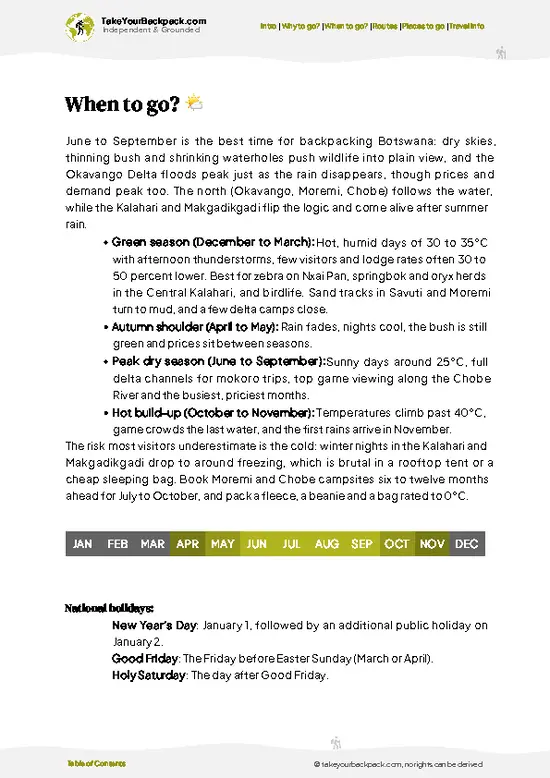
  • Weather: The dry season from May to October is your best bet. Expect clear skies and minimal rain, which means trails stay firm and the red earth doesn’t turn to mud. Avoid the wet season (November to April) when heavy rains can make paths slippery and obscure the rock art.

  • Temperature: Daytime highs hover around 25-30°C (77-86°F) during the dry months, perfect for hiking without overheating. Nights can dip to 5-10°C (41-50°F), so pack layers. The wet season heats up to 35°C (95°F) with high humidity—tough on the trail and your energy.

  • Daylight Hours: From May to August, you get long, crisp days with about 11-12 hours of daylight—enough time to explore multiple hills without rushing. The sun sets earlier in winter, so start hikes early to maximize light.

  • Crowds: Tsodilo Hills sees
read more 👉

  • Weather: The dry season from May to October is your best bet. Expect clear skies and minimal rain, which means trails stay firm and the red earth doesn’t turn to mud. Avoid the wet season (November to April) when heavy rains can make paths slippery and obscure the rock art.

  • Temperature: Daytime highs hover around 25-30°C (77-86°F) during the dry months, perfect for hiking without overheating. Nights can dip to 5-10°C (41-50°F), so pack layers. The wet season heats up to 35°C (95°F) with high humidity—tough on the trail and your energy.

  • Daylight Hours: From May to August, you get long, crisp days with about 11-12 hours of daylight—enough time to explore multiple hills without rushing. The sun sets earlier in winter, so start hikes early to maximize light.

  • Crowds: Tsodilo Hills sees few visitors year-round, but the dry season attracts more serious trekkers and researchers. You’ll rarely feel crowded, but expect a handful of fellow hikers during peak dry months.

  • Seasonal Activities: Dry months coincide with wildlife spotting and cultural tours. Local guides are more active, offering richer storytelling and access to rock art sites. Wet season limits access and outdoor activities.

  • Price Fluctuations: Accommodation and guide fees peak in the dry season due to demand. Booking ahead can lock in better rates. The wet season offers lower prices but at the cost of trail conditions and fewer services.


Pro-tip: Aim for late August to early September—cool mornings, dry trails, fewer crowds, and the landscape starts to bloom, rewarding your effort with a rare blend of comfort and color.


source: climatestotravel.comJANJanuary: fair for travelingFEBFebruary: fair for travelingMARMarch: fair for travelingAPRApril: fair for travelingMAYMay: excellent for travelingJUNJune: excellent for travelingJULJuly: excellent for travelingAUGAugust: excellent for travelingSEPSeptember: highly recommended for travelingOCTOctober: highly recommended for travelingNOVNovember: fair for travelingDECDecember: fair for traveling
botswana-hike-tsodilo-hills
© Google |

✈️ The backpacker research shortcutBotswana Travel Guide

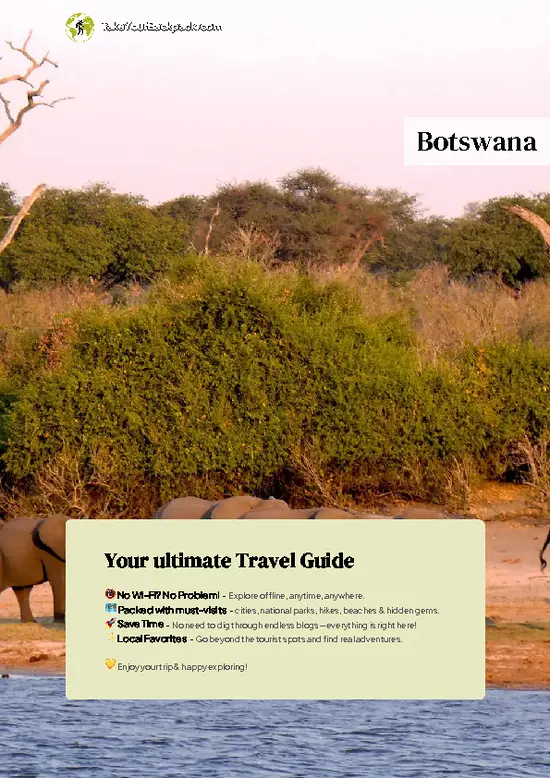
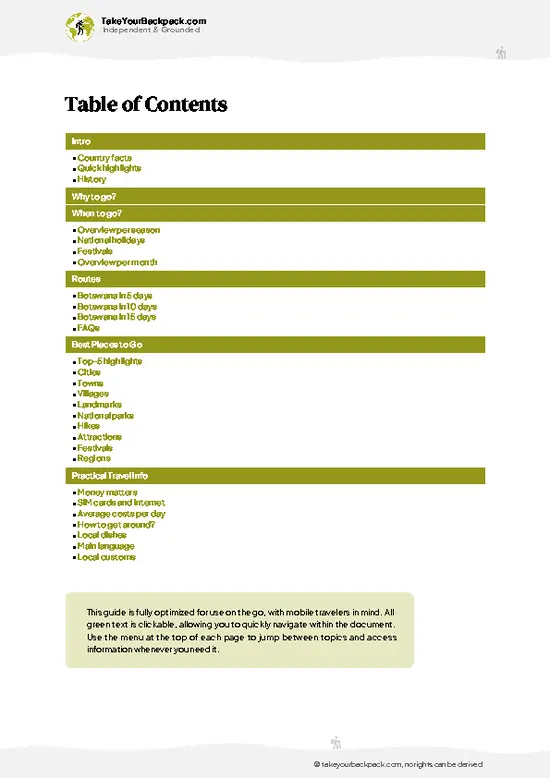
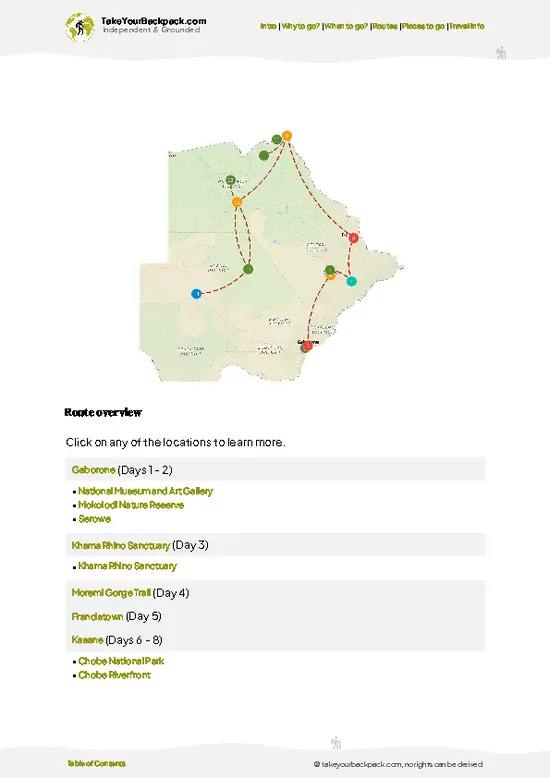
An offline-friendly backpacking guide with optimized travel routes, ranked highlights, transport advice, and the best areas to stay.
example page 0 from our offline Travel Guide for Botswana
example page 1 from our offline Travel Guide for Botswana
example page 2 from our offline Travel Guide for Botswana
example page 3 from our offline Travel Guide for Botswana
example page 4 from our offline Travel Guide for Botswana
example page 5 from our offline Travel Guide for Botswana
example page 6 from our offline Travel Guide for Botswana
example page 7 from our offline Travel Guide for Botswana
The digital guide (257 pages) contains:
58 highlights, ranked by travel appeal
Optimized 5, 10 & 15-day travel routes
Cities, national parks, landmarks, beaches
How to get around
Offline-friendly for travel without Wi-Fi
👉 Click to see all 30+ guide features

📅 Plan smarter in minutes, not weeks
Month by month travel advice
Festivals & national holidays
Budget expectations

🗺️ Go to the right places, skip the overrated ones
Honest pros & cons of destinations
Top hikes, parks & viewpoints
Lesser-known places most travelers miss
Clear “worth it vs skip it” guidance

🛏️ Travel smoothly without rookie mistakes
Best areas to stay
Transport systems explained simply
Common scams & safety advice
SIM cards, money & practical tips

🌍 Understand the country, not just visit it
Culture & traditions
52 Essential phrases & customs
Festivals worth planning around
Traveler-friendly historical context
Insights that make places more meaningful

📱 Built for real travel conditions
Fully downloadable PDF
Works completely offline
Optimized for phone use
Useful in remote areas & buses
Everything in one place
Save weeks of stressful planning
Get instant access to your full guide. 30‑day money-back guarantee.


By proceeding you agree to our terms.
Sent to your inbox immediately after payment • 100% Secure Checkout
Best Backpacking Travel Advisor 2025 tourism awardBest Backpacking
Travel Advisor
2025
What others say about Take Your Backpack Guides:
⭐⭐⭐⭐⭐
Fantastic, amazing amount of information!
⭐⭐⭐⭐⭐
My goodness this is amazing, it's what I've been looking for hats off too you!
⭐⭐⭐⭐⭐
I think this is absolutely BRILLIANT
⭐⭐⭐⭐
Very complete and informative. It's still missing places, but I gotta to commend you
⭐⭐⭐⭐⭐
This is truly amazing, thank you, can't wait to explore it with my kids!
⭐⭐⭐⭐⭐
Awesome resource, thank you!
⭐⭐⭐⭐⭐
This is amazing! Can't wait to explore the ones I haven't seen
⭐⭐⭐⭐
I love this! Well done, great idea.
⭐⭐⭐⭐⭐
Thanks for taking the time to make this gem!
⭐⭐⭐⭐⭐
This might be the best website I've ever seen.
⭐⭐⭐⭐⭐
Congratulations, and thank you so much for your work; it's incredibly valuable.
⭐⭐⭐⭐
In all seriousness I think you did a great job pointing out the important spots
⭐⭐⭐⭐⭐
10/10 very good
⭐⭐⭐⭐⭐
As someone who's only just starting to visit regularly this is awesome, thank you.
⭐⭐⭐⭐
Thank you very much! I'm going to visit my dad, it's going to be very useful!
⭐⭐⭐⭐⭐
This is really cool! We'll be travelling for the first time and this definitely come in handy.
⭐⭐⭐⭐⭐
You are now our minister of culture, congratulations 👨‍💼
⭐⭐⭐⭐⭐
Just wanted to tell you that this is a pearl! Going to follow your recommendations.
⭐⭐⭐⭐⭐
This is so cool. I'll definitely be using the resource for my travels soon.
⭐⭐⭐⭐⭐
This is very impressive! Good work.
⭐⭐⭐⭐⭐
This is an amazing and informative site. Very well done!

🛏️ Where to stay?Best areas and accommodation options

If you enjoy meeting fellow travelers, consider choosing hostels with high ratings for atmosphere. On the other hand, if you prefer having your own space, a hotel might be a better option.

🥾 Hike detailsA practical overview of the hike

Total Distance: The Tsodilo Hills trail spans approximately 15 kilometers (about 9.3 miles) round trip, depending on the specific route you take through the hills.

Estimated Duration: Expect to spend around 5 to 7 hours on this hike. This includes time for breaks, exploring, and soaking in the views.

Difficulty Level: This trail is generally rated as moderate. While the terrain can be rocky and uneven in parts, it’s manageable for most hikers with a decent fitness level.

Starting Point: The trailhead is located at the Tsodilo Hills World Heritage Site. To get there via public transport, you … read more 👉
Total Distance: The Tsodilo Hills trail spans approximately 15 kilometers (about 9.3 miles) round trip, depending on the specific route you take through the hills.

Estimated Duration: Expect to spend around 5 to 7 hours on this hike. This includes time for breaks, exploring, and soaking in the views.

Difficulty Level: This trail is generally rated as moderate. While the terrain can be rocky and uneven in parts, it’s manageable for most hikers with a decent fitness level.

Starting Point: The trailhead is located at the Tsodilo Hills World Heritage Site. To get there via public transport, you can catch a bus from Maun to the village of Tsodilo. From the village, it’s a short taxi ride to the entrance of the park.

Major Landmarks Along the Route:
  • Rock Paintings: The hills are famous for their ancient San rock art, with numerous sites to explore.
  • Hilltop Views: Climbing to the top of the hills rewards you with breathtaking panoramic views of the surrounding area.
  • Wildlife Sightings: Keep an eye out for various birds and possibly even some larger mammals in the distance.

Type of Terrain and Scenery: The trail features a mix of rocky paths, sandy stretches, and some steep ascents. The scenery is stunning, with dramatic rock formations, vast plains, and distant horizons that make every step worthwhile.

Typical Vegetation: Expect to see a variety of flora, including acacia trees, baobabs, and various grasses. The vegetation changes as you ascend, with denser growth at lower altitudes and more sparse, resilient plants higher up.

Wildlife: While hiking, you might spot various birds like the lilac-breasted roller and some small mammals. Larger wildlife is less common but can occasionally be seen, especially at dawn or dusk. Just remember to keep your distance and respect their space.
⚠️ Hiking info can sometimes be outdated or inaccurate. Before you hit the trail, check the latest conditions with locals. If you do spot anything that's off, I'd love to hear from you, so I can update it for fellow travelers.

🛡️ SafetySafety Tips and Common Scams in Tsodilo Hills

The Tsodilo Hills hike is a rewarding challenge, but it demands respect for its unique environment. Weather can shift quickly; the sun blazes during the day, but temperatures can plummet at night. Dress in layers and pack a reliable rain jacket.

The terrain is rugged, with steep sections that require careful footing. Navigation is straightforward, but keep your eyes peeled for trail markers. A sturdy pair of hiking boots is essential; the rocky paths can be unforgiving.

Wildlife encounters are part of the experience. You might spot a curious baboon or a distant kudu. Keep your distance and don’t feed them; respect their space.

Timing is key. Start early to avoid the midday heat and enjoy the cooler morning air. Hydration is crucial—carry enough water to keep you fueled. Embrace the grit … read more 👉
The Tsodilo Hills hike is a rewarding challenge, but it demands respect for its unique environment. Weather can shift quickly; the sun blazes during the day, but temperatures can plummet at night. Dress in layers and pack a reliable rain jacket.

The terrain is rugged, with steep sections that require careful footing. Navigation is straightforward, but keep your eyes peeled for trail markers. A sturdy pair of hiking boots is essential; the rocky paths can be unforgiving.

Wildlife encounters are part of the experience. You might spot a curious baboon or a distant kudu. Keep your distance and don’t feed them; respect their space.

Timing is key. Start early to avoid the midday heat and enjoy the cooler morning air. Hydration is crucial—carry enough water to keep you fueled. Embrace the grit of the trail, and when you reach the summit, the panoramic views will make every step worthwhile.

Other Botswanan hikes near Tsodilo Hills

Explore more nearby:


💡 Not sure where to go next?
Create a personalized itinerary for Botswana including Tsodilo Hills and the places that fit your trip.

Generate my itinerary

👉 Discover all hikes

Or checkout all Botswana has to offer (think cities, towns, villages, national parks, hikes, beaches, festivals)
Country photo of Botswana

We 💚 feedbackWhat to keep in mind

The Tsodilo Hills are a wild, rugged playground. You’ll feel the pulse of ancient spirits in the rock art, and the air is thick with stories. The surprise? Spotting wildlife while you hike—don’t miss the baboons swinging overhead. But a heads-up: the trails can be tough, so pack plenty of water and wear sturdy shoes. When you finally reach the top, the view stretches endlessly, and that cold beer back at camp tastes like victory. Embrace the grit; it’s worth every step.

✍️ Help improve this page!
The information on this page is based on in-depth research, insights shared by experienced travelers, and feedback from the local travel community in Botswana. While every effort is made to keep the information accurate and current, conditions can change — so if you spot anything incorrect or outdated, please get in touch.


🙋‍♂️ Give feedback

👋 Meet the founderWho’s Behind Take Your Backpack?

Johan, backpacker and founder of TakeYourBackpackHi, I’m Johan (Netherlands 🇳🇱), the creator of TakeYourBackpack. Over the past decade, I’ve backpacked through 80+ countries across six continents, gaining extensive experience with independent travel, long-term trips, and overland routes.

This site is built on a combination of firsthand travel experience and carefully curated insights from other backpackers. Many guides are based on places I’ve personally visited, while others bring together tips, observations, and practical advice shared by trusted travelers I’ve met along the way.

The goal is to provide realistic, experience-driven guidance — not generic itineraries — so you can explore destinations with better context, clearer expectations, and more confidence.

Get full Botswana guide •
Instant download • 58 highlights • Full Offline guide