×

Botswana🇧🇼 | festivalsMaun International Arts FestivalOkavango Delta backdrop, visual arts, poetry readings, local crafts | things to do and best time to go

Explore Maitisong FestivalExplore Toyota 1000 Desert Race

Backpacking in Maun International Arts
🌟 Highlightfestival ranked #3
By Johan Kruseman 🇳🇱 | Updated May 18, 2026

Your boots thud against the packed earth, dust swirling as a marimba riff cuts through the late-afternoon heat. Someone’s grilling goat skewers nearby—smoke and spice tangle in the air. Laughter ricochets off canvas tents, and a poet’s voice rises, raw and unfiltered, over the crowd. This is the Maun International Arts Festival, pulsing right on the edge of the Okavango Delta in northern Botswana, where the wild meets the wired.

Maun’s festival isn’t a polished, big-city affair; it’s a kinetic sprawl of live music (think Afro-jazz, hip-hop, and homegrown folk), spoken word, and visual art, drawing a mix of local creatives, backpackers, and the occasional safari guide on a break. The crowd skews young, curious, and ready to dance. It runs for about a week, usually in September, and the vibe is open, experimental, and fiercely local. If you want to swap stories with artists, dodge tourist crowds, and feel the pulse of Botswana’s creative scene, this is where you trade comfort for connection.

Discover everything you want to know in the 📖 Botswana Travel Guide.


Get your Botswana guide
58 ranked highlights, routes & tips, works offline (257 pages)
Loading the map 🌍
CLICK TO FILTER
cities
towns
villages
landmarks
national parks
hikes
attractions
festivals
regions
SHOW COUNTRY’S BESTSHOW ALL

✨ Why go?
Ranked #3 festival in Botswana
Why Maun International Arts should be on your travel list

Backpackers flock to the Maun International Arts Festival for a reason. It’s not just a festival; it’s a social energy powerhouse. Picture this: artists, musicians, and performers from all over converge, creating a temporary community that pulses with creativity and connection. You’re not just a spectator; you’re part of something alive and electric.

This festival offers a deep cultural immersion that’s hard to find elsewhere. You’ll experience traditional dances, contemporary art, and local cuisine, all while mingling with fellow travelers and locals. It’s a chance to swap stories and forge friendships that last beyond the festival’s end.

Affordability is another draw. Compared to similar events worldwide, Maun’s festival is a steal. You can dive into workshops, performances, and exhibitions … read more 👉
Backpackers flock to the Maun International Arts Festival for a reason. It’s not just a festival; it’s a social energy powerhouse. Picture this: artists, musicians, and performers from all over converge, creating a temporary community that pulses with creativity and connection. You’re not just a spectator; you’re part of something alive and electric.

This festival offers a deep cultural immersion that’s hard to find elsewhere. You’ll experience traditional dances, contemporary art, and local cuisine, all while mingling with fellow travelers and locals. It’s a chance to swap stories and forge friendships that last beyond the festival’s end.

Affordability is another draw. Compared to similar events worldwide, Maun’s festival is a steal. You can dive into workshops, performances, and exhibitions without breaking the bank. This leaves you with more budget for the real adventures—like exploring the Okavango Delta or taking a safari.

Integrating the festival into your travel plans is a no-brainer. It’s a vibrant waypoint that enriches your journey, ensuring you leave with not just memories, but a sense of belonging. So, gear up and get ready to dive into this unforgettable experience!
Want to include Maun International Arts Festival in your Botswana route?
Create a personalized Botswana itinerary that includes Maun International Arts Festival and the places that fit your trip — based on your travel style, budget, and available time. Get your route in seconds.

Generate my trip

💡 HighlightsEssential experiences to have while celebrating the Maun International Arts

  1. Sunset riverbank performances — Music and small-scale shows staged along the Thamalakane river create an intimate, almost cinematic vibe as the sun drops. It’s less “stadium” and more front-row-in-a-backyard: close-up acoustic sets, spontaneous duets and the kind of atmosphere where performers and audience trade smiles between songs.
  2. Tswana and regional cultural showcases — Traditional dance, storytelling and cultural demonstrations are woven into the program, so you see living customs rather than museum recreations. Expect rhythmic drumming, vocal styles and costumes that feel rooted in community life — a direct window into local heritage.
  3. Independent theatre, spoken word and experimental art — The festival champions contemporary voices from Botswana and nearby countries, so you’ll catch
read more 👉
  1. Sunset riverbank performances — Music and small-scale shows staged along the Thamalakane river create an intimate, almost cinematic vibe as the sun drops. It’s less “stadium” and more front-row-in-a-backyard: close-up acoustic sets, spontaneous duets and the kind of atmosphere where performers and audience trade smiles between songs.
  2. Tswana and regional cultural showcases — Traditional dance, storytelling and cultural demonstrations are woven into the program, so you see living customs rather than museum recreations. Expect rhythmic drumming, vocal styles and costumes that feel rooted in community life — a direct window into local heritage.
  3. Independent theatre, spoken word and experimental art — The festival champions contemporary voices from Botswana and nearby countries, so you’ll catch bold theatre pieces, intimate spoken-word nights and small experimental works that push boundaries while staying human and relatable.
  4. Art markets and pop-up galleries — Local artists and craftspeople set up stalls and mini-exhibitions, making it the best place to find original prints, beadwork, baskets and paintings. These markets aren’t just shopping — they’re chances to meet makers, hear the backstory and pick up something truly local.
  5. Hands-on workshops and community events — From drumming and dance classes to collaborative mural projects, the festival emphasizes participation. It’s not just watching; you can learn a basic rhythm, join a community performance or see how arts outreach connects with schools and youth groups in the area.
Spotted a mistake or missing something? Contact us.

Things to do around Maun International Arts Festival

Ratings based on Tripadvisor reviews. When you book through this link, you support our work at no extra cost to you.

🌤️ When to go?When is the celebration of Maun International Arts Festival?


  • Weather: The festival runs in August, right in Botswana’s dry season. Expect clear skies and almost no rain, perfect for outdoor performances and wandering the arts market without soggy shoes.

  • Temperature: Days hover around a comfortable 25°C to 30°C (77°F to 86°F), but nights can dip sharply to 5°C to 10°C (41°F to 50°F). Pack layers to stay warm after sunset when the desert chill kicks in.

  • Daylight Hours: August offers roughly 11 to 12 hours of daylight, giving you plenty of time to soak in the festival and explore Maun’s surroundings without rushing.

  • Crowds: This is peak festival season, so expect a lively crowd. It’s a magnet for regional artists and tourists, which means vibrant energy but also higher accommodation demand. Book early to avoid last-minute price spikes.

  • Seasonal
read more 👉

  • Weather: The festival runs in August, right in Botswana’s dry season. Expect clear skies and almost no rain, perfect for outdoor performances and wandering the arts market without soggy shoes.

  • Temperature: Days hover around a comfortable 25°C to 30°C (77°F to 86°F), but nights can dip sharply to 5°C to 10°C (41°F to 50°F). Pack layers to stay warm after sunset when the desert chill kicks in.

  • Daylight Hours: August offers roughly 11 to 12 hours of daylight, giving you plenty of time to soak in the festival and explore Maun’s surroundings without rushing.

  • Crowds: This is peak festival season, so expect a lively crowd. It’s a magnet for regional artists and tourists, which means vibrant energy but also higher accommodation demand. Book early to avoid last-minute price spikes.

  • Seasonal Activities: August aligns with prime safari season in the Okavango Delta nearby. Combine your festival trip with wildlife spotting when animals gather around shrinking water sources, making sightings easier and more thrilling.

  • Price Fluctuations: Festival time means prices for lodging and flights can surge. Lock in your bookings months ahead to dodge inflated rates and secure budget-friendly options.


Pro-tip: Arrive a day early to acclimate and snag better deals, then dive into the festival fully charged and ready to move with the rhythm of Botswana’s dry season.


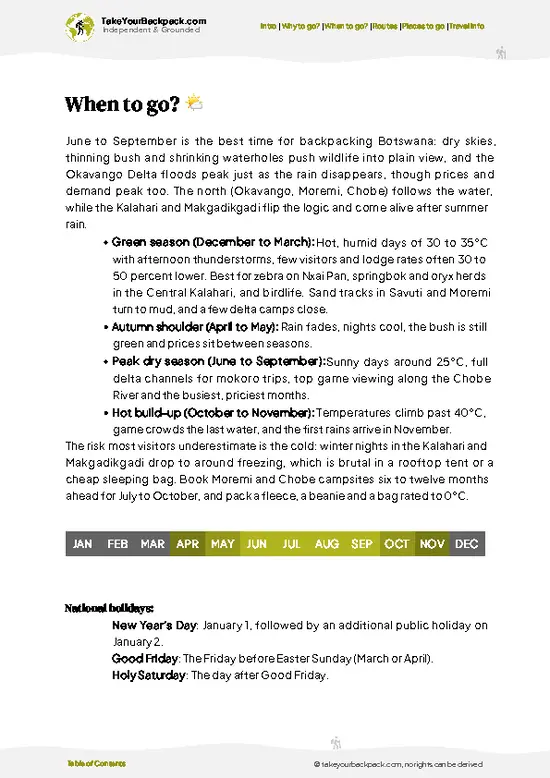
source: climatestotravel.comJANJanuary: not recommended for travelingFEBFebruary: not recommended for travelingMARMarch: not recommended for travelingAPRApril: not recommended for travelingMAYMay: not recommended for travelingJUNJune: not recommended for travelingJULJuly: not recommended for travelingAUGAugust: excellent for travelingSEPSeptember: not recommended for travelingOCTOctober: not recommended for travelingNOVNovember: not recommended for travelingDECDecember: not recommended for traveling

✈️ The backpacker research shortcutBotswana Travel Guide

An offline-friendly backpacking guide with optimized travel routes, ranked highlights, transport advice, and the best areas to stay.
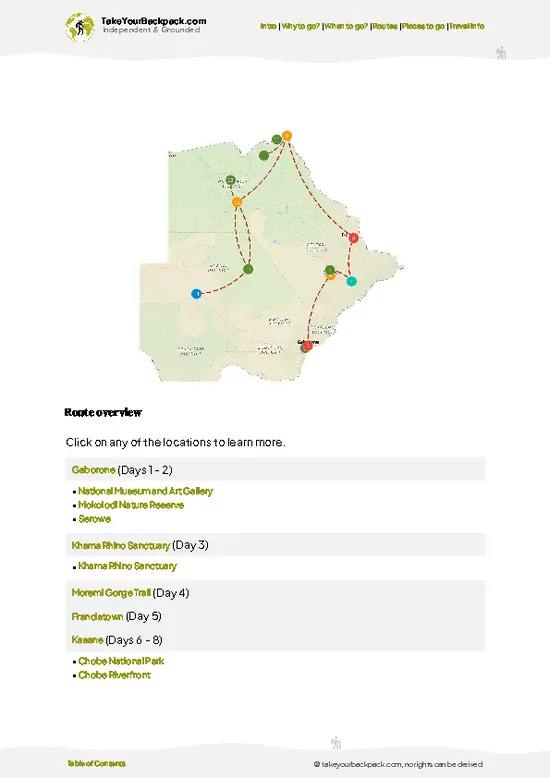
example page 0 from our offline Travel Guide for Botswana
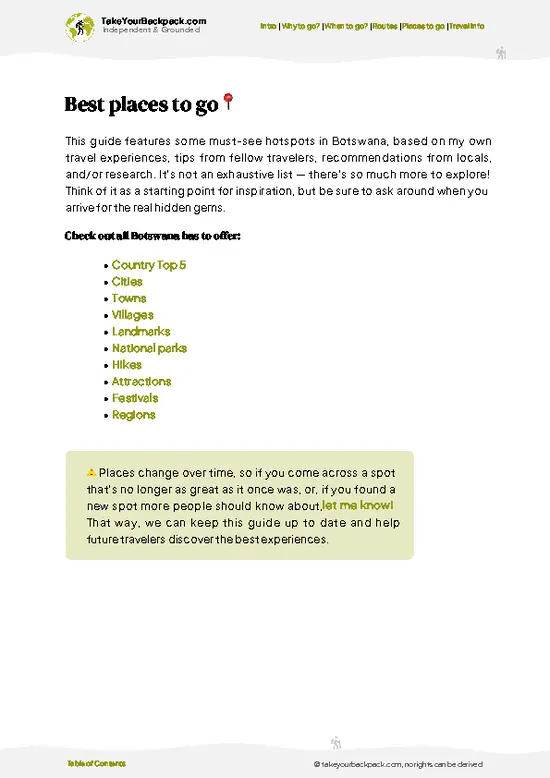
example page 1 from our offline Travel Guide for Botswana
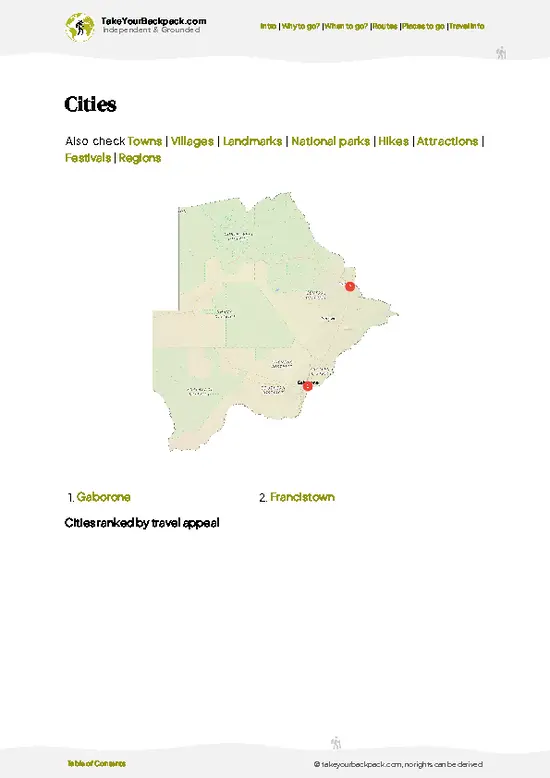
example page 2 from our offline Travel Guide for Botswana
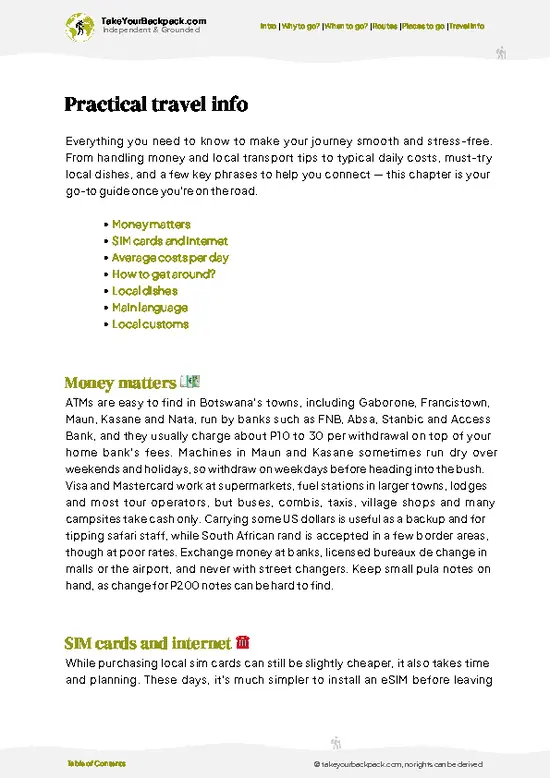
example page 3 from our offline Travel Guide for Botswana
example page 4 from our offline Travel Guide for Botswana
example page 5 from our offline Travel Guide for Botswana
example page 6 from our offline Travel Guide for Botswana
example page 7 from our offline Travel Guide for Botswana
The digital guide (257 pages) contains:
58 highlights, ranked by travel appeal
Optimized 5, 10 & 15-day travel routes
Cities, national parks, landmarks, beaches
How to get around
Offline-friendly for travel without Wi-Fi
👉 Click to see all 30+ guide features

📅 Plan smarter in minutes, not weeks
Month by month travel advice
Festivals & national holidays
Budget expectations

🗺️ Go to the right places, skip the overrated ones
Honest pros & cons of destinations
Top hikes, parks & viewpoints
Lesser-known places most travelers miss
Clear “worth it vs skip it” guidance

🛏️ Travel smoothly without rookie mistakes
Best areas to stay
Transport systems explained simply
Common scams & safety advice
SIM cards, money & practical tips

🌍 Understand the country, not just visit it
Culture & traditions
52 Essential phrases & customs
Festivals worth planning around
Traveler-friendly historical context
Insights that make places more meaningful

📱 Built for real travel conditions
Fully downloadable PDF
Works completely offline
Optimized for phone use
Useful in remote areas & buses
Everything in one place
Save weeks of stressful planning
Get instant access to your full guide. 30‑day money-back guarantee.


By proceeding you agree to our terms.
Sent to your inbox immediately after payment • 100% Secure Checkout
Best Backpacking Travel Advisor 2025 tourism awardBest Backpacking
Travel Advisor
2025
What others say about Take Your Backpack Guides:
⭐⭐⭐⭐⭐
Fantastic, amazing amount of information!
⭐⭐⭐⭐⭐
My goodness this is amazing, it's what I've been looking for hats off too you!
⭐⭐⭐⭐⭐
I think this is absolutely BRILLIANT
⭐⭐⭐⭐
Very complete and informative. It's still missing places, but I gotta to commend you
⭐⭐⭐⭐⭐
This is truly amazing, thank you, can't wait to explore it with my kids!
⭐⭐⭐⭐⭐
Awesome resource, thank you!
⭐⭐⭐⭐⭐
This is amazing! Can't wait to explore the ones I haven't seen
⭐⭐⭐⭐
I love this! Well done, great idea.
⭐⭐⭐⭐⭐
Thanks for taking the time to make this gem!
⭐⭐⭐⭐⭐
This might be the best website I've ever seen.
⭐⭐⭐⭐⭐
Congratulations, and thank you so much for your work; it's incredibly valuable.
⭐⭐⭐⭐
In all seriousness I think you did a great job pointing out the important spots
⭐⭐⭐⭐⭐
10/10 very good
⭐⭐⭐⭐⭐
As someone who's only just starting to visit regularly this is awesome, thank you.
⭐⭐⭐⭐
Thank you very much! I'm going to visit my dad, it's going to be very useful!
⭐⭐⭐⭐⭐
This is really cool! We'll be travelling for the first time and this definitely come in handy.
⭐⭐⭐⭐⭐
You are now our minister of culture, congratulations 👨‍💼
⭐⭐⭐⭐⭐
Just wanted to tell you that this is a pearl! Going to follow your recommendations.
⭐⭐⭐⭐⭐
This is so cool. I'll definitely be using the resource for my travels soon.
⭐⭐⭐⭐⭐
This is very impressive! Good work.
⭐⭐⭐⭐⭐
This is an amazing and informative site. Very well done!

🛏️ Where to stay?Best areas to stay in Botswana

When you’re gearing up for the Maun International Arts Festival, your choice of where to stay can make or break your experience. Focus on the heart of Maun, where the buzz of creativity meets the camaraderie of fellow travelers.

The area around the festival venue is a prime spot. It’s alive with energy, and you’ll find plenty of budget-friendly accommodations that cater to backpackers. Staying here means you can easily pop back to drop off your gear or recharge between events.

Look for places near the Thamalakane River. This area offers a laid-back vibe, perfect for mingling with other festival-goers. … read more 👉
When you’re gearing up for the Maun International Arts Festival, your choice of where to stay can make or break your experience. Focus on the heart of Maun, where the buzz of creativity meets the camaraderie of fellow travelers.

The area around the festival venue is a prime spot. It’s alive with energy, and you’ll find plenty of budget-friendly accommodations that cater to backpackers. Staying here means you can easily pop back to drop off your gear or recharge between events.

Look for places near the Thamalakane River. This area offers a laid-back vibe, perfect for mingling with other festival-goers. You’ll find communal spaces where stories flow as freely as the local beer.

Don’t overlook the outskirts of Maun, either. Some hostels and guesthouses offer a more tranquil setting while still being a short ride from the festival. This can be a smart move if you want to escape the hustle after a day of art and music.

Safety is key, so stick to well-lit areas and trusted accommodations. With the right base, you’ll have the energy and budget to dive into every moment of the festival.

👛 Costs (as of 17 March 2026)How expensive it really is

The Maun International Arts Festival in Botswana is a vibrant celebration, but navigating the costs can feel like a maze. Here’s how to keep your budget in check while maximizing your experience.
  • Festival Tickets: Expect to pay between $10 to $30 for a day pass. Multi-day passes can range from $50 to $100. Prices vary based on the events you want to attend, so plan ahead to catch the highlights without overspending.
  • Accommodation: Options vary widely. Budget travelers can find dorm beds in hostels for about $15 to $25 per night. Mid-range hotels will set you back $50 to $100. If you’re feeling adventurous, consider camping, which can be as low as $10 a night.
  • Local Transport: Public transport is your friend. Minibus taxis are affordable, costing around $1 to $3 for short trips. If you prefer
read more 👉
The Maun International Arts Festival in Botswana is a vibrant celebration, but navigating the costs can feel like a maze. Here’s how to keep your budget in check while maximizing your experience.
  • Festival Tickets: Expect to pay between $10 to $30 for a day pass. Multi-day passes can range from $50 to $100. Prices vary based on the events you want to attend, so plan ahead to catch the highlights without overspending.
  • Accommodation: Options vary widely. Budget travelers can find dorm beds in hostels for about $15 to $25 per night. Mid-range hotels will set you back $50 to $100. If you’re feeling adventurous, consider camping, which can be as low as $10 a night.
  • Local Transport: Public transport is your friend. Minibus taxis are affordable, costing around $1 to $3 for short trips. If you prefer more comfort, budget $20 to $40 for a taxi ride within the city. Renting a bike can also be a fun way to explore, usually around $10 per day.
  • Food & Drinks: Street food is a steal, with meals costing between $3 to $7. Sit-down restaurants will charge you $10 to $20 for a decent meal. Don’t forget to budget for drinks; local beers are about $2, while cocktails can run $5 to $10.
  • Miscellaneous Expenses: Always have a buffer. Souvenirs, tips, and unexpected costs can add up. Set aside $50 to $100 for these extras. This way, you won’t be caught off guard when you want to indulge in something special.

Stay sharp and keep these costs in mind. The festival is about the experience, not just the price tag.


source: botswanatourism.co.bw
⚠️ Prices can change and everyone travels differently, so take this as a rough guide. Hope it helps you plan your adventure!

🍲 FoodLocal Flavors for Backpackers

At the Maun International Arts Festival, food and drinks are a vibrant part of the experience. You’ll find local specialties like biltong—a dried, spiced meat that’s a must-try. Pair it with pap, a staple made from maize, often served with rich, flavorful sauces. Don’t miss out on seswaa, a slow-cooked beef dish that melts in your mouth.

Festival stalls buzz with energy, offering everything from grilled boerewors (sausage) to freshly made samosas. Grab a local beer or a refreshing sorrel drink to wash it all down. The atmosphere is electric, and sharing food is part of the fun. Don’t be surprised if someone offers you a taste of their dish—reciprocate and dive into the communal spirit.

Be prepared for lines; they can get long, especially for popular stalls. Bring cash, as not all vendors … read more 👉
At the Maun International Arts Festival, food and drinks are a vibrant part of the experience. You’ll find local specialties like biltong—a dried, spiced meat that’s a must-try. Pair it with pap, a staple made from maize, often served with rich, flavorful sauces. Don’t miss out on seswaa, a slow-cooked beef dish that melts in your mouth.

Festival stalls buzz with energy, offering everything from grilled boerewors (sausage) to freshly made samosas. Grab a local beer or a refreshing sorrel drink to wash it all down. The atmosphere is electric, and sharing food is part of the fun. Don’t be surprised if someone offers you a taste of their dish—reciprocate and dive into the communal spirit.

Be prepared for lines; they can get long, especially for popular stalls. Bring cash, as not all vendors accept cards. Serving sizes can vary, so don’t hesitate to ask for recommendations. The key here is to savor the moment, enjoy the flavors, and soak in the lively interactions. This festival isn’t just about the food; it’s about the connections you make over shared meals.

Other Botswanan festivals near Maun International Arts

Explore more nearby:


💡 Not sure where to go next?
Create a personalized itinerary for Botswana including Maun International Arts and the places that fit your trip.

Generate my itinerary

👉 Discover all festivals

Or checkout all Botswana has to offer (think cities, towns, villages, national parks, hikes, beaches, festivals)
Country photo of Botswana

We 💚 feedbackWhat to keep in mind

The Maun International Arts Festival is a vibrant pulse of creativity, where local artists showcase their soul through music, dance, and crafts. Expect the unexpected—like stumbling upon a mesmerizing traditional dance performance in a dusty courtyard. Just a heads-up: accommodations can fill up fast, so book early to avoid scrambling last minute. Embrace the energy, soak in the atmosphere, and let the art ignite your spirit. This isn’t just a festival; it’s a celebration of life in the heart of Botswana.

✍️ Help improve this page!
The information on this page is based on in-depth research, insights shared by experienced travelers, and feedback from the local travel community in Botswana. While every effort is made to keep the information accurate and current, conditions can change — so if you spot anything incorrect or outdated, please get in touch.


🙋‍♂️ Give feedback

👋 Meet the founderWho’s Behind Take Your Backpack?

Johan, backpacker and founder of TakeYourBackpackHi, I’m Johan (Netherlands 🇳🇱), the creator of TakeYourBackpack. Over the past decade, I’ve backpacked through 80+ countries across six continents, gaining extensive experience with independent travel, long-term trips, and overland routes.

This site is built on a combination of firsthand travel experience and carefully curated insights from other backpackers. Many guides are based on places I’ve personally visited, while others bring together tips, observations, and practical advice shared by trusted travelers I’ve met along the way.

The goal is to provide realistic, experience-driven guidance — not generic itineraries — so you can explore destinations with better context, clearer expectations, and more confidence.

Get full Botswana guide •
Instant download • 58 highlights • Full Offline guide