×

British Virgin Islands🇻🇬 | best regionsWhere to Find the 3 Best regions in British Virgin Islands

Regions in the British Virgin Islands are really islands, and each one sets its own pace, price and crowd level. Tortola is the hub with ferries, groceries and the most beds. Smaller islands trade convenience for quiet and higher bills. Independent travelers do best by matching a ferry-friendly base to their budget, then adding one quieter island before the afternoon boats thin out.

By Johan Kruseman 🇳🇱 | Updated November 3, 2026
Explore the best towns in British Virgin Islands

Why go?Understanding Their Importance

The BVI are a British Overseas Territory of about 60 islands and cays, and that shapes everything. The US dollar is the currency, so prices read in dollars, and the charter-yacht economy sets the cost of food, drinks and beds. Backpacker infrastructure is thin. Expect few hostels, plenty of villas and resorts, and a handful of campgrounds and budget guesthouses that book up early.

Geography does the rest. Islands are separated by sheltered channels, so everything moves by ferry, taxi or boat, and there is no rail or public bus network worth planning around. Cash helps at small bars and taxis. Before you choose the BVI, accept that sailing culture drives the best experiences, and that going without a boat means planning around ferry timetables.
Evaluating the Top Choices
The list of best regions in British Virgin Islands is created based on landscapes, local culture, attractions, vibes, and overall appeal. If you feel a region is missing in this list, please let us know.

When to go?Optimal Periods for Travel

Best months and weather: The best months are December to April, when it is dry, breezy and about 78 to 87°F (26 to 31°C), with calmer seas on the sheltered sides of the islands. Showers are brief, and rainfall is lowest from February to April.

Peak, shoulder and low season: Christmas to New Year is the peak, with rooms costing 30 to 60 percent more and ferries and moorings filling up. May to June and November are the shoulder months, with lower prices, warm water and fewer visitors. August to October is hurricane season, with peak risk in September, heavy rain and some restaurants and guesthouses closing for a few weeks. Book flexible rates if you travel then. The Anegada side of the territory is exposed to winter swells, so check ferry sailings before committing to a day trip.

region hoppingOptimizing Your Multi-Stop Itinerary

How many days to plan: A trip combining several regions needs 7 to 10 days, and 5 days is the realistic minimum for two.

Direction and pacing: Start on Tortola, where the main ferry terminals at Road Town and West End connect to the other islands. Then work outward, with Virgin Gorda and the nearby small islands as one cluster and the western islands as another. Allow 2 to 4 nights per stop. Inter-island ferries take roughly 30 to 90 minutes, and some routes run only a few times a day. Ferries to St. Thomas and St. John in the US Virgin Islands are separate crossings with passport checks.

Common planning mistakes: The usual error is packing in one-night stays. Ferries shut down by late afternoon, so a delayed boat costs a whole day. Stay at least two nights per island and book the first … read more 👉
How many days to plan: A trip combining several regions needs 7 to 10 days, and 5 days is the realistic minimum for two.

Direction and pacing: Start on Tortola, where the main ferry terminals at Road Town and West End connect to the other islands. Then work outward, with Virgin Gorda and the nearby small islands as one cluster and the western islands as another. Allow 2 to 4 nights per stop. Inter-island ferries take roughly 30 to 90 minutes, and some routes run only a few times a day. Ferries to St. Thomas and St. John in the US Virgin Islands are separate crossings with passport checks.

Common planning mistakes: The usual error is packing in one-night stays. Ferries shut down by late afternoon, so a delayed boat costs a whole day. Stay at least two nights per island and book the first and last ferry ahead. Another mistake is skipping the return leg, so confirm the final sailing before you cross.

The ListTop regions of British Virgin Islands

1 Anegada

Flat coral island, flamingo pond, lobster dinners, empty beaches, rental jeeps

Drive a rented jeep between long pale beaches, a flamingo pond and harbor kitchens that cook lobster to order, with reef snorkeling close to shore.

british-virgin-islands-region-anegada
© Google |

2 Virgin Gorda

Granite boulders, Baths grottoes, Gorda Peak, North Sound marinas

Scramble through house-sized boulders at the Baths, then walk on to Devil’s Bay, climb to a lookout tower or catch a boat to North Sound.

3 Little Jost Van Dyke

Boat-only access, no shops, quiet shoreline, kayak crossing

Paddle or hire a skipper across from Jost Van Dyke to a bare shoreline for long swims, shallow snorkeling and sunsets with no one around.

british-virgin-islands-region-little-jost-van-dyke
© Google | Patrick Monnier
Loading the map 🌍

Expert viewExpert Commentary on regions

How many regions to visit: I advise two or three islands for a week to ten days. Every move costs a ferry fare of roughly US$20 to 60 one way, plus a taxi at each end, so a third stop pays off only if you stay at least three nights. Four or more means you spend most days at docks.

Choosing between kinds of islands: For budget travelers, the main hub island gives the most value. Groceries, a public ferry network and the cheapest rooms sit there, and you can swim at beaches for free. Smaller, more remote islands cost more per night and per meal but deliver the clearest water and quietest evenings, so pick one for the headline experience rather than three. Boat-access sites such as snorkeling stops and wreck dives cost US$80 to 150 on a day trip, which is worth the money for one outing but not … read more 👉
How many regions to visit: I advise two or three islands for a week to ten days. Every move costs a ferry fare of roughly US$20 to 60 one way, plus a taxi at each end, so a third stop pays off only if you stay at least three nights. Four or more means you spend most days at docks.

Choosing between kinds of islands: For budget travelers, the main hub island gives the most value. Groceries, a public ferry network and the cheapest rooms sit there, and you can swim at beaches for free. Smaller, more remote islands cost more per night and per meal but deliver the clearest water and quietest evenings, so pick one for the headline experience rather than three. Boat-access sites such as snorkeling stops and wreck dives cost US$80 to 150 on a day trip, which is worth the money for one outing but not for several. Water-focused travelers should spend the money there, while hikers and beach-sitters can skip it.

Daily and trip budget: A shoestring day runs about US$90 to 150 with a campsite or guesthouse bed, supermarket food and shared taxis. Add US$40 to 80 if you eat out each night, since mains often cost US$20 to 35 and a beer US$5 to 8. Taxi rides cost US$15 to 40 a trip, and park or beach entry fees are usually a few dollars. For ten days, plan for roughly US$900 to 1,800 excluding flights. The departure tax and environmental levy are paid at the border or ferry terminal, so keep cash for them.

Safety and local etiquette: The BVI are among the safer Caribbean destinations, but leave nothing visible in rental cars or on beaches. Swim away from boat traffic and watch for currents on exposed beaches. Cover up when walking through towns, as locals dress modestly away from the beach, and greet people with “good morning” before asking for anything. Never touch coral or take shells.

Check hurricane forecasts from August to October.

✈️ The backpacker research shortcutBritish Virgin Islands Travel Guide

What the free pages can't give you: ready-made routes, every place ranked, and it works offline. All in 1 guide.
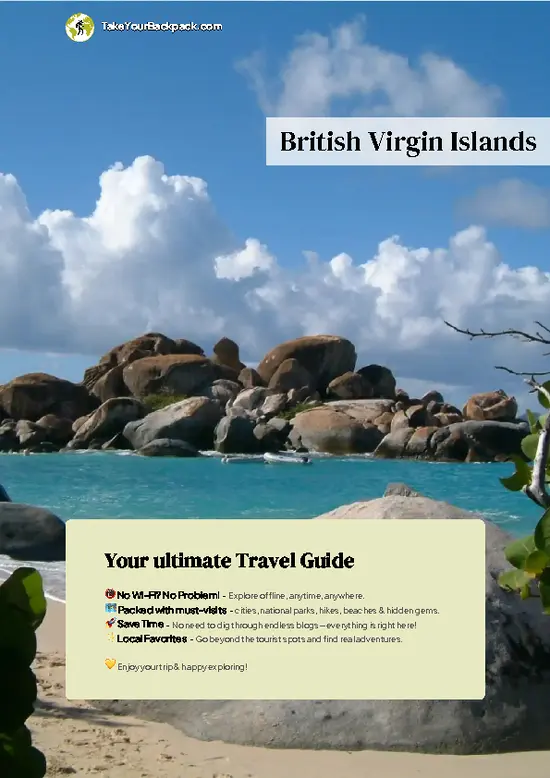
example page 0 from our offline Travel Guide for British Virgin Islands
example page 1 from our offline Travel Guide for British Virgin Islands
example page 2 from our offline Travel Guide for British Virgin Islands
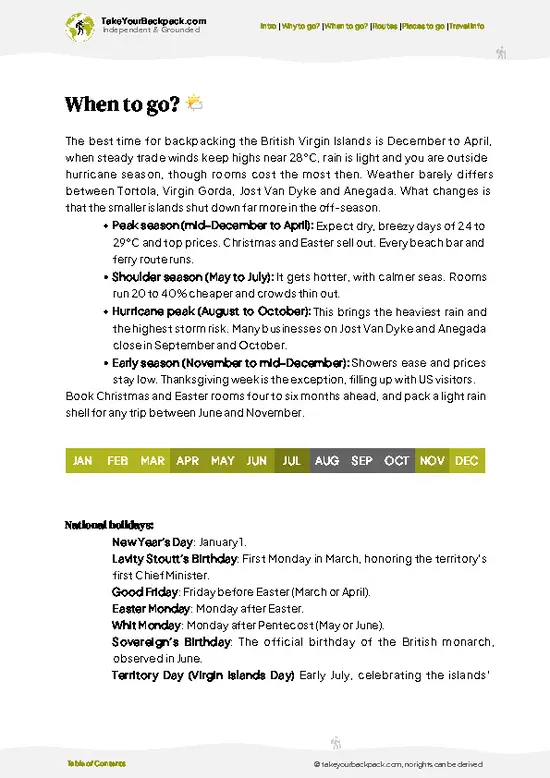
example page 3 from our offline Travel Guide for British Virgin Islands
example page 4 from our offline Travel Guide for British Virgin Islands
example page 5 from our offline Travel Guide for British Virgin Islands
example page 6 from our offline Travel Guide for British Virgin Islands
example page 7 from our offline Travel Guide for British Virgin Islands
The digital guide (108 pages) contains:-page digital guide:
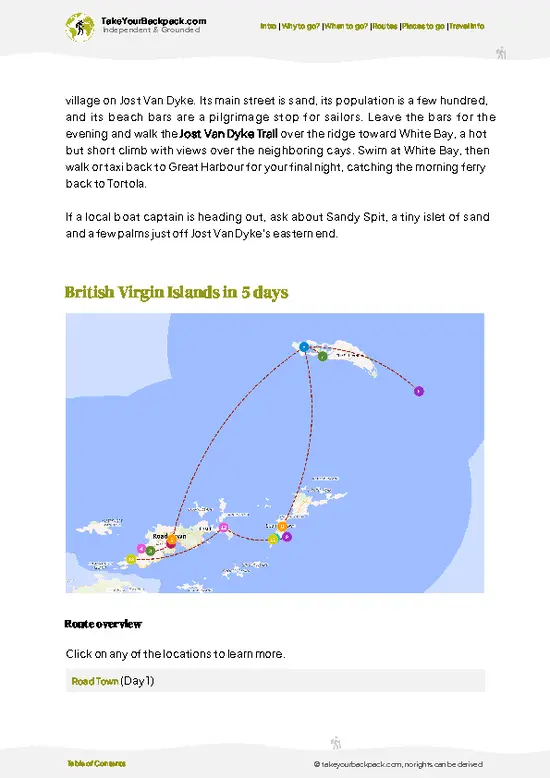
✅ Ready-made 2, 3 & 5-day routes
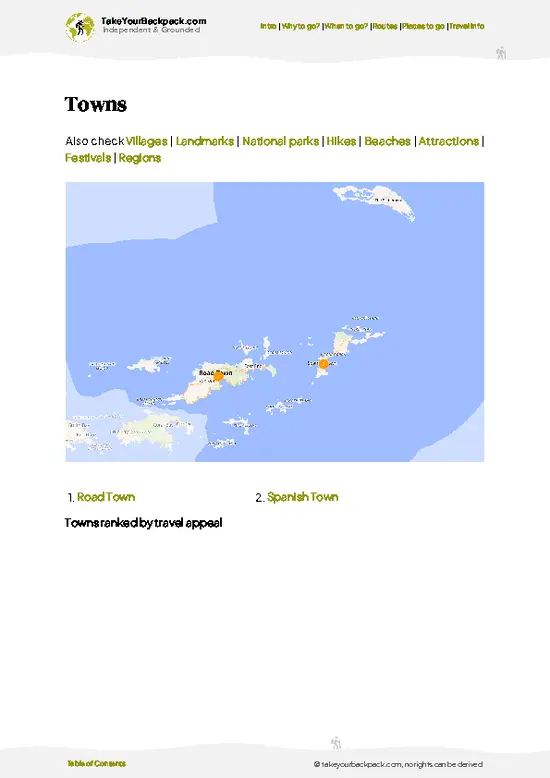
✅ All 24 places ranked, so you skip the overrated ones
✅ Works offline, all in 1 guide
✅ Cities, national parks, landmarks, beaches
✅ How to get around
👉 Click to see all 30+ guide features

📅 Plan smarter in minutes, not weeks
✅ Month by month travel advice
✅ Festivals & national holidays
✅ Budget expectations

🗺️ Go to the right places, skip the overrated ones
✅ Honest pros & cons of destinations
✅ Top hikes, parks & viewpoints
✅ Lesser-known places most travelers miss
✅ Clear “worth it vs skip it” guidance

🛏️ Travel smoothly without rookie mistakes
✅ Best areas to stay
✅ Transport systems explained simply
✅ Common scams & safety advice
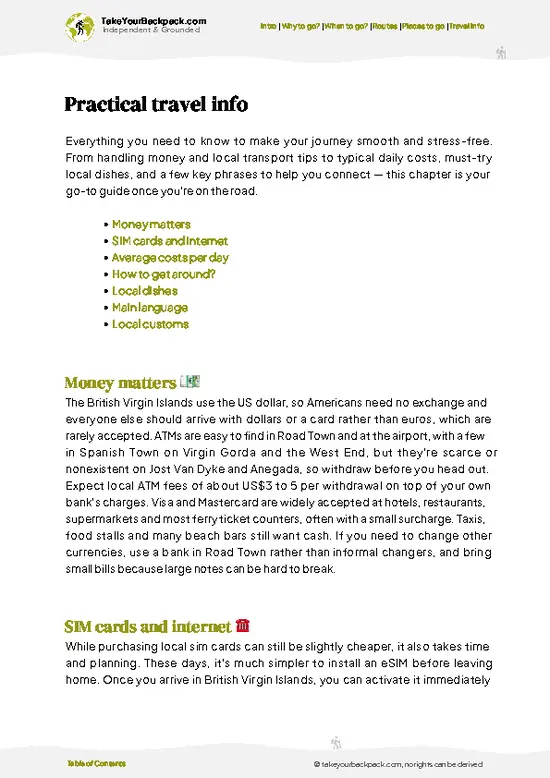
✅ SIM cards, money & practical tips

🌍 Understand the country, not just visit it
✅ Culture & traditions
✅ Local customs
✅ Festivals worth planning around
✅ Traveler-friendly historical context
✅ Insights that make places more meaningful

📱 Built for real travel conditions
✅ Fully downloadable PDF
✅ Works completely offline
✅ Optimized for phone use
✅ Useful in remote areas & buses
✅ All in 1 guide
Stop searching, start planning
Get instant access to your full guide. 30‑day money-back guarantee.


By proceeding you agree to our terms.
Sent to your inbox immediately after payment • 100% Secure Checkout
Best Backpacking Travel Advisor 2025 tourism awardBest Backpacking
Travel Advisor
2025
What others say about Take Your Backpack Guides:
⭐⭐⭐⭐⭐
Fantastic, amazing amount of information!
⭐⭐⭐⭐⭐
My goodness this is amazing, it's what I've been looking for hats off too you!
⭐⭐⭐⭐⭐
I think this is absolutely BRILLIANT
⭐⭐⭐⭐
Very complete and informative. It's still missing places, but I gotta to commend you
⭐⭐⭐⭐⭐
This is truly amazing, thank you, can't wait to explore it with my kids!
⭐⭐⭐⭐⭐
Awesome resource, thank you!
⭐⭐⭐⭐⭐
This is amazing! Can't wait to explore the ones I haven't seen
⭐⭐⭐⭐
I love this! Well done, great idea.
⭐⭐⭐⭐⭐
Thanks for taking the time to make this gem!
⭐⭐⭐⭐⭐
This might be the best website I've ever seen.
⭐⭐⭐⭐⭐
Congratulations, and thank you so much for your work; it's incredibly valuable.
⭐⭐⭐⭐
In all seriousness I think you did a great job pointing out the important spots
⭐⭐⭐⭐⭐
10/10 very good
⭐⭐⭐⭐⭐
As someone who's only just starting to visit regularly this is awesome, thank you.
⭐⭐⭐⭐
Thank you very much! I'm going to visit my dad, it's going to be very useful!
⭐⭐⭐⭐⭐
This is really cool! We'll be travelling for the first time and this definitely come in handy.
⭐⭐⭐⭐⭐
You are now our minister of culture, congratulations 👨‍💼
⭐⭐⭐⭐⭐
Just wanted to tell you that this is a pearl! Going to follow your recommendations.
⭐⭐⭐⭐⭐
This is so cool. I'll definitely be using the resource for my travels soon.
⭐⭐⭐⭐⭐
This is very impressive! Good work.
⭐⭐⭐⭐⭐
This is an amazing and informative site. Very well done!

🛏️ Where to stay?Where to Base Yourself

There are no true backpacker hostels in the British Virgin Islands, so budget travelers stay in small guesthouses, rooms above shops and restaurants, simple apartments and a few campgrounds, with the cheapest beds typically starting around US$90 to 150 a night. Road Town on Tortola has the widest choice and puts you next to the ferry terminal, supermarkets and most restaurants, though evenings are quiet and traffic is heavy by day, while Cane Garden Bay on Tortola’s north shore trades convenience for a swimming beach and the islands’ liveliest beach-bar scene. For something calmer, Spanish Town on Virgin Gorda sits close to the ferry dock and The Baths, and Jost Van Dyke and Anegada offer camping … read more 👉
There are no true backpacker hostels in the British Virgin Islands, so budget travelers stay in small guesthouses, rooms above shops and restaurants, simple apartments and a few campgrounds, with the cheapest beds typically starting around US$90 to 150 a night. Road Town on Tortola has the widest choice and puts you next to the ferry terminal, supermarkets and most restaurants, though evenings are quiet and traffic is heavy by day, while Cane Garden Bay on Tortola’s north shore trades convenience for a swimming beach and the islands’ liveliest beach-bar scene. For something calmer, Spanish Town on Virgin Gorda sits close to the ferry dock and The Baths, and Jost Van Dyke and Anegada offer camping and simple rooms that are very quiet and safe but have few shops and limited ferry connections.

If you enjoy meeting fellow travelers, consider choosing hostels with high ratings for atmosphere. On the other hand, if you prefer having your own space, a hotel might be a better option.

British Virgin IslandsExpand Your Journey

👋 Meet the founderWho’s Behind Take Your Backpack?

Johan, backpacker and founder of TakeYourBackpackHi, I’m Johan (Netherlands 🇳🇱), the creator of TakeYourBackpack. Over the past 30 years, I’ve backpacked through 88 countries across six continents, gaining extensive experience with independent travel, long-term trips, and overland routes.

This site is built on a combination of firsthand travel experience and carefully curated insights from other backpackers. Many guides are based on places I’ve personally visited, while others bring together tips, observations, and practical advice shared by trusted travelers I’ve met along the way.

The goal is to provide realistic, experience-driven guidance — not generic itineraries — so you can explore destinations with better context, clearer expectations, and more confidence.