×

Burundi🇧🇮 | festivalsUmuganuro FestivalGishora drummers, sorghum first-fruits, royal drum sanctuary, hill ceremony | things to do and best time to go

Explore Bujumbura International Jazz FestivalExplore Burundi Fashion Week

Backpacking in Umuganuro
🏆 Top pickfestival ranked #2
By Johan Kruseman 🇳🇱 | Updated October 22, 2026

You can watch the Gishora royal drummers play on their home ground, with no festival wristbands and no ticket queues. Umuganuro Festival takes place in the hills of central Burundi, in Gishora, northeast of the political capital Gitega. It marks the sorghum first-fruits and is a ceremony of thanks for the harvest. Expect heavy drums, dancing, speeches and rural families in their best cloth. The crowd is mostly Burundian, with a few diplomats and curious backpackers. The road to Gishora is a dirt track lined with banana groves and sorghum fields, and the dust is part of the price of admission. Skip anything that looks like a souvenir stall. The ceremony and the drumming are what you came for. The festival lasts a day. Unlike Rwanda’s Umuganura, a national holiday with large staged events, Burundi’s version feels local, close to the drums and easy to follow on foot.

Discover everything you want to know in the 📖 Burundi Travel Guide.
Safety warning

The current risk level for Burundi is high. Check the advice before going.


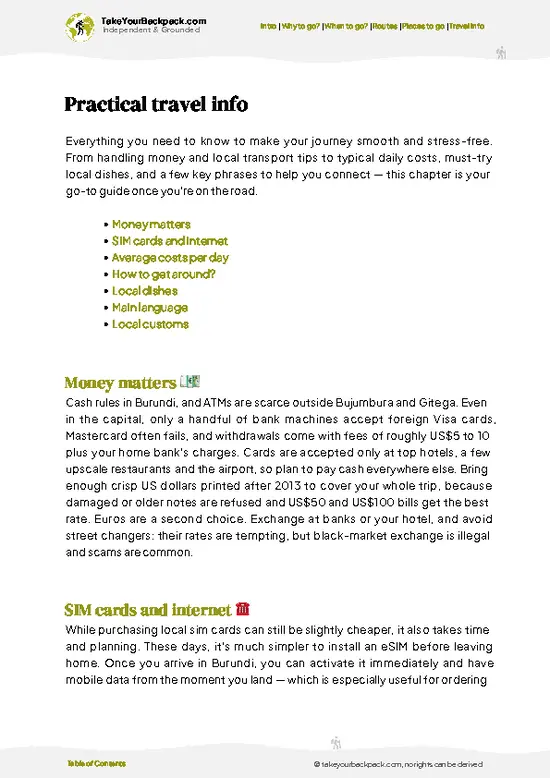
example page 0 from our offline Travel Guide for Burundi
example page 1 from our offline Travel Guide for Burundi
example page 2 from our offline Travel Guide for Burundi
example page 3 from our offline Travel Guide for Burundi
example page 4 from our offline Travel Guide for Burundi
example page 5 from our offline Travel Guide for Burundi
example page 6 from our offline Travel Guide for Burundi
example page 7 from our offline Travel Guide for Burundi
Loading the map 🌍
CLICK TO FILTER
cities
towns
landmarks
national parks
hikes
beaches
attractions
festivals
SHOW COUNTRY’S BESTSHOW ALL

✨ Why go?
Ranked #2 festival in Burundi
What makes it a must-see festival

Umuganuro Festival gives you something Burundi rarely offers on a schedule: a chance to see the royal drummers of Gishora perform for the occasion they were created for. Most visitors catch the drums in short tourist shows. Here they sit inside a ritual, with elders, officials and neighbors who know every beat.

The second draw is access to Burundian culture without a filter. The harvest rites revolve around sorghum, the grain that once defined the agricultural year, and you can watch how a community still honors it. People will explain the meaning if you ask politely, usually in Kirundi or French, so a few phrases go a long way.

For a longer trip, it fits well with a few days around Gitega, where you can combine the festival with the museum and the surrounding hill country. It is also an … read more 👉
Umuganuro Festival gives you something Burundi rarely offers on a schedule: a chance to see the royal drummers of Gishora perform for the occasion they were created for. Most visitors catch the drums in short tourist shows. Here they sit inside a ritual, with elders, officials and neighbors who know every beat.

The second draw is access to Burundian culture without a filter. The harvest rites revolve around sorghum, the grain that once defined the agricultural year, and you can watch how a community still honors it. People will explain the meaning if you ask politely, usually in Kirundi or French, so a few phrases go a long way.

For a longer trip, it fits well with a few days around Gitega, where you can combine the festival with the museum and the surrounding hill country. It is also an excellent reason to head inland rather than stay on Lake Tanganyika, and spending is modest because the event itself is a community gathering rather than a ticketed spectacle.

💡 HighlightsTop highlights of Umuganuro

  1. The Royal Drummers of Gishora: The headline act. Drummers carry the heavy drums on their heads, step in tight formation and leap as they play. The sound is physical, a chest-rattling thump you feel before you hear it. UNESCO recognizes this tradition, and Gishora is where it is rooted.
  2. The Sorghum First-Fruits Ritual: This is the reason for the day. The ceremony marks the new harvest with symbolic offerings of sorghum. Historically the king opened the season, and today officials and elders carry the act forward. Stand close enough to see the grain and hear the speeches.
  3. The Gishora Drum Sanctuary: The sacred drum site is the setting for the festival. Walk the grounds before the crowd thickens. The setting among eucalyptus and hillside farms makes the history easier to picture than any museum
… read more 👉
  1. The Royal Drummers of Gishora: The headline act. Drummers carry the heavy drums on their heads, step in tight formation and leap as they play. The sound is physical, a chest-rattling thump you feel before you hear it. UNESCO recognizes this tradition, and Gishora is where it is rooted.
  2. The Sorghum First-Fruits Ritual: This is the reason for the day. The ceremony marks the new harvest with symbolic offerings of sorghum. Historically the king opened the season, and today officials and elders carry the act forward. Stand close enough to see the grain and hear the speeches.
  3. The Gishora Drum Sanctuary: The sacred drum site is the setting for the festival. Walk the grounds before the crowd thickens. The setting among eucalyptus and hillside farms makes the history easier to picture than any museum label.
  4. Dance and Song by Local Troupes: Between ceremonies, groups from nearby hills perform dances and call-and-response songs in bright wraps. Watch the footwork and the way the audience joins in. This is the most relaxed part of the day, when conversation starts easily.
  5. The National Museum of Gitega: Visit it before or after the festival. It holds a collection of Burundian cultural objects, including drums, baskets and tools, that explain what you saw at Gishora. Entry is modest, and an hour is enough for the main rooms.
Umuganuro Festival itself fills most of one day, and the museum adds another hour or two.
Spotted a mistake or missing something? Contact us.

🌤️ When to go?When is the celebration of Umuganuro Festival?

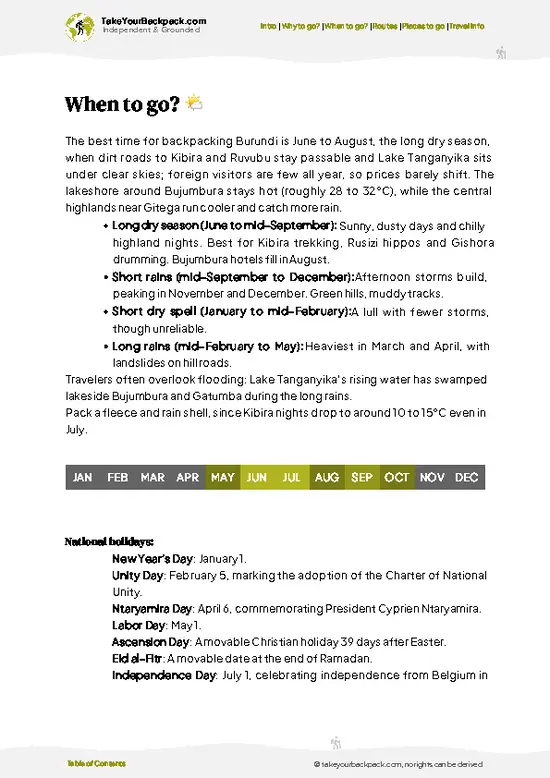
Umuganuro Festival, the Burundian sorghum-harvest ritual, is usually held in late July or August at Gitega, with the main ceremony lasting one day and the date set by the Burundian government and cultural authorities each year.
  • Best day: The main ceremony day is the one to attend, with the sacred drum performances and the symbolic first sowing and harvest rites. Arrive early, because the crowd gathers before the official program starts.
  • Weather: This is the dry season. Days run about 24 to 28°C (75 to 82°F), mornings and evenings drop to roughly 14 to 17°C (57 to 63°F), and rain is unlikely. Bring a hat, sunscreen, a light jacket and sturdy shoes for dusty ground.
  • Booking: Book a bed in Gitega two to three weeks ahead, since guesthouses are few. Prices can rise 20 to 30 percent around the ceremony.
… read more 👉
Umuganuro Festival, the Burundian sorghum-harvest ritual, is usually held in late July or August at Gitega, with the main ceremony lasting one day and the date set by the Burundian government and cultural authorities each year.
  • Best day: The main ceremony day is the one to attend, with the sacred drum performances and the symbolic first sowing and harvest rites. Arrive early, because the crowd gathers before the official program starts.
  • Weather: This is the dry season. Days run about 24 to 28°C (75 to 82°F), mornings and evenings drop to roughly 14 to 17°C (57 to 63°F), and rain is unlikely. Bring a hat, sunscreen, a light jacket and sturdy shoes for dusty ground.
  • Booking: Book a bed in Gitega two to three weeks ahead, since guesthouses are few. Prices can rise 20 to 30 percent around the ceremony.
  • Roads: Roads from Bujumbura fill up on the morning of the event. Leave before dawn and plan to head back before late afternoon, when minibuses are packed.
Confirm the exact date locally a week before, since it can shift.


source: climatestotravel.comJANJanuary: not recommended for travelingFEBFebruary: not recommended for travelingMARMarch: not recommended for travelingAPRApril: not recommended for travelingMAYMay: not recommended for travelingJUNJune: excellent for travelingJULJuly: not recommended for travelingAUGAugust: not recommended for travelingSEPSeptember: not recommended for travelingOCTOctober: not recommended for travelingNOVNovember: not recommended for travelingDECDecember: not recommended for traveling

✈️ The backpacker research shortcutBurundi Travel Guide

An offline-friendly backpacking guide with optimized travel routes, ranked highlights, transport advice, and the best areas to stay.
example page 0 from our offline Travel Guide for Burundi
example page 1 from our offline Travel Guide for Burundi
example page 2 from our offline Travel Guide for Burundi
example page 3 from our offline Travel Guide for Burundi
example page 4 from our offline Travel Guide for Burundi
example page 5 from our offline Travel Guide for Burundi
example page 6 from our offline Travel Guide for Burundi
example page 7 from our offline Travel Guide for Burundi
The digital guide (209 pages) contains:
✅ 47 highlights, ranked by travel appeal
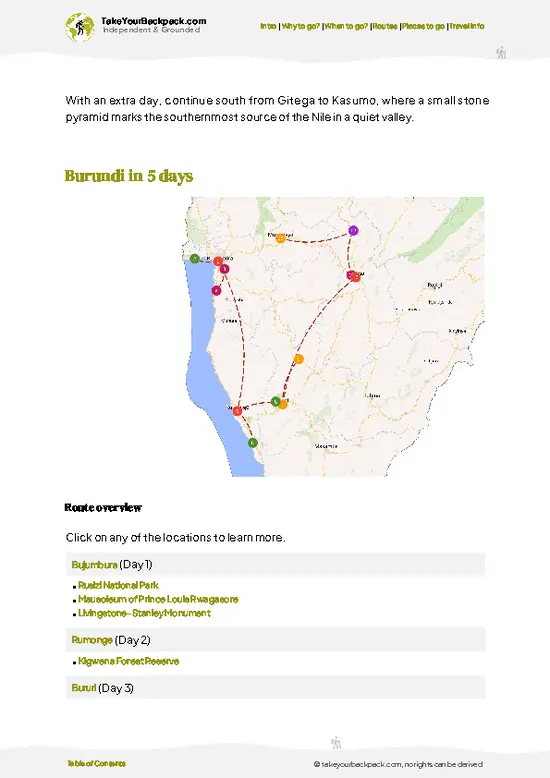
✅ Optimized 2, 3 & 5-day travel routes
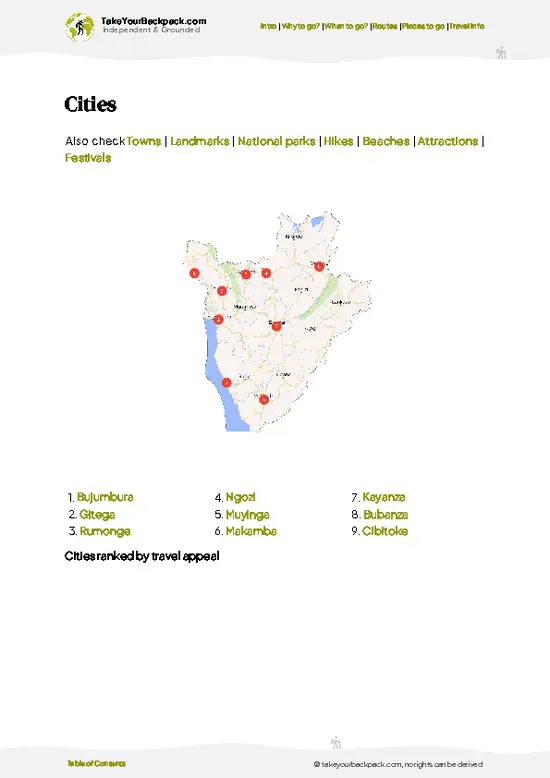
✅ Cities, national parks, landmarks, beaches
✅ How to get around
✅ Offline-friendly for travel without Wi-Fi
👉 Click to see all 30+ guide features

📅 Plan smarter in minutes, not weeks
✅ Month by month travel advice
✅ Festivals & national holidays
✅ Budget expectations

🗺️ Go to the right places, skip the overrated ones
✅ Honest pros & cons of destinations
✅ Top hikes, parks & viewpoints
✅ Lesser-known places most travelers miss
✅ Clear “worth it vs skip it” guidance

🛏️ Travel smoothly without rookie mistakes
✅ Best areas to stay
✅ Transport systems explained simply
✅ Common scams & safety advice
✅ SIM cards, money & practical tips

🌍 Understand the country, not just visit it
✅ Culture & traditions
✅ 52 Essential phrases & customs
✅ Festivals worth planning around
✅ Traveler-friendly historical context
✅ Insights that make places more meaningful

📱 Built for real travel conditions
✅ Fully downloadable PDF
✅ Works completely offline
✅ Optimized for phone use
✅ Useful in remote areas & buses
✅ Everything in one place
Stop searching, start planning
Get instant access to your full guide. 30‑day money-back guarantee.
+ Add another guide for just

By proceeding you agree to our terms.
Sent to your inbox immediately after payment • 100% Secure Checkout
Best Backpacking Travel Advisor 2025 tourism awardBest Backpacking
Travel Advisor
2025
What others say about Take Your Backpack Guides:
⭐⭐⭐⭐⭐
Fantastic, amazing amount of information!
⭐⭐⭐⭐⭐
My goodness this is amazing, it's what I've been looking for hats off too you!
⭐⭐⭐⭐⭐
I think this is absolutely BRILLIANT
⭐⭐⭐⭐
Very complete and informative. It's still missing places, but I gotta to commend you
⭐⭐⭐⭐⭐
This is truly amazing, thank you, can't wait to explore it with my kids!
⭐⭐⭐⭐⭐
Awesome resource, thank you!
⭐⭐⭐⭐⭐
This is amazing! Can't wait to explore the ones I haven't seen
⭐⭐⭐⭐
I love this! Well done, great idea.
⭐⭐⭐⭐⭐
Thanks for taking the time to make this gem!
⭐⭐⭐⭐⭐
This might be the best website I've ever seen.
⭐⭐⭐⭐⭐
Congratulations, and thank you so much for your work; it's incredibly valuable.
⭐⭐⭐⭐
In all seriousness I think you did a great job pointing out the important spots
⭐⭐⭐⭐⭐
10/10 very good
⭐⭐⭐⭐⭐
As someone who's only just starting to visit regularly this is awesome, thank you.
⭐⭐⭐⭐
Thank you very much! I'm going to visit my dad, it's going to be very useful!
⭐⭐⭐⭐⭐
This is really cool! We'll be travelling for the first time and this definitely come in handy.
⭐⭐⭐⭐⭐
You are now our minister of culture, congratulations 👨‍💼
⭐⭐⭐⭐⭐
Just wanted to tell you that this is a pearl! Going to follow your recommendations.
⭐⭐⭐⭐⭐
This is so cool. I'll definitely be using the resource for my travels soon.
⭐⭐⭐⭐⭐
This is very impressive! Good work.
⭐⭐⭐⭐⭐
This is an amazing and informative site. Very well done!

🛏️ Where to stay?Where staying makes the most sense

Gitega is the practical base for Umuganuro Festival, and the central part of town near the main market and the bus stop is where budget travelers should look first. It is walkable, you can find food and a money changer within minutes, and you will meet other visitors and Burundian festival-goers in the same few streets. Guesthouses and small lodgings here fill early around the ceremony, so reserve ahead by phone or through a local contact.

The area close to the National Museum of Gitega and the old royal quarter suits anyone who wants a short walk to the cultural sites. It is quieter at night, … read more 👉
Gitega is the practical base for Umuganuro Festival, and the central part of town near the main market and the bus stop is where budget travelers should look first. It is walkable, you can find food and a money changer within minutes, and you will meet other visitors and Burundian festival-goers in the same few streets. Guesthouses and small lodgings here fill early around the ceremony, so reserve ahead by phone or through a local contact.

The area close to the National Museum of Gitega and the old royal quarter suits anyone who wants a short walk to the cultural sites. It is quieter at night, which helps if you need sleep before an early start, and moto-taxis pass regularly.

If Gitega is full, Bujumbura is the fallback. It has far more budget beds and the largest number of travelers, and the center and the Rohero district are the usual choices for solo backpackers. The catch is the road: Gitega is roughly 100 km east, about two to three hours by minibus, so you must leave before dawn on the day. Keep valuables out of sight, avoid walking alone after dark, and travel in the daytime when possible.

👛 Costs (as of 22 October 2026)Typical daily expenses

A day at Umuganuro Festival costs about US$0 to 5 for an independent traveler, with a total daily budget of US$62 in high season, and most of the spend goes on a bed and transport to Gitega.
CategoryBudget RangeLocal Reality
Festival ticketsUS$0 to 5Public ceremony areas are generally open to visitors. Occasional small contributions or reserved-seat fees may apply.
AccommodationUS$12 to 25 (high season US$25)Simple guesthouses in Gitega with shared or basic private rooms. Prices rise around the ceremony and rooms sell out.
Local transportUS$8 to 15A minibus from Bujumbura costs roughly US$3 to 6 each way. Moto-taxis in town cost about US$0.50 to 2 a ride.
Food & drinksUS$6 to 12Stall plates of ubugari with beans or meat cost US$1.50 to 4. Beer is about US$1 to 2.
Miscellaneous expensesUS$5 to 10Water,
… read more 👉
A day at Umuganuro Festival costs about US$0 to 5 for an independent traveler, with a total daily budget of US$62 in high season, and most of the spend goes on a bed and transport to Gitega.
CategoryBudget RangeLocal Reality
Festival ticketsUS$0 to 5Public ceremony areas are generally open to visitors. Occasional small contributions or reserved-seat fees may apply.
AccommodationUS$12 to 25 (high season US$25)Simple guesthouses in Gitega with shared or basic private rooms. Prices rise around the ceremony and rooms sell out.
Local transportUS$8 to 15A minibus from Bujumbura costs roughly US$3 to 6 each way. Moto-taxis in town cost about US$0.50 to 2 a ride.
Food & drinksUS$6 to 12Stall plates of ubugari with beans or meat cost US$1.50 to 4. Beer is about US$1 to 2.
Miscellaneous expensesUS$5 to 10Water, sunscreen, small tips to performers, local SIM data and a small souvenir such as a drum-themed craft.
Total Daily BudgetUS$32 to 62About US$62 in high season with a guesthouse bed at the upper end.
⚠️ Prices can change and everyone travels differently, so take this as a rough guide. Hope it helps you plan your adventure!

🍲 FoodLocal Flavors for Backpackers

Expect the food at Umuganuro Festival to be rooted in the sorghum harvest it celebrates. Look for ubugari, the thick cassava or maize porridge, served with beans, grilled goat or fried plantains. Small stalls around Gitega also sell brochettes (skewered meat), boiled maize and roasted sweet potatoes, usually eaten standing, straight from the fire.

The drink to try is impeke or sorghum beer, which is tied to the ritual itself. It is cloudy, slightly sour and often shared from a communal gourd or pot, so accept a sip if it is offered, as it is a polite gesture of welcome. Burundian Primus and Amstel beers are widely sold, along with sodas and tea with milk for the cold mornings.

Pay in cash, in small notes, because stalls rarely take cards and change can be scarce. Portions are generous and … read more 👉
Expect the food at Umuganuro Festival to be rooted in the sorghum harvest it celebrates. Look for ubugari, the thick cassava or maize porridge, served with beans, grilled goat or fried plantains. Small stalls around Gitega also sell brochettes (skewered meat), boiled maize and roasted sweet potatoes, usually eaten standing, straight from the fire.

The drink to try is impeke or sorghum beer, which is tied to the ritual itself. It is cloudy, slightly sour and often shared from a communal gourd or pot, so accept a sip if it is offered, as it is a polite gesture of welcome. Burundian Primus and Amstel beers are widely sold, along with sodas and tea with milk for the cold mornings.

Pay in cash, in small notes, because stalls rarely take cards and change can be scarce. Portions are generous and cheap, so one plate often feeds a hungry traveler. Lines are loose rather than orderly, so be patient and greet the seller first. Eat early, because popular stalls can sell out by midday, and carry bottled water, since the dry-season dust gets thick.

FAQFrequently asked questions about Umuganuro

Umuganuro Festival takes place in late July or August, with the main ceremony held over one day at Gitega, Burundi’s political capital. The exact date is set each year by the Burundian authorities, so confirm it locally about a week before. Gitega lies roughly 100 km east of Bujumbura, around two to three hours by road.
Attending Umuganuro Festival is usually free or very cheap, with the real costs being the trip. Expect US$3 to 6 each way for a minibus from Bujumbura, US$12 to 25 a night for a guesthouse in Gitega, and US$6 to 12 a day for food and drinks. A realistic daily budget is about US$32 to 62.
Umuganuro Festival generally does not require advance tickets for the public ceremony in Gitega, since most of it is open to visitors. Any reserved seating is usually arranged on site for a small fee of a few US dollars. What you should book ahead is a bed, ideally two to three weeks early, because Gitega has few guesthouses and they fill around the ceremony.
⚠️ Things can change over time, so always validate details locally before you go.

Other Burundian festivals near Umuganuro

Explore more nearby:


💡 Not sure where to go next?
Create a personalized itinerary for Burundi including Umuganuro and the places that fit your trip.

Generate my itinerary

👉 Discover all festivals

Or checkout all Burundi has to offer (think cities, towns, villages, national parks, hikes, beaches, festivals)
Country photo of Burundi

We 💚 feedbackWhat to keep in mind

Umuganuro Festival rewards those who arrive early, because the quiet hour before the drummers assemble is when you can see the sanctuary grounds and chat with the elders and organizers. I would bring small bills, a hat for the sun and a few Kirundi greetings, and I would stay for the closing songs rather than leaving after the first drum round.

✍️ Help improve this page!
The information on this page is based on in-depth research, insights shared by experienced travelers, and feedback from the local travel community in Burundi. While every effort is made to keep the information accurate and current, conditions can change — so if you spot anything incorrect or outdated, please get in touch.


🙋‍♂️ Give feedback

👋 Meet the founderWho’s Behind Take Your Backpack?

Johan, backpacker and founder of TakeYourBackpackHi, I’m Johan (Netherlands 🇳🇱), the creator of TakeYourBackpack. Over the past 3 decades, I’ve backpacked through 90+ countries across six continents, gaining extensive experience with independent travel, long-term trips, and overland routes.

This site is built on a combination of firsthand travel experience and carefully curated insights from other backpackers. Many guides are based on places I’ve personally visited, while others bring together tips, observations, and practical advice shared by trusted travelers I’ve met along the way.

The goal is to provide realistic, experience-driven guidance — not generic itineraries — so you can explore destinations with better context, clearer expectations, and more confidence.