
×

Cabo Verde🇨🇻 | citiesPraiaPlateau district, local markets, Atlantic coastline, government buildings | things to do and best time to go

Explore Praia de CurralinhoExplore Santa Catarina

Backpacking in Praia
🏆 Top pickcity ranked #1
By Johan Kruseman 🇳🇱 | Updated May 21, 2026

You land in Praia, Cabo Verde’s capital, and the first real fork in the road hits: do you splurge on a breezy taxi from Nelson Mandela International, or wrangle your way onto a packed aluguer (shared minibus) with the locals? This isn’t just about a few euros—it’s about how you want to experience the city’s pulse. Praia sits on the southern tip of Santiago Island, the largest in the archipelago, and it’s the country’s political and economic heart. For backpackers, Praia is a paradox: lively but not always easy, with colonial-era plateaus, the faded grandeur of Praça Alexandre Albuquerque, and the Mercado de Sucupira’s sensory overload. You’ll find a few hostels and a trickle of travelers, but this isn’t a party hub like Mindelo. Costs are moderate, safety is decent if you keep your wits, and English is rare—Portuguese or Creole will get you further. Praia rewards patience and curiosity, but it won’t hand you its secrets on a plate.

Discover everything you want to know in the 📖 Cabo Verde Travel Guide.
Loading the map 🌍
CLICK TO FILTER
city
town
village
unique site
national park
hike
beach
attraction
festival
region
SHOW COUNTRY’S BESTSHOW ALL

✨ Why go?
Ranked #1 city in Cabo Verde
The unique appeal for travelers

Praia, the capital of Cabo Verde, is a strategic basecamp for backpackers navigating the archipelago. It offers a blend of affordability and accessibility that makes it a smart stop on your journey. The hostels here are not just budget-friendly; they foster a community vibe, perfect for meeting fellow travelers.

You’ll find a variety of food options, from local eateries serving up hearty dishes to international spots catering to diverse tastes. The city is walkable, allowing you to explore its vibrant streets without the hassle of transport.

While Praia itself has its share of highlights, it’s also a launchpad for day trips to other islands, making it easy to dive deeper into the culture and landscapes of Cabo Verde. The nightlife is lively but not overwhelming, offering a chance to unwind … read more 👉
Praia, the capital of Cabo Verde, is a strategic basecamp for backpackers navigating the archipelago. It offers a blend of affordability and accessibility that makes it a smart stop on your journey. The hostels here are not just budget-friendly; they foster a community vibe, perfect for meeting fellow travelers.

You’ll find a variety of food options, from local eateries serving up hearty dishes to international spots catering to diverse tastes. The city is walkable, allowing you to explore its vibrant streets without the hassle of transport.

While Praia itself has its share of highlights, it’s also a launchpad for day trips to other islands, making it easy to dive deeper into the culture and landscapes of Cabo Verde. The nightlife is lively but not overwhelming, offering a chance to unwind after a day of exploration.

If you’re looking for a place that balances comfort and value, Praia fits the bill. It’s not just a stopover; it’s a hub that enhances your overall experience in Cabo Verde, making it a worthy addition to your backpacking route.
Get the complete Travel Guide for Cabo Verde
Everything organized for offline planning — routes, highlights, costs & tips

See what’s inside 👉

Get the Travel Guide -

💡 HighlightsDon't-miss highlights and experiences

  • Platô (Plateau) — The old colonial heart of Praia: narrow streets, pastel government buildings, little cafés and viewpoints that give you the best feel for the city’s layout and history.
  • Praça Alexandre Albuquerque — The central square on the Platô where locals meet, street vendors sell snacks, and you can people-watch while surrounded by key civic buildings and palm trees.
  • Mercado de Sucupira (Sukupira Market) — The city’s busiest market: produce, fish, clothes and a lively barter scene. Great for photos, cheap eats and seeing everyday Cabo Verdean life up close.
  • Sé Catedral de Nossa Senhora da Graça (Praia Cathedral) — Stands on the Plateau with a simple, solid presence; nice inside and out for history buffs and anyone who likes churches with a view over the bay.
  • Palácio do Governo
read more 👉
  • Platô (Plateau) — The old colonial heart of Praia: narrow streets, pastel government buildings, little cafés and viewpoints that give you the best feel for the city’s layout and history.
  • Praça Alexandre Albuquerque — The central square on the Platô where locals meet, street vendors sell snacks, and you can people-watch while surrounded by key civic buildings and palm trees.
  • Mercado de Sucupira (Sukupira Market) — The city’s busiest market: produce, fish, clothes and a lively barter scene. Great for photos, cheap eats and seeing everyday Cabo Verdean life up close.
  • Sé Catedral de Nossa Senhora da Graça (Praia Cathedral) — Stands on the Plateau with a simple, solid presence; nice inside and out for history buffs and anyone who likes churches with a view over the bay.
  • Palácio do Governo — The government palace on the Plateau: elegant colonial architecture and a useful landmark for orientation; the square in front is often a hub of civic activity.
  • Palácio da Cultura Ildo Lobo — The main cultural center for concerts, exhibitions and events. If there’s a show on, it’s an excellent place to catch live music and local art.
  • Estádio da Várzea — Football is a local religion; catch a match or just stop by to soak in the raucous atmosphere, street food stalls and authentic fan culture.
  • Praia da Gamboa — A working fishing bay and small beach tucked close to the city center; watch the boats, eat fresh-caught fish on the sand, and see how the harbour side of Praia really operates.
  • Porto da Praia (Praia Harbor) — The entry point for inter-island ferries and fishing boats. It’s gritty, photogenic and practical—good for catching connections or watching daily maritime life.
  • Farol da Ponta Temerosa (Ponta Temerosa Lighthouse) — A dramatic headland and lighthouse at the southern tip of the city; waves, wind and good coastal views make it a memorable short walk from the center.
For day trips outside the city, easily reachable highlights include the UNESCO site of Cidade Velha (Fort Real de São Filipe), the Serra Malagueta mountains for hiking, and the sandy bay at Tarrafal on the north coast.
Spotted a mistake or missing something? Contact us.

Things to do in Praia

Ratings based on Tripadvisor reviews. When you book through this link, you support our work at no extra cost to you.

🏘️ NeighborhoodsHow different areas shape the experience

Praia, the capital of Cabo Verde, offers a mix of urban energy and laid-back island vibes. Each neighborhood has its own character, making it essential to choose wisely based on your priorities.

Plateau: This is the heart of Praia, where you’ll find government buildings, shops, and local eateries. The vibe is bustling, perfect for those who enjoy a lively atmosphere. Costs are moderate, and it’s highly walkable. Nightlife is decent, with bars and cafes that stay open late. Ideal for short stays, as you can easily explore the city center.

Achada de Santo António: A residential area with a more local feel. It’s quieter than Plateau, making it suitable for longer stays if you want to immerse yourself in daily life. Prices here are lower, and you’ll find authentic dining options. Walkability … read more 👉
Praia, the capital of Cabo Verde, offers a mix of urban energy and laid-back island vibes. Each neighborhood has its own character, making it essential to choose wisely based on your priorities.

Plateau: This is the heart of Praia, where you’ll find government buildings, shops, and local eateries. The vibe is bustling, perfect for those who enjoy a lively atmosphere. Costs are moderate, and it’s highly walkable. Nightlife is decent, with bars and cafes that stay open late. Ideal for short stays, as you can easily explore the city center.

Achada de Santo António: A residential area with a more local feel. It’s quieter than Plateau, making it suitable for longer stays if you want to immerse yourself in daily life. Prices here are lower, and you’ll find authentic dining options. Walkability is good, but public transport is necessary for longer trips.

Praia da Gamboa: This coastal area is known for its beach and relaxed vibe. It’s a great spot for sunbathers and those who want to unwind. Costs can vary; beachfront accommodations may be pricier. The nightlife is chill, with beach bars offering a laid-back atmosphere. Perfect for short stays focused on relaxation.

Vila Nova: A bit off the beaten path, this neighborhood is quieter and more residential. It’s less touristy, which means lower costs and a more authentic experience. Walkability is decent, but you’ll want to use public transport for city access. Best for longer stays if you want to escape the hustle and bustle.

⌛️ 1 day1-day itinerary for Praia

Praia, the capital of Cabo Verde, is a vibrant blend of culture, history, and stunning coastal views. Its lively streets pulse with the rhythm of local music, while the colorful markets offer a feast for the senses. You can easily spend a day here, soaking in the essence of this unique city.

Start your morning in the Plateau neighborhood, the heart of Praia. Grab a strong cup of local coffee at Café Cidadela, where the aroma mingles with the chatter of locals. After your caffeine fix, stroll through the nearby Mercado de Sucupira. This bustling market is a sensory overload, with vendors selling everything from fresh produce to handmade crafts. It’s a great spot to pick up a few souvenirs and engage with the friendly locals.

As the sun climbs higher, make your way to the iconic Praia da Gamboa. … read more 👉
Praia, the capital of Cabo Verde, is a vibrant blend of culture, history, and stunning coastal views. Its lively streets pulse with the rhythm of local music, while the colorful markets offer a feast for the senses. You can easily spend a day here, soaking in the essence of this unique city.

Start your morning in the Plateau neighborhood, the heart of Praia. Grab a strong cup of local coffee at Café Cidadela, where the aroma mingles with the chatter of locals. After your caffeine fix, stroll through the nearby Mercado de Sucupira. This bustling market is a sensory overload, with vendors selling everything from fresh produce to handmade crafts. It’s a great spot to pick up a few souvenirs and engage with the friendly locals.

As the sun climbs higher, make your way to the iconic Praia da Gamboa. This beach is a local favorite, perfect for a midday break. You can lounge on the sand, take a dip in the Atlantic, or enjoy a light lunch at one of the beachside eateries. Try the grilled fish; it’s fresh and flavorful, a true taste of Cabo Verde.

In the afternoon, head to the historic area of Cidade Velha, a UNESCO World Heritage site. Explore the cobblestone streets and visit the impressive Fort Real de São Filipe. The views from the fort are breathtaking, offering a panoramic look at the coastline and the surrounding hills. While this area is known, it’s often overlooked by tourists, making it a peaceful escape.

As evening approaches, return to the Plateau for dinner. Check out a local restaurant like Taverna d’Luz for traditional Cape Verdean dishes. Cap off your day with a stroll along the waterfront promenade, where the sunset paints the sky in hues of orange and pink. This is Praia at its best—authentic, lively, and full of character.
Build the Right Itinerary
Use the Cabo Verde Travel Guide’s 2, 3 & 5-day routes as a starting point to plan a trip that actually works on the ground.

Get the Travel Guide -

🌤️ When to go?Choosing the right time of year


  • Topic: Weather – Praia’s climate is semi-arid, meaning it’s mostly dry with a brief rainy season from August to October. Outside these months, expect clear skies and minimal rain, perfect for trekking and beach time.

  • Topic: Temperature – Daytime highs hover around 25-30°C (77-86°F) year-round, with cooler evenings dipping to 20°C (68°F). The hottest months are September and October, which can feel sticky but manageable with ocean breezes.

  • Topic: Daylight Hours – Near the equator, daylight is steady, about 12 hours daily throughout the year. This consistency means you don’t have to rush daylight-dependent plans based on season.

  • Topic: Crowds – Peak tourist season aligns with European winter (December to February), when Praia sees an influx of visitors escaping cold climates. This drives
read more 👉

  • Topic: Weather – Praia’s climate is semi-arid, meaning it’s mostly dry with a brief rainy season from August to October. Outside these months, expect clear skies and minimal rain, perfect for trekking and beach time.

  • Topic: Temperature – Daytime highs hover around 25-30°C (77-86°F) year-round, with cooler evenings dipping to 20°C (68°F). The hottest months are September and October, which can feel sticky but manageable with ocean breezes.

  • Topic: Daylight Hours – Near the equator, daylight is steady, about 12 hours daily throughout the year. This consistency means you don’t have to rush daylight-dependent plans based on season.

  • Topic: Crowds – Peak tourist season aligns with European winter (December to February), when Praia sees an influx of visitors escaping cold climates. This drives up prices and fills accommodations.

  • Topic: Seasonal Activities – November to June is ideal for water sports like surfing and diving, thanks to calmer seas. Cultural festivals peak in late summer, offering authentic local experiences but also more crowds.

  • Topic: Price Fluctuations – Expect higher costs during the December-February window. Traveling just before or after this period can save money without sacrificing weather quality.


Pro-tip: Aim for the shoulder months—March to May or November—to balance pleasant weather, fewer tourists, and better prices, turning logistics into your strategic advantage.


source: climatestotravel.comJANJanuary: good for travelingFEBFebruary: good for travelingMARMarch: excellent for travelingAPRApril: excellent for travelingMAYMay: excellent for travelingJUNJune: highly recommended for travelingJULJuly: good for travelingAUGAugust: fair for travelingSEPSeptember: fair for travelingOCTOctober: fair for travelingNOVNovember: excellent for travelingDECDecember: good for traveling
when-to-go

✈️ The backpacker research shortcutCabo Verde Travel Guide

An offline-friendly backpacking guide with optimized travel routes, ranked highlights, transport advice, and the best areas to stay.
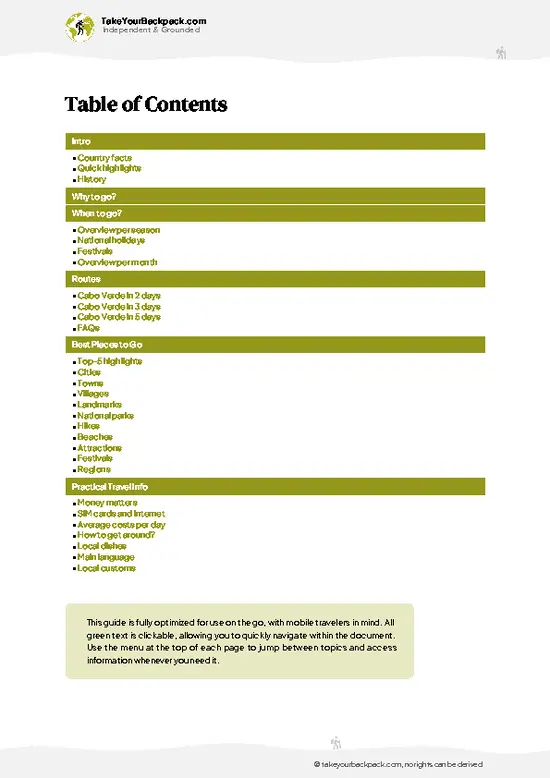
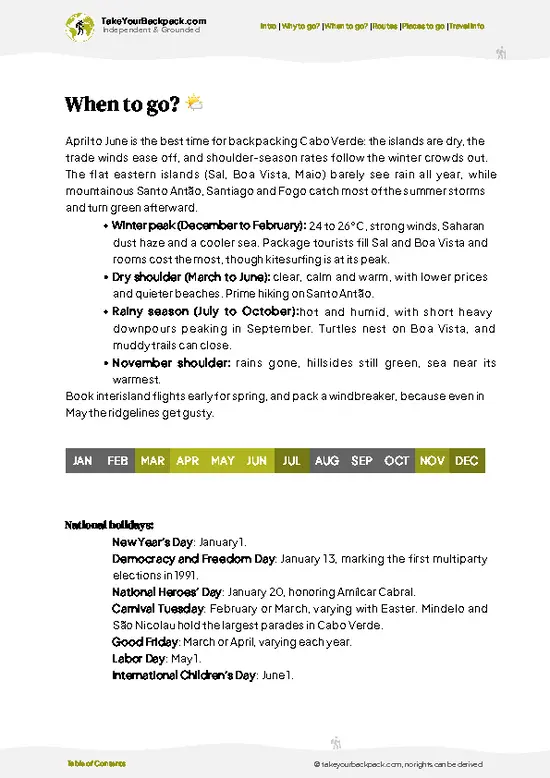
example page 0 from our offline Travel Guide for Cabo Verdeexample page 1 from our offline Travel Guide for Cabo Verdeexample page 2 from our offline Travel Guide for Cabo Verdeexample page 3 from our offline Travel Guide for Cabo Verdeexample page 4 from our offline Travel Guide for Cabo Verdeexample page 5 from our offline Travel Guide for Cabo Verdeexample page 6 from our offline Travel Guide for Cabo Verdeexample page 7 from our offline Travel Guide for Cabo Verde
The digital guide (257 pages) contains:
61 highlights, ranked by travel appeal
Optimized 2, 3 & 5-day travel routes
Cities, national parks, beaches, historical sites, ...
How to get around
Offline-friendly for travel without Wi-Fi
👉 Click to see all 30+ guide features

📅 Plan smarter in minutes, not weeks
Month by month travel advice
Festivals & national holidays
Budget expectations

🗺️ Go to the right places, skip the overrated ones
Honest pros & cons of destinations
Top hikes, parks & viewpoints
Lesser-known places most travelers miss
Clear “worth it vs skip it” guidance

🛏️ Travel smoothly without rookie mistakes
Best areas to stay
Transport systems explained simply
Common scams & safety advice
SIM cards, money & practical tips

🌍 Understand the country, not just visit it
Culture & traditions
52 Essential phrases & customs
Festivals worth planning around
Traveler-friendly historical context
Insights that make places more meaningful

📱 Built for real travel conditions
Fully downloadable PDF
Works completely offline
Optimized for phone use
Useful in remote areas & buses
Everything in one place
Save weeks of stressful planning
Get instant access to the full guide directly. 30-day money-back guarantee.


Sent to your inbox immediately after payment • 100% Secure Checkout
Best Backpacking Travel Advisor 2025 tourism awardBest Backpacking
Travel Advisor
2025
What others say about Take Your Backpack Guides:
⭐⭐⭐⭐⭐
Fantastic, amazing amount of information!
⭐⭐⭐⭐⭐
My goodness this is amazing, it's what I've been looking for hats off too you!
⭐⭐⭐⭐⭐
I think this is absolutely BRILLIANT
⭐⭐⭐⭐
Very complete and informative. It's still missing places, but I gotta to commend you
⭐⭐⭐⭐⭐
This is truly amazing, thank you, can't wait to explore it with my kids!
⭐⭐⭐⭐⭐
Awesome resource, thank you!
⭐⭐⭐⭐⭐
This is amazing! Can't wait to explore the ones I haven't seen
⭐⭐⭐⭐
I love this! Well done, great idea.
⭐⭐⭐⭐⭐
Thanks for taking the time to make this gem!
⭐⭐⭐⭐⭐
This might be the best website I've ever seen.
⭐⭐⭐⭐⭐
Congratulations, and thank you so much for your work; it's incredibly valuable.
⭐⭐⭐⭐
In all seriousness I think you did a great job pointing out the important spots
⭐⭐⭐⭐⭐
10/10 very good
⭐⭐⭐⭐⭐
As someone who's only just starting to visit regularly this is awesome, thank you.
⭐⭐⭐⭐
Thank you very much! I'm going to visit my dad, it's going to be very useful!
⭐⭐⭐⭐⭐
This is really cool! We'll be travelling for the first time and this definitely come in handy.
⭐⭐⭐⭐⭐
You are now our minister of culture, congratulations 👨‍💼
⭐⭐⭐⭐⭐
Just wanted to tell you that this is a pearl! Going to follow your recommendations.
⭐⭐⭐⭐⭐
This is so cool. I'll definitely be using the resource for my travels soon.
⭐⭐⭐⭐⭐
This is very impressive! Good work.
⭐⭐⭐⭐⭐
This is an amazing and informative site. Very well done!

🛏️ Where to stay?Best areas and accommodation options

In Praia, the backpacker sweet spot is the Plateau district. This is the city’s historic heart, perched on a hill with a grid of streets that pulse with local life. Staying here means you’re never far from street markets, casual eateries, and the main transport hubs. It’s safe enough for solo travelers who want to roam after dark without a second thought. The vibe is a mix of laid-back and lively—think locals chatting over coffee, musicians tuning up, and the occasional street festival. Hostels and budget guesthouses cluster here, making it easy to meet other travelers without sacrificing your … read more 👉
In Praia, the backpacker sweet spot is the Plateau district. This is the city’s historic heart, perched on a hill with a grid of streets that pulse with local life. Staying here means you’re never far from street markets, casual eateries, and the main transport hubs. It’s safe enough for solo travelers who want to roam after dark without a second thought. The vibe is a mix of laid-back and lively—think locals chatting over coffee, musicians tuning up, and the occasional street festival. Hostels and budget guesthouses cluster here, making it easy to meet other travelers without sacrificing your wallet.

Compare that to neighborhoods like Achada Santo António or Palmarejo. These areas are more residential and spread out, which can mean longer commutes to central spots and fewer social opportunities. They’re quieter, yes, but less convenient for the backpacker who thrives on spontaneous connections and quick access to city life.

Choosing Plateau means trading a bit of comfort—expect simple lodgings and basic amenities—for maximum social payoff and time saved on transport. It’s a classic backpacker trade-off: you sacrifice plush quiet for the buzz of the city’s core, where every corner offers a chance to dive deeper into Cabo Verdean culture and meet fellow adventurers.

🚌 Getting aroundTransportation options and practical tips

Praia moves at its own rhythm—neither strictly by the clock nor entirely by whim. The city’s pulse is a blend of informal hustle and pockets of predictability. You’ll find that schedules exist, but they’re more like guidelines than ironclad rules. This means your travel choices here are a dance between patience and strategy. Understanding the trade-offs between time, money, and comfort is your secret weapon. When you get this balance right, you’re not just moving through Praia—you’re mastering it.


  • Walking: The ultimate budget option. Praia’s compact center makes walking not just feasible but often faster than waiting for transport. It costs zero, offers maximum flexibility, and lets you soak in the city’s textures up close. The trade-off? You’ll expend energy and time, especially under
read more 👉
Praia moves at its own rhythm—neither strictly by the clock nor entirely by whim. The city’s pulse is a blend of informal hustle and pockets of predictability. You’ll find that schedules exist, but they’re more like guidelines than ironclad rules. This means your travel choices here are a dance between patience and strategy. Understanding the trade-offs between time, money, and comfort is your secret weapon. When you get this balance right, you’re not just moving through Praia—you’re mastering it.


  • Walking: The ultimate budget option. Praia’s compact center makes walking not just feasible but often faster than waiting for transport. It costs zero, offers maximum flexibility, and lets you soak in the city’s textures up close. The trade-off? You’ll expend energy and time, especially under the midday sun.


  • Aluguer Minibuses: These shared vans are the backbone of local transit. They run frequently from early morning until late evening, with fares around 50-100 CVE (roughly 50 cents to $1 USD). They’re cheap and relatively quick but can get cramped and unpredictable in departure times. Comfort is minimal, but the price and speed make them a no-brainer for budget travelers who don’t mind a bit of hustle.


  • Standard Buses: Slightly larger and more comfortable than minibuses, these buses cover main routes with a fixed schedule, usually from 6 AM to 9 PM. Tickets cost about 100-150 CVE. They offer a middle ground—more comfort and reliability than minibuses but at a slightly higher cost and less frequency. If you value a bit of breathing room and a predictable departure, this is your pick.


  • Taxis: Taxis in Praia are metered but often negotiate fares upfront. They’re the fastest and most comfortable option, especially if you’re traveling with luggage or in a group. Expect to pay 500-1000 CVE for typical city rides. The trade-off is clear: you’re buying time and comfort at a premium, which can quickly eat into a tight budget.


  • Bicycle Rentals: An underappreciated option that balances speed, cost, and flexibility. Rentals run about 500-1000 CVE per day. You gain independence and can cover more ground than walking without the expense of motorized transport. The downside: Praia’s hills and traffic can be challenging, and you’ll need to be comfortable navigating urban streets.


Mastering Praia’s transit means knowing when to walk, when to squeeze into an aluguer, and when to splurge on a taxi. Each choice is a calculated trade-off. Your goal is to maximize your experience without draining your energy or wallet. This is the game—play it smart, and the city unfolds on your terms.

👛 Costs (as of 28 January 2025)Money, prices, and spending tips

Backpacking in Praia, Cabo Verde, is a balancing act between modest costs and the occasional splurge, with prices reflecting the island’s developing tourism scene. Here’s a breakdown of what you’re looking at day-to-day:
  • Dorm Accommodation (High Season): Expect to pay around €15-€25 per night. High season drives prices up due to demand, especially in popular hostels near the city center or beach areas.
  • Dorm Accommodation (Off-Season): Prices drop to about €10-€15 per night. Fewer tourists mean better deals, but some places may close or reduce services.
  • Meals: Local eateries offer filling meals for €3-€7. Street food and small restaurants serve traditional dishes like cachupa at budget-friendly prices, while mid-range spots push closer to €10.
  • Local Transport: Minibuses (aluguers) are the
read more 👉
Backpacking in Praia, Cabo Verde, is a balancing act between modest costs and the occasional splurge, with prices reflecting the island’s developing tourism scene. Here’s a breakdown of what you’re looking at day-to-day:
  • Dorm Accommodation (High Season): Expect to pay around €15-€25 per night. High season drives prices up due to demand, especially in popular hostels near the city center or beach areas.
  • Dorm Accommodation (Off-Season): Prices drop to about €10-€15 per night. Fewer tourists mean better deals, but some places may close or reduce services.
  • Meals: Local eateries offer filling meals for €3-€7. Street food and small restaurants serve traditional dishes like cachupa at budget-friendly prices, while mid-range spots push closer to €10.
  • Local Transport: Minibuses (aluguers) are the go-to, costing roughly €0.50-€1 per ride within the city. They’re frequent but can be crowded and irregular.
  • City Transport Pass: There isn’t a widely used city transport pass system in Praia. Budget for individual rides or occasional taxis (€3-€5 for short trips) if you want more comfort or speed.
  • Basic Activities/Entry Fees: Museums and cultural sites typically charge €2-€5. Beaches are free, but guided tours or boat trips start around €20 and up, which can be a worthwhile splurge.
  • Miscellaneous Expenses: Include things like bottled water (€0.50-€1), snacks, and occasional internet café or SIM card top-ups (€5-€10). These add up but remain modest.

In total, a realistic daily budget for backpacking in Praia ranges from about €20 on a tight budget during off-season, to €40-€50 if you lean into more comfort or activities. Knowing these trade-offs lets you pick your priorities—whether that’s saving on lodging to splurge on local experiences or keeping transport cheap to extend your stay.
⚠️ Prices can change and everyone travels differently, so take this as a rough guide. Hope it helps you plan your adventure!

🚌 Day tripsBest day trips from Praia

Using Praia as your base opens up a world of day trips that blend adventure with cultural immersion. Each journey offers a unique slice of Cabo Verde, making it easy to craft a memorable experience without the hassle of overnight stays.

Santiago Island Exploration
A ferry ride of about 30 minutes takes you to Santiago, the largest island in the archipelago. Here, you can wander through the historic streets of Cidade Velha, a UNESCO World Heritage site, where the remnants of colonial architecture whisper stories of the past. Don’t miss the local market for fresh produce and handmade crafts. Budget around $20 for the ferry and lunch. The best time to visit is during the dry season from November to June. A common mistake is underestimating the ferry schedule, so check times in advance to avoid … read more 👉
Using Praia as your base opens up a world of day trips that blend adventure with cultural immersion. Each journey offers a unique slice of Cabo Verde, making it easy to craft a memorable experience without the hassle of overnight stays.

Santiago Island Exploration
A ferry ride of about 30 minutes takes you to Santiago, the largest island in the archipelago. Here, you can wander through the historic streets of Cidade Velha, a UNESCO World Heritage site, where the remnants of colonial architecture whisper stories of the past. Don’t miss the local market for fresh produce and handmade crafts. Budget around $20 for the ferry and lunch. The best time to visit is during the dry season from November to June. A common mistake is underestimating the ferry schedule, so check times in advance to avoid a long wait.
👉 Explore Santiago

Tarrafal Beach Retreat
Just an hour’s drive from Praia, Tarrafal Beach is a slice of paradise with its soft sands and clear waters. This spot is perfect for a day of relaxation or snorkeling. Grab a local lunch at one of the beachside eateries for an authentic taste of Cabo Verdean cuisine. Expect to spend around $15 for transportation and food. The ideal months to visit are from December to May when the weather is pleasantly warm. First-timers often overlook the importance of sunscreen; the sun can be intense, even on cloudy days.
👉 Explore Tarrafal

Assomada Market Day
A 45-minute bus ride will land you in Assomada, where the bustling market comes alive, especially on Saturdays. This is the heart of local commerce, filled with vibrant colors and the sounds of haggling. You can find everything from spices to handmade textiles. Budget about $10 for transport and snacks. The best experience is during the market days, but be prepared for crowds. A rookie mistake is not bringing cash; many vendors don’t accept cards.
👉 Explore Assomada

Ribeira Grande Hike
For the adventurous, a day hike in Ribeira Grande offers stunning views and a chance to connect with nature. It’s about an hour from Praia, and the trails vary in difficulty, catering to all levels. Bring plenty of water and snacks, as you’ll want to fuel up while soaking in the breathtaking landscapes. Expect to spend around $15 for transport. The cooler months from November to March are ideal for hiking. Many first-timers forget to check the weather; it can change quickly in the mountains.


Pico do Antónia Summit
If you’re up for a challenge, head to Pico do Antónia, the highest peak in Cabo Verde. The drive takes about an hour, and the hike to the summit can take 3-4 hours. The panoramic views are worth every step. Bring layers; temperatures can drop at higher elevations. Budget around $20 for transport and snacks. The best time to hike is during the dry season. A common mistake is not starting early; the heat can be intense later in the day.
Want to know what more Cabo Verde offers?
The Cabo Verde Travel Guide describes 61 highlights, from cities to national parks, from beaches to hikes

Get the Travel Guide -

🍲 FoodEating & Drinking in Praia

In Praia, Cabo Verde, food and drinks are a vibrant tapestry of flavors and social connections. Start with catchupa, the national dish—a hearty stew of corn, beans, and meat that embodies the island’s soul. It’s a meal that warms you up, perfect for sharing with new friends. Pair it with a glass of grogue, a potent local rum that packs a punch and is often enjoyed straight or mixed into cocktails.

Backpackers will find their culinary adventures in markets and street stalls. The Praia Market is a sensory overload, with vendors selling everything from fresh fish to tropical fruits. Grab a plate of pastéis—savory pastries filled with fish or meat—as you mingle with locals. The atmosphere is electric, filled with laughter and the sizzling sounds of food being prepared.

When it comes to drinking read more 👉
In Praia, Cabo Verde, food and drinks are a vibrant tapestry of flavors and social connections. Start with catchupa, the national dish—a hearty stew of corn, beans, and meat that embodies the island’s soul. It’s a meal that warms you up, perfect for sharing with new friends. Pair it with a glass of grogue, a potent local rum that packs a punch and is often enjoyed straight or mixed into cocktails.

Backpackers will find their culinary adventures in markets and street stalls. The Praia Market is a sensory overload, with vendors selling everything from fresh fish to tropical fruits. Grab a plate of pastéis—savory pastries filled with fish or meat—as you mingle with locals. The atmosphere is electric, filled with laughter and the sizzling sounds of food being prepared.

When it comes to drinking customs, don’t be surprised if you’re offered a round of drinks as a gesture of friendship. It’s common to share a toast, so keep your glass raised and join in the camaraderie. Eating with your hands is also a norm, especially with dishes like cachupa—it’s all part of the experience. Embrace the flavors and the warmth of the people; it’s what makes Praia truly special.

🛡️ SafetySafety Tips and Common Scams in Praia

Praia, Cabo Verde, is generally safe, but like any city, it has its quirks. Stay aware in crowded areas, especially around markets and bus stations. Pickpocketing can happen, so keep your belongings close.

If you’re traveling solo, especially at night, stick to well-lit streets and avoid wandering into quieter neighborhoods. The waterfront area is lively and often feels secure, but trust your instincts.

Common scams are rare, but be cautious of overly friendly locals who might offer unsolicited help. They may expect a tip or try to steer you toward specific shops. A polite but firm “no, thank you” usually suffices.

Everyday annoyances can include aggressive street vendors. A simple smile and a shake of the head can help you navigate these interactions without escalating tension. Overall, … read more 👉
Praia, Cabo Verde, is generally safe, but like any city, it has its quirks. Stay aware in crowded areas, especially around markets and bus stations. Pickpocketing can happen, so keep your belongings close.

If you’re traveling solo, especially at night, stick to well-lit streets and avoid wandering into quieter neighborhoods. The waterfront area is lively and often feels secure, but trust your instincts.

Common scams are rare, but be cautious of overly friendly locals who might offer unsolicited help. They may expect a tip or try to steer you toward specific shops. A polite but firm “no, thank you” usually suffices.

Everyday annoyances can include aggressive street vendors. A simple smile and a shake of the head can help you navigate these interactions without escalating tension. Overall, carry yourself confidently, stay aware, and you’ll enjoy the vibrant life of Praia without much hassle.

Expanding your trip beyond this stop

Praia isn’t the only highlight in Cabo Verde. Explore all what Cabo Verde has to offer.
Country photo of Cabo Verde

We 💚 feedbackSumming up the experience

If you find yourself in Praia, don’t skip the local markets. The energy is electric, and the colors pop like a painter’s palette. You’ll stumble upon fresh fish, handmade crafts, and the best cachupa you’ve ever tasted. Just a heads-up: the streets can be chaotic, so keep your wits about you. But that’s part of the charm. Embrace the hustle, chat with the vendors, and you’ll leave with more than just souvenirs—you’ll have stories that linger long after you’ve returned home.

✍️ Help improve this page!
The information on this page is based on in-depth research, insights shared by experienced travelers, and feedback from the local travel community in Cabo Verde. While every effort is made to keep the information accurate and current, conditions can change — so if you spot anything incorrect or outdated, please get in touch.


🙋‍♂️ Give feedback

👋 Meet the founderWho’s Behind Take Your Backpack?

Johan, backpacker and founder of TakeYourBackpackHi, I’m Johan (Netherlands 🇳🇱), the creator of TakeYourBackpack. Over the past decade, I’ve backpacked through 80+ countries across six continents, gaining extensive experience with independent travel, long-term trips, and overland routes.

This site is built on a combination of firsthand travel experience and carefully curated insights from other backpackers. Many guides are based on places I’ve personally visited, while others bring together tips, observations, and practical advice shared by trusted travelers I’ve met along the way.

The goal is to provide realistic, experience-driven guidance — not generic itineraries — so you can explore destinations with better context, clearer expectations, and more confidence.

Get full Cabo Verde guide •
Instant download • 61 highlights • Full Offline guide