×

Cameroon🇨🇲 | beachesManoka BeachEstuary island, working pirogues, smoked fish, Douala skyline | things to do and best time to go

Explore Limbe BeachExplore Down Beach

Backpacking in Manoka Beach
👌 Worth visitingbeach ranked #5
By Johan Kruseman 🇳🇱 | Updated October 22, 2026

Manoka Beach is not a resort strip with hotels and sunbeds; the Manoka area is a cluster of fishing communities on an island in the Wouri estuary, with sand and mangrove edges that serve working canoes first and swimmers second. It lies in Cameroon’s Littoral region, across the water from Douala. The upside is real life at close range: smoke from fish-drying racks, the slap of paddles, brown-green water streaked with silt and low light over the mangroves. Crowds are thin, and you will likely be the only outsider. The downside is that the water is murky, some shoreline carries plastic and fish waste, and swimming and snorkeling are poor. Services are basic, so expect simple local meals of grilled fish and little in the way of lodging. Before going, arrange your boat transfer and a local contact in advance, and bring cash.

Discover everything you want to know in the 📖 Cameroon Travel Guide.


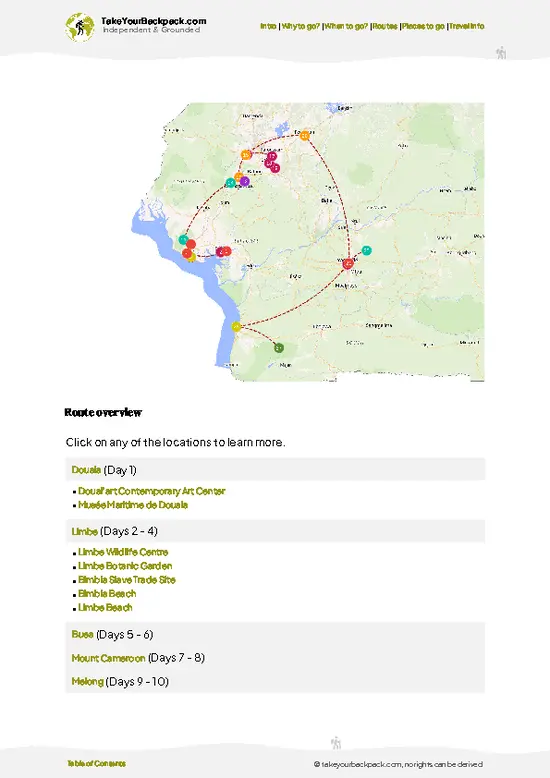
example page 0 from our offline Travel Guide for Cameroon
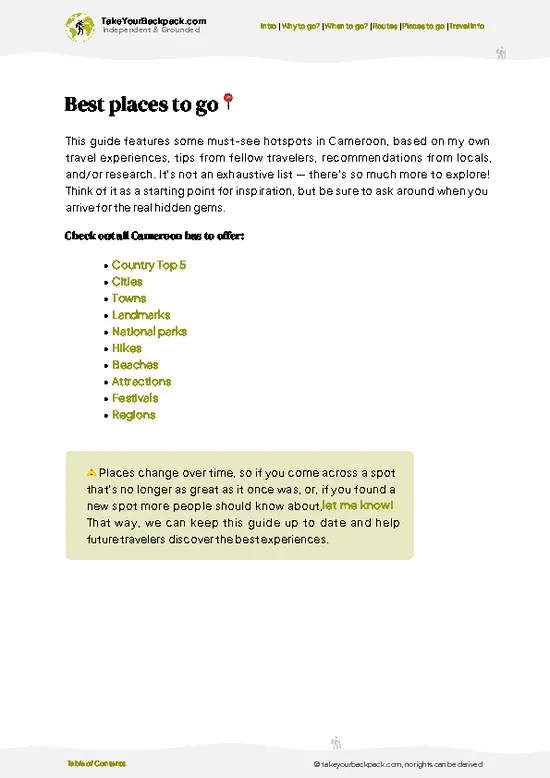
example page 1 from our offline Travel Guide for Cameroon
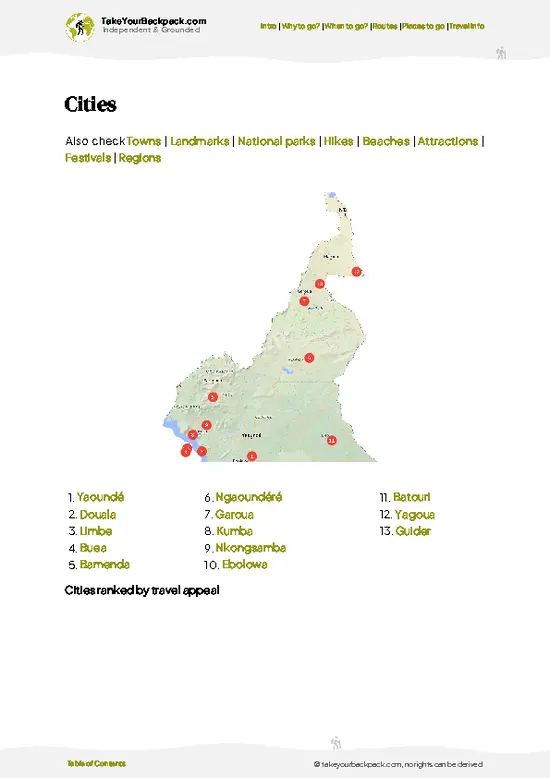
example page 2 from our offline Travel Guide for Cameroon
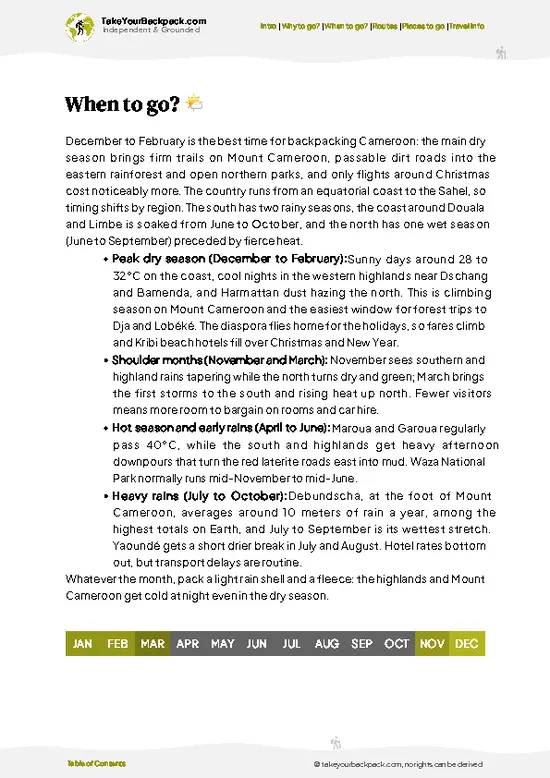
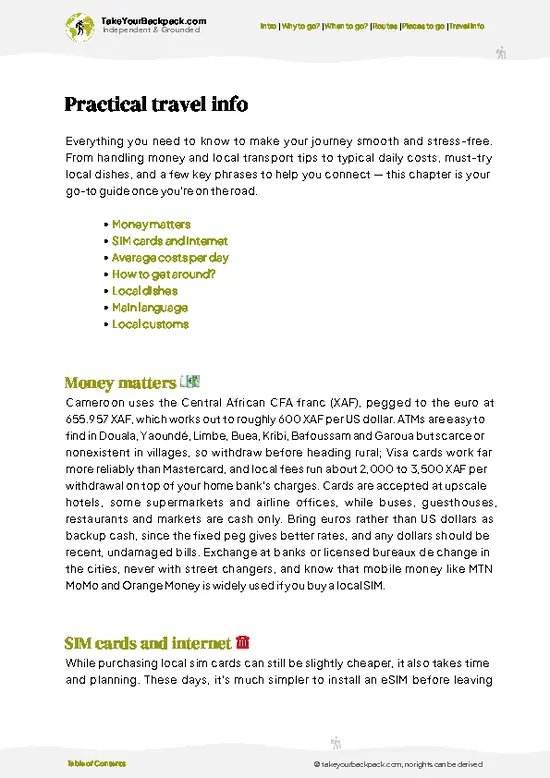
example page 3 from our offline Travel Guide for Cameroon
example page 4 from our offline Travel Guide for Cameroon
example page 5 from our offline Travel Guide for Cameroon
example page 6 from our offline Travel Guide for Cameroon
example page 7 from our offline Travel Guide for Cameroon
Loading the map 🌍
CLICK TO FILTER
cities
towns
landmarks
national parks
hikes
beaches
attractions
festivals
regions
SHOW COUNTRY’S BESTSHOW ALL

✨ Why go?
Ranked #5 beach in Cameroon
Why visitors keep coming back

Manoka Beach draws backpackers who want a Cameroon coastal stop with no tour-bus polish. The first reason is the fishing village life around the shore. Wooden pirogues come in loaded, women smoke the catch over wood fires, and you can watch the whole process within a short walk. Nobody is selling you a package, so conversations start easily, especially if you greet people properly and ask before taking photos. The second reason is the mangrove channels of the Wouri estuary. A paddle or motorized canoe takes you through roots, herons and tidal creeks that feel far from Douala’s traffic, though the city sits just across the water. The third is simple affordability: grilled fish and local drinks cost little, and there is little else to spend money on. For a route along Cameroon’s coast, it works … read more 👉
Manoka Beach draws backpackers who want a Cameroon coastal stop with no tour-bus polish. The first reason is the fishing village life around the shore. Wooden pirogues come in loaded, women smoke the catch over wood fires, and you can watch the whole process within a short walk. Nobody is selling you a package, so conversations start easily, especially if you greet people properly and ask before taking photos. The second reason is the mangrove channels of the Wouri estuary. A paddle or motorized canoe takes you through roots, herons and tidal creeks that feel far from Douala’s traffic, though the city sits just across the water. The third is simple affordability: grilled fish and local drinks cost little, and there is little else to spend money on. For a route along Cameroon’s coast, it works as a quiet pause between the city and beaches further south, a place to slow down, eat well and see how the estuary communities actually live.

💡 HighlightsDon't-miss highlights and experiences

  1. Fishing village waterfront: The shoreline is the main sight. Pirogues land their catch in the morning, nets are mended on the sand and the smell of smoked fish carries across the village. Visit early for the busiest activity.
  2. Mangrove canoe trips: Local boatmen take you through the tidal creeks of the estuary, past tangled roots, kingfishers and egrets. It is calm, shaded and a good way to understand the island’s geography. Agree the price and duration before boarding.
  3. Smoked fish and grilled catch: Eating here means fish cooked within hours of landing, often grilled over charcoal and served with plantain or cassava. It is simple and satisfying, and the best taste of the place.
  4. Village walks: Wander between wooden houses, drying racks and small shops where residents repair boats and sell goods.
… read more 👉
  1. Fishing village waterfront: The shoreline is the main sight. Pirogues land their catch in the morning, nets are mended on the sand and the smell of smoked fish carries across the village. Visit early for the busiest activity.
  2. Mangrove canoe trips: Local boatmen take you through the tidal creeks of the estuary, past tangled roots, kingfishers and egrets. It is calm, shaded and a good way to understand the island’s geography. Agree the price and duration before boarding.
  3. Smoked fish and grilled catch: Eating here means fish cooked within hours of landing, often grilled over charcoal and served with plantain or cassava. It is simple and satisfying, and the best taste of the place.
  4. Village walks: Wander between wooden houses, drying racks and small shops where residents repair boats and sell goods. Greet people, ask permission for photos and you will often be invited to sit and talk.
  5. Estuary views toward Douala: From the shore you can look across the water to the city skyline and passing cargo vessels. At dusk the haze and the lights of boats on the water make it a quiet place to end the day.
Manoka Beach has no ticketed attractions, but the canoe trips should be arranged with a boatman ahead of time.
Spotted a mistake or missing something? Contact us.

Things to do near Manoka Beach

Ratings based on Tripadvisor reviews. When you book through this link, you support our work at no extra cost to you.

🌤️ When to go?Choosing the right time of year

  • Main Dry Season (December to February): Calmest seas and the most sunshine, with highs of 28 to 32°C (82 to 90°F) and nights near 23°C (73°F). Boat crossings from Douala run smoothly and weekends fill with day-trippers, so prices for boat hire edge up.
  • Short Dry Spell (July to August): Cloudier and cooler at 25 to 28°C (77 to 82°F), with drizzle more likely than sun. Crowds thin out and boat operators haggle more readily.
  • Wet Seasons (March to June, September to November): Douala is one of Africa’s wettest areas, so expect downpours that can run for hours, choppier water in the estuary and humid heat. Mangrove channels look their greenest and you will often have the sand to yourself.
  • Daylight: Close to the equator, days stay at roughly 12 hours all year, so plan boat trips to finish well before
… read more 👉
  • Main Dry Season (December to February): Calmest seas and the most sunshine, with highs of 28 to 32°C (82 to 90°F) and nights near 23°C (73°F). Boat crossings from Douala run smoothly and weekends fill with day-trippers, so prices for boat hire edge up.
  • Short Dry Spell (July to August): Cloudier and cooler at 25 to 28°C (77 to 82°F), with drizzle more likely than sun. Crowds thin out and boat operators haggle more readily.
  • Wet Seasons (March to June, September to November): Douala is one of Africa’s wettest areas, so expect downpours that can run for hours, choppier water in the estuary and humid heat. Mangrove channels look their greenest and you will often have the sand to yourself.
  • Daylight: Close to the equator, days stay at roughly 12 hours all year, so plan boat trips to finish well before dark.
Aim for a weekday in January and you get the best weather without the weekend crowds.


source: climatestotravel.comJANJanuary: excellent for travelingFEBFebruary: excellent for travelingMARMarch: highly recommended for travelingAPRApril: fair for travelingMAYMay: fair for travelingJUNJune: fair for travelingJULJuly: fair for travelingAUGAugust: fair for travelingSEPSeptember: fair for travelingOCTOctober: fair for travelingNOVNovember: highly recommended for travelingDECDecember: excellent for traveling
when-to-go

✈️ The backpacker research shortcutCameroon Travel Guide

An offline-friendly backpacking guide with optimized travel routes, ranked highlights, transport advice, and the best areas to stay.
example page 0 from our offline Travel Guide for Cameroon
example page 1 from our offline Travel Guide for Cameroon
example page 2 from our offline Travel Guide for Cameroon
example page 3 from our offline Travel Guide for Cameroon
example page 4 from our offline Travel Guide for Cameroon
example page 5 from our offline Travel Guide for Cameroon
example page 6 from our offline Travel Guide for Cameroon
example page 7 from our offline Travel Guide for Cameroon
The digital guide (351 pages) contains:
✅ 84 highlights, ranked by travel appeal
✅ Optimized 7, 14 & 21-day travel routes
✅ Cities, national parks, landmarks, beaches
✅ How to get around
✅ Offline-friendly for travel without Wi-Fi
👉 Click to see all 30+ guide features

📅 Plan smarter in minutes, not weeks
✅ Month by month travel advice
✅ Festivals & national holidays
✅ Budget expectations

🗺️ Go to the right places, skip the overrated ones
✅ Honest pros & cons of destinations
✅ Top hikes, parks & viewpoints
✅ Lesser-known places most travelers miss
✅ Clear “worth it vs skip it” guidance

🛏️ Travel smoothly without rookie mistakes
✅ Best areas to stay
✅ Transport systems explained simply
✅ Common scams & safety advice
✅ SIM cards, money & practical tips

🌍 Understand the country, not just visit it
✅ Culture & traditions
✅ 52 Essential phrases & customs
✅ Festivals worth planning around
✅ Traveler-friendly historical context
✅ Insights that make places more meaningful

📱 Built for real travel conditions
✅ Fully downloadable PDF
✅ Works completely offline
✅ Optimized for phone use
✅ Useful in remote areas & buses
✅ Everything in one place
Stop searching, start planning
Get instant access to your full guide. 30‑day money-back guarantee.
+ Add another guide for just

By proceeding you agree to our terms.
Sent to your inbox immediately after payment • 100% Secure Checkout
Best Backpacking Travel Advisor 2025 tourism awardBest Backpacking
Travel Advisor
2025
What others say about Take Your Backpack Guides:
⭐⭐⭐⭐⭐
Fantastic, amazing amount of information!
⭐⭐⭐⭐⭐
My goodness this is amazing, it's what I've been looking for hats off too you!
⭐⭐⭐⭐⭐
I think this is absolutely BRILLIANT
⭐⭐⭐⭐
Very complete and informative. It's still missing places, but I gotta to commend you
⭐⭐⭐⭐⭐
This is truly amazing, thank you, can't wait to explore it with my kids!
⭐⭐⭐⭐⭐
Awesome resource, thank you!
⭐⭐⭐⭐⭐
This is amazing! Can't wait to explore the ones I haven't seen
⭐⭐⭐⭐
I love this! Well done, great idea.
⭐⭐⭐⭐⭐
Thanks for taking the time to make this gem!
⭐⭐⭐⭐⭐
This might be the best website I've ever seen.
⭐⭐⭐⭐⭐
Congratulations, and thank you so much for your work; it's incredibly valuable.
⭐⭐⭐⭐
In all seriousness I think you did a great job pointing out the important spots
⭐⭐⭐⭐⭐
10/10 very good
⭐⭐⭐⭐⭐
As someone who's only just starting to visit regularly this is awesome, thank you.
⭐⭐⭐⭐
Thank you very much! I'm going to visit my dad, it's going to be very useful!
⭐⭐⭐⭐⭐
This is really cool! We'll be travelling for the first time and this definitely come in handy.
⭐⭐⭐⭐⭐
You are now our minister of culture, congratulations 👨‍💼
⭐⭐⭐⭐⭐
Just wanted to tell you that this is a pearl! Going to follow your recommendations.
⭐⭐⭐⭐⭐
This is so cool. I'll definitely be using the resource for my travels soon.
⭐⭐⭐⭐⭐
This is very impressive! Good work.
⭐⭐⭐⭐⭐
This is an amazing and informative site. Very well done!

🛏️ Where to stay?Choosing the right base

The best base is Douala, on the mainland, because Manoka itself offers only a handful of very simple guesthouses and homestays, and the island lies a short boat ride from the city waterfront. Most backpackers sleep in Douala and cross for the day. Akwa is the practical choice: it has the widest range of budget rooms (roughly €15 to 30 a night), plenty of cheap eating, and moto and taxi access to the boat departure points. It is busy and loud, but you can walk to restaurants and cash machines after dark in the main streets. Bonanjo, the old colonial quarter, is quieter and a little more upscale, … read more 👉
The best base is Douala, on the mainland, because Manoka itself offers only a handful of very simple guesthouses and homestays, and the island lies a short boat ride from the city waterfront. Most backpackers sleep in Douala and cross for the day. Akwa is the practical choice: it has the widest range of budget rooms (roughly €15 to 30 a night), plenty of cheap eating, and moto and taxi access to the boat departure points. It is busy and loud, but you can walk to restaurants and cash machines after dark in the main streets. Bonanjo, the old colonial quarter, is quieter and a little more upscale, good if you want calm and easier taxi rides. Bonapriso has more expat-oriented cafés and a safer feel at night, though beds cost more. Meeting other travelers is hit and miss, since Cameroon has few traditional hostels, so expect to socialize at bars and restaurants rather than dorm common rooms. If you want to wake up on the island, ask around the village for a room with a local family. Bring cash and arrange the boat for the next morning in advance, because it is simplest to deal directly with the community.

🛡️ SafetyScams, Hazards, and Annoyances

Manoka Beach is generally calm and low-drama, though it is an estuary shoreline rather than an open-ocean resort, so conditions are shaped by tides and river flow. Water is brownish and shallow near shore, with soft mud in places, and currents can pick up around channel mouths at the turn of the tide. Swim where villagers do and skip areas close to the boat landings. Waves are modest, and rips are rarely the concern. Sun is strong all year, even under cloud, so cover up and carry water. Rain squalls can blow in quickly in the wet months and make the boat crossing bumpy, so ask for life jackets and cross in the morning. Stings from jellyfish are uncommon, but mangrove mud can hide shells and debris, so wear sandals. Petty theft is uncommon in the village, though in Douala you should keep phones … read more 👉
Manoka Beach is generally calm and low-drama, though it is an estuary shoreline rather than an open-ocean resort, so conditions are shaped by tides and river flow. Water is brownish and shallow near shore, with soft mud in places, and currents can pick up around channel mouths at the turn of the tide. Swim where villagers do and skip areas close to the boat landings. Waves are modest, and rips are rarely the concern. Sun is strong all year, even under cloud, so cover up and carry water. Rain squalls can blow in quickly in the wet months and make the boat crossing bumpy, so ask for life jackets and cross in the morning. Stings from jellyfish are uncommon, but mangrove mud can hide shells and debris, so wear sandals. Petty theft is uncommon in the village, though in Douala you should keep phones and cash tucked away. Keep valuables to a minimum on the boat and the sand.

FAQTraveler FAQ

From Douala, take a taxi to the Youpwe or Bonaberi waterfront landings, then a motorized pirogue or speedboat to Manoka, which takes about 20 to 40 minutes depending on the boat and tide. Shared pirogues cost roughly €2 to 5 per person, while a private boat for the day is about €25 to 50. Taxis from central Akwa to the landing run around €2 to 4. Go in the morning, since afternoon rain and wind make the estuary choppier.
Manoka Beach is fine for casual swimming at calm times but is not a surf or snorkeling destination. The water is brown and estuarine, with soft mud, small waves and tidal currents near channels, so there is no real surf break and visibility is too poor for snorkeling. Mangrove paddling and fishing trips with local boatmen are the better water activities, usually arranged for about €10 to 25. Swim at high tide near the village shoreline and avoid the boat landings.
Manoka Beach has no entrance fee, and you can walk the shore freely. Expect to pay for the boat, usually €2 to 5 each way on a shared pirogue, or €25 to 50 for a private day charter from Douala. Some villages may ask for a small community contribution of around €1 to 3 if you hire a guide or tour the mangroves. Bring cash, as there are no cards or cash machines on the island.
⚠️ Things can change over time, so always validate details locally before you go.

Other Cameroonian beaches near Manoka Beach

Explore more nearby:

  • Bimbia Beach—Slave-trade ruins, dark volcanic sand, mangrove creeks, red-mud track| 43 km away
  • Limbe Beach—Black sand, Mount Cameroon views, canoe landings, beach grills| 48 km away
  • Down Beach—black volcanic sand, smoky fish grills, market bustle| 48 km away

💡 Not sure where to go next?
Create a personalized itinerary for Cameroon including Manoka Beach and the places that fit your trip.

Generate my itinerary

👉 Discover all beaches

Or checkout all Cameroon has to offer (think cities, towns, villages, national parks, hikes, beaches, festivals)
Country photo of Cameroon

We 💚 feedbackSumming up the experience

Manoka Beach works best as a half-day detour tied to a Douala stay, then a move on to the sandier coast near Kribi or Limbe for actual swimming. I would go in the morning when the boats land, bring small bills and skip the idea of a beach day here. Eat the fish, take the canoe, leave by afternoon.

✍️ Help improve this page!
The information on this page is based on in-depth research, insights shared by experienced travelers, and feedback from the local travel community in Cameroon. While every effort is made to keep the information accurate and current, conditions can change — so if you spot anything incorrect or outdated, please get in touch.


🙋‍♂️ Give feedback

👋 Meet the founderWho’s Behind Take Your Backpack?

Johan, backpacker and founder of TakeYourBackpackHi, I’m Johan (Netherlands 🇳🇱), the creator of TakeYourBackpack. Over the past 3 decades, I’ve backpacked through 90+ countries across six continents, gaining extensive experience with independent travel, long-term trips, and overland routes.

This site is built on a combination of firsthand travel experience and carefully curated insights from other backpackers. Many guides are based on places I’ve personally visited, while others bring together tips, observations, and practical advice shared by trusted travelers I’ve met along the way.

The goal is to provide realistic, experience-driven guidance — not generic itineraries — so you can explore destinations with better context, clearer expectations, and more confidence.