×

Cayman Islands🇰🇾 | attractionsPedro St. James National Historic Site1780 Great House, 1831 assembly room, south-coast veranda, bluff gardens | things to do and best time to go

Explore Cayman Spirits Co. DistilleryExplore Cayman Turtle Centre

Backpacking in Pedro St. James National Historic Site
🌟 Highlightattraction ranked #2
By Johan Kruseman 🇳🇱 | Updated October 20, 2026

The Great House here was built around 1780 and is widely described as the oldest surviving building of its kind in the Cayman Islands, and it was where the islands’ first legislative assembly met in 1831. Pedro St. James National Historic Site sits on a bluff above the sea in Savannah, in the south of Grand Cayman in the Cayman Islands, a short drive inland from the Bodden Town side. Be ready for an admission price that feels steep for a one-building site, and for tour buses that arrive in waves on cruise days. Go when the gates open or in the last hour and you’ll often have the veranda to yourself. The payoff is a restored three-story house, a theater film that sets up the story, and a view across the coast that few tour stops match. It differs from the Cayman National Museum in George Town, which spreads the islands’ story across rooms of artifacts, while here the building itself is the exhibit.

Discover everything you want to know in the 📖 Cayman Islands Travel Guide.


example page 0 from our offline Travel Guide for Cayman Islands
example page 1 from our offline Travel Guide for Cayman Islands
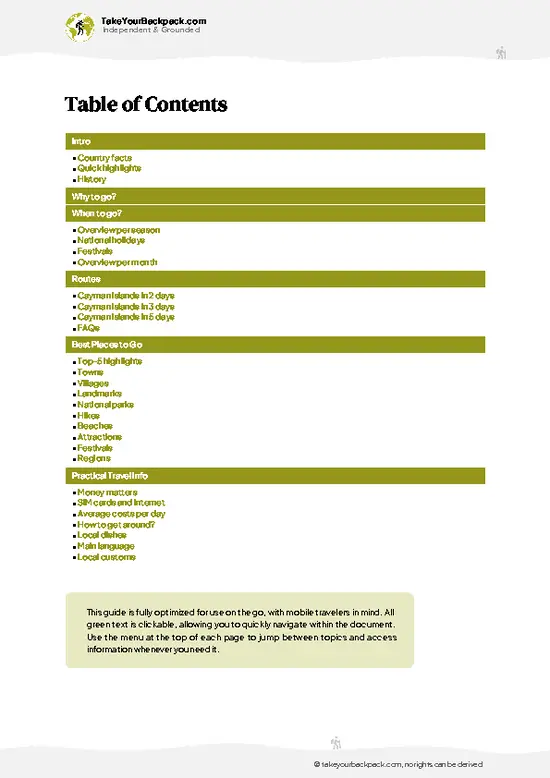
example page 2 from our offline Travel Guide for Cayman Islands
example page 3 from our offline Travel Guide for Cayman Islands
example page 4 from our offline Travel Guide for Cayman Islands
example page 5 from our offline Travel Guide for Cayman Islands
example page 6 from our offline Travel Guide for Cayman Islands
example page 7 from our offline Travel Guide for Cayman Islands
Loading the map 🌍
CLICK TO FILTER
towns
villages
landmarks
national parks
hikes
beaches
attractions
festivals
regions
SHOW COUNTRY’S BESTSHOW ALL

✨ Why go?
Ranked #2 attraction in Cayman Islands
What sets this place apart

Pedro St. James National Historic Site is the place to understand how the Cayman Islands turned from a remote outpost of Jamaica’s colonial world into a self-governing community. Most beach days on Grand Cayman say nothing about that. This hilltop does.
The story is concrete. In 1831 the island’s residents gathered in the house to set up the first elected assembly, and the dates, names and decisions are laid out in the visit. A candid part of the story is the enslaved people who built and worked the property, and the interpretation does not skip it.
The other reason is physical. The restored three-story Great House has wide shaded galleries, heavy timber, and breezes that explain why it was built on this bluff. You can stand where the view of the sea would have mattered to anyone arriving by … read more 👉
Pedro St. James National Historic Site is the place to understand how the Cayman Islands turned from a remote outpost of Jamaica’s colonial world into a self-governing community. Most beach days on Grand Cayman say nothing about that. This hilltop does.
The story is concrete. In 1831 the island’s residents gathered in the house to set up the first elected assembly, and the dates, names and decisions are laid out in the visit. A candid part of the story is the enslaved people who built and worked the property, and the interpretation does not skip it.
The other reason is physical. The restored three-story Great House has wide shaded galleries, heavy timber, and breezes that explain why it was built on this bluff. You can stand where the view of the sea would have mattered to anyone arriving by boat.
It also fits a day on the quieter east-of-town side of the island, so you can pair it with the coastal drive instead of spending all of it on Seven Mile Beach.

💡 HighlightsKey sights and experiences for travelers

  1. The Great House: The restored three-story house is the reason to come. Its galleries, timber frame and period rooms show how a wealthy island family lived, and you can wander the floors at your own pace.
  2. Legislative Assembly Room: The space linked to the 1831 gathering where residents set up the first elected assembly. It is small, which makes the history feel closer than the grand name suggests.
  3. Founders Theater film: A short film about the site’s story, shown in the visitor center. It gives the dates and people you need before you walk the grounds.
  4. Upper veranda and sea views: From the high galleries you look out over the south coast. The breeze here shows why the owners chose the bluff.
  5. Period furnishings and exhibits: Rooms are set with items that suggest daily life in the house, including
… read more 👉
  1. The Great House: The restored three-story house is the reason to come. Its galleries, timber frame and period rooms show how a wealthy island family lived, and you can wander the floors at your own pace.
  2. Legislative Assembly Room: The space linked to the 1831 gathering where residents set up the first elected assembly. It is small, which makes the history feel closer than the grand name suggests.
  3. Founders Theater film: A short film about the site’s story, shown in the visitor center. It gives the dates and people you need before you walk the grounds.
  4. Upper veranda and sea views: From the high galleries you look out over the south coast. The breeze here shows why the owners chose the bluff.
  5. Period furnishings and exhibits: Rooms are set with items that suggest daily life in the house, including the working and storage areas that tell the less comfortable side of the story.
  6. Gardens and grounds: Landscaped paths wind around the house with native plants and open lawns. They are good for slowing down and for photographs without the building crowded by people.
  7. Visitor center and gift shop: Local crafts, books and small souvenirs, plus cold drinks to help after the walk around the property.
Pedro St. James National Historic Site charges an entry fee at the gate, around US$15 to 20, and no advance booking is usually needed except for group visits or special evening events.
Spotted a mistake or missing something? Contact us.

Things to do around Pedro St. James National Historic Site

Ratings based on Tripadvisor reviews. When you book through this link, you support our work at no extra cost to you.

🌤️ When to go?Seasonal considerations and timing

  • Dry Season (December to April): Pedro St. James National Historic Site is most comfortable now, with highs of 28 to 30°C (82 to 86°F), lows near 21°C (70°F) and low humidity. Days run about 11 to 12 hours, so the Great House and its grounds are easy to cover before dusk. Cruise ships dock in George Town most days, and tour buses fill the car park mid-morning.
  • Wet Season (May to October): Expect 30 to 33°C (86 to 91°F), heavy humidity and afternoon downpours that clear within an hour. Daylight stretches to roughly 13 hours. Crowds thin, and flights and rooms drop in price, sometimes by a third.
  • Hurricane Peak (August to October): Storm risk is highest, and closures can happen with little notice. Cheap fares are tempting, so book flexible tickets.
  • Shoulder Months (November and May): Temperatures
… read more 👉
  • Dry Season (December to April): Pedro St. James National Historic Site is most comfortable now, with highs of 28 to 30°C (82 to 86°F), lows near 21°C (70°F) and low humidity. Days run about 11 to 12 hours, so the Great House and its grounds are easy to cover before dusk. Cruise ships dock in George Town most days, and tour buses fill the car park mid-morning.
  • Wet Season (May to October): Expect 30 to 33°C (86 to 91°F), heavy humidity and afternoon downpours that clear within an hour. Daylight stretches to roughly 13 hours. Crowds thin, and flights and rooms drop in price, sometimes by a third.
  • Hurricane Peak (August to October): Storm risk is highest, and closures can happen with little notice. Cheap fares are tempting, so book flexible tickets.
  • Shoulder Months (November and May): Temperatures sit around 28 to 31°C (82 to 88°F), visitor numbers are modest and rates are lower than in winter.
Arrive when the gates open, since the site's multimedia show and tours run smoothly before the cruise groups arrive.


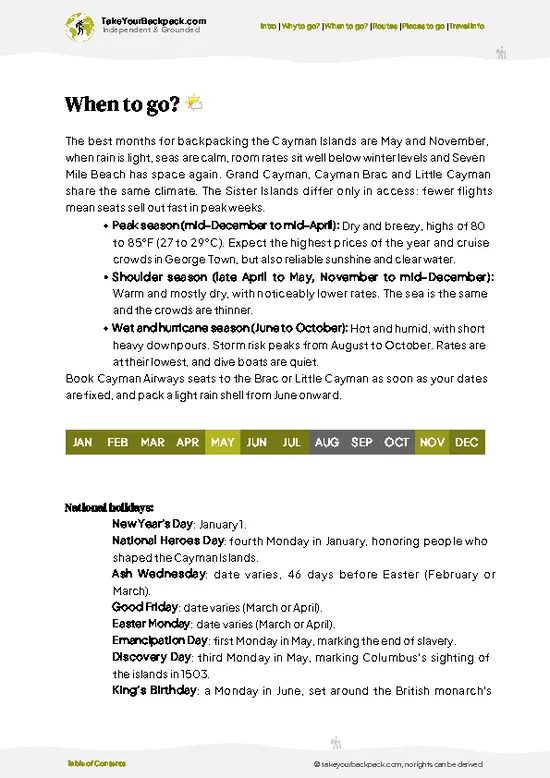
source: climatestotravel.comJANJanuary: excellent for travelingFEBFebruary: excellent for travelingMARMarch: excellent for travelingAPRApril: highly recommended for travelingMAYMay: highly recommended for travelingJUNJune: fair for travelingJULJuly: fair for travelingAUGAugust: fair for travelingSEPSeptember: fair for travelingOCTOctober: fair for travelingNOVNovember: highly recommended for travelingDECDecember: excellent for traveling
cayman-islands-attraction-pedro-st-james-national-historic-site v1
© Google |

✈️ The backpacker research shortcutCayman Islands Travel Guide

An offline-friendly backpacking guide with optimized travel routes, ranked highlights, transport advice, and the best areas to stay.
example page 0 from our offline Travel Guide for Cayman Islands
example page 1 from our offline Travel Guide for Cayman Islands
example page 2 from our offline Travel Guide for Cayman Islands
example page 3 from our offline Travel Guide for Cayman Islands
example page 4 from our offline Travel Guide for Cayman Islands
example page 5 from our offline Travel Guide for Cayman Islands
example page 6 from our offline Travel Guide for Cayman Islands
example page 7 from our offline Travel Guide for Cayman Islands
The digital guide (140 pages) contains:
✅ 33 highlights, ranked by travel appeal
✅ Optimized 2, 3 & 5-day travel routes
✅ Cities, national parks, landmarks, beaches
✅ How to get around
✅ Offline-friendly for travel without Wi-Fi
👉 Click to see all 30+ guide features

📅 Plan smarter in minutes, not weeks
✅ Month by month travel advice
✅ Festivals & national holidays
✅ Budget expectations

🗺️ Go to the right places, skip the overrated ones
✅ Honest pros & cons of destinations
✅ Top hikes, parks & viewpoints
✅ Lesser-known places most travelers miss
✅ Clear “worth it vs skip it” guidance

🛏️ Travel smoothly without rookie mistakes
✅ Best areas to stay
✅ Transport systems explained simply
✅ Common scams & safety advice
✅ SIM cards, money & practical tips

🌍 Understand the country, not just visit it
✅ Culture & traditions
✅ Local customs
✅ Festivals worth planning around
✅ Traveler-friendly historical context
✅ Insights that make places more meaningful

📱 Built for real travel conditions
✅ Fully downloadable PDF
✅ Works completely offline
✅ Optimized for phone use
✅ Useful in remote areas & buses
✅ Everything in one place
Stop searching, start planning
Get instant access to your full guide. 30‑day money-back guarantee.
+ Add another guide for just

By proceeding you agree to our terms.
Sent to your inbox immediately after payment • 100% Secure Checkout
Best Backpacking Travel Advisor 2025 tourism awardBest Backpacking
Travel Advisor
2025
What others say about Take Your Backpack Guides:
⭐⭐⭐⭐⭐
Fantastic, amazing amount of information!
⭐⭐⭐⭐⭐
My goodness this is amazing, it's what I've been looking for hats off too you!
⭐⭐⭐⭐⭐
I think this is absolutely BRILLIANT
⭐⭐⭐⭐
Very complete and informative. It's still missing places, but I gotta to commend you
⭐⭐⭐⭐⭐
This is truly amazing, thank you, can't wait to explore it with my kids!
⭐⭐⭐⭐⭐
Awesome resource, thank you!
⭐⭐⭐⭐⭐
This is amazing! Can't wait to explore the ones I haven't seen
⭐⭐⭐⭐
I love this! Well done, great idea.
⭐⭐⭐⭐⭐
Thanks for taking the time to make this gem!
⭐⭐⭐⭐⭐
This might be the best website I've ever seen.
⭐⭐⭐⭐⭐
Congratulations, and thank you so much for your work; it's incredibly valuable.
⭐⭐⭐⭐
In all seriousness I think you did a great job pointing out the important spots
⭐⭐⭐⭐⭐
10/10 very good
⭐⭐⭐⭐⭐
As someone who's only just starting to visit regularly this is awesome, thank you.
⭐⭐⭐⭐
Thank you very much! I'm going to visit my dad, it's going to be very useful!
⭐⭐⭐⭐⭐
This is really cool! We'll be travelling for the first time and this definitely come in handy.
⭐⭐⭐⭐⭐
You are now our minister of culture, congratulations 👨‍💼
⭐⭐⭐⭐⭐
Just wanted to tell you that this is a pearl! Going to follow your recommendations.
⭐⭐⭐⭐⭐
This is so cool. I'll definitely be using the resource for my travels soon.
⭐⭐⭐⭐⭐
This is very impressive! Good work.
⭐⭐⭐⭐⭐
This is an amazing and informative site. Very well done!

🛏️ Where to stay?Choosing the right base

Seven Mile Beach, about 30 to 40 minutes by road to the west, is where backpackers should stay, because it holds nearly all the island's budget beds, bars and bus connections. Pedro St. James National Historic Site sits in Savannah on Grand Cayman's south coast, and no true hostel scene exists in its immediate area.
West Bay Road and the Seven Mile Beach corridor work best. You can walk to supermarkets, beach bars and dive shops, and the public bus runs along the main road through the day, which suits solo travelers without a car. Shared dorms are scarce on the island, so expect a few guesthouses, … read more 👉
Seven Mile Beach, about 30 to 40 minutes by road to the west, is where backpackers should stay, because it holds nearly all the island's budget beds, bars and bus connections. Pedro St. James National Historic Site sits in Savannah on Grand Cayman's south coast, and no true hostel scene exists in its immediate area.
West Bay Road and the Seven Mile Beach corridor work best. You can walk to supermarkets, beach bars and dive shops, and the public bus runs along the main road through the day, which suits solo travelers without a car. Shared dorms are scarce on the island, so expect a few guesthouses, small studios and room shares at roughly US$60 to 120 a night in high season. Meeting other travelers is easiest at dive operators and beach bars.
George Town is the second option. It is quieter at night and busy by day with cruise crowds, but it works as the island's bus hub, which puts you closest to services toward Savannah. Lodging there skews toward small apartments and guesthouses.
Bodden Town, east of the site, is the local alternative. It is calmer, with fewer visitors, and suits anyone renting a car or scooter and wanting a cheaper, residential base. Safety is good throughout Grand Cayman, though lighting is poor on rural roads at night.

👛 Costs (as of 20 October 2026)Typical daily expenses

Pedro St. James National Historic Site costs a backpacker roughly US$115 to 165 per day on Grand Cayman, with an average around US$140 once the entry fee is paid. Travelers pay in Cayman Islands dollars, though US dollars are accepted nearly everywhere.
CategoryBudget RangeLocal Reality
Entrance feeUS$15 to 20Covers the Great House, the multimedia show and the grounds. Prices for adults are higher than for children and residents.
Guided extrasUS$0 to 10Tours of the house are usually included. Special evening events cost extra.
Accommodation (high season)US$60 to 120Guesthouses and room shares near Seven Mile Beach. Dorm beds are rare.
TransportUS$3 to 40Public buses cost about US$2 per ride and do not reach the site's door. A taxi or rental scooter costs more.
FoodUS$20 to 35Supermarket meals and
… read more 👉
Pedro St. James National Historic Site costs a backpacker roughly US$115 to 165 per day on Grand Cayman, with an average around US$140 once the entry fee is paid. Travelers pay in Cayman Islands dollars, though US dollars are accepted nearly everywhere.
CategoryBudget RangeLocal Reality
Entrance feeUS$15 to 20Covers the Great House, the multimedia show and the grounds. Prices for adults are higher than for children and residents.
Guided extrasUS$0 to 10Tours of the house are usually included. Special evening events cost extra.
Accommodation (high season)US$60 to 120Guesthouses and room shares near Seven Mile Beach. Dorm beds are rare.
TransportUS$3 to 40Public buses cost about US$2 per ride and do not reach the site's door. A taxi or rental scooter costs more.
FoodUS$20 to 35Supermarket meals and local takeaways cost less than sit-down restaurants. Bring water.
Snacks and drinksUS$5 to 10A small café sells refreshments on site.
Total Daily BudgetUS$115 to 165Roughly US$140 for a typical day including entry and a mid-range bed.
⚠️ Prices can change and everyone travels differently, so take this as a rough guide. Hope it helps you plan your adventure!

FAQCommon questions from travelers

Plan on 1.5 to 2 hours at Pedro St. James National Historic Site. The multimedia presentation lasts about 20 minutes, the guided Great House walk takes 30 to 45 minutes, and the grounds and lookout over the sea cliffs add another 30 minutes or so. Combined with Bodden Town and the Blow Holes along the south coast, it fills a half day.
Yes for most travelers, since Pedro St. James National Historic Site is the oldest surviving stone building in the Cayman Islands, dating to 1780, and the entry fee of roughly US$15 to 20 includes a guided tour and a film. It suits anyone curious about the island's history beyond beaches. If you only care about snorkeling and diving, skip it, but with an hour or two to spare it is the best history stop on Grand Cayman.
Pedro St. James National Historic Site is in Savannah on Grand Cayman's south coast, about 25 to 35 minutes by car from George Town or Seven Mile Beach. A taxi from Seven Mile Beach costs roughly US$40 to 60 each way. Buses toward Bodden Town run from George Town for about US$2, but you then walk or catch a short ride, so renting a car for the day (from about US$50 to 70) is simpler.
⚠️ Things can change over time, so always validate details locally before you go.

Other Caymanian attractions near Pedro St. James National Historic Site

Explore more nearby:


💡 Not sure where to go next?
Create a personalized itinerary for Cayman Islands including Pedro St. James National Historic Site and the places that fit your trip.

Generate my itinerary

👉 Discover all attractions

Or checkout all Cayman Islands has to offer (think cities, towns, villages, national parks, hikes, beaches, festivals)
Country photo of Cayman Islands

We 💚 feedbackWhat to keep in mind

Pedro St. James National Historic Site needs about 90 minutes to two hours, three if you watch the film and linger on the upper galleries. I would book it for a morning so you finish before midday heat, then drive the coast road east for lunch.

✍️ Help improve this page!
The information on this page is based on in-depth research, insights shared by experienced travelers, and feedback from the local travel community in Cayman Islands. While every effort is made to keep the information accurate and current, conditions can change — so if you spot anything incorrect or outdated, please get in touch.


🙋‍♂️ Give feedback

👋 Meet the founderWho’s Behind Take Your Backpack?

Johan, backpacker and founder of TakeYourBackpackHi, I’m Johan (Netherlands 🇳🇱), the creator of TakeYourBackpack. Over the past 3 decades, I’ve backpacked through 90+ countries across six continents, gaining extensive experience with independent travel, long-term trips, and overland routes.

This site is built on a combination of firsthand travel experience and carefully curated insights from other backpackers. Many guides are based on places I’ve personally visited, while others bring together tips, observations, and practical advice shared by trusted travelers I’ve met along the way.

The goal is to provide realistic, experience-driven guidance — not generic itineraries — so you can explore destinations with better context, clearer expectations, and more confidence.