v2.webp)
The Clay Architecture of Gaoui
Forget the Instagram filters—Gaoui’s sun-baked, ochre-walled homes are the real deal. These aren’t just photogenic backdrops; they’re living, breathing examples of Sahelian mud-brick construction, with thick walls that keep interiors cool even when the Chadian sun is in full attack mode. The patterns etched into the facades aren’t for show—they’re a language, a family signature, and a quiet rebellion against prefab monotony. Walk the alleys and you’ll see why architects and anthropologists alike get giddy here. This is architecture with soul, not just style.
The Sao Museum
Most museums in this part of the world are either dusty afterthoughts or over-curated mausoleums. Not here. The Sao Museum is a compact, slightly ramshackle treasure chest, packed with artifacts … read more 👉
Forget the Instagram filters—Gaoui’s sun-baked, ochre-walled homes are the real deal. These aren’t just photogenic backdrops; they’re living, breathing examples of Sahelian mud-brick construction, with thick walls that keep interiors cool even when the Chadian sun is in full attack mode. The patterns etched into the facades aren’t for show—they’re a language, a family signature, and a quiet rebellion against prefab monotony. Walk the alleys and you’ll see why architects and anthropologists alike get giddy here. This is architecture with soul, not just style.
The Sao Museum
Most museums in this part of the world are either dusty afterthoughts or over-curated mausoleums. Not here. The Sao Museum is a compact, slightly ramshackle treasure chest, packed with artifacts … read more 👉
The Clay Architecture of Gaoui
Forget the Instagram filters—Gaoui’s sun-baked, ochre-walled homes are the real deal. These aren’t just photogenic backdrops; they’re living, breathing examples of Sahelian mud-brick construction, with thick walls that keep interiors cool even when the Chadian sun is in full attack mode. The patterns etched into the facades aren’t for show—they’re a language, a family signature, and a quiet rebellion against prefab monotony. Walk the alleys and you’ll see why architects and anthropologists alike get giddy here. This is architecture with soul, not just style.
The Sao Museum
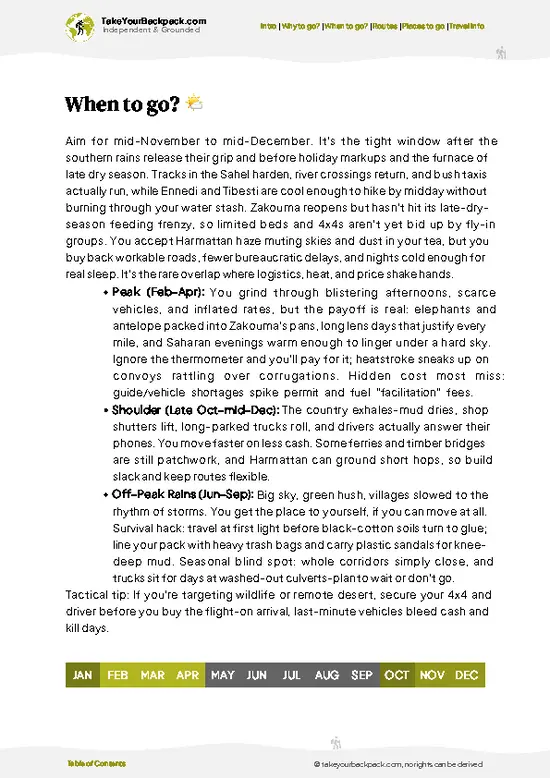
Most museums in this part of the world are either dusty afterthoughts or over-curated mausoleums. Not here. The Sao Museum is a compact, slightly ramshackle treasure chest, packed with artifacts from the Sao civilization—one of Central Africa’s most enigmatic ancient cultures. You’ll find pottery, tools, and ritual masks that look like they belong in a blockbuster adventure movie, but these are the real relics, dug up from the very ground you’re standing on. The staff are more likely to be local elders than polished guides, and if you’re lucky, you’ll get stories that don’t show up in any guidebook.
Traditional Pottery Workshops
This isn’t a staged “cultural experience” with a gift shop exit. Pottery in Gaoui is a living tradition, and you can watch (or, if you’re brave, try) the process from raw clay to finished vessel. The women here are masters—no-nonsense, fast-moving, and fiercely proud of their craft. The pots are shaped by hand, fired in open pits, and decorated with patterns that have been passed down for generations. If you want a souvenir that actually means something, this is where you get it.
Local Storytelling and Oral History
If you hang around long enough, you’ll notice that Gaoui’s real magic isn’t in its buildings or artifacts—it’s in the stories. Elders gather in shaded courtyards and recount tales of the Sao, of ancient battles, of spirits and ancestors. This isn’t a performance; it’s the heartbeat of the village. If you’re respectful and show genuine interest, you might be invited to listen. Don’t expect a polished narrative—expect digressions, laughter, and the kind of wisdom you can’t Google.
The Village Rhythm
Here’s the truth: Gaoui is not a theme park. There are no ticketed shows, no scheduled “cultural demonstrations.” The entertainment is the slow, unfiltered rhythm of daily life—kids herding goats, women drawing water, the call to prayer drifting over the rooftops. If you’re after spectacle, you’ll be disappointed. But if you’re willing to slow down and watch, you’ll see a kind of everyday theater that’s more honest—and more rewarding—than anything you’ll find in a brochure.
Forget the Instagram filters—Gaoui’s sun-baked, ochre-walled homes are the real deal. These aren’t just photogenic backdrops; they’re living, breathing examples of Sahelian mud-brick construction, with thick walls that keep interiors cool even when the Chadian sun is in full attack mode. The patterns etched into the facades aren’t for show—they’re a language, a family signature, and a quiet rebellion against prefab monotony. Walk the alleys and you’ll see why architects and anthropologists alike get giddy here. This is architecture with soul, not just style.
The Sao Museum
Most museums in this part of the world are either dusty afterthoughts or over-curated mausoleums. Not here. The Sao Museum is a compact, slightly ramshackle treasure chest, packed with artifacts from the Sao civilization—one of Central Africa’s most enigmatic ancient cultures. You’ll find pottery, tools, and ritual masks that look like they belong in a blockbuster adventure movie, but these are the real relics, dug up from the very ground you’re standing on. The staff are more likely to be local elders than polished guides, and if you’re lucky, you’ll get stories that don’t show up in any guidebook.
Traditional Pottery Workshops
This isn’t a staged “cultural experience” with a gift shop exit. Pottery in Gaoui is a living tradition, and you can watch (or, if you’re brave, try) the process from raw clay to finished vessel. The women here are masters—no-nonsense, fast-moving, and fiercely proud of their craft. The pots are shaped by hand, fired in open pits, and decorated with patterns that have been passed down for generations. If you want a souvenir that actually means something, this is where you get it.
Local Storytelling and Oral History
If you hang around long enough, you’ll notice that Gaoui’s real magic isn’t in its buildings or artifacts—it’s in the stories. Elders gather in shaded courtyards and recount tales of the Sao, of ancient battles, of spirits and ancestors. This isn’t a performance; it’s the heartbeat of the village. If you’re respectful and show genuine interest, you might be invited to listen. Don’t expect a polished narrative—expect digressions, laughter, and the kind of wisdom you can’t Google.
The Village Rhythm
Here’s the truth: Gaoui is not a theme park. There are no ticketed shows, no scheduled “cultural demonstrations.” The entertainment is the slow, unfiltered rhythm of daily life—kids herding goats, women drawing water, the call to prayer drifting over the rooftops. If you’re after spectacle, you’ll be disappointed. But if you’re willing to slow down and watch, you’ll see a kind of everyday theater that’s more honest—and more rewarding—than anything you’ll find in a brochure.
Spotted a mistake or missing something? Contact us.

N'DJAMENA - Gaoui village and the Sao civilization

N'DJAMENA The Elephant-Dandi rock and Doughia tourist resort

SAHARA -Self Drive Ennedi

Visit of the Ennedi Nature Reserve 10 days

ETNIE - Traditional Gerewol dances

SAFARI - Zakouma National Park

N'DJAMENA - 4x4 car rental with driver

SAHARA - Tibesti



 Best Backpacking
.jpg) Hi, I’m Johan (Netherlands 🇳🇱), the creator of TakeYourBackpack. Over the past decade, I’ve backpacked through 80+ countries across six continents, gaining extensive experience with independent travel, long-term trips, and overland routes.
Hi, I’m Johan (Netherlands 🇳🇱), the creator of TakeYourBackpack. Over the past decade, I’ve backpacked through 80+ countries across six continents, gaining extensive experience with independent travel, long-term trips, and overland routes.