
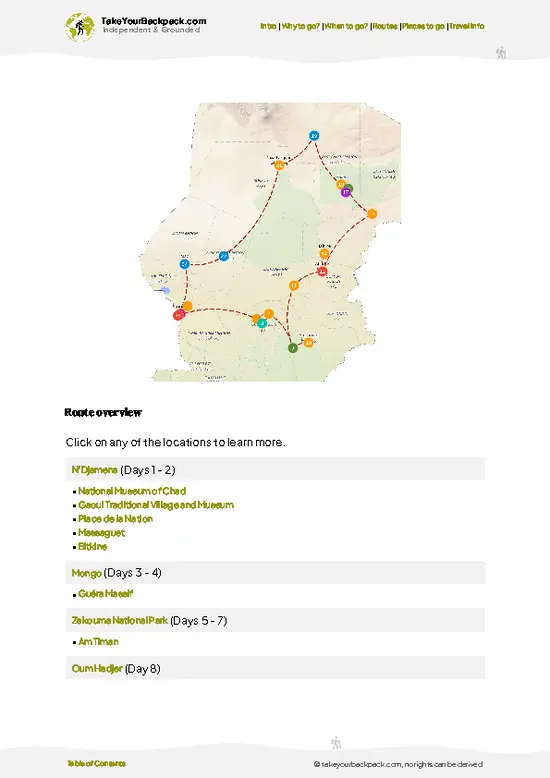
- Koumra Central Market (Marché Central) — The heart of the town: a chaotic, colorful place where you’ll see everything from fresh produce to second-hand clothes, meet traders from surrounding villages, and get a real feel for daily life. Best visited early morning when arrivals and bargaining are at their peak.
- La Grande Mosquée / Main prayer area — The mosque is a social as well as spiritual center. Even if you don’t go inside, the courtyard, the rhythm of calls to prayer and the neighborhood around it are great for observing local dress, etiquette and everyday interactions.
- Catholic mission / parish complex — The mission acts as a community hub in town: church services, a small clinic or school in many cases, and often a garden or compound where you can talk with missionaries or local
- Koumra Central Market (Marché Central) — The heart of the town: a chaotic, colorful place where you’ll see everything from fresh produce to second-hand clothes, meet traders from surrounding villages, and get a real feel for daily life. Best visited early morning when arrivals and bargaining are at their peak.
- La Grande Mosquée / Main prayer area — The mosque is a social as well as spiritual center. Even if you don’t go inside, the courtyard, the rhythm of calls to prayer and the neighborhood around it are great for observing local dress, etiquette and everyday interactions.
- Catholic mission / parish complex — The mission acts as a community hub in town: church services, a small clinic or school in many cases, and often a garden or compound where you can talk with missionaries or local parishioners about community projects and history.
- Préfecture and colonial-era administration buildings — The government offices and older municipal buildings (often with simple colonial architecture) tell the town’s administrative story. The square in front is where people gather and where local announcements and civic life happen.
- Artisan quarter and tailor workshops — A cluster of small workshops and street artisans making baskets, leather goods, and tailor-made clothing. Watching—or commissioning—a simple piece of work is one of the most authentic souvenirs you can take home.
- Weekly livestock market (marché aux bestiaux) — A bigger social event than a routine market day: traders from the countryside bring cattle, goats and other animals. Good for photography (ask first), conversation, and seeing how rural and urban economies connect.
- Gare routière (bus/minibus hub) — Not pretty, but endlessly interesting: the transport hub is where people arrive, depart, gossip, haggle over fares and share news. If you want practical info on onward travel or to meet traders, this is where to hang out.
- Stade municipal / local football pitch — Match days are community festivals here. Even small, informal games draw a crowd and are a superb way to experience local humor, food stalls and relaxed social life.
- Community radio station and cultural association spaces — Local radio (often a tiny operation) and the town’s cultural groups broadcast music, announcements and stories—stop by to hear local languages, discover events, or chat with presenters about life in Koumra.
- Market streets and palm-grove fringes inside town — Walk the smaller lanes where you’ll find food stalls, roadside cafés, small palms and gardens tucked between houses. These everyday scenes—women preparing food, children playing, farmers sorting crops—are where Koumra’s character lives.
Spotted a mistake or missing something? Contact us.

 Best Backpacking

 Hi, I’m Johan (Netherlands 🇳🇱), the creator of TakeYourBackpack. Over the past 3 decades, I’ve backpacked through 90+ countries across six continents, gaining extensive experience with independent travel, long-term trips, and overland routes.